💥UPSC 2027,2028 Mentorship (April Batch) + Access XFactor Notes & Microthemes PDF

Archives: News

  • Foreign Policy Watch: India – EU

    [9th October 2025] The Hindu Op-ed: An anchor for India-U.K. ties, their economic partnership

    Introduction:

    1. The signing of the Comprehensive Economic and Trade Agreement (CETA) in July 2025 marks a major milestone in India–UK relations, cementing their partnership in trade, technology, defence, and climate cooperation.
    2. British Prime Minister Keir Starmer’s visit to Mumbai further signals mutual intent to deepen collaboration under the evolving Comprehensive Strategic Partnership (CSP) framework of Roadmap 2030 (2021).
    3. The agreement reflects a broader trend i.e. India’s calibrated engagement with post-Brexit Britain and the European continent, aligning trade liberalisation with strategic convergence.

    India–UK Relations: A Quick Recap

    • Comprehensive Strategic Partnership (2021): Anchored in Roadmap 2030, covering trade, climate, defence, technology, and health.
    • Economic Ties: The UK contributes nearly 5% of India’s total FDI; bilateral trade exceeded USD 20 billion in FY 2024–25.
    • Defence Cooperation: Exercises such as Ajeya Warrior and Konkan Shakti, and collaboration in aerospace and propulsion systems strengthen military interoperability.
    • Technology Partnership: The Technology Security Initiative (TSI) focuses on AI, semiconductors, quantum technology, and critical minerals.
    • People-to-People Linkages: Over 1.7 million Indian-origin residents and 150,000 students in the UK reinforce socio-economic ties.
    • Global Convergence: Shared democratic values underpin cooperation on climate action, maritime security, and UN Security Council reform.
    • Trajectory: The relationship is transitioning from historical ties to a modern, technology-driven alliance, embedded in the emerging multipolar global order.

    India–UK Economic Partnership under CETA:

    1. Framework: The CETA (2025) combines tariff reduction, regulatory alignment, and investment facilitation, aiming to double bilateral trade by 2030.
    2. Benefits for India:
      • Tariff cuts on pharmaceuticals, textiles, and agricultural exports.
      • Enhanced access for IT, green tech, and digital services.
    3. Implications for the UK:
      • Lower duties on automobiles, Scotch whisky, and high-end machinery.
      • Post-Brexit diversification into South Asian markets.
    4. Double Contributions Convention (DCC): Exempts Indian professionals in the UK from dual social security payments for up to three years.
    5. Bilateral Investment Treaty (BIT): Ensures investor protection and promotes sustainable FDI in manufacturing, renewables, and infrastructure.
    6. Defence Industrial Partnership (2025): Facilitates joint R&D, co-production, and defence manufacturing, aligned with Atmanirbhar Bharat.
    7. Technology Security Initiative (TSI, 2024): Coordinates semiconductors, quantum computing, AI, and critical minerals cooperation at the national security adviser level.

    Parallel European Engagements:

    1. India’s UK outreach complements its broader European diversification strategy:
      • EFTA Trade and Economic Partnership Agreement (TEPA): In effect from October 2025, ensuring USD 100 billion investment over 15 years.
      • EU Negotiations: Trade with the European Union reached USD 136.5 billion (FY 2024–25) with sustained dialogue on an FTA.
    2. This multi-vector diplomacy balances India’s engagement between continental Europe and post-Brexit Britain.
    3. Europe’s emphasis on technological sovereignty, climate neutrality, and Indo-Pacific cooperation aligns with India’s maritime and sustainability interests.
    4. The combined outreach enhances India’s access to capital, innovation, and strategic technologies, consolidating its role as a balancing power in global governance.

    Economic and Strategic Significance:

    1. Complementarity: India offers scale and skilled labour, while the UK contributes technology, capital, and innovation ecosystems.
    2. Co-Development: Collaboration in green energy, fintech, advanced manufacturing, higher education, and sustainable finance.
    3. Geostrategic Convergence:
      • UK’s support for India’s UNSC seat and NSG membership.
      • Joint naval and maritime initiatives under the Indo-Pacific Oceans Initiative (IPOI).
      • Partnership on Electric Propulsion Capability Initiative in naval systems.
    4. Diaspora Role: The Indian diaspora serves as a connective economic and cultural bridge, amplifying trade and investment flows.
    5. The relationship now transcends transactional trade, emerging as a multi-domain strategic alliance integrating security, sustainability, and innovation.

    Challenges and Negotiation Frictions:

    1. Political Sensitivities: Colonial legacy and diaspora-linked protests periodically affect diplomatic optics.
    2. Negotiation Hurdles: Differences on tariff schedules, rules of origin, and intellectual property.
    3. TRIPS-Plus Provisions: India’s resistance to stronger IP norms preserves its pharmaceutical flexibility.
    4. Immigration and Data Divergences: Require harmonised frameworks for professional mobility and digital governance.
    5. FTA Ratification Delays: Absence of fixed timelines for CETA and BIT create investor uncertainty.

    Despite frictions, both sides perceive these accords as long-term strategic enablers, not mere commercial instruments.

    Conclusion:

    The next phase of engagement should focus on joint innovation, co-production, and sustainability-based partnerships, moving beyond conventional tariff-based frameworks.  Strengthening defence R&D and technology transfer mechanisms will foster greater self-reliance and industrial growth in both nations.

  • Pulses Production – Subramanian Committee, Eco Survey, etc.

    Why is India seeking Self-sufficiency in Pulses?

    Why in the News?

    India, though the world’s largest producer and consumer of pulses, continues to face chronic supply-demand imbalance, threatening food security and farm incomes.

    Introduction  

    • The Union Cabinet (1 October 2025) approved the ₹11,440 crore “Mission for Atmanirbharta in Pulses”, a 6-year programme (FY26–FY31) to achieve self-sufficiency in pulse production.
    • The initiative responds to surging imports of $5.5 billion in FY25, the highest ever, amid stagnating domestic yields and acreage.
    • India, though the world’s largest producer and consumer of pulses, continues to facea  chronic supply-demand imbalance, threatening food security and farm incomes.

    Value Addition: Pulses and their Production in India

    • Overview: Pulses are edible seeds of leguminous plants (family Fabaceae), cultivated for dry grains such as gram, tur, urad, masoor, and moong.
    • Nutritional Role: Rich in protein, fiber, micronutrients, and amino acids; low in fat and vital for nutritional security.
    • Agro-Climatic Range: Grown in both kharif and rabi seasons, requiring 20–27°C temperature and 25–60 cm rainfall.
    • Production Share: India produces ~25 million tonnes, accounting for 25% of global output, yet consumes 27%, making it the largest producer, consumer, and importer.
    • Crop Composition: As per FY2024, Gram (~40%), Tur/Arhar (15–20%), Moong/Urad (8–10%) dominate; pulses occupy 20% of grain area but only 7–10% of total foodgrain output.
    • Regional Spread: Major producers are- Madhya Pradesh, Maharashtra, Rajasthan, UP, Karnataka.
    • Crop Share: Pulses occupy 20 % of grain area but yield only 7–10 % of output; gram 40 %, tur 15–20 %, moong/urad 8–10 %.

    Why Farmers shifted away from Pulses?

    1. Price Disparity: Market prices often 14–28% below MSP, due to cheap imports (e.g., yellow peas from Canada at ₹3,000/quintal vs MSP ₹5,875).
    2. Import Competition: Duty-free imports from Canada, Australia, Mozambique, Myanmar suppress domestic demand.
    3. Policy Bias: Procurement, subsidies, and irrigation facilities favour rice and wheat, not pulses.
    4. Low Productivity: Pulses mostly grown on rain-fed, marginal lands, highly vulnerable to droughts, erratic monsoons, and poor irrigation.
    5. Market Risk: Weak procurement and delayed payments reduce confidence in government price support.
    6. Limited R&D: Poor availability of improved seed varieties and inadequate extension support for pest management and soil health.

    Key Structural Challenges:

    1. MSP and Procurement Gaps: Inconsistent purchase operations discourage adoption of pulses over cereals.
    2. Climatic Vulnerability: Rain-fed dependence leads to high risk from El Niño, floods, or dry spells.
    3. Low Yields: National average at 740 kg/ha, below global mean of 949 kg/ha and far below Canada/USA (1,800+ kg/ha).
    4. Small Landholdings: Over 85% small and marginal farmers lack capital for irrigation and mechanisation.
    5. Soil and Pest Constraints: Nutrient deficiency, salinity, and frequent pest attacks hinder productivity.
    6. Institutional Weakness: Fragmented R&D ecosystem and weak integration between seed research, extension, and procurement systems.

    Import Trends and Dependence:

    • Import Bill Growth: From $1.6 billion (FY21) to $5.5 billion (FY25) i.e a 3.4× surge.
    • Sources: Australia and Canada (peas), Myanmar, Tanzania, Mozambique (tur/arhar).
    • Volume: 7.3 million tonnes imported in 2024-25 surpassing the 2016-17 record.
    • Drivers: Stagnant domestic output (~25 Mt for five years) and rising urban consumption.
    • Top Importers: Canada, Russia, Australia, Mozambique, Tanzania, Myanmar, USA.

    Economic and Social Dimensions:

    • Production Rise: From 19.2 Mt (FY14) to 24.4 Mt (FY24), yet consumption still exceeds supply.
    • Consumption Growth: Rising incomes and protein awareness push demand upward.
    • Trade Imbalance: India remains both largest producer (25 %) and largest importer (14 %) of global pulses.

    Benefits of Pulses Cultivation:

    1. Environmental Sustainability: Pulses require less water and lower chemical inputs than cereals.
    2. Soil Fertility: Through biological nitrogen fixation, they enrich soil nitrogen, improving yield for subsequent crops.
    3. Reduced Fertilizer Use: Lower dependence on synthetic urea reduces subsidy burden and emissions.
    4. Soil Structure and Water Retention: Root systems enhance porosity, carbon content, and microbial biodiversity.
    5. Pest and Disease Management: Crop rotation with pulses suppresses soil-borne pathogens and reduces pesticide dependency.
    6. Carbon Sequestration: Residue incorporation increases soil organic carbon, mitigating greenhouse gas emissions.
    7. Economic Efficiency: Arvind Subramanian Committee (2016) estimated a ₹13,000/ha higher social benefit for Tur vis-à-vis rice cultivation due to water and emission savings.

    Way Forward:

    1. Seed Innovation: Intensify research through ICAR–IIPR and utilise India’s 70,000 germplasm accessions for high-yielding, climate-resilient strains.
    2. Area Expansion: Promote rice-fallow pulse rotation in eastern India and intercropping systems in semi-arid regions.
    3. Assured Procurement: Scale up NAFED and NCCF-led MSP operations, ensuring timely payments.
    4. Infrastructure Support: Strengthen warehousing, milling, and processing hubs near production clusters.
    5. Import Rationalisation: Impose variable tariffs to protect domestic farmers from global price volatility.
    6. Sustainability Integration: Incentivise pulse cultivation under carbon farming and sustainable agriculture missions.

    PYQ Relevance:

    [UPSC 2017] Mention the advantages of the cultivation of pulse because of which the year 2016 was declared as the International Year of Pulses by the United Nations.

    [UPSC 2020] With reference to pulse production in India, consider the following statements:

    1. Black gram can be cultivated as both kharif and rabi crop.

    2. Green gram alone accounts for nearly half of pulse production.

    3. In the last three decades, while the production of kharif pulses has increased, the production of rabi pulses has decreased.

    Which of the statements given above is/are correct?

    (a) 1 only * (b) 2 and 3 only (c) 2 only (d) 1, 2 and 3


    Linkage: Pulses imports often strain the Balance of Payments (BoP) and affect food inflation (a topic tested in 2024 Mains). Achieving self-sufficiency saves foreign exchange and helps manage domestic price volatility.


  • Labour, Jobs and Employment – Harmonization of labour laws, gender gap, unemployment, etc.

    Are workers’ rights being eroded?

    Introduction / Context

    • Recent Disasters: In 2025, three major industrial accidents — the Sigachi Industries chemical blast in Telangana (June 30), the Gokulesh Fireworks explosion in Sivakasi (July 1), and the Ennore Thermal Power Station collapse in Chennai (September 30) — killed nearly 60 workers within three months.
    • Scale of the Problem: According to the British Safety Council, one in four fatal workplace accidents globally occurs in India, though actual figures are higher due to underreporting in informal sectors.
    • Structural Failure: These tragedies expose a systemic breakdown in safety enforcement, where profit maximisation overrides worker protection.

    Why Workplace Accidents Occur

    1. Preventable Failures: Most industrial accidents occur due to negligence in hazard prevention such as poor equipment design, absence of alarms, and lack of maintenance.
    2. Telangana Case: The chemical reactor was operated at twice its safe limit, safety alarms failed, and untrained contract workers were deployed without records or protection.
    3. ILO Findings: The International Labour Organization (ILO) attributes most accidents to cost-cutting by managements, not random chance or individual mistakes.
    4. Human Error Myth: Employers blame workers for “human error”, but systemic issues like excessive work hours, fatigue, and exploitative conditions are the root causes.
    5. Lack of Safety Oversight: The absence of mandatory inspections and safety officers allows hazardous practices to continue unchecked.

    Evolution of Workplace Safety Laws in India

    1. Colonial Roots: The first Factories Act of 1881 was enacted under British rule to regulate working hours and conditions in textile mills.
    2. Post-Independence Framework: The Factories Act of 1948 became the foundation of India’s occupational safety regime, covering licensing, rest periods, and machine maintenance.
    3. Bhopal Legacy: The 1987 Amendment followed the Bhopal Gas Tragedy, introducing stricter safety clauses but failing in enforcement due to bribery and falsified records.
    4. Compensation Mechanisms: The Workmen’s Compensation Act (1923) and Employees’ State Insurance Act (1948) provide for injury and income loss but remain financially inadequate.
    5. Lack of Criminal Accountability: Employers rarely face criminal charges for fatal negligence; compensation is often paid through government relief funds, not company liability.

    Post-Liberalisation Deregulation and Impact

    1. Shift in Policy: Since the 1990s, India’s industrial policy has prioritised labour flexibility over worker protection.
    2. Self-Certification: States like Maharashtra (2015) allowed industries to self-certify compliance, effectively dismantling inspection-based oversight.
    3. Ease of Doing Business: Safety rules are now portrayed as regulatory hurdles, diluting mandatory standards for inspection and reporting.
    4. Contract Labour Expansion: Informal and outsourced workforces dominate hazardous sectors, operating without registration or legal protection.
    5. Erosion of State Capacity: Labour departments have been underfunded and depowered, reducing preventive enforcement to mere paperwork.

    The Occupational Safety, Health and Working Conditions (OSHWC) Code, 2020

    1. Purpose: Consolidates 13 older laws including the Factories Act (1948), Mines Act (1952), and Contract Labour Act (1970) into one unified framework.
    2. Scope: Applies to all workplaces with 10 or more workers and covers mines, docks, and factories.
    3. Employer Duties: Mandates risk-free work environments, medical check-ups, and welfare amenities, with provisions for National and State Safety Boards.
    4. Penalties: Prescribes monetary penalties for violations and limited punishment for accidents causing death.
    5. Criticism: The Code converts safety from a statutory right to administrative discretion, weakening enforceability and inspection mechanisms.

    Other Key Labour Codes:

    1. Code on Wages (2019): Ensures minimum wages, equal pay for equal work, and timely payment, reducing wage-related exploitation.
    2. Industrial Relations Code (2020): Governs strikes, layoffs, and retrenchments, focusing on maintaining employer–employee harmony under managerial control.
    3. Social Security Code (2020): Extends healthcare, pension, and insurance benefits to gig and platform workers, integrating fragmented welfare laws into one structure.

    Current Trends and Emerging Risks

    1. Extended Working Hours: Post-pandemic, States have increased daily limits and reduced rest periods, heightening fatigue-related risks.
    2. Case Example: Karnataka (2023) made longer shifts permanent, undermining rest and recovery norms critical to accident prevention.
    3. Informalisation: Over 90% of India’s workforce operates informally, with no safety records or accident insurance, leaving families uncompensated.
    4. Weakened Enforcement: Inspections replaced by self-reporting allow companies to evade accountability for safety violations.
    5. Outcome: India remains among the world’s most dangerous industrial economies, with preventable deaths treated as operational costs.

    Institutional and Governance Failures:

    1. Policy Shift: The State’s role has shifted from enforcer to facilitator, prioritising investment over worker welfare.
    2. Diluted Inspections: Labour departments, understaffed and politically pressured, no longer conduct surprise or independent audits.
    3. Token Punishment: Accident inquiries result in minor fines or temporary closures, not criminal prosecutions.
    4. Moral Blindness: Treating workplace deaths as “inevitable” reflects a moral and administrative collapse in valuing human life.

    Way Forward: Restoring Safety as a Fundamental Right

    1. Safety as Right: Workplace safety must be reinstated as a non-negotiable constitutional right, not a regulatory privilege.
    2. Reinforce Inspection: Mandatory and surprise inspections must replace self-certification to ensure compliance.
    3. Criminal Liability: Employers responsible for preventable deaths must face criminal prosecution, not ex gratia settlements.
    4. Economic Logic: Studies confirm that safe workplaces increase productivity and profitability, contradicting industry claims of cost burdens.
    5. Moral Imperative: Until the State enforces accountability, transparency, and legal deterrence, India’s workers will remain collateral casualties of deregulated growth.


    [UPSC 2024] Discuss the merits and demerits of the four ‘Labour Codes’ in the context of labour market reforms in India. What has been the progress so far in this regard?

    Linkage: The topic of the erosion of workers’ rights is highly important for the upcoming UPSC Mains, particularly because it connects statutory, economic, and social issues, making it a favorite for analytical questions


  • Historical and Archaeological Findings in News

    Private players to conserve heritage monuments

    Why in the News?

    The Centre has recently proposed to open conservation of protected monuments to private participation, ending the Archaeological Survey of India’s (ASI) exclusive control over this domain.

    About Archaeological Survey of India (ASI):

    • Establishment: Formed in 1861 under the Ministry of Culture, ASI is responsible for archaeological research, exploration, and protection of India’s cultural heritage.
    • Legal Authority: Enforces the Ancient Monuments and Archaeological Sites and Remains Act, 1958 and the Antiquities and Art Treasures Act, 1972.
    • Scope of Work: Manages about 3,700 centrally protected monuments and archaeological sites of national importance.
    • Organisational Structure: Operates through 37 regional Circles and specialist wings such as Science Branch (material analysis), Horticulture Branch (site maintenance), Temple Survey Projects (documentation), and Underwater Archaeology Wing (submerged heritage).
    • Institutional Challenges: Faces staff shortages, budget limits, and procedural delays, constraining nationwide conservation capacity.

    What is the new Public–Private Partnership (PPP) Model for Conservation?

    • Purpose: Supplements ASI’s work by allowing private participation in conservation of heritage monuments.
    • Participants: Corporates, PSUs, and philanthropic bodies may fund, execute, and monitor restoration projects under ASI supervision.
    • Funding Mechanism: Routed through the National Culture Fund (NCF); donations qualify as CSR expenditure with 100% tax exemption.
    • Implementation Framework:
      • Empanelment of conservation architects via RFP by the Ministry of Culture.
      • Donors select architects, who jointly engage restoration agencies experienced in structures over 100 years old.
      • Each project must have a Detailed Project Report (DPR) approved by ASI and comply with the National Policy for Conservation, 2014.
    • Priority Monuments: 250 sites identified for initial adoption based on region or thematic interest.
    • Eligibility: Proven heritage conservation experience, financial competence, and technical compliance with ASI standards.

    Difference from ‘Adopt a Heritage’ Scheme:

    • Earlier Model (2017, revised 2023): Focused on tourism amenities cafés, ticketing, signage through “Monument Mitras”; excluded structural restoration.
    • Current PPP Model: Extends to scientific conservation and architectural restoration under direct ASI oversight.
    • Regulatory Control: ASI retains authority over authenticity, ethics, and policy compliance; funding channelled via NCF with technical audit.
    • Policy Evolution: Marks a shift from tourism partnership to heritage stewardship, blending private resources with public accountability for monument preservation.
  • Nobel and other Prizes

    Metal-Organic Frameworks (MOFs) wins Chemistry Nobel Prize, 2025

    Why in the News?

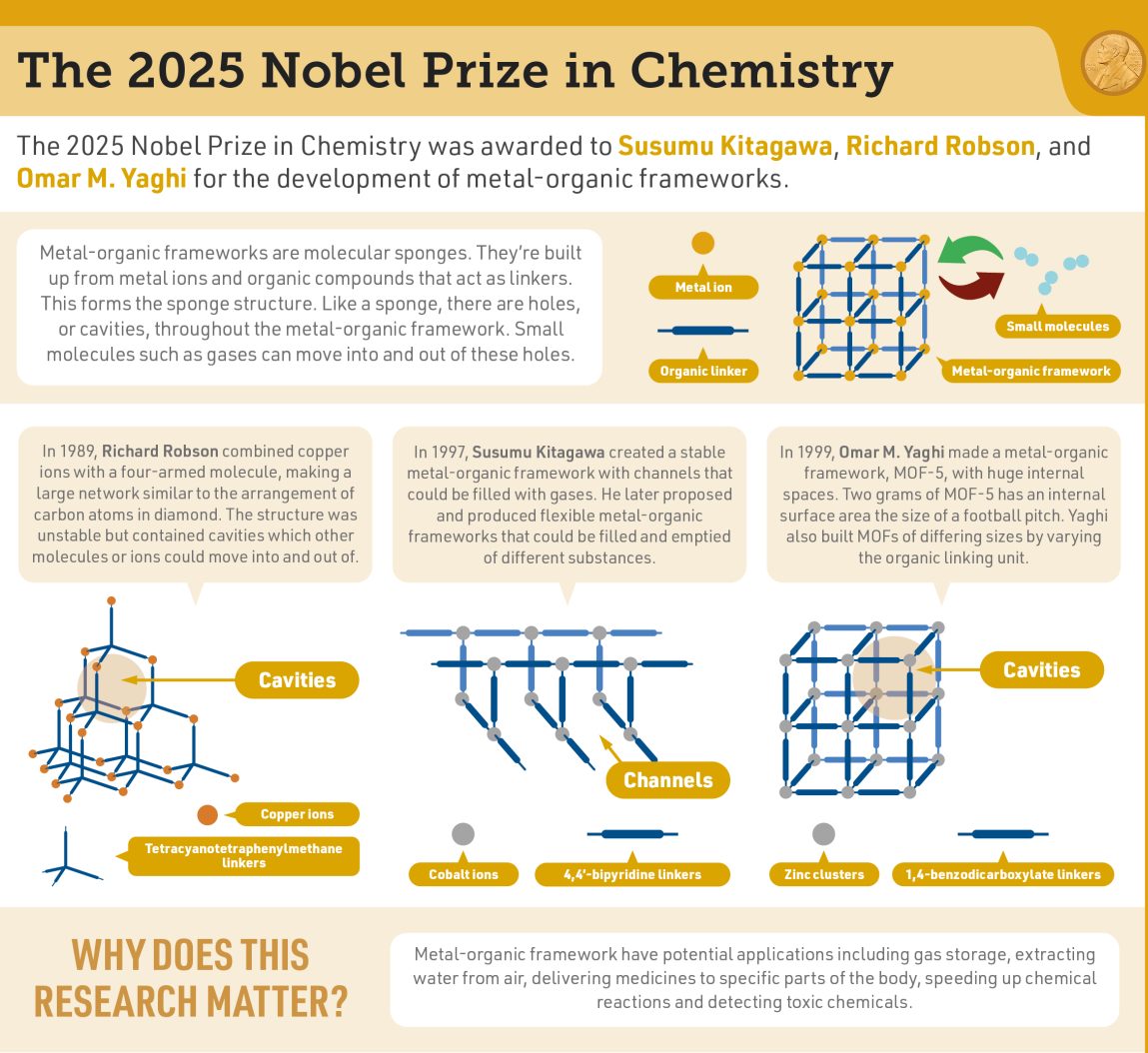
    The 2025 Nobel Prize in Chemistry has been awarded to Richard Robson, Susumu Kitagawa, and Omar Yaghi for pioneering the creation of metal–organic frameworks (MOFs).

    Metal-Organic Frameworks (MOFs) wins Chemistry Nobel Prize, 2025

    What are Metal–Organic Frameworks (MOFs)?

    • Overview: They are crystalline materials composed of metal ions linked by organic molecules, forming a three-dimensional porous network capable of selectively trapping and storing gases, vapours, or liquids.
    • Structure: Metal ions serve as nodes or connectors, while organic ligands (carbon-based linkers) create scaffold-like frameworks with very high surface area and controllable pore size.
    • Porosity: MOFs possess some of the highest porosity among solids, often exceeding 7,000 square metres per gram, enabling the storage of large volumes of gases within minimal material.
    • Flexibility: Organic linkers can be chemically modified, allowing custom design for specific interactions, such as selective gas capture or catalysis.
    • Thermal and Chemical Stability: Advanced MOFs remain stable up to 300–400°C and can withstand diverse chemical environments, suitable for industrial and environmental use.
    • Bonding Principle: Based on coordination chemistry, MOFs combine metal rigidity with organic flexibility, enabling precise control over molecular architecture.
    • Functionality: Their open channels permit easy adsorption and desorption, making MOFs reusable, durable, and efficient for a range of scientific and industrial applications.

    Applications of MOFs:

    • Water Harvesting: Capture moisture from arid air and release it upon heating — enabling portable water generation in desert regions.
    • Carbon Capture: Their selective pores allow efficient CO capture and storage, aiding climate change mitigation.
    • Hydrogen and Methane Storage: Act as solid sponges essential for fuel cells and clean energy systems.
    • Pollutant Filtration: Remove PFAS (Per- and Polyfluoroalkyl Substances), heavy metals, and organic contaminants from water sources.
    • Food Preservation: Absorb ethylene gas emitted by fruits, slowing ripening and extending shelf life.
    • Catalysis and Sensing: Serve as heterogeneous catalysts and chemical sensors for trace-level detection in industrial settings.
    • Clean Energy Systems: Integrated into batteries, fuel cells, and supercapacitors for energy storage due to high conductivity and surface area.

    Scientific Development:

    • Richard Robson (University of Melbourne, 1970s): He pioneered the idea of linking metal atoms and ligands into extended frameworks, though early models were fragile.
    • Susumu Kitagawa (Kyoto University): Built porous coordination polymers, the first to demonstrate that gases could diffuse through molecular cavities—a defining MOF feature.
    • Omar Yaghi (University of California, Berkeley, 1990s): Created robust, heat-resistant MOFs, standardised synthesis techniques, and coined the term “Metal–Organic Framework” in a 1995 Nature paper.
      • Breakthrough Achievement: Yaghi’s team designed copper- and cobalt-based MOFs stable up to 350°C, capable of hosting guest molecules without collapse.
    [UPSC 2024] With reference to Direct Air Capture, an emerging technology, which of the following statements is/are correct?

    I. It can be used as a way of carbon sequestration.

    II. It can be a valuable approach for plastic production and in food processing.

    III. In aviation, it can be a source of carbon for combining with hydrogen to create synthetic low-carbon fuel.

    Select the correct answer using the code given below.

    (a) I and II only (b) II only (c) I, II, and III* (d) None of the above statements is correct


  • Agricultural Sector and Marketing Reforms – eNAM, Model APMC Act, Eco Survey Reco, etc.

    [pib] E-NAM (electronic National Agriculture Market) Portal

    Why in the News?

    The Department of Agriculture and Farmers’ Welfare has expanded the National Agriculture Market (e-NAM) by including 9 additional commodities, raising the total tradable items on the platform to 247.

    About National Agriculture Market (e-NAM):

    • Launch: Introduced in April 2016 by the Ministry of Agriculture & Farmers’ Welfare under the Integrated Scheme on Agricultural Marketing (ISAM).
    • Implementing Agency: Managed by the Small Farmers Agribusiness Consortium (SFAC) under the Department of Agriculture & Farmers’ Welfare.
    • Objective: To unify agricultural markets across India by offering farmers and traders a transparent, competitive, and quality-based digital trading platform for real-time price discovery and reduced intermediary dependence.
    • Legal Framework: Operates within state Agricultural Produce Market Committee (APMC) Acts, harmonised through inter-state trading licences and digital linkage.
    • Funding & Governance: Fully centrally funded, providing both digital infrastructure and physical market modernisation to APMCs.
    • Working Mechanism:
      • Digital APMC Integration: Each mandi connected to the e-NAM portal for online inter-state trading.
      • Online Auctions: Produce graded, assayed, and weighed before real-time electronic bidding.
      • Price Discovery & Payment: Transparent auction ensures quality-linked pricing; proceeds transferred directly to farmers’ bank accounts.
      • Unified Licensing: A single trading licence enables purchase from multiple mandis nationwide.
      • Warehouse Trading (e-NAM 2.0): Incorporates warehouses and cold storages for sale of stored produce and extended logistics support.
    • Coverage (2025):
      • Mandis Integrated: 1,522 mandis across 23 States & 4 UTs.
      • Commodities: 247 tradable items including cereals, pulses, oilseeds, fruits, spices, and medicinal plants.
      • Participants: Around 1.7 crore farmers and 4,500 FPOs registered.
      • Leading States: Tamil Nadu (213 mandis), followed by Rajasthan and Gujarat.
      • Data Analytics: Real-time insights on trade volume, prices, and demand trends aid policy decisions.

    Key Features & Impact:

    • Pan-India Integration: Realises “One Nation, One Market” by linking mandis and private markets.
    • Quality Assurance: Standardised parameters framed by Directorate of Marketing & Inspection (DMI) ensure grade-based pricing.
    • Digital Efficiency: Electronic weighing, e-payments, and cloud-based architecture cut transaction time from 8–10 hours to 30 minutes.
    • FPO & Warehouse Linkages: Strengthen logistics, storage, and collective bargaining power.
    • Scheme Synergy: Complements PM-KISAN, PM-AASHA, and MSP operations through traceable, transparent procurement data.
    [UPSC 2017] What is/are the advantage/advantages of implementing the `National Agriculture Market’ scheme?

    1. It is a pan-India electronic trading portal for agricultural commodities.

    2. It provides the farmers access to nationwide market, with prices commensurate with the quality of their produce.

    Select the correct answer using the code given below:

    Options: (a) 1 only (b) 2 only (c) Both 1 and 2* (d) Neither 1 nor 2


  • Solar Energy – JNNSM, Solar Cities, Solar Pumps, etc.

    India to boost solar pumps scheme in Africa, Island nations

    Why in the News?

    The Union Ministry of New and Renewable Energy (MNRE) plans to showcase India’s PM-KUSUM and PM Surya Ghar schemes to several African and island nations through the International Solar Alliance (ISA) platform.

    India’s Global Outreach via International Solar Alliance (ISA):

    • Founded: 2015, jointly by India and France, headquartered in Gurugram (Haryana, India).
    • Membership (2025): 98 countries, focused on promoting solar energy deployment in developing and tropical nations.
    • Mandate: Facilitate affordable solar technology, finance mobilization, and policy support to achieve global energy access and climate goals.
    • Strategic Focus Areas (2025):
      • Catalytic Finance Hub: Mobilising global investments in solar infrastructure.
      • Global Capability Centre: Providing technical training, digital tools, and policy frameworks.
      • Technology Roadmap: Driving innovation in floating solar, AI-based grid management, green hydrogen, and One Sun, One World, One Grid (OSOWOG) connectivity.
      • Country Engagement: Strengthening regional partnerships for implementation and capacity-building.
    • Global Showcasing of Indian Models:
      • India plans to export the PM-KUSUM and PM Surya Ghar models to Africa and island nations facing low electrification and irrigation coverage.
      • Only 4% of Africa’s arable land is irrigated, creating a vast opportunity for solar-powered irrigation and energy access.
    • Significance: ISA serves as the primary vehicle for India’s renewable diplomacy, promoting clean energy cooperation, technology transfer, and South–South collaboration for sustainable development.

    Back2Basics:

    [1] PM-KUSUM Scheme:

    • Full Name: Pradhan Mantri Kisan Urja Suraksha evam Utthaan Mahabhiyan (PM-KUSUM) launched in 2019 by the Ministry of New and Renewable Energy (MNRE).
    • Objective: To promote solar energy use in agriculture, enabling farmers to generate clean electricity, replace diesel pumps, and earn additional income through sale of surplus solar power.
    • Targets:
      • Add 34,800 MW of decentralized solar capacity by March 2026.
      • Total outlay of ₹34,422 crore in Central financial assistance.
    • Structure: Three key components –
      1. Component A: 10,000 MW of decentralized grid-connected solar/renewable plants on barren land.
      2. Component B: 14 lakh standalone solar pumps for irrigation.
      3. Component C: Solarization of 35 lakh existing grid-connected pumps (including feeder-level solarisation).
    • Financial Support: Farmers receive 60% subsidy, 30% institutional loan, and contribute 10% cost.
    • Achievements (as of 2025):
      • 70% completion in standalone solar pumps.
      • Limited progress in grid-connected plants (6%) and pump solarization (16–25%).
      • Scheme likely to be extended beyond 2026 due to delayed infrastructure readiness.
    • Benefits: Reduces input costs, ensures energy self-reliance, lowers carbon emissions, and generates sustainable farmer income through surplus power sales.

    [2] PM Surya Ghar Scheme:

    • Full Name: PM Surya Ghar: Muft Bijli Yojana launched in 2025 as a flagship rooftop solar initiative for residential households.
    • Implementing Agency: Ministry of New and Renewable Energy (MNRE).
    • Objective: To promote rooftop solar installations for one crore households, especially middle-class and economically weaker sections, providing affordable or free electricity.
    • Budget: ₹75,021 crore for implementation till FY 2026–27.
    • Features:
      • Subsidy up to 40% of total installation cost.
      • Annual household savings of up to ₹18,000 through self-generation.
      • Net metering enables sale of surplus power to the grid.
      • Simplified application via national portal; eligibility limited to one household per residence.
    • Impact: Reduces power bills, promotes decentralized renewable energy generation, and contributes to India’s target of 500 GW non-fossil energy capacity by 2030.
    [UPSC 2016] Consider the following statements:

    1. The International Solar Alliance was launched at the United Nations Climate Change Conference in 2015.

    2. The Alliance includes all the member countries of the United Nations.

    Which of the statements given above is/are correct?

    Options: (a) 1 only* (b) 2 only (c) Both 1 and 2 (d) Neither 1 nor 2


  • New Species of Plants and Animals Discovered

    Nesolynx banabitanae new wasp discovered in West Bengal

    Why in the News?

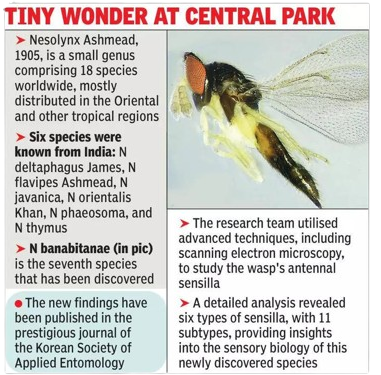
    A new species of wasp, Nesolynx banabitanae, has been discovered in Central Park (Banabitan), Salt Lake, Kolkata.

    Nesolynx banabitanae new wasp discovered in West Bengal

    About ‘Nesolynx banabitanae’:

    • Taxonomic Family: Belongs to the Eulophidae family — known for parasitic and hyperparasitic wasps.
    • Type of Species: It is a hyperparasitoid, meaning it parasitises other parasitoid wasps rather than directly preying on host insects.
    • Host Interaction: Parasitises the ichneumonid parasitoid Charops aditya, which itself attacks caterpillars of the Common Palmfly (Elymnias hypermnestra) and Common Castor (Ariadne merione) butterflies.
    • Significance: Only the seventh known wasp species discovered in India, adding to the country’s limited record of Nesolynx genus.
    • Etymology: Named banabitanae after “Banabitan”, the local Bengali name for Central Park, where it was first identified.

    Significance:

    • Ecological Role: Contributes to multitrophic ecological interactions by adding a fourth trophic level influencing population dynamics of butterflies and their parasitoids.
    • Scientific Relevance: Enhances understanding of hyperparasitoid behaviour, urban insect ecology, and biodiversity conservation in anthropogenic landscapes.
    • Analytical Importance: The SEM-based structural mapping provides baseline data for future phylogenetic and taxonomic comparisons within Nesolynx.
    [UPSC 2024] Regarding Peacock tarantula (Gooty tarantula), consider the following statements:

    I. It is an omnivorous crustacean. II. Its natural habitat in India is only limited to some forest areas. III. In its natural habitat, it is an arboreal species.

    Which of the statements given above is/are correct?

    (a) I only (b) I and III (c) II only (d) II and III *


  • Foreign Policy Watch: India – EU

    In a multi-polar West, India’s opportunity

    Introduction

    British PM Keir Starmer’s visit to Mumbai, the new EFTA trade pact, and ongoing EU-India trade talks in Brussels reflect Europe’s growing weight in India’s foreign policy. After years of limited engagement, Europe is emerging as a central partner in Delhi’s strategic calculus, just as the continent itself begins to assert geopolitical autonomy beyond its traditional dependence on the United States.

    This marks a structural transformation in world politics, the emergence of a “multipolar West”, where Europe, North America, and Asia’s democratic powers pursue convergent but independent strategic agendas.

    Historical Background: From Western Unity to Strategic Pluralism:

    • Post-War Western Unity: After World War II, the “West” became synonymous with political unity under US leadership, reinforced through NATO and Cold War alliances against the Soviet bloc.
    • Unipolar Moment after USSR Collapse: The collapse of the USSR in 1991 strengthened this unity, briefly creating a unipolar world centred on US dominance and Western liberal values.
    • Emergence of New Power Centres: As Russia reasserted its power and China rose to global prominence, the old Western consensus began to fracture.
    • India’s Advocacy for Multipolarity: Emerging powers like India called for a multipolar world — initially to balance US hegemony, but increasingly to acknowledge growing diversity within the West itself.

    Shifting Dynamics: The Rise of a Multipolar West

    • Erosion of Transatlantic Dependence: Donald Trump’s “America First” policy disrupted long-standing alliances, forcing Europe and Asia to reconsider their strategic dependence on Washington.
    • Deepening Intra-Western Differences: Differences within the West have widened over Russia, China, trade policy, digital sovereignty, and technological standards.
    • Transactional Nature of US Power: European capitals now recognise that the US may increasingly act as a transactional power — pursuing self-interest rather than collective leadership.
    • Europe’s Strategic Reorientation: In response, Europe is embracing strategic autonomy to reduce vulnerability to shifting US politics and develop independent capacities in defence, technology, and industrial production.

    Europe’s Quest for Sovereignty and Strategic Autonomy:

    • Leadership from Paris and Berlin: Leaders like Emmanuel Macron (France) and Olaf Scholz (Germany) are spearheading efforts to build a self-reliant Europe capable of defending its own interests.
    • Institutional Assertion of Autonomy: In her 2025 State of the Union address, European Commission President Ursula von der Leyen declared that Europe must “stand on its own feet, economically, technologically, and militarily.”
    • Defence and Security Cooperation: The EU is expanding defence collaboration through joint industrial initiatives and deeper coordination with partners such as the UK, Japan, South Korea, and Canada.
    • Persistent Internal Divides: Despite enduring divides between East and West over Russia, and North and South over fiscal policy Europe’s trajectory is unmistakably toward a more unified and assertive role within a plural Western order.

    India’s Engagement with Europe’s Strategic Evolution:

    • EU–India Partnership Framework: The EU’s Joint Communication on India (September 2025) positions Delhi as a key partner in Europe’s Indo-Pacific and economic diversification strategy.
    • Priority Areas of Cooperation:
      • Trade and Technology: Collaboration in semiconductors, clean energy, and digital infrastructure.
      • Connectivity: Engagement through the Global Gateway initiative, aligning with India’s infrastructure ambitions.
      • Defence and Security: Cooperation on maritime domain awareness and joint naval presence in the Indian Ocean.
      • Political Dialogue: Recognition of differences on Russia, but convergence on multilateralism and democratic resilience.
    • Shift Beyond China-Centric Policy: Europe is moving beyond its earlier China-centric worldview, placing India at the centre of its Indo-Pacific engagement and supply-chain diversification efforts.

    Implications of a Multipolar West for India

    • Expanded Diplomatic Flexibility: A loosely knit Western order provides India with greater strategic freedom to engage multiple Western poles — the US, EU, and UK — without rigid alignment.
    • Opportunity for Issue-Based Coalitions: The new order enables collaboration on shared priorities like climate action, digital governance, and critical technologies.
    • Risks of Fragmentation: However, a fragmented West may weaken collective responses to authoritarian aggression and reduce coherence in global governance.
    • Balancing Opportunity and Stability: India must simultaneously exploit Western pluralism and safeguard against the erosion of strategic stability that could undermine democratic solidarity.

    Way Forward

    • Evolving Maturity in Foreign Policy: India’s diplomacy now shows increasing sophistication — evident in renewed engagement with Europe, balanced ties with the US, Russia, and China, and pragmatic participation in both Western and non-Western coalitions such as the Quad, BRICS, and IPEF.
    • Domestic Readiness as a Constraint: Despite external agility, institutional inertia, slow structural reforms, and uneven economic modernisation continue to limit India’s ability to leverage emerging global openings.
    • Aligning Internal and External Transformation: To fully benefit from a multipolar West, India must synchronise domestic transformation with external ambitions, ensuring that internal capacity and policy agility match the demands of an evolving global order.
    [UPSC 2024] The West is fostering India as an alternative to reduce dependence on China’s supply chain and as a strategic ally to counter China’s political and economic dominance.’ Explain this statement with examples.


    Linkage: “Multipolar World” theme involves focusing heavily on India’s strategic responses to new global and regional alliances (e.g., QUAD, AUKUS, I2U2), the shifting economic dominance of powers like China, and the resulting geopolitical instability.


  • Issues related to Economic growth

    Why Indian capital needs to invest domestically?

    Introduction:

    India faces a critical policy challenge — balancing the long-term gains of global trade with the short-term risks of unemployment, stagnant wages, and inequality among vulnerable populations. The existing economic system prioritises private capital accumulation over mass welfare, requiring a realignment of capitalism toward inclusivity and public interest.

    Amid global trade disruptions, tariff wars, and falling external demand, Indian capital must reinvent itself, collaborate closely with the government, and anchor domestic economic stability through investment, innovation, and equitable growth.

    Evolution of Indian Capital and the Need for Reorientation:

    • Protected Growth Era: Historically, Indian capital thrived under state protection before liberalisation, leveraging tariff barriers and inward-looking policies to earn supernormal profits in closed domestic markets.
    • Global Expansion Phase: Liberalisation in the 1990s enabled Indian firms to expand globally, acquiring foreign assets and establishing international linkages. This evolution created a few industrial conglomerates that dominate key sectors.
    • Shift Toward Public-Interest Capitalism: With global trade slowing and protectionism rising, these firms must now redefine their role — from being beneficiaries of state incentives to partners in public-interest growth.
    • Reinvention of Capitalism: Capitalism, as history shows, can adapt and evolve. The moment demands an inclusive capitalism that balances private profit with national development goals.

    Global Trade, Demand, and Economic Vulnerabilities

    • Determinants of Demand Expansion: Economic history identifies three drivers of mass-market expansion, creation of a wage-labour class, productivity gains from industrial production, and rising personal incomes leading to higher demand.
    • Neglect of Aggregate Demand: Growth of aggregate demand is vital for sustaining production and profits, yet most policy frameworks underestimate its role, assuming supply automatically creates demand.
    • Domestic vs. External Demand: In a globalised economy, demand comprises domestic and external components. While early industrial policies relied on internal markets, the post-reform phase emphasised exports.
    • Vulnerability to Global Shocks: Today’s volatile global trade marked by tariffs and supply-chain distortions, has weakened external demand. Thus, strengthening domestic consumption through higher wages, internal investment, and industrial diversification is the pragmatic path forward.

    The Role of Domestic Capital in Stimulating Growth

    1. Reviving Private Investment

      • Stagnation in Private Capex: Despite record corporate profits, private investment has stagnated, with the state driving capital formation through public infrastructure and fiscal stimulus.
      • Rise in Public Investment: Public capex surged from ₹3.4 lakh crore (FY20) to ₹10.2 lakh crore (FY25) — a CAGR of 25%, primarily in railways, roads, and communications.
      • Outward vs. Inward Investment: Private capex remains subdued even as outward FDI by Indian firms has grown 12.6% annually (2019–2024), indicating stronger foreign than domestic investment appetite.
      • Strategic Redirection Needed: A strategic reversal is required — redirecting capital toward domestic expansion, capacity building, and industrial diversification.
    1. Ensuring Moderate Wage Growth

      • Profit–Wage Imbalance: The Economic Survey 2024–25 highlighted a growing imbalance — corporate profits at a 15-year high versus stagnant real wages.
      • Falling Real Incomes: Rating agencies project real wage growth to fall from 7% (FY25) to 6.5% (FY26), weakening purchasing power and domestic demand.
      • Labour Market Precarity: Contractualization and weakened collective bargaining in formal sectors have reduced labour’s share of income, intensifying inequality.
      • Need for Wage-Linked Growth: Sustainable growth requires balanced profit–wage dynamics, linking productivity with equitable income distribution to expand internal demand.
    1. Expanding R&D and Innovation:

      • Low R&D Spending: India’s gross expenditure on R&D (GERD) stands at 0.64% of GDP, far below that of the U.S., China, Japan, and South Korea, where private enterprise funds over 70% of total R&D.
      • Weak Private Contribution: In India, the private sector contributes only 36%, with concentration in a few industries, pharmaceuticals, IT, defence, and biotechnology.
      • Innovation as a Structural Imperative: To ensure long-term competitiveness, Indian firms must increase basic and applied research spending, moving beyond short-term, profit-driven innovation cycles.

    Way Forward: Aligning Private Capital with Public Purpose

    • Need for Coordination: The global economic uncertainty necessitates coordinated policy–business action to safeguard growth.
    • Government’s Supportive Role: The government has built a supportive framework through fiscal incentives, simplified regulation, infrastructure development, and credit facilitation. Yet, without active private participation, momentum will stall.
    • Reorientation of Corporate Priorities: Indian capital must realign its priorities:
      • National Responsibility: Treat national economic stability as a collective responsibility, not merely a policy backdrop.
      • Domestic Reinvestment: Reinvest profits domestically to generate employment and strengthen demand.
      • Wage-Led Expansion: Commit to wage-led growth, ensuring equitable income distribution.
      • R&D Commitment: Integrate R&D-driven innovation as a structural pillar of industrial policy.
    • Conclusion: A partnership model — where the state provides the framework and domestic capital drives inclusive, innovation-led expansion — can secure both growth resilience and social legitimacy in the post-globalisation era.

    PYQ Relevance:

    [UPSC 2023] Do you agree that Indian capitalism needs re-orientation towards inclusive and sustainable growth?


    Linkage: The issue aligns with GS-III themes: Indian Economy and issues relating to growth, inclusive development, investment models, and effects of liberalisation on the economy.

    It also fits Essay Paper topics like “Capitalism without conscience is a peril to society” or “Economic self-reliance and global interdependence must coexist.”

    The debate concerns how Indian private capital can become a stakeholder in inclusive growth amid protectionism, global trade uncertainty, and sluggish domestic demand.


Join the Community

Join us across Social Media platforms.