💥UPSC 2027,2028 Mentorship (April Batch) + Access XFactor Notes & Microthemes PDF

Archives: News

  • Innovations in Biotechnology and Medical Sciences

    Novel Open Reading Frames (NORF)

    A team from the University of Cambridge set out to find whether new genes emerge in the genome of living organisms and if they do, how they do so. They have now catalogued 1,94,000 novel regions.

    Genes/Genomes/DNA/RNA is all-time favourite of UPSC. You can easily find 1-2 questions every year since 2017 in Prelims.

    Novel genomic regions

    • The ‘novel’ genomic regions cannot be defined by our current ‘definition’ of a gene.
    • Hence, researchers call these novel regions – novel Open Reading Frames or as nORFs.
    • Researchers found that the mutations in nORFs do have physiological consequences and a majority of mutations that are often annotated as benign have to be re-interpreted.

    What novel did the researchers find?

    • nORF regions were uniquely present in the cancer tissues and not present in the control tissue.
    • They found that some nORF disruptions strongly correlated with the survival of patients.
    • nORFs proteins can form structures, can undergo biochemical regulation like known proteins and be targeted by drugs in case they are disrupted in diseases.
    • The researchers also identified these nORFs in Plasmodium falciparum, the parasite which causes the deadliest form of malaria.

    Connected to disease

    • The research found that these regions are also broadly involved in diseases.
    • The nORFs were seen as dysregulated in 22 cancer types.
    • Dysregulated is a term which means that they could either be mutated, upregulated, or downregulated, or they could be uniquely present.

  • Cyber Security – CERTs, Policy, etc

    What is NetWire Malware?

    This newscard is an excerpt from the original article published in The Hindu.

    Try this question from CSP 2018:

    Q.The terms ‘WannaCry, Petya, Eternal Blue’ sometimes mentioned news recently are related to

    (a) Exoplanets

    (b) Crypto currency

    (c) Cyber attacks

    (d) Mini satellites

    What is NetWire?

    • NetWire, which first surfaced in 2012, is a well-known malware.
    • It is also one of the most active ones around.
    • It is a remote access Trojan, or RAT, which gives control of the infected system to an attacker. Such malware can log keystrokes and compromise passwords.

    Threats posed

    • This malware essentially does two things:
    1. One is data exfiltration, which means stealing data. Most anti-virus software is equipped to prevent this.
    2. The other involves infiltrating a system, and this has proven to be far more challenging for anti-virus software.
    • NetWire is described as an off-the-shelf malware, while something like Pegasus, which used a bug in WhatsApp to infiltrate users’ phones in 2019, is custom-made and sold to nations.

    Back2Basics: Classification of malicious softwares

    Viruses

    • A computer virus is a type of malware that propagates by inserting a copy of itself into and becoming part of another program.
    • It spreads from one computer to another, leaving infections as it travels.
    • Viruses can range in severity from causing mildly annoying effects to damaging data or software and causing denial-of-service (DoS) conditions.
    • Almost all viruses are attached to an executable file, which means the virus may exist on a system but will not be active or able to spread until a user runs or opens the malicious host file or program.
    • When the host code (alternative word for a computer program) is executed, the viral code is executed as well.

    Ransomware

    • Ransomware is a type of malicious software that threatens to publish the victim’s data or perpetually block access to it unless a ransom is paid.
    • While some simple ransomware may lock the system in a way that is not difficult for a knowledgeable person to reverse, more advanced malware uses a technique called cryptoviral extortion.
    • This encrypts the victim’s files, making them inaccessible, and demands a ransom payment to decrypt them.

    Worms

    • Computer worms are similar to viruses in that they replicate functional copies of themselves and can cause the same type of damage.
    • In contrast to viruses, which require the spreading of an infected host file, worms are standalone software and do not require a host program or human help to propagate.
    • To spread, worms either exploit the vulnerability on the target system or use some kind of social engineering to trick users into executing them.
    • A worm enters a computer through a vulnerability in the system and takes advantage of file-transport or information-transport features on the system, allowing it to travel unaided.
    • More advanced worms leverage encryption, wipers, and ransomware technologies to harm their targets.

    Trojans

    • A Trojan is a harmful piece of software that looks legitimate.
    • After it is activated, it can achieve any number of attacks on the host, from irritating the user (popping up windows or changing desktops) to damaging the host (deleting files, stealing data, or activating and spreading other malware, such as viruses).
    • Trojans are also known to create backdoors to give malicious users access to the system.
    • Unlike viruses and worms, Trojans do not reproduce by infecting other files nor do they self-replicate.
    • Trojans must spread through user interaction such as opening an email attachment or downloading and running a file from the Internet.

    Bots

    • “Bot” is derived from the word “robot” and is an automated process that interacts with other network services.
    • Bots often automate tasks and provide information or services that would otherwise be conducted by a human being.
    • A typical use of bots is to gather information, such as web crawlers, or interact automatically with Instant Messaging (IM), Internet Relay Chat (IRC), or other web interfaces.
    • They may also be used to interact dynamically with websites.
  • Wildlife Conservation Efforts

    Species in news: Mandarin Duck

    A rare Mandarin duck was observed floating in the Maguri-Motapung beel (or wetland) in Assam’s Tinsukia district for over a week is spectacular.

    Mandarin duck

    IUCN status: Least Concerned

    • Considered the most beautiful duck in the world, the Mandarin duck, or the (Aix galericulata) was first identified by Swedish botanist, physician and zoologist Carl Linnaeus in 1758.
    • The eBird website, a platform that documents birds world over, describes it as a “small-exotic looking bird” native to East Asia.
    • It’s very beautiful, with majestic colours and can be spotted from a distance.

    Its habitat and breeding

    • The migratory duck breeds in Russia, Korea, Japan and northeastern parts of China. It now has established populations in Western Europe and America too.
    • In 2018, when a Mandarin duck was spotted in a pond in New York City’s Central Park, it created a flutter among local residents.
    • It was recorded in 1902 in Dibru River in the Rongagora area in Tinsukia.

    About Maguri beel

    • The Maguri Motapung wetland is an Important Bird Area as declared by the Bombay Natural History Society.
    • It is located close to the Dibru Saikhowa National Park in Upper Assam.
    • The entire ecosystem is very important as it is home to at least 304 bird species, including a number of endemic ones like Black-breasted parrotbill and Marsh babbler.
    • In May 2020, the beel was adversely affected by a blowout and fire at an Oil India Limited-owned gas well.
  • Roads, Highways, Cargo, Air-Cargo and Logistics infrastructure – Bharatmala, LEEP, SetuBharatam, etc.

    [pib] FASTag declared mandatory

    Ministry of Road Transport & Highways has decided that all lanes in the fee plazas on National Highways shall be declared as “FASTag lane of the fee plaza”.

    Fastag went unnoticed this year. The RFID technology deployed in this holds an intuition for its relevance in CS prelims and many forthcoming exams.

    What is ‘FASTag’?

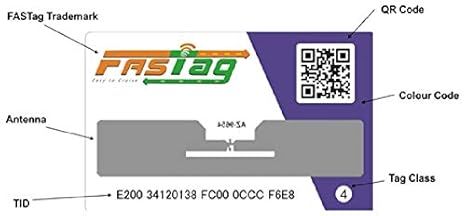
    • FASTags are stickers that are affixed to the windscreen of vehicles and use Radio Frequency Identification (RFID) technology to enable digital, contactless payment of tolls without having to stop at toll gates.
    • The tags are linked to bank accounts and other payment methods.
    • As a car crosses a toll plaza, the amount is automatically deducted, and a notification is sent to the registered mobile phone number.

    How does it work?

    • The device employs Radio Frequency Identification (RFID) technology for payments directly from the prepaid or savings account linked to it.
    • It is affixed on the windscreen, so the vehicle can drive through plazas without stopping.
    • RFID technology is similar to that used in transport access-control systems, like Metro smart card.
    • If the tag is linked to a prepaid account like a wallet or a debit/credit card, then owners need to recharge/top up the tag.
    • If it is linked to a savings account, then money will get deducted automatically after the balance goes below a pre-defined threshold.
    • Once a vehicle crosses the toll, the owner will get an SMS alert on the deduction. In that, it is like a prepaid e-wallet.

    Must read:

    [Burning Issue] Implementation of FASTags

  • Primary and Secondary Education – RTE, Education Policy, SEQI, RMSA, Committee Reports, etc.

    Sharpening educational divide

    The article highlights the issue of the decrease in allocation for education and two ways in which the government seeks to plug this gap.

    Decrease in allocation to education: Two paradoxical axes

    • The government allocated Rs 6,000 crore less on education in Budget 2021 as compared to last year.
    • It’s strange that this year’s budget makes no reference to the pandemic and the multiple challenges it has thrown up for the poor.
    • Parents who depend on the lowest rung of free government schools are the ones who need maximum state support.
    • More recently, the state’s position with regard to the provision of education in general and budgetary allocations to education in particular hinges on two paradoxical axes.

    1) Supporting community volunteer

    • On one axis, is its appreciation of the commitment and passion of the community volunteers to reach out to children who may not be learning for multiple reasons.
    • Acknowledging the contribution of such people, the NEP proposes ideas of “peer-tutoring and trained volunteers” to support teachers to impart foundational literacy and numeracy skills to children in need of such skills.
    • While such efforts need to be applauded, they cannot be regarded as substitutes of the formal state apparatus.
    • Such a view also de-legitimises the teaching profession-associated qualifications and the training mandated by the state for people to become teachers.
    • Salaries and working conditions of the local community, most of whom are unemployed youth and women, are often compromised.
    • This is exploitation and needless to say, it also impacts the quality of education for the poor.

    2) Public-Private partnership and issues with it

    • On the second axis, is the position advocating partnerships between public and private bodies.
    • Not that the involvement of private individuals/organisations/schools in education is anything new in India.
    • However, in the past, private schools catered to the relatively better-off but now the poor are being targeted for profit.
    • This narrative is based on two sources: Poor learning outcomes of children, particularly those studying in government schools as reported by large scale assessment surveys, and large-scale absenteeism/dereliction of duty on the part of government school teachers.
    • Reasons for these are attributed to government school teachers having no accountability.
    • NEP 2020 also states that the non-governmental philanthropic organisations will be supported to build schools and alternative models of education will be encouraged by making their requirements for schools as mandated in the RTE less restrictive.
    • This is clearly problematic but convenient as the justification underlying this position is that one needs to shift focus from inputs to outputs.
    • This also indicate that schools can do with lesser financial resources, and compromised inputs may not necessarily lead to compromised outputs.
    • The nature of the partnership between public and private has also changed from the private supporting the public to private jostling for space with the public, even replacing them.
    • It’s a win-win situation for both — the state gets to spend less and private players make profit.

    Consider the question “Examine the impact of a covid pandemic on the education of the poor. Suggest the measure need to be taken by the government to mitigate the impact.”

    Conclusion

    While money may not ensure quality education, lack of adequate resources will only deepen the social divide between people.

  • Disasters and Disaster Management – Sendai Framework, Floods, Cyclones, etc.

    Cost of development in the fragile mountains

    The article explains the relationship between development activities in Uttarakhand and the devastating floods.

    Cause of recent flash flood in Uttarakhand

    • According to Planet Labs, ice along with frozen mud and rocks fell down from a high mountain inside the Nanda Devi Sanctuary, from a height of 5,600 m to 3,300 m.
    • This created an artificial lake within the sanctuary in Rontigad, a tributary of Rishi Ganga.
    • Within eight hours, this lake burst open and its water, laden with mud and stones, rushed through the Rishi Ganga gorge which opens near Reni.
    • Studies say that the current winter season has seen little rain and snow, with temperatures being highest in the last six decades.
    •  So, the effects of chemical weathering were much more active in the higher Himalayas.
    •  There is a possibility of more such events this year.

    Factors responsible

    1) Development with no regard for the environment

    • As a mountain system, the Himalayas have had earthquakes, avalanches, landslides, soil erosion, forest fires and floods, and these are its natural expressions, parts of its being.
    • Except for earthquakes, humans have directly contributed towards aggravating all the other phenomena.
    • The Ravi Chopra committee formed by the SC recommended closure of all the 24 hydro projects in question by Wildlife Institute of India.
    • The SC also formed another committee to look at the impact of the Chaardham road project.
    • Road and hydro projects are being operated in the Himalayas with practically no rigorous research on the ecological history of the area, cost-benefit analysis and many other aspects including displacement of communities, destruction of biodiversity, agricultural land, pastures as well as the cultural heritage of the area.

    Dilution of Environmental Impact Assessment rules

    • Earlier, while independent experts carried out the Environmental Impact Assessment (EIA), today it is assigned to a government agency, which does the work for other government departments.
    • Furthermore, during the lockdown, the government changed the EIA rules and diluted labour laws (most of the workers in both the affected projects belong to unorganised sector) in the name of pandemic measures.

    2) Climate change

    • Another factor which cannot be overlooked is that of climate change.
    • Studies have suggested that the pace of this change is faster in mountains and fastest in the Himalayas.
    • While earthquakes and weathering work at their own pace, climate change can contribute towards altering their natural speed.

    Need for studying the 2013 calamity

    •  We can look back at the terrible calamity of 2013, and see how it washed away the encroachments in river areas-dams, barrages, tunnels, buildings, roads.
    • The communities paid a much heavier price than what they received in compensation.
    • Further, the 2013 calamity has to be studied and understood in all the other regions and river valleys of Uttarakhand, Western Nepal and Himachal.
    • It was not specific to Kedarnath, although much of the focus was directed there.
    • Till date, we don’t have any white paper on this calamity.
    • The India Meteorological Department failed in its prediction and wrongly announced at the end of the first week of June that the monsoon will reach Uttarakhand by June 27-28.
    • It reached on June 16-17 with 300-400 per cent more rain, a record never heard of before.
    •  24 big and small hydro projects were destroyed.
    • The muck created by these projects was also the cause of their destruction.
    • The road debris, always dumped in rivers, was another cause.
    • The smaller rivers were more aggressive in 2013.

    Consider the question “What are the factors responsible for the devastating floods in the Uttarakhand? Suggest the measures for disaster mitigation.”

    Conclusion

    The Himalayas have been giving us life through water, fertile soil, biodiversity, wilderness and a feel of spirituality. We cannot and should not try to control or dictate the Himalayas.

  • Animal Husbandry, Dairy & Fisheries Sector – Pashudhan Sanjivani, E- Pashudhan Haat, etc

    Farakka ‘lock’ and Hilsa Fish

    It has been reported that an old project to facilitate the movement of Hilsa upstream along the Ganga to its spawning grounds of yore may come to fruition this year.

    What is the news?

    • Back in February 2019, the government had unveiled a project to redesign the navigation lock at the Farakka Barrage at a cost of Rs 360 crore to create a “fish pass” for the Hilsa.

    Hilsa Fish

    • In scientific parlance, the Hilsa (Tenualosa ilisha) is an anadromous fish.
    • It lives most of its life in the ocean, but during the rainy season, the Hilsa moves towards the estuary, where the rivers of India and Bangladesh meet the Bay of Bengal.
    • A large part of the shoal travels upstream in the Padma and the Ganga — some are known to move towards the Godavari, and there are records of Hilsa migration to the Cauvery.
    • Culinary lore has it that the fish that travel the farthest upstream have the best combination of the flavours of the sea and the river.

    Try this question from CSP 2019:

    Q. Consider the following pairs:

    Wildlife Naturally found in
    1. Blue-finned Mahseer Cauvery River
    2. Irrawaddy Dolphin Chambal River
    3. Rusty-spotted Cat Eastern Ghats

    Which of the pairs given above are correctly matched?

    a) 1 and 2 only

    b) 2 and 3 only

    c) 1 and 3 only

    d) 1, 2 and 3

    Obstructions created by Farakka Barrage

    • Historical records also show that until the 1970s, the Hilsa would swim the Ganga upstream to Allahabad — and even to Agra.
    • But the Farakka Barrage, which became operational on the Ganga in 1975, disrupted the westward movement of the Hilsa.
    • The barrage had a navigation lock that stopped the fish from swimming upstream beyond Farakka.
    • In Buxar on the border of Bihar and Uttar Pradesh, the last recorded catch of the Hilsa was made 32 years ago.
    • The role of the Farakka Barrage in disrupting the Hilsa’s journey is well documented and has been discussed in Parliament as well.
    • On August 4, 2016, then Union Water Resources Minister told Lok Sabha about plans to create “fish ladders” to help the fish navigate the obstacle posed by the barrage.

    Fish ladders/fishways/fish passes

    • Fish passes — also known as fish ladders or fishways — aim to assist fish in crossing obstacles presented by dams and barrages.
    • They usually consist of small steps that allow the fish to climb over the obstacles and enable them to reach the open waters on the other side.
  • Mother and Child Health – Immunization Program, BPBB, PMJSY, PMMSY, etc.

    [pib] National Creche Scheme

    The Union Minister of Women and Child Development have given information about the National Creche Scheme to the Lok Sabha.

    Try this PYQ:

    Q.Which of the following statements is/are correct regarding the Maternity Benefit (Amendment) Act, 2017?

    1. Pregnant women are entitled to three months pre-delivery and three months post-delivery paid leave.
    2. Enterprises with creches must allow the mother a minimum of six crèche visits daily.
    3. Women with two children get reduced entitlements.

    Select the correct answer using the code given below.

    (a) 1 and 2 only

    (b) 2 only

    (c) 3 only

    (d) 1, 2 and 3

    National Creche Scheme

    • The Ministry of WCD implements the NCS for the children of working mothers as a Centrally Sponsored Scheme through States/ UTs with effect from 01.01.2017.
    • It aims to provide daycare facilities to children (age group of 6 months to 6 years) of working mothers.

    The Scheme provides an integrated package of the following services:

    • Daycare facilities including sleeping facilities.
    • Early stimulation for children below 3 years and pre-school education for 3 to 6 years old children
    • Supplementary nutrition (to be locally sourced)
    • Growth monitoring
    • Health check-up and immunization
  • Modern Indian History-Events and Personalities

    [pib] Swami Dayanand Saraswati

    Information and Broadcasting Minister paid his tributes to Swami Dayanand Saraswati on his birth anniversary.

    Dayanand Saraswati (1824-1883)

    • Swami Dayanand Saraswati was a philosopher, social leader and founder of the Arya Samaj, a reform movement of the Vedic dharma.
    • He was the first to give the call for Swaraj as “India for Indians” in 1876, a call later taken up by Lokmanya Tilak.
    • Denouncing the idolatry and ritualistic worship, he worked towards reviving Vedic ideologies.
    • Subsequently, the philosopher and then President, S. Radhakrishnan called him one of the “makers of Modern India”, as did Sri Aurobindo.

    Try this PYQ:

    Q.Which among the following event happened earliest?

    (a) Swami Dayanand established Arya Samaj

    (b) Dinabandhu Mitra wrote Neeldarpan

    (c) Bankim Chandra Chattopadhyay wrote Anandmath

    (d) Satyendranath Tagore became the first India to succeed in the Indian Civil Services Examination

    His influence

    • Those who were influenced by and followed him included Madam Cama, Shyamji Krishna Varma, Kishan Singh, Bhagat Singh, VD Savarkar, Bhai Parmanand, Lala Hardayal, Madan Lal Dhingra, Ram Prasad Bismil, MG Ranade, Ashfaq Ullah Khan, , Lala Lajpat Rai etc.

    Philosophy

    • He was ascetic from boyhood and a scholar.
    • He believed in the infallible authority of the Vedas.
    • He advocated the doctrine of Karma and Reincarnation.
    • He emphasized the Vedic ideals of Brahmacharya, including celibacy and devotion to God.

    His contribution

    • Among Dayananda’s contributions were his promoting of the equal rights for women, such as the right to education and reading of Indian scriptures.
    • He wrote his commentary on the Vedas from Vedic Sanskrit in Sanskrit as well as in Hindi.
  • Child Rights – POSCO, Child Labour Laws, NAPC, etc.

    [pib] Child Beggars and their protection

    The Union Minister of Women and Child Development has given important information regarding the protection of child beggars in India under various acts and ministries.

    Q.What are the various legislatures aimed at protecting Child Beggars in India? Discuss their efficacy in the prevention of child begging as well as abuse.

    Protection of Child Beggars

    (A) JJ Act, 2015

    • The Juvenile Justice (Care and Protection of Children) Act, 2015 (JJ Act) is the primary law for children in the country.
    • The Section 2 (14) (ii) of the Act, 2015, considers a child being in force or is found begging, or living on the street as a “child in need of care and protection”.
    • As per Section 76 of JJ Act, whoever employs or uses any child for the purpose of begging or causes any child to beg shall be punishable with imprisonment.
    • The Act provides a security net of service delivery structures along with measures for institutional and non-institutional care, to ensure the comprehensive well being of children in distress situations.
    • The primary responsibility of execution of the Act rests with the States/UTs.

    (B) Child Protection Services (CPS)

    • The Ministry implements a centrally sponsored scheme CPS under the umbrella Integrated Child Development Services scheme.
    • It supports the children in difficult circumstances including child beggars and destitute children.
    • Under the scheme, institutional care is provided through Child Care Institutions (CCIs), as a rehabilitative measure.
    • The programmes and activities in CCIs inter-alia include age-appropriate education, access to vocational training, recreation, health care, counselling etc.
    • The scheme supports 24×7 emergency outreach/ helpline service for children in distress conditions.
    • The service is accessible through a dedicated toll-free number, 1098 from anywhere in India.

    (C) Rehabilitation measures

    • The Ministry of Social Justice and Empowerment, has undertaken a pilot project for Comprehensive Rehabilitation of Persons engaged in the act of begging.
    • It is currently held in ten (10) cities; namely Delhi, Mumbai, Chennai, Ahmadabad, Hyderabad, Bangalore, Lucknow, Patna, Nagpur and Indore.
    • The initiative aims for identification, rehabilitation, counselling, skill development of beggars.
    • It includes education of children engaged in begging/children of persons engaged in the begging.

    The children of today are assets of tomorrow. Yet education, which is a fundamental right to every child in our country, is still a dream for many children in India, especially the ones who are poor, downtrodden and in dire need.

Join the Community

Join us across Social Media platforms.