💥UPSC 2026, 2027, 2028 UAP Mentorship (March Batch) + Access XFactor Notes & Microthemes PDF

Archives: News

  • Climate Change Negotiations – UNFCCC, COP, Other Conventions and Protocols

    Five years of Paris Agreement

     Climate Ambition Summit was held on the 5th anniversary of the Paris Agreement. The article takes stock of the progress made on climate action in the last 5 years.

    The Paris Agreement

    • The Paris Agreement is a legally binding international treaty on climate change. It was adopted by 196 Parties at COP 21 in Paris, on 12 December 2015 and entered into force on 4 November 2016.
    • Its goal is to limit global warming to well below 2, preferably to 1.5 degrees Celsius, compared to pre-industrial levels.
    • To achieve this long-term temperature goal, countries aim to reach global peaking of greenhouse gas emissions as soon as possible to achieve a climate-neutral world by mid-century.
    • It is a landmark process because, for the first time, a binding agreement brings all nations into a common cause to undertake ambitious efforts to combat climate change and adapt to its effects.

    How does it function?

    • Implementation of the Paris Agreement requires economic and social transformation, based on the best available science.
    • The Agreement works on a 5- year cycle of increasingly ambitious climate action carried out by countries.
    • By 2020, countries submit their plans for climate action known as nationally determined contributions (NDCs).

    NDCs

    • In their NDCs, countries communicate actions they will take to reduce their Greenhouse Gas emissions in order to reach the goals of the Paris Agreement.
    • Countries also communicate in the NDCs actions they will take to build resilience to adapt to the impacts of rising temperatures.

    Long-Term Strategies

    • To better frame the efforts towards the long-term goal, the Paris Agreement invites countries to formulate and submit by 2020 long-term low greenhouse gas emission development strategies (LT-LEDS).
    • LT-LEDS provide the long-term horizon to the NDCs. Unlike NDCs, they are not mandatory.
    • Nevertheless, they place the NDCs into the context of countries’ long-term planning and development priorities, providing a vision and direction for future development.

    Progress made after 5 years

    • All states have submitted their national contributions to mitigate and adapt to climate change.
    • However, these contributions are radically insufficient to reach the “well below 2 degrees Celsius” limit and are even further from the “1.5 degrees Celsius” temperature limit identified in the Paris Agreement.
    • This initial shortfall was expected — the logic of the Paris Agreement relied on iterative scaling up of national targets over time to bridge the gap.

    Are countries scaling up the targets

    • Although 151 states have indicated that they will submit stronger targets before December 31, only 13 of them, covering 2.4 per cent of global emissions, have submitted such targets.
    • While states have been slow to update their national contributions for 2025-2030, several have announced “net zero” targets in the recent past.
    • All G-7 states except the US and 11 G20 members have mid-century (2050 or 2060) net zero targets -carbon dioxide or other GHGs.
    • The Joe Biden administration is also expected to join this group.

    Issues in Net Zero targets

    1) Credibility of the commitments

    • First, the credibility check — are these long-term net zero goals aligned with short-term actions, policies and measures?
    • The IPCC 1.5 degrees Celsius Report indicated that to stay within a reasonable chance of achieving 1.5 degrees Celsius, global carbon dioxide emissions have to fall by 45 per cent from the 2010 levels by 2030.
    • Current national contributions are not on track for such a fall.
    • For many there is a mismatch between short-term actions and long-term commitments.
    • Further, there is a significant “overshoot” in terms of GHGs in the short and medium-term, and a reliance on negative emissions technologies to get there in the long-term.

    2) Fixing accountability

    • Many net zero goals have not yet been embedded in national contributions and long-term strategies under the Paris Agreement.
    • In any case, accountability under the Paris Agreement is limited. States are not obliged to achieve their self-selected targets.
    • There is no mechanism to review the adequacy of individual contributions.
    • States are only asked to provide justifications for the fairness and ambition of their targets.
    • The transparency framework does not contain a robust review function, and the compliance committee is facilitative and limited to ensuring compliance with a short list of binding procedural obligations.
    • Accountability, therefore, has thus far been generated by non-state actors outside the UN regime rather than in the regime.

    3) Fairness of climate action

    •  The issue of equity and fairness, side-stepped in the Paris Agreement, is emerging in climate litigation before national and regional courts.
    • In the landmark Urgenda case (2019), the Dutch Supreme court considered “fair shares” when identifying benchmarks against which the Netherland’s national effort could be judged in the context of a collective action problem.
    • Issues of fairness and justice, both between and within generations, are “unavoidable”.

    India’s commitment

    In 2015, ahead of the UN significant climate conference in Paris, India announced three major voluntary commitments called the Nationally Determined Contributions (NDC):

    1. Improving the emissions intensity of its GDP by 33–35% by 2030 over 2005 levels
    2. Increasing the share of non-fossil fuels-based electricity to 40% by 2030 and
    3. Enhancing its forest cover, thereby absorbing 2.5 to 3 billion tonnes of carbon dioxide

    A success (?)

    • The Environment Minister said that we have achieved 21% of its emissions intensity reduction target as a proportion of its GDP in line with its pledge to a 33-35% reduction by 2030.
    • India was the only major G20 country that was on track towards keeping to its nationally determined commitments to halt runaway global warming.

    Conclusion

    Credible short-term commitments, with a clear pathway to medium-term decarbonisation, that take into account the multiple challenges states face, such as on air pollution, and development, might well be the more defensible choice for some.

  • Climate Change Negotiations – UNFCCC, COP, Other Conventions and Protocols

    India’s Commitment for Paris Agreement

    This week marks the fifth anniversary of the Paris Agreement, where formidable climate diplomacy ushered 196 rich and poor countries into a legally binding treaty seeking to hold global heating below 2°C at this century’s end.

    Try this PYQ first, then head with the news:

    Q.With reference to the Agreement at the UNFCCC Meeting in Paris in 2015, which of the following statements is/are correct?

    1.    The Agreement was signed by all the member countries of the UN and it will go into effect in 2017.
    2.    The Agreement aims to limit the greenhouse gas emissions so that the rise in average global temperature by the end of this century does not exceed 20C or even 1.50C above pre-industrial levels.
    3.    Developed countries acknowledged their historical responsibility in global warming and committed to donate S 1000 billion a year from 2020 to help developing countries to cope with climate change.

    Select the correct answer using the code given below.

    (a)    1 and 3 only

    (b)    2 only

    (c)    2 and 3 only

    (d)    1, 2 and 3

    The Paris Agreement

    • The Paris Agreement is a legally binding international treaty on climate change. It was adopted by 196 Parties at COP 21 in Paris, on 12 December 2015 and entered into force on 4 November 2016.
    • Its goal is to limit global warming to well below 2, preferably to 1.5 degrees Celsius, compared to pre-industrial levels.
    • To achieve this long-term temperature goal, countries aim to reach global peaking of greenhouse gas emissions as soon as possible to achieve a climate-neutral world by mid-century.
    • It is a landmark process because, for the first time, a binding agreement brings all nations into a common cause to undertake ambitious efforts to combat climate change and adapt to its effects.

    How does it function?

    • Implementation of the Paris Agreement requires economic and social transformation, based on the best available science.
    • The Agreement works on a 5- year cycle of increasingly ambitious climate action carried out by countries.
    • By 2020, countries submit their plans for climate action known as nationally determined contributions (NDCs).

    NDCs

    • In their NDCs, countries communicate actions they will take to reduce their Greenhouse Gas emissions in order to reach the goals of the Paris Agreement.
    • Countries also communicate in the NDCs actions they will take to build resilience to adapt to the impacts of rising temperatures.

    Long-Term Strategies

    • To better frame the efforts towards the long-term goal, the Paris Agreement invites countries to formulate and submit by 2020 long-term low greenhouse gas emission development strategies (LT-LEDS).
    • LT-LEDS provide the long-term horizon to the NDCs. Unlike NDCs, they are not mandatory.
    • Nevertheless, they place the NDCs into the context of countries’ long-term planning and development priorities, providing a vision and direction for future development.

    India’s commitment

    In 2015, ahead of the UN significant climate conference in Paris, India announced three major voluntary commitments called the Nationally Determined Contributions (NDC):

    1. Improving the emissions intensity of its GDP by 33–35% by 2030 over 2005 levels
    2. Increasing the share of non-fossil fuels-based electricity to 40% by 2030 and
    3. Enhancing its forest cover, thereby absorbing 2.5 to 3 billion tonnes of carbon dioxide

    A success (?)

    • The Environment Minister said that we have achieved 21% of its emissions intensity reduction target as a proportion of its GDP in line with its pledge to a 33-35% reduction by 2030.
    • India was the only major G20 country that was on track towards keeping to its nationally determined commitments to halt runaway global warming.
  • Monsoon Updates

    What are Rossby Waves?

    Droughts in India have historically been associated with El Nino, anomalous warming of the equatorial Pacific, but Indian scientists have found some relevance in Rossby Waves.

    Q.The determinants of Indian Monsoon are no more limited to the Pacific and the Indian Ocean. Discuss.

    El-Nino alone do not cause drought

    • The study says that nearly six out of 10 droughts, in non-El Nino years occurred during the Indian summer-monsoon season in the past century.
    • They may have been driven by atmospheric disturbances from the North Atlantic region.
    • In an El Niño year, abnormally warm equatorial Pacific waters pull moisture-laden clouds away from the subcontinent.
    • But the IISc Bangalore study shows that in non-El Nino years, these droughts are a consequence of a sudden and steep drop in rainfall in late August.

    Then, how were droughts induced?

    • In an El Nino year, the rainfall deficit departure from a long-term average set in early around mid-June and progressively worsen.
    • Researchers tried to trace this drought back to a forcing agent or system that influences the behaviour over India.
    • They found, the winds that were prevalent in these non-El Niño drought years.

    Another factor: The Rossby Waves

    • The researchers noted that winds in the upper atmosphere are interacting with a deep cyclonic circulation above the abnormally cold North Atlantic waters.
    • The resulting wave of air currents called a Rossby wave, curved down from the North Atlantic squeezed in by the Tibetan plateau and hits the subcontinent around mid-August.
    • This has a suppressing effect on rainfall and throws off the monsoon that was trying to recover from the June slump.

    Now scratch your basics on Planetary Winds. “Go back to the NCERTs !”

    What are Rossby Waves?

    • They are giant meanders in high-altitude winds that have a major influence on the weather.
    • They are influenced by the Coriolis force and pressure gradient.
    • The wave’s usual course is to go from west to east, but not towards the equator.

    Points to be noted ……

    • The Indian Ocean and the Pacific Ocean seem to be at the forefront of all discussions surrounding Indian monsoon droughts.
    • Thus beyond looking at the Pacific Ocean it is important to consider other influences on the Indian monsoon from outside the tropics.
    • It is perhaps time to focus just as much on mid-latitude influences, which might aid in getting a better handle on enhanced predictability of monsoon variability.

  • Finance Commission – Issues related to devolution of resources

    N.K. Singh calls for a fresh look at the Seventh Schedule

    Fifteenth Finance Commission chairman N.K. Singh has called for a fresh look at the Constitution’s Seventh Schedule, which forms the basis for allocating subjects to the Centre and States.

    Try this PYQ:

    Q.Which of the following provisions of the Constitution of India have a bearing on Education?

    1. Directive Principles of State Policy
    2. Rural and Urban Local Bodies
    3. Fifth Schedule
    4. Sixth Schedule
    5. Seventh Schedule

    Select the correct answer using the codes given below:

    (a) 1 and 2 only

    (b) 3, 4 and 5 only

    (c) 1, 2 and 5 only

    (d) 1, 2, 3 4 and 5

    Why such calls by Mr NKS?

    • Singh said these issues needed urgent consideration to reinforce trust in fiscal federalism.
    • He urged a review of both the Seventh Schedule and Article 282 of the Constitution so as to give more flexibility to States in implementing centrally sponsored schemes.
    • Many have argued that the trust between various forms of government is waning.
    • Since the farmers’ agitation, these are seen through the prism of suspicion and mistrust.

    Q. The federal organisation of powers under the Constitution’s Seventh Schedule needs review. In light of this, examine the problems faced by the distribution and suggest the challenge the review would face.

    What is the Seventh Schedule?

    • This Schedule of the Indian Constitution deals with the division of powers between the Union government and State governments.
    • It defines and specifies the allocation of powers and functions between Union & States. It contains three lists; i.e. 1) Union List, 2) State List and 3) Concurrent List.

    The Union List

    • It is a list of 98 (Originally 97) numbered items as provided in the Seventh Schedule.
    • The Union Government or Parliament of India has exclusive power to legislate on matters relating to these items.

    The State List

    • It is a list of 59 (Originally 66) items.
    • The respective state governments have exclusive power to legislate on matters relating to these items.

    The Concurrent List

    • There are 52 (Originally 47) items currently in the list.
    • This includes items which are under the joint domain of the Union as well as the respective States.
  • Wildlife Conservation Efforts

    Voluntary Disclosure of Exotic Pets

    Last month, the Supreme Court upheld an Allahabad High Court order granting immunity from investigation and prosecution if one declared illegal acquisition or possession of exotic wildlife species.

    Q.What are Zoonotic Diseases? Discuss how the illicit trade in wildlife has resulted in the spread of zoonotic diseases of the scale of the ongoing COVID-19?

    Voluntary disclosure scheme

    • The MoEFCC has come out with an advisory on a one-time voluntary disclosure amnesty scheme.
    • It allows owners of exotic live species that have been acquired illegally, or without documents, to declare their stock to the government between June and December 2020.
    • The scheme aims to address the challenge of zoonotic diseases and regulate their import. In its current form, however.
    • It shall develop an inventory of exotic live species for better compliance under the Convention on International Trade in Endangered Species of Wild Fauna and Flora (CITES).
    • However, the amnesty scheme is just an advisory, not a law

    What kind of exotic wildlife is covered?

    • The advisory has defined exotic live species as animals named under the Appendices I, II and III of the CITES.
    • It does not include species from the Schedules of the Wild Life (Protection) Act 1972.
    • So, a plain reading of the advisory excludes exotic birds from the amnesty scheme.

    Why need such a scheme?

    • The Directorate of Revenue Intelligence (DRI), which enforces anti-smuggling laws, says India has emerged as a big demand centre for exotic birds and animals.
    • There has been an increase in smuggling of endangered species from different parts of the world.
    • Most of these exotic wildlife is imported through Illegal channels and then sold in the domestic market as pets.
    • The long international border and air routes are used to source consignments from Bangkok, Malaysia and other top tourist destinations in South East Asia, as well as from Europe into India.

    Back2Basics: CITES

    • CITES stands for the Convention on International Trade in Endangered Species of Wild Fauna and Flora.
    • It is as an international agreement aimed at ensuring “that international trade in specimens of wild animals and plants does not threaten their survival”.
    • It was drafted after a resolution was adopted at a meeting of the members of the International Union for Conservation of Nature (IUCN) in 1963.
    • It entered into force on July 1, 1975, and now has 183 parties.
    • The Convention is legally binding on the Parties in the sense that they are committed to implementing it; however, it does not take the place of national laws.
    • India is a signatory to and has also ratified CITES convention in 1976.

    CITES Appendices

    • CITES works by subjecting international trade in specimens of selected species to certain controls.
    • All import, export, re-exports and introduction from the sea of species covered by the convention has to be authorized through a licensing system. It has three appendices:
    1. Appendix I includes species threatened with extinction. Trade-in specimens of these species are permitted only in exceptional circumstances.
    2. Appendix II provides a lower level of protection.
    3. Appendix III contains species that are protected in at least one country, which has asked other CITES Parties for assistance in controlling trade.
  • Innovations in Sciences, IT, Computers, Robotics and Nanotechnology

    Quantum Key Distribution (QKD) Technology

    The Defence Research and Development Organisation (DRDO) has successfully demonstrated communication between its two labs using Quantum Key Distribution (QKD) technology.

    Q. What is Quantum Key Distribution (QKD) Technology? Discuss how it enables secure communication networks. (150W)

    What is QKD Technology?

    • Quantum key distribution (QKD) is a secure communication method which implements a cryptographic protocol involving components of quantum mechanics.
    • It enables two parties to produce a shared random secret key known only to them, which can then be used to encrypt and decrypt messages.
    • It gives the ability of the two communicating users to detect the presence of any third party trying to gain knowledge of the key.
    • This is a result of a fundamental aspect of quantum mechanics: the process of measuring a quantum system, in general, disturbs the system.
    • By using quantum superposition or quantum entanglement and transmitting information in quantum states, a communication system can be implemented that detects data leak.

    How does it work?

    • In the QKD, encryption keys are sent as qubits in a fibre optic cable. Time-bin encoding is used to encode qubit on a photon.
    • Quantum computing uses qubits as basic resources, similar to how bits are used as basic resources in classical computing.
    • The QKD is designed in a way that if an illegitimate entity tries to read the transmission, it will disturb the qubits – which are encoded on photons.
    • This will generate transmission errors, leading to legitimate end-users being immediately informed.

    Advantages of using QKD

    • It allows the detection of data leak or hacking because it can detect any such attempt.
    • It also allows the process of setting the error level between the intercepted data in dependence.
  • Innovations in Biotechnology and Medical Sciences

    Plasmodium Ovale and Other types of Malaria

    A not very common type of malaria, Plasmodium Ovale, has been identified in a jawan in Kerala.

    Try this PYQ:

    Q. Widespread resistance of malarial parasite to drugs like chloroquine has prompted attempts to develop a malarial vaccine to combat malaria.

    Why is it difficult to develop an effective malaria vaccine?

    (a) Malaria is caused by several species of Plasmodium

    (b) Man does not develop immunity to malaria during natural infection

    (c) Vaccines can be developed only against bacteria

    (d) Man is only an intermediate host and not the definitive host

    What is Malaria?

    • Malaria is caused by the bite of the female Anopheles mosquito if the mosquito itself is infected with a malarial parasite.
    • There are five kinds of malarial parasites — Plasmodium falciparum, Plasmodium vivax (the commonest ones), Plasmodium malariae, Plasmodium ovale and Plasmodium knowlesi.
    • Therefore, to say that someone has contracted the Plasmodium ovale type of malaria means that the person has been infected by that particular parasite.
    • Malaria is treated with prescription drugs to kill the parasite. Chloroquine is the preferred treatment for any parasite that is sensitive to the drug.

    Plasmodium Ovale

    • P ovale rarely causes severe illness and there is no need for panic.
    • Symptoms include fever for 48 hours, headache and nausea, and the treatment modality is the same as it is for a person infected with P vivax.
    • P ovale is no more dangerous than getting a viral infection.
    • It is termed ovale as about 20% of the parasitised cells are oval in shape.

    Burden of Malaria in India

    • In 2018, the National Vector-borne Disease Control Programme (NVBDCP) estimated that approximately 5 lakh people suffered from malaria.
    • 63% of the cases were of Plasmodium falciparum.
    • The recent World Malaria Report 2020 said cases in India dropped from about 20 million in 2000 to about 5.6 million in 2019.
  • Electoral Reforms In India

    Digital Voter ID Card and its benefits

    The Election Commission (EC) is keen to make the Elector’s Photo Identity Card or EPIC available in electronic form.

    Try this PYQ:

    Q.Regarding DigiLocker, sometimes seen in the news, which of the following statements is/are correct?

    1. It is a digital locker system offered by the Government under Digital India Programme.
    2. It allows you to access your e-documents irrespective of your physical location.

    Select the correct answer using the code given below.

    (a) 1 only

    (b) 2 only

    (c) Both 1 and 2

    (d) Neither 1 nor 2

    Digital Voter ID Card

    • The digital voter card is not expected to look too different from its physical form.
    • It will be available as a PDF file and can be downloaded on one’s phone or computer.
    • The soft copy may also have a QR code that will carry the voter’s enrolment details such as name and date of birth and address.
    • This is still just a proposal and needs to be approved by the Election Commission.

    How to avail it?

    • To avail this facility, an eligible voter will have to provide her mobile number or email address to the EC machinery at the time of applying for enrolment in the voters’ list.
    • Once her name is included in the electoral roll, she will be intimated through an SMS or email.
    • The new voter can then download the Voter Card through OTP (One Time Password) authentication.
    • Existing voters may have to re-verify their details with the EC (similar to the Bank KYC process) and provide their email or mobile phone number to get their cards in the electronic form.

    Benefits offered

    • An electronic card will help the EC save costs on printing and distributing a hard copy of EPIC.
    • The EC feels that voters too will find it useful to have the PDF file of her voter card on her phone.
    • This will do away with the necessity of first producing a voter’s slip on the day of voting.
  • Renewable Energy – Wind, Tidal, Geothermal, etc.

    Renewable Energy Generation: Betting on the green power market

    The article takes stock of the progress India made on renewable energy capacity and the steps taken for its trade through the creation of green markets.

    India increasing share of renewable energy

    • As a signatory to the Paris Climate Agreement, India is committed to increasing its share of renewable energy capacity to 450 GW by 2030.
    • India has an installed renewable energy capacity of 89 GW.
    • India has today become the most attractive destination for investment in the renewable sector.
    • During the last six years, has attracted over Rs 4.7 lakh crore of investment, including FDI of about Rs 42,700 crore.
    • India witnessed 20% CAGR growth in the renewable generation since FY16 while total electricity generation saw 4.3% growth in the same period.
    • The current levelised cost of energy (LCOE) for large scale solar in India is around Rs 2.5 per kWh, compared to ~Rs 12 in 2010. 

    Factor’s responsible

    • Waiver of inter-state transmission charges for the sale of solar and wind power, the renewable purchase obligation (RPO) trajectories for states, focus on maintaining the sanctity of contracts, permitting FDI in the renewable sector have accelerated the progress.

    Trading in renewable power

    • Most renewable power generation companies in India are committed to selling their power to consumers—mostly discoms  under the long-term Power Purchase Agreements (PPAs).
    • It is also a matter of gratification that most generation companies have adopted a robust system of forecasting and scheduling of power.
    • It is in this context, the CERC was approached for creating a market for green energy.
    • Ultimately, the CERC approved trading of renewable energy contracts under Green Term Ahead Market (GTAM) on the energy exchange.
    • The green market commenced trade on August 21, in day-ahead contingency (DAC) and intra-day contracts in both solar and non-solar segments.
    • The green market has now launched two more options—daily and weekly.
    • This will further strengthen the market and allow participants to buy green energy through contracts available for trade in all the segments.
    • The energy will be delivered to the market participants leveraging the national, regional and state-level transmission and distribution network.
    • With robust value proposition such as transparency, competitive prices, flexibility, and payment security and financial savings that the exchange market offers, a pan-India green market has the potential to drive and facilitate the country to meet its renewable energy targets.
    • The green market will ultimately encourage green generators to adopt multiple models of sale and trading.

    Conclusion

    Going forward, the introduction of new segments such as green day-ahead market, long-duration green contracts, contract for difference (CfD), etc, will play a crucial role in furthering sustainability goals, and ensuring that all the renewable energy generated within the country is dispatched in the most efficient manner through a pan India wide exchange-based energy markets.


    Source:-

    https://www.financialexpress.com/opinion/renewable-energy-generation-betting-on-the-green-power-market/2147657/

  • The Crisis In The Middle East

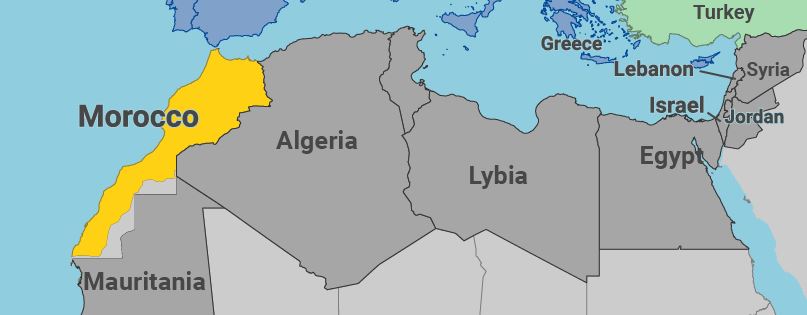
    Morocco to normalize ties with Israel

    Morocco has become the fourth Arab nation this year to recognise Israel after interventions by the US.

    Must read:

    Israel and Morocco

    • After the United Arab Emirates, Bahrain and Sudan, Morocco is the fourth Arab State since August to commit to establishing diplomatic relations with the Jewish State.
    • Morocco and Israel had respectively maintained liaison offices in Tel Aviv and Rabat in the 1990s, before closing them in 2000.
    • Israeli PM Netanyahu anticipated direct flights between the two countries soon.
    • Palestinian officials condemned the agreement, saying it encouraged Israel’s denial of their rights.

    For the sake of Western Sahara

    • The White House said the US would recognise Morocco’s claim over Western Sahara as part of the deal with Israel.
    • The US recognised Moroccan sovereignty over the entire Western Sahara territory.
    • A former Spanish colony, it was annexed by Morocco in 1975.
    • Since then it has been the subject of a long-running territorial dispute between Morocco and its indigenous Saharawi people.
    • Morocco says it has always been part of its territory, while the African Union recognizes it as an independent state.
    • A 16-year-long insurgency ended with an UN-brokered truce in 1991 and the promise of a referendum on independence, which has yet to take place.

    Ground realities

    • The latest move by the Trump administration will not necessarily have an immediate impact on the ground because the dispute is seen as greater than the whims of the American president.
    • However, Trump’s backing of Morocco’s claim to sovereignty over Western Sahara is a big deal because it diminishes the hope of a people who have aspired for the independence of that territory for decades.
    • The UN is still mandated to oversee a referendum for the independence of Western Sahara – although this hasn’t materialized since 1991.

    Why Arab countries are normalizing their ties with Israel?

    • Economics: The Gulf States see opportunities for trade and more. The deal helps the ambitious gulf, who has built themselves into military power as well as a place to do business.
    • Common enemy: The UAE has used its already well-equipped armed forces in Libya and Yemen. But its most serious potential enemy is Iran, just on the other side of the Gulf.
    • For the Iron wall: Normalizing its relations with gulf is a genuine achievement for the Israelis who is a believer in the strategy first described in the 1920s of an “Iron Wall” between the Jewish state and the Arabs.

Join the Community

Join us across Social Media platforms.