💥UPSC 2026, 2027, 2028 UAP Mentorship (March Batch) + Access XFactor Notes & Microthemes PDF

Archives: News

  • ISRO Missions and Discoveries

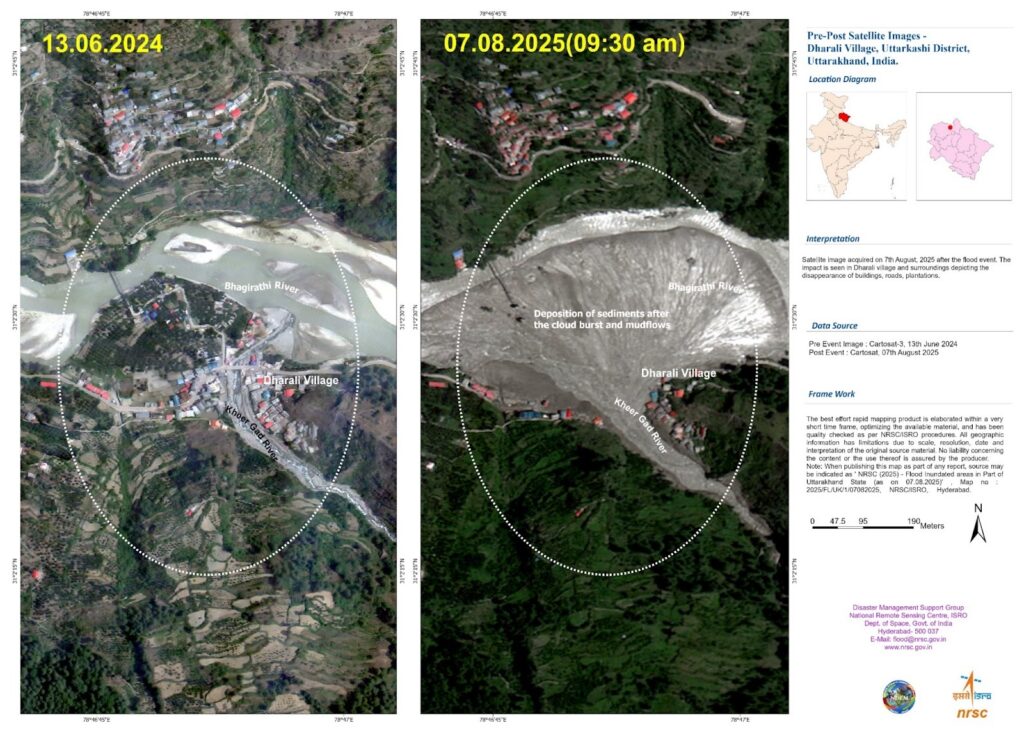
    FlDepth: New ISRO Tool to Measure Flood Depth from Space

    Why in the News

    Researchers at the National Remote Sensing Centre have developed FlDepth, a new GIS based tool that measures floodwater depth from space in near real time.

    What is FlDepth

    • A satellite based flood depth estimation tool
    • Developed by ISRO National Remote Sensing Centre
    • Converts 2D satellite flood images into 3D flood depth maps
    • Helps in disaster response and flood management
    [2019] For the measurement/estimation of which of the following are satellite images/remote sensing data used? 
    1 Chlorophyll content in the vegetation of a specific location 
    2 Greenhouse gas emissions from rice paddies of a specific location 
    3 Land surface temperatures of a specific location 
    Select the correct answer using the code given below: (a) 1 only (b) 2 and 3 only (c) 3 only (d) 1, 2 and 3
  • Animal Husbandry, Dairy & Fisheries Sector – Pashudhan Sanjivani, E- Pashudhan Haat, etc

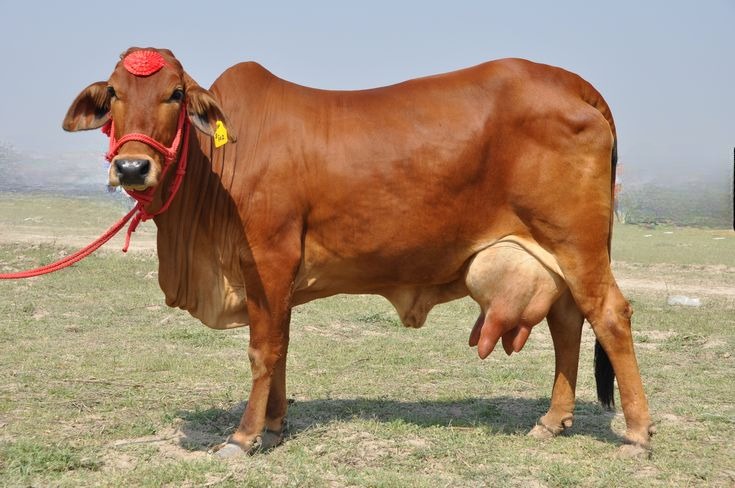
    IVRI Produces Sahiwal Calves Using Advanced Reproductive Technology

    Why in the News

    The Indian Veterinary Research Institute successfully produced Sahiwal breed calves using advanced Assisted Reproductive Technologies, marking a major breakthrough in genetic improvement of indigenous cattle.

    Key Highlights

    • Institute: ICAR–Indian Veterinary Research Institute (IVRI), Izatnagar, Bareilly
    • Breed: Sahiwal indigenous cattle
    • Technology used:
      • Ovum Pick Up (OPU)
      • In-Vitro Fertilisation (IVF)
      • Embryo Transfer (ET)
    • Five healthy Sahiwal calves born within five days starting 28 February 2026

    What is OPU-IVF-ET Technology

    • Ovum Pick-Up (OPU): Ultrasound-guided collection of eggs from elite female animals
    • In-Vitro Fertilisation (IVF): Fertilisation in laboratory using selected superior semen
    • Embryo Transfer (ET): Developed embryos transferred to surrogate mothers
      • Enables rapid multiplication of superior genetics

    Why the Sahiwal Breed is Important

    • Indigenous dairy breed
    • Heat tolerant
    • Disease resistant
    • Suitable for tropical climates
    • High milk productivity among native breeds
    [2017] What is the application of Somatic Cell Nuclear Transfer Technology? (a) Production of biolarvicides (b) Manufacture of biodegradable plastics (c) Reproductive cloning of animals (d) Production of organisms free of diseases
  • Antibiotics Resistance

    UNEP Report: Waste Prevention Key to Safe Disposal of Unused Medicines

    Why in News

    A new report by the United Nations Environment Programme (UNEP) highlights waste prevention as the most effective strategy for the safe disposal of unused medicines, citing risks to environmental and public health.

    Why Improper Disposal is a Concern

    Improper disposal of medicines leads to:

    • Antimicrobial Resistance (AMR)
    • Endocrine disruption
    • Toxicity risks
    • Water, soil and air pollution
    • Accidental poisoning

    Unused and expired antimicrobials are particularly linked to AMR pollution.

    UNEP Four Pillar Framework

    The UNEP report proposes a Four-Pillar Approach:

    1. Prevention at source
    2. Medicine take-back systems
    3. Legal and policy frameworks
    4. Awareness and outreach programmes

    Unused Medicine in India 

    • Households discard up to 70% of purchased medicines, with common methods including throwing them in dustbins (over 80% in studies), contributing to environmental contamination and antimicrobial resistance
    • The Central Drugs Standard Control Organization (CDSCO) has issued formal guidelines to address this waste and the resulting environmental hazards.
    • Guidelines for:
    • Collection
    • Storage
    • Transportation
    • Disposal of expired medicines
    • 17 drugs placed under Flush List for safe disposal
    [2019] Which of the following are the reasons for the occurrence of multi-drug resistance in microbial pathogens in India? 
    1 Genetic predisposition of some people 
    2 Taking incorrect doses of antibiotics to cure diseases 
    3 Using antibiotics in livestock farming 
    4 Multiple chronic diseases in some people 
    Select the correct answer using the code given below: (a) 1 and 2 (b) 2 and 3 only (c) 1, 3 and 4 (d) 2, 3 and 4
  • Parliament – Sessions, Procedures, Motions, Committees etc

    Corporate Laws Amendment Bill 2026 Sent to Joint Parliamentary Committee

    Why in News

    The Lok Sabha introduced the Corporate Laws Amendment Bill 2026 and referred it to a Joint Parliamentary Committee (JPC) for detailed examination.

    Key Objectives of the Bill

    • Promote ease of doing business
    • Improve ease of living for corporates
    • Decriminalise minor offences
    • Rationalise penalties
    • Streamline regulatory procedures

    Laws Proposed to be Amended

    • Companies Act, 2013
    • Limited Liability Partnership Act, 2008

    Major Proposed Changes

    • Shift minor procedural violations from criminal offences to monetary penalties
    • Simplify compliance requirements
    • Address gaps identified by Company Law Committee (2022)

    CSR Controversy

    • Opposition raised concerns about dilution of Corporate Social Responsibility (CSR) norms
    • Current rule: Companies must spend 2% of net profits on CSR
    • Government clarification:
      • Only net profit calculation criteria being amended
      • CSR requirement remains unchanged

    Joint Parliamentary Committee (JPC)

    • The Joint Parliamentary Committee (JPC) is not a constitutional body. 
    • It is an ad-hoc (temporary) body established by Parliament through a motion passed in both houses, or by the Speaker/Chairman of both houses, to examine specific bills or investigate urgent matters, not established directly by the Constitution.
    [2024] With reference to Corporate Social Responsibility (CSR) rules in India, consider the following statements: 
    1 CSR rules specify that expenditures that benefit the company directly or its employees will not be considered as CSR activities. 
    2 CSR rules do not specify minimum spending on CSR activities. 
    Select the correct answer using the code given below: 
    (a) 1 only (b) 2 only (c) Both 1 and 2 (d) Neither 1 nor 2
  • Electoral Reforms In India

    Centre Considers 2011 Census-Based Delimitation to Implement Women’s Quota

    Why in the News

    The Union Government is considering a delimitation exercise based on the 2011 Census to implement the Women’s Reservation Act, 2023 before the 2029 Lok Sabha elections.

    Key Proposals

    • Lok Sabha seats likely to increase from 543 to 816
    • 273 seats proposed to be reserved for women
    • State Assembly seats may also be expanded
    • Amendment Bill may be introduced in:
      • Ongoing Budget Session, or
      • Special Session of Parliament

    Reason for the Move

    • Women’s Reservation Act, 2023 requires:
      • Census
      • Delimitation
      • Then implementation of 33% quota
    • 2021 Census delayed due to COVID-19
    • Without amendment, implementation could be delayed beyond 2030
    • Government aims to implement quota before 2029 elections

    Concerns of States

    • Southern States worried about loss of representation
    • Government proposal:
      • Maintain existing proportion of seats
      • Around 50% increase in seats across all States
      • Pro-rata distribution to avoid regional imbalance

    Constitutional Background

    • Article 82: Delimitation after first Census post-2026
    • Proposed amendment:
      • Use 2011 Census data
      • Avoid waiting for latest Census completion 
    [2024] Consider the following statements regarding ‘Nari Shakti Vandan Adhiniyam’: 1 Provisions will come into effect from the 18th Lok Sabha. 2 This will be in force for 15 years after becoming an Act. 3 There are provisions for the reservation of seats for Scheduled Castes Women within the quota reserved for the Scheduled Castes. Select the correct answer using the code given below: (a) 1, 2 and 3 (b) 1 and 2 only (c) 2 and 3 only (d) 1 and 3 only
  • Indian Missile Program Updates

    DEFENCE NEWS 2026

    1. Integrated Guided Missile Development Programme (IGMDP)

    • Launched: 1983
    • Leader: A.P.J. Abdul Kalam
    • Objective: Self-reliance in missile technology
    • Duration: 1983 to 2012

    Missiles (PATNA):

    • Prithvi: Surface to Surface
    • Agni: Ballistic (later separated)
    • Trishul: Short range SAM
    • Nag: Anti tank, fire and forget
    • Akash: Medium range SAM

    Keywords: Self-reliance, Indigenous missiles, Strategic deterrence

    Prelims Traps:

    • IGMDP not ongoing
    • Agni separated from programme

    2. Ballistic vs Cruise Missiles

    Ballistic Missile:

    • Path: Parabolic trajectory
    • Propulsion: Initial phase only
    • Altitude: Outside atmosphere
    • Speed: Hypersonic

    Cruise Missile:

    • Path: Aircraft-like
    • Propulsion: Continuous
    • Altitude: Low altitude
    • Accuracy: High

    Keywords: Trajectory, Propulsion, Detection

    Prelims Traps:

    • Cruise missiles harder to detect
    • Ballistic missiles less maneuverable

    3. Hypersonic Technology

    • Speed: Mach 5 and above

    Types:

    • HGV: Rocket launched, glide phase
    • Hypersonic Cruise: Scramjet powered

    India:

    • HSTDV by DRDO
    • Scramjet tested by ISRO

    Engine Types:

    • Ramjet: Subsonic combustion
    • Scramjet: Supersonic combustion

    Keywords: Mach 5, Scramjet, Hypersonic

    Prelims Traps:

    • Scramjet requires very high initial speed

    4. Agni Series Missiles

    Agni V:

    • Range: Greater than 5000 km
    • Type: Ballistic
    • Feature: MIRV capable

    Agni Prime:

    • Range: 1000 to 2000 km
    • Feature: Canisterised

    Keywords: MIRV, Canisterisation, Strategic missile

    Prelims Traps:

    • Canisterisation reduces launch time

    5. Pralay Missile

    • Type: Quasi ballistic
    • Range: 150 to 500 km
    • Payload: 500 to 1000 kg

    Features:

    • Maneuverable trajectory
    • Hard to intercept

    Keywords: Quasi ballistic, Tactical missile

    Prelims Trap:

    • Not a cruise missile

    6. Astra Mk III (Gandiva)

    • Type: Air to air missile
    • Range: 300 to 350 km
    • Speed: Around Mach 4.5

    Platforms:

    • Su 30 MKI
    • Tejas

    Keywords: BVR missile, Air combat

    Prelims Trap:

    • Beyond Visual Range missile

    7. BrahMos Missile

    • Type: Supersonic cruise missile
    • Speed: Around Mach 3
    • Range: Around 350 km

    Developed by:

    • India and Russia

    Variants:

    • Land, Air, Sea, Submarine

    Keywords: Supersonic, Ramjet, Fire and forget

    Prelims Traps:

    • Uses ramjet engine

    8. Akashteer System

    • Type: AI enabled air defence system
    • Developer: Bharat Electronics Limited
    • Induction: 2024

    Features:

    • Autonomous monitoring
    • Tri services integration

    Keywords: AI defence, C4ISR integration

    Prelims Trap:

    • Army focused system

    9. IACCS

    • Full Form: Integrated Air Command and Control System
    • Service: Indian Air Force

    Features:

    • Radar integration
    • Real time data sharing
    • Multi layer defence

    Layers:

    • Counter drone
    • Short range
    • Medium range
    • Long range

    Keywords: Network centric warfare, Air defence

    Prelims Trap:

    • Not a Navy system

    10. Project Kusha

    • Type: Long range air defence system
    • Developer: DRDO

    Features:

    • Interceptors: 150, 250, 350 km
    • Comparable to S 400, Patriot

    Keywords: Missile shield, Indigenous defence

    Prelims Trap:

    • Fully indigenous

    11. Directed Energy Weapon (Sahastra Shakti)

    • Type: Laser weapon
    • Power: 30 kilowatt
    • Developer: DRDO

    Targets:

    • Drones
    • Missiles

    Keywords: Laser, Speed of light, DEW

    Prelims Trap:

    • No conventional ammunition

    12. K 4 Missile

    • Type: SLBM
    • Range: Around 3500 km

    Platform:

    • Nuclear submarines

    Keywords: Second strike, Nuclear deterrence


    13. INS Taragiri

    • Type: Stealth frigate
    • Project: 17A
    • Class: Nilgiri

    Features:

    • 75 percent indigenous
    • Multi mission

    Keywords: Stealth, Naval modernization


    14. Fighter Aircraft Generations

    4th Generation:

    • Maneuverability

    4.5 Generation:

    • AESA radar
    • Advanced avionics

    5th Generation:

    • Stealth
    • Sensor fusion

    6th Generation:

    • AI integration
    • Drone teaming

    India:

    • Tejas Mk1A: 4.5 generation
    • AMCA: 5th generation

    Keywords: Stealth, AESA, AI

    Prelims Trap:

    • 4.5 generation not stealth

    15. Drone Systems

    Types:

    • HALE: MQ 9B
    • MALE: TAPAS, Rustom
    • Loitering munition: Harop

    Indian Systems:

    • Indrajaal: Anti drone dome
    • Bhragavastra: Micro missile system

    Keywords: UAV, Loitering munition, Surveillance

    Prelims Trap:

    • Loitering munition is drone missile hybrid

    16. Sonobuoys

    • Use: Anti submarine warfare

    Working:

    • Dropped in water
    • Hydrophone detects sound
    • Data transmitted to aircraft

    Keywords: Underwater detection, Acoustic signals

    Prelims Trap:

    • Not radar based

    17. Mission Sudarshan Chakra

    • Announcement: 15 August 2025

    Objective:

    • National security shield by 2035

    Coverage:

    • Air, land, sea
    • Civilian infrastructure

    Keywords: Integrated defence, National security


    18. Golden Dome

    • Country: USA
    • Type: Missile defence system

    Features:

    • Ground and space based

    Legal Aspect:

    • Outer Space Treaty bans WMD in space
    • Conventional weapons allowed

    Keywords: Space militarisation, Missile shield

    Prelims Trap:

    • Space not fully demilitarised
  • [23rd March 2026] The Hindu OpED: Double engine-cute slogan, a serious federal question

    PYQ Relevance[UPSC 2024] What changes has the Union Government recently introduced in the domain of Centre-State relations? Suggest measures to be adopted to build the trust between the Centre and the States and for strengthening federalism.Linkage: The PYQ examines evolving Centre-State relations and trust deficit, a core GS-2 theme reflecting tensions in fiscal federalism and governance. The “double engine” debate reflects concerns over erosion of cooperative federalism and need for institutional trust-building.

    Mentor’s Comment

    The idea of a “double engine government” implies faster development when the same party governs both the Union and the State. However, this political narrative raises serious constitutional concerns regarding cooperative federalism, fiscal equity, and institutional neutrality, as envisaged under the Indian Constitution.

    Does the ‘Double Engine’ Narrative Undermine Constitutional Federalism?

    1. Constitutional Design: Ensures a federal structure with unitary bias, where Union and States operate within defined spheres.
    2. Political Distortion: Suggests preferential governance for politically aligned States, deviating from constitutional neutrality.
    3. Electoral Messaging: Links development outcomes with party alignment rather than policy performance.

    How Does Fiscal Federalism Reflect Emerging Centre-State Frictions?

    1. Finance Commission Role: Ensures objective devolution based on criteria like income distance under Article 280.
    2. Resource Centralization: Increases Union’s fiscal dominance through cesses and surcharges, reducing divisible pool.
    3. Population Criteria Debate: Penalizes States with successful population control (e.g., Southern States).
    4. State Concerns: Tamil Nadu, Kerala, Karnataka raise issues of being treated as “beggars” despite contribution.

    Are Governors Acting as Neutral Constitutional Authorities?

    1. Constitutional Mandate: Requires Governors to act as impartial constitutional heads.
    2. Legislative Delays: Instances of Bills being withheld or delayed, bypassing elected legislatures.
    3. Judicial Intervention: Courts emphasize timely assent as constitutional obligation.
    4. Case Example: Supreme Court observations in Punjab (2023) and Tamil Nadu (2025) highlight misuse of discretion.

    Does Political Alignment Affect Governance Delivery?

    1. Administrative Efficiency: Facilitates coordination when the same party governs at both levels.
    2. Discriminatory Outcomes: Leads to delays in opposition-ruled States, affecting welfare delivery.
    3. Policy Bias: Shifts governance from citizen-centric to party-centric approach.

    Is Cooperative Federalism Being Replaced by Competitive/Aligned Federalism?

    1. Shift in Decision-Making: Moves from institutional consultation (GST Council, Inter-State Council) to top-down policy imposition, reducing genuine collaboration. Example: Growing concerns over unilateral fiscal decisions like cesses reducing State share.
    2. Performance vs Political Proximity: Replaces objective competition (Ease of Doing Business, SDG rankings) with *political alignment as a criterion for faster approvals and support. Example: Perception that “double engine” States receive quicker project clearances.
    3. Fiscal Incentive Distortion: Undermines rule-based devolution by increasing discretionary transfers, weakening Finance Commission neutrality. Example: Rising share of centrally sponsored schemes with conditionalities.
    4. Erosion of Institutional Federalism: Weakens platforms meant for cooperation, leading to bilateral Centre-State power asymmetry instead of multilateral dialogue. Example: Declining relevance of Inter-State Council.
    5. From Cooperative to Aligned Federalism: Introduces a model where governance efficiency depends on political alignment, not constitutional design, creating unequal federal experience across States. 

    What Structural Reforms Are Needed to Restore Federal Balance?

    1. Statutory Timelines: Ensures time-bound gubernatorial assent to Bills.
    2. Finance Commission Strengthening: Enhances credibility and fairness in resource distribution.
    3. Inter-State Council Revival: Promotes institutional dialogue under Article 263.
    4. Fiscal Transparency: Reduces cess-based centralization of revenues

    Conclusion

    The “double engine” narrative reflects a shift from constitutional federalism to politically aligned governance. Sustaining India’s federal structure requires reinforcing institutional neutrality, fiscal fairness, and cooperative mechanisms, ensuring that governance remains citizen-centric rather than party-driven.

  • The Crisis In The Middle East

    India’s dual dependence on West Asia for urea production

    Why in the News?

    India’s fertilizer security is entering a phase of structural vulnerability. The ongoing West Asian geopolitical tensions have exposed a critical fragility, India’s heavy dependence on imported LNG and urea supply chains. With over 60% LNG imports linked to West Asia and urea imports rising despite domestic capacity, any disruption, such as a Strait of Hormuz blockade, can directly threaten food security.

    Why is India’s fertilizer security under threat due to West Asia?

    1. Dual Dependence: India relies on LNG imports for urea production and direct urea imports, exposing both supply chains to geopolitical risks.
    2. High Import Linkage: ~50% of India’s LNG imports come from West Asia, making supply highly vulnerable to regional instability.
    3. Critical Chokepoint Risk: Strait of Hormuz dependency, over 40% of global oil trade passes through it, with Qatar being a major LNG supplier.
    4. Rising Import Burden: India imported 26 lakh metric tonnes of urea in 2025, despite domestic production capacity.

    How does LNG availability impact urea production in India?

    1. Feedstock Dependence: LNG serves as the primary input for ammonia production, which is further processed into urea.
    2. Energy-Intensive Nature: Urea plants require continuous and stable gas supply; disruptions reduce output.
    3. Production Constraints: Several urea plants are operating below full capacity, limiting domestic supply.
    4. Environmental Shift: Plants have shifted from naphtha/fuel oil to natural gas due to lower emissions, increasing LNG reliance.

    What are the structural vulnerabilities in India’s fertilizer ecosystem?

    1. Demand-Supply Gap: India’s urea consumption reached 387 lakh metric tonnes (2025), while domestic production is ~306 lakh tonnes, leaving a significant gap.
    2. Import Concentration:
      1. 45% of urea imports from Oman
      2. 26% from Saudi Arabia
      3. Remaining from UAE and others
    3. LNG Import Concentration:
      1. Qatar: 41.4%
      2. USA: 19.5%
      3. Others include UAE, Oman, Angola
    4. Sectoral Usage:
      1. Fertilizers: ~21.6% of LNG use
      2. City gas distribution, power, refinery sectors also compete for gas.

    How does the West Asian conflict disrupt global fertilizer supply chains?

    1. Trade Disruptions: Conflict has disrupted LPG and LNG shipments, tightening global energy markets.
    2. Price Surge: Rising crude oil prices increase fertilizer production costs globally.
    3. Shipping Risks: Potential closure or instability in Hormuz Strait threatens uninterrupted energy flows.
    4. Global Supply Chain Shock: Fertilizer markets are globally integrated; disruption in one region leads to price volatility and shortages elsewhere.

    What policy measures has India undertaken to mitigate risks?

    1. Regulatory Inclusion: New Gas Pricing Guidelines (2026) include fertilizers, ensuring priority gas allocation.
    2. Import Diversification: Efforts to diversify LNG sources beyond West Asia.
    3. Domestic Capacity Expansion: Increased urea production capacity over the last decade.
    4. Strategic Reserves: Maintaining buffer stocks of fertilizers to cushion short-term disruptions.

    What are the broader implications for India’s food and economic security?

    1. Agricultural Risk: Urea is essential for crops like rice and wheat; supply shocks threaten food grain output.
    2. Fiscal Pressure: Increased imports and subsidies raise fertilizer subsidy burden.
    3. Inflationary Impact: Rising fertilizer costs can increase food inflation.
    4. Strategic Vulnerability: Energy dependence translates into agricultural vulnerability, linking geopolitics to food security.

    Conclusion

    India’s fertilizer security is increasingly shaped by global geopolitics. Reducing LNG dependence, diversifying imports, and enhancing domestic production are essential to ensure agricultural resilience and long-term food security.

    PYQ Relevance

    [UPSC 2017] The question of India’s Energy Security constitutes the most important part of India’s economic progress. Analyze India’s energy policy cooperation with West Asian Countries.

    Linkage: This PYQ highlights India’s critical dependence on West Asia for energy imports, making energy security central to economic stability and growth. The article extends this dependence to fertilizers via LNG-based urea production, showing how West Asian instability directly threatens India’s food and economic security.

  • Renewable Energy – Wind, Tidal, Geothermal, etc.

    How agriPV can turn India’s farms into dual purpose powerhouses

    Why in the News?

    India’s target of 300 GW solar capacity by 2030 has intensified land-use conflicts with agriculture, bringing agrivoltaics (AgriPV) into focus as a dual-use solution. The near doubling of PM-KUSUM allocation to ₹5,000 crore signals a shift toward farmer-centric solarisation. However, despite ~50 pilots, AgriPV faces scalability challenges due to high costs and regulatory gaps.

    What is Agrivoltaics?

    Agrivoltaics, also known as AgriPV or agrophotovoltaics (APV), is the simultaneous use of land for both solar energy generation and agriculture. Unlike traditional solar farms where panels are ground-mounted on bare land, AgriPV systems are designed to allow crops to grow, livestock to graze, or pollinator habitats to thrive underneath or between the solar panels.

    AgriPV systems optimize land use by placing solar panels in specific configurations to balance electricity production with agricultural needs: 

    1. Elevated (Stilted) Systems: Panels are mounted on tall structures (at least 2.1m to 4m high), providing enough clearance for tractors and farming machinery to operate underneath.
    2. Inter-row (Ground-mounted) Systems: Panels are placed at lower heights but with wide spacing between rows to allow crops to be cultivated in the alleys between arrays.
    3. Vertical Systems: Bifacial panels are mounted vertically (like walls), often at the periphery of fields, capturing sunlight primarily during sunrise and sunset while leaving the maximum amount of ground open for farming.
    4. PV Greenhouses: Solar modules are integrated into the roof or exterior of a greenhouse to regulate internal temperature and power its climate control system.

    How does Agrivoltaics address the land-energy-agriculture conflict?

    1. Dual Land Use: Enables simultaneous electricity generation and crop cultivation on the same land parcel.
    2. Land Efficiency: Reduces pressure on agricultural land compared to utility-scale solar requiring large tracts.
    3. Food-Energy Balance: Maintains agricultural output while expanding renewable capacity.
    4. Example: Elevated panel systems allow crops to grow underneath without disrupting farming operations.

    What are the design and technological variations in AgriPV systems?

    1. Elevated Systems: Panels mounted several metres above ground ensure adequate sunlight for crops.
    2. Row-based Systems: Panels placed between crop rows minimise shading impact.
    3. Vertical Systems: Upright panels reduce land obstruction and optimise sunlight distribution.
    4. Greenhouse Integration: Panels installed on rooftops or walls support controlled farming environments.
    5. Agro-climatic Adaptation: Crop selection varies across regions (e.g., tomato, onion, turmeric in MP; grapes, tomato in Maharashtra).

    What economic benefits does Agrivoltaics provide to farmers?

    1. Income Diversification: Farmers earn through electricity sales, leasing land, or revenue-sharing models.
    2. Reduced Input Costs: Solar-powered irrigation lowers diesel dependency.
    3. Risk Mitigation: Protection from extreme weather (hail, rainfall) stabilises farm output.
    4. Example: PM-KUSUM promotes decentralised solar pumps and power plants to enhance farm incomes.

    What environmental and productivity benefits does AgriPV offer?

    1. Water Conservation: Reduced evapotranspiration due to panel shading improves soil moisture retention.
    2. Climate Resilience: Protection against extreme weather events enhances crop stability.
    3. Energy Sustainability: Supports clean energy generation aligned with net-zero goals.
    4. Example: Partial shading benefits crops sensitive to excessive sunlight.

    What are the key challenges limiting large-scale adoption?

    1. High Capital Costs: Elevated structures and specialised mounting systems increase investment costs beyond conventional solar.
    2. Regulatory Uncertainty: Lack of clarity in land classification, tariffs, and grid connectivity.
    3. Design Gaps: Absence of standardised benchmarks for crop-panel configurations.
    4. Institutional Barriers: Limited access to affordable finance and weak governance frameworks.
    5. Data Deficit: Insufficient empirical evidence across agro-climatic zones.

    What policy measures can accelerate Agrivoltaics deployment?

    1. National Mission Integration: Inclusion in a proposed National Agri-Photovoltaics Mission under PM-KUSUM 2.0.
    2. Financial Support: Viability Gap Funding (VGF) reduces capital cost burden.
    3. State-level Interventions: Identification of clusters and streamlined approvals.
    4. Capacity Building: Integration into farmer training and advisory systems.
    5. Market Linkages: Clear tariffs and long-term purchase agreements ensure financial viability.

    What is the current status of Agrivoltaics in India?

    1. Pilot Projects: Around 50 installations across different regions.
    2. Policy Recognition: Increasing mention in renewable energy discussions.
    3. Scaling Constraint: Lack of commercial-scale implementation due to financial and regulatory barriers.

    Conclusion

    Agrivoltaics provides a viable pathway to reconcile India’s energy transition with agricultural sustainability. Scaling requires policy clarity, financial innovation, and region-specific design optimisation.

    PYQ Relevance

    [UPSC 2022] What is Integrated Farming System? How is it helpful to small and marginal farmers?

    Linkage: AgriPV represents an advanced form of Integrated Farming System, combining agriculture with solar energy generation on the same land. It enhances income diversification and resource efficiency for small and marginal farmers, aligning directly with the objectives of IFS.

  • Tax Reforms

    PRARAMBH 2026 – Income Tax Awareness Campaign 

    Why in the News

    • Government launched PRARAMBH 2026, a nationwide awareness campaign for the Income Tax Act, 2025 (effective from 1 April 2026).

    About PRARAMBH 2026

    • Full form: Policy Reform and Responsible Action for Mission Viksit Bharat
    • Nature: Nationwide taxpayer awareness and outreach campaign
    • Mode:
      • Print, TV, radio, digital, social media
      • On-ground workshops and engagement

    Key Objectives

    • Promote: Tax awareness and Ease of compliance
    • Shift behaviour: From confusion to trust-based compliance
    • Ensure: Smooth implementation of new tax law

    Key Features

    1. Taxpayer Outreach

    • Guidance material: FAQs, Brochures and Tutorial videos
    • Available in: 10 regional languages plus English and Hindi

    2. Digital Initiatives

    • Launch of Income Tax Website 2.0
      • Improved usability
      • Simpler navigation
    • AI chatbot:
      • Kar Saathi
      • Helps with: Act, Rules, and Forms

    3. Capacity Building

    • Nationwide: 300 plus workshops
    • Focus:
      • Training tax officials
      • Stakeholder engagement

    4. Citizen-Centric Approach

    • Principle: Nagrik Devo Bhava
    • Focus on:
      • Empathy
      • Trust-based tax administration
      • Reduced human interface through technology

    New Income Tax Act, 2025

    • Effective from: 1 April 2026
    • Key aims: Simplicity, Clarity, Reduced litigation, and Better compliance

    Governance Philosophy

    • Based on: M.A.N.A.V. framework
      • Moral and ethical systems
      • Accountable governance
      • National sovereignty
      • Accessible and inclusive AI
      • Valid systems
    [2020] In the context of India, which one of the following is the characteristic appropriate for bureaucracy? (a) An agency for widening the scope of parliamentary democracy (b) An agency for strengthening the structure of federalism (c) An agency for facilitating political stability and economic growth (d) An agency for the implementation of public policy

Join the Community

Join us across Social Media platforms.