💥UPSC 2026, 2027, 2028 UAP Mentorship (March Batch) + Access XFactor Notes & Microthemes PDF

Archives: News

  • Trade Sector Updates – Falling Exports, TIES, MEIS, Foreign Trade Policy, etc.

    RELIEF Scheme for Exporters 

    Why in the News

    • Government approved RELIEF (Resilience & Logistics Intervention for Export Facilitation) under Export Promotion Mission (EPM)
    • Aim: Support exporters amid West Asia crisis and maritime logistics disruption

    Background

    • Disruptions in Strait of Hormuz region
    • Issues:
      • Vessel diversion
      • Longer shipping routes
      • Port congestion
      • High freight cost + insurance premium + war-risk surcharge
      • Increased export uncertainty

    Objective

    • Ensure export continuity
    • Reduce logistics cost escalation
    • Provide risk mitigation
    • Protect MSME exporters and employment

    Coverage

    • Regions:
      • UAE, Saudi Arabia, Qatar, Oman, Kuwait, Israel, Bahrain, Iraq, Iran, Yemen
    • Covers:
      • Past shipments (disruption period)
      • Future consignments

    Key Components

    1. Enhanced Risk Coverage (Insured Exporters)

    • Up to 100% additional coverage
    • For shipments during disruption period

    2. Support for Upcoming Exports

    • Up to 95% risk coverage
    • Encourages export flow continuity

    3. MSME Support (Non-Insured)

    • Up to 50% reimbursement
    • Covers:
      • Freight escalation
      • Insurance surcharge
    • Cap: ₹50 lakh per exporter
    [2023] Consider the following statements with reference to India: 
    1. According to the ‘Micro, Small and Medium Enterprises Development (MSMED) Act, 2006’, the ‘medium enterprises’ are those with investments in plant and machinery between Rs. 15 crore and Rs. 25 crore. 
    2. All bank loans to the Micro, Small and Medium Enterprises qualify under the priority sector. 
    Select the correct answer using the code given below: 
    (a) 1 only (b) 2 only (c) Both 1 and 2 (d) Neither 1 nor 2
  • Economic Indicators and Various Reports On It- GDP, FD, EODB, WIR etc

    World Happiness Report 2026  

    Why in the News

    • The World Happiness Report 2026 has been released.
    • Finland ranked as the happiest country for the 9th consecutive year.
    • India ranked 116th out of 147 countries.

    Top 10 Happiest Countries

    1. Finland
    2. Iceland
    3. Denmark
    4. Costa Rica
    5. Sweden
    6. Norway
    7. Netherlands
    8. Israel
    9. Luxembourg
    10. Switzerland

    Unhappiest Countries

    • Bottom-ranked: Afghanistan

    Key Factors Used in Ranking

    1. GDP per capita
    2. Life expectancy
    3. Social support
    4. Freedom to make life choices
    5. Generosity
    6. Perception of corruption

    Who publishes the World Happiness Report?

    • Wellbeing Research Centre, University of Oxford (lead publisher)
    • In partnership with:
      • Gallup
      • UN Sustainable Development Solutions Network
      • An independent editorial board of experts

    Major Findings

    1. Social Media Impact

    • High usage linked to: Lower well-being, especially among teenagers
    • Teenage girls using >5 hours/day: Reported lower life satisfaction

    2. Youth Happiness Decline

    • Decline observed in: USA, Canada, Australia and New Zealand

    3. Why Finland Tops

    • High income with equitable distribution
    • Strong welfare state
    • High trust in institutions
    • Better life expectancy

    4. Conflict and Happiness

    • Countries facing conflict: Lowest happiness levels
    [2019] In the context of any country, which one of the following would be considered as part of its social capital? (a) The proportion of literates in the population (b) The stock of its buildings, other infrastructure and machines (c) The size of population in the working age group (d) The level of mutual trust and harmony in the society
  • Festivals, Dances, Theatre, Literature, Art in News

    World Sparrow Day 2026: ‘Chidi’ in Sikh Tradition

    Why in the News

    • World Sparrow Day (March 20) highlights declining sparrow populations and their cultural significance, especially in Sikh tradition.

    Sparrow: Ecological Importance

    • One of the most common birds in human settlements
    • Plays role in:
      • Insect control
      • Maintaining urban biodiversity
    • Decline linked to:
      • Urbanisation
      • Loss of nesting spaces
      • Pollution

    ‘Chidi’ in Sikh Tradition

    Symbolism

    • Sparrow (‘chidi’) represents: Ordinary, weak, or downtrodden people

    Spiritual Meaning

    • In Sikh philosophy: Even the weakest can become powerful through divine grace and courage

    Cultural Expression

    • Sikh teachings, especially in: Guru Granth Sahib
    • Use nature imagery: Birds, animals, insects
      • Reflects rural Punjabi life and ethics

    Famous Metaphor

    • Linked with Sikh ethos: “Making sparrows fight hawks”
    • Symbolises: Empowerment of the weak against the strong

    Broader Insight

    • Sparrow is not just a bird but: A moral and spiritual metaphor
    • Shows connection between: Nature and religious philosophy
    [2013] Consider the following Bhakti Saints: 
    1. Dadu Dayal 
    2. Guru Nanak 
    3. Tyagaraja 
    Which among the above was/were preaching when the Lodi Dynasty fell and Babur took over? 
    (a) 1 and 3 (b) 2 only (c) 2 and 3 (d) 1 and 2
  • Industrial Sector Updates – Industrial Policy, Ease of Doing Business, etc.

    Core Sector Growth Slows to 2.3% (February 2026)

    Why in the News

    • Government data shows growth in the Index of Eight Core Industries slowed sharply to 2.3% in February 2026, a three-month low.

    What are Core Sectors

    • Eight industries with high weight in IIP: Coal, Crude oil, Natural gas, Refinery products, Fertilisers, Steel, Cement, and Electricity

    Key Findings

    1. Sharp Slowdown

    • Growth declined from 4.7% (January) → 2.3% (February)
    • Broad-based slowdown across sectors

    2. Best Performing Sectors

    • Cement: 9.3% growth (though slowing)
    • Steel: 7.2% growth

    3. Weak Performing Sectors

    • Crude oil: –5.2% (6th month of decline)
    • Natural gas: –5% (20th month of decline)
    • Refinery products: –1%
    • Electricity: 0.5% (low growth)
    • Coal: 2.3% (slowed)
    [2015] In the ‘Index of Eight Core Industries’, which one of the following is given the highest weight? (a) Coal Production (b) Electricity generation (c) Fertilizer production (d) Steel production
  • Renewable Energy – Wind, Tidal, Geothermal, etc.

    MNRE Seeks Expanded Powers under Electricity Act

    Why in the News

    The Ministry of New and Renewable Energy has proposed expanding its authority under the Electricity Act, 2003 and seeks recognition as the “Central Government” for all renewable energy matters.

    Background

    Currently, the Ministry of Power exercises primary control over the Electricity Act, including grid-connected renewable energy. The proposal by MNRE aims to redefine this institutional arrangement.

    Key Demands by MNRE

    1. Policy and Market Design
      • Authority to design renewable energy markets
      • Power to frame and notify bidding guidelines for renewable projects
    2. Regulatory Role
      • Power to define tariff principles for the Central Electricity Regulatory Commission
      • Ability to guide the regulator on renewable energy issues
    3. Monitoring Renewable Purchase Obligations (RPOs)
      • Oversight of compliance by distribution companies and large consumers
      • Addressing weak implementation by states
    4. Institutional Coordination
      • Greater role in regulation-making by the Central Electricity Authority
      • Influence over national transmission planning

    Current Status of Renewable Energy in India

    • Total installed capacity stands at about 520 GW
    • Non-fossil capacity is around 272 GW, more than half of total capacity
    • Renewable energy contributes about 263 GW
    • However, actual electricity generation from non-fossil sources is only about 25 percent 

    Government Target

    • India aims to achieve 500 GW of non-fossil fuel capacity by 2030, making efficient governance of the sector critical.
    [2019] In India, which of the following review the independent regulators in sectors like telecommunications, insurance, electricity, etc.? Ad Hoc Committees set up by the Parliament Parliamentary Department Related Standing Committees Finance Commission Financial Sector Legislative Reforms Commission NITI Aayog Select the correct answer using the code given below: (a) 1 and 2 (b) 1, 3 and 4 (c) 3, 4 and 5 (d) 2 and 5
  • Artificial Intelligence (AI) Breakthrough

    [20th March 2026] The Hindu OpED: AI-powered tax governance in India and its challenges

    PYQ Relevance[UPSC 2023] Introduce the concept of Artificial Intelligence (AI). How does AI help clinical diagnosis? Do you perceive any threat to privacy of the individual in the use of AI in healthcare?Linkage: The question examines the use of Artificial Intelligence in healthcare and the associated concerns of data privacy and ethics. Similar privacy and ethical issues arise in AI-based tax governance, where sensitive financial data is processed.

    Mentor’s Comment

    The growing application of Artificial Intelligence in tax administration has significant implications for revenue mobilisation and governance in India. The Income Tax Department’s Project Insight (PI) represents a major shift towards data-driven tax administration. It leverages Artificial Intelligence and data analytics to enhance compliance, detect evasion, and improve revenue outcomes. 

    What is Project Insight (PI) and how does it function?

    1. Project Insight (PI): Establishes a data-driven tax intelligence system to strengthen compliance and enforcement.
    2. Income Tax Transaction Analysis Centre (INTRAC): Processes financial data from banks, GST, property, and securities to generate taxpayer insights
    3. 360-degree Profiling: Integrates multi-source financial data to build comprehensive taxpayer profiles
    4. Non-intrusive Usage of Data to Guide and Enable (NUDGE) Strategy: Uses behavioural nudges such as SMS and emails to prompt voluntary compliance
    5. Compliance Management Centralised Processing Centre: Ensures behavioural monitoring and correction of inaccurate filings

    How does AI improve tax compliance and administrative efficiency?

    1. Voluntary Compliance: Enables self-correction; over one crore revised returns filed since 2021
    2. Targeted Enforcement: Identifies high-risk taxpayers; 19,501 individuals contacted under NUDGE campaign
    3. Automation of Processes: Reduces routine workload; allows focus on complex assessments
    4. Service Delivery: Assists taxpayers in filing returns and resolving queries through automated systems
    5. Efficiency Gains: Reduces refund processing time from 93 days to 17 days

    What are the measurable outcomes of AI-driven tax governance?

    1. Revenue Augmentation: Generates ₹11,000 crore additional tax collection
    2. Foreign Asset Disclosure: ₹1,089 crore declared under foreign income reporting
    3. Digital Asset Tracking: ₹29,208 crore in overseas assets including cryptocurrencies identified
    4. False Claim Correction: ₹963 crore corrected under NUDGE campaign
    5. Additional Tax Payments: ₹410 crore realised from compliance actions
    6. Evasion Detection: ₹70,000 crore suppressed turnover identified since 2019-20
    7. Fraud Techniques Identified: Fake invoices, sales data manipulation, post-billing modifications

    What are the challenges related to data quality and accuracy?

    1. Data Dependence: Ensures outcomes depend on quality and completeness of input data
    2. False Positives: Flags legitimate transactions (e.g., joint family structures, clerical errors) as suspicious
    3. Error Propagation: Inaccurate data leads to flawed enforcement actions
    4. Administrative Burden: Increases grievance redressal workload

    How does algorithmic bias affect fairness in tax enforcement?

    1. Historical Bias Replication: Uses past enforcement data, reinforcing socio-economic disparities
    2. Geographical Skew: Targets specific regions or taxpayer categories disproportionately
    3. International Example: Dutch childcare benefits scandal demonstrates risks of biased AI systems
    4. Equity Concerns: Undermines fairness and trust in taxation

    Why is explainability critical in AI-based tax systems?

    1. Transparency Requirement: Ensures taxpayers understand reasons for scrutiny
    2. Right to Appeal: Facilitates challenge to algorithmic decisions
    3. Human Oversight: Maintains human-in-the-loop for high-impact decisions
    4. Legal Validity: Supports principles of natural justice and due process

    What are the concerns related to data privacy and security?

    1. Sensitive Data Handling: Involves financial and personal taxpayer information
    2. Cybersecurity Risks: Expands attack surface for data breaches
    3. Surveillance Concerns: Enables potential misuse of taxpayer data
    4. Regulatory Gaps: Highlights need for AI-specific safeguards

    Why is institutional oversight necessary in AI governance?

    1. AI Ombudsman Requirement: Establishes independent grievance redressal
    2. Algorithm Audits: Ensures external verification of AI systems
    3. Public Disclosure: Reports false positives and system accuracy
    4. Trust Building: Enhances legitimacy of tax administration

    Conclusion

    AI-based tax governance improves compliance and revenue outcomes. However, risks related to bias, privacy, and accountability require institutional safeguards. A balance between efficiency and fairness remains essential.

  • The Crisis In The Middle East

    Oil, power, and politics of disruption

    Why in the News?

    The disruption of the Strait of Hormuz, through which nearly one-fifth of global oil trade flows, has triggered a sharp spike in oil prices (crossing $110/barrel) and exposed the fragility of global energy supply chains. The crisis is significant because it disrupts a critical chokepoint for the first time at this scale in recent years, contrasting with earlier relatively stable flows despite geopolitical tensions.

    How did past oil shocks reshape global energy geopolitics?

    1. 1970s oil crisis: Oil prices increased sharply due to OPEC actions, exposing dependence of Western economies on West Asian oil.
    2. Shift in control: Oil geopolitics moved from Western firms to state-controlled national oil companies in producer countries.
    3. U.S. response: Initiated energy diversification and domestic production push, culminating in shale oil revolution (mid-2000s).
    4. Outcome: U.S. became the world’s largest oil producer, reshaping global supply dynamics and reducing dependence on imports.

    How have wars and conflicts shaped control over oil resources?

    1. Gulf War (1990-91): Ensured continued Western access to Gulf oil after Iraq’s invasion of Kuwait.
    2. Iraq War (2003–2011): Reinforced U.S. strategic presence in West Asia and control over energy routes.
    3. Venezuela factor: U.S. actions (including sanctions and political pressure) influenced oil-rich regions outside West Asia.
    4. Strategic logic: Energy security has been a primary driver of military interventions and foreign policy decisions.

    What is the significance of global oil reserve distribution?

    1. Reserve concentration: Venezuela and Iran together account for ~39% of proven oil reserves, highlighting extreme geographic concentration.
    2. Power asymmetry: Countries with reserves wield disproportionate geopolitical influence.
    3. Supply vulnerability: Concentration increases risk of supply shocks during conflicts.
    4. Example: Hormuz disruption directly affects exports from reserve-rich Gulf countries.

    Why is the Strait of Hormuz central to global energy security?

    1. Strategic chokepoint: Handles nearly 20% of global oil trade, making it a critical artery for global energy flows.
    2. Geographical concentration: Links Persian Gulf producers (Saudi Arabia, UAE, Iran) to global markets.
    3. Energy dependence asymmetry: West Asia produces surplus energy, while Asia (China, India, Japan) drives demand.
    4. Limited alternatives: Lack of viable substitutes increases vulnerability; pipelines and alternate routes remain insufficient.

    How has the disruption reshaped global oil markets and prices?

    1. Price escalation: Oil prices surged beyond $110/barrel, indicating immediate supply shock.
    2. Market volatility: Disruptions triggered uncertainty, impacting futures markets and energy planning.
    3. Historical contrast: Earlier geopolitical tensions did not significantly block flows; current disruption marks a sharper shock.
    4. Supply shock transmission: Increased input costs for transport, manufacturing, and inflation globally.

    What role do major powers play in the geopolitics of energy flows?

    1. U.S. energy dominance: Became the world’s largest oil producer post-2000s shale boom, reducing import dependence.
    2. Strategic intervention: Seeks increased purchases of unsanctioned Russian oil to stabilize markets.
    3. Russia’s repositioning: Post-2022 sanctions, redirected exports toward India and China, emerging as key supplier.
    4. Control over reserves: Countries like U.S., Russia, Venezuela, Canada possess large reserves, influencing power balance.

    How has India navigated shifting oil geopolitics?

    1. Import dependence: India is the second-largest crude importer and third-largest consumer globally.
      1. Value addition: Crude oil is refined into petrol, diesel, LPG, and petrochemicals.
    2. Discounted Russian oil: Share increased from 2.5% (2022) to ~39% (2023), reducing import costs.
    3. Refining advantage: India processes crude into petrol, diesel, LPG, petrochemicals, exporting refined products.
      1. China parallel: Similar refinery expansion strategy adopted by China.
    4. Strategic vulnerability: Heavy reliance on imports, especially via Hormuz, exposes India to supply shocks.

    What are the structural imbalances in global energy flows?

    1. Supply-demand mismatch: West Asia = supply hub; Asia = demand hub, creating interdependence.
    2. Regional concentration risk: Energy reserves concentrated in few regions increases geopolitical tensions.
    3. Consumption disparity: U.S. per capita energy use is 10× India and 2.4× China, reflecting unequal demand patterns.
    4. Global trade imbalance: Countries like China and India remain net importers, while Gulf nations are exporters.

    What are the implications for future global energy order?

    1. Energy realignment: Shift toward Russia-Asia energy axis due to sanctions and trade redirection.
    2. Geopolitical fragmentation: Emergence of competing blocs (West vs Russia-China alignment).
    3. Strategic stockpiling: Countries likely to enhance reserves and diversify suppliers.
    4. Long-term uncertainty: Persistent instability in West Asia could reshape global energy governance.

    Conclusion

    The Strait of Hormuz disruption underscores the structural fragility of global energy systems rooted in geographic concentration and geopolitical rivalries. It accelerates the transition toward diversified supply chains, strategic autonomy, and new energy alliances, while exposing India’s dual position as both a beneficiary (discounted oil) and a vulnerable importer.

    PYQ Relevance

    [UPSC 2017] The question of India’s Energy Security constitutes the most important part of India’s economic progress. Analyze India’s energy policy cooperation with West Asian Countries.

    Linkage: This PYQ aligns with the article’s focus on geopolitics of oil and chokepoint vulnerability, especially the Strait of Hormuz. It also reflects India’s evolving strategy of diversification (Russia) and refining-led value addition amid global energy disruptions.

  • Modern Indian History-Events and Personalities

    Before salt, there was water: why Mahad Satyagraha deserves its centenary

    Why in the News?

    The Mahad Satyagraha is in the news due to its upcoming centenary in 2027, prompting reflection on its legacy. It is significant as it marked an organised Dalit assertion of civil rights, while also highlighting the continuing gap between constitutional equality and social reality.

    What was the Mahad Satyagraha?

    The Mahad Satyagraha (also known as the Chavdar Tale Satyagraha) was a non-violent social movement led by Dr. B.R. Ambedkar on March 20, 1927. It was a landmark event in the struggle for Dalit rights in India, aimed at asserting the right of “untouchables” to use water from the public Chavdar Tank in Mahad, Maharashtra.

    Key Aspects of the Movement

    1. The Act of Defiance: Dr. Ambedkar led thousands of followers to the tank and publicly drank water from it, symbolically breaking the traditional caste-based prohibition.
    2. Historical Context: Although the Mahad Municipality had officially opened the tank to all in 1924 following the 1923 Bole Resolution, local upper-caste resistance had effectively barred Dalits from using it until this direct action.
    3. Beyond Water: Dr. Ambedkar famously stated that the movement was not just about water, but about establishing human rights and dignity. He viewed it as a “social revolution” against the caste hierarchy.
    4. Backlash and Rituals: Following the protest, upper-caste individuals “purified” the tank using cow urine and other rituals, highlighting the deep-seated prejudice of the time.
    5. Manusmriti Dahan Din: Later that year, in December 1927, as part of the ongoing struggle in Mahad, Ambedkar and his followers publicly burned the Manusmriti, a text they saw as the ideological source of caste oppression.

    What structural inequalities did the Mahad Satyagraha challenge?

    1. Caste-based exclusion: Enforced denial of access to public resources; e.g., Dalits prohibited from using Chavdar tank despite legal sanction.
    2. Social segregation: Institutionalised untouchability dictated everyday practices; e.g., separate access to water, temples, and public spaces.
    3. Denial of dignity: Reduced individuals to impure status; e.g., prohibition on touching vessels or shared resources.
    4. Legal-social disconnect: Laws permitted access but social enforcement denied it; e.g., 1923 resolution remained ineffective.

    How did Mahad transform the idea of rights in India?

    1. Assertion over petitioning: Shift from appeals to direct action; e.g., Ambedkar leading thousands to drink water publicly.
    2. Civil rights framework: Established access to public resources as a fundamental right, not charity.
    3. Collective mobilisation: Mass participation of Dalits signified organised resistance; e.g., large procession in Mahad.
    4. Symbolic transformation: Water became a symbol of equality and citizenship.

    What was the legal and constitutional legacy of Mahad?

    1. Social Empowerment Day: The date of the satyagraha, March 20, is observed annually in India as Social Empowerment Day (Samajik Sabalikaran Din).
    2. Article 15 foundation: Prohibits discrimination in access to public places; reflects Mahad’s core demand.
    3. Article 17 embodiment: Abolishes untouchability and criminalises its practice.
    4. Constitutional morality: Reinforces equality as a lived principle, not abstract ideal.
    5. Judicial validation: Courts eventually upheld rights to public resources; e.g., prolonged litigation confirmed access rights.

    Why does caste discrimination persist despite constitutional guarantees?

    1. Social inertia: Deep-rooted caste norms resist legal change; e.g., continued exclusion in rural areas.
    2. Invisible discrimination: Shift from overt to subtle practices; e.g., indirect denial of services.
    3. Economic dependency: Marginalised groups lack bargaining power to assert rights.
    4. Weak enforcement: Laws exist but implementation gaps remain.

    How does Mahad compare with other nationalist movements like Dandi March?

    1. Different objectives: Mahad targeted internal social injustice; Dandi challenged colonial authority.
    2. Scope of reform: Mahad addressed civilisational inequalities; Dandi addressed economic exploitation.
    3. Moral depth: Mahad required reform within society itself, making it more complex.
    4. Historical imbalance: National narrative prioritised anti-colonial struggles over social reform movements.

    What does the centenary demand from contemporary India?

    1. Social audit: Evaluates realisation of equality in everyday life; e.g., access to water, sanitation, education.
    2. Behavioural change: Moves beyond legal compliance to societal transformation.
    3. Inclusive citizenship: Ensures dignity irrespective of birth.
    4. Policy prioritisation: Strengthens anti-discrimination enforcement mechanisms.

    Conclusion

    The Mahad Satyagraha remains a foundational moment in India’s journey toward equality, but its centenary exposes an unfinished agenda. The persistence of caste-based discrimination reveals that legal abolition has not translated into social transformation. The event calls for renewed commitment to constitutional morality, ensuring that dignity and equality move from text to lived reality.

    PYQ Relevance

    [UPSC 2021] Trace the rise and growth of socio-religious reform movements with special reference to Young Bengal and Brahmo Samaj.

    Linkage: The PYQ tests evolution of socio-religious reform movements and their role in transforming Indian society. Mahad Satyagraha marks the shift from elite reform (Brahmo, Young Bengal) to mass-based assertion of equality and dignity by Scheduled Castes.


  • Women empowerment issues – Jobs,Reservation and education

    SC Strikes Down 3-Month Cap on Maternity Leave for Adoptive Mothers

    Why in the News

    • The Supreme Court of India (March 2026) struck down the 3-month age cap for maternity leave for adoptive mothers under:
      • Maternity Benefit Act, 1961
      • Code of Social Security, 2020

    What the Law Earlier Said

    • 12 weeks maternity leave was allowed only if child < 3 months at adoption
    • Result: Most adoptive mothers could not qualify

    Supreme Court Ruling

    • Adoptive mothers: Entitled to 12 weeks maternity leave regardless of child’s age
    • Held: “Motherhood cannot depend on child’s age”

    Why SC Struck Down the Cap

    1. Violation of Equality (Article 14)

    • Article 14 of the Indian Constitution
    • Court said: Distinction between mothers based on child’s age is: Artificial and unreasonable
    • Same caregiving responsibilities: Infant (2 months) vs child (4 months)

    2. Violation of Right to Life & Dignity (Article 21)

    • Article 21 of the Indian Constitution
    • Includes:
      • Reproductive autonomy
      • Right to form a family (including adoption)

    3. Law was “Illusory” in Practice

    • Adoption process (under Juvenile Justice Act, 2015):
      • Mandatory waiting periods
      • Legal procedures
    • Result: Child rarely available below 3 months

    4. Importance of Child Bonding

    • Maternity leave ensures: Emotional bonding and Child’s adjustment in new family
    • Applies equally to: Adoptive mothers (even more critical)

    5. Rejection of Government Argument

    • Govt suggested: Use crèche facilities
    • Court response:
      • Not universal (only for ≥50 employees)
      • Cannot replace maternal care
    [2019] With reference to the Maternity Benefit Amendment Act, 2017, consider the following statements: Pregnant women are entitled for three months pre-delivery and three months post-delivery paid leave. This act applies to all organisations with 20 or more employees. It has made it mandatory for every organisation with 100 or more employees to have a crèche. Which of the statements given above is/are correct? (a) 1 and 2 only (b) 2 only (c) 3 only (d) 1, 2 and 3
  • The Crisis In The Middle East

    Ras Laffan Attack & India’s LNG Concerns  

    Why in News

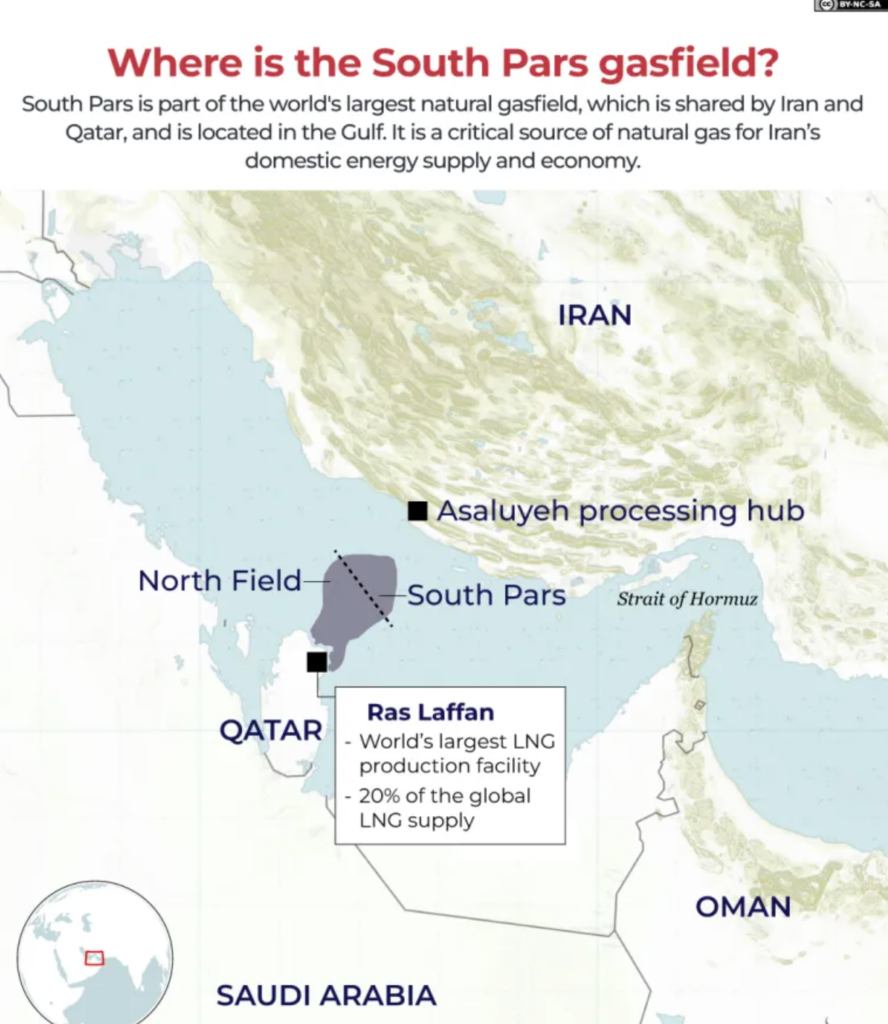
    • Missile strikes on Ras Laffan Industrial City, the world’s largest LNG facility, amid West Asia conflict have raised concerns over global energy supply and India’s energy security.

    What Happened

    • Iran targeted:
      • LNG facilities in Qatar (Ras Laffan)
      • Other energy sites in Saudi Arabia, Kuwait
    • Earlier: Attack on South Pars Gas Field (world’s largest gas field)
    • Marks escalation from transport disruption → production disruption

    Why Ras Laffan is Important

    • Accounts for ~20% of global LNG supply
    • Hub of:
      • LNG production
      • Liquefaction
      • Export infrastructure
    • Damage may cause long-term supply disruption

    Impact on Global Energy

    • Brent crude: Jumped above $119/barrel
    • Natural gas prices: Sharp rise
    • Risk: From supply chain issue → full supply crisis

    India’s Energy Dependence

    1. LNG Dependence

    • ~50% of gas demand met via imports
    • >40% LNG from Qatar
    • Most from Ras Laffan

    2. Overall Energy Imports

    • Crude oil: ~88% import dependent
    • LPG: ~60%
    • Natural gas: ~50%

    3. Strategic Chokepoint

    • Strait of Hormuz:
      • ~50% of India’s crude imports
      • ~60% LNG
      • ~90% LPG

    Immediate Impact on India

    • LNG supply cuts to industries
    • LPG supply concerns
    • Rising energy import costs
    [2024] Consider the following statements: Statement-I: Sumed pipeline is a strategic route for Persian Gulf oil and natural gas shipments to Europe . Statement-II: Sumed pipeline connects the Red Sea with the Mediterranean Sea . Select the correct answer using the code given below: (a) Both Statement-I and Statement-II are correct and Statement-II explains Statement-I (b) Both Statement-I and Statement-II are correct but Statement-II does not explain Statement-I (c) Statement-I is correct but Statement-II is incorrect (d) Statement-I is incorrect but Statement-II is correct

Join the Community

Join us across Social Media platforms.