💥UPSC 2027,2028 Mentorship (April Batch) + Access XFactor Notes & Microthemes PDF

Archives: News

  • Electoral Reforms In India

    Registered Unrecognised Political Parties (RUPP)

    Why in the News?

    The Election Commission de-listed 474 Registered Unrecognised Political Parties (RUPP) for not contesting polls in six years, as part of its electoral clean-up drive.

    Delisting of Political Parties:

    • ECI’s Powers: Governed by Section 29A, RP Act, 1951.
      • No explicit power with ECI to de-register a party once registered, except for fraud or anti-Constitutional allegiance.
    • Judicial Interpretation:
      • INC vs Institute of Social Welfare (2002): SC ruled that ECI cannot de-register parties, only delist or declare inactive, which removes privileges but NOT their legal entity.

    About Registered Unrecognised Political Parties (RUPPs):

    • Constitutional Right: Right to form political associations is guaranteed under Article 19(1)(c).
    • Registration: RUPPs are political associations registered with the Election Commission of India (ECI) under Section 29A, Representation of the People Act, 1951.
    • Not recognised: As either State or National parties because they have not secured the required vote share or seats in past elections.
    • Privileges & Benefits:
      • Tax exemption under Section 13A, Income Tax Act, 1961.
      • Eligibility for common poll symbols during elections (under Symbols Order, 1968).
      • Can nominate up to 20 star campaigners.
    • Obligations:
      • Must contest elections periodically.
      • File annual audit accounts and contribution reports.
      • Disclose donations above ₹20,000.
      • Ensure no donations above ₹2,000 are taken in cash.
    • Issues: Many RUPPs exploit privileges without contesting elections, crowding out genuine contesting parties and confusing voters.

    What are Recognised Political Parties?

    • Types: Recognised parties are classified as National Parties or State Parties.
    • Privileges:
      • Exclusive reserved symbols.
      • Free copies of electoral rolls.
      • Broadcasting time on Doordarshan/All India Radio.
      • Consultation rights with ECI in election matters.
    • Recognition depends on vote share or seats won in Lok Sabha/Assembly elections.

    Conditions for Recognition:

    National Party State Party
    Secures 6% of valid votes in Lok Sabha/Assembly elections in any 4 or more states + wins 4 Lok Sabha seats. Secures 6% of valid votes in the state Assembly election + wins 2 Assembly seats.
    Wins 2% of Lok Sabha seats (currently 11 seats) from at least 3 states. Secures 6% of valid votes in the state’s Lok Sabha election + wins 1 Lok Sabha seat.
    Recognised as a State Party in 4 or more states. Wins 3% of Assembly seats or 3 seats (whichever is higher) in the state Assembly.
    Wins 1 Lok Sabha seat for every 25 seats allotted to that state.
    Secures 8% of total valid votes in the state’s Assembly or Lok Sabha election (added in 2011).


    [UPSC 2001] Consider the following statements regarding the political parties in India:

    1. The Representation of the People Act, 1951 provides for the registration of political parties.

    2. Registration of political parties is carried out by the Election Commission.

    3. A national level political party is one which is recognised in four or more States.

    4. During the 1999 general elections, there were six National and 48 State level parties recognised by the Election Commission.

    Options: (a) I, II and IV (b) I and III (c) II and IV (d) I, II, III and IV*


  • ISRO Missions and Discoveries

    Gaganyaan Analog Experiments (Gyanex)

    Why in the News?

    Gyanex (Gaganyaan Analog Experiments) ground-based astronaut simulations are being conducted by ISRO with ICMR and Institute of Aerospace Medicine, Bengaluru, to prepare Indian astronauts for the 2027 Gaganyaan mission.

    What are Gaganyaan Analog Experiments (Gyanex)?

    • Purpose: India’s first systematic programme in space medicine and astronaut psychology, preparing protocols for Gaganyaan and future missions like space stations and lunar expeditions.
    • Setup: Conducted at the Institute of Aerospace Medicine, Bengaluru, with ICMR support. Astronauts and defence personnel live in a mock spacecraft simulator under confinement, consuming DRDO-developed space food.
    • Activities: Strict space-like routines involving scientific experiments, resource management, schedules, and limited supplies. Tests also cover communication with time-delay simulation.
    • Gyanex-1: Group Captain Angad Pratap and two others confined for 10 days; completed 11 experiments on psychology, biomedicine, and communications.
    • Microgravity Simulation: Weightlessness cannot be reproduced on Earth; instead, 7-day bed-confinement at 6° head tilt studied microgravity effects.
    • Other Indian Analog Missions:
      • Ladakh Human Analog Mission (Nov 2024): Simulated interplanetary survival in cold, barren terrain.
      • HOPE Habitat at Tso Kar (Aug 2025): Tested 8 m habitat + 5 m utility module in Mars-like conditions of low pressure, saline permafrost, and high UV radiation.

    About Gaganyaan Mission:

    • Overview: India’s first human spaceflight mission, initiated in 2007, to send 3 astronauts into Low Earth Orbit (400 km) for 3 days, followed by Arabian Sea splashdown.
    • Rocket: Human-Rated LVM3 (HLVM3), adapted from GSLV Mk3, certified in 2025 for safe human use.
    • Significance: India to become the 4th nation (after US, Russia, China) with crewed spaceflight capability.
    • Latest Timeline (as of Sept 2025):
      • Dec 2025: First uncrewed mission (G1) with humanoid Vyommitra.
      • 2026: Two more uncrewed flights for life-support, avionics, and escape tests.
      • Early 2027: First crewed mission – 3 astronauts in orbit for 3 days.
    • Progress so far:
      • 80–85% development complete: avionics, parachutes, crew safety systems validated.
      • Integrated Air Drop Test (Aug 2025): Confirmed crew module deceleration.
      • Crew Escape System: Multiple ground and flight tests successful.
      • Recovery: Indian Navy and Australian Space Agency conducting splashdown drills.
      • Four IAF test pilots shortlisted: Shubhanshu Shukla, Prasanth Balakrishnan Nair, Angad Pratap, Ajit Krishnan.
      • All trained in Russia, now in advanced Indian training. Final crew of three will be chosen for maiden flight.
    [UPSC 2016] Consider the following statements: The Mangalyaan launched by ISRO

    1. is also called the Mars Orbiter Mission

    2. made India the second country to have a spacecraft orbit the Mars after USA

    3. made India the only country to be successful in making its spacecraft orbit the Mars in its first attempt.

    Select the correct answer using the code given below:

    Options: (a) 1 only (b) 2 and 3 only (c) 1 and 3 only * (d) 1, 2 and 3


  • Water Management – Institutional Reforms, Conservation Efforts, etc.

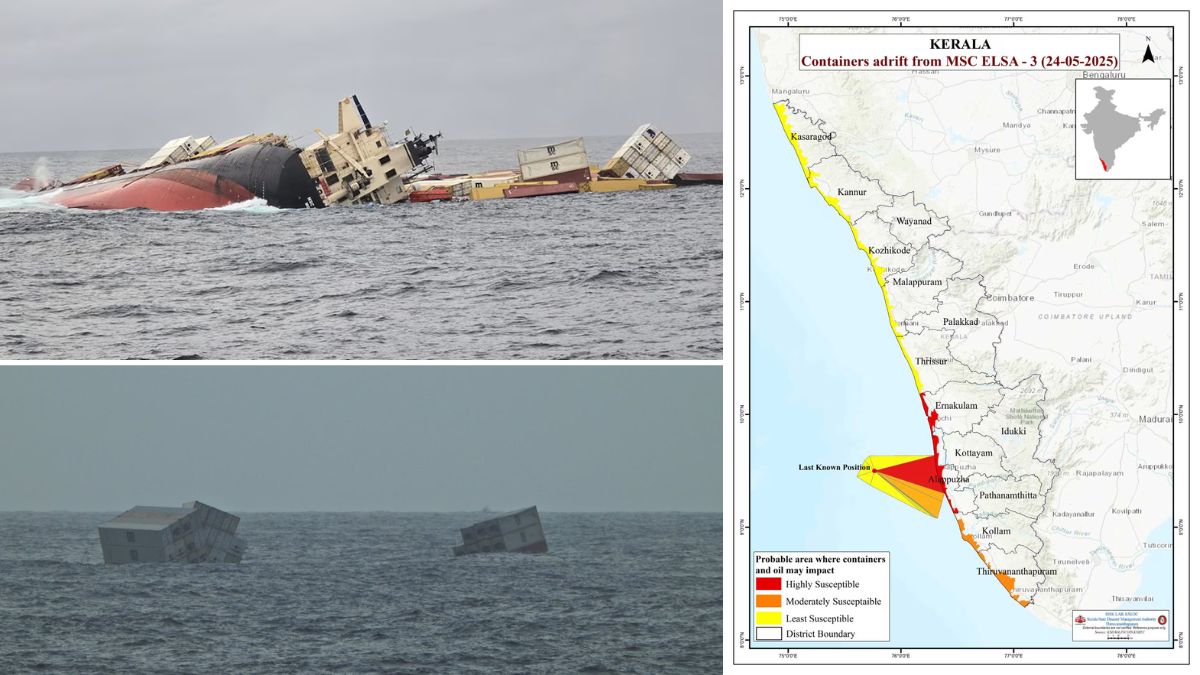
    Ecological Impact of the ELSA 3 Shipwreck in the Arabian Sea

    Why in the News?

    The sinking of the ELSA 3 ship off the Kerala coast in May led to a significant ecological disruption in the south-eastern Arabian Sea, a new study has confirmed.

    Ecological Impact of the ELSA 3 Shipwreck in the Arabian Sea

    About the Pollution and Contaminants:

    • Oil Slick: Wreck of ELSA 3 released petroleum pollutants, initially forming a slick of about 2 square miles.
    • Polyaromatic Hydrocarbons (PAHs): Compounds like naphthalene, fluorene, anthracene, phenanthrene, fluoranthene, pyrene detected; toxic, carcinogenic, and bioaccumulative.
    • Naphthalene Marker: High levels confirmed continuous leakage from fuel tanks.
    • Trace Metals: Nickel, lead, copper, vanadium found in elevated levels in water and sediments, worsening toxicity.
    • Distribution: Oil spread shifted with sea turbulence—first mid-depth concentration, later visible on the surface.

    Ecological Impacts of the Oil Spill:

    • Plankton: Zooplankton showed pollutant accumulation, marking entry into the marine food chain.
    • Fish Eggs & Larvae: Collected in the southwest monsoon spawning season displayed decay and mortality, threatening commercial species recruitment.
    • Benthic Organisms: Sensitive species declined within days; only pollution-tolerant worms and bivalves survived, reflecting seabed stress.
    • Higher Fauna: Brown Noddy seabird (Anous stolidus) recorded with oil-soaked plumage, highlighting risks to birds and larger marine life.
    • Overall Effect: A multi-level disruption from plankton to fish stocks to seabirds.

    Microbial Response and Bioremediation:

    • Bacterial Diversity: Metagenomic studies found hydrocarbon-degrading bacteria near the wreck.
    • Key Strains: Neptunomonas acidivorans, Halomonas tabrizica, Acinetobacter baumannii detected.
    • Implications: Their presence reflects both severe contamination and natural bioremediation potential.
    • Outlook: Microbial action may reduce pollution gradually, but contamination in the Arabian Sea remains significant.
    [UPSC 2017] In the context of solving pollution problems what is/are the advantage/disadvantages of bioremediation technique?

    1. It is a technique for cleaning up pollution by enhancing the same biodegradation process that occurs in nature.

    2. Any contaminant with heavy metals such as cadmium and lead can be readily and completely treated by bioremediation using microorganisms.

    3. Genetic engineering can be used to create microorganisms specifically designed for bioremediation.

    Select the correct answer using the code given below:

    Options: (a) 1 only, (b) 2 and 3 only, (c) 1 and 3 only* (d) 1, 2 and 3


  • Food Procurement and Distribution – PDS & NFSA, Shanta Kumar Committee, FCI restructuring, Buffer stock, etc.

    [19th Septmeber 2025] The Hindu Op-ed: Equalising Primary Food Consumption in India

    PYQ Relevance

    [UPSC 2019] What are the reformative steps taken by the Government to make food grain distribution system more effective?

    Linkage: The article’s proposal to restructure the PDS by trimming excess cereal entitlements and expanding pulse distribution directly links with UPSC 2019’s question. It highlights how reformative steps—like targeted subsidies, rationalised stocking by FCI, and focus on nutritional security beyond cereals—can make the food grain distribution system more effective. Thus, it connects poverty reduction with sustainable and equitable food security reforms.

    Mentor’s Comment

    The recent NSS household consumption survey, coupled with World Bank estimates, has painted a contrasting picture of India’s poverty and food deprivation. While global narratives celebrate the near-eradication of extreme poverty, ground-level consumption data tells a more sobering story, half of rural India still struggles to afford two simple thalis a day. This article unpacks the deeper meaning of food security beyond calorie intake, critiques the existing Public Distribution System (PDS), and explores how restructuring subsidies, especially towards pulses, can equalise food consumption in India. For UPSC aspirants, the debate is not only about statistics but also about welfare priorities, distributional justice, and the role of the state in ensuring dignified living standards.

    Introduction

    India has long battled poverty and hunger, but the release of the 2024 NSS Household Consumption Survey and the World Bank’s Poverty and Equity Brief (2025) has reshaped the debate. The World Bank report claims that extreme poverty has fallen from 16.2% in 2011-12 to just 2.3% in 2022-23, a historic achievement if true. Yet, when food consumption is measured through the “thali index” rather than calorie-based poverty lines, stark disparities emerge: 50% of rural India and 20% of urban India could not afford two thalis a day in 2023-24. This contradiction raises a crucial policy question—how can India ensure not just calorie intake but nutritional adequacy and equal access to primary food consumption?

    The contrasting narratives of poverty in India

    1. World Bank Estimate: Extreme poverty has “virtually disappeared,” with only 2.3% living below $2.15/day.
    2. Thali Index Reality: Despite rising incomes, half of rural India could not afford two balanced meals (thalis) daily in 2023-24.
    3. Deprivation Gap: The difference arises because food is residual expenditure after households spend on essentials like rent, health, and transport.

    Why measure poverty through the thali meal?

    1. Beyond Calories: Traditional poverty lines only measure calorific intake, ignoring nutrition and satisfaction.
    2. Balanced Meal: A thali (rice, dal, roti, vegetables, curd, salad) represents a self-contained, nutritious unit of food consumption.
    3. Cost Factor: Crisil estimates a home-cooked thali costs ₹30. Many households fall short of affording even two thalis/day per person.

    How effective is the Public Distribution System?

    1. Food Deprivation with PDS: Even after including PDS food supplies, deprivation persists—40% rural and 10% urban cannot afford two thalis daily.
    2. Subsidy Distribution: In rural India, a person in the 90–95% expenditure class receives 88% of the subsidy given to the poorest 5%, despite much higher consumption capacity.
    3. Urban Progressivity: The PDS is more progressive in urban areas, but still, 80% receive subsidised or free food, including those not in need.

    Why are cereals not enough

    1. Equalised Cereal Consumption: Both the poorest and richest consume similar amounts of rice and wheat, showing PDS success but also its limits.
    2. Expenditure Share: Cereals now account for only 10% of average household expenditure, so increasing cereal subsidy has diminishing returns.
    3. Need for Protein: Pulses consumption is half in the poorest 5% compared to the richest 5%, highlighting protein inequality.

    Policy path: Equalising food consumption through pulses

    1. Expand PDS Coverage: Redirect subsidies towards pulses, the main protein source for many Indians.
    2. Rationalise Cereals Subsidy: Trim excess rice/wheat entitlements, especially for better-off groups, reducing stocking costs for FCI.
    3. Compact and Targeted PDS: By focusing on pulses and eliminating subsidies beyond the “two thali/day” norm, the system becomes both cost-effective and equitable.
    4. Global Significance: Achieving equalised food consumption across social classes would be a unique welfare success story worldwide.

    Conclusion

    The thali index reveals a hidden crisis of food deprivation that headline poverty numbers obscure. While cereal consumption has been equalised through decades of PDS efforts, the next frontier lies in ensuring protein security via pulses distribution. Rationalising subsidies and targeting them effectively can not only optimise public spending but also equalise primary food consumption across India, a feat that would stand as a benchmark in global welfare policy.

  • Artificial Intelligence (AI) Breakthrough

    How the DeepSeek-R1 AI model was taught to teach itself to reason

    Introduction

    Reasoning, the ability to reflect, verify, self-correct, and adapt, has historically been considered uniquely human. From mathematics to moral decision-making, reasoning shapes every facet of human civilisation. Large language models (LLMs) like GPT-4 have shown glimpses of reasoning, but these were achieved with human-provided examples, introducing cost, bias, and limits. In September 2024, researchers at DeepSeek unveiled their model R1, which demonstrated reasoning through reinforcement learning (trial and error with rewards), without supervised fine-tuning. This represents a paradigm shift in how machines may learn, reason, and potentially evolve intelligence.

    Why is DeepSeek-R1 in the News?

    For the first time, an AI model has taught itself to reason without human-crafted examples. The results were dramatic: DeepSeek-R1 improved from 15.6% to 86.7% accuracy in solving American Invitational Mathematics Examination (AIME) problems, even surpassing the average performance of top human students. It also demonstrated reflection (“wait… let’s try again”) and verification—human-like traits of reasoning. The scale and quality of progress mark this as a milestone in AI research, contrasting sharply with traditional methods that heavily relied on human-labelled data.

    What is Reinforcement Learning in AI?

    1. Definition: Reinforcement learning (RL) is a trial-and-error method where a system receives rewards for correct answers and penalties for wrong ones.
    2. DeepSeek’s Application: Instead of providing reasoning steps, the model was only rewarded for correct final answers.
    3. Outcome: Over time, R1 developed reflective chains of reasoning, dynamically adjusting “thinking time” based on task complexity.

    How Did DeepSeek-R1 Achieve Self-Reasoning?

    1. R1-Zero Phase: Started with solving maths/coding problems, producing reasoning inside <think> tags and answers in <answer> tags.
    2. Trial-and-Error Learning: Wrong reasoning paths were discouraged, correct ones reinforced.
    3. Emergence of Reflection: Model started using “wait” or “let’s try again,” indicating self-correction.

    What Were the Major Successes?

    1. Mathematical Benchmarks: R1-Zero improved from 15.6% to 77.9%, and with fine-tuning, to 86.7% on AIME.
    2. General Knowledge & Instruction Following: 25% improvement on AlpacaEval 2.0 and 17% on Arena-Hard.
    3. Efficiency: Adaptive thinking chains—shorter for easy tasks, longer for difficult ones—conserving computational resources.
    4. Alignment: Improved readability, language consistency, and safety.

    What Are the Limitations and Risks

    1. High Energy Costs: Reinforcement learning is computationally expensive.
    2. Human Role Not Fully Eliminated: Open-ended tasks (e.g., writing) still require human-labelled data for reward models.
    3. Ethical Concerns: Ability to “reflect” raises risks of generating manipulative or unsafe content.
    4. Need for Stronger Safeguards: As AI reasoning grows, so does the risk of misuse.

    Why Does this Matter for the Future of AI?

    1. Reduces Dependence on Human Labour: Cuts costs and addresses exploitative conditions in data annotation.
    2. Potential for Creativity: If reasoning can emerge from incentives, could creativity and understanding follow?
    3. Shift in AI Training Paradigm: From “learning by example” to “learning by exploration.”
    4. Global Implications: Impacts education, coding, mathematics, governance, and ethics of AI.

    Conclusion

    DeepSeek-R1 marks a turning point in AI evolution. By demonstrating reasoning through reinforcement learning alone, it challenges the notion that human-labelled data is indispensable. Yet, this very capability opens new debates—about creativity, autonomy, and control. For policymakers and citizens alike, the task is to harness AI’s promise while ensuring safety, fairness, and ethical integrity.

    PYQ Relevance:

    [UPSC 2023] Introduce the concept of Artificial Intelligence (AI). How does Al help clinical diagnosis? Do you perceive any threat to privacy of the individual in the use of Al in healthcare?

    Linkage: The breakthrough of DeepSeek-R1 shows how AI can now reason through reinforcement learning without human-labelled data, making it more efficient and adaptive. Such reasoning ability can enhance clinical diagnosis by enabling AI to self-correct and refine decision-making in complex medical cases. However, as with healthcare AI generally, the privacy threat persists if sensitive patient data is fed into models without strong safeguards.

  • Foreign Policy Watch: India-China

    Should India overlook boundary issues while normalizing ties with China?

    Introduction

    The India-China relationship has historically oscillated between cautious cooperation and sharp confrontation. The latest Modi–Xi meeting on the sidelines of the SCO Summit reopened bilateral trade, air connectivity, and emphasised peace at the border. Yet, the memory of the 2020 Galwan clashes looms large. At stake is the central question: Can India afford to set aside the boundary dispute for the sake of wider cooperation, or would that compromise its strategic autonomy and long-term security?

    Why is this debate in the news?

    Prime Minister Narendra Modi’s China visit marks the first high-level attempt in five years to restore normalcy after Galwan. The move is significant as it reflects India’s willingness to restart engagement despite recent military tensions and China’s continued strategic partnership with Pakistan. The revival of trade and connectivity signals pragmatism, but it raises the question of whether unresolved boundary tensions can remain compartmentalised. This sharp contrast with the hostility of recent years makes the issue both urgent and unprecedented.

    Can India normalise ties without resolving the boundary issue?

    1. Historical Precedent (1988, 1990s): Rajiv Gandhi’s visit to Beijing in 1988 initiated the idea of cooperation in other domains while border talks continued separately. Both sides agreed to maintain peace and tranquility along the LAC despite unresolved sovereignty disputes.
    2. Galwan Disruption (2020): The deadly clash exposed the fragility of this arrangement and highlighted China’s aggressive posture, a setback far greater than earlier skirmishes.
    3. Current Diplomatic Push: Since 2020, both countries have restored disengagement through buffer zones, with the 2024 Border Patrol Agreement marking an important breakthrough, including restoration of patrol rights in Demchok and Depsang.

    What explains China’s actions and insecurities?

    1. Article 370 Effect: Chinese analysts linked Galwan to India’s constitutional move in Jammu & Kashmir, which Beijing opposed.
    2. Economic Competition: During the U.S.-China trade war, Beijing feared India aligning with Washington to grab supply-chain opportunities.
    3. India’s Growth Factor: China increasingly perceives India’s demographic dividend and economic rise as a potential threat, at a time when its own population is shrinking.
    4. Manufacturing Prowess: Despite insecurities, China’s dominance is overwhelming—accounting for 45% of global manufacturing output, highlighted by India’s Economic Survey 2024-25.

    How fragile is the current normalisation?

    1. Possibility of Galwan-2: Any fresh military clash could derail progress entirely, as mistrust remains deep-rooted.
    2. Chinese Perception of India: Beijing no longer treats India as a peer but as a regional player to be managed, often subordinated to its ties with Pakistan.
    3. Infrastructure Build-up: China continues rapid military expansion on the Tibetan plateau, forcing India to invest heavily in its own LAC infrastructure.
    4. Diplomatic Asymmetry: Even as dialogue continues, China shows little real interest in a final border settlement.

    Can India-China cooperation coexist with China’s South Asia strategy?

    1. China’s Trilateral Mechanisms: Beijing is building frameworks like Pakistan-China-Afghanistan and Pakistan-China-Bangladesh, which aim to sideline India.
    2. Strategic Rivalry: China views India as a long-term competitor; India counters with its own diplomatic cards.
    3. Interdependence Factor: Despite rivalry, both economies remain connected—India dependent on China’s manufacturing, and China wary of India’s market potential.

    Conclusion

    India cannot afford to overlook the boundary issue entirely, as sovereignty and security form the bedrock of foreign policy. Yet, pragmatic engagement, through trade, connectivity, and multilateral platforms, remains equally important. A calibrated approach that safeguards territorial integrity while leveraging cooperation where possible may be the most realistic path forward.

    PYQ Relevance:

    [UPSC 2014] With respect to the South China Sea, maritime territorial disputes and rising tension affirm the need for safeguarding maritime security to ensure freedom of navigation and ever flight throughout the region. In this context, discuss the bilateral issues between India and China.

    Linkage: The South China Sea tensions highlight China’s assertive behaviour in territorial disputes, which parallels its aggressive stance on the India-China boundary issue, especially after Galwan. Just as freedom of navigation is contested in the maritime domain, peace and tranquility along the LAC is fragile despite agreements like the 2024 Border Patrol pact. Thus, bilateral issues centre on sovereignty, security dilemmas, and China’s attempts to limit India’s strategic space in both continental and regional contexts.

  • Iran’s Nuclear Program & Western Sanctions

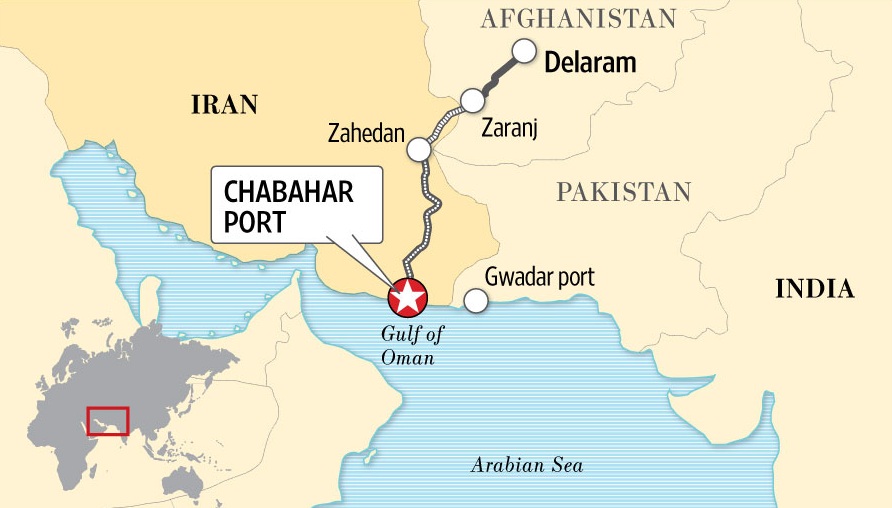
    US revokes sanctions waiver on Chabahar Port

    Why in the News?

    The U.S. has ended the 2018 waiver that let India use Iran’s Chabahar Port for Afghanistan’s reconstruction, revoking it within 10 days.

    US revokes sanctions waiver on Chabahar Port

    About Chabahar Port:

    • Location: Deep-water port in Sistan-Baluchistan province of Iran, on the Gulf of Oman at the mouth of the Strait of Hormuz.
    • Unique Feature: The only Iranian port with direct access to the Indian Ocean.
    • Distances: Kandla Port, Gujarat – 550 nautical miles, Mumbai – 786 nautical miles from Chabahar.
    • Structure: Comprises Shahid Beheshti and Shahid Kalantari terminals.
    • Connectivity Potential: Its proximity to Afghanistan, Pakistan, and India and position on the International North-South Transport Corridor (INSTC) gives it the ability to become a major commercial hub.
    • INSTC: A multi-modal route linking the Indian Ocean and Persian Gulf to the Caspian Sea via Iran, and onward to northern Europe via Russia.

    India’s Engagements for Chabahar Port:

    • Tripartite Agreement (2016): India, Iran, and Afghanistan agreed to develop the Shahid Beheshti terminal, marking India’s first foreign port project.
    • Infrastructure Goals: Develop the port and build a rail line to Zahedan, bypassing Pakistan to reach Afghanistan and Central Asia.
    • Recent Developments: In May 2024, India Ports Global Ltd (IPGL) signed a 10-year lease to operate Shahid Beheshti.
    • Commitments: India pledged $120 million in equipment and a $250 million credit line.
    • Operations: India supplied 6 harbour cranes; facilitated shipments of 2.5 million tonnes of wheat and 2,000 tonnes of pulses to Afghanistan.

    Implications of US Sanctions for India:

    • Economic Setback: Jeopardises India’s ₹200 crore investment and future projects.
    • Connectivity Loss: Cuts India’s only direct maritime gateway to Afghanistan, Central Asia, and INSTC.
    • Strategic Impact: Weakens India’s counter to China’s Gwadar Port in Pakistan under CPEC.
    • Diplomatic Strain: Risks tensions with Iran (strategic partner) and the United States (major trade partner).
    • Operational Challenges: Sanctions may deter shippers, insurers, and suppliers, slowing port activity.
    [UPSC 2017] What is the importance of developing Chabahar Port by India?

    Options: (a) India’s trade with African countries will enormously increase.

    (b) India’s relations with oil-producing Arab countries will be strengthened.

    (c) India will not depend on Pakistan for access to Afghanistan and Central Asia *

    (d) Pakistan will facilitate and protect the installation of a gas pipeline between Iraq and India


  • 7 Natural Heritage Sites from India added to UNESCO’s Tentative List

    Why in the News?

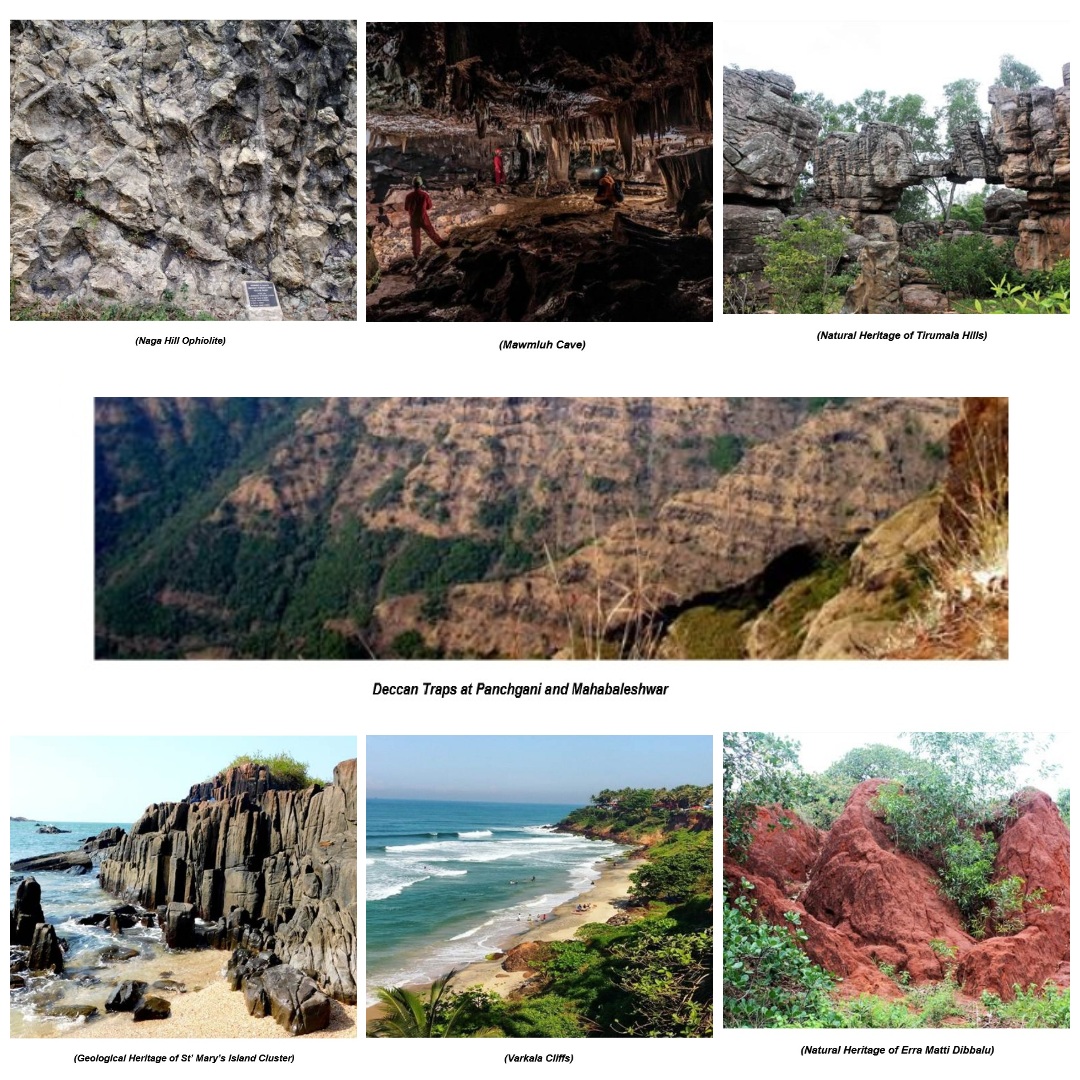
    Seven natural heritage sites from India were added to UNESCO’s Tentative List of World Heritage Sites, raising India’s tally from 62 to 69 places.

    About the 7 newly added UNESCO Tentative List Sites:

    Site

    Detailed Facts

    Deccan Traps (Panchgani & Mahabaleshwar, Maharashtra) • One of the world’s largest volcanic provinces (~66 mya)
    Basalt lava flows covering ~500,000 sq. km
    Step-like “trap” topography, fossil beds, red bole layers
    • Linked to end-Cretaceous mass extinction
    • Part of Western Ghats; within Koyna Wildlife Sanctuary
    St. Mary’s Island Cluster (Udupi, Karnataka) Four islands in Arabian Sea near Udupi
    • Famous for hexagonal/polygonal rhyolitic lava columns (~85–88 mya)
    • Formed during breakup of India–Madagascar
    • Declared National Geo-heritage Monument (2016)
    Rare acidic lava formations, unique in India
    Meghalayan Age Caves (East Khasi Hills, Meghalaya) Mawmluh Cave is type locality for Meghalayan Age (~4,200 years ago)
    • Records global drought event in late Holocene
    • Meghalaya has longest sandstone cave (Krem Puri – 24.5 km)
    Karst systems preserve stalagmites, paleoclimate archives
    • Culturally significant to Khasi tribes; threatened by mining
    Naga Hill Ophiolite (Nagaland) • 200 km belt of uplifted oceanic crust & mantle rocks
    • Composed of gabbro, peridotite, basalt
    • Formed at supra-subduction / mid-ocean ridge zones
    • Later thrust onto Indian continental plate
    • Only major ophiolite exposure in India; National Geological Monument
    Erra Matti Dibbalu (Red Sand Hills, Andhra Pradesh) Quaternary-age coastal red sand mounds (~12,000–18,500 years old)
    • Spread over 5 km near Visakhapatnam
    • Derived from ancient Khondalite rocks
    Record climate shifts, sea-level oscillations, monsoon history
    Mesolithic–Neolithic artefacts found; National Geo-heritage Monument
    Tirumala Hills (Tirupati, Andhra Pradesh) • Famous for Eparchaean Unconformity (1.5 billion-year gap)
    • Boundary between Archaean gneiss & Proterozoic quartzites
    • Hosts Silathoranam natural arch, rare erosional landform
    • Hills rise to ~900 m; part of Cuddapah Basin
    • Combines geological, tectonic, and spiritual significance
    Varkala Cliff (Kerala) • Coastal cliff escarpment up to 80 m high
    • Exposes Mio-Pliocene Warkalli Formation (1.3–25 mya)
    Fossiliferous sedimentary rocks beside sea (rare in India)
    Natural springs and aquifers emerge from cliff face
    • Declared National Geological Monument; major tourism hub (Papanasam Beach)

    Back2Basics: UNESCO’s Tentative List

    • What is it: An inventory of cultural and natural sites that a member country plans to nominate for future World Heritage status.
    • Requirement: A site must stay on this list for at least one year before nomination.
    • Purpose: Allows UNESCO to assess Outstanding Universal Value (OUV) and plan conservation.
    • Note: Not all sites on the Tentative List become World Heritage Sites.
    • World Heritage Sites (WHS): Cultural, natural, or mixed sites recognised under the 1972 World Heritage Convention for their OUV.
    • Categories of WHS:
      • Cultural: Temples, monuments, forts, archaeological remains.
      • Natural: National parks, caves, biodiversity zones.
      • Mixed: Sacred landscapes with both cultural and natural value.
    • 10 Criteria for Selection: A site must satisfy at least one of these:
      • Cultural (i–vi): Masterpiece of human genius; interchange of values; unique cultural testimony; outstanding architecture/landscape; example of settlement/land use; linked to events, traditions, or ideas of universal significance.
      • Natural (vii–x): Exceptional natural beauty; example of Earth’s history; ecological or biological processes; key habitats for in-situ biodiversity conservation and threatened species.
    • India: It is currently a member of the UNESCO World Heritage Committee (2021–2025 term); Has 42 World Heritage Sites (34 cultural, 7 natural, 1 mixed).
    [UPSC 2024] Consider the following properties included in the World Heritage List released by UNESCO:

    1. Shantiniketan 2. Rani-ki-Vav 3. Sacred Ensembles of the Hoysalas 4. Mahabodhi Temple Complex at Bodhgaya

    How many of the above properties were included in 2023?

    Options: (a) Only one (b) Only two* (c) Only three (d) All four


  • Historical and Archaeological Findings in News

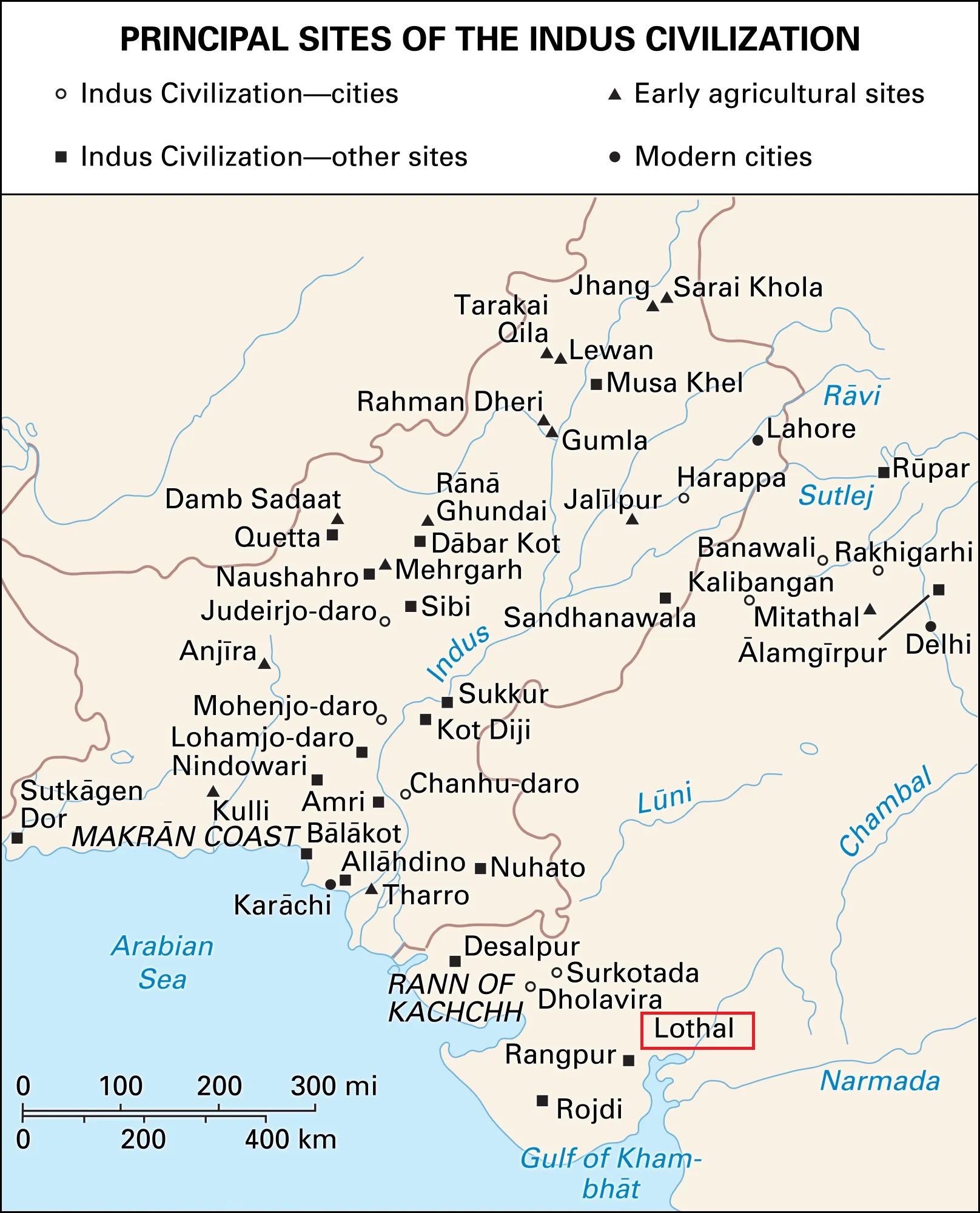
    National Maritime Heritage Complex at Lothal

    Why in the News?

    The PM has recently inspected the progress of the National Maritime Heritage Complex (NMHC) at Lothal in the Ahmedabad district.

    dhol.jpg

    About National Maritime Heritage Complex at Lothal:

    • Location: Lothal, Ahmedabad district, Gujarat, in the Bhal region near the Gulf of Khambhat.
    • Developer: Ministry of Ports, Shipping and Waterways, Government of India.
    • Objective: To showcase India’s 5,000-year-old maritime history, especially the role of Lothal as the world’s earliest dockyard during the Indus Valley Civilization.
    • Historical Significance of Lothal:
      • Built around 2200 BCE as a major Harappan trade and craft centre for beads, gems, and ornaments.
      • Lothal in Gujarati means “Mound of the Dead”, similar to Mohenjo-daro.
      • Excavated by S.R. Rao (1955–1960).
      • Dockyard confirmed through studies (size: 222 x 37 m), once linked with Sabarmati’s old course.
      • Evidence of Lock Gates and Sluice System to regulate flow of water.
      • Trade connections extended to Mesopotamia and other ancient regions.
      • Nominated as a UNESCO World Heritage Site (2014); only known port-town of the Indus Valley Civilization.
    • Features of the Complex:
      • Exhibition halls, maritime park, amphitheater, museum, and research/educational facilities.
      • Will highlight ancient trade routes, shipbuilding traditions, and navigation techniques.
      • Expected to be a major hub for cultural tourism and heritage education.
    [UPSC 2021] Which one of the following ancient towns is well-known for its elaborate system of water harvesting and management by building a series of dams and channelling water into connected reservoirs?

    (a) Dholavira*  (b) Kalibangan (c) Rakhigarhi (d) Ropar


  • Innovation Ecosystem in India

    Highlights of the Global Innovation Index, 2025

    Why in the News?

    The World Intellectual Property Organization (WIPO) has released the Global Innovation Index (GII) 2025.

    About the Global Innovation Index (GII):

    • Overview: Annual ranking of 139 economies by their innovation capacity and success.
    • Publishers: Jointly by Cornell University, INSEAD, and the World Intellectual Property Organization (WIPO).
    • Origin: First published in 2007.
    • Indicators: Uses 80+ metrics across 7 pillars.
    • Structure:
      • Innovation Input Sub-Index: Institutions, human capital and research, infrastructure, market sophistication, business sophistication.
      • Innovation Output Sub-Index: Knowledge and technology outputs, creative outputs.
    • Purpose: Helps governments evaluate how effectively R&D, education, and infrastructure are translated into innovation outcomes.

    Key Highlights of GII 2025:

    • Global R&D growth: Slowed to 2.9% (2024) and 2.3% (2025 projection), down from 4.4% earlier; lowest since the 2010 financial crisis.
    • Top Performers: Switzerland (1st), Sweden (2nd), United States (3rd), followed by Republic of Korea, Singapore, United Kingdom, Finland, Netherlands, Denmark, and China (10th).
    • China: Surpassed Switzerland in knowledge and technology outputs; 2nd highest in R&D expenditure; world leader in patent filings.
    • Regional Trends: Europe dominates with 15 of top 25 economies; Southeast, East Asia and Oceania (SEAO) region has 6 economies in top 25.
    • India: Ranked 38th globally with a score of ~40.5; top among lower-middle income countries and in Central & Southern Asia.
      • Strengths: Knowledge and technology outputs (22nd), market sophistication, and human capital and research.
      • Weaknesses: Business sophistication, infrastructure, and institutions remain lagging.
    [UPSC 2019] The Global Competitiveness Report is published by the:

    Options:

    (a) International Monetary Fund  (b) United Nations Conference on Trade and Development  (c) World Economic Forum * (d) World Bank


Join the Community

Join us across Social Media platforms.