💥UPSC 2027,2028 Mentorship (April Batch) + Access XFactor Notes & Microthemes PDF

Archives: News

  • Wetland Conservation

    Protecting Peatlands can help attain climate goals


    Peatlands, which play a crucial role in regulating global climate by acting as carbon sinks, are facing degradation and need to be urgently monitored, according to the FAO. 

    What are Peatlands?

    • Peatlands are a type of wetlands that occur in almost every country on Earth, currently covering 3% of the global land surface.
    • The term ‘peatland’ refers to the peat soil and the wetland habitat growing on its surface.
    • They are formed due to the accumulation of partially decomposed plant remains over thousands of years under conditions of water-logging.
    • In these areas, year-round waterlogged conditions slow the process of plant decomposition to such an extent that dead plants accumulate to form peat.
    • Over millennia this material builds up and becomes several metres thick.

    Why are peatlands significant?

    • Large amounts of carbon, fixed from the atmosphere into plant tissues through photosynthesis, are locked away in peat soils, representing a valuable global carbon store.
    • Peatlands are highly significant to global efforts to combat climate change, as well as wider sustainable development goals.
    • The protection and restoration of peatlands are vital in the transition towards a low-carbon and circular economy.

    1) Better sinks of Carbon

    • Damaged peatlands contribute about 10% of greenhouse gas emissions from the land-use sector.
    • CO2 emissions from drained peatlands are estimated at 1.3 gigatonnes of CO2 This is equivalent to 5.6% of global anthropogenic CO2 emissions.
    • However, at the same time, peatlands are the largest natural terrestrial carbon store. Worldwide, the remaining area of near-natural peatland contains more than 550 gigatonnes of carbon.
    • This represented 42% of all soil carbon and exceeds the carbon stored in all other vegetation types, including the world’s forests. This area sequesters 0.37 gigatonnes of CO2 a year.

    2) Vital ecosystem services

    • By regulating water flows, peatlands help minimize the risk of flooding and drought and prevent seawater intrusion.
    • In many parts of the world, peatlands supply food, fibre and other local products that sustain local economies.
    • They also preserve important ecological and archaeological information such as pollen records and human artefacts.
    • Draining peatlands reduces the quality of drinking water due to pollution from dissolved compounds. Damage to peatlands also results in biodiversity loss.

    Other benefits

    • Peatlands occur in different climate zones.
    • While in a tropical climate, they can occur in mangroves, in Arctic regions, peatlands are dominated by mosses. Some mangrove species are known to develop peatland soils under them.
    • Besides climate mitigation, peatlands are important for archaeology, as they maintain pollen, seeds and human remains for a long time in their acidic and water-logged conditions.
    • In many countries, pristine peatlands are important for recreation activities. These areas also support livelihood in the form of pastoralism
    • The vegetation growing on pristine peatlands provide different kinds of fibres for construction activities and handicrafts.
    • Many wetland species produce berries, mushrooms and fruits, often economically important to local communities.
    • Peatlands also provide fishing and hunting opportunities. It is also possible to practise paludiculture or wet agriculture on rewetted peatlands.

    Various threats

    • Their degradation due to drainage, fire, agricultural use and forestry can trigger the release of the stored carbon in a few decades.
    • Peatlands contain 30 per cent of the world’s soil carbon. When drained, these emit greenhouse gases, contributing up to one gigatonne of emissions per year through oxidation.

    Way forward

    • In India, peatlands occupy roughly 320–1,000 square kilometres area.
    • To prevent further degradation, these areas should be urgently mapped and monitored.

    With inputs from: https://www.iucn.org/resources/issues-briefs/peatlands-and-climate-change

  • International Space Agencies – Missions and Discoveries

    Fast Radio Bursts (FRBs)


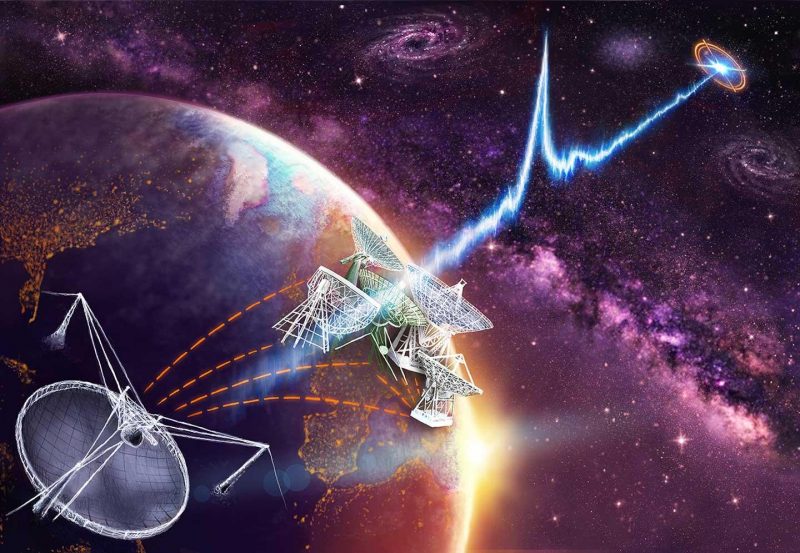
    Researchers from a Canadian space observatory have been recording the periodic radio waves hitting Earth from a neighbouring galaxy from past few years. These radio waves are called Fast Radio Bursts (FRBs).

    Fast Radio Bursts (FRBs)

    • FRBs are super intense, millisecond-long bursts of radio waves produced by unidentified sources in the space.
    • Their discovery in 2007 by American astronomer Duncan Lorimer led to the term ‘Lorimer Bursts’.
    • Since then, just a few dozen similar events have been observed in data collected by radio telescopes around the world, building evidence that points to a variety of potential causes.
    • Only a handful of emissions have been traced to specific areas of the sky, indicating sources in other galaxies.
    • The flash of radio waves is incredibly bright if distant, comparable to the power released by hundreds of millions of suns in just a few milliseconds.
    • This intensity suggests powerful objects like black holes and neutron stars could be involved.
    • The events were once considered to be largely transient – they seemed to happen once, without obvious signs of a repeat emission. However, a number of such bursts have been identified since then.

    Why are they significant?

    • First noticed in 2018 by the Canadian observatory the waves have created ripples across the globe for one reason — they arrive in a pattern.
    • This gave birth to theories that they could be from an alien civilization.
    • Initially, it was believed that the collision of black holes or neutron stars triggers them.
    • But the discovery of repeating FRBs debunked the theory of colliding objects.
  • Labour, Jobs and Employment – Harmonization of labour laws, gender gap, unemployment, etc.

    Kurzarbeit Scheme

    Amid the all-round disruption caused to the economy by the novel coronavirus outbreak, a concern across the world is the possibility of a loss of jobs. Various governments have unveiled various measures to address such concerns, and one of the most talked-about is Kurzarbeit.

    Kurzarbeit Scheme

    • Kurzarbeit is German for “short-work”.
    • The policy provides for a short-time work allowance, called kurzarbeitgeld, which partially compensates for lost earnings during uncertain economic situations.
    • The policy was rolled out during the 2008 economic crisis while its origins date back as far as the early 20th century, before and after World War I.

    How it works?

    • When companies face a loss of earnings due to unforeseen economic situations, they often need to cut back on their working hours or send some of their employees’ home.
    • It aims to address workers who are impacted by the loss of income due to shortened work hours during such times.
    • They can apply for short-term work benefits under the scheme, with the government stepping in to pay employees a part of their lost income.

    Quantum of payment

    • Payment under Kurzarbeit is calculated on the basis of a net loss of earnings.
    • As per Germany’s Federal Agency for Work, short-time employees generally receive about 60 per cent of the flat-rate net wage.
    • In case there is at least one child in the house of the short-time worker, he/she receives 67 per cent of the flat-rate net wage.

    Benefits

    • This scheme helps the companies retain their employees instead of laying them off, and allows the latter to sustain themselves for a period of up to 12 months.
  • Health Sector – UHC, National Health Policy, Family Planning, Health Insurance, etc.

    What is Hantavirus?

    China has reported the death of a person from Yunnan Province who tested positive for the Hantavirus.

    What is Hantavirus?

    • The Hantaviruses are a family of viruses spread mainly by rodents. It is contracted by humans from infected rodents.
    • Cases of the Hantavirus in humans occur mostly in rural areas where forests, fields and farms offer suitable habitat for infected rodents.
    • A person can get infected if he/she comes in contact with a rodent that carries the virus.
    • In the US and Canada, for instance, the Hantavirus carried by the deer mouse is responsible for the majority cases of the Hantavirus infection.
    • Like this, there are various other kinds of Hantaviruses that find hosts in rodents, like the white-footed mouse and the cotton rat among others that may lead to infections in humans if transmitted.

    Its origin

    • The Hantavirus is not novel and its first case dates back to 1993, according to the US Centre for Disease Control (CDC).
    • In the Americas, the family of viruses is known as ‘New World hantaviruses’.

    Symptoms

    • A person infected with the virus may show symptoms within the first to eighth week after they have been exposed to fresh urine, faeces or the saliva of infected rodents.
    • Symptoms may include fever, fatigue, muscle aches, headaches, chills and abdominal problems.
    • Four to ten after being infected, late symptoms of HPS may start to appear, which include coughing and shortness of breath.

    Mortality risk

    • It is the cause of Hantavirus pulmonary disease (HPS), a severe respiratory disease. The HPS can be fatal and has a mortality rate of 38 per cent.
    • It remains unclear whether human-to-human transmission of the virus is possible.
    • There have been no reports of human-to-human transmission of Hantavirus in the US.
  • Capital Markets: Challenges and Developments

    India VIX Index

    The  India VIX Index, an indicator of the volatility of the stock market has been plunging after the outbreak of novel coronavirus.

    What is Volatility Index?

    • Volatility Index is a measure of the market’s expectation of volatility over the near term.
    • Volatility is often described as the “rate and magnitude of changes in prices” and in finance often referred to as risk.
    • It is a measure, of the amount by which an underlying Index is expected to fluctuate, in the near term, (calculated as annualized volatility, denoted in percentage e.g. 20%) based on the order book of the underlying index options.

    India VIX Index

    • India VIX is a volatility index based on the NIFTY Index Option prices.
    • From the best bid-ask prices of NIFTY Options contracts, a volatility figure (%) are calculated which indicates the expected market volatility over the next 30 calendar days.
    • “VIX” is a trademark of Chicago Board Options Exchange, Incorporated (“CBOE”) and Standard & Poor’s.
    • The firm has granted a license to NSE to use such mark in the name of the India VIX and for purposes relating to the India VIX.
  • Zoonotic Diseases: Medical Sciences Involved & Preventive Measures

    Welcome Policy On APIs, Devices

    Context

    It is most welcome that the Centre has announced a `14,000-crore incentive package to boost the manufacture of drugs, especially active pharmaceutical ingredients (API).

    What should be the immediate policy focus?

    • Focus on protective gear: The immediate policy focus must be to swiftly overcome shortages of critical protective gear like gowns and face masks, diverting production lines if required.
    • We also need to anticipate and step-up production of vital devices like ventilators.
    •  Provisions in the package: What is proposed now are industrial parks for bulk drugs and APIs, together with a policy for multi-year fiscal benefits. And ditto for parks for the manufacture of medical devices and attendant fiscal incentives.
    • The state governments need to identify 1,000 acres for the parks that are well-integrated with knowledge centres and nationally accredited labs.

    What additions need to be made in the package?

    • Public-private partnership: In tandem, the pharmaceuticals package issued on Saturday needs to be followed through, with a forward-looking public-private partnership, to avoid import-dependency in this critical sector.
    • What is envisaged is a set of schemes to reap economies of scale and ready availability of inputs in the production of APIs and medical devices via the cluster approach.

    How India became uncompetitive in API?

    • Policy rigidities and price controls: APIs are, of course, bulk drugs that provide medicines with their therapeutic value, and it is unfortunate that since circa 1995, India has become steadily uncompetitive in API production, thanks to a panoply of policy rigidities such as onerous price controls.
    • Export competition from China: Opaque export competition from China has been game-changing indeed: APIs for most medicines are mostly imported.
    • This needs to change, fast. We do need to competitively and efficiently boost output of pharmaceuticals right across the value chain.

    Conclusion

    The government must understand that manufacture by itself is not enough. The policy must ensure competition and quality, keep prices down.

  • Parliament – Sessions, Procedures, Motions, Committees etc

    What is Finance Bill?

    The Parliament has passed the Finance Bill 2020 with 40 amendments without any discussion.

    Highlights of the Bill

    • Among the important amendments included was one enabling the government to raise additional excise duty on petrol by up to Rs 18 per litre and diesel by up to Rs 12 per litre when required.
    • Amendments enabling the taxation of NRIs’ India-controlled income above Rs 15 lakh, and another extending the DDT exemption to REITs and Infrastructure Investment trusts were passed.
    • The Bill also changes the definition of ‘Resident’, as stipulated under the Income Tax Act.
    • Presently, a person is considered a resident of India, i.e. their global income is taxable in India if they are in the country for more than 182 days a year. This has now been reduced to 120 days.
    • The amendments also include provisions for levying TDS of 1 per cent on e-commerce transactions.

    What is a Finance Bill?

    • As per Article 110 of the Constitution, the Finance Bill is a Money Bill.
    • The Finance Bill is a part of the Union Budget, stipulating all the legal amendments required for the changes in taxation proposed by the Finance Minister.
    • This Bill encompasses all amendments required in various laws pertaining to tax, in accordance with the tax proposals made in the Union Budget.
    • The Finance Bill, as a Money Bill, needs to be passed by the Lok Sabha — the lower house of the Parliament. Post the Lok Sabha’s approval, the Finance Bill becomes Finance Act.

    Difference between a Money Bill and the Finance Bill

    1) Money Bill

    • A Money Bill has to be introduced in the Lok Sabha as per Section 110 of the Constitution. Then, it is transmitted to the Rajya Sabha for its recommendations.
    • The Rajya Sabha has to return the Bill with recommendations in 14 days.
    • However, the Lok Sabha can reject all or some of the recommendations.

    2) Finance Bill

    • In a general sense, any Bill that relates to revenue or expenditure is a Financial Bill.
    • The Finance Bill is introduced in Lok Sabha.
    • Rajya Sabha can recommend amendments in the bill. However, the bill has to be passed by the Parliament within 75 days of introduction.

    >Types of Finance Bills

    Type I

    • Financial Bill Cat-1 is a bill which contains any of the matters specified in Article 110 but does not exclusively deal with such matters.
    • For example- a bill which contains a taxation clause, but does not deal solely with taxation under Article 117 (1), has two features in common with a money bill.
    1. It cannot be introduced in the Rajya Sabha.
    2. It can only be introduced in Lok Sabha with the prior recommendation of the President.(Similarities)
    • But has one feature uncommon that is, not being a Money Bill, the Rajya Sabha has the same power to reject or amend such Financial Bill subject to limitation.

    Type II

    • It is a finance bill which merely involves expenditure and does not include any of the matters specified in Article 110.
    • It is an Ordinary Bill and may be initiated in either House and the Rajya Sabha has full power to reject or ament it.
    • It is thus apparent that all Money Bills are Financial Bills but all Financial Bills are not Money Bills.

    Who decides the Bill is a Finance Bill?

    • The Speaker of the Lok Sabha is authorised to decide whether the Bill is a Money Bill or not.
    • Also, the Speaker’s decision shall be deemed to be final.

    Why Finance Bill is needed?

    • The Union Budget proposes many tax changes for the upcoming financial year, even if not all of those proposed changes find a mention in the Finance Minister’s Budget speech.
    • These proposed changes pertain to several existing laws dealing with various taxes in the country.
    • The Finance Bill seeks to insert amendments into all those laws concerned, without having to bring out a separate amendment law for each of those Acts.
    • For instance, a Union Budget’s proposed tax changes may require amending the various sections of the Income Tax law, Stamp Act, Money Laundering law, etc.
    • The Finance Bill overrides and makes changes in the existing laws wherever required.

    What changes can be made via Finance Bill?

    • The most awaited changes in the tax proposals in the Union Budget usually pertain to personal income tax.
    • For taxpayers across the country, the most awaited moment is when the Finance Minister’s speech announces an increase in minimum income threshold, or declares any changes in income tax slabs to make it less costly, or other exemptions.
    • In addition, there might be changes in the rules, procedures, and deadlines for filing tax returns or the payment of tax itself.
    • For instance, there might be a change in the amount of penalty for missing the deadline. Those proposed changes would typically need to be brought in via amending the Income Tax Act.
    • Among other changes, the FM may propose in the Union Budget with regard to the rates or processes for payment or administration of stamp duty levied on various instruments.
    • Such a change would need to be brought in via an amendment to the Stamp Act.
    • Since the introduction of GST, there is no amendment to indirect taxes in the Union Budget, since that is under the purview of the GST Council.


  • Oil and Gas Sector – HELP, Open Acreage Policy, etc.

    Govt. has raised excise duty cap on fuel

    In a move which would help the government to raise excise duty on fuel further in future, the government has raised the cap on special additional excise duty on petrol and diesel. These changes are as per the amendments in the Finance Bill passed in the Parliament.

    Why such move?

    • Government is increasing duties on petrol and diesel to raise revenues in view of a tight fiscal situation.
    • Slump in global crude oil prices, alongside possibility of a global economic recession, has forced the government to look for avenues to raise revenues to support growth.
    • With major companies going for production shut downs, industry players have suggested the government to boost fiscal stimulus in the wake of demand collapse triggered by the coronavirus.
    • Earlier, Saudi Arabia had triggered the crash in prices by announcing a sharp increase in oil production after Russia declined to reduce oil supply to contain a fall in oil prices due to declining demand in a meeting of petroleum exporting countries.

    Impact of the move

    • Every rupee hike in excise duty is expected to yield roughly Rs 13,000-14,000 crore annually.
    • The slump in global crude oil prices enables the government to raise these duties substantially without immediately putting the burden on the consumer.
    • But there is expected to be a demand slowdown for fuels with a nearly country wide lockdown in the wake of coronavirus.
    • With airlines, railways, trucks and passenger cars going off the roads, petrol, diesel and ATF (aviation turbine fuel) consumption is expected to fall drastically.

    Back2Basics

    What is Excise Duty?

    • Excise duty is a form of tax imposed on goods for their production, licensing and sale.
    • It is the opposite of Customs duty in sense that it applies to goods manufactured domestically in the country, while Customs is levied on those coming from outside of the country.
    • At the central level, excise duty earlier used to be levied as Central Excise Duty, Additional Excise Duty, etc.
    • Excise duty was levied on manufactured goods and levied at the time of removal of goods, while GST is levied on the supply of goods and services.

    Purview of excise duty

    • The GST introduction in July 2017 subsumed many types of excise duty.
    • Today, excise duty applies only on petroleum and liquor.
    • Alcohol does not come under the purview of GST as exclusion mandated by constitutional provision.
    • States levy taxes on alcohol according to the same practice as was prevalent before the rollout of GST.
    • After GST was introduced, excise duty was replaced by central GST because excise was levied by the central government. The revenue generated from CGST goes to the central government.

    Types of excise duty in India

    Before GST kicked in, there were three kinds of excise duties in India.

    Basic Excise Duty

    • Basic excise duty is also known as the Central Value Added Tax (CENVAT). This category of excise duty was levied on goods that were classified under the first schedule of the Central Excise Tariff Act, 1985.
    • This duty was levied under Section 3 (1) (a) of the Central Excise Act, 1944. This duty applied on all goods except salt.

    Additional Excise Duty

    • Additional excise duty was levied on goods of high importance, under the Additional Excise under Additional Duties of Excise (Goods of Special Importance) Act, 1957.
    • This duty was levied on some special category of goods.

    Special Excise Duty

    • This type of excise duty was levied on special goods classified under the Second Schedule to the Central Excise Tariff Act, 1985.
    • Presently the central excise duty comprises of a Basic Excise Duty, Special Additional Excise Duty and Additional Excise Duty (Road and Infrastructure Cess) on auto fuels.
  • Coronavirus – Health and Governance Issues

    Legal Provisions Used By Law Enforcement Agencies To Control The Spread Of Coronavris

    To enforce a full lockdown to contain the spread of COVID-19, law enforcement agencies have taken the help of various legal provisions in CrPC and IPC.

    • The orders issued to curb the spread of the coronavirus have been framed under the Epidemic Diseases Act, 1897, which lays down punishment as per Section 188 of the Indian Penal Code, 1860.
    • Similarly, Sections 269 and 270 IPC are being invoked against persons who malignantly do any act which is likely to spread the infection of any disease dangerous to life.

      Sections 269 and 270 of the IPC

      • Sections 269 (negligent act likely to spread infection of disease dangerous to life) and 270 (malignant act likely to spread infection of disease dangerous to life) come under Chapter XIV of the IPC.
      • The chapter is named ‘Of Offences Affecting The Public Health, Safety, Convenience, Decency and Morals’.
      • While Section 269 provides for a jail term of six months and/or fine, Section 270 provides for a jail term of two years and/or fine.
      • In Section 270, the word ‘malignantly’ indicates a deliberate intention on the part of the accused.
      • During the coronavirus outbreak, penal provisions, such as Sections 188, 269 and 270 of the IPC, are being invoked to enforce the lockdown orders in various states.

      Earlier instances of invocation

      • Both Sections have been used for over a century to punish those disobeying orders issued for containing epidemics.
      • The Sections were similarly enforced by colonial authorities during outbreaks of diseases such as smallpox and bubonic plague.

    What is Section 188 of the Indian Penal Code?

    • Section 3 of the Epidemic Diseases Act, 1897, provides penalties for disobeying any regulation or order made under the Act.
    • These are according to Section 188 of the Indian Penal Code (disobedience to order duly promulgated by public servant).
    • It is not necessary that the offender should intend to produce harm, or contemplate his disobedience as likely to produce harm.
    • It is sufficient that he knows of the order which he disobeys, and that his disobedience produces, or is likely to produce, harm.

    What happens if you violate the lockdown orders? 

    Under Section 188, there two offences:

    1) Disobedience to an order lawfully promulgated by a public servant, If such disobedience causes obstruction, annoyance or injury to persons lawfully employed

    Punishment: Simple Imprisonment for 1 month or fine of Rs 200 or both

    2) If such disobedience causes danger to human life, health or safety, etc.

    Punishment: Simple Imprisonment for 6 months or fine of Rs 1000 or both

    According to the First Schedule of the Criminal Procedure Code (CrPC), 1973, both offences are cognizable, bailable, and can be tried by any magistrate.

    Triable By: Any Magis­trate


  • Innovations in Sciences, IT, Computers, Robotics and Nanotechnology

    [pib] National Supercomputing Mission (NSM)

    The Union Ministry of Science & Technology has informed about the progress of the National Supercomputing Mission.

    National Supercomputing Mission (NSM)

    • NSM is a proposed plan by GoI to create a cluster of seventy supercomputers connecting various academic and research institutions across India.
    • In April 2015 the government approved the NSM with a total outlay of Rs.4500 crore for a period of 7 years.
    • The mission was set up to provide the country with supercomputing infrastructure to meet the increasing computational demands of academia, researchers, MSMEs, and startups by creating the capability design, manufacturing, of supercomputers indigenously in India.
    • Currently there are four supercomputers from India in Top 500 list of supercomputers in the world.

    Aims and objectives

    • The target of the mission was set to establish a network of supercomputers ranging from a few Tera Flops (TF) to Hundreds of Tera Flops (TF) and three systems with greater than or equal to 3 Peta Flops (PF) in academic and research institutions of National importance across the country by 2022.
    • This network of Supercomputers envisaging a total of 15-20 PF was approved in 2015 and was later revised to a total of 45 PF (45000 TFs), a jump of 6 times more compute power within the same cost and capable of solving large and complex computational problems.

    IWhat is a Supercomputer?

    • A supercomputer is a computer with a high level of performance as compared to a general-purpose computer.
    • The performance of a supercomputer is commonly measured in floating-point operations per second (FLOPS) instead of million instructions per second (MIPS).
    • Since 2017, there are supercomputers which can perform over a hundred quadrillion FLOPS (petaFLOPS).
    • Since November 2017, all of the world’s fastest 500 supercomputers run Linux-based operating systems.

    Why do we need supercomputers?

    • Developed and almost-developed countries have begun ensuring high investments in supercomputers to boost their economies and tackle new social problems.
    • These high-performance computers can simulate the real world, by processing massive amounts of data, making cars and planes safer, and more fuel-efficient and environment-friendly.
    • They also aid in the extraction of new sources of oil and gas, development of alternative energy sources, and advancement in medical sciences.
    • Supercomputers have also helped weather forecasters to accurately predict severe storms, enable better mitigation planning and warning systems.
    • They are also used by financial services, manufacturing and internet companies and infrastructure systems like water-supply networks, energy grids, and transportation.
    • Future applications of artificial intelligence (AI) also depend on supercomputing.
    • Due to the potential of this technology, countries like the US, China, France, Germany, Japan, and Russia have created national-level supercomputing strategies and are investing substantially in these programmes.

    When did India initiate its efforts to build supercomputers?

    • India’s supercomputer programme initiated in the late 1980s, when the United States ceased the export of a Cray Supercomputer due to technology embargos.
    • This resulted in India setting up C-DAC in 1988, which in 1991, unveiled the prototype of PARAM 800, benchmarked at 5 Gflops. This supercomputer was the second-fastest in the world at that time.
    • Since June 2018, the USA’s Summit is the fastest supercomputer in the world, taking away this position from China.
    • As of January 2018, Pratyush and Mihir are the fastest supercomputers in India with a maximum speed of Peta Flops.

    What are the phases of the National Supercomputing Mission?

    Phase I:

    • In the first phase of the NSM, parts of the supercomputers are imported and assembled in India.
    • A total of 6 supercomputers are to be installed in this phase.
    • The first supercomputer that was assembled indigenously is called Param Shivay. It was installed in IIT (BHU) located in Varanasi.
    • Similar systems, Param Shakti (IIT Kharagpur) and Param Brahma (IISER, Pune) were also later installed within the country.
    • The rest will be installed at IIT Kanpur, IIT Hyderabad and Jawaharlal Nehru Institute of Advanced Studies (JNIAS).

    Phase II:

    • The supercomputers that are installed so far are about 60% indigenous.
    • The 11 systems that are going to be installed in the next phase will have processors designed by the Centre for Development of Advanced Computing (C-DAC) and will have a cumulative capacity of 10 petaflops.
    • These new systems are to be constructed more cost-effectively than the previous ones.
    • One of the 11 proposed supercomputers will be installed
    • at C-DAC exclusively for small and medium enterprises so that they can train employees as well as work on supercomputers at a very low cost.

    Phase III:

    • The third phase aims to build fully indigenous supercomputers.
    • The government had also approved a project to develop a cryogenic cooling system that rapidly dispels the heat generated by a computing chip. This will be jointly built together by IIT-Bombay and C-DAC.

    What are the advantages of the National Supercomputing Mission?

    • The National Supercomputing Mission can ensure accessibility to supercomputers at an affordable rate to the scientific community and medium and small enterprises.
    • It can exponentially enhance the quality and quantity of R&D and higher education in the areas of science and technology.
    • It can solve the current and future challenges that are plaguing the country.
    • Currently, the world’s top supercomputers are mostly under the control of advanced nations like the US, Japan, China and the European Union. This Mission has the potential to bring India into this select league of such nations.
    • These supercomputers can be used in the areas of climate modelling, weather predictions, computational biology, atomic energy simulations, defence, disaster simulation, astrophysics etc.
    • These computers have played a crucial role in scientific and technological advancements in numerous fields.
    • Unlike other computers, these high-performance machines can crunch the most complex of data at a speed, which is millions of times faster than a desktop PC.
    • This mission, aiming to provide supercomputing facilities to about 60-70 institutions across the nation and thousands of active researchers, academicians, is moving fast towards creating a computer infrastructure within the country.
    • This mission can also enhance the country’s capacity to develop the next generation of supercomputer experts.

    How do other countries make use of supercomputers?

    China:

    • Jiangsu Province has a supercomputer called “Sunway TaihuLight”.
    • This supercomputer performs a wide range of tasks, including climate science, weather forecasting and earth-system modelling to help ships avoid rough seas, improve farmers’ yields and ensure the safety of offshore drilling.
    • TaihuLight has already led to an increase in profits and a reduction in expenses that justify its cost ($270 million).

    United States:

    • In the US, supercomputers are radically transforming the healthcare system.
    • The Centre for Disease Control (CDC) has used supercomputers to create a far more detailed model of the Hepatitis-C virus, a major cause of the liver disease that costs $9 billion in healthcare costs in the US alone.
    • Using supercomputers, the researchers have now developed a model that comprehensively simulates heart down to the cellular level and can lead to a substantial reduction in heart diseases.

    These are some of the very few cases of how supercomputers have enhanced breakthroughs in various fields.

    How do supercomputers help fight coronavirus?

    • Earlier, the US had established COVID-19 High-Performance Computing Consortium that will bring together industry, academic institutions, and federal laboratories to try to identify or create candidate compounds that might prevent or treat coronavirus infection.
    • One of the members of the consortium, the Oak Ridge National Laboratory, aimed to look into compounds that are already available in the market that might combat COVID-19.
    • For this purpose, the world’s fastest supercomputer “Summit” was used.
    • Like other viruses, the novel coronavirus uses a spike protein to inject cells.
    • Using Summit with an algorithm to investigate which drugs could bind to the protein and prevent the virus from doing its duty, the researchers have a list of 77 drugs that show promise.
    • Starting with 8,000 compounds, Summit has shortened the time of the experiment exponentially, ruling out the vast majority of possible medications before settling on 77 drugs, which are ranked based on how effective they are likely to be at halting the virus in the human body.

    Way forward

    • It is evident that supercomputers would become a vital part of our lives as it can provide solutions to the current and future problems and India, one of the most populous nations in the world, must ensure that it also has access to this technology for the welfare of its people.
    • Supercomputers, as they operate at such incredible speeds, will encounter numerous barriers like network and interconnectivity hardware that previous generations of designers did not have to deal with.
    • The cooling system is also one of the major design constraints.
    • Hence, India must give a high emphasis on innovation to tackle these challenges.
    • India must also give high emphasis to the application rather than the technology itself.
    • Supercomputing research also requires fundamental research of the next stages of computing like quantum computing that are still in the theoretical stage.
    • Bureaucratic red-tapism must be circumvented and scientists and researchers must be allowed to take bold and radical steps without fear of reprisal.
    • The government must also invest in necessary physical and digital infrastructure.
    • It must also address the challenges of:
    • Limited funding and delayed release of funds
    • The increasing need for imports for necessary hardware components to build supercomputers

    Conclusion:

    • Supercomputers are strategically important for India as it can help the country to become a knowledge-driven economy.
    • This technology also can support cutting edge research that can benefit the economy, society, businesses, environment, etc.
    • Thus, enhancing investments, improving flexibility for research and providing other necessary infrastructures must be ensured for it to grow.
    • Without this technology, India risks being surpassed on the global stage by other nations and will consequently miss the huge benefits that come from having this strategically important technology at the disposal of the country’s best and brightest minds


Join the Community

Join us across Social Media platforms.