💥UPSC 2026, 2027, 2028 UAP Mentorship (March Batch) + Access XFactor Notes & Microthemes PDF

Archives: News

  • Electoral Reforms In India

     Many questions about ‘one nation, one election’   

    Why in the News?

    In an Independence Day speech, the Prime Minister renewed his push for simultaneous elections, targeting implementation by the 2029 polls.

    Pros and Cons of Simultaneous Elections in India:

    Pros

    Cons

    1. Cost Reduction: It can decrease the deployment of resources such as EVMs, security personnel, and election management teams to only one time in 5 years.
    2. Continuity in Governance: Simultaneous elections can prevent the frequent imposition of the Model Code of Conduct, which disrupts government development activities and decision-making processes.
    3. Reduced Election Fatigue: Voters, political parties, and the administration could benefit from reduced election fatigue, allowing them to focus more on governance and development.
    4. Uniformity in Policy Implementation: Central and state governments can work in sync on policy implementation without the hindrance of upcoming elections in various states.
    1. Constitutional Challenges: The implementation of simultaneous elections would require significant amendments to the Constitution, particularly Articles 83, 85, 172, and 174, which deal with the duration of legislative bodies.
    2. Federalism Concerns: Opponents argue that simultaneous elections could undermine the federal structure of India, marginalizing regional parties and giving dominance to national parties.
    3. Voter Disengagement: The synchronization of elections might lead to voter disengagement due to the overwhelming nature of combined elections, where national issues may overshadow regional ones.

    Key Recommendations of High-Level Committee

    The High-Level Committee on Simultaneous Elections, chaired by former President Ram Nath Kovind, has made several significant recommendations aimed at synchronizing elections for the Lok Sabha, state assemblies, and local bodies in India.

    1. Amendment to Article 82A: Allow the President to set an ‘Appointed Date’ for starting simultaneous elections to Lok Sabha and Legislative Assemblies
    2. Term Synchronization: States with elections between June 2024 and May 2029 would have their terms end with the 18th Lok Sabha, enabling the first simultaneous elections in 2029
    3. Premature Dissolution Measures: Fresh elections only for the remaining term until the next simultaneous elections in case of early dissolution of Parliament or state Assembly
    4. Synchronization of Local Body Elections: Parliament to pass legislation to align municipalities and panchayats elections with General Elections within 100 days
    5. Single Electoral Roll: The committee advocates for a single electoral roll applicable to all tiers of government, which would require an amendment to Article 325. This aims to reduce redundancy and duplication in voter registration.
    6. Logistical Arrangements: ECI to provide detailed logistical and expenditure plans for simultaneous elections in coordination with SECs.

    Way forward: 

    • Constitutional and Legal Reforms: Begin with phased constitutional amendments and legal reforms to address the challenges of synchronization while ensuring that the federal structure and democratic principles are preserved.
    • Pilot Implementation: Consider piloting simultaneous elections in a few states with synchronized local body elections to assess feasibility, logistical challenges, and public response before scaling up to the national level by 2029.

    Mains question for practice:

    Q Discuss the feasibility and implications of implementing simultaneous elections in India by 2029, as recently proposed by the Prime Minister. 15M 

    Mains PYQs

    ‘Simultaneous election to the Lok Sabha and the State Assemblies will limit the amount of time and money spent in electioneering but it will reduce the government’s accountability to the people’ Discuss. (UPSC CSE 2017)

  • Right To Privacy

    What is a Polygraph Test?

    Why in the News?

    The Central Bureau of Investigation (CBI) concluded polygraph tests on the accused in the Kolkata Rape and Murder Case.

    About Polygraph Tests in India

    Details
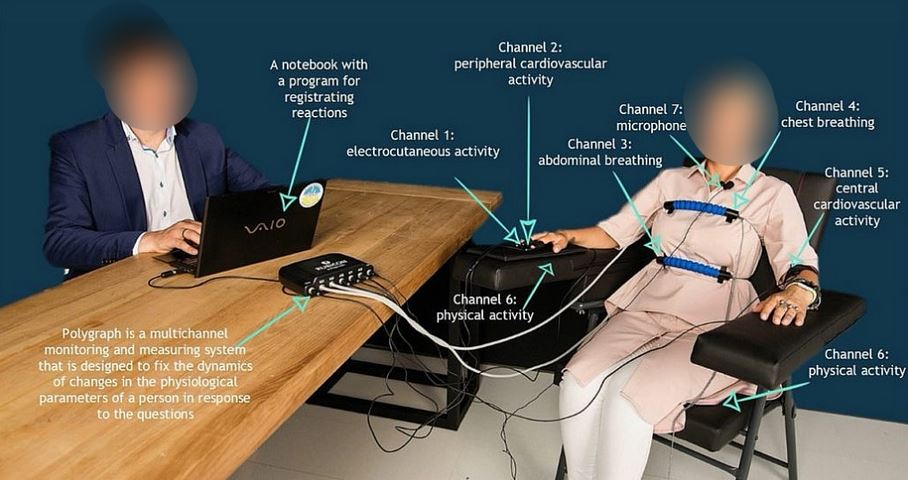
    Definition A procedure measures physiological responses like blood pressure, pulse, respiration, and skin conductivity while a subject answers questions to detect deception.
    Physiological Indicators Heart Rate and Blood Pressure: Monitored for changes.
    Respiratory Rate: Tracks breathing patterns.
    Galvanic Skin Response (GSR): Measures skin’s electrical conductance, which varies with moisture levels.
    Procedure Sensor Connection: Attached to the chest, fingertips, and arm.
    Baseline Questions: Establish physiological response baselines.
    Control and Relevant Questions: Analyzed to identify deceptive responses by comparing physiological changes.
    Constitutional Provisions Article 20(3): Protects against self-incrimination; necessitates consent for polygraph tests.
    Article 21: Concerns about potential violations of the right to life and privacy due to mental torture aspects of polygraph tests.
    Legal and Judicial Rulings Selvi vs. State of Karnataka (2010): Tests must be voluntary with informed consent.
    D.K. Basu vs. State of West Bengal (1997): Involuntary tests could violate the Right to Life and Privacy.
    Admissibility in Court According to the Indian Evidence Act, 1871, results from polygraph tests are not admissible as evidence in court.
    Guidelines National Human Rights Commission Guidelines (1999): Establish consent and procedural requirements for administering polygraph tests to align with human rights standards.


    PYQ:

    [2018] Right to Privacy is protected as an intrinsic part of Right to Life and Personal Liberty. Which of the following in the Constitution of India correctly and appropriately imply the above statement?

    (a) Article 14 and the provisions under the 42nd Amendment to the Constitution.

    (b) Article 17 and the Directive Principles of State Policy in Part IV.

    (c) Article 21 and the freedoms guaranteed in Part III.

    (d) Article 24 and the provisions under the 44th Amendment to the Constitution.

  • Microfinance Story of India

    MUDRA 2.0 Loans

    Why in the News?

    The Union Budget 2024 has sought to increase the loan limit under the MUDRA scheme signifying the potential launch of MUDRA 2.0.

    What is MUDRA 1.0?

    Details
    Launch
    • Pradhan Mantri Mudra Yojana (PMMY)
    • Launched in 2015.
    Purpose To extend affordable credit to micro and small enterprises, bringing them into the formal financial system and funding the unfunded.
    Loan Providers Public Sector Banks (PSU Banks), Regional Rural Banks, Cooperative Banks, Private Sector Banks, Foreign Banks, Micro Finance Institutions (MFI), and Non-Banking Finance Companies (NBFC).
    Eligibility Indian citizens with a business plan for non-farm sector income-generating activities in manufacturing, processing, trading, or services, requiring less than ₹10 lakh.
    Types of Loans Shishu: Loans up to ₹50,000.
    Kishor: Loans above ₹50,000 and up to ₹5 lakh.
    Tarun: Loans above ₹5 lakh and up to ₹10 lakh.
    Subsidy
    • No direct subsidy;
    • Loans linked to Government schemes providing capital subsidies are eligible under PMMY.

    Achievements of MUDRA 1.0

    • Financial Inclusion: Disbursed over Rs 27.75 lakh crore to 47 crore small entrepreneurs, improving access to formal credit.
    • Support for Marginalized Groups: 69% of loans went to women, and 51% to SC/ST and OBC entrepreneurs, enhancing social equity and gender equality.
    • Job Creation: Helped create jobs and encouraged self-employment, especially in rural and semi-urban areas.
    • Reduction in NPAs: Reduced non-performing assets (NPAs) from 3.61% in FY21 to 2.1% in FY24, showing better loan management.

    Challenges Faced by MUDRA 1.0

    • Unequal Loan Distribution: In 2021-22, the top 10 districts received Rs 26,000 crore, about the same as the bottom 318 districts, showing uneven credit distribution.
    • High NPAs in Early Categories: The Shishu (loans up to Rs 50,000) and Kishore (loans between Rs 50,001 and Rs 5 lakh) categories had NPAs above 4% from FY20 to FY22 due to a lack of business skills among early-stage entrepreneurs.
    • Low Financial Literacy: Only 27% of the population is financially literate, leading to poor loan management and higher defaults.
    • Monitoring and Credit Appraisal Issues: Increased lending led to challenges in maintaining quality credit appraisal processes and monitoring, resulting in some misuse of funds.

    What is MUDRA 2.0?

    • MUDRA 2.0 is the proposed next phase of the scheme, aiming to expand and enhance support for micro-entrepreneurs, especially in underserved regions.
    • Features of MUDRA 2.0:
      • Expanded Outreach: Establish new centers in rural and semi-urban areas to provide financial literacy, mentorship, and business support.
      • Enhanced Financial Literacy: Launch nationwide programs covering budgeting, savings, credit management, and digital literacy to help entrepreneurs manage their finances better.
      • Improved Credit Support: Introduce the Enhanced Credit Guarantee Scheme (ECGS) to reduce risks for banks and encourage more lending to small enterprises.
      • Stronger Monitoring: Implement a robust monitoring framework using data analytics to track loan disbursements, usage, and repayments in real-time, ensuring transparency and reducing misuse.

    PYQ:

    [2016] Pradhan Mantri MUDRA Yojana is aimed at:

    (a) Bringing the small entrepreneurs into formal financial system.

    (b) Providing loans to poor farmers for cultivating particular crops.

    (c) Providing pension to old and destitute persons.

    (d) Funding the voluntary organizations involved in the promotion of skill development and employment generation.

  • International Space Agencies – Missions and Discoveries

    What was the Great Moon Hoax of 1835?

    Why in the News?

    The Great Moon Hoax of 1835 is a series of fabricated news reports published by The New York Sun, an American newspaper, claiming that life had been discovered on the moon.

    What is the Great Moon Hoax of 1835?

    • The Great Moon Hoax was a series of newspaper articles falsely claiming that John Herschel, an astronomer, had discovered life on the moon.
    • The hoax was created and published by The New York Sun, a daily newspaper in New York City, starting on August 25, 1835.
    • It described various fantastical creatures, such as bat-winged humanoids (called Vespertilio-homo), unicorns, and upright beavers, along with detailed landscapes and other features of the moon.
    • These reports were entirely fictional and intended as satire.
    • However, they were widely believed by the public and reprinted in other newspapers.

    Why the Hoax was conceived?

    • To Mock Religious Influence on Science: It aimed to satirize the blend of religious beliefs with scientific claims, especially in astronomy.
    • Boost Readership: The hoax was a tactic to increase The New York Sun’s circulation from 8,000 copies a day.
    • Challenge Public Credulity: It highlighted how easily the public could be deceived by sensational stories without verifying their accuracy.
  • Innovations in Biotechnology and Medical Sciences

    Simple Medical Tools of an OPD Visit

    Why in the News?

    • These medical tools—thermometers, stethoscopes, weighing scales, and sphygmomanometers—are essential for diagnosing and monitoring basic health parameters.
      • Each tool has its own function and specific way of operation, which helps healthcare professionals make informed decisions about patient care.

    Here is the list of tools used in a Doctor’s Diagnosis:

    Function Description and Working Principle
    Thermometer Measures body temperature.
    • Mercury Thermometer: Features a mercury-filled bulb and a glass capillary with numerical markings. Temperature changes cause the mercury to expand or contract, moving through the capillary to indicate temperature.
    • Digital Thermometer: Utilizes sensors like infrared or thermistors to detect temperature changes, which are then converted into digital readings.
    Stethoscope Listens to internal body sounds.
    • Acoustic Stethoscope: Comprises a diaphragm for high-frequency sounds and a bell for low-frequency sounds, connected by a tube to earpieces.
    • Electronic Stethoscope (Stethophone): Amplifies body sounds electronically and may include recording capabilities and additional diagnostics such as electrocardiograms. These devices transmit sound data to smartphones or other devices.
    Weighing Scale Measures body weight.
    • Spring Scale: Uses a spring under a plate; weight is measured by the degree of spring compression or extension. Requires calibration to account for local gravity variations.
    • Electronic Scale: Converts the mechanical force of weight into electrical signals using load cells or strain gauges, displayed as weight readings on a digital screen.
    Sphygmomanometer Measures blood pressure.
    • Manual Sphygmomanometer: Includes an inflatable cuff, linked to a mercury or aneroid manometer. Uses a stethoscope to detect blood flow sounds (Korotkov sounds) for determining systolic and diastolic pressures.
    • Electronic Sphygmomanometer: Uses oscillometric technology to sense pressure oscillations caused by arterial blood flow, automating blood pressure measurement. Easier for home use but may have accuracy issues in patients with certain cardiovascular conditions.


    PYQ:

    [2019] In the context of wearable technology, which of the following tasks is/are accomplished by wearable devices?

    1. Location identification of a person
    2. Sleep monitoring of a person
    3. Assisting the hearing-impaired person

    Select the correct answer using the codes given below:

    (a) 1 only

    (b) 2 and 3 only

    (c) 3 only

    (d) 1, 2 and 3

  • Global Geological And Climatic Events

    Frequent mass wasting in Tibet a cause for worry in India 

    Why in the News?

    A recent study on frequent mass wasting in Sedongpu Gully and rapid warming raises concerns for India’s Northeast region.

    About Sedongpu Gully:

    • The Sedongpu gully (29°47′7.20′′N, 94°55′24′′E) is in the large bend region of the Yarlung Tsangpo River, located in the southeastern Tibetan Plateau.
    • Debris flows have occurred in two adjacent gullies, namely Sedongpu Gully (SDP) and Zelongnong Gully (ZLN), since the 1950s.

    Mass Wasting in the Gully: Stats and Reasons

    • Since 2017, over 700 million cubic meters of debris have been mobilized in the Sedongpu Gully catchment, with more than 68% of the total 19 identified mass-wasting events occurring in this period.
      • The events include ice-rock avalanches (IRAs), ice-moraine avalanches (IMAs), and glacier debris flows (GDFs).
    • Causes: The increased frequency of mass wasting is attributed to a combination of long-term warming and seismic activity.
      • The area rarely experienced temperatures above 0º C before 2012, but climate change has led to significant warming, destabilizing permafrost and increasing landslide activity.
      • The 6.4-magnitude Nyingchi earthquake in November 2017 also contributed to the destabilization of slopes.

    Implications of sedimentation from mass wasting events:

    • River Choking and Flash Floods: The study warns that the increased sedimentation from mass wasting events could choke river channels, particularly affecting the Brahmaputra River system. 
    • Hydropower Projects: China is planning to construct a massive 60-gigawatt hydropower project on the Tsangpo River, which could exacerbate sedimentation issues downstream.
      • This project is expected to have three times the capacity of the Three Gorges Dam, raising concerns about river management and flood risks in India and Bangladesh.
    • Historical Flood Events: Past incidents, like the 2000 floods in Arunachal Pradesh caused by landslides blocking the Tsangpo River, show how dangerous landslides can be for areas downstream.
      • The chance of similar disasters is higher now because of the ongoing geological instability in the Sedongpu Gully.

    Way forward: 

    • Bilateral and Multilateral Dialogues: India should intensify diplomatic efforts with China, advocating for shared water management strategies and transparency in hydropower projects on the Tsangpo River.
    • Real-Time Monitoring: Establish advanced real-time monitoring systems for the Brahmaputra River and its tributaries, using satellite imagery, remote sensing, and ground-based observations to track landslides, sedimentation, and water flow.

    Mains question for practice:

    Q Discuss the potential risks posed by the increasing frequency of mass wasting events in the Sedongpu Gully and the implications for India’s Northeast region. (150 words) 10M

  • Labour, Jobs and Employment – Harmonization of labour laws, gender gap, unemployment, etc.

    Investing in persons with disabilities  

    Why in the News?

    The recent film Srikanth depicts industrialist Srikanth Bolla’s triumph over visual impairment. It highlights societal stigma, marginalization, and the lack of support for Persons with Disabilities (PwDs).

    Status of Education and Jobs for PwD’s in India:

    • Limited Employment Opportunities: A 2023 report indicates that only five out of 50 Nifty 50 companies employ more than 1% of persons with disabilities (PwDs), with most being public sector firms.
    • Gap in Accessibility and Supply: Less than 1% of educational institutions in India are disabled-friendly, highlighting a significant gap in accessibility and support for PwDs in both education and employment sectors.
    • Inadequate Infrastructure: Data shows that fewer than 40% of school buildings have ramps, and only about 17% have accessible restrooms.
    • Lack of effective implementation: Despite legislative provisions for reservations in government jobs under the Rights of Persons with Disabilities Act, 2016, there is a lack of effective implementation, resulting in low participation of PwDs in the workforce.

    Challenges Faced by Persons with Disabilities (PwD)

    • Social Stigma and Marginalization: PwDs face deep-rooted social stigma, which leads to discrimination and exclusion from various sectors, including education and employment.
    • Inaccessible Infrastructure: Many public and private spaces lack the necessary infrastructure to accommodate PwDs, such as ramps and accessible restrooms, which severely limits their mobility and independence. For example, Less than 40% of school buildings have ramps, and only about 17% have accessible restrooms.
    • Educational Barriers: Despite the Right to Education Act, many PwDs encounter barriers such as a lack of inclusive schools, trained teachers, and assistive technologies, leading to high illiteracy rates among disabled individuals.
    • Workplace Discrimination: PwDs often face discrimination in the workplace, including a lack of reasonable accommodations and societal prejudices that create a “glass ceiling” for their employment opportunities.

    Erosion of Identity for PwDs

    • Negative Representation: The portrayal of PwDs in society often reduces them to objects of pity or ridicule. This negative representation contributes to a societal attitude that undermines their dignity and identity.
    • Perception as Burdens: Sociologists argue that PwDs are frequently seen as burdens on society, which affects their self-identity and societal participation. This perception is reinforced through media and public discourse.
    • Intersectionality of Disability: PwDs who also belong to marginalized castes or genders face compounded discrimination, creating a double or triple burden that further erodes their identity and social standing.
    • Social Exclusion: The stigma surrounding disabilities often leads to exclusion from social activities and relationships, reinforcing the idea that PwDs can only relate to one another, which diminishes their broader social identity.

    Way forward: 

    • Enhance Accessibility: Ensure that educational institutions and workplaces are fully accessible by upgrading infrastructure and implementing inclusive design standards.
    • Combat Stigma and Promote Inclusion: Launch targeted awareness campaigns to challenge negative perceptions of PwDs and promote their positive contributions.

    Mains PYQ: 

    Q The Rights of Persons with Disabilities Act, 2016 remains only a legal document without intense sensitisation of government functionaries and citizens regarding disability. Comment. (2022)

  • Trade Sector Updates – Falling Exports, TIES, MEIS, Foreign Trade Policy, etc.

    Tackling the frictions in cross-border payments  

    Why in the News?

    Despite being worth $181.9 trillion in 2022, cross-border payments still have inefficiencies prompting the G-20 to focus on improving them for economic growth.

    Present Status of the Global Cross-Border Payments Market

    • The cross-border payments market was valued at approximately $181.9 trillion in 2022 and is projected to reach $356.5 trillion by 2032, reflecting a compound annual growth rate (CAGR) of 7.3% from 2023 to 2032.
    • The growth is driven by increasing globalization, the rise of e-commerce, and technological innovations in the financial sector. The demand for faster, more secure, and transparent payment solutions is compelling banks and fintech companies to enhance their offerings.
    • The market includes various channels such as bank transfers, money transfer operators, and card payments, with a significant share coming from business-to-business (B2B) transactions.

    Difference Between Old and New Systems


    Cross-Border Payment 

    Features Challenges
    Old System Cross-border payments relied on manual processes involving letters of credit, checks, and extensive documentation. It faced challenges such as high transaction costs, slow processing times, and limited access due to regulatory burdens.
    New System Incorporates technological advancements such as blockchain, digital wallets, and instant payment systems.

    Example:  peer-to-peer transactions and interlinked payment infrastructures

    challenges around scalability, security, regulation and standardization.

    Challenges to Cross-Border Payments

    • High Costs: Transaction fees remain a significant barrier, with various financial institutions imposing different charges that complicate cost-effectiveness.
    • Low Speed: Processing times can vary greatly, often taking several days due to intermediary banks and regulatory checks, which can frustrate users seeking rapid transactions.
    • Limited Access: Many individuals and businesses still face obstacles in accessing cross-border payment services, particularly in underbanked regions.
    • Insufficient Transparency: Users often lack clarity regarding fees, processing times, and the overall transaction process, leading to mistrust and reluctance to engage in cross-border transactions.
    • Regulatory Compliance: Navigating diverse legal frameworks across jurisdictions complicates transactions, with anti-money laundering (AML) and counter-terrorist financing (CFT) regulations adding layers of complexity.

    Way forward: 

    • Adoption of Emerging Technologies: Leveraging blockchain, digital currencies, and AI can streamline processes, reduce transaction costs, and enhance transparency, making cross-border payments faster and more accessible.
    • Regulatory Harmonization and Collaboration: Promoting global regulatory alignment and fostering collaboration between financial institutions and governments can simplify compliance, improve transaction efficiency, and broaden access to underbanked regions.
  • Pension Reforms

    What is the Unified Pension Scheme?

    Why in the News?

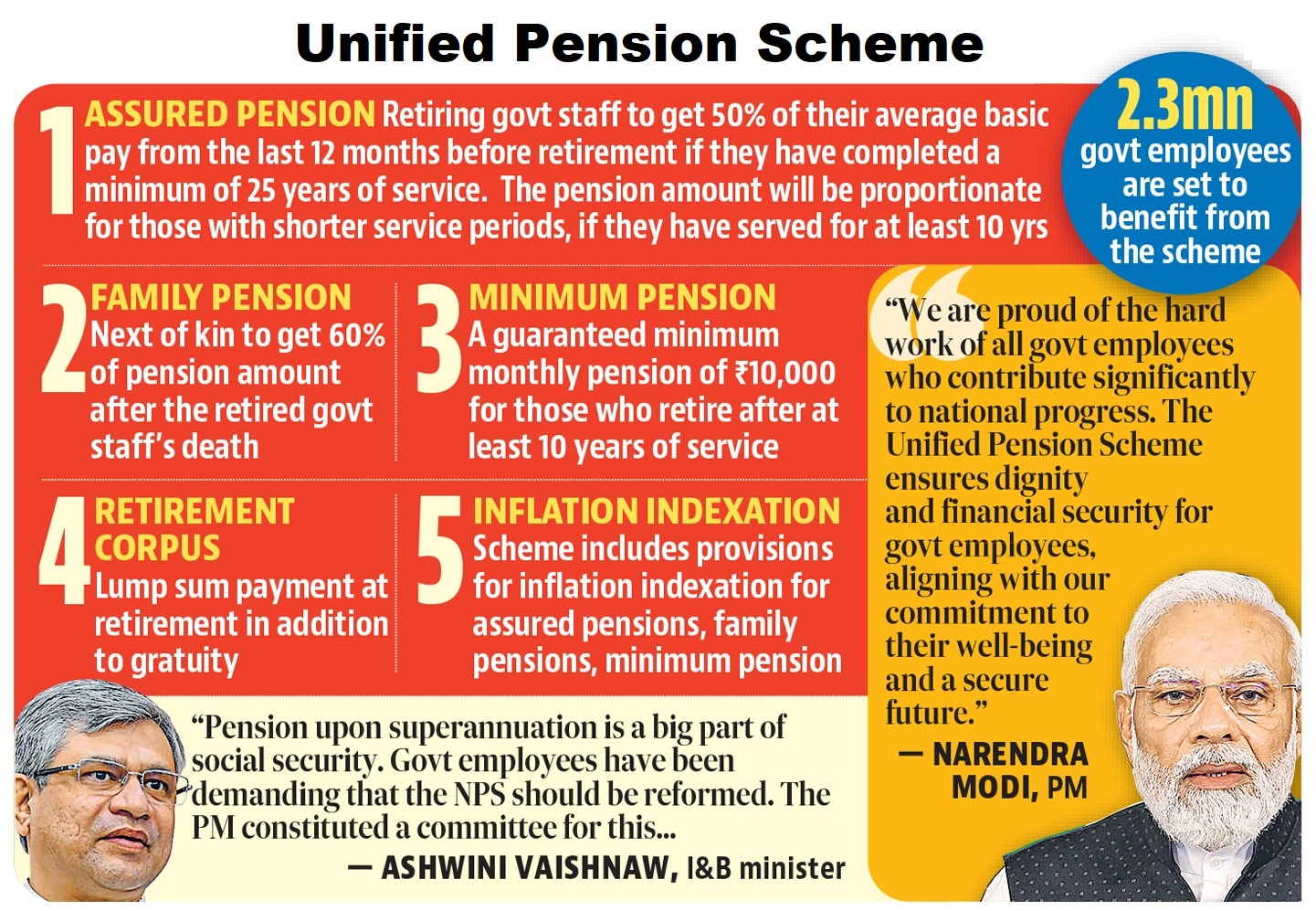
    The Union Cabinet approved the Unified Pension Scheme (UPS) for 23 lakh central government employees.

    About Unified Pension Scheme (UPS):

    Explanation
    Implementation Date Effective from April 1, 2025.
    Eligibility Central government employees with at least 10 years of service.
    Assured Pension
    • 50% of average basic pay over the last 12 months prior to retirement for employees with 25+ years of service.
    • Proportionate benefits for 10-25 years of service.
    Assured Minimum Pension ₹10,000 per month for employees with at least 10 years of service.
    Assured Family Pension 60% of the pension that the employee was drawing before their death.
    Inflation Protection
    • Pensions indexed to inflation;
    • Dearness Relief (DR) based on the All India Consumer Price Index for Industrial Workers (AICPI-IW).
    Government Contribution 18.5% of basic pay and DA, increased from 14% under the National Pension System (NPS).
    Employee Contribution 10% of basic pay and DA (same as under NPS).
    Lump Sum Payment on Superannuation One-tenth of the last drawn monthly pay (including DA) for every 6 months of completed service, in addition to gratuity.
    Option to Choose Employees can choose between UPS and NPS starting from the upcoming financial year; the choice is final once made.
    Beneficiaries
    • Initially benefits 23 lakh central government employees;
    • May extend to 90 lakh if adopted by state governments.
    Difference from NPS Unlike the market-dependent NPS, UPS provides a guaranteed pension amount, a minimum pension, increased government contribution, fixed family pension, and a lump sum payment at superannuation.

    Significance of the UPS

    • Financial Security: Guarantees a pension and family pension for stable post-retirement income.
    • Minimum Pension: Ensures at least ₹10,000 per month for retirees, supporting lower-income employees.
    • Inflation Protection: Indexes pensions to inflation, maintaining purchasing power over time.
    • Increased Benefits: Raises government contribution to 18.5%, enhancing employee retirement benefits.
    • Flexibility: Allows choice between UPS and NPS based on personal financial needs.
    • Family Support: Provides 60% of the pension to the spouse if the employee passes away.
    • Employee Welfare: Aligns with government goals to improve employee welfare and post-retirement life quality.

    PYQ:

    [2017] Who among the following can join the National Pension System (NPS)?

    (a) Resident Indian citizens only.

    (b) Persons of age from 21 to 55 only.

    (c) All State Government employees joining the services after the date of notification by the respective State Governments.

    (d) All Central Government employees including those of Armed Forces joining the services on or after 1st April, 2004.

  • Languages and Eighth Schedule

    Classical Language Centres ask for autonomy

    Why in the News?

    Classical Language Centres in India are seeking more autonomy to improve their effectiveness and address operational challenges.

    Classical Language Centres in India

    • India has designated 6 languages as classical: Tamil, Sanskrit, Telugu, Kannada, Malayalam, and Odia.
    • Special centres have been established to promote these languages.
    • Only the Centre for Tamil functions autonomously.
    • The centres for Telugu, Kannada, Malayalam, and Odia operate under the Central Institute of Indian Languages (CIIL) in Mysuru.

    About Classical Languages in India

    Aspect Details
    Recognized Classical Languages Tamil (2004), Sanskrit (2005), Kannada (2008), Telugu (2008), Malayalam (2013), Odia (2014).
    Additional Languages for Preservation Pali, Persian, Prakrit, and Farsi (Persian) as per the National Education Policy-2020.
    Criteria for Classical Language Status High Antiquity: Recorded history of 1500-2000 years.
    Valuable Heritage: Possesses ancient literature and texts.
    Originality: Unique literary tradition, not borrowed from other languages.
    Distinctness: Language and literature distinct from modern forms.
    Promotion of Classical Languages International Awards: Two major awards for scholars in classical Indian languages.
    Centre of Excellence: For studies in classical languages.
    Professional Chairs: UGC requested to create chairs in Central Universities.
    The Eighth Schedule Lists 22 official languages, governed by Articles 344(1) and 351 of the Constitution. Includes Assamese, Bengali, Bodo, Dogri, Gujarati, Hindi, Kannada, Kashmiri, Konkani, Maithili, Malayalam, Manipuri, Marathi, Nepali, Odia, Punjabi, Sanskrit, Santali, Sindhi, Tamil, Telugu, and Urdu.
    Chronological Additions to the Eighth Schedule 1950: Initially included 14 languages.
    1967: Sindhi added (21st Constitutional Amendment).
    1992: Konkani, Manipuri (Meitei), Nepali added (71st Constitutional Amendment).
    2003: Bodo, Dogri, Maithili, Santali added (92nd Constitutional Amendment).
    2011: “Oriya” replaced with “Odia” (96th Constitutional Amendment).


    PYQ:

    [2015] Which one of the following was given classical language status recently?

    (a) Odia

    (b) Konkani

    (c) Bhojpuri

    (d) Assamese

Join the Community

Join us across Social Media platforms.