💥UPSC 2026, 2027, 2028 UAP Mentorship (March Batch) + Access XFactor Notes & Microthemes PDF

Archives: News

  • Foreign Policy Watch: India-China

     How South China Sea tensions pose a threat to international trade? 

    Why in the News?

    Tensions between China and the Philippines have sharply escalated after a violent clash between their sailors in the South China Sea (SCS) last week. Currently, escalating tensions in the South China Sea are heightening global security concerns over this vital trade route.

    How Important is the South China Sea for World Trade?

    • About a third of global maritime trade passes through the 3.5 million square kilometre South China Sea annually, according to UNCTAD.
    • Around 40% of petroleum products traded globally are delivered via the South China Sea every year.
    • In 2016, an estimated $3.4 trillion to $3.6 trillion worth of goods and commodities travelled the seaway.
    • Tens of thousands of cargo vessels move through the South China Sea every year, carrying around 40% of China’s, one-third of India’s and 20% of Japan’s trade with the rest of the world.
    • The South China Sea is a vital crossroads for both intra-Asian trade as well as for commerce with the rest of the world, especially Europe, the Middle East and Africa.

    What makes the South China Sea such a Controversial Issue?

    • Beijing claims almost all of the South China Sea as its own, angering its neighbours who say China’s territorial ambitions cut into their exclusive economic zones.
    • China ignored a 2016 ruling by an international arbitration court that Beijing has no legal or historical basis for its expansive claims under international law.
    • The Chinese military has staged increasingly aggressive actions in the seaway recently, including clashes with Filipino ships, fueling fears of a full-scale conflict.
    • Vietnam and the Philippines have filed claims with the UN for extended continental shelves in the South China Sea.
    • Concerns that Beijing may use military force to bring Taiwan under its control have further raised tensions in the region.

    Why is the South China Sea Contested?

    • Availability of Natural gas and oil: The South China Sea is estimated to hold about 5.38 trillion cubic meters of proven and probable natural gas and 11 billion barrels of oil reserves.
    • Rare earth elements: The disputed waters also contain large deposits of rare-earth minerals crucial to China’s technological ambitions, including electric vehicle batteries and advanced electronics.
      • Some estimates suggest the Pacific Ocean contains a thousand times more rare-earth minerals than the currently known land reserves, more than half of which are controlled by China.

    Biggest Chokepoint in the South China Sea

    • The Malacca Strait, which lies between Malaysia, Indonesia and Singapore, is considered the biggest chokepoint in the South China Sea.
    • Last year, 23.7 million barrels of oil and petroleum products were moved through the strait per day, 13% higher than through the Strait of Hormuz.
    • The Malacca Strait is just 64 kilometers wide at its narrowest point and is already vulnerable to congestion and collisions.
    • Experts predict that if China invades Taiwan, the U.S. and its allies could blockade the Malacca Strait, limiting China’s access to oil and exports

    What should India do? (Way forward)

    • Enhance Strategic Partnerships: India should strengthen its maritime collaborations with key regional players like ASEAN nations, Japan, and Australia while deepening its involvement in forums such as the Quad to promote a rules-based order in the Indo-Pacific and ensure freedom of navigation in the South China Sea.
    • Bolster Naval Capabilities: India should continue to modernize and expand its naval presence in the Indo-Pacific, focusing on securing critical sea lanes and chokepoints like the Malacca Strait to safeguard its trade routes and energy supplies in the event of escalating tensions.

    Mains PYQ:

    Q South China Sea has assumed great geopolitical significance in the present context. Comment.(2016)

  • Foreign Policy Watch: United Nations

    Dealing with Death at Work    

    Why in the News?

    On August 21, 2024, a deadly explosion at the Escientia plant in Atchutapuram SEZ killed 17 workers and injured over 50, triggered by a solvent leak involving MTBE. The incident, part of a troubling safety trend, has prompted a government inquiry and calls for stricter safety regulations, particularly due to the exemption from regular inspections for SEZ units.

    • Previous Incidents: This accident is part of a troubling pattern, as it follows another major explosion in the same SEZ last year, and recalls a deadly styrene vapour leak incident in 2020 that killed 12 people.
    • Government Response: The Andhra Pradesh government has ordered a high-level inquiry into the incident. Chief Minister N. Chandrababu Naidu has expressed condolences and promised support for the victims’ families.

    Importance of Safety Audits

    • Preventing Future Accidents: Regular safety audits can help identify potential hazards and ensure compliance with safety regulations, reducing the risk of catastrophic incidents.
    • Accountability: Audits enforce accountability among management to adhere to safety standards, promoting a culture of safety within organizations.
    • Regulatory Compliance: Conducting safety audits helps organizations ensure compliance with local, state, and national safety regulations.
    • Public Trust: Enhancing safety measures and transparency can restore public confidence in industrial operations, particularly in regions prone to industrial accidents.

    Safety Law and Guidelines:

    • Factories Act, 1948: Governs worker safety in factories, mandating safety audits and safety officer appointments. Requires safety committees with management and employee reps to address hazards.
    • IS 14489:1998: Provides guidelines for occupational safety and health audits, focusing on compliance, deviations, and safety management effectiveness across sectors.
    • Occupational Safety, Health and Working Conditions Code, 2020: Consolidates labor laws, mandates regular safety audits for hazardous processes, and grants inspectors authority to enforce compliance.
    • CIMAH Rules: Require industries with hazardous processes to prepare safety reports and conduct regular audits to prevent major accidents, enforced by state safety authorities.
    • Integrated Guidance Framework for Chemicals Safety: Offers guidance for safety audits in handling hazardous chemicals, emphasizing compliance with MSIHC Rules and robust audit practices.

    Note:

    IS 14489:1998 is an Indian Standard titled “Code of Practice on Occupational Safety and Health Audit.” It provides comprehensive guidelines for conducting occupational safety and health audits in various workplaces.

    Way forward: 

    • Implement Regular Safety Audits: Enforce routine safety audits for all industrial units, including SEZs, to identify hazards and ensure compliance with safety standards, thus preventing future incidents and promoting a culture of safety.
    • Strengthen Regulatory Oversight: Close regulatory gaps by applying safety standards uniformly across all sectors, including exempted units, and enhance transparency and accountability in safety practices to restore public trust.
  • ISRO Missions and Discoveries

    A look at ongoing Indian Space Missions

    Why in the News?

    Since Chandrayaan 3’s successful moon landing on August 23, 2023 and its declaration of National Space Day, ISRO has remained highly active with several key missions, despite a quieter phase at Sriharikota.

    Key Missions and Milestones:

    Details Date
    Chandrayaan 3
    • Successful Moon landing by Vikram lander.
    • August 23 declared as India’s National Space Day.
    August 23, 2023
    Aditya L1
    • Solar science mission to study the Sun.
    • Reached Earth-Sun L1 point on January 6, 2024.
    • Studied solar storm in May 2024.
    Launched: September 2, 2023
    L1 Orbit: January 6, 2024
    Gaganyaan TV-D1
    • First abort mission for Gaganyaan program.
    • Tested Crew Escape System (CES); crew module recovered by INS Shakthi.
    October 21, 2023
    XPoSat
    • X-ray Polarimeter Satellite to study radiation polarization.
    • Second such space observatory after NASA’s IPEX.
    Launched: January 1, 2024
    INSAT-3DS
    • Meteorological satellite launched to support GSLV credibility for NISAR mission.
    • Enhances weather forecasting capabilities.
    Launched: February 17, 2024
    RLV-TD (Pushpak)
    • Reusable Launch Vehicle tests (LEX-02 and LEX-03) conducted.
    • Simulated landing conditions for future Orbital Return Flight.
    LEX-02: March 22, 2024
    LEX-03: June 7, 2024
    SSLV
    • Final development flight of Small Satellite Launch Vehicle (SSLV).
    • Successfully placed EOS-08 and SR-0 Demosat in orbit.
    August 16, 2024
    ISRO Roadmaps
    • 25-year roadmap until 2047.
    • Plans for crewed lunar missions, sample-return missions, and the Bharatiya Antariksh Station (BAS) by 2035.
    Announced: December 2023
    Next-Generation Launch Vehicle (NGLV)
      • New 3-stage launch vehicle under development to replace GSLV.
    • Powered by semi-cryogenic, liquid, and cryogenic engines.
    • Project report submitted to Union Cabinet.
    Project report submitted: February 2024
    NSIL Missions
    • Agreement with SpaceX for GSAT-20/GSAT-N2 launch.
    • SSLV launch service agreement with an Australian company.
    2024
    Private Space Missions
    • Agnikul Cosmos launched SoRTeD-01, first semi-cryogenic engine vehicle from Indian soil.
    • Skyroot and Dhruva Space progressing with tests and launches.
    2024
    IN-SPACe Initiatives
    • Released ‘Norms, Guidelines, and Procedures for Authorisation of Space Activities’.
    • Granted first satellite broadband license to Eutelsat
    • OneWeb and first ground station service license to Dhruva Space.
    • 100 % Direct FDI policy.
    2024
  • Telecom and Postal Sector – Spectrum Allocation, Call Drops, Predatory Pricing, etc

    [pib] World Audio Visual & Entertainment Summit (WAVES)

    Why in the News?

    Union Minister of Information and Broadcasting has launched 25 challenges as part of the ‘Create in India Challenge – Season 1’ for the World Audio Visual & Entertainment Summit (WAVES).

    About WAVES

    • It is an international summit organized by the Ministry of Information & Broadcasting, Government of India.
    • The first edition will take place from 20-24 November 2024 in Goa.
    • The summit will be hosted in Goa in collaboration with the State Government of Goa.
    • The Entertainment Society of Goa will act as the Nodal Agency for the event, following an MOU with Ministry of Information & Broadcasting.
    • It is supported by industry partners like the Federation of Indian Chambers of Commerce & Industry (FICCI) and the Confederation of Indian Industry (CII).
    • Purpose:
      • WAVES aims to be a pivotal forum for fostering dialogue, trade collaboration, and innovation within the evolving media and entertainment industry.
      • The summit will showcase India as a hub for innovation and excellence in the media and entertainment sector, attract investments, and position India as a global leader in the entertainment business.

    Location & Collaboration:

    • WAVES is designed to promote sustainable growth in the media and entertainment industry.
    • It will help attract global trade and investment to India, positioning the country as a key player in the global entertainment landscape.
    • The summit will bring together industry leaders, stakeholders, and innovators to explore new opportunities, tackle challenges, and shape the future of the sector.

    PYQ:

    [2014] Though 100 percent FDI is already allowed in non-news media like a trade publication and general entertainment channel, the government is mulling over the proposal for increased FDI in news media for quite some time. What difference would an increase in FDI make? Critically evaluate the pros and cons.

  • Urban Floods

    In news: Gumti River

    Why in the News?

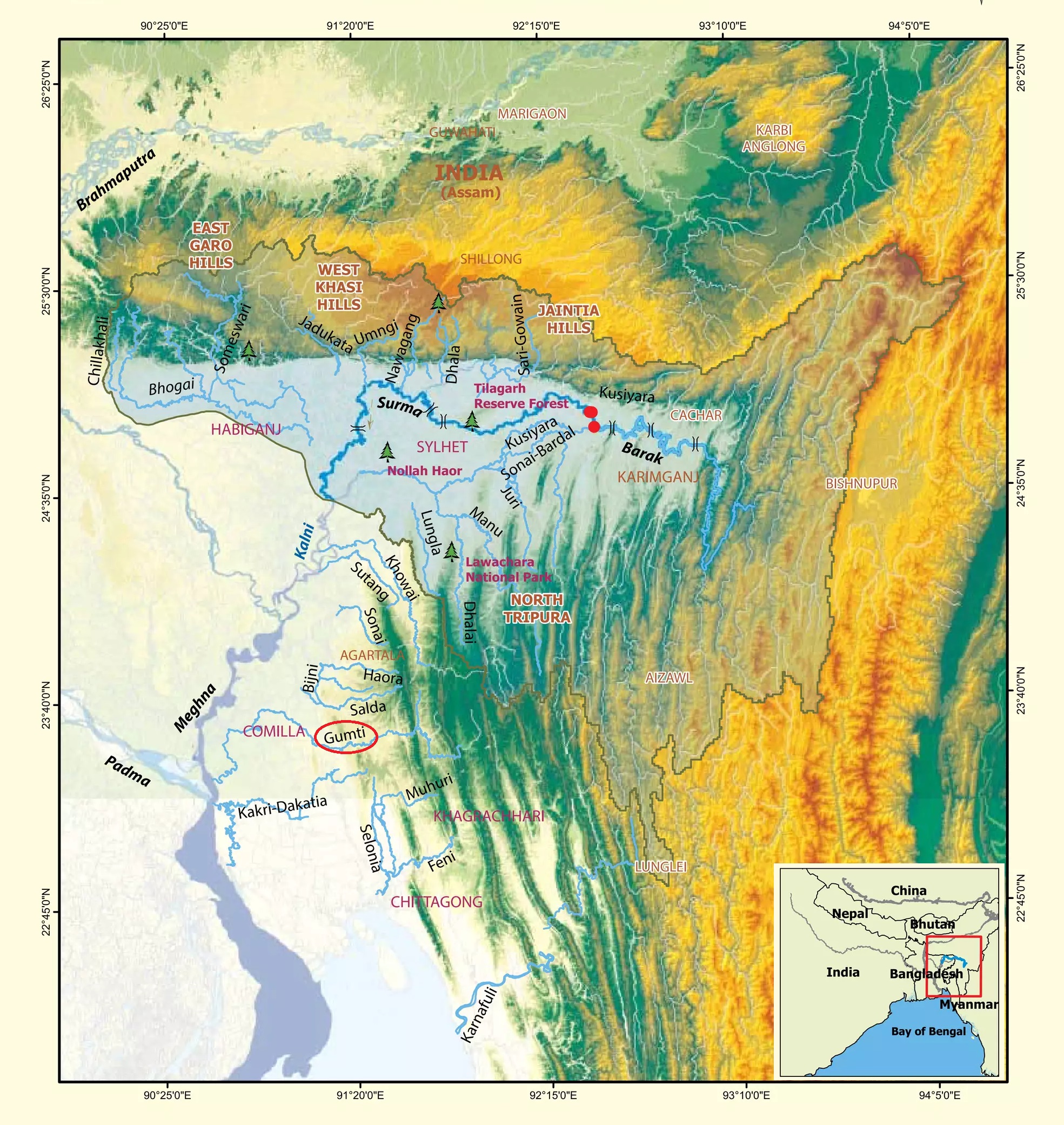
    India has refuted allegations that the recent floods in eastern Bangladesh were caused by the opening of the Dumbur dam over Gumti River in Tripura.

    About Gumti River

    Details
    Origin Dumboor Lake, Tripura, India
    Length Approximately 150 kilometers
    Course
    • Flows southward through Tripura, India, and then into Bangladesh;
    • Joins the Meghna River.
    Tributaries
    • Left: Raima, Manu
    • Right: Deo, Khowai
    Terrain Hilly terrain in upper course, fertile plains in lower course
    Biodiversity Supports diverse flora and fauna
    Projects Installed
    • Gumti Hydroelectric Project: Located near Dumbur; Generates hydroelectric power in Tripura; Bangladesh also receives 40 MW.
    • Gumti Irrigation Project: Supports irrigation for agriculture in Tripura, India


    PYQ:

    [2014] Consider the following rivers:

    1. Barak
    2. Lohit
    3. Subansiri

    Which of the above flows / flow through Arunachal Pradesh?

    (a) 1 only

    (b) 2 and 3 only

    (c) 1 and 3 only

    (d) 1, 2 and 3

  • Wildlife Conservation Efforts

    Why has Malaysia tweaked its ‘Orangutan Diplomacy’?

    Why in the News?

    Malaysia, after initially introducing its version of soft power called “Orangutan Diplomacy” following China’s successful “panda diplomacy,” has now reversed its decision.

    What is Orangutan Diplomacy?

    • It is a Malaysian strategy that seeks to use orangutan conservation as a tool of soft power, inspired by China’s “panda diplomacy.”
    • It had first announced plans to gift orangutans (IUCN Status: Critically Endangered) to palm oil-buying countries.
    • It engages other countries in conservation efforts, focusing on symbolic adoptions rather than sending animals abroad.
    • Reasons behind:
      • Palm Oil Industry Criticism: Malaysia faces criticism for deforestation due to palm oil plantations, threatening orangutans.
      • Enhance Image: It aims to counter negative perceptions and showcase commitment to sustainability and position Malaysia as a leader in wildlife protection.
      • Global Cooperation: It seeks to strengthen ties with major palm oil importers like China, India, and the EU through conservation partnerships.

    Criticisms:

    • Habitat Concerns: Critics argue real conservation requires protecting habitats, not just symbolic actions.
    • Comparisons to Panda Diplomacy: Malaysia’s effort lacks the infrastructure and commitment seen in China’s panda conservation.

    PYQ:

    [2021] With reference to ‘palm oil’, consider the following statements :​

    1. The palm oil tree is native to Southeast Asia.​

    2. The palm oil is a raw material for some industries producing lipstick and perfumes.​

    3. The palm oil can be used to produce biodiesel.​

    Which of the statements given above are correct?​

    (a) 1 and 2 only

    (b) 2 and 3 only

    (c) 1 and 3 only

    (d) 1, 2 and 3

  • Civil Services Reforms

    Centre directs UPSC to withdraw ad for lateral entry into bureaucracy: Why has the policy been criticized?

    Why in the News?

    The Central government asked the Union Public Service Commission (UPSC) on Tuesday, August 20, to cancel an advertisement from three days earlier that called for applications to fill senior government positions through lateral recruitment.

    What is ‘Lateral Entry’ into the Bureaucracy?

    • Definition: Lateral entry refers to the recruitment of personnel from outside the traditional civil services into senior and middle-level positions in the central government. These entrants come from various backgrounds, including state/UT governments, public sector undertakings (PSUs), statutory organizations, research institutes, universities, and the private sector.
    • Objective: The idea is to bring in individuals with domain expertise and specialized knowledge to enhance the efficiency and effectiveness of governance. These individuals are usually appointed on contracts of three years, which can be extended to a total of five years.

    What are the Positions Open for Lateral Entry?

    • Positions Advertised: Lateral entry initially focused on Joint Secretary-level positions, which are high-ranking roles within a Department. Over time, positions for Director and Deputy Secretary levels were also opened.
    • Roles and Responsibilities:
      • Joint Secretary: Third-highest rank in a Department, responsible for decision-making and administrative head of a wing within the Department.
      • Director/Deputy Secretary: Middle-level officials, performing roles similar to Joint Secretaries in most ministries.

    What was the Union Government’s Logic Behind Introducing Lateral Entries?

    • Rationale: The government introduced lateral recruitment to bring in fresh talent and specialized skills that may not be available within the traditional civil services.
    • NITI Aayog’s Recommendation: The policy was recommended in 2017 by NITI Aayog in its three-year Action Agenda and by the Sectoral Group of Secretaries (SGoS) on Governance.

    How Many People Have Been Appointed via Lateral Recruitment So Far?

    • First Round (2018): The first round attracted 6,077 applications for Joint Secretary-level positions. Nine individuals were eventually selected and appointed in 2019.
    • Subsequent Rounds: Additional rounds of recruitment occurred in 2021 and May 2023. As of August 2024, a total of 63 appointments have been made through lateral entry, with 57 lateral entrants currently holding positions in various Ministries/Departments.

    What is the Criticism of Lateral Entry Recruitment?

    • Lack of Reservations: A significant criticism of lateral recruitment is the absence of quotas for Scheduled Castes (SC), Scheduled Tribes (ST), and Other Backward Classes (OBC).
    • Promotion Concerns: Critics like Mayawati have pointed out that lateral entry deprives lower-level employees in the civil services of promotion opportunities, which would otherwise be available through a merit-based system.

    Way forward: 

    • Incorporate Inclusive Quota Provisions: To address the criticism regarding the absence of reservations, the government could consider introducing a reservation policy for Scheduled Castes (SC), Scheduled Tribes (ST), and Other Backward Classes (OBC) in lateral entry recruitment.
    • Establish a Transparent and Merit-Based Selection Process: To ensure the credibility and effectiveness of lateral recruitment, the government should enhance transparency in the selection process. This could involve clearly defined eligibility criteria, objective assessment methods, and regular monitoring of the performance of lateral entrants.

    Mains PYQ:

    Q Has the Cadre-based Civil Services Organization been the cause of slow in India? Critically examine. (UPSC IAS/2014)

  • Pharma Sector – Drug Pricing, NPPA, FDC, Generics, etc.

    Imports weaken Indian pharma

    Why in the News?

    • The government has introduced two import-based initiatives to meet domestic needs, which could potentially dampen the growth of the domestic industry.
    • New medicines are generally under patent protection, preventing Indian companies from producing affordable generics/biosimilars.

    Impact of two initiatives on Domestic Industry:

    • Global Tendering for 120 Medicines: The Department of Expenditure (DoE) allowed the Ministry of Health to buy 120 medicines, including popular anti-diabetes and anti-cancer drugs, through global tenders for government programs. This decision, which specifies certain brands for over 40 of these medicines, could increase the monopoly of foreign companies in India.
    • Customs Duty Removal on Cancer Medicines: The 2024-25 Union Budget proposed removing the 10-12% customs duty on three cancer medicines marketed by AstraZeneca. While intended to reduce prices, this measure is unlikely to significantly lower costs and may instead increase reliance on imports, further disadvantaging domestic producers.

    Status of Indian Pharma

    • India is a leading manufacturer of vaccines, accounting for 60% of global production.
    • India supplies 70% of vaccines used by the WHO.
    • India is a major exporter of generic drugs, accounting for 20% of global exports.
    • The industry is expected to grow to over $130 billion by 2030.

    What are Biosimilar guidelines?

    • Biosimilar guidelines in India are regulatory frameworks established by the Central Drugs Standard Control Organization (CDSCO) and the Department of Biotechnology (DBT) to govern the development, approval, and marketing of biosimilars.
    • Biosimilars are biologic medical products that are highly similar to an already approved original biologic (known as the reference product), with no clinically meaningful differences in terms of safety, purity, and potency.

    Status Biosimilars: 

    • Significant Market Size: The biosimilar market in India is valued at approximately $2.2 billion, and it is projected to reach $40 billion by 2030. This growth is driven by the expiration of patents for several key biologics, which opens the door for biosimilar development.
    • Product Approvals: As of now, over 70 biosimilars have been approved in India, covering a range of therapeutic areas, including oncology, diabetes, and autoimmune diseases. Notable examples include:
      • Adalimumab (for rheumatoid arthritis)
      • Trastuzumab (for breast cancer)
      • Filgrastim (for neutropenia)
      • Insulin glargine (for diabetes)

    Outdated Biosimilar Guidelines in India:

    • Obsolete and Resource-Intensive:
      • India’s biosimilar guidelines are outdated, requiring mandatory animal studies, which are no longer necessary in developed countries like the U.S. and EU with stringent regulatory standards.
      • The guidelines also mandate clinical trials, while WHO and U.K. guidelines treat clinical trials as an exception rather than a rule.
    • Barrier for Domestic Producers:
      • The stringent requirements for animal studies and mandatory clinical trials create significant barriers for Indian producers, making it difficult for them to compete with their global counterparts.
    • Impact on Patient Access:
      • According to the International Generic and Biosimilar Medicines Association, eliminating these duplicative requirements could lead to significant savings in time and resources, ultimately improving patient access to affordable biosimilars.

    Way forward: 

    • Update Regulatory Guidelines: Modernize India’s biosimilar guidelines by removing unnecessary requirements like mandatory animal studies and clinical trials, aligning them with global standards to reduce barriers for domestic producers.
    • Support Local Production: Utilize provisions in the Patents Act to promote domestic manufacturing of affordable medicines, reducing reliance on imports and strengthening the local pharmaceutical industry.
  • Telecom and Postal Sector – Spectrum Allocation, Call Drops, Predatory Pricing, etc

    What is Tera Hertz Spectrum?

    Why in the News?

    The Telecom Regulatory Authority of India (TRAI) released its recommendations on the Tera Hertz Spectrum.

    About Tera Hertz (THz) Spectrum

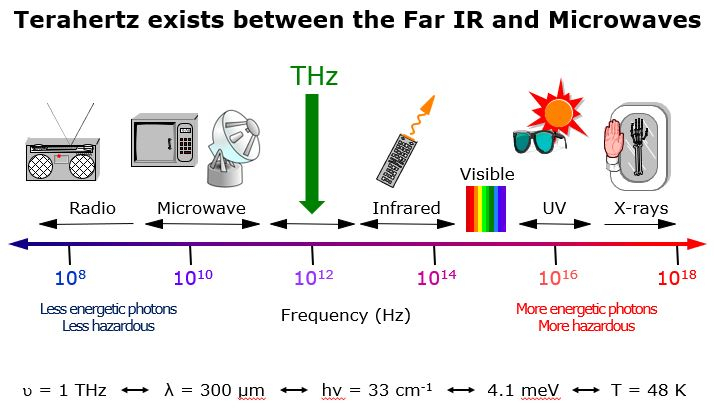
    • The THz Spectrum refers to a range of electromagnetic waves with frequencies between 100 GHz (gigahertz) and 10 THz (terahertz). 
      • This spectrum lies between microwaves and infrared light.
      • It is known as the “THz gap” because it has been less explored compared to other parts of the electromagnetic spectrum.
    • Key Features:
      • Unique Properties: THz waves can pass through many materials like clothing, paper, and wood but are absorbed by water and metals.
      • Applications: Used for advanced technologies like imaging, communications, and spectroscopy.
      • Potential Uses: Security scanning, medical imaging, and high-speed wireless communication.

    Impact of recent recommendation:

    • THEA will encourage innovation in Tera Hertz technologies, supporting the ‘Make in India’ initiative.
    • The opening of specific frequency bands will boost the development and deployment of next-generation wireless technologies and automotive safety systems in India.

    PYQ:

    [2020] With reference to Visible Light Communication (VLC) technology, which of the following statements are correct?

    1. VLC uses electromagnetic spectrum wavelengths 375 to 780 nm.

    2. VLC is known as long-range optical wireless communication.

    3. VLC can transmit large amounts of data faster than Bluetooth.

    4. VLC has no electromagnetic interference.

    Select the correct answer using the code given below:

    (a) 1, 2 and 3 only

    (b) 1, 2 and 4 only

    (c) 1, 3 and 4 only

    (d) 2, 3 and 4 only

  • Economic Indicators and Various Reports On It- GDP, FD, EODB, WIR etc

    Global Finance Central Banker Report Cards, 2024

    Why in the News?

    The Reserve Bank of India (RBI) Governor has been awarded an “A+” rating for the second consecutive year in the Global Finance Central Banker Report Cards 2024.

    About the Global Finance Central Banker Report Cards

    • The Central Banker Report Cards are published annually by Global Finance, a magazine that has been grading central bank governors since 1994.
    • The report grades the central bank governors of nearly 100 countries, territories, and districts, including major institutions like the European Union, the Eastern Caribbean Central Bank, the Bank of Central African States, and the Central Bank of West African States.
    • Grading Scale:
      • The ratings range from “A+” for excellent performance to “F” for outright failure.
      • The grades assess success in key areas such as inflation control, economic growth, currency stability, and interest rate management.

    Significance 

    • This recognition highlights his exceptional performance in managing India’s monetary policy, particularly in areas such as inflation control, economic growth, currency stability, and interest rate management.

    PYQ:

    [2016] ‘Global Financial Stability Report’ is released by which organisation?

    (a) European Central Bank

    (b) International Monetary Fund

    (c) International Bank for Reconstruction and Development

    (d) Organisation for Economic Co-operation and Development

Join the Community

Join us across Social Media platforms.