💥UPSC 2027,2028 Mentorship (April Batch) + Access XFactor Notes & Microthemes PDF

Archives: News

  • Poverty Eradication – Definition, Debates, etc.

    Mapping India’s poor

    What’s the news?

    • The recent release of the NITI Aayog’s Multidimensional Poverty Report for the period 2019-21 marks a significant milestone in India’s pursuit of poverty alleviation.

    Central idea

    • The NITI Aayog’s Multidimensional Poverty Report’s unveiling of a noteworthy decline in the poverty headcount, from 24.85 percent in 2015-16 to 14.96 percent in 2019–2021, presents a promising trajectory of progress. These revelations, rooted in data sourced from standardized National Health Status Reports, underscore the government’s commitment to transparency and evidence-based policymaking.

    Complexity of poverty management

    • Challenging Task: Poverty management is more complex now compared to the era of global expansion (1980 to 2007).
    • Economic Factors: Economies like India, characterized by large populations and lower middle-level per capita incomes, face difficulties in allocating resources to further reduce poverty ratios.
    • Technological Advancements: Technological progress, automation, Artificial Intelligence (AI), and bionics add complexity to poverty management.
    • Job Creation Risk: Technological advances can freeze the addition of productive global jobs, which in turn jeopardizes household incomes.
    • Population Increase: India’s anticipated population rise of about 250 million by 2050 introduces additional complexity.
    • Youth Demographic: While a youthful population could be beneficial, ensuring appropriate employment for this growing workforce remains uncertain.
    • Future of Work: The impact of technological advances such as automation, AI, and bionics on job creation and household income stability is unclear.
    • Need for Innovation: Overcoming the complexity of poverty management requires innovative strategies and adaptable approaches.

    Significance of the Report

    • In-Depth Analysis: The NITI Aayog’s Multidimensional Poverty Report provides a detailed analysis of poverty at the state level, offering insights into the status of poverty in different regions.
    • Flexible Tool for Poverty Identification: The report introduces a flexible tool with 12 indicators to identify the poor and assess the intensity of deprivation. This approach offers a nuanced understanding of poverty beyond income-based measurements.
    • Inclusivity: The methodology prioritizes inclusivity over rigid statistical precision. This acknowledges the practical necessity of balancing misidentification while ensuring poverty reduction.
    • Contextual Barriers to Poverty Reduction: The Alkire-Foster methodology recognizes that barriers to ending poverty can vary across jurisdictions, enabling contextual priorities to be factored into poverty reduction efforts.
    • The Changing Nature of Poverty: The report acknowledges that poverty’s face evolves over time and across states. This underscores the importance of flexible monitoring systems to map, assess, and address poverty.
    • Policy Implications: The report’s findings have significant policy implications as they highlight disparities in education, health, and quality of life among the poor. This can guide targeted interventions and policy decisions.
    • Methodological Comparison: The report introduces a methodological approach distinct from traditional methods, which can lead to more accurate and comprehensive poverty assessments.

    Effectiveness of the Poverty Reduction Strategy

    • Education and Health Impact: The poor constitute a significant portion of those requiring higher levels of assistance in education and health. They make up 62% of households not meeting schooling norms and 43% not receiving minimum health support.
    • Quality of Life Disparities: The poor are particularly disadvantaged in terms of quality of life. Around 56% of poor households lack access to electricity, raising concerns about the effectiveness of ground-level electrification efforts. Additionally, 47% of poor households don’t possess assets like a telephone or TV.
    • MDPI as a Tracking Tool: The Multidimensional Poverty Index (MDPI) serves as a valuable tool to assess the results of government programs aimed at poverty reduction. It offers a comprehensive framework to monitor and evaluate poverty initiatives.

    Way forward

    • Contextual Grassroot Initiatives: Given the complexity of poverty management, it’s a necessity to promote and implement context-specific initiatives at the grassroot level. These initiatives should address the unique challenges and needs of different regions.
    • Adapt to Changing Dynamics: With the potential freezing of job creation due to technological advances, there’s a need to formulate strategies that adapt to the changing nature of work. This includes preparing the workforce for emerging job sectors and bolstering social safety nets.
    • Employment Generation: Considering the projected population increase, efforts to generate meaningful employment opportunities must be a priority. Ensuring employment for the growing workforce is crucial for poverty reduction.
    • Innovative Monitoring Systems: The changing face of poverty demands flexible monitoring systems that can accurately map, assess, and respond to evolving poverty patterns across states and over time.
    • Inclusive Approaches: The inclusive nature of poverty reduction efforts, as demonstrated by the methodology in the report, should be maintained. Balancing misidentification while ensuring inclusivity is essential.
    • Quality Education and Healthcare: Effective interventions should be designed to address gaps in education and healthcare for the poor. These areas play a significant role in breaking the cycle of poverty.
    • Digital Inclusion: Disparities in access to electricity and digital connectivity need to be addressed. Expanding access to these services can improve the quality of life and open economic opportunities.
    • Dignified Assistance: While providing merit goods for free is important, policymakers must ensure that such assistance doesn’t undermine the dignity of the poor. Balancing charity with preserving self-respect is crucial.

    Conclusion

    • The NITI Aayog’s report signifies a significant step toward comprehending and addressing multidimensional poverty in India. As India’s per capita incomes rise, the country must internalize the lesson that poverty’s face evolves asymmetrically across states. This realization underscores the need for adaptable monitoring and targeted strategies.
  • Corporate Social Responsibility: Issues & Development

    Environmental-Social-Governance (ESG) Framework

    CSR

    What’s the news?

    • The growing importance of Corporate Social Responsibility (CSR) and Environmental-Social-Governance (ESG) frameworks in the business world.

    Central Idea

    • In recent years, Corporate Social Responsibility (CSR) has evolved from a mere obligation into a potent tool for companies to contribute to society and the environment. Concurrently, the ESG disclosures gained prominence as a means to showcase energy conservation efforts and align with global commitments to combat climate change.

    What is Corporate Social Responsibility (CSR)?

    • CSR refers to the practice of companies and businesses taking on initiatives and actions that contribute positively to society, the environment, and various social causes beyond their core profit-making activities.
    • CSR has become a legal requirement for certain companies under the Companies Act of 2013 in India.

    CSR

    What is Environmental-Social-Governance (ESG)?

    • The ESG framework assesses a company’s performance and impact in three key areas: environmental sustainability, social responsibility, and corporate governance.
    • ESG goes beyond traditional financial metrics to measure a company’s efforts and policies related to issues such as energy conservation, carbon footprint reduction, diversity and inclusion, employee well-being, community engagement, ethical business practices, and more.

    The significance of ESG

    • Addressing Climate Change: ESG provides a structured approach for businesses to tackle environmental issues, particularly climate change. It helps companies mitigate risks, enhance sustainability, and contribute to global climate goals.
    • Social Responsibility: ESG encompasses social aspects such as diversity, employee well-being, and community engagement. Prioritizing these areas fosters ethical practices and positive relationships with stakeholders.
    • Strong Governance: The “G” in ESG underscores effective corporate governance, which promotes transparency, accountability, and ethical business conduct. This builds investor trust and long-term sustainability.
    • Financial Performance: Companies emphasizing inclusion and diversity tend to achieve financial goals more consistently. Additionally, ESG integration enhances resilience during crises and supports innovation.
    • Meeting Stakeholder Expectations: ESG aligns with consumer and investor preferences for environmentally and socially conscious practices. Companies embracing ESG attract responsible consumers and investors.
    • Regulatory Compliance: ESG disclosure requirements are evolving, reflecting their increasing importance. Adhering to ESG standards positions companies to comply with changing regulations.
    • Long-Term Value: ESG contributes to long-term value creation by managing risks, fostering stakeholder relationships, and positioning companies for sustainable growth.

    The confluence of ESG and CSR and their advantages

    • Enhanced Sustainability: By aligning sustainable business goals with the established CSR framework, companies can expedite the transition to environmentally friendly and socially responsible practices. This alignment ensures that sustainability becomes a central tenet of the company’s operations.
    • Multi-Stakeholder Approach: Implementing both ESG and CSR requires the collaboration and shared vision of internal and external stakeholders. This approach fosters better communication, cooperation, and effective execution of CSR initiatives, which benefits the company’s overall impact.
    • Boosted Brand Recognition: The combination of ESG and CSR efforts enhances a company’s brand image, portraying it as environmentally conscious, socially responsible, and committed to ethical practices. This positive perception resonates with customers and stakeholders alike.
    • Risk Mitigation: Effective CSR practices coupled with ESG considerations help companies manage risks associated with environmental and social factors. This proactive approach minimizes potential negative impacts on the business’s reputation and bottom line.
    • Supply Chain Optimization: The confluence of ESG and CSR prompts companies to rethink and optimize their supply chains, from procurement to production. This transformation encourages environmentally friendly practices and reduces the overall environmental footprint.

    Case Studies: Embodied Synergy

    • Global giants such as Google and the luxury brand Chanel exemplify the positive outcomes of blending CSR and ESG principles.
    • Google’s substantial investment in an energy-efficient supply chain significantly boosted its brand while catalyzing its green transition.
    • Similarly, Chanel’s partial stake acquisition in a natural fiber manufacturer demonstrates a commitment to sustainable supply chain practices.
    • These examples illustrate the potential of combining CSR and ESG for transformative impact.

    What are the concerns raised?

    • Transition Costs: The transition from traditional to sustainable business practices can be accompanied by high costs. Integrating ESG principles and expanding CSR initiatives might require substantial investments in infrastructure, technology, and employee training, which could strain financial resources.
    • Risks and Uncertainties: Certain environmental or social initiatives might not yield immediate returns or could face opposition from stakeholders.
    • Smaller Businesses: The smaller businesses might find it challenging to prioritize ESG given their limited resources. Balancing ESG considerations alongside day-to-day operations could be more difficult for smaller enterprises compared to larger corporations.
    • Legitimacy of Self-Regulation: CSR is legally mandated in India but is self-regulated and voluntary in some regions, like the EU, UK, and US. Some experts raise concerns about the legitimacy of private self-regulation compared to regulation imposed by legislative bodies.

    Way forward

    • Advocating Regulatory Mandates for ESG: Push for regulatory mandates for ESG similar to CSR to ensure a structured approach. Collaborate to define legal integration, especially for smaller businesses.
    • Incentivizing ESG Investments: Reforms in economic policies and taxation can offer incentives like tax concessions, spurring ESG investments for sustainable practices.
    • Comprehensive Policy Frameworks: Implement organization-wide policy frameworks, embedding sustainability into all decisions, ensuring accountability, and facilitating regulatory compliance.
    • Holistic Integration: Infuse CSR across supply chains, led by transparent, larger corporations setting standards for others.
    • Digital connectivity and financial inclusion: with a projected 40 percent of the population transitioning to urban life by 2030, the aspirations of rural regions are harmonizing with urban benchmarks. However, the translation of intentions into action necessitates addressing crucial imperatives such as digital connectivity and financial inclusion.
    • Unified Approach: Blending CSR and ESG aligns business goals with sustainability, benefiting consumers, investors, employees, and society overall.

    Conclusion

    • The amalgamation of CSR and ESG provides a dynamic route towards sustainable growth. This synergy encapsulates responsible corporate citizenship and offers a transformative pathway to address challenges collectively. By harmonizing these two pillars, businesses contribute to a future where progress is intertwined with responsibility, promising a thriving world for all.

    Also read:

  • Wildlife Conservation Efforts

    Places in news: Yasuni National Park

    yasuni national park

    Central Idea

    • Ecuadorians made a historic decision by rejecting oil drilling by a referendum in Yasuni National Park, a biodiverse Amazonian region.

    About Yasuni National Park

    • Yasuni National Park, declared a UNESCO biosphere reserve in 1989, spans 1 million hectares and harbors exceptional biodiversity.
    • It is part of the Amazon rainforest, which itself is a global hotspot for species diversity.
    • It is situated in the northeastern part of Ecuador, within the Napo and Pastaza provinces.
    • It covers an area of approximately 9,820 square km (3,791 square miles).
    • The park is considered one of the most biologically diverse areas on Earth.

    Unique features

    • Biodiversity: It is estimated that Yasuni contains around 670 species of birds, over 150 species of amphibians, and numerous large mammals like jaguars, pumas, and tapirs.
    • Indigenous Communities: Yasuni is home to several indigenous communities, including the Waorani and Kichwa peoples, who have lived in the area for generations and have a deep connection to the land.
  • Oil and Gas Sector – HELP, Open Acreage Policy, etc.

    Drilling in the North Sea: History and environmental concerns

    north sea

    Central Idea

    • Recent endorsement by U.K. Prime Minister of plans for fresh fossil fuel drilling off Britain’s coast has sparked a debate among environmental experts.
    • Amidst global concerns about climate change, the decision raises questions about the country’s commitment to sustainability and its impact on climate goals.

    Evolution of North Sea Drilling

    • Origins and Legislation: The North Sea drilling history dates back to the 1958 Geneva Convention on the Continental Shelf, which set the stage for exploration in the region.
    • Continental Shelf Act: The U.K. Parliament’s enactment of the Continental Shelf Act in 1964 established the country’s jurisdiction over oil and gas resources beneath its seabed.

    Milestones and Concerns in Drilling

    • Early Exploration and Challenges: British Petroleum (BP) was granted the first exploration license in 1964, leading to natural gas discovery the following year.
    • Forties Field Discovery: BP’s breakthrough commercial oil discovery in the Forties Field in 1970 marked a significant milestone.
    • Expanding Operations and Safety Revamp: The following years witnessed increased exploration activities and installation of oil platforms. The Piper Alpha disaster in 1988 prompted crucial safety reforms.

    Rationale and Concerns

    • Government’s Position: In an official statement, the government justified the move as a strategy to enhance Britain’s energy independence.
    • Environmental Alarm: However, environmental experts express apprehension, especially given the global push towards averting irreversible climate change.

    North Sea Transition Authority and Offshore Licensing

    • NTSA’s Role: The North Sea Transition Authority (NTSA) is responsible for regulating the oil, gas, and carbon storage sectors.
    • Offshore Licensing Round: The NTSA is currently conducting the 33rd offshore oil and gas licensing round, aiming to award more than 100 licenses.
    • Timing and Awards: The first licenses are expected to be granted in the autumn, furthering the expansion of drilling operations.

    Shaping Geopolitical Energy Dependence

    • Energy Security Concerns: The Prime Minister emphasized the necessity of domestic oil and gas sources, even as the country aims to reach net-zero emissions by 2050.
    • Strategic Implications: The decision is portrayed as an effort to reduce reliance on oil and gas imports, which could originate from potentially unfavourable sources.

    Ecological Concerns and Climate Impact

    • Adverse Environmental Effects: Offshore drilling poses risks to workers, marine ecosystems, and climate health. It contributes to ocean warming, rising sea levels, and threatens marine biodiversity.
    • Carbon Pollution Impact: Carbon pollution settling into oceans contributes to acidification, endangering coral reefs and shellfish.

    Evaluating UK’s Climate Commitments

    • Climate Change Committee Report: The Climate Change Committee (CCC) pointed out deficiencies in the U.K.’s preparations for climate change under the National Adaptation Programme.
    • Adaptation Implementation: The CCC’s assessment highlighted a lack of substantial implementation of adaptation measures to address climate risks.
    • Inconsistent with Paris Agreement: The Climate Action Tracker assesses the U.K.’s climate action as not fully aligned with the Paris Agreement.
    • Long-Term Targets: The U.K.’s Nationally Determined Contributions (NDCs) and long-term targets do not reflect a fair share of global efforts to mitigate climate change.
    • Incompatibility with Limits: Licensing new oil and gas extraction plans contradicts the 1.5°C temperature rise limit set by the Paris Agreement.

    Conclusion

    • The UK’s endorsement of offshore drilling reflects a complex balancing act between energy security, economic considerations, and environmental stewardship.
    • As the world grapples with the imperative of combating climate change, the decisions made today hold the potential to shape the course of a sustainable future.
  • Electronic System Design and Manufacturing Sector – M-SIPS, National Policy on Electronics, etc.

    Debate over India’s Smartphone Manufacturing Dreams

    smartphone

    Central Idea

    • A recent dispute between former RBI governor Raghuram Rajan and Minister of State for Electronics Rajeev Chandrasekhar has brought to light differing opinions on the effectiveness of a Central government initiative aimed at bolstering electronics manufacturing in India.
    • The disagreement centers around whether the scheme truly promotes self-sufficiency and robust manufacturing or merely generates low-level assembly jobs dependent on imports.

    Critical Overview of the PLI Scheme

    • Government Intentions: Around five years ago, India embarked on a mission to invigorate domestic manufacturing as a cornerstone of economic growth.
    • Dual Strategy: The government employed a dual strategy of raising import duties (the ‘stick’) and providing incentives (the ‘carrot’) to stimulate manufacturing. The Production-Linked Incentive (PLI) scheme emerged as a key component, offering financial support to companies engaged in production within India.

    Triumphs and Concerns

    • Focus on Smartphone Manufacturing: Among various sectors, smartphone manufacturing stood out as the frontrunner in embracing the PLI scheme.
    • Impact of PLI on Smartphone Exports and Imports: The program yielded impressive results, witnessed by a surge in mobile phone exports from $300 million in FY2018 to a remarkable $11 billion in FY23. Furthermore, imports of mobile phones saw a decrease from $3.6 billion in FY2018 to $1.6 billion in FY23.

    Delving into Critiques

    • Rising Component Imports: A central point of contention involves the surge in imports of mobile phone components like display screens, batteries, cameras, and printed circuit boards between FY21 and FY23.
    • Redefining Manufacturing: The critique challenges the conventional notion of localized manufacturing, asserting that manufacturers primarily assemble imported components.

    Counterarguments

    • Diverse Component Uses: The response counters the claim by asserting that imported components, such as screens and batteries, could serve multiple industries beyond mobile phones.
    • Partial PLI Implementation: The response clarifies that only approximately 22% of mobile production in India is supported by the PLI scheme.
    • Import Dependency Clarification: It is emphasized that not all imports are utilized for mobile phone production.

    Central Disagreement

    • Critical Viewpoint: One perspective underscores that even if a percentage of imports are used for production, India’s net exports remain in the red.
    • Crux of Disagreement: The heart of the disagreement centres on whether the PLI program can generate sustainable job growth and elevate India’s manufacturing prowess to encompass value-added production.

    Conclusion

    • The spirited exchange encapsulates the intricacies of India’s electronics manufacturing scheme.
    • While both sides present compelling viewpoints, a fundamental question persists: Can the PLI program truly foster enduring job opportunities and propel India towards becoming a hub of value-enriched manufacturing?
    • As India charts its economic course, striking the right balance between incentivizing domestic production and investing in comprehensive socio-economic advancement remains a formidable challenge.
  • Genetically Modified (GM) crops – cotton, mustards, etc.

    Gene-Edited Mustard: Less pungent, more useful

    Central Idea

    • Among India’s domestically grown oilseeds, rapeseed-mustard stands out.
    • However, its pungent oil and unpalatable meal have posed challenges for both consumers and livestock.
    • Scientists have undertaken breeding efforts to create Canola-quality (white) mustard with reduced pungency and improved meal quality.

    About Rapeseed-Mustard

    • Rapeseed-Mustard: India’s significant oilseed is rapeseed-mustard, contributing significantly to vegetable oil production and meal availability.
    • Pungency: Mustard seeds contain glucosinolates, compounds that give the oil and meal their pungent flavor and odor.

    Quest for Canola-Quality Mustard

    • Canola-Quality Pursuit: Scientists aimed to breed mustard lines with low glucosinolate content similar to Canola.
    • Reducing Pungency: Efforts to create low-pungency oil and meal have faced challenges due to the necessity of glucosinolates in plant defense.
    • Vulnerability to Pests and Diseases: Canola-quality mustard lines have not been cultivated extensively due to their susceptibility to pests and diseases.

    Role of Gene Editing

    • Innovative Research: Gene editing emerges as a solution to balance glucosinolate levels for improved quality and plant defence.
    • CRISPR/Cas9 Approach: Researchers used CRISPR/Cas9 gene editing tool to target and modify 10 out of 12 GTR genes in Indian mustard.
    • Achieving Desired Changes: Editing GTR genes led to lower glucosinolate content in seeds while preserving higher levels in leaves and pod walls.

    Benefits of GE Mustard

    • Easy Synthesis: Glucosinolates are synthesized in mustard leaves and pod walls before translocation to seeds.
    • Dual Benefit of Glucosinolates: The study revealed that edited mustard lines with low-seed glucosinolates exhibited improved defence against pests and diseases.

    Distinction between GE and GM

    • GE Mustard: The new mustard lines are genome-edited (GE), not genetically modified (GM).
    • Transgene-Free Solution: Unlike GM crops with foreign genes, GE lines have no foreign DNA and no residual gene-editing tools.

    Regulatory Considerations and Future Prospects

    • Regulation Changes: India’s regulatory environment is shifting, exempting GE plants free of exogenous introduced DNA from stringent approval requirements.
    • Potential Field Trials: Scientists are preparing for open field trials of GE mustard, with expectations to conduct them in the upcoming planting season.
    • Importance of Self-Reliance: With massive edible oil imports, domestic oilseed production through breeding advancements like GE mustard becomes vital for self-reliance.

    Economic Implications and Self-Sufficiency

    • Importance of Oilseeds: India’s substantial edible oil imports highlight the need for boosting domestic oilseed production.
    • Mustard’s Role: Mustard’s high oil content and protein-rich meal position it as a significant oilseed crop.
    • Potential Benefits: Both GE mustard and GM hybrid mustard have the potential to reduce dependence on imported vegetable oils.

    Conclusion

    • The journey of rapeseed mustard from its pungent state to a potentially improved, self-sufficient crop demonstrates the power of innovative breeding techniques.
    • The breakthrough in gene editing opens doors to balancing quality and plant defence.

    Back2Basics: CRISPR/Cas9 Gene Editing Tool

    crispr mustard

    • CRISPR-Cas9 is a revolutionary technology allowing precise genetic modifications by altering DNA sequences.
    • It’s a cutting-edge tool in genetic manipulation, generating excitement in the scientific community.

    How does it work?

    • CRISPR-Cas9 employs two crucial components for DNA change:
      1. Cas9 enzyme: Functions as molecular scissors, cutting DNA strands at a specific location.
      2. Guide RNA (gRNA): Composed of a short, pre-designed RNA sequence within a longer scaffold. The scaffold guides Cas9 to the right genomic spot.
    • Guide RNA complements a target DNA sequence. It binds only to the specific DNA region, avoiding unintended interactions.
    • Cas9 follows guide RNA to the DNA sequence, creating a cut across both strands.
    • Cell recognizes the DNA damage and initiates repair.
    • Scientists harness repair processes to modify genes in a cell’s genome.
  • Waste Management – SWM Rules, EWM Rules, etc

    Per- and Polyfluoro-Alkyl substances (PFAs): the Forever Chemicals

    A recent study published in Environment Science and Technology has found that rainwater from many places across the globe is contaminated with “per- and polyfluoroalkyl substances,” (PFAs) also called “forever chemicals”.

    What are PFAs?

    • PFAs are man-made chemicals used to make non-stick cookware, water-repellent clothing, stain-resistant fabrics, cosmetics, fire-fighting forms and many other products that resist grease, water and oil.
    • They refer to a group of over 3,000 widely used human-made chemicals linked to cancer and other health risks.
    • They have tendency to stick around in the atmosphere, rainwater and soil for long periods of time.
    • PFAs can migrate to the soil, water and air during their production and use.
    • Since most PFAs do not break down, they remain in the environment for long periods of time.
    • Some of these PFAs can build up in people and animals if they are repeatedly exposed to the chemicals.

    What harm do PFAs cause?

    • A variety of health risks are attributed to PFA exposure, including decreased fertility, developmental effects in children, interference with body hormones, increased cholesterol levels and increased risk of some cancers.
    • Recent research has also revealed that long-term low-level exposure to certain PFAs can make it difficult for humans to build antibodies after being vaccinated against various diseases.

    How can these chemicals be removed from rainwater?

    • There is no known method that can extract and remove PFAs from the atmosphere itself.
    • There are many effective, albeit expensive, methods to remove them from rainwater that has been collected through various rainwater harvesting methods.
    • One way to do this would be to use a filtration system with activated carbon.
    • The activated carbon will need to be removed and replaced regularly.
    • Also, the old contaminated material must be destroyed.

    Remedial measures

    • A cheaper method is under trial.
    • The researchers first placed a PFA compound in a solvent called DMSO (dimethyl sulfoxide).
    • They then mixed it with sodium hydroxide (lye) in water.
    • They found that when this mixture was heated up to boiling temperature, the PFA compound began to degrade.
    • However, this method doesn’t work for all PFAs and only works for certain PFA subsets.


    UPSC 2023 countdown has begun! Get your personal guidance plan now! (Click here)

  • Climate Change Impact on India and World – International Reports, Key Observations, etc.

    Extreme heat can impact your mind, not just the body: Here is how

    heat

    What’s the news?

    • As heatwaves grow fiercer and more frequent, their influence on mental health becomes undeniable, prompting experts to explore the intricate connections.

    Central idea

    • In recent times, the intensifying and prolonged heatwaves have gone beyond scorching temperatures and have started to scorch minds as well. The impact of soaring temperatures on mental health has gained newfound recognition, necessitating a deeper examination of the interplay between climate change and our psychological well-being.

    What are Heat Waves?

    • Heatwaves generally occur in India between March and June.
    • IMD declares a heatwave event when the maximum daytime temperature for a location in the plains crosses 40 degrees Celsius.
    • Over the hills, the threshold temperature is 30 degrees Celsius.

    What is meant by Climate Distress?

    • Climate Distress is a term coined to describe a range of emotions triggered by the environmental changes brought about by climate change.
    • It encompasses feelings such as anxiety, terror, sadness, shame, and guilt, all of which stem from the recognition of the broader consequences of climate change

    Frequency of Heatwaves in India

    • Increase in frequency and intensity: India has been witnessing an increase in the frequency and intensity of heatwaves in recent years.
    • For instance: In April and May 2022, around 350 million Indians were exposed to strong heat stress. On average, six heat wave events occur every year in the northern parts of the country.
    • Rise in summer temperatures as well as winter temperatures: Summer temperatures have risen by an average of 0.5–0.9 °C across districts in Punjab, Haryana, Uttar Pradesh, Bihar, and Rajasthan between 1990 and 2019. In addition, around 54% of India’s districts have seen a similar rise in winter temperatures.
    • Temperature rise projection: It is expected that between 2021 and 2050, the maximum temperature will rise by 2–3.5 °C in 100 districts and by 1.5–2°C in around 455 districts. Winter temperatures will also rise between 1°C and 1.5°C in around 485 districts.

    Heatwaves: The Looming Threat

    • Studies have uncovered alarming correlations between elevated temperatures and a rise in suicides, violent crimes, aggression, hospitalizations for mental disorders, and even mortality.
    • Patients with conditions like schizophrenia, dementia, psychosis, and substance use disorders are particularly vulnerable.
    • For every 1-degree Celsius increase, the risk of death among patients with such disorders rises by nearly 5%.
    • A seminal study analyzed data from over 2 million individuals with private insurance, revealing a spike in emergency department visits for mental health issues during the hottest days of summer.

    heat

    The Physical-Mental Connection

    • Heat’s influence isn’t confined to discomfort; it sets off a cascade of physiological changes that translate into emotional and mental shifts.
    • Increased heart rates due to heat can lead to heightened anxiety.
    • The neurotransmitter serotonin, linked to mood regulation, anxiety, and depression, also affects temperature perception.
    • Certain drugs can amplify heat’s impact on body temperature regulation, such as common medications for schizophrenia, depression, and bipolar disorder.

    Heatwaves: The Potent Agents of Psychological Distress

    • Rise in Suicides and Violent Crimes: Research has uncovered a striking connection between heatwaves and a surge in suicides, violent crimes, and aggression. Studies have reported a 0.7% increase in suicides linked to rising temperatures. Additionally, a 4% to 6% increase in interpersonal violence, including homicides, has been observed during heatwaves.
    • Aggravation of Mental Illnesses: Conditions like anxiety, schizophrenia, and depression are exacerbated by heatwaves. Irritability, anger, and anxiety intensify, making symptom management challenging.
    • Sleep Impact: Heatwaves disrupt sleep patterns, impacting mental health. Disturbed sleep leads to mood disorders, anxiety, and cognitive impairment.
    • Vulnerable Groups: Older adults, adolescents, and those with preexisting mental issues are especially vulnerable. Physiological vulnerabilities worsen their mental distress during heatwaves.
    • Physiological Stress Response: Heatwaves trigger increased heart rates, heightening anxiety levels. The physiological stress response amplifies emotional arousal.
    • Medication Interaction: Mental health medications interacting with heat worsen physical and mental effects, exacerbating psychological distress.
    • Routine Disruption and Isolation: Heatwaves disrupt routines and limit social interactions, fostering loneliness and frustration, amplifying psychological distress.
    • Climate Change Impact: Heatwaves are part of climate change’s wider impact, contributing to environmental uncertainty. This awareness triggers anxiety, fear, and helplessness.

    Coping Strategies

    • Recognizing the Reality: Understanding that the threats posed by heatwaves and climate change are real is the first step. Acknowledging the potential impact on mental health helps individuals prepare and seek appropriate support.
    • Traditional Coping Strategies: While traditional coping strategies like cognitive behavioral therapy and medications are valuable, the unique nature of climate distress requires acknowledging that the threat is tangible and not just a matter of perception.
    • Advocating for Change: Channeling distress into advocacy can be empowering. Participating in climate initiatives and advocating for policies addressing the root causes of climate change can provide a sense of purpose.
    • Fostering Resilience: Building resilience through mindfulness techniques and stress reduction practices can help individuals manage the anxiety and fear associated with climate distress.

    Conclusion

    • Heatwaves carry a dual impact: physical discomfort and psychological distress. Recognizing and addressing the mental health implications of climate change is an urgent endeavor. As our understanding evolves, it becomes imperative to support individuals and communities in navigating the profound mental effects of escalating temperatures.

    Also read:

    Heat domes, anticyclones and climate change: What’s causing heat waves across the world?

  • BRICS Summits

    15th BRICS SUMMIT

    What’s the news?

    • India’s pivotal role in the upcoming BRICS summit in South Africa from August 22 to 24 underscores its evolving diplomatic challenges and potential impact on global geopolitics.

    Central idea

    • The global geopolitical stage is once again witnessing the active participation of India. With the BRICS (Brazil, Russia, India, China, and South Africa) summit around the corner, India finds itself at a crucial juncture of international diplomacy. This summit not only tests the waters of Indian diplomacy but also holds clues to the trajectory of global geopolitics.

    All you need to know about BRICS

    • BRICS is an acronym for the grouping of the world’s leading emerging economies, namely Brazil, Russia, India, China, and South Africa.
    • Jim O’Neill, a British economist, coined the term ‘BRIC’ to describe the four emerging economies of Brazil, Russia, India, and China. He made a case for BRIC on the basis of econometric analyses projecting that the four economies would individually and collectively occupy far greater economic space and become among the world’s largest economies.
    • The importance of BRICS is self-evident: it represents 42% of the world’s population, 30% of the land area, 24% of global GDP, and 16% of international trade.
    • The five BRICS countries are also members of the G-20.

    Agenda of the BRICS

    The regular annual summit and deliberation of BRICS has considerably widened over the years to encompass topical global issues such as:

    • International terrorism
    • Climate change
    • Food and energy security
    • International economic and financial situation
    • Reform of the Bretton Woods Institutions
    • Trade protectionism and the WTO

    Significance of BRICS for India

    • Economic Cooperation: BRICS countries together account for a substantial portion of the world’s population and GDP. For India, being part of this grouping allows for enhanced economic cooperation, trade, investment, and collaboration in various sectors, contributing to economic growth and development.
    • Global Influence and Voice: BRICS provides India with a platform to engage on the global stage and express its views on important international issues. As a member of BRICS, India’s voice is amplified in discussions related to global economic governance, trade, climate change, and more.
    • Geo-political: BRICS offers India the opportunity to diversify its economic and diplomatic engagements beyond traditional partners. It helps India strengthen ties with fellow emerging economies, reducing dependency on a few major economies.
    • Strategic : The BRICS Summit provides India with a forum for engaging in strategic dialogues with like-minded countries on various geopolitical and security matters. This is particularly important given India’s strategic interests in its neighborhood and beyond.
    • Trade and Investment Opportunities: BRICS countries offer substantial trade and investment opportunities for India. The collective market potential of these nations can help Indian businesses expand their global footprint and increase exports.
    • Development Cooperation: BRICS member countries often cooperate in areas of mutual interest, such as development financing, infrastructure projects, and technology sharing. This cooperation can benefit India’s efforts to address its development challenges.
    • Technology and Innovation Sharing: BRICS cooperation can facilitate the sharing of technology, innovation, and best practices among member countries, aiding India’s efforts to modernize its industries and infrastructure.
    • Joint Efforts on Global Challenges: BRICS members often work together to address global challenges, such as climate change, sustainable development, and poverty alleviation. Collaborative efforts can amplify India’s contributions to these issues.

    Achievements of BRICS

    • Establishment of the New Development Bank (NDB): BRICS countries established the New Development Bank in 2014 to fund infrastructure and sustainable development projects in member countries and other emerging economies.
    • Contingent Reserve Arrangement (CRA): The CRA was established to provide member countries with financial support in times of crisis. It acts as a mechanism to address short-term liquidity pressures and enhance financial stability among BRICS nations.
    • Economic Cooperation and Trade: BRICS countries have increased economic cooperation and trade among themselves.The BRICS Trade Fair promotes business-to-business interactions, showcasing products and services from member countries and facilitating trade deals.
    • Joint Efforts on Global Challenges: BRICS members have collaborated on addressing global challenges such as climate change, sustainable development, and poverty alleviation. BRICS members issued a joint declaration at the 2018 summit in South Africa, emphasizing their commitment to the Paris Agreement and sustainable development.
    • Academic and Cultural Exchanges: BRICS countries have promoted academic and cultural exchanges, fostering mutual understanding and collaboration among scholars, students, and cultural groups from member states.The BRICS Network University fosters collaboration among universities in member countries, promoting academic research and exchange programs.
    • Strengthened Global South Voice: BRICS has become a platform for emerging economies to assert their interests and perspectives on global issues. It has strengthened the representation of the Global South in international discussions.
    • Infrastructure Investment: The BRICS NDB has funded various infrastructure projects in member countries, contributing to development and job creation while addressing critical infrastructure gaps.The NDB approved a $1 billion loan to South Africa for renewable energy projects, supporting the country’s transition to cleaner energy sources.

    15th BRICS Summit 2023

    The 15th BRICS Summit was held in Johannesburg, South Africa, from 22-24 August 2023.

    The important highlights of the Summit are as follows:

    • Theme: “BRICS and Africa: Partnership for Mutually Accelerated Growth, Sustainable Development and Inclusive Multilateralism”.
    • Gifts from India: The PM of India gifted Bidri Surahi, Nagaland Shawl, and Gond Paintings to BRICS leaders.
    • BRICS-Africa Outreach and BRICS Plus Dialogue: India participated in the BRICS-Africa Outreach and BRICS Plus Dialogue:
    • Participation: The meeting included leaders from BRICS countries along with guest countries from Africa, Asia, and Latin America.
    • Invitation for International Initiatives: India extended invitations for countries to join international initiatives like the International Solar Alliance, One Sun One World One Grid, Coalition for Disaster Resilient Infrastructure, One Earth One Health, Big Cat Alliance, and Global Centre for Traditional Medicine.

    Joint Statement: Leaders express support for India’s G20 Presidency.

    • Support for G20 Presidencies: Backed Brazil and South Africa’s G20 Presidencies in 2024 and 2025, focusing on global South representation.
    • Opposition to Unilateral Measures: Condemned unilateral coercive actions, advocated inclusive multilateralism, and upheld international law.
    • Global Governance Enhancement: Aimed to improve global governance through agility, efficiency, representation, and democratic accountability.
    • Human Rights Cooperation: Committed to cooperating on human rights under equality and mutual respect principles within BRICS and international platforms.
    • Agriculture and Food Security: Strived for fair agricultural trade, ending hunger, sustainable agriculture, and resilient practices.
    • UN Reform: Supported comprehensive UN reform, including the Security Council, for enhanced democracy, effectiveness, and developing country representation.
    • Peaceful Conflict Resolution: Committed to peaceful dispute resolution through dialogue and inclusiveness while recognising women’s participation in peace processes.

    Expansion of BRICS

    More than 40 countries have expressed interest in joining BRICS, and 22 have formally asked to be admitted. Therefore, leaders of the BRICS in the 15th Summit have agreed on mechanisms for considering new members.
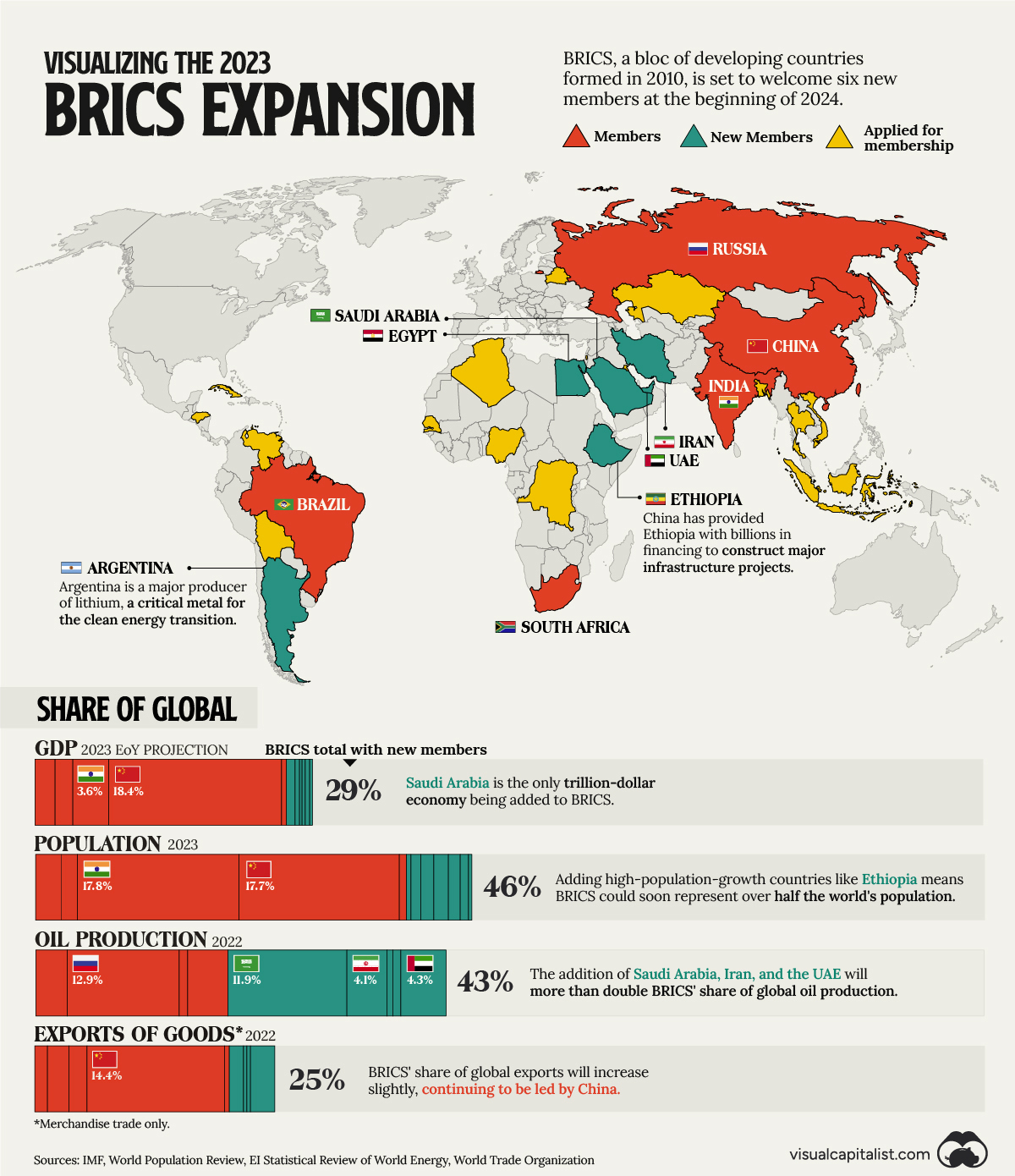
    Expansion of BRICS

    • First phase of expansion: The countries including Argentina, Egypt, Ethiopia, Iran, Saudi Arabia, and the UAE have received invitations to join BRICS. This new membership is set to take effect from January 1, 2024.

    Reasons for the BRICS expansion:

    • China’s strategic move for global influence.
    • FOMO: Fear of missing out on a visible club.
    • Limited options in other groups.
    • Anti-western sentiment and Global South unity

    Challenges faced by BRICS

    • Divergent National Interests: BRICS members have diverse economic and political priorities, which can sometimes lead to conflicting interests. Example: China’s emphasis on export-led growth might conflict with India’s efforts to reduce its trade deficit with China, creating economic tensions within the group.
    • Economic Inequalities: Challenge: Economic disparities among BRICS countries can hinder equitable distribution of benefits from cooperation. Example: South Africa, with a smaller economy compared to China and India, might find it challenging to compete for investment and trade opportunities within the group.
    • Geopolitical Competition: Geopolitical rivalries and regional conflicts among BRICS members can strain cooperation. Example: China’s territorial disputes in the South China Sea have led to tensions with other BRICS countries like India, which has concerns over freedom of navigation.
    • Differing Political Systems: BRICS countries have different political systems and levels of political freedom, impacting their approaches to governance and international relations. Example: Russia’s political landscape differs significantly from the democratic systems in Brazil, India, and South Africa, potentially affecting consensus on certain issues.
    • Infrastructure and Connectivity Gaps:  Inadequate infrastructure and connectivity gaps within BRICS countries can hinder trade and collaboration. Example: Insufficient transport and logistics infrastructure in some member countries can hinder smooth movement of goods and services.
    • Institutional Limitations: The institutional structure of BRICS, including the New Development Bank, might face limitations in terms of resources, decision-making processes, and lending capacity. The NDB might struggle to finance large-scale projects without relying on external resources beyond the BRICS nations.
    • Economic Volatility: Economic fluctuations and market vulnerabilities can impact the stability of BRICS economies. Example: The global economic recession triggered by the COVID-19 pandemic affected BRICS nations differently, leading to varying levels of economic contraction and recovery.
    • Regional and Bilateral Disputes: Regional and bilateral disputes among BRICS members can strain the group’s unity and shared objectives. Example: The Doklam standoff between India and China in 2017 created tensions and highlighted potential areas of conflict within BRICS.
    • Leadership Rotation and Priorities: Each BRICS member country holds the rotating presidency for a year, which can impact the continuity of the group’s priorities. Example: Each new presidency might emphasize different areas of cooperation based on its national interests and foreign policy goals.

    Reforms needed in BRICS

    • Inclusion of Civil Society and Private Sector: Involve civil society organizations and the private sector in discussions and initiatives to broaden perspectives and encourage innovation.
    • Promotion of Sustainable Development Goals (SDGs): Align BRICS activities more explicitly with the United Nations’ SDGs to foster sustainable and inclusive development across member countries.Launch joint projects on renewable energy deployment across member countries, addressing SDG 7 (Affordable and Clean Energy).
    • Humanitarian and Disaster Response Collaboration: Establish a BRICS Disaster Response Task Force to coordinate resources and expertise during natural disasters.
    • Expanding Membership or Partnerships: Consider the possibility of expanding the membership or establishing strategic partnerships with other emerging economies that share similar interests and values.
    • Promotion of Digital Connectivity: Foster digital connectivity and technological collaboration among BRICS members to capitalize on the benefits of the digital economy.
    • Regular Assessment of Goals and Progress: Periodically evaluate the achievements, challenges, and relevance of BRICS objectives to ensure they remain aligned with member countries’ evolving interests.
    • Climate Change and Environmental Cooperation: Establish a BRICS Environmental Fund to finance joint environmental protection and conservation projects.

    Way Forward for India

    • BRICS’ Role: BRICS can serve as an alternative platform to address global governance deficiencies, despite its imperfections. It could initiate discussions on more inclusive global governance.
    • Navigating Complexity: India’s geopolitical choices are complex due to its affiliations in various forums. India’s participation in non-Western platforms reflects a response to historical inequities.
    • Balancing Geopolitical Shifts: As competing blocs emerge, India must balance affiliations between a China-centric and a West-centric world order. Striking this balance is crucial to India’s global positioning.
    • Managing China’s Rise: India needs to consider whether its actions inadvertently support China’s ascent. While India must moderate China’s influence, it should avoid alienating other global South nations.
    • Safeguarding National Interests: India’s active participation in global forums must align with promoting equitable global governance while ensuring its national interests are safeguarded.

    Conclusion

    • Amid global uncertainties, India’s role in the BRICS summit gains prominence. Balancing between non-Western forums and Western ties, India aims for equitable global governance while managing China’s ascendancy. These decisions could mold India’s path and impact the evolving international landscape.

  • Modern Indian History-Events and Personalities

    Ajnala Massacre of 1857 and its Rediscovery

    ajnala

    Central Idea

    • A recent collaborative effort of professional geneticists has resulted in a scientific confirmation of the Ajnala massacre – an event lost to history for 165 years.
    • This project, marked by emotional intensity and rigorous analysis, brought long-lost victims to light through molecular and isotope data.

    Ajnala Massacre

    • Buried Tragedy: 282 soldiers of the 26th Native Bengal Infantry Regiment met a brutal fate during the 1857 uprising, drowned in a well by the British East India Company.
    • Discovery of Location: Cooper’s book provided clues that helped locate the 1857 Kallianwala Martyrs’ Well beneath the Gurdwara Singh Sabha in Ajnala.
    • Chance Encounter: In 2003, historian Surinder Kochhar found a reference to ‘Ajnala’ in a discarded book titled “Crisis in Punjab” by Frederick Henry Cooper.
    • Massacre Rediscovered: Kochhar’s research led to the revelation of the Ajnala Massacre, a grim incident hidden for over 157 years.

    Excavation and Revelation

    • Unveiling the Remains: The well was excavated in 2014, exposing the skeletal remains of the soldiers.
    • Gruesome Discovery:  During the 1857 Sepoy mutiny, many Indian soldiers revolted against the British. Around 500 revolted at Mian Mir Cantonment in Lahore.
    • Evading execution: They swam across the Ravi River to reach the town of Ajnala, now in Amritsar district. Of them, 218 were killed by British soldiers at Dadian Sofian village near Ajnala.
    • Dumped into a well: The remaining 282 were stuffed in a small room, where many died of asphyxiation. The rest were shot dead and their bodies were thrown into a well, which was later named “Kalianwala Khu” and “Shaheedan da Khu”.

    Verification and Acknowledgment

    • Scientific Verification: DNA-based evidence confirmed that the remains belonged to soldiers of the 26th Native Bengal Infantry regiment.
    • Historical Importance: The Ajnala Massacre adds to the narrative of the 1857 Indian uprising against the British East India Company’s oppression.

    Conclusion

    • The Ajnala Massacre underscores the often-overlooked brutalities of the 1857 Indian uprising.
    • The lack of acknowledgement and memorials can be attributed to the government’s hesitance to address uncomfortable aspects of history.

Join the Community

Join us across Social Media platforms.
