💥UPSC 2026, 2027, 2028 UAP Mentorship (March Batch) + Access XFactor Notes & Microthemes PDF

Archives: News

  • Horticulture, Floriculture, Commercial crops, Bamboo Production – MIDH, NFSM-CC, etc.

    Camellia sinensis

    Why in the News?

    • The Food Safety and Standards Authority of India clarified that a beverage can be legally called tea only if it is derived from the plant Camellia sinensis.

    About Camellia sinensis

    • Belongs to the family Theaceae
    • Commonly known as the tea plant
    • Primary source of green tea, black tea, oolong tea, and white tea
    • Grows as a shrub or evergreen tree
    • Can reach a height of up to 16 metres
    • Widely cultivated on mountain slopes
    • Thrives at altitudes up to 2200 metres

    Required Climatic Conditions

    • Temperature range of 15°C to 23°C
    • Requires a warm and humid climate
    • Needs at least 5 hours of sunlight daily
    • Annual rainfall of 150 to 300 cm, evenly distributed
    • Prefers slightly acidic, calcium free soil
    • Requires porous sub soil
    • Sloping terrain essential for proper drainage

    Global Distribution

    • Cultivated in subtropical and warm temperate regions
    • Native to South east Asia
    • Major tea producing countries include China, India, Bangladesh, Bhutan, Japan, Korea and Malaysia

    Prelims Pointers

    • All true teas come from Camellia sinensis
    • Herbal or flower infusions are not tea under FSSAI norms
    • Tea prefers acidic soils and high rainfall
    • Oxidation level differentiates green, oolong, black, and white teas
    Though coffee and tea both are cultivated on hill slopes, there is some difference between them regarding their cultivation. In this context, consider the following statements: (2010)

    1. Coffee plant requires a hot and humid climate of tropical areas whereas tea can be cultivated in both tropical and subtropical areas. 

    2. Coffee is propagated by seeds but tea is propagated by stem cuttings only. 

    Which of the statements given above is/are correct? 

    (a) 1 only (b) 2 only (c) Both 1 and 2 (d) Neither 1 nor 2

  • Modern Indian History-Events and Personalities

    Rashtriya Prerna Sthal

    Why in the News?

    • The Prime Minister recently inaugurated the Rashtriya Prerna Sthal in Lucknow, Uttar Pradesh, to commemorate the 101st birth anniversary of former Prime Minister Atal Bihari Vajpayee.

    About Rashtriya Prerna Sthal

    • Developed as a national memorial and inspirational complex
      • Dedicated to the life, ideals, and values of Atal Bihari Vajpayee
      • Envisioned as a site of enduring national significance
      • Designed to promote leadership values, national service, cultural consciousness, and public inspiration

    Location and Extent

    • Located on the banks of the Gomti River
      • Situated in Lucknow, Uttar Pradesh
      • Spread across 65 acres

    Statues and Key Structures

    • Features 65 foot high bronze statues
      • Statues of Syama Prasad Mookerjee, Deendayal Upadhyaya, and Atal Bihari Vajpayee
      • Each statue weighs 42 tonnes
      • Each statue platform is surrounded by a water body
    Consider the following pairs: (2024)

         Party : Its Leader 

    1. Bharatiya Jana Sangh : Dr. Shyama Prasad Mukherjee 

    2. Socialist Party : C. Rajagopalachari 

    3. Congress for Democracy : Jagjivan Ram 

    4. Swatantra Party : Acharya Narendra Dev 

    How many of the above are correctly matched? 

    (a) Only one (b) Only two (c) Only three (d) All four

  • Industrial Sector Updates – Industrial Policy, Ease of Doing Business, etc.

    Quality Council of India 

    Why in the News?

    • The Quality Council of India recently announced a comprehensive set of next generation quality reforms aimed at strengthening India’s quality ecosystem across healthcare, laboratories, MSMEs, and manufacturing sectors.

    About Quality Council of India (QCI)

    • Non profit autonomous organisation
    • Registered under the Societies Registration Act XXI of 1860
    • Established in 1997
    • Set up jointly by the Government of India and Indian industry

    Industry Associations Involved

    • ASSOCHAM
    • Confederation of Indian Industry
    • Federation of Indian Chambers of Commerce and Industry

    Administrative Control

    • Functions under the Department for Promotion of Industry and Internal Trade
    • Department under the Ministry of Commerce and Industry

    Key Functions of QCI

    • Acts as the national accreditation body of India
    • Provides a framework for independent third party assessment of Products
    • Promotes adoption of quality standards related to
    • Quality Management Systems
    • Food Safety Management Systems
    • Product certification and inspection bodies
    • Plays a key role in propagation and adherence to quality standards across sectors
    • Leads the National Quality Campaign for a nationwide quality movement

    Boards and Divisions under QCI

    • National Accreditation Board for Testing and Calibration Laboratories (NABL)
    • National Accreditation Board for Hospitals and Healthcare Providers (NABH)
    • National Accreditation Board for Education and Training (NABET)
    • National Accreditation Board for Certification Bodies (NABCB)
    • National Board for Quality Promotion (NBQP)
    With reference to ‘Quality Council of India (QCI)’, consider the following statements: (2017)

    1. QCI was set up jointly by the Government of India and the Indian Industry. 

    2. Chairman of QCI is appointed by the Prime Minister on the recommendations of the industry to the Government. 

    Which of the above statements is/are correct? 

    (a) 1 only (b) 2 only (c) Both 1 and 2 (d) Neither 1 nor 2

  • International Space Agencies – Missions and Discoveries

    Titan

    Why in the News?

    Scientists have re examined data from NASA’s Cassini spacecraft and suggested that Saturn’s largest moon Titan may not have a global subsurface ocean, contrary to earlier studies.

    About Titan

    • Titan is the largest moon of Saturn
      Second largest moon in the solar system, after Ganymede
      • Discovered in 1655 by Christiaan Huygens
      Nearly 50 percent wider than Earth’s Moon
      Only moon with a dense atmosphere
      • Atmosphere dominated by nitrogen with methane
      Only body besides Earth with stable surface liquids
      • Presence of rivers, lakes, and seas
      • Liquids composed of methane and ethane

    Scientific Significance

    • Earlier models suggested a subsurface ocean
    • New findings indicate uncertainty in the existence or thickness of such an ocean
    • Important for understanding Titan’s internal structure
    • Affects assessment of potential habitability
    • Relevant for future planetary exploration missions

    Cassini Spacecraft

    • Cassini spacecraft was a joint mission of NASA, ESA, and ASI
    • Launched in 1997
    • First spacecraft to orbit Saturn
    • Studied Saturn, its rings, and moons
    • Carried the Huygens probe
    • Huygens landed on Titan in 2005
    • Provided first direct surface data from Titan
    Which of the following pairs is/are correctly matched? (2014)

    Spacecraft — Purpose: 

    I. Cassini-Huygens: Orbiting the Venus and transmitting data to the Earth. 

    II. Messenger: Mapping and investigating Mercury. 

    III. Voyager 1 and 2: Exploring the outer solar system. 

    Select the correct answer using the code given below: 

    (a) 1 only (b) 2 and 3 only (c) 1 and 3 only (d) 1, 2 and 3 only

  • Foreign Policy Watch: Indo-Pacific and QUAD

    [26th December 2025] Thze Hindu OpED: A year of dissipating promises for Indian foreign policy

    PYQ Relevance

    [UPSC 2019] ‘‘The long-sustained image of India as a leader of the oppressed and marginalised Nations has disappeared on account of its new found role in the emerging global order”. Elaborate.

    Linkage: This PYQ examines the transformation of India’s normative foreign policy identity amid power politics and global realignments. The article highlights India’s selective silence on democracy and human rights in its neighbourhood and alignment dilemmas, weakening its moral leadership image in 2025.

    Introduction

    India entered 2025 with expectations of active diplomacy backed by political continuity and economic scale. Planned bilateral visits, trade negotiations, and regional outreach were intended to reposition India amid global flux. However, the year unfolded with mounting challenges across economic security, energy security, global strategic stability, and regional security, forcing India into reactive diplomacy rather than agenda-setting leadership.

    Did India’s Economic and Energy Security Strategy Falter in 2025?

    1. Tariff escalation by the U.S.: Imposition of a 25% reciprocal tariff on Indian goods affected labour-intensive sectors such as apparel, gems and jewellery, and seafood.
    2. Trade vulnerability exposure: Actions reversed expectations of a smooth India-U.S. reset under Trump’s second term.
    3. Generalized System of Preferences (GSP) withdrawal legacy: Continued absence of preferential market access compounded export stress.
    4. Energy sanctions pressure: U.S. surcharge on Russian oil imports raised costs, making India the most heavily tariffed Russian oil buyer.
    5. Investment uncertainty: Factory-level job losses and delayed contracts reflected tangible economic impact.
    6. FTA stagnation: Despite negotiations with the U.K., Oman, and New Zealand, major agreements with the U.S. and EU remained unsigned.

    Did China Engagement Deliver Strategic Stability?

    1. Symbolic diplomatic engagement: High-profile Modi-Xi interactions restored optics but not substance.
    2. Unresolved security guarantees: No rollback of Chinese military deployments or confidence-building mechanisms at the LAC.
    3. Economic barriers intact: Restrictions on Chinese investment and trade regulations remained unchanged.
    4. Consular incident escalation: Prolonged detention of an Indian airline passenger in Shanghai raised diplomatic credibility concerns.
    5. Strategic ambiguity persistence: Engagement failed to translate into operational de-escalation.

    Has India’s Russia Policy Reached Strategic Limits?

    1. Energy dependence peak: Russian oil imports rose to $52 billion after sanctions eased.
    2. Renewed sanctions pressure: New U.S. actions revived uncertainty over import sustainability.
    3. Summit outcome gap: India-Russia summit ended without major agreements in defence, nuclear energy, or space cooperation.
    4. Reputational costs: Alignment dilemmas increased amid geopolitical polarisation.
    5. Strategic autonomy strain: Balancing Western pressure and Eurasian partnerships became costlier.

    Is Global Strategic Space Shrinking for India?

    1. Shift in U.S. strategic framing: 2025 U.S. National Security Strategy adopted a softer but ambiguous stance on China and Russia.
    2. Reduced India emphasis: India’s role articulated mainly within Indo-Pacific security, not as a global strategic partner.
    3. G-2 speculation: Trump’s references to Xi Jinping heightened concerns over marginalisation.
    4. Rules-based order erosion: Gaza and Ukraine ceasefire proposals weakened accountability norms.
    5. China’s governance push: Beijing’s Global Governance framework challenged existing international architectures.

    Did Regional Security Challenges Expose Diplomatic Gaps?

    1. Pahalgam terror attack: April attack demonstrated continued cross-border terrorist capability.
    2. Operation Sindoor limitations: Militarily effective retaliation lacked sustained diplomatic backing.
    3. Limited international support: Few countries openly endorsed India’s response.
    4. Neighbourhood volatility: Political instability in Bangladesh and Nepal reduced predictability.
    5. Pakistan dynamics: Rise of ultra-hardline leadership constrained crisis management options.

    Has India’s Neighbourhood Policy Lost Momentum?

    1. Bangladesh reversal: Post-protest regime change reversed engagement gains.
    2. Nepal instability: Fragile transitional government limited cooperation.
    3. Myanmar elections: India engaged with junta while also reaching out to deposed leadership without results.
    4. Human rights dilemma: Calls for democratic values conflicted with strategic silence.
    5. Reduced influence: India appeared reactive rather than agenda-shaping in South Asia.

    What Lessons Does 2025 Offer for India’s Foreign Policy?

    1. Limits of performative diplomacy: Summits and symbolism failed to deliver strategic gains.
    2. Credibility deficit risk: Silence on sensitive issues weakened diplomatic trust.
    3. Normative inconsistency: External democracy advocacy clashed with internal minority concerns.
    4. Narrative recalibration: Shift from Vishwaguru to Vishwamitra lacked operational clarity.
    5. Strategic self-reflection: Acknowledging double standards emerged as a policy necessity.

    Conclusion

    India’s foreign policy experience in 2025 underscores a widening gap between diplomatic ambition and strategic delivery. Economic coercion, unresolved security challenges, neighbourhood volatility, and shrinking multilateral space revealed the limits of symbolism-driven diplomacy. The year demonstrates that strategic autonomy cannot be sustained through optics alone and requires consistency, credibility, and outcome-oriented engagement. Recalibrating foreign policy around economic resilience, principled regional leadership, and realistic power alignment will be essential for restoring India’s influence in an increasingly transactional global order.

    Value Addition: India’s Foreign Policy Trajectory under the Modi Government (2014-2025)

    1. Strategic Reorientation: Transitioned India’s foreign policy from issue-based reactivity to agenda-setting and assertive diplomacy aligned with national interest.
    2. Guiding Doctrine: Anchored diplomacy in the principles of Sabka Saath, Sabka Vikas, Sabka Vishwas, Sabka Prayas, reinforcing inclusivity, trust-building, and collective effort.

    Regional and Neighbourhood Outreach

    1. Neighbourhood First Policy: Prioritised political stability, connectivity, development assistance, and crisis support in South Asia.
    2. Extended Neighbourhood Strategies:
      1. Act East strengthened ASEAN and Indo-Pacific engagement.
      2. Think West deepened ties with West Asia and the Gulf.
      3. Connect Central Asia expanded India’s Eurasian footprint.
    3. SAGAR Doctrine: Reinforced maritime security, regional cooperation, and inclusive growth in the Indian Ocean Region.

    Defence Self-Reliance and Strategic Partnerships

    1. Atmanirbhar Defence: Expanded indigenous manufacturing and reduced import dependence.
    2. INS Vikrant Commissioning: Demonstrated India’s capability in complex defence platforms and blue-water navy ambitions.
    3. iDEX Framework: Institutionalised innovation by integrating startups, MSMEs, and academia into defence R&D ecosystems.

    Humanitarian Diplomacy and Crisis Response

    1. First Responder Role: Institutionalised rapid humanitarian assistance through the MEA’s Rapid Response Cell.
    2. Evacuation and Relief Operations:
      1. Operation Dost (Turkey-Syria earthquake, 2023)
      2. Operation Ganga (Ukraine, 2022)
      3. Operation Devi Shakti (Afghanistan, 2021)
      4. Mission Sagar (IOR outreach, 2020)
    3. Outcome: Enhanced India’s credibility as a reliable humanitarian partner.

    Global Initiatives and Multilateral Leadership

    1. Climate and Sustainability Leadership:
      1. International Solar Alliance (ISA)
      2. Coalition for Disaster Resilient Infrastructure (CDRI)
      3. Lifestyle for Environment (LiFE) Movement
    2. Multilateral Impact: Positioned India as a norm-shaper on climate action, resilience, and sustainable development.

    G20 Presidency and Global South Leadership

    1. G20 2023 Presidency: Advanced consensus-driven diplomacy under the theme “Vasudhaiva Kutumbakam”.
    2. African Union Inclusion: Secured AU’s permanent G20 membership, strengthening Global South representation.
    3. Development-Centric Agenda: Emphasised debt relief, digital public infrastructure, and inclusive growth.

    Overall Significance for UPSC Mains

    1. Demonstrates India’s evolution from a rule-taker to a rule-shaper in global governance.
    2. Provides counterbalance to critiques of 2025 by highlighting structural strengths, institutional capacity, and long-term strategic vision.
    3. Useful for GS II answers on India’s foreign policy evolution, Global South leadership, strategic autonomy, and multilateralism.
  • The urban future with cities as dynamic ecosystems

    Why in the News

    The article gains significance amid India’s rapid urban transition, where cities are absorbing unprecedented internal migration while urban planning frameworks continue to rely on static, infrastructure-centric models. There is a sharp contrast between how cities are officially designed and how they are actually inhabited, particularly by migrants and linguistic minorities. The “invisible tax of exclusion” imposed through language, documentation, and cultural conformity represents a systemic governance failure rather than individual inability to integrate.

    Introduction

    Cities function as engines of economic growth, innovation, and opportunity. However, urban planning has largely prioritised physical infrastructure over social integration. The article argues that cities are not fixed spatial units but fluid, evolving ecosystems shaped by continuous migration and cultural diversity. Failure to recognise this reality results in exclusion, weakened social cohesion, and reduced urban resilience.

    What is the ‘invisible tax of exclusion’ in urban spaces?

    1. Linguistic assimilation: Enforces dominant language norms as prerequisites for access to jobs, welfare, and services, marginalising migrants from different linguistic zones.
    2. Cultural conformity: Normalises “do what the Romans do” expectations, delegitimising diverse identities within the city.
    3. Administrative barriers: Converts routine processes such as housing, healthcare, and welfare access into bureaucratic obstacles due to monolingual documentation.
    4. Economic penalty: Pushes migrants into informal employment with higher exploitation and reduced social mobility.

    How does language become a tool of urban exclusion?

    1. Primary integration standard: Establishes language as the non-negotiable gateway to urban belonging.
    2. Access denial: Restricts full participation in economic and civic life for non-native speakers.
    3. Labour contradiction: Extracts migrant labour while denying equal access to opportunities and services.
    4. Resilience erosion: Undermines long-term social and economic stability of cities dependent on migrant populations.

    What are the structural flaws in modern urban planning?

    1. Static city assumption: Treats cities as stable entities with homogenous users.
    2. Established-resident bias: Designs infrastructure around existing residents, rendering newcomers invisible.
    3. Smart city selectivity: Benefits populations already fluent in dominant languages and compliant with documentation norms.
    4. Governance homogeneity: Planning bodies fail to reflect cultural and demographic diversity of metropolitan realities.

    Why does infrastructure-led planning fail to deliver inclusion?

    1. Blueprint dominance: Prioritises physical design over lived experience.
    2. Human element neglect: Ignores belonging as a determinant of service effectiveness.
    3. Mismatch of needs: Public amenities fail to align with demographic shifts and migrant realities.
    4. Policy blindness: Treats exclusion as incidental rather than systemic.

    What does designing cities ‘for all’ require?

    1. Layered reimagination: Integrates social, cultural, and administrative inclusion with infrastructure.
    2. Dynamic governance: Recognises cities as fluid spaces capable of expansion and adaptation.
    3. Anticipatory planning: Accounts for friction between established residents and new entrants.
    4. Cultural sensitisation: Trains public-facing officials to manage diversity efficiently and democratically.

    How can governance adapt to cities as dynamic ecosystems?

    1. Fluid identity recognition: Accepts cities as continuously reshaped by migration.
    2. Inclusive imagination: Designs cities for present and future inhabitants.
    3. Managed disruption: Accepts temporary discomfort as necessary for equitable transformation.
    4. Belonging-centric success metric: Measures urban performance through lived security and validation.

    Conclusion

    Urbanisation cannot be evaluated solely through infrastructure expansion or economic output. Cities that ignore language, culture, and lived experience institutionalise exclusion and weaken social resilience. Treating cities as dynamic ecosystems, designed around belonging, inclusion, and adaptive governance, is essential for sustainable, equitable, and democratic urban futures.

    PYQ Relevance

    [UPSC 2023] Does urbanisation lead to more segregation and/or marginalisation of the poor in Indian metropolises?

    Linkage: This question falls under GS Paper I (Indian Society-Urbanisation) and examines the social consequences of rapid urban growth in Indian cities. It directly links to the article’s argument that urban planning prioritising infrastructure over lived experience leads to structural exclusion, segregation, and marginalisation of the urban poor, especially migrants.

  • Industrial Sector Updates – Industrial Policy, Ease of Doing Business, etc.

    GCGs keep India’ technology job market alive as IT lags

    Introduction

    Global Capability Centres are offshore subsidiaries of multinational corporations established to handle technology, engineering, analytics, and innovation functions. In India, GCCs are increasingly replacing traditional IT services firms as the primary creators of high-value technology jobs. Their rapid expansion signals a structural transformation in the nature of work, skill demand, and geographic dispersion of technology employment.

    Why in the News

    Global Capability Centres (GCCs) have emerged as the primary drivers sustaining India’s technology job market amid a hiring slowdown by large IT services firms. During October-December FY26, GCCs recorded 5-7% sequential growth and 48% workforce expansion plans, contrasting sharply with muted IT hiring. India currently hosts 1,850 GCCs employing nearly 2 million professionals, with projections of 2,400 GCCs by 2030, employing over 3 million workers and generating a $25 billion market size. The transition of GCCs from cost-arbitrage centres to strategic hubs for AI, R&D, and specialised digital work marks a qualitative shift in India’s technology employment trajectory.

    What are Global Capability Centres (GCCs)?

    1. Global Capability Centres (GCCs) are wholly-owned offshore units of multinational corporations established to deliver core, high-value functions such as technology development, data analytics, research and development, finance, risk management, and enterprise AI solutions.
    2. Ownership structure: Operate as captive centres under direct control of parent multinational firms.
    3. Functional role: Handle strategic and mission-critical operations, not routine outsourcing tasks.
    4. Evolutionary shift: Transitioned from cost-arbitrage back offices to innovation, R&D, and decision-support hubs.
    5. Indian context: India hosts the world’s largest concentration of GCCs due to its skilled workforce, digital infrastructure, and cost competitiveness.
    6. Economic significance: Contribute to high-skill employment, technology transfer, and integration into global value chains.

    Why are GCCs sustaining technology hiring when IT services firms are slowing?

    1. Hiring resilience: Demonstrated 5-7% sequential growth during Q3 FY26 despite industry-wide slowdown.
    2. Workforce expansion intent: 48% of GCCs reported active workforce expansion plans for the coming year.
    3. Structural insulation: Operate as captive centres aligned to parent firms’ long-term strategies rather than cyclical client demand.

    How has the role of GCCs evolved beyond cost arbitrage?

    1. High-value pivot: Transition from back-office operations to specialised, strategic, and hyperactive roles.
    2. Capability creation: Function as centres of AI adoption, enterprise AI transition, and advanced analytics.
    3. Talent positioning: Serve as strategic cores for high-end talent and R&D, not merely support units.

    What is the scale and future trajectory of GCC expansion in India?

    1. Current footprint: 1,850 GCCs employing ~2 million professionals.
    2. Projected growth: 2,400 GCCs by 2030, employing over 3 million workers.
    3. Economic value: Expected to generate $25 billion market size by 2030.
    4. Enterprise integration: Increasing integration into global decision-making and innovation pipelines.

    How are GCCs reshaping India’s technology geography?

    1. Non-metro diffusion: Growth spreading beyond Tier I cities to Nagpur, Indore, Coimbatore, and other Tier II-III cities.
    2. Quarterly growth rate: Non-metro GCC employment grew at 8-9% per quarter.
    3. Workforce decentralisation: Expansion supports regional talent absorption and reduces metropolitan concentration.

    Why do GCC jobs command higher salaries than IT services roles?

    1. Compensation premium: GCCs offer 12-20% higher salaries compared to IT services firms.
    2. Skill intensity: Higher pay reflects demand for specialised, AI-driven, and leadership roles.
    3. Leadership expansion: Leadership talent pool in GCCs grew from 88,600 to 90,700 between Dec 2024 and Dec 2025.

    How does GCC growth compare with traditional IT services employment?

    1. Net additions: GCCs added 3,400 leaders, increasing total leadership strength from 44,000 to 47,400.
    2. Growth rate: 7.7% growth in GCC leadership roles compared to 2.4% growth in IT services.
    3. Structural contrast: Indicates stronger long-term expansion prospects for GCC-driven employment.

    Conclusion:

    The rise of Global Capability Centres marks a structural shift in India’s technology economy from volume-led IT services to value-driven, innovation-centric employment. While GCCs strengthen India’s position in global digital and AI value chains, sustaining long-term and inclusive growth will depend on aligning skill development, regional dispersion, and workforce readiness with this high-end transformation.

    PYQ Relevance

    [UPSC 2023] What is the status of digitalization in the Indian economy? Examine the problems faced in this regard and suggest improvements.

    Linkage: The question assesses the depth, quality, and inclusiveness of digitalisation in India’s economic transformation. The expansion of GCCs as AI- and data-driven enterprise hubs reflects advanced digitalisation, while also exposing gaps in skill readiness and digital inclusion.

  • Industrial Sector Updates – Industrial Policy, Ease of Doing Business, etc.

    Kimberley Process 

    Why in the News?

    The Kimberley Process Plenary has selected India to assume the Chairmanship of the Kimberley Process from 1 January 2026. This will be the third time India will chair the process.

    About the Kimberley Process

    • It is a tripartite initiative involving governments, the international diamond industry, and civil society.
    • Aim is to prevent the trade in conflict diamonds.
    • Conflict diamonds are rough diamonds used by rebel groups to finance armed conflicts against legitimate governments, as defined by UN Security Council resolutions.

    Governance Structure

    • Chair and Vice Chair are appointed by Plenary consensus.
    • Vice Chair of a year automatically becomes Chair the following year.
    • Plenary is the highest decision making body of the Kimberley Process.

    Participants

    • 60 participants representing 86 countries.
    • European Union is counted as a single participant.

    India and the Kimberley Process

    • India has been participating in the Kimberley Process Certification Scheme since 2003.
    • This is the third time India has been entrusted with the Chairmanship.
    • India is a major global hub for diamond cutting and polishing, giving it strategic importance in KP deliberations.

    Prelims Pointers

    • Kimberley Process deals only with rough diamonds, not polished diamonds.
      • KP is not a UN body, but works in alignment with UN Security Council resolutions.
      • Certification is mandatory for international trade in rough diamonds among KP participants.
      • EU counts as one participant despite multiple countries.
    Consider the following pairs: (2025)

    Country –        Resource-rich in; 

    I. Botswana:   Diamond; 

    II. Chile:         Lithium; 

    III. Indonesia: Nickel. 

    In how many of the above rows is the given information correctly matched? 

    (a) Only one (b) Only two (c) All the three (d) None

  • Electronic System Design and Manufacturing Sector – M-SIPS, National Policy on Electronics, etc.

    Minamitori Island  

    Why in the News?

    Japan has decided to conduct test mining of rare earth rich mud from the deep seabed near Minamitori Island to reduce dependence on imported critical minerals.

    About Minamitori Island

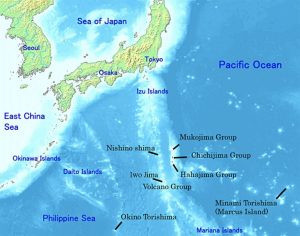
    • Minamitori Island is also known as Marcus Island.
    • It is an isolated Japanese coral atoll located in the northwestern Pacific Ocean.
    • It marks the easternmost territorial point of Japan.
    • It is the first location in Japan to witness sunrise due to its eastern position.
    • The island is situated about 1,950 kilometres southeast of central Tokyo.

    Geographical and Geological Features

    • Minamitori Island represents the exposed summit of a massive underwater seamount.
    • The seamount rises from the deep ocean floor along the Marcus Necker Ridge.
    • It is the only landmass of Japan that lies entirely on the Pacific Plate.
    • The island provides Japan with a large Exclusive Economic Zone in the Pacific Ocean.

    What is Rare Earth Mud

    • Rare earth mud is a type of pelagic sediment formed from the accumulated remains of plankton.
    • Over millions of years, these sediments become enriched with rare earth elements.
    • The mud contains significant quantities of neodymium and dysprosium.
    • These elements are essential for manufacturing high performance permanent magnets.
    Consider the following statements: (2021)

    1. The Global Ocean Commission grants licenses for seabed exploration and mining in international waters. 

    2. India has received licenses for seabed mineral exploration in international waters. 

    3. ‘Rare earth minerals’ are present on the seafloor in international waters. 

    Which of the statements given above are correct? 

    (a) 1 and 2 only (b) 2 and 3 only (c) 1 and 3 only (d) 1, 2, and 3

  • New Species of Plants and Animals Discovered

    Himalayan Red Fox 

    Why in the News?

    A roadside sighting of a Himalayan Red Fox near Pangong Tso in Ladakh went viral on social media. Wildlife authorities cautioned that human interaction with wild animals can disturb their natural behaviour and pose ecological risks.

    About Himalayan Red Fox

    • Subspecies of the widespread red fox
      • One of the most adaptable predators of high altitude Himalayan ecosystems

    Conservation Status

    • Classified as Least Concern on the IUCN Red List

    Distribution

    • Native to the Himalayan mountain range
      • Found in India, Nepal, Bhutan, Tibet
      • In India, distributed across Jammu and Kashmir, Himachal Pradesh, Uttarakhand, Sikkim and Arunachal Pradesh

    Key Facts about Pangong Tso

    • High altitude endorheic lake in the Ladakh Himalayas
      • One third lies in India and two thirds in China
      • World’s highest saltwater lake
      • Known for changing colours such as blue, green, and reddish shades

    Prelims Pointers

    • Himalayan Red Fox shows high ecological adaptability
      • Pangong Tso is saline and landlocked
      • Wildlife disturbance from tourism is an emerging conservation concern
      • Least Concern species can still face localised threats
    Consider the following: (2012)

    1. Black-necked crane 

    2. Cheetah 

    3. Flying squirrel 

    4. Snow leopard. 

    Which of the above are naturally found in India? 

    (a) 1, 2 and 3 only (b) 1, 3 and 4 only (c) 2 and 4 only (d) 1, 2, 3 and 4

Join the Community

Join us across Social Media platforms.