💥UPSC 2027,2028 Mentorship (April Batch) + Access XFactor Notes & Microthemes PDF

Archives: News

  • Issues related to Economic growth

    How India can leverage its biggest strength?

    India

    Central Idea

    • India’s greatest strength lies in its vast manpower. In the coming 25 years, the country has the potential to experience a golden era, provided it effectively utilizes its favorable demographic composition.

    Relevance of the topic

    The current population of India is 1,420,681,800, based on Worldometer elaboration of the latest United Nations data.

    The growth is driven by India’s large, dynamic and young population, with 65% of Indians being under 35 years old.

    However, one of the greatest challenges facing young India’s is unemployment. This raises core question is this an opportunity or demographic disaster

    There is a need to create opportunities for the existing labour force and the new entrants into the labour market by improving their productivity.

    India’s Demographic Advantage

    • Young Workforce: India’s average age of 29 years, compared to countries like the US (38), China (38), France (42), Germany (45), and Japan (48), highlights its advantage of having a younger population, which can contribute to economic growth and productivity.
    • Favorable Dependency Ratio: The projected old-age dependency ratios indicate India’s advantage in terms of a smaller proportion of the population requiring support from the working-age population. For instance, while India’s projected old-age dependency ratio is 37% in 2075, France is projected to have 55.8%, Japan 75.3%, the US 49.3%, the UK 53%, and Germany 63.1%.
    • Rising Working-Age Population: India is currently in a phase where its working-age population is increasing, presenting a potential workforce that can drive economic growth and development for several decades.
    • Potential for Labor Supply: With its large population and a growing workforce, India has the potential to become a significant source of labor supply for the rest of the world. This can attract investment and outsourcing opportunities, further boosting economic growth.
    • Abundant Human Capital: India possesses a vast pool of educated and skilled individuals, which contributes to its human capital advantage. This workforce can drive innovation, productivity, and economic competitiveness across various sectors.
    • Consumer Market: India’s large population provides a substantial domestic consumer market, offering significant opportunities for businesses to cater to the needs and demands of a vast consumer base, driving economic activity.
    • Innovation and Entrepreneurship: The young and dynamic population in India fosters a culture of innovation and entrepreneurship, contributing to the development of new industries, technologies, and solutions, creating employment opportunities and driving economic progress.
    • Potential for Economic Growth: By effectively utilizing its demographic advantage, India has the potential to achieve higher rates of economic growth and improve its standard of living.
    • Global Competitiveness: A young and skilled labor force enhances India’s competitiveness in the global market, attracting foreign investment, promoting export-oriented industries, and positioning India as a preferred business and investment destination.
    • Demographic Dividend: India’s favorable demographic composition presents the opportunity to unlock the demographic dividend, leading to accelerated economic growth and development through investments in education, skill development, healthcare, and employment opportunities.

    Lessons learned from Asian success stories accordingly

    • Harnessing the Demographic Dividend: Asian countries like China, Japan, South Korea, Malaysia, and Singapore have effectively utilized their favorable demographics to drive economic growth and development. India, with its young workforce, can learn from these examples and focus on maximizing the potential of its demographic dividend.
    • Focus on Labor-Intensive Manufacturing: Asian success stories have demonstrated the importance of capitalizing on labor-intensive manufacturing sectors to create employment opportunities. India can prioritize these sectors, such as textiles, toys, footwear, auto components, and agricultural processing, to leverage its abundant labor force.
    • Structural Transformations: Asian nations have undergone structural transformations by transitioning from labor-intensive industries to more advanced sectors. India can learn from these examples and emphasize technological advancements, innovation, and high-value manufacturing to sustain economic growth and enhance competitiveness.
    • Investment in Infrastructure: Developing robust infrastructure is crucial for economic growth. Asian countries have recognized the significance of infrastructure development in reducing trade and transaction costs, improving connectivity, and attracting investments. India should focus on infrastructure development to support its economic growth objectives.
    • Trade and Investment Facilitation: Asian success stories have implemented trade facilitation measures and pursued policies to attract foreign direct investment. India can learn from these experiences by adopting measures to facilitate trade, improve ease of doing business, and create a favorable investment climate.
    • Support for MSMEs: Micro, Small, and Medium Enterprises (MSMEs) play a pivotal role in the manufacturing sector. Asian countries have provided support to MSMEs to enhance their competitiveness, scale, and integration into global supply chains. India can prioritize support for MSMEs to drive manufacturing growth and job creation.
    • Emphasis on Skill Development: Asian success stories have recognized the importance of skill development in enhancing labor force productivity. India should invest in skilling initiatives, re-skilling, and up-skilling programs to improve employability and align the workforce with evolving industry demands.
    • Quality Education and Healthcare: Asian nations have prioritized investments in quality education and healthcare. India can learn from these examples by focusing on improving access to quality education and healthcare services, which will contribute to a skilled workforce and a healthy labor force.
    • Government Reforms and Policies: Asian success stories have been supported by proactive government reforms and policies. India should implement favorable policies related to labor laws, taxation, ease of doing business, and intellectual property rights to create an enabling environment for economic growth and entrepreneurship.
    • Long-term Vision and Implementation: Asian countries that have achieved sustained success have demonstrated long-term vision and commitment to implementing policies and reforms. India should adopt a similar approach by formulating long-term strategies and ensuring consistent implementation to drive sustainable economic growth.

    What India needs to capitalize on its demographic dividend?

    • Skilling and Education: India needs to focus on skill development programs such as the Jan Shikshan Sansthan, the Pradhan Mantri Kaushal Vikas Yojana, and the National Apprenticeship Promotion Scheme. These programs have shown success in increasing human resource supply in various sectors. However, efforts should be made to upscale and improve the skills of the labor force, especially in the unorganized sector where underpaid jobs prevail.
    • Job Creation and Employment Opportunities: India should prioritize sectors with high labor intensity, such as textiles, toys, footwear, auto components, sports goods, agricultural processing, restaurants, hotels, mining, construction, healthcare, and caregiving services. These sectors have significant potential for employment generation. Additionally, the focus should be on infrastructure development to reduce trade and transaction costs and create an environment conducive to doing business.
    • Industry and Infrastructure Development: India should accelerate infrastructure development to support economic growth and enhance competitiveness. This includes investment in transportation, energy, digital connectivity, and other critical infrastructure sectors.
    • Ease of Doing Business: To attract investments and promote entrepreneurship, India should continue its efforts to improve the ease of doing business by simplifying regulatory processes, reducing bureaucratic hurdles, and enhancing transparency.
    • Social Security and Healthcare: India should work towards improving access to quality healthcare services and implementing robust social security programs. Measures like the Ayushman Bharat and Pradhan Mantri Bhartiya Janaushadhi Pariyojana mentioned in the article can help in achieving these goals.
    • Government Reforms and Policies: Implementing favorable labor laws, rationalizing taxation systems, and providing policy stability are essential for creating an enabling environment for economic growth. There is importance of reforms such as the National Education Policy 2020, which aims to update knowledge and ensure productive employment opportunities.

    Way Forward: Priority areas

    1. Improving Education Quality:
    • India should prioritize the implementation of the National Education Policy 2020, which emphasizes knowledge updating and aims to provide inclusive, equitable, and quality education at all levels.
    • Steps should be taken to address challenges such as non-functional schools, resistance to change, and inadequate resources.
    • Providing access to quality education up to higher secondary levels for all is essential to create a productive labor force.
    1. Ensuring Quality Healthcare:
    • The government should continue implementing initiatives like Ayushman Bharat and the Pradhan Mantri Bhartiya Janaushadhi Pariyojana to improve healthcare equity.
    • Efforts should be made to make drug prices affordable and accessible, and steps should be taken to ensure financial medical protection, such as universal insurance and adequate medical infrastructure.
    • Quality health infrastructure for all will contribute to a healthy and productive labor force.
    1. Accelerating Reforms for Future Success:
    • India should accelerate the implementation of reforms and flagship programs to unlock its demographic dividend and drive economic growth.
    • Streamlining bureaucratic processes, improving ease of doing business, and creating an investor-friendly environment are essential to attract investments and foster entrepreneurship.
    • Additionally, continued infrastructure development, trade facilitation measures, and reforms in labor laws and taxation systems will support the growth of industries and enhance India’s competitiveness in the global market.

    Conclusion

    • India’s demographic dividend offers a unique opportunity for growth and development in the coming years. By prioritizing skill development, creating employment opportunities, enhancing productivity, ensuring access to quality healthcare and education, and implementing crucial reforms, India can fully harness its demographic advantage. The nation has the potential to become a global labor force supplier and secure a prosperous future.

    Also read:

    India’s Population Growth: Dividend or a Disaster?

  • Digital India Initiatives

    Data Protection Bill approved by Cabinet: Content, concerns

    protection

    Central Idea

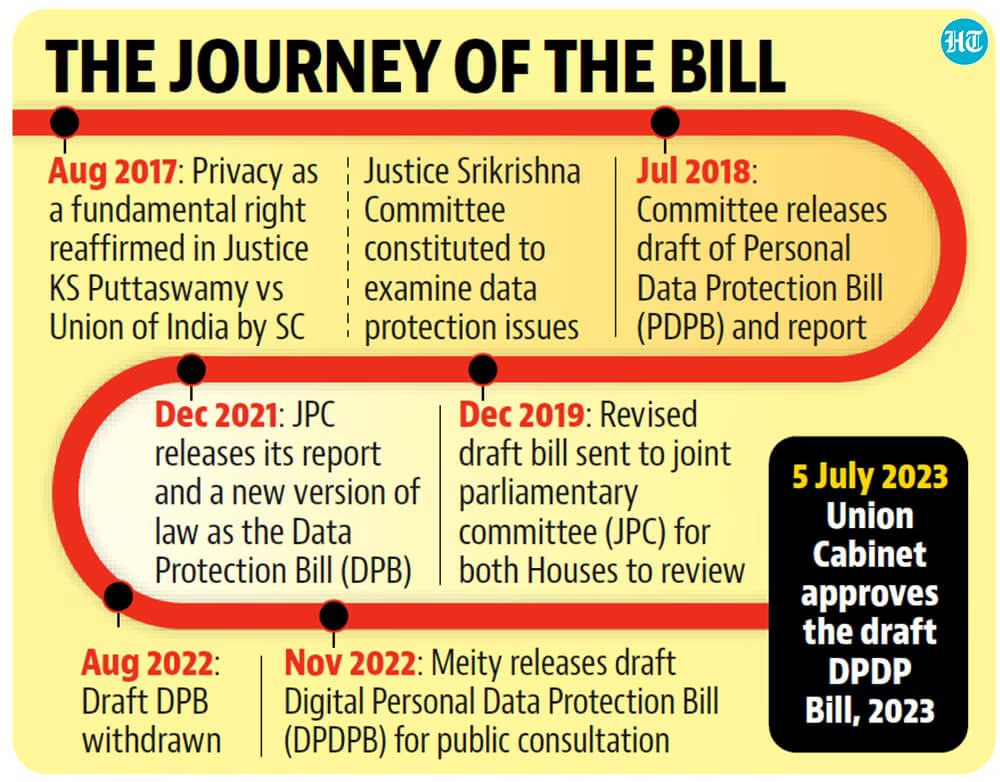
    • Nearly six years after the Supreme Court recognized privacy as a fundamental right, the Indian government has taken a significant step towards safeguarding personal data with the Digital Personal Data Protection Bill, 2022. This legislation, expected to be tabled in the upcoming Monsoon Session of Parliament, aims to address concerns regarding data protection, while considering the country’s trade negotiations with international partners.

    *Relevance of the topic*

    Today India has more than 800 million internet users and it is expected to increase by 45% in the next five years to 900 million in 2025

    Given the dynamic nature of the online sphere, privacy concerns and issues are rapidly changing.

    Need for robust data protection policy and its implications on citizens

    Significance of Privacy Law/ Data Protection Bill, 2022

    • Filling the Legislative Gap: The proposed bill aims to fill the legislative gap in India regarding the protection of personal data. By enacting a comprehensive privacy law, it will provide a dedicated legal framework for the collection, storage, processing, and transfer of personal data, addressing concerns that were previously unregulated.
    • Strengthening Data Protection: The bill seeks to strengthen data protection measures by placing obligations on entities, referred to as data fiduciaries, to maintain the accuracy and security of personal data. It also emphasizes the importance of deleting data once its purpose has been fulfilled, promoting responsible data management practices.
    • Trade Negotiations and Global Alignment: The bill’s enactment holds significance in India’s trade negotiations, particularly with regions like the European Union. Implementing a robust privacy law aligns India with international data protection standards, such as the GDPR, which can facilitate smoother data transfers and trade relations with countries that prioritize privacy.
    • Consumer Trust and Confidence: Establishing a privacy law builds consumer trust and confidence in the digital ecosystem. It assures individuals that their personal data will be protected, thereby encouraging greater participation in digital transactions, e-commerce, and other online activities. Increased trust contributes to the growth of the digital economy.
    • Accountability and Remedies: The bill includes provisions for accountability and remedies in case of privacy breaches. It empowers individuals to seek legal remedies and file complaints against entities that violate the privacy provisions. This promotes a culture of accountability among organizations and strengthens individuals’ rights.
    • Harmonizing Data Protection and National Interests: The proposed bill aims to strike a balance between data protection and national interests. While safeguarding privacy rights, it also provides exemptions for the central government and its agencies on grounds of national security, foreign relations, and public order, ensuring that legitimate national interests are taken into account

    Concerns Surrounding the Draft Bill

    • Wide-ranging Exemptions: One of the major concerns is the inclusion of wide-ranging exemptions for the central government and its agencies. These exemptions allow the government to bypass certain provisions of the bill based on reasons such as national security, relations with foreign governments, and maintenance of public order. Critics argue that these exemptions could potentially undermine privacy protections and weaken the scope of the law.
    • Dilution of the Data Protection Board: The role of the data protection board, which serves as an adjudicatory body for privacy-related disputes, is perceived to be diluted in the draft bill. The control of the central government in appointing board members and determining the terms and conditions of their service raises concerns about the independence and effectiveness of the board.
    • Potential Impact on the Right to Information (RTI) Act: There are concerns that the draft bill could have implications for the Right to Information (RTI) Act. The protection of personal data of government functionaries under the privacy law could make it more challenging for information to be shared with RTI applicants, potentially affecting transparency and accountability

    How does India’s proposal compare with other countries?

    • European Union (EU) Model: The EU’s General Data Protection Regulation (GDPR) is a comprehensive data protection law that sets high standards for the processing and protection of personal data. The GDPR is known for its stringent requirements and extensive obligations on organizations handling personal data. India’s proposed bill aims to align with international standards, including those set by the GDPR, to facilitate data transfers and trade relations with the EU.
    • United States Model: Privacy protection in the United States is primarily based on sectoral laws and regulations. The focus is on safeguarding individual liberties, with an emphasis on protection from government intrusion. The US approach allows data collection as long as individuals are informed about it. In comparison, India’s proposed bill takes a more comprehensive approach, covering various aspects of data protection and placing obligations on both government and private entities.
    • China Model: China has recently implemented new data privacy and security laws, including the Personal Information Protection Law (PIPL) and the Data Security Law (DSL). These laws grant individuals new rights over their personal data and impose restrictions on cross-border data transfers. While the specific provisions of India’s proposed bill may differ, both India and China aim to enhance data protection and privacy in the face of increasing digitalization.
    • Global Adoption: According to the United Nations Conference on Trade and Development (UNCTAD), the majority of countries globally have established data protection and privacy laws. Africa and Asia have shown significant adoption rates, with countries in these regions implementing their own privacy frameworks. It is worth noting that the level of adoption and the specifics of these laws may vary across countries.

    Implications of the bill on Citizens

    1. Positive implications
    • Enhanced Privacy Protection: The bill would provide individuals with greater control over their personal data and reduce the risk of unauthorized access or misuse.
    • Strengthened Data Security: Stricter requirements for data fiduciaries to implement security measures can help safeguard sensitive data, enhancing trust and confidence in digital transactions.
    • Increased Accountability and Remedies: The bill empowers citizens by providing them with avenues to address privacy violations, ensuring that their rights are protected and promoting a culture of accountability among data handlers.
    1. Potential Negative Implications:
    • Exemptions for Government Agencies: Concerns about the government’s access to and use of personal data, leading to potential privacy risks and diminished transparency.
    • Weakened Role of the Data Protection Board: The perceived dilution of the data protection board’s role, particularly in terms of its independence and control by the central government may result in a lack of impartial adjudication and hinder citizens’ ability to seek redress for privacy violations.
    • Potential Impact on Right to Information (RTI) Act: If personal data is shielded under the privacy law, it may restrict access to information by RTI applicants, potentially affecting transparency and accountability in the public sphere.

    What changes are likely in the final version?

    • Cross-border Data Flows: A key change in the final draft is a shift from a ‘whitelisting’ approach to a ‘blacklisting’ mechanism regarding cross-border data flows. This means that data transfers will be allowed to most jurisdictions by default, except for those specified in a ‘negative list’ of countries where transfers would be prohibited.
    • Stricter “Deemed Consent” Provision: The provision on “deemed consent” may be reworded to impose stricter requirements on private entities while allowing government departments to assume consent for processing personal data on grounds of national security and public interest. This change aims to strengthen privacy protections for individuals.
    • Clarification of Penalties: The final version of the bill is expected to provide clarity on penalties for data breaches. It is reported that the highest penalty for failing to prevent a data breach could be prescribed at Rs 250 crore per instance. The interpretation of “per instance” would be determined by the data protection board on a case-by-case basis.

    Way forward

    • Stakeholder Consultation: Engage with privacy experts, industry representatives, and civil society organizations for comprehensive input and diverse perspectives.
    • Strengthen Privacy Safeguards: Minimize exemptions for government agencies, ensure an independent and effective data protection board, and clarify provisions on data breaches and penalties.
    • Transparency and Accountability: Establish clear guidelines for data fiduciaries, conduct regular audits, and provide accessible mechanisms for citizens to file complaints and seek redress.
    • Awareness and Education: Launch public awareness campaigns, privacy literacy programs, and collaborate with educational institutions to empower individuals with knowledge about their privacy rights.
    • International Cooperation: Align standards with international frameworks, collaborate on data transfer mechanisms, and actively participate in global privacy discussions and forums.
    • Continuous Review and Adaptation: Incorporate provisions for regular review and updates to address emerging privacy challenges and technological advancements.

    Conclusion

    • As India prepares to introduce the Digital Personal Data Protection Bill, 2022, it marks a significant milestone in protecting individuals’ privacy rights and regulating data practices. However, concerns regarding exemptions for government agencies and the potential impact on the RTI Act need to be carefully addressed. By striking a balance between privacy protection and national interests, India can establish a robust framework that promotes data-driven innovation, fosters international trade relations, and ensures individuals’ control over their personal data

    Also read:

    Digital Personal Data Protection Bill: Need A Pre-legislative Consultation

  • Festivals, Dances, Theatre, Literature, Art in News

    Kanwar Yatra: What is it?

    kanwar yatra

    Central Idea: The Kanwar Yatra, a significant annual pilgrimage, commenced on July 4 and will continue until July 15.

    What is Kanwar Yatra?

    • This pilgrimage sees millions of devotees, known as Kanwariyas or Kriyas, undertaking a journey to collect water from the Ganga River and offer it to Lord Shiva.
    • The Kanwar Yatra symbolizes the unbreakable bond between devotees and Lord Shiva and is considered an act of faith and devotion.

    Mythological Origins of Kanwar Yatra

    • Samudra Manthan: Kanwar Yatra is believed to have originated from the mythological story of Samudra Manthan, where Lord Shiva consumed poison to save the world. To alleviate the effects of the poison, all the gods poured water from the Ganga River on Lord Shiva.
    • King Rama’s Offering: Another version suggests that the ritual of Kanwar Yatra began when King Ram offered water from the Ganga to a statue of Lord Shiva (shivalinga) in an earthen pot.

    Customs and Rituals Performed

    • Collection of Ganga Water: Devotees, dressed in saffron attire, embark on foot to collect water from the Ganga River at Haridwar, Gomukh, and Gangotri. They carry two earthen pots filled with water, hung on a decorated bamboo stick, which they balance on their shoulders.
    • Significance of Purity: Devotees consider it essential to keep the pots from touching the ground or getting contaminated by dust, as it may impure the sacred water.
    • Challenging Journey: Kanwariyas undertake the yatra barefoot, covering long distances in challenging terrains and extreme weather conditions.
  • Agricultural Sector and Marketing Reforms – eNAM, Model APMC Act, Eco Survey Reco, etc.

    Tomato Crop affected by different Mosiac Viruses

    tomato mosiac

    Central Idea

    • Tomato growers in Maharashtra and Karnataka have reported significant yield losses due to the impact of two different Mosiac Viruses.
    • The cucumber mosaic virus (CMV) has affected tomato crops in Maharashtra, while the tomato mosaic virus (ToMV) has been blamed for crop losses in Karnataka and other South Indian states.


    Cucumber Mosaic Virus (CMV)

    Tobacco Mosaic Virus (TMV)

    Target Plants Various plants, including cucumbers, tomatoes, peppers, lettuce, and ornamentals Plants in the Solanaceae family, including tobacco, tomatoes, peppers, etc.
    Transmission Aphids, seeds, mechanical contact, infected plant debris Direct contact, mechanical transmission, contaminated plant material
    Symptoms Mosaic patterns, yellowing, stunted growth, leaf curling, distorted fruits or flowers Mosaic patterns, yellowing, leaf curling, stunted growth
    Impact on Crops Reduced yield and quality Reduced yield, impact on flavor and quality
    Longevity Not specified Long-term viability in dried plant debris, tobacco products, contaminated surfaces
    Control Measures Vector control, seed selection, crop rotation Crop rotation, sanitation, virus-free seeds/seedlings, cultural practices
    Curability No cure, management focuses on prevention No cure, management focuses on prevention


    Impact on Tomato Crops

    • Symptoms of ToMV: Infected plants exhibit alternating yellowish and dark green areas, blisters on leaves, leaf distortion, twisting of younger leaves, necrotic spots on fruits, and reduced fruit setting.
    • Symptoms of CMV: Leaf distortion, with top and bottom leaves most affected, mosaic-like patterns of yellow and green spots in cucumber, fruit deformation, and reduced production in tomato.

    Control Measures

    • ToMV: Ensuring biosafety standards in nurseries, seed treatment, careful inspection of saplings before planting, continuous monitoring for infection, and removal of infected plants are crucial.
    • CMV: Due to its wide host range, controlling aphids becomes essential. Measures include spraying quick-acting insecticides or mineral oils, monitoring aphid migration, and clearing fields of weeds and plant material that may harbor the virus.


  • Wildlife Conservation Efforts

    What is Ambergris?

    amber

    Central Idea

    • The discovery of a sperm whale carcass on the shore of the Canary Island of La Palma has led to an extraordinary find.
    • During the post-mortem examination, a pathologist found ambergris, a highly valuable substance often referred to as “floating gold,” stuck in the whale’s colon.
    • The estimated worth of the retrieved lump of ambergris is around €500,000 (Rs 4,47,62,500).

    What is Ambergris?

    • Origin: Ambergris is a waxy substance formed in the digestive system of protected sperm whales.
    • Formation: One theory suggests that ambergris is produced in the gastrointestinal tract of sperm whales to aid the passage of hard objects ingested during feeding.
    • Appearance and Odour: Freshly passed ambergris is light yellowish and fatty, but it ages and turns waxy, taking on red-brownish colors. It possesses a mild, earthy, sweet smell with hints of marine odor.

    Uses and Rarity of Ambergris

    • Perfume Industry: Traditionally, ambergris is used in the production of perfumes, adding a musky note.
    • Historical Uses: In the past, ambergris was utilized to flavor food, alcoholic beverages, and tobacco in certain cultures.
    • Rarity and Value: Ambergris is a scarce substance, contributing to its high demand and significant price in the international market.

    Legal Restrictions in India

    • Wildlife Protection Act: Sperm whales, the source of ambergris, are a protected species under Schedule 2 of the Wildlife Protection Act in India.
    • Illegal Possession and Trade: The possession and trade of ambergris and its by-products, including in India, are prohibited under the Wildlife Protection Act of 1972.
    • Smuggling and Trade Routes: Smuggling networks involved in ambergris trade often procure the substance from coastal areas in India and transport it through countries with comparatively less stringent sea trade regulations.
  • Right To Privacy

    Cabinet clears Data Protection Bill

    data

    Central Idea

    • The Union Cabinet has granted clearance for the Digital Personal Data Protection (DPDP) Bill, which is set to be introduced in the upcoming Monsoon Session of Parliament.
    • This legislation aims to regulate the management of personal data of Indian residents, emphasizing explicit consent for data collection and usage.

    DPDP, Bill: Key Features and Concerns

    (A) Data Protection Norms and Consent

    • Data Protection Law: The DPDP Bill establishes norms for the management of personal data and mandates explicit consent from individuals whose data is collected and used.
    • Limited Transparency: More than 20,000 comments were received during the public consultation on the draft Bill, but these comments have not been made publicly available.
    • Minimal Changes: The final Bill, to be presented in Parliament, reportedly shows little deviation from the initial draft circulated for public consultation.

    (B) Data Protection Board and Grievance Redressal

    • Role of the Data Protection Board: The DPDP Bill enables individuals to lodge complaints with the Data Protection Board of India, consisting of government-appointed technical experts, in case of unauthorized data usage.
    • Investigation of Breaches: The Board will initiate an investigation into reported breaches of personal data.

    (C) Provisions and Penalties

    • EU Influence: The DPDP Bill draws inspiration from the EU’s General Data Protection Regulation, outlining practices for entities collecting personal data, storage, processing, and the rights of data subjects.
    • Voluntary Undertaking: Entities can admit a breach and pay a penalty as a mitigation measure to avoid court litigation.
    • Penalties and Fines: Penalties for breaches can reach up to ₹250 crore, with a possibility of upward revision to ₹500 crore. Individual offenses may attract fines starting from ₹10,000.
    • Data Protection Board’s Role: The Board will levy fines and penalties for breaches, with a maximum penalty of ₹500 crore for data breaches.

    (D) Exemptions and Concerns

    • Exemptions for Courts and Law Enforcement: The Bill exempts courts and law enforcement agencies from certain requirements when processing personal data for the prevention, detection, investigation, or prosecution of offenses.
    • Concerns over RTI Amendment: An amendment in the DPDP Bill raises concerns among Right to Information activists, as it may restrict the sharing of “personal information” by government departments, potentially impeding transparency and accountability.

    Potential Changes in the Final Draft

    • Cross-Border Data Flows: The approach to cross-border data transfers may shift from a ‘whitelisting’ approach to a ‘blacklisting’ mechanism.
    • Stricter Deemed Consent: The provision on “deemed consent” for private entities could be reworded to be more stringent, while government departments may assume consent for processing personal data in the interest of national security and public interest.

    International Comparisons

    data

    • Global Data Protection Laws: A significant number of countries have enacted data protection and privacy legislation, with the GDPR serving as a template for many jurisdictions.
    • EU, US, and China Models: The EU focuses on comprehensive data protection, the US emphasizes privacy as “liberty protection,” and China has introduced new laws on data privacy and security.

    Why discuss this yet again?

    • Previous Withdrawal: An earlier version of the data protection Bill was withdrawn from Parliament in 2021 due to pushback from various stakeholders.
    • International Relevance: The DPDP Bill’s implementation is crucial for India’s trade negotiations, particularly with regions like the European Union, which has comprehensive privacy laws under the General Data Protection Regulation (GDPR).

    Conclusion

    • The Bill marks a significant step toward safeguarding personal data in India.
    • The legislation introduces stricter norms for data collection and usage, emphasizing explicit consent and establishing penalties for breaches.
    • However, concerns have been raised regarding the limited transparency of the consultation process and potential exemptions that may impact transparency and accountability.


  • Foreign Policy Watch: India-Iran

    Iran dragged to International Court of Justice (ICJ)

    iran icj

    Central Idea

    • The UK, Canada, Sweden, and Ukraine have jointly initiated legal proceedings against Iran at the International Court of Justice, the highest court of the United Nations.
    • The case pertains to the tragic downing of a Ukrainian passenger jet in 2020, resulting in the loss of all 176 passengers and crew members.
    • Iran recently acquired the membership of SCO.

    About the International Court of Justice (ICJ)

    Establishment Also called World Court, was established in 1945.

    Began its operations in 1946.

    Located in The Hague, Netherlands.

    Purpose To settle legal disputes between member states and provide advisory opinions on legal questions referred to it by authorized UN organs and specialized agencies.
    Composition 15 judges elected by the UN General Assembly and the Security Council.

    Judges serve for a term of 9 years and can be re-elected.

    Judicial Independence Operates independently of the UN.

    Its decisions are binding on the parties involved in a dispute.

    Member states are obligated to comply with ICJ judgments.

    Jurisdiction Over cases submitted to it by sovereign states.

    Can only hear cases if both parties involved in the dispute have consented to its jurisdiction.

    Provides advisory opinions to UN organs and specialized agencies.

    Cases Disputes over territorial boundaries, maritime rights, human rights violations, interpretation of treaties, and state responsibility.

    It has jurisdiction over both contentious cases and advisory proceedings.

    Legal Systems Applies two primary sources of law:  International treaties and customary international law.

    Considers general principles of law and judicial decisions as subsidiary sources.

    Proceedings ICJ proceedings are public unless the court decides otherwise or the parties involved agree on privacy.
    Binding Nature of Judgments ICJ judgments are legally binding on the parties involved in a dispute.

    If a state fails to comply with a judgment, the matter can be brought to the attention of the UN Security Council for further action.

    Enforcement Mechanism ICJ lacks its own enforcement mechanism, and it relies on the voluntary compliance of states with its judgments.

    However, the UN Security Council has the power to take measures to enforce ICJ rulings.

    Accessibility Accessible to all member states of the UN.

    Non-member states can also become parties to cases.

    Tragedy and International Response

    • Flight PS752: Details of the Ukrainian passenger jet, which was en route from Tehran to Kyiv on January 8, 2020.
    • Shooting Down: The plane was shot down shortly after takeoff.
    • Nationalities: The victims included individuals from Canada, Sweden, Ukraine, the United Kingdom, Afghanistan, and Iran, spanning a wide age range.

    Iran’s Admission and Subsequent Actions

    • Failed Arbitration Request: Iran’s lack of response to arbitration request led to the filing of the case.
    • Initial Denials: Iran initially denied responsibility for the downing but later admitted that the Revolutionary Guard had mistakenly shot down the plane using two surface-to-air missiles.
    • Blaming the Operator: Iranian authorities attributed the incident to an air defense operator who allegedly mistook the Boeing 737-800 for an American cruise missile.
    • Judicial Response: An Iranian court sentenced an air defense commander to 13 years in prison for his alleged role in the downing.
    • Critique of the Trial: The countries filing the case criticized the prosecution, referring to it as a “sham and opaque trial.”

    Allegations against Iran  

    • Lack of Preventive Measures: The plaintiffs argue that Iran failed to take necessary measures to prevent the intentional commission of an offence.
    • Inadequate Investigation and Prosecution: Iran is accused of conducting an impartial, transparent, and fair criminal investigation, which is inconsistent with international law.
    • Destruction of Evidence: Allegations claim that Iran withheld or destroyed crucial evidence related to the incident.
    • Harassment of Families: Iran is accused of threatening and harassing the families of the victims who sought justice.
    • Failure to Report: Iran neglected to report crucial details of the incident to the International Civil Aviation Organization.


  • Where India lags in science, research fields, and can National Research Foundation help fix it?

    Central Idea

    • The government’s recent approval of the National Research Foundation (NRF) has been widely hailed by the scientific community in India. The establishment of the NRF presents a significant opportunity to tackle long-standing deficiencies within the country’s scientific research sector.

    *Relevance of the topic

    *Despite possessing a vast pool of science and engineering graduates, extensive research institutions, and active involvement in cutting-edge scientific research, India has lagged behind several nations in research indicators.

    *While the spending on research has increased over the years, it has not kept pace with the rapid growth of India’s GDP.

    *It is crucial for India to harness the potential of demographic dividend

    Insufficient expenditure on research and development

    • Inadequate Allocation: The Indian government has failed to meet its stated objective of allocating at least two percent of the national GDP for research and development (R&D) activities. Despite this objective being set for over two decades, the current expenditure on research as a proportion of GDP stands at only around 0.65 percent, a decline from 0.8 percent at the beginning of the millennium.
    • Stagnant Growth: The share of research expenditure as a percentage of GDP has remained stagnant for the past decade, indicating a lack of significant progress in increasing investment in R&D.
    • Falling Behind Global Standards: In comparison to other countries, India’s expenditure on R&D falls short. According to the 2021 UNESCO Science Report, at least 37 countries spent more than one percent of their GDP on R&D in 2018, with 15 of them surpassing the two percent mark. Globally, the average percentage of GDP spent on R&D is 1.79 percent, indicating that India lags behind in research investment.
    • Insufficient Funding per Researcher: The amount allocated per researcher in India is significantly lower compared to other nations. In 2020, India spent only $42 (in purchasing power parity terms) per researcher. In contrast, countries like Israel, South Korea, and the United States invested substantially higher amounts per researcher, highlighting the need for increased financial support to facilitate quality research.
    • Disproportionate Growth: While funding for research in India has increased over the years, it has not kept pace with the country’s economic growth. As a result, the share of research expenditure as a proportion of GDP has declined, indicating a mismatch between the growth of the research sector and overall economic development.

    Significance of sufficient allocation for research and development (R&D) activities in India

    • Promoting Innovation and Technological Advancement: Adequate funding for R&D fosters innovation and technological advancement in various sectors. It allows scientists, researchers, and institutions to conduct groundbreaking research, develop new technologies, and create intellectual property.
    • Addressing Societal Challenges: Sustained investment in R&D enables the exploration of solutions to pressing societal challenges. It supports research in areas such as healthcare, agriculture, energy, climate change, and infrastructure development.
    • Enhancing Global Competitiveness: Adequate funding for R&D is crucial for India to remain globally competitive. It allows the country to stay at the forefront of scientific advancements, technological breakthroughs, and innovation. By investing in R&D, India can nurture a skilled workforce, attract talent, foster collaborations with international partners, and build a strong knowledge-based economy.
    • Driving Economic Growth and Job Creation: R&D stimulates demand for goods and services, creates employment opportunities, and contributes to overall economic development. Robust R&D investment promotes entrepreneurship, encourages startups, and facilitates the commercialization of research outcomes, leading to job creation and economic prosperity.
    • Strengthening Academic Institutions: Sufficient allocation for R&D enables universities and research institutions to enhance their research infrastructure, attract top talent, and engage in cutting-edge research. This strengthens the academic ecosystem, promotes interdisciplinary collaboration, and facilitates knowledge transfer between academia and industry.
    • Leveraging Global Collaboration: Adequate investment in R&D enables India to actively participate in global collaborations and leverage international expertise. It encourages knowledge sharing, joint research projects, and scientific collaborations with renowned institutions worldwide.

    India’s research output and collaboration

    • Doctorates and Research Output: India produces a significant number of science and engineering doctorates. In the year 2020-21, India produced 25,550 doctorates, with 14,983 in science and engineering disciplines. In terms of absolute numbers, India ranks among the top countries globally. However, considering India’s large population, the number of researchers per million is relatively low compared to other developing nations.
    • Publications: Indian researchers have shown improvement in publishing articles in international science and engineering journals. In 2020, they published 149,213 articles, which is almost two and a half times more than a decade earlier. However, Indian publications only constituted 5 percent of all articles published globally. China contributed 23 percent, while the United States accounted for 15.5 percent.
    • Patents: In 2021, India filed a total of 61,573 patents, making it the sixth-largest in the world in terms of patent filings. However, this number is significantly lower compared to countries like China and the United States, which filed millions of patents in the same year.

    Necessity of National Research Foundation (NRF)

    • Addressing Funding Issues: The NRF has the potential to address the issue of insufficient funding for research and development (R&D) activities in India. By providing a centralized funding mechanism, the NRF can streamline and optimize the allocation of resources, ensuring that sufficient funds are directed towards scientific research.
    • Coupling Education and Research: One of the key areas where India faces an anomaly is the disconnect between education and research. The NRF places emphasis on rectifying this by coupling education and research.
    • Strengthening Research in Universities: The NRF aims to enhance research capabilities in universities. Currently, only a small percentage of Indian universities engage in active research. The NRF’s focus on rectifying this anomaly can lead to the establishment of robust research ecosystems within universities, making them centres for research and development activities.
    • Promoting Collaboration and Innovation: By providing a platform for interdisciplinary collaborations, facilitating knowledge-sharing, and encouraging industry-academia partnerships, the NRF can foster innovation, accelerate the translation of research outcomes into practical applications, and promote entrepreneurship.
    • Addressing Gender Disparity: The NRF can also contribute to addressing the gender disparity in the scientific research sector. By prioritizing gender diversity and inclusivity in research funding and initiatives, the NRF can work towards increasing the representation of women in scientific research, fostering an environment that is more equitable and diverse.

    Conclusion

    • The establishment of the National Research Foundation holds tremendous promise for rectifying deficiencies in India’s scientific research sector. It is imperative for the government, scientific community, and relevant stakeholders to collaborate and provide the necessary support to ensure the success of the NRF in transforming India’s research landscape
  • Economic Indicators and Various Reports On It- GDP, FD, EODB, WIR etc

    A macro view of the fiscal health of States

    Central Idea

    • In India, the States play a crucial role in revenue mobilization, government expenditure, and borrowing. Understanding their fiscal situation is essential for drawing evidence-based conclusions about the country’s overall fiscal health.

    Relevance of the topic

    Despite the decrease in fiscal deficits, it remains important to address the challenges associated with fiscal imbalances, including persistence of revenue deficits in many States

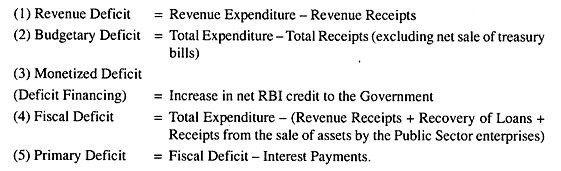
    Revise key concepts Fiscal deficit, revenue deficit, Debt-to-GDP ratio etc

    Fiscal imbalance and its impact on an economy and thereby social welfare.

    The fiscal imbalance at present

    1. Reduction in Fiscal Deficit:
    • There has been a significant reduction in fiscal deficits at both the Union and State levels. The Union’s fiscal deficit decreased from 9.1% of GDP in 2020-21 to 5.9% in 2023-24 (BE).
    • The aggregate State fiscal deficit also decreased from 4.1% of GDP in 2020-21 to 3.24% in 2022-23 (RE).
    • Major States are expected to achieve a fiscal deficit of 2.9% of GDP in 2023-24 (BE).
    1. Revenue Deficit Challenge:
    • Despite the reduction in fiscal deficits, there is persistence of revenue deficits in many States.
    • Out of the 17 major States analyzed, 13 have a deficit in the revenue account for the fiscal year 2023-24 (BE).
    • Seven States, namely Andhra Pradesh, Haryana, Kerala, Punjab, Rajasthan, Tamil Nadu, and West Bengal, experience fiscal deficits primarily driven by revenue deficits.
    1. High Debt-to-GSDP Ratios: Some of the States with revenue deficits also have high debt-to-GSDP ratios. This indicates that these States have accumulated significant levels of debt relative to their Gross State Domestic Product (GSDP).

    The Impact of fiscal imbalance on an Economy

    • Macroeconomic Instability: Fiscal imbalances, such as high fiscal deficits and revenue deficits, can lead to macroeconomic instability. Large deficits may increase government borrowing, which can put upward pressure on interest rates, crowd out private investment, and potentially lead to inflationary pressures. This instability can hinder economic growth and create uncertainty in the business environment.
    • Increased Debt Burden: Persistent fiscal imbalances often result in increased government debt levels. High levels of public debt can have adverse consequences, including increased debt servicing costs, reduced fiscal flexibility, and potential credit rating downgrades. A higher debt burden can also limit the government’s ability to invest in critical areas such as infrastructure, education, and healthcare.
    • Reduced Public Investments: Fiscal imbalances may necessitate fiscal consolidation measures, such as expenditure cuts and reduced public investments. This can impact critical areas of public spending, including infrastructure development, social welfare programs, and public services. Reduced investments can hinder long-term economic growth and development.
    • Limited Policy Space: Fiscal imbalances can limit the government’s ability to implement countercyclical fiscal policies during economic downturns. A high debt burden or constrained fiscal capacity may prevent the government from effectively using fiscal stimulus measures to boost aggregate demand and support economic recovery.
    • Pressure on Social Welfare: Fiscal imbalances may lead to reductions in social welfare programs and public services. Austerity measures implemented to address fiscal imbalances can disproportionately affect vulnerable populations and hinder efforts to address income inequality and social welfare needs.
    • Investor Confidence and Credit Ratings: Persistent fiscal imbalances can erode investor confidence and negatively impact the country’s credit ratings. A lower credit rating can increase borrowing costs, discourage foreign investment, and limit access to international capital markets.
    • Inter-Generational Equity: Fiscal imbalances, particularly when driven by high levels of public debt, can have inter-generational equity implications. The burden of repaying debt and managing fiscal imbalances may fall on future generations, impacting their ability to invest, save, and achieve sustainable economic growth.

    Reducing Revenue deficit: Way forward

    • Link Interest-Free Loans to Revenue Deficit Reduction: Implement a mechanism where interest-free loans provided by the Union Government to States are linked to a reduction in revenue deficits. This incentivizes States to prioritize revenue generation and reduce reliance on borrowed funds for revenue expenditure.
    • Defined Time Path for Revenue Deficit Reduction: Establish a clear timeline and targets for reducing revenue deficits in States. This includes setting specific goals for revenue deficit reduction and developing a credible fiscal adjustment plan to achieve those targets.
    • Performance Incentive Grants: Introduce performance incentive grants to reward States that effectively reduce their revenue deficits. The grants can be designed based on the recommendations of previous Finance Commissions, considering factors such as the extent of deficit reduction, fiscal discipline, and efficient revenue management.
    • Fiscal Adjustment and Expenditure Rationalization: Encourage States to undertake fiscal adjustment measures to align revenue and expenditure. This involves conducting a detailed analysis of expenditure patterns, prioritizing essential spending, and identifying areas for rationalization and efficiency gains.
    • Strengthen Revenue Mobilization: Enhance efforts to improve revenue mobilization by implementing measures such as broadening the tax base, improving tax administration and compliance, and exploring new revenue sources. This includes ensuring effective collection of Goods and Services Tax (GST) and non-GST revenues.
    • Public Financial Management Reforms: Strengthen public financial management systems to enhance transparency, accountability, and efficient utilization of resources. This includes improving budgeting processes, expenditure tracking, and financial reporting mechanisms to monitor and control revenue and expenditure.
    • Long-Term Revenue Planning: Develop a comprehensive long-term revenue plan that aligns with the country’s development goals. This involves forecasting revenue trends, identifying potential revenue sources, and implementing policies that support sustainable revenue generation over the long term.
    • Capacity Building: Invest in building the capacity of State governments in revenue management, tax administration, and expenditure control. This includes providing training and technical assistance to enhance their skills and capabilities in managing revenue deficits effectively.
    • Public Awareness and Participation: Conduct public awareness campaigns to educate citizens about the importance of revenue generation, fiscal discipline, and the impact of revenue deficits on public services. Foster public participation in budgeting processes to promote transparency and accountability.
    • Regular Monitoring and Reporting: Establish a robust monitoring and reporting mechanism to track the progress of revenue deficit reduction efforts. Regularly assess and report the performance of States in revenue mobilization and deficit reduction to ensure accountability and facilitate necessary corrective actions.

    Prelims mark enhancerDeficit Financing in India | Financing | EconomicsDebt to GDP Ratio - What Is It, Formula & Calculation

    Conclusion

    • Effectively managing revenue deficits is crucial for achieving fiscal balance and sustainable economic growth. By adopting a macro view and implementing appropriate measures and incentives, India can consolidate revenue deficits in its States. This would ensure fiscal stability, stimulate State-specific growth, and maintain macroeconomic stability at the national level
  • Foreign Policy Watch: India-SCO

    Iran Joins Shanghai Cooperation Organisation (SCO)

    Central Idea

    • Prime Minister Modi welcomed Iran as the newest member of the Shanghai Cooperation Organisation (SCO) during the virtual summit of the grouping.
    • Iran’s membership has been discussed for years, and recent geopolitical shifts have made it more relevant.

    About SCO

    • The SCO, formed in 2001, aims to enhance regional cooperation in combating terrorism, separatism, and extremism in Central Asia.

    Expansion of the SCO

    • Previous membership: The SCO consisted of eight member countries, including China, Russia, India, Pakistan, and the Central Asian nations of Kazakhstan, Kyrgyzstan, Tajikistan, and Uzbekistan.
    • Observer and Dialogue Partner status: Afghanistan, Belarus, Iran, and Mongolia have Observer status, while Azerbaijan, Armenia, Cambodia, Nepal, Turkey, and Sri Lanka hold Dialogue Partner status.

    Importance of Iran’s Membership

    • Nuclear deal context: After signing the nuclear deal (JCPOA) in 2015, Iran’s path to SCO membership was facilitated.
    • Changing geopolitical landscape: The US withdrawal from Afghanistan has created opportunities for increased Chinese influence in the region.
    • Expanding alliances: Iran has sought to establish closer ties beyond its traditional ally Russia, including reaching out to Saudi Arabia and opening a border market with Pakistan.

    Geopolitical Implications

    • China’s interests: Iran’s energy resources and cooperation in areas like oil are beneficial to China as it seeks to counter the US.
    • Russia’s alliances: Russia aims to strengthen its position by building alliances within the SCO, including potential full membership for Belarus.
    • US-India relations: India’s growing partnership with the US and their shared democratic values contrast with Chinese authoritarianism, creating a delicate balancing act for India.

    India’s Balancing Act

    • Maintaining partnerships: India has strengthened ties with the US through significant technology and defence agreements, emphasizing shared democratic values.
    • Historical ties with Iran: India has had traditional commercial ties with Iran, primarily in the import of crude oil.
    • Challenges in balancing: India’s shifting alliances with the US and historical ties with Iran pose challenges as the dynamics of the SCO evolve.

    Conclusion

    • Iran’s membership in the SCO signifies the changing geopolitical landscape and the increasing influence of China and Russia in the region.
    • India faces the challenge of balancing its partnerships with the US and historical ties with Iran while navigating the evolving dynamics within the SCO.


    Also read

    PM Modi to host SCO 2023 Summit

Join the Community

Join us across Social Media platforms.