💥UPSC 2026, 2027, 2028 UAP Mentorship (March Batch) + Access XFactor Notes & Microthemes PDF

Archives: News

  • RBI Notifications

    RBI Integrated Ombudsman Scheme (RB-IOS) FY25 

    Why in the News
    The RBI’s Annual Report of the Ombudsman Scheme highlighted a growth of 13.55% in complaints under RB-IOS during FY25, rising to 1.33 million from 1.18 million in FY24.

    What is RB-IOS?
    • A unified dispute redress mechanism of the Reserve Bank of India covering banks, NBFCs, and authorized payment system participants.
    • Aims to simplify the process by introducing One Nation One Ombudsman framework.

    Sources of Complaints
    • Office of RBI Ombudsman (ORBIO) and Centralised Receipt and Processing Centre (CRPC)
    • ORBIO handled nearly 0.30 million complaints in FY25 (0.82% rise YoY)

    Major Categories of Complaints

    1. Loans and advances: 29.25% of total complaints (highest)
    2. Credit cards: 20.04% increase YoY
    3. Mobile/electronic banking: 16.86% share (declined by 12.74% YoY)

    Entity-wise Break-up
    • Banks: 0.24 million complaints (81.53% of ORBIO complaints)
    • NBFCs: 43,864 complaints (14.80%)
    • Among banks:

    • Private sector banks share rose: 34.39% to 37.53%
    • Public sector banks share fell: 38.32% to 34.80% 

    Disposal of Complaints
    • ORBIOs disposed 0.29 million complaints with a 93.07% disposal rate
    • Maintainable complaints: 62.16% of disposed

    • 51.91% resolved through mutual settlement, conciliation, mediation
    • 43.36% rejected
    The Reserve Bank of India regulates the commercial banks in matters of (2013)

    (1). liquidity of assets 

    (2). branch expansion 

    (3). merger of banks 

    (4). winding-up of banks 

    Select the correct answer using the codes given below. 

    (a) 1 and 4 only (b) 2, 3 and 4 only (c) 1, 2 and 3 only (d) 1, 2, 3 and 4

  • Coal and Mining Sector

    [4th December 2025] The Hindu OpED: A missing link in India’s mineral mission

    PYQ Relevance

    [UPSC 2022] Do you think India will meet 50 percent of its energy needs from renewable energy by 2030 ? Justify your answer. How will the shift of subsidies from fossil fuels to renewables help achieve the above objective ? Explain.

    Linkage: India’s renewable targets depend on critical minerals for solar, wind, and EVs, making processing gaps a strategic risk. The PYQ links directly to the article’s theme that energy goals need a secure, domestic critical-mineral value chain.

    Mentor’s Comment

    India’s mining policy has entered a decisive phase. While recent reforms emphasise exploration and raw mineral extraction, the real bottleneck lies in the missing domestic processing and refining capacity. This gap exposes India to external vulnerabilities, particularly China’s dominance in this space. The article below breaks down this structural challenge in an exam-ready format for UPSC aspirants.

    Introduction

    India has intensified its focus on critical minerals due to global supply-chain shifts, rising technology needs, and geopolitical tensions. The Union Cabinet’s ₹7,280-crore rare-earth magnet scheme and the new G20 framework highlight the urgency of building a self-reliant processing ecosystem. However, the country still imports almost all refined critical minerals despite possessing resources. This mismatch between mining and processing threatens India’s energy transition, semiconductor ambitions, and defence manufacturing. The missing link in India’s mineral mission is not exploration, it is domestic refining and value addition.

    Why in the news

    India’s recent rare-earth magnet scheme and the growing push for critical minerals have highlighted a structural weakness: India mines several critical minerals but processes almost none. This is a major vulnerability at a time when China controls over 90% of global rare-earth processing, and geopolitical frictions like the U.S.-China tech war have tightened export controls. India imports nearly all of its lithium, graphite, titanium, and processed rare earths, even when domestic mining exists. Thus, the real bottleneck in the mineral value chain is processing and refining, which threatens India’s clean-energy future, semiconductor plans, and defence manufacturing goals.

    What makes processing the missing link in India’s mineral mission?

    1. Mining-Processing Mismatch: India mines seven critical minerals (copper, graphite, silicon, tin, titanium, rare earths, zirconium) but lacks refining capability, forcing dependence on imports.
    2. High Import Vulnerability: Domestic mining has risen, but refined imports still constitute almost the entire requirement of high-purity materials.
    3. China’s Dominance: China controls 90%+ of global rare-earth processing, battery precursors, and polysilicon, exposing India to supply shocks.

    Why are India’s critical mineral imports a strategic concern?

    1. Exposure to Global Frictions: The U.S.-China tech conflict has triggered export controls, which directly affect India’s energy and electronics sectors.
    2. Dependence for Clean Energy: Solar panels, EVs, and storage depend on refined minerals that India does not process domestically.
    3. High-Purity Material Shortages: Imports help meet demand but do not strengthen India’s long-term industrial resilience.

    What steps can India take to strengthen domestic processing capacity?

    1. Centres of Excellence and Innovation Engines
      1. Centres of Excellence: Nine Centres under the National Critical Mineral Mission must drive specialised research to develop high-purity compounds and industrial materials.
      2. Focus on Indigenous Technologies: Emphasis on innovative processing technologies that can be scaled from labs to commercial use.
      3. Institutional Support: IITs, NITs, and research institutes should conduct life-cycle modelling and cost-benefit assessments.
    2. Unlocking Secondary Resources

      1. Coal Ash Recovery: India generates 250 million tonnes of coal ash annually; extracting gallium, rare earths, cobalt, germanium is feasible.
      2. Industrial By-Products: Aluminium plants generate residues containing critical metals.
      3. Pilot Projects: CSIR and IITs conducting ash recovery pilots can feed processed materials into the value chain.
    3. Building a Skilled Metallurgical Workforce

      1. New Processing Curriculum: Training technicians in hydrometallurgy, pyrometallurgy, and advanced refining.
      2. Industry-Lab Integration: Diploma-level programmes and academic partnerships to create specialised talent.
      3. Projected Employment: Thousands of jobs through NCMM and industry collaborations.
    4. De-risking Investment Through Financial Instruments

      1. Government Assurances: U.S.-style procurement guarantees and price stabilisation mechanisms can incentivise private investment.
      2. Strategic Stockpiling: India can turn itself into a market-stabilising actor through stockpiling and calibrated release.
    5. Improving Overseas Acquisitions and Midstream Capabilities

      1. Beyond Raw Ore Imports: Indian overseas acquisitions should focus on refining assets, not just mining.
      2. Bilateral Partnerships: Co-investor and co-processing collaborations through critical mineral parks.
      3. Focus on High-Purity Refining: Consistent high-purity output strengthens downstream industries such as defence and electronics.

    Conclusion

    India’s critical-mineral strategy will succeed only if domestic refining and processing capacity develops in tandem with mining. The future of India’s clean energy transition, electronics manufacturing, and defence preparedness depends on closing this midstream gap. Transforming India into a resilient and reliable mineral-processing hub is the missing link that determines whether India becomes a rule-maker or remains a resource-dependent economy.

    Rare Earth Magnet Scheme (₹7,280 crore)

    Objective and Rationale

    1. Import Substitution: Reduces dependence on China for permanent magnets used in EVs, wind turbines, electronics, and defence systems.
    2. Strategic Security: Strengthens domestic capability in magnets essential for guided missiles, drones, satellites, and precision instruments.
    3. Energy Transition Push: Supports India’s renewable energy and electric mobility targets by securing critical magnet supply.

    Key Features of the Scheme

    1. End-to-End Integration: Covers the value chain from mineral refining-alloy production-magnet manufacturing.
    2. Domestic Production Incentives: Encourages industry to set up plants for Neodymium-Iron-Boron (NdFeB) and Samarium-Cobalt (SmCo) magnets.
    3. Technology Development Focus: Promotes advanced metallurgical processes and IP creation in high-performance magnets.
    4. Strategic Partnerships: Enables collaborations with global firms for technology transfer and joint R&D.
  • RBI Notifications

    Rupee breaches 90-mark: What’s driving the slide

    INTRODUCTION

    The rupee slipping below ₹90-per-dollar has raised fresh concerns about the economy. What makes it notable is that this fall comes despite stable domestic indicators like easing inflation and steady growth. The pressure is largely external, persistent dollar outflows, a widening trade deficit, slowing exports, and delays in the Indo-US trade deal. In response, the RBI is allowing a gradual adjustment instead of intervening sharply.

    Why is the rupee depreciating?

    1. Persistent dollar outflows: Investors are shifting to attractive US markets; domestic markets face profit-booking.
    2. Strong US dollar index: Dollar strength has continued on global markets for over 14 months, creating consistent pressure on emerging-market currencies.
    3. Trade deficit expansion: Merchandise exports contracted by 11.8% YoY in October, slipping to a 12-month low of $34.4 billion; imports declined only marginally.
    4. Gold, electronics, industrial imports: Non-oil, non-gas imports rose by 12.4% YoY to $46.5 billion, driven by strong demand for machinery, electronics, and festive consumption.
    5. Delay in Indo-US trade deal: The uncertainty has weighed on investor sentiment and weakened the rupee further.

    How is the trade deficit shaping currency movement?

    1. Widening merchandise gap: Despite falling global crude prices, India’s import bill remains high due to electronics, machinery, and industrial goods.
    2. Export slowdown: Engineering goods, gems and jewellery, pharmaceuticals, and chemicals recorded weak performance.
    3. Mixed services exports: IT services showed resilience, but the slowdown in global discretionary spending has affected margins.
    4. Oil imports: Brent prices have eased, but import volumes remain strong due to festive demand and industrial recovery.

    How are capital flows influencing the slide?

    1. Portfolio investor withdrawal: FPIs have sold equities worth ₹43,000 crore in the last two months.
    2. NSDL data signal caution: Investors have been pulling out since January after strong equity gains
    3. Shift to safe assets: High US yields continue to attract global capital away from emerging markets.
    4. Domestic market underperformance: Broader markets have not matched earlier highs, reinforcing capital outflows.

    What is the RBI’s stance?

    1. Limited intervention: The RBI is allowing a gradual depreciation, instead of sharply defending a level.
    2. Focus on smoothing volatility: Intervention is likely only to prevent excessive swings, not to hold the rupee below 90.
    3. Reversal signal: A more decisive intervention may come only when rupee volatility rises sharply or external shocks intensify.

    Which commodities and sectors are impacted?

    1. Gold imports: Gold prices surged due to the weaker rupee; imports rose 21% to 78 tonnes and ₹56,000 crore in value.
    2. Electronics and machinery: High demand for smartphones, computers, chips, and engineering goods has inflated import bills.
    3. Petroleum products: Despite cooling global crude prices, India’s petroleum imports remain elevated.

    Way Forward

    1. Boost Export Competitiveness: Strengthen logistics, cut regulatory delays, and diversify exports into high-value sectors like electronics, machinery, and pharmaceuticals.
    2. Fast-Track Trade Agreements: Conclude pending trade deals, especially the Indo-US trade pact, to improve market access and restore investor confidence.
    3. Reduce Import Dependence: Expand domestic manufacturing of electronics, critical minerals, and energy inputs to ease pressure from large non-oil imports.
    4. Stabilise Capital Flows: Encourage long-term FDI and stable institutional investments to minimise vulnerability to volatile FPI outflows.
    5. Strengthen Forex Buffers: Build reserves gradually to enhance India’s ability to manage external shocks and currency volatility.
    6. Deepen Financial Markets: Broaden corporate bond markets and promote rupee-denominated overseas borrowing to reduce dollar dependence.
    7. Calibrated RBI Intervention: Maintain the current managed-float approach but intervene sharply during disorderly market conditions.
    8. Stable Macroeconomic Policy Signals: Provide predictable fiscal and trade policy to reduce uncertainty and strengthen currency sentiment.

    CONCLUSION

    The rupee’s decline past the ₹90 mark reflects evolving external vulnerabilities rather than core domestic weaknesses. Dollar outflows, trade deficits, import surges, and delayed trade negotiations have all combined to push the currency downward. The RBI’s calibrated stance indicates a preference for stability over aggressive intervention. Going forward, external sector reforms, export competitiveness, and strategic trade deals will be crucial in restoring confidence and strengthening the rupee.

    PYQ Relevance

    [UPSC 2018] How would the recent phenomena of protectionism and currency manipulations in world trade affect macroeconomic stability of India?

    Linkage: The rupee’s fall past ₹90 mirrors global currency pressures and dollar dominance discussed in the PYQ. Export slowdown, delayed trade deal, and capital outflows in the article directly show how external currency shifts impact India’s macroeconomic stability.

  • Foreign Policy Watch: India-Russia

    Putin’s visit: The long arc of India’s ties with Russia, the road ahead

    Introduction

    India-Russia relations have historically been marked by defence cooperation, political trust, and strategic convergence. However, the global context surrounding President Putin’s December 2024 visit, his first after the Ukraine conflict, has introduced new complexities. India now navigates sanctions pressure, energy dependencies, defence shortfalls, and the need to sustain balanced relations with both the West and Russia.

    Why in the News? 

    President Vladimir Putin’s visit to India on 4-5 December for the 23rd Annual Summit is significant as it is his first visit since Russia’s invasion of Ukraine. This is a period marked by sanctions, slowed defence supplies, and shifting global alignments. India-Russia bilateral trade crossed $63.8 billion, but sanctions on Russian energy and secondary sanctions on Indian companies now threaten the $100-billion trade target.

    The Evolution of India-Russia Strategic Ties

    1. Historical Convergence: New Delhi and Moscow shared close ties since the Soviet era, with Russia supporting India post-1998 sanctions.
    2. Defence Legacy: 60% of India’s defence inventory remains of Russian origin; legacy platforms need regular servicing and spares.
    3. Diversification Effort: India expanded its partnerships with the US, Europe, and others for technology, security, and economic needs.
    4. Stable Political Understanding: Leadership-level engagement remained consistent, even during geopolitical disruptions.

    Why Defence Remains the Core Pillar

    1. Legacy Equipment: India still requires servicing and spares for Russian-origin systems; replacement is slow.
    2. S-400 Delivery Issues: Russia was expected to deliver five S-400 units, but deliveries slowed due to the Ukraine war.
    3. Sanctions Impact: Sanctions on Russia impaired its ability to manufacture cutting-edge defence systems, reducing India’s supply reliability.
    4. Strategic Risk: The disruption compelled India to diversify procurement to Western partners.

    How Have Economic and Energy Ties Changed?

    1. Discounted Oil Purchases: Post-Ukraine, India bought discounted Russian crude, helping control domestic fuel prices.
    2. Trade Surge: Bilateral trade increased from $6.87 billion (FY24) to $63.8 billion last year, driven by oil imports.
    3. Trade Imbalance: India’s imports massively exceed exports; Russia aims to boost Indian exports to reach $100 billion bilateral trade.
    4. Secondary Sanctions Risk: US sanctions forced Indian companies to exit Russian shipping and oil-related operations.

    What is Expected During the Upcoming Visit?

    1. Controlled Optics: No large-scale pageantry; Modi-Putin meeting likely private and focused.
    2. Limited Public Events: No public address or mass interactions expected.
    3. West’s Scrutiny: US and Europe closely monitor the visit given ongoing tensions over Ukraine.
    4. Agenda Items: Defence delivery timelines, energy cooperation, and trade balance to dominate.

    How is India Balancing Russia and the West?

    1. Eastern Partnership: Russia remains key for defence hardware and strategic autonomy.
    2. Western Engagement: India deepened cooperation with the US and Europe in technology, capital, and mobility corridors.
    3. Strategic Autonomy: India maintains multi-alignment, ensuring no relationship becomes exclusive.
    4. Domestic Aspiration: India seeks high-technology and economic opportunities for a modernising population.

    Conclusion

    India-Russia relations enter a phase of recalibration shaped by sanctions, defence supply constraints, and India’s deepening Western partnerships. Yet, the historical trust, defence legacy, and energy complementarity ensure that Russia remains relevant for India. The challenge lies in sustaining a realistic, interest-driven relationship while managing Western scrutiny and domestic strategic needs.

    PYQ Relevance

    [UPSC 2020] What is the significance of Indo-US defence deals over Indo-Russian defence deals? Discuss with reference to stability in the Indo-Pacific region.

    Linkage: The question reflects India’s growing shift from Russian to US defence partnerships discussed in the article. It connects these defence ties to India’s role in ensuring stability in the Indo-Pacific region.

  • Defence Sector – DPP, Missions, Schemes, Security Forces, etc.

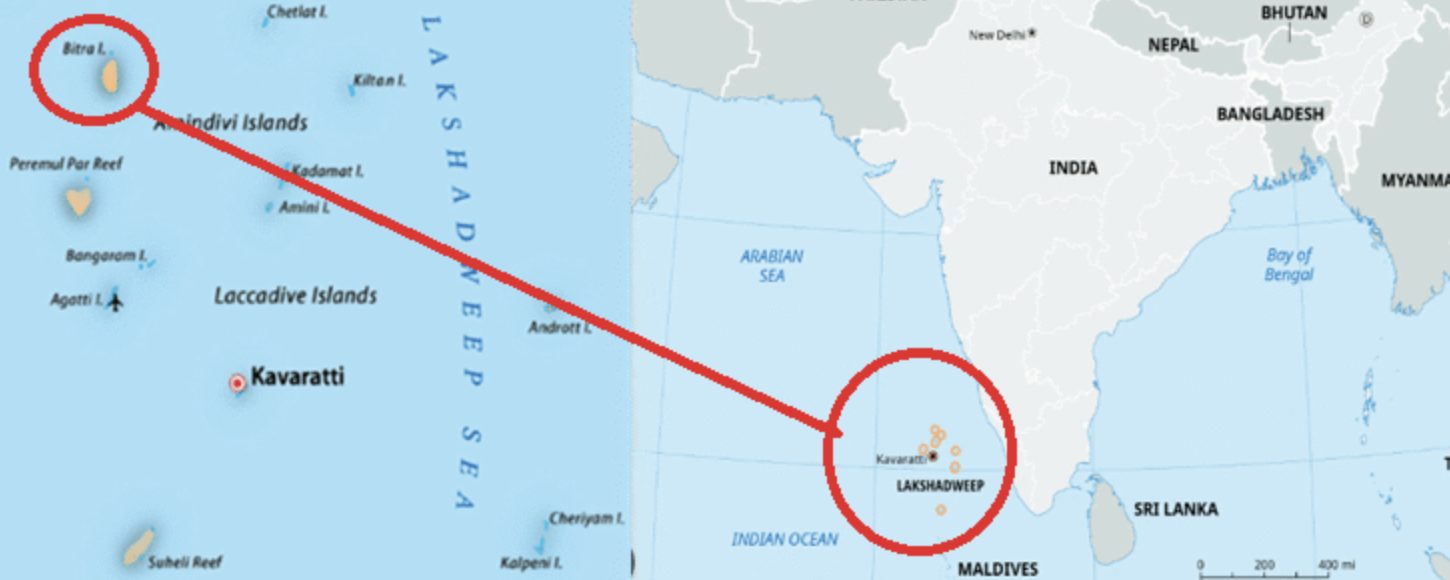
    Bitra Island

    Why in the News?

    The Chief of Staff, Southern Naval Command, announced that the Indian Navy is setting up a detachment on Bitra Island, and the facility is almost completed. This will make Bitra the third island in Lakshadweep to host a defence establishment.

    About Bitra Island

    • Location: Northern Lakshadweep, Arabian Sea
    • Smallest inhabited island in Lakshadweep
    • Land area: 0.105 sq. km
    • Dimensions: Length – 0.57 km | Width – 0.28 km
    • Lagoon area: 45.61 sq. km (significantly larger than the landmass)
    • Population (2011): 271

    Key Features

    • Cultural Significance: Hosts a shrine of Malik Mulla, an Arab saint believed to be buried there.
      • Important pilgrimage site for locals across Lakshadweep.
    • Ecology: Once covered with thick shrubs.
      • Historically a major breeding ground for seabirds, which declined in the 19th century due to human interference.
    • Climate: Similar to Kerala’s climate.
    • Hottest months: March–May
    • Temperature: 25°C – 35°C
    • Humidity: 70–76% throughout most of the year.

    Strategic Importance

    • Located in a key position in the Arabian Sea, critical for maritime security.
    • Enhances surveillance over sea lanes close to India’s western maritime frontier.
    • Adds to Lakshadweep’s defence infrastructure:
      • INS Dweeprakshak – Kavaratti
      • INS Jatayu – Minicoy
      • New Navy detachment – Bitra Island

    Prelims Pointers

    • Bitra = smallest inhabited island of Lakshadweep
    • Features a shrine of Malik Mulla
    • Large lagoon-to-land ratio
    • Strategically vital for India’s naval presence in the Arabian Sea
    • Climate closely resembles Kerala
    Which one of the following pairs of islands is separated from each other by the ‘Ten Degree Channel’? (2014)

    (a) Andaman and Nicobar 

    (b) Nicobar and Sumatra 

    (c) Maldives and Lakshadweep 

    (d) Sumatra and Java

  • Health Sector – UHC, National Health Policy, Family Planning, Health Insurance, etc.

    WHO Issues Global Guidelines on GLP-1 Drugs for Obesity 

    Why in the News?

    The World Health Organization (WHO) has released its first global guidelines (Dec 1, 2025) supporting the use of GLP-1 (Glucagon-Like Peptide-1) drugs as long-term treatment for obesity in adults, alongside diet and exercise.
    These guidelines emphasise equitable access, affordability, and caution about long-term safety.

    What are GLP-1 Drugs?

    • GLP-1 = Glucagon-Like Peptide-1 receptor agonists
    • Originally developed for type 2 diabetes
    • Now widely used for medically supervised weight loss
    • Examples: Semaglutide, Tirzepatide, Liraglutide
    • Mechanism:
      • Reduce appetite
      • Slow gastric emptying
      • Improve insulin sensitivity

    Key WHO Recommendations

    Conditional approval for adults

    • GLP-1 drugs may be used for long-term obesity management
    • Excluded: pregnant women
    • Reason for “conditional” status:
      • Limited long-term efficacy & safety data
      • Uncertainty about outcomes after discontinuation
      • High cost and global inequity in access

    Must be combined with lifestyle interventions

    • Balanced diet + regular physical activity remain essential
    • Drugs cannot replace behavioural changes

     Equity and affordability

    • WHO urges:
      • Generics development
      • Insurance coverage
      • Lower pricing
    • Obesity’s global economic cost projected to reach $3 trillion by 2030
    A company marketing food product advertises that its items do not contain trans-fats. What does this campaign signify to the customers? (2011)

    1. The food products are not made out of hydrogenated oils. 

    2. The food products are not made out of animal fats/oils. 

    3. The oils used are not likely to damage the cardiovascular health of the consumers. 

    (a) 1 only (c) 1 and 3 only (b) 2 and 3 only (d) 1, 2 and 3

  • Wildlife Conservation Efforts

    Saving Rock Eagle Owl Eggs at a Telangana Quarry 

    Why in the News?

    A rare conservation incident unfolded at Yenakathala village, Vikarabad district (Telangana) where operations in a stone quarry were halted for 30+ days to protect five eggs of the endangered Rock Eagle Owl found in a rock crevice. The quarry is incurring ₹1.2 lakh loss per day (₹35 lakh total) to ensure safe hatching. This has been hailed as a “miracle” rescue and an example of community-led wildlife protection.

    About the Rock Eagle Owl (Indian Eagle-Owl) – Bubo bengalensis

    • Also called Bengal Eagle-Owl
    • Large horned owl species
    • Habitat: Hilly scrub forests, cliffs, rock crevices
    • Camouflage: Brown & grey plumage with a white throat patch
    • Distribution: Throughout India
    • IUCN Status: Least Concern globally, but population decreasing
    • In India:
      • Protected under Schedule I, Wildlife Protection Act, 1972
      • This places it at par with species like tigers and elephants in terms of legal protection
    • Threats: 
      • Habitat loss
      • Quarrying and mining
      • Poaching (₹35–40 lakh per bird in black market)
      • Superstitious killings

    Important:

    • Nesting sites are difficult to locate; nests are usually in rock niches and cliffs, not trees.
      The species abandons the nest if touched by humans.
    In India, if a species of tortoise is declared protected under Schedule I of the Wildlife (Protection) Act, 1972, what does it imply ? (2017)

    (a) It enjoys the same level of protection as the tiger. 

    (b) It no longer exists in the wild, a few individuals are under captive protection; and how it is impossible to prevent its extinction. 

    (c) It is endemic to a particular region of India. 

    (d) Both (b) and (c) stated above are correct in this context.

  • GI(Geographical Indicator) Tags

    Tamil Nadu Adds Five New GI-Tagged Products 

    Why in the News?

    Five traditional products from Tamil Nadu have received the Geographical Indications (GI) tag, highlighting the State’s rich textile, agricultural, and handicraft heritage. With these additions, Tamil Nadu now has 74 GI-tagged products, one of the highest in India. Applications were filed by IPR attorney P. Sanjai Gandhi on behalf of the concerned associations.

    Newly Awarded GI Products (2025)

    Woraiyur Cotton Sari

    • Region: Woraiyur & Manamedu (Tiruchirappalli district)
    • Material: Cotton yarn sourced from Coimbatore & Rajapalayam
    • Dyes: From Jayamkondam
    • Features:
      • Light-weight, soft handloom cotton
      • Known for intricate designs and distinct regional weaving patterns
    • Significance: Represents age-old weaving traditions on the banks of the Cauvery River.

    Kavindapadi Naatu Sakkarai (Jaggery Powder)

    • Region: Kavindapadi, Erode district
    • Raw Material: Sugarcane from fields irrigated by the Lower Bhavani Project canal
    • Process:
      • Mechanically crushed
      • Cane juice slowly evaporated
      • No chemical additives → retains natural minerals
    • Importance: Major jaggery powder supplier for Tamil Nadu; valued for purity and aroma.

    Thooyamalli Rice

    • Meaning: “Thooya” (pure) + “Malli” (jasmine) — named for its fragrance
    • Type: Traditional samba-season paddy, duration 135–140 days
    • Application: Tamil Nadu State Agricultural Marketing Board, supported by NABARD Madurai Agri Business Incubation Forum
    • Features:
      • Long-duration rice variety
      • High nutritional value
      • Aromatic and suitable for traditional dishes

     Namakkal Makkal Pathirangal (Soapstone Cookware / Kalchatti)

    • Region: Namakkal district
    • Material: Soft soapstone carved into cooking vessels
    • Cultural Roots: Used in South India for centuries; retains heat and enhances flavour
    • GI History:
      • First application by Tamil Nadu Handicrafts (Poompuhar) withdrawn (2019)
      • Final successful application submitted in 2022 by:
        • Namakkal Stone Products Manufacturers
        • MSME Technology Development Centre – IP Facilitation Centre

     Ambasamudram Choppu Saman (Wooden Toys)

    • Region: Ambasamudram, Tirunelveli district
    • Tradition: Over 200 years old (origin in the 18th century)
    • Craft: Handcrafted wooden miniature toys such as:
      • Kitchen utensils
      • Tables, chairs
      • Household play items
    • Wood Used:
      • Manjal Kadamba (Neolamarckia cadamba)
      • Teak
      • Rosewood
    • Significance: Traditional children’s play items that promote creativity and fine motor skills.

    About GI (Geographical Indications) 

    • A GI tag is a sign used on products with a specific geographical origin, possessing qualities/ reputation due to that origin.
    • Governed by:
      • Geographical Indications of Goods (Registration & Protection) Act, 1999
    • Validity: 10 years, can be renewed
    • India’s first GI: Darjeeling Tea
    Which of the following has/have been accorded ‘Geographical Indication’ status? (2015)

    (1) Banaras Brocades and Sarees

    (2) Rajasthani Daal-Bati-Churma

    (3) Tirupathi Laddu

    Select the correct answer using the code given below.

    (a) 1 only

    (b) 2 and 3 only

    (c) 1 and 3 only

    (d) 1, 2 and 3

  • Modern Indian History-Events and Personalities

    Assam Day & Chaolung Sukapha 

    Why in the News?

    Assam Day was celebrated in New Delhi on 2 December 2025, led by Union Minister Sarbananda Sonowal, paying tribute to Chaolung Sukapha, founder of the Ahom Kingdom and architect of “Greater Assam.”

    About Chaolung Sukapha

    • Founder of the Ahom Kingdom (established c. 1228 CE).
    • Migrated from present-day Yunnan region (original Tai-Ahom lineage).
    • Crossed the Patkai Hills to enter Assam.
    • Known for integrating diverse communities through:
      • Goodwill
      • Empathy
      • Just and inclusive administration
    • Believed in winning the “hearts of people” as the basis for stable governance.
    • Sukapha is revered as the architect of “Greater Assam.”
    • Sukapha Divas / Assam Day is celebrated on 2 December.
    • First official celebration in 2016 at Charaideo, during Sonowal’s tenure as CM.

    Ahom Kingdom

    • Ruled Assam for nearly 600 years (1228–1826).
    • Capital at various times: Charaideo, Sibsagar, Garhgaon, etc.
    • Famous for:
      • Efficient land revenue system (Paik system)
      • Strong military organisation
      • Architecture: Maidams (Ahom burial mounds)
    • Successfully resisted Mughal expansion (Battle of Saraighat, 1671).
    In the context of Indian history, which of the following statements is/are correct? (2021)

    1. The Nizamat of Arcot emerged out of Hyderabad State.

    2. The Mysore Kingdom emerged out of Vijayanagara Empire.

    3. Rohilkhand Kingdom was formed out of the territories occupied by Ahmad Shah Durrani. Select the correct answer using the code given below:

    (a) 1 and 2

    (b) 2 only

    (c) 2 and 3

    (d) 3 only

  • Foreign Policy Watch: India-Maldives

    [3rd December 2025] The Hindu OpED: A template for security cooperation in the Indian Ocean

    PYQ Relevance

    [UPSC 2024] Discuss the geopolitical and geostrategic importance of Maldives for India with a focus on global trade and energy flows. Further also discuss how this relationship affects India’s maritime security and regional stability amidst international competition?

    Linkage: This PYQ is directly linked to India’s strategic engagement with the Colombo Security Conclave (CSC), where Maldives is a core maritime partner. The question becomes relevant as Maldives’ political shifts, China’s growing presence, and competition over Indian Ocean trade and energy routes directly shape India’s maritime security priorities.

    Mentor’s Comment

    This article breaks down the evolving relevance of the Colombo Security Conclave (CSC) for India and the wider Indian Ocean region in 2025. China’s growing presence in the region is reshaping the geopolitical environment. In this setting, the CSC becomes an important platform for India to strengthen maritime security cooperation.

    Introduction

    The CSC has emerged as a critical framework for regional security cooperation in the Indian Ocean. It initially focused on issues such as maritime security, counter-terrorism, cybersecurity, and human trafficking. Now it is attempting to institutionalise itself and broaden its mandate to address the increasingly complex geopolitical and maritime challenges in the region. India’s leadership in reviving and expanding the grouping has placed CSC at the centre of its Indian Ocean strategy.

    How is the evolving Indian Ocean environment reshaping CSC’s relevance?

    1. Strategic Shifts: The Indian Ocean region is witnessing significant changes in the broader Indo-Pacific, making cooperative security frameworks more urgent.
    2. Economic Interdependence: Littoral states depend heavily on ocean-based economies; maritime disruptions create widespread developmental challenges.
    3. Non-traditional Threats: Issues such as organised crime, cyberattacks, and trafficking continue to expand, requiring coordinated regional responses.

    What has shaped the CSC’s institutional trajectory so far?

    1. Initial Trilateral Framework: Established between India, Sri Lanka and the Maldives; momentum slowed due to political transitions in Sri Lanka and Maldives.
    2. Revival in 2020: India reinstated its engagement, establishing structured cooperation across four pillars, maritime security, counter-terrorism, trafficking, and cybersecurity.
    3. Progressive Expansion: Mauritius joined as full member (2022); Bangladesh added in 2024; Malaysia joined as observer in 2025.
    4. Growing Synergies: NSA-level coordination has strengthened common frameworks across member states.

    Why does China’s growing presence create strategic dilemmas for CSC?

    1. Contrasting Perceptions:
      1. India: Views China’s activities as a major security challenge.
      2. Other Members: Depend on China economically and see it as a developmental partner rather than a threat.
    2. Need for Balance: India must carefully manage CSC’s agenda such that the grouping does not fracture over divergent China-related security views.
    3. Anchoring India’s Priorities: CSC allows India to place maritime security and regional stability at the centre of cooperative action.

    What institutional challenges does the CSC currently face?

    1. Fragmented Frameworks: Lack of integrated institutional structures limits effective coordination.
    2. Need for Policy Consistency: Member states’ domestic disturbances (e.g., in Bangladesh) can affect the group’s resilience.
    3. Operational Limitations: Without an institutionalised Secretariat or joint mechanisms, coordination remains NSA-driven and episodic.

    What opportunities does CSC expansion create for regional security?

    1. Wider Membership: Growing membership allows for more inclusive maritime-security cooperation in the Indian Ocean.
    2. Enhanced Information-Sharing: Expanding partnerships help create common threat-perception frameworks.
    3. Forward Momentum: Malaysia’s possible future membership indicates sustained interest in CSC’s work
    4. Aligning Actionable Pathways: Collective policies on maritime issues can strengthen resilience across the region.

    Conclusion

    The CSC stands at a defining moment in 2025. Its expansion, renewed momentum, and India’s leadership provide a framework to address the growing complexity of maritime security in the Indian Ocean. However, institutional strengthening, policy coherence, and careful handling of China-related sensitivities will determine how successfully the CSC evolves into a reliable, long-term regional security architecture.

Join the Community

Join us across Social Media platforms.