On March 28, 2026, the Archaeological Survey of India (ASI) Patna Circle officially commenced a large-scale scientific excavation at the Balirajgarh site in the Madhubani district of Bihar. The project aims to uncover the “virgin soil” to determine the earliest human habitation and explore the site’s potential links to the Iron Age Videha Kingdom and the ancient civilization of Mithila.
Key Highlights of the Balirajgarh Site
Location: Situated in the Babubarhi block of Madhubani district, Bihar.
Historical Identity: Locally known as Raja Bali Ka Garh, it is traditionally believed to be the capital of the legendary King Bali and a major administrative hub of the ancient Videha Kingdom.
Archaeological Status: Declared a protected site of national importance by the ASI in 1938.
Site Features: The site spans approximately 176 acres and features a massive brick fortification and over 20 archaeological mounds.
[2023] With reference to the Indian History, Alexander Rea, A.H. Longhurst, Robert Sewell, James Burgess and Walter Elliot were associated with (a) archaeological excavations (b) establishment of English Press in Colonial India (c) establishment of Churches in Princely States (d) construction of railways in Colonial India
In March 2026, the World Bank released a landmark report titled “New Water-Food Nexus Framework” ahead of World Water Day. The report warns of a “Global Water Bankruptcy,” stating that current water management can sustainably support food for only 3.4 billion people, far short of the 10 billion projected by 2050.
Economic Impact of Productivity:
A 10% increase in agricultural productivity can lead to a 2.5–3% reduction in poverty.
Expanding irrigation in rainfed areas could potentially create 245 million jobs globally.
Global Water Bankruptcy:
The UN and World Bank warn that water crises are no longer “temporary” but a structural state of bankruptcy.
South Asia (including India) is flagged for overexploiting resources, while Sub-Saharan Africa is noted for underusing available water.
The “New Water-Food Nexus Framework”:
The report categorizes nations into four quadrants to guide policy:
Water-secure food importer: Has water but relies on trade for food.
Water-stressed food exporter: High water risk but remains a major exporter (India falls here).
Water-stressed food importer: Lacks water and relies on imports (e.g., Middle East).
[2023] Consider the following statements: Statement-I: According to the United Nations’ ‘World Water Development Report, 2022’, India extracts more than a quarter of world’s groundwater withdrawal each year. Statement-II: India needs to extract more than a quarter of the world’s groundwater each year to satisfy the drinking water and sanitation needs of almost 18% of world’s population living in its territory. Which one of the following is correct in respect of the above statements? (a) Both Statement-I and Statement-II are correct and Statement-II is the correct explanation for Statement-I (b) Both Statement-I and Statement-II are correct and Statement-II is not the correct explanation for Statement-I (c) Statement-I is correct but Statement-II is incorrect (d) Statement-I is incorrect but Statement-II is correct
In March 2026, the Auditor General of Canada (Karen Hogan) tabled a report in Parliament flagging significant integrity gaps in the International Student Program. The audit highlights how India, despite being a high-risk origin for fraudulent applications, maintained a 98% approval rate under the now-discontinued Student Direct Stream (SDS).
Key Points:
Student Direct Stream (SDS): Launched in 2018 as a “fast-track,” light-touch eligibility review for students from 14 countries (including India, China, Philippines). It was discontinued in late 2024 due to fraud and non-compliance concerns.
The “Indian Exception”: While India’s overall share of new study permits plunged from 51.6% (2023) to 8.1% (2025) due to a national cap, those applying via SDS saw approval rates jump to 98% in 2024, despite internal warnings of document fraud.
Integrity Gaps:Document Fraud: Audit identified 800 cases (mostly SDS) using fraudulent educational credentials or “ghost” institutions.
Extension Loophole: Study permit extensions (95% approval) face much lighter scrutiny than new permits (38-58% approval), allowing flagged individuals to stay in Canada.
Relevance to Syllabus
GS-II: Effect of policies of developed countries on India’s interests (Indian Diaspora).
International Relations: Indo-Canadian bilateral ties and migration governance.
With reference to India, consider the following statements: 1 There is only one citizenship and one domicile. 2 A citizen by birth only can become the Head of State. 3 A foreigner, once granted citizenship, cannot be deprived of it under any circumstances. Select the correct answer using the code given below: (a) 1 only (b) 2 only (c) 1 and 3 (d) 2 and 3
PYQ Relevance[UPSC 2024] What changes has the Union Government recently introduced in the domain of Centre-State relations? Suggest measures to build trust and strengthen federalism.Linkage: The PYQ tests understanding of evolving Centre-State dynamics, fiscal federalism, and institutional trust, core to GS-II governance and polity. The article’s North-South divide reflects the same tension; economic contribution vs political representation, making federal balance and trust-building central to India’s unity.
Mentor’s Comment
India’s development trajectory reflects a growing divergence between the Peninsular (Southern) States and the Hindi heartland (Northern States). This divergence is no longer limited to economic indicators but extends to political representation, social development, and institutional capacity, raising concerns about long-term national integration.
How has India’s North-South divide structurally evolved?
Economic divergence: Southern States exhibit per capita incomes nearly double those of northern counterparts; e.g., Tamil Nadu vs Bihar.
Human development gap: Indicators like literacy, life expectancy, maternal health align with upper-middle-income countries in Kerala and Tamil Nadu, while northern States resemble sub-Saharan benchmarks.
Demographic asymmetry: Northern States dominate population growth, while the South leads in fertility transition and stabilization.
Spatial inequality: Wealth in States like Karnataka and Telangana is concentrated in 3-4 urban districts, indicating uneven intra-state development.
Why is delimitation intensifying the crisis?
Population-based representation: Delimitation reallocates seats based on population, increasing northern political dominance.
Voice-wealth mismatch: Southern States generating higher GDP face reduced parliamentary influence.
Institutional imbalance: Larger States gain more seats but fewer per capita representation; smaller States gain greater representation per person.
Potential conflict: Creates a perception of “productive minority subsidising political majority”, increasing regional friction.
Does the South face an internal developmental crisis?
Middle-income trap: Southern economies show high per capita income but structural inequality.
Unequal distribution: Growth benefits are captured by a narrow elite, leaving large populations behind.
Labour income disparity: In Tamil Nadu, per capita income is triple that of Bihar, but agricultural wages remain stagnant.
Social inequalities: Persistent casteism, patriarchy, and governance deficits (e.g., urban law violations in Bengaluru/Chennai).
Failure of transformation: Economic gains have not fully translated into social mobility and equity.
Why is convergence between North and South unlikely in the near future?
Income differential persistence: A 300% per capita income gap requires generations to bridge.
Migration paradox: Migration from North to South creates “internal outsiders”, not integration.
Weak institutional capacity: Northern States struggle with governance deficits, limiting catch-up growth.
Demographic burden: High population growth in the North slows per capita income gains.
Asymmetric growth model: Southern growth does not automatically pull the rest of India upward.
How does this divide threaten India’s federal structure?
Fiscal stress: Southern States divert resources to compensate for national imbalance.
Political alienation: Reduced representation risks weakening cooperative federalism.
Regionalism risk: Rising rhetoric may deepen identity-based politics.
Historical parallels: Similar patterns seen in USSR and Yugoslavia, where economic minorities subsidised political majorities.
Unity challenge: The divide evolves into a structural fault line, not a temporary disparity.
What kind of policy response is required?
Balanced representation: Ensures equitable parliamentary voice beyond pure population metrics.
Human capital investment: Strengthens education, health, and skill systems in lagging regions.
Institutional reforms: Improves governance capacity and rule of law in northern States.
Inclusive growth model: Shifts focus from GDP to distribution and social outcomes.
National social contract: Promotes shared prosperity and cooperative federalism.
Conclusion
India’s North-South divide reflects a deeper contradiction between economic efficiency and democratic representation. Addressing it requires moving beyond regional rhetoric toward institutional reform, inclusive growth, and a renewed federal compact, ensuring that prosperity and political voice remain aligned.
Gold prices, which usually rise during wars and crises, have instead fallen by about 15% to around $4,500 per ounce despite ongoing global tensions. This is unusual because gold is normally seen as a safe option in uncertain times. However, factors like high interest rates, a strong US dollar, investors booking profits, and changes in central bank strategies have pushed prices down. Even during conflicts like Iran tensions and the Ukraine war, demand for gold has weakened, showing a change in how global markets behave.
Why has gold behaved contrary to its safe-haven nature?
Safe-haven paradox: Gold prices fell despite geopolitical tensions like Iran conflict and Ukraine war, unlike past trends (e.g., 2022 surge during Russia-Ukraine war).
Historical contrast: Earlier crises saw initial price rise followed by decline, but current fall is sharper and earlier.
Market sentiment shift: Investors prefer liquidity and alternative assets, reducing gold’s traditional appeal.
How have interest rates and monetary policy impacted gold prices?
High interest rates: US Fed maintaining 3.5-3.75% rates reduces attractiveness of non-yielding assets like gold.
Opportunity cost: Rising yields (e.g., US 10-year bond yield ~4.05% to 4.33%) shift investments toward bonds.
Delayed rate cuts: Only 8% probability of rate cut earlier, later expectations, sustaining downward pressure.
What role has the US dollar and global financial flows played?
Strong US dollar: Dollar appreciation reduces gold demand globally as gold becomes expensive in other currencies.
Capital flight to USD assets: Investors prefer US treasury securities, increasing dollar strength.
Exchange rate effect: Strengthened dollar index directly correlates with fall in commodity prices including gold.
How have central banks and institutional investors influenced demand?
Central bank diversification: Post-Ukraine war, central banks reduced dependence on USD but later shifted strategy, weakening gold demand.
Record purchases earlier: Central banks bought ~2,000 tonnes in 2024, but momentum slowed.
What explains the ‘FOMO effect’ and retail investor behaviour?
Retail surge: Late 2024-25 saw retail investors rushing to gold fearing price rise.
Profit booking: Subsequent fall triggered mass selling to secure gains, accelerating decline.
Psychological factors: Fear-driven entry followed by panic exit, amplifying volatility.
How has inflation and energy crisis interacted with gold prices?
Energy shock: Iran conflict disrupted Strait of Hormuz (20% global oil flow), raising energy prices.
Inflation expectations: Higher energy prices lead to inflation which further leads to interest rate tightening, indirectly hurting gold.
Inflation paradox: Gold failed to act as an inflation hedge due to strong monetary tightening.
What is the significance of recent economic indicators?
Purchasing Managers’ Index (PMI) decline: S&P Global PMI indicates sharp contraction in manufacturing and services, reducing demand.
Global slowdown signals: Weak demand from EU and India, impacting industrial gold usage.
Data lag: Inflation data lagging ; markets reacting to forward-looking indicators instead of current data.
Conclusion
The decline in gold prices reflects a structural shift in global financial behaviour, where monetary policy, strong dollar, and investor psychology outweigh traditional safe-haven dynamics. It signals evolving market priorities and reduced reliance on conventional hedges.
PYQ Relevance
[UPSC 2018] How would the recent phenomena of protectionism and currency manipulations in world trade affect macroeconomic stability of India?
Linkage: This PYQ is relevant as the article highlights how strong US dollar and global capital shifts (currency dynamics) affect gold prices, similar to currency manipulation impacts on macroeconomic stability. It also reflects how global economic policies and trade conditions influence domestic financial markets and investor behaviour.
India’s 10-year government bond yield has risen to 6.94%, increasing by 26 basis points in one month. This is due to rising inflation fears, high crude oil prices (above $100/barrel), and expectations of RBI increasing interest rates. The rise marks a shift from earlier low yields and shows that markets expect higher interest rates, continued inflation, and fiscal pressure, with yields possibly crossing 7%, an important psychological level.
What is Bond Yield?
Bond Yield: Return earned on a bond investment; reflects the effective interest rate received by the investor.
Government Bond Yield: Benchmark indicator of economy-wide interest rates and inflation expectations (e.g., India’s 10-year G-Sec yield at 6.94%).
Inverse Relationship: Bond prices and yields move in opposite directions; falling prices increase yields.
Why are bond yields rising sharply in India and globally?
Wage-Price Spiral Risk: Persistent inflation may lead to higher wages and further inflation.
What is the global dimension of rising bond yields?
US Federal Reserve Policy: Rates at 3.50-3.75% reflect tight monetary stance.
Synchronized Tightening: Major economies facing inflation are raising rates simultaneously.
Capital Flow Volatility: Higher US yields may trigger capital outflows from emerging markets like India.
Conclusion
The sharp rise in bond yields reflects inflationary pressures, global monetary tightening, and fiscal vulnerabilities, signalling a challenging macroeconomic environment. Sustained crude price volatility and currency weakness may further complicate RBI’s balancing of growth and inflation objectives.
Value Addition
What are the Types of Bond Yields?Coupon Yield: Fixed annual interest paid as a percentage of face value.Current Yield: Annual coupon divided by market price of the bond.Yield to Maturity (YTM): Total return if bond is held till maturity; includes coupon + capital gain/loss.Real Yield: Nominal yield minus inflation rate; reflects actual purchasing power.What is the Yield Curve?Definition: Graph showing relationship between bond yields and maturities.Normal Curve: Long-term yields > short-term yields – indicates growth expectations.Inverted Curve: Short-term yields > long-term yields – signals possible recession.What is Monetary Tightening?Definition: Policy action to reduce inflation by increasing interest rates.Tools: Repo rate hike, CRR increase, liquidity withdrawal
PYQ Relevance
[UPSC 2024] What are the causes of persistent high food inflation in India? Comment on the effectiveness of the monetary policy of the RBI to control this type of inflation.
Linkage: Rising bond yields reflect market expectations of persistent inflation and possible RBI tightening, directly linking to causes of inflation and policy response. It highlights limits of monetary policy in controlling supply-side inflation (like food, oil), as asked in the PYQ.
The Kerala Forest Department is attempting to capture the wild elephant Muttikomban in Vadakkanad, Wayanad district, with plans to confine it in a kraal at Muthanga and convert it into a Kumki elephant, triggering scientific, legal and conservation concerns.
Why Is Muttikomban Being Targeted?
• Repeated crop damage in farms and plantations • Frequent movement into settlements • Recent death of farmer Rajeev • Locals suspect Muttikomban responsible
However
• No scientific evidence linking elephant to death • No camera trap or forensic confirmation • No record of previous human killing
What Is a Kraal?
• Wooden enclosure used to confine wild elephants • Used during taming and training process • Step before conversion into Kumki elephant
What Is a Kumki Elephant?
• Trained captive elephant • Used to control wild elephants • Used during capture operations • Used in forest management
Why Are Experts Opposing Capture?
Legal Concerns
• Wildlife Protection Act 1972 • Capture allowed only as Last Resort • Requires Verified Threat Evidence • Experts say Legal criteria not met
Ethical Concerns
• Stress during tranquilisation • Captivity of wild elephant • Possible Violation of Prevention of Cruelty to Animals Act
[2022] With reference to Indian laws about wildlife protection, consider the following statements: 1 Wild animals are the sole property of the government. 2 When a wild animal is declared protected, such animal is entitled for equal protection whether it is found in protected areas or outside. 3 Apprehension of a protected wild animal becoming a danger to human life is sufficient ground for its capture or killing. Which of the statements given above is/are correct? (a) 1 and 2 (b) 2 only (c) 1 and 3 (d) 3 only
A UNESCO Report titled 2026 GEM Report Access and Equity Countdown to 2030 revealed that 273 million children, adolescents and youth were out of school globally in 2024, highlighting slow progress toward SDG 4 Education by 2030.
How Many Children Are Out of School Globally?
• 273 million children and youth out of school globally • Additional 13 million children excluded in conflict affected countries • One in six school age children excluded from education • Only Two thirds students complete secondary education
Where Does India Stand in the UNESCO 2026 GEM Report?
The UNESCO 2026 GEM Report does not highlight India among worst performing countries, but India still faces major structural challenges affecting education access, equity and learning outcomes.
[2011] Consider the following: 1 Right to education 2 Right to equal access to public service 3 Right to food Which of the above is/are Human Right/Human Rights under the “Universal Declaration of Human Rights”? (a) 1 only (b) 1 and 2 only (c) 3 only (d) 1, 2 and 3
Prelims Only | Polity | Mains Paper 2: Executive & Judiciary,Laws, Institutions & Bodies Constituted For The Vulnerable Sections
Why in the news?
The Supreme Court of India flagged serious lapses by trial courts and police in protecting the identity of sexual assault survivors and warned about general indifference towards statutory safeguards.
What Did the Supreme Court Observe?
• General indifference by trial courts and police • Disclosure of survivors’ identity in court records and affidavits • Violation of legal safeguards protecting survivors • Court intervened twice in one week • Directed redaction of names and identity details
What Were the Recent Cases Highlighted?
Gurugram Case
• 3.8 year old survivor case • Police affidavits disclosed identity details • School records attached with personal details • Bench headed by Chief Justice Surya Kant • Supreme Court Registry ordered to redact identity
Himachal Pradesh Case
• Nine year old survivor • Identity disclosed in court documents • Bench headed by Justice Sanjay Karol • Court termed disclosure disturbing
Which Law Protects Survivor Identity?
Section 228A IPC Now Section 72 BNS
• Section 228A IPC now Section 72 Bharatiya Nyaya Sanhita (BNS) • Prohibits disclosure of sexual assault survivor identity • Applies to Police, Courts, Media, Public • Violation is a Criminal Offence
[2024] Under which of the following Articles of the Constitution of India, has the Supreme Court of India placed the Right to Privacy? (a) Article 15 (b) Article 16 (c) Article 19 (d) Article 21
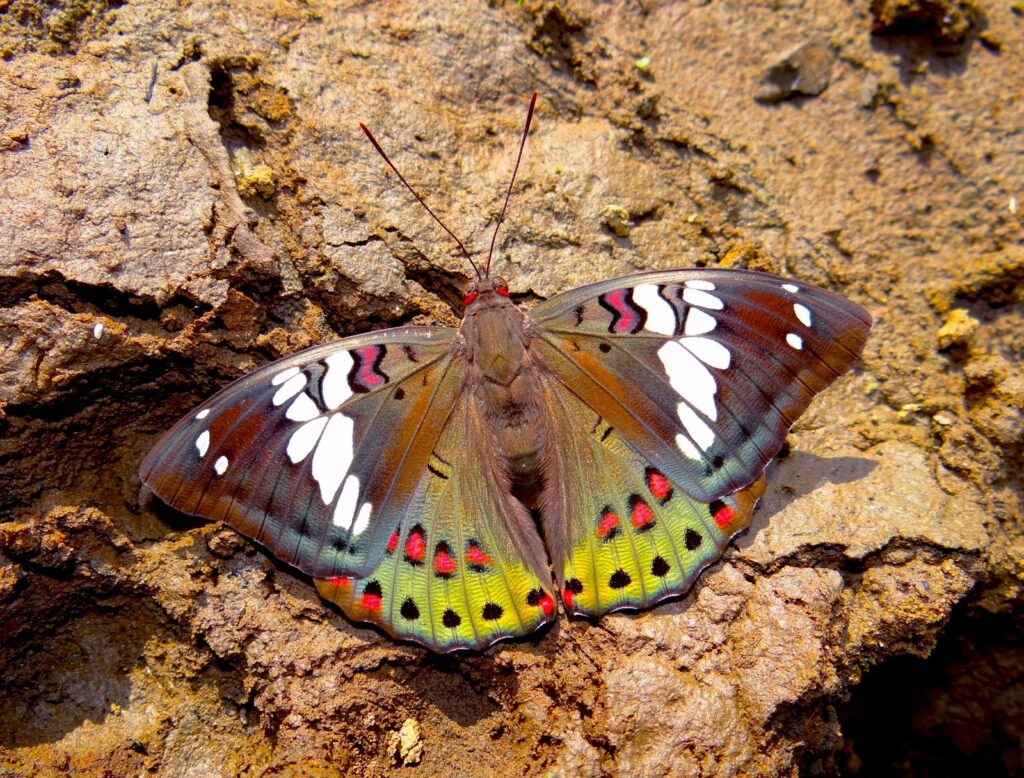
A new butterfly species discovered in Arunachal Pradesh’s Leparada district has been named Euthalia zubeengargi in honour of Zubeen Garg, a cultural icon of Assam, whose death on September 19, 2025 triggered widespread public reaction.
What Is the Newly Discovered Butterfly Species?
• Scientific Name: Euthalia zubeengargi • Common Name Proposed: Basar Duke • Genus: Euthalia • Habitat: Semi evergreen forests • Elevation Range: 600 to 750 metres • Location: Leparada district, Arunachal Pradesh
Why Is the Discovery Important?
• Only Two Male Individuals recorded • One Collected Specimen • One Photographed in Wild • Indicates Rare or Highly Localised Species • Found in Forest Ecosystem of Eastern Himalayas
[2016] Recently, for the first time in our country, which of the following States has declared a particular butterfly as ‘State Butterfly’? (a) Arunachal Pradesh (b) Himachal Pradesh (c) Karnataka (d) Maharashtra