💥UPSC 2027,2028 Mentorship (April Batch) + Access XFactor Notes & Microthemes PDF

Archives: News

  • GI(Geographical Indicator) Tags

    Tamil Nadu Adds Five New GI-Tagged Products 

    Why in the News?

    Five traditional products from Tamil Nadu have received the Geographical Indications (GI) tag, highlighting the State’s rich textile, agricultural, and handicraft heritage. With these additions, Tamil Nadu now has 74 GI-tagged products, one of the highest in India. Applications were filed by IPR attorney P. Sanjai Gandhi on behalf of the concerned associations.

    Newly Awarded GI Products (2025)

    Woraiyur Cotton Sari

    • Region: Woraiyur & Manamedu (Tiruchirappalli district)
    • Material: Cotton yarn sourced from Coimbatore & Rajapalayam
    • Dyes: From Jayamkondam
    • Features:
      • Light-weight, soft handloom cotton
      • Known for intricate designs and distinct regional weaving patterns
    • Significance: Represents age-old weaving traditions on the banks of the Cauvery River.

    Kavindapadi Naatu Sakkarai (Jaggery Powder)

    • Region: Kavindapadi, Erode district
    • Raw Material: Sugarcane from fields irrigated by the Lower Bhavani Project canal
    • Process:
      • Mechanically crushed
      • Cane juice slowly evaporated
      • No chemical additives → retains natural minerals
    • Importance: Major jaggery powder supplier for Tamil Nadu; valued for purity and aroma.

    Thooyamalli Rice

    • Meaning: “Thooya” (pure) + “Malli” (jasmine) — named for its fragrance
    • Type: Traditional samba-season paddy, duration 135–140 days
    • Application: Tamil Nadu State Agricultural Marketing Board, supported by NABARD Madurai Agri Business Incubation Forum
    • Features:
      • Long-duration rice variety
      • High nutritional value
      • Aromatic and suitable for traditional dishes

     Namakkal Makkal Pathirangal (Soapstone Cookware / Kalchatti)

    • Region: Namakkal district
    • Material: Soft soapstone carved into cooking vessels
    • Cultural Roots: Used in South India for centuries; retains heat and enhances flavour
    • GI History:
      • First application by Tamil Nadu Handicrafts (Poompuhar) withdrawn (2019)
      • Final successful application submitted in 2022 by:
        • Namakkal Stone Products Manufacturers
        • MSME Technology Development Centre – IP Facilitation Centre

     Ambasamudram Choppu Saman (Wooden Toys)

    • Region: Ambasamudram, Tirunelveli district
    • Tradition: Over 200 years old (origin in the 18th century)
    • Craft: Handcrafted wooden miniature toys such as:
      • Kitchen utensils
      • Tables, chairs
      • Household play items
    • Wood Used:
      • Manjal Kadamba (Neolamarckia cadamba)
      • Teak
      • Rosewood
    • Significance: Traditional children’s play items that promote creativity and fine motor skills.

    About GI (Geographical Indications) 

    • A GI tag is a sign used on products with a specific geographical origin, possessing qualities/ reputation due to that origin.
    • Governed by:
      • Geographical Indications of Goods (Registration & Protection) Act, 1999
    • Validity: 10 years, can be renewed
    • India’s first GI: Darjeeling Tea
    Which of the following has/have been accorded ‘Geographical Indication’ status? (2015)

    (1) Banaras Brocades and Sarees

    (2) Rajasthani Daal-Bati-Churma

    (3) Tirupathi Laddu

    Select the correct answer using the code given below.

    (a) 1 only

    (b) 2 and 3 only

    (c) 1 and 3 only

    (d) 1, 2 and 3

  • Modern Indian History-Events and Personalities

    Assam Day & Chaolung Sukapha 

    Why in the News?

    Assam Day was celebrated in New Delhi on 2 December 2025, led by Union Minister Sarbananda Sonowal, paying tribute to Chaolung Sukapha, founder of the Ahom Kingdom and architect of “Greater Assam.”

    About Chaolung Sukapha

    • Founder of the Ahom Kingdom (established c. 1228 CE).
    • Migrated from present-day Yunnan region (original Tai-Ahom lineage).
    • Crossed the Patkai Hills to enter Assam.
    • Known for integrating diverse communities through:
      • Goodwill
      • Empathy
      • Just and inclusive administration
    • Believed in winning the “hearts of people” as the basis for stable governance.
    • Sukapha is revered as the architect of “Greater Assam.”
    • Sukapha Divas / Assam Day is celebrated on 2 December.
    • First official celebration in 2016 at Charaideo, during Sonowal’s tenure as CM.

    Ahom Kingdom

    • Ruled Assam for nearly 600 years (1228–1826).
    • Capital at various times: Charaideo, Sibsagar, Garhgaon, etc.
    • Famous for:
      • Efficient land revenue system (Paik system)
      • Strong military organisation
      • Architecture: Maidams (Ahom burial mounds)
    • Successfully resisted Mughal expansion (Battle of Saraighat, 1671).
    In the context of Indian history, which of the following statements is/are correct? (2021)

    1. The Nizamat of Arcot emerged out of Hyderabad State.

    2. The Mysore Kingdom emerged out of Vijayanagara Empire.

    3. Rohilkhand Kingdom was formed out of the territories occupied by Ahmad Shah Durrani. Select the correct answer using the code given below:

    (a) 1 and 2

    (b) 2 only

    (c) 2 and 3

    (d) 3 only

  • Foreign Policy Watch: India-Maldives

    [3rd December 2025] The Hindu OpED: A template for security cooperation in the Indian Ocean

    PYQ Relevance

    [UPSC 2024] Discuss the geopolitical and geostrategic importance of Maldives for India with a focus on global trade and energy flows. Further also discuss how this relationship affects India’s maritime security and regional stability amidst international competition?

    Linkage: This PYQ is directly linked to India’s strategic engagement with the Colombo Security Conclave (CSC), where Maldives is a core maritime partner. The question becomes relevant as Maldives’ political shifts, China’s growing presence, and competition over Indian Ocean trade and energy routes directly shape India’s maritime security priorities.

    Mentor’s Comment

    This article breaks down the evolving relevance of the Colombo Security Conclave (CSC) for India and the wider Indian Ocean region in 2025. China’s growing presence in the region is reshaping the geopolitical environment. In this setting, the CSC becomes an important platform for India to strengthen maritime security cooperation.

    Introduction

    The CSC has emerged as a critical framework for regional security cooperation in the Indian Ocean. It initially focused on issues such as maritime security, counter-terrorism, cybersecurity, and human trafficking. Now it is attempting to institutionalise itself and broaden its mandate to address the increasingly complex geopolitical and maritime challenges in the region. India’s leadership in reviving and expanding the grouping has placed CSC at the centre of its Indian Ocean strategy.

    How is the evolving Indian Ocean environment reshaping CSC’s relevance?

    1. Strategic Shifts: The Indian Ocean region is witnessing significant changes in the broader Indo-Pacific, making cooperative security frameworks more urgent.
    2. Economic Interdependence: Littoral states depend heavily on ocean-based economies; maritime disruptions create widespread developmental challenges.
    3. Non-traditional Threats: Issues such as organised crime, cyberattacks, and trafficking continue to expand, requiring coordinated regional responses.

    What has shaped the CSC’s institutional trajectory so far?

    1. Initial Trilateral Framework: Established between India, Sri Lanka and the Maldives; momentum slowed due to political transitions in Sri Lanka and Maldives.
    2. Revival in 2020: India reinstated its engagement, establishing structured cooperation across four pillars, maritime security, counter-terrorism, trafficking, and cybersecurity.
    3. Progressive Expansion: Mauritius joined as full member (2022); Bangladesh added in 2024; Malaysia joined as observer in 2025.
    4. Growing Synergies: NSA-level coordination has strengthened common frameworks across member states.

    Why does China’s growing presence create strategic dilemmas for CSC?

    1. Contrasting Perceptions:
      1. India: Views China’s activities as a major security challenge.
      2. Other Members: Depend on China economically and see it as a developmental partner rather than a threat.
    2. Need for Balance: India must carefully manage CSC’s agenda such that the grouping does not fracture over divergent China-related security views.
    3. Anchoring India’s Priorities: CSC allows India to place maritime security and regional stability at the centre of cooperative action.

    What institutional challenges does the CSC currently face?

    1. Fragmented Frameworks: Lack of integrated institutional structures limits effective coordination.
    2. Need for Policy Consistency: Member states’ domestic disturbances (e.g., in Bangladesh) can affect the group’s resilience.
    3. Operational Limitations: Without an institutionalised Secretariat or joint mechanisms, coordination remains NSA-driven and episodic.

    What opportunities does CSC expansion create for regional security?

    1. Wider Membership: Growing membership allows for more inclusive maritime-security cooperation in the Indian Ocean.
    2. Enhanced Information-Sharing: Expanding partnerships help create common threat-perception frameworks.
    3. Forward Momentum: Malaysia’s possible future membership indicates sustained interest in CSC’s work
    4. Aligning Actionable Pathways: Collective policies on maritime issues can strengthen resilience across the region.

    Conclusion

    The CSC stands at a defining moment in 2025. Its expansion, renewed momentum, and India’s leadership provide a framework to address the growing complexity of maritime security in the Indian Ocean. However, institutional strengthening, policy coherence, and careful handling of China-related sensitivities will determine how successfully the CSC evolves into a reliable, long-term regional security architecture.

  • Foreign Policy Watch: India-Russia

    Why is there no peace in Ukraine

    Introduction

    Since Russia’s full-scale invasion in February 2022, several attempts at negotiations, from Belarus to Turkey, have collapsed. With Russia consolidating control over Ukrainian territories and Ukraine facing military constraints, the conflict shows signs of becoming a prolonged war. The Trump plan, recent Russian advances, and fatigue in Western capitals have complicated the strategic landscape, placing Ukraine at a turning point.

    Why in the news

    The Ukraine-Russia war has again entered headlines as Russia captured Pokrovske, marking the first major territorial gain after a year of stalled frontlines. Simultaneously, a 28-point U.S. peace proposal surfaced, offering recognition of Russian control over key territories. Ukraine is facing troop shortages, battlefield pressure, and delays in Western aid, making negotiations both urgent and politically difficult. Recent territorial losses, a disputed peace plan, and growing pressure on President Zelensky have reopened global debate on whether a ceasefire is achievable.

    Battlefield Dynamics and Stalled Negotiations

    1. Russian Consolidation: Russia captured Pokrovske after holding back Ukrainian forces for nearly a year; repositioned units in Kharkiv and Kherson and intensified attacks on Avdiivka and Kupiansk.
    2. Ukrainian Strain: Ukraine faces troop shortages, heavy attrition, and reduced Western ammunition deliveries; unable to meet battlefield demands.
    3. Failed Negotiations History: Talks in Belarus (Feb 28, 2022), Turkey (March 2022), and subsequent engagements collapsed due to disagreements over territory, NATO membership, and security guarantees.
    4. Renewed Russian Push: Russia resumed rotated forces, strengthened defensive lines, and maintained pressure across the east and south.

    Why Have Earlier Peace Efforts Failed?

    1. Maximalist Positions:
      1. Ukraine demanded withdrawal to 1991 borders and refusal of territorial concessions.
      2. Russia insisted on recognition of annexed territories and long-term security guarantees.
    2. NATO Membership Dispute: Ukraine’s insistence on future NATO membership remained unacceptable to Russia.
    3. Shifting War Outcomes: Early battlefield gains for Ukraine pushed negotiations aside; later Russian consolidation hardened Moscow’s stance.
    4. Domestic Political Costs: Zelensky faced internal political risk if he conceded territory or NATO flexibility.
    5. Western Signalling: Changes in Western messaging during 2022, especially from UK PM Boris Johnson’s Kyiv visit, reinforced Ukraine’s resolve to fight rather than negotiate.

    What Does the New Trump Peace Plan Propose?

    1. Territorial Recognition: Recognizes Russian control of current occupied territories (Crimea, Luhansk, Donetsk, Zaporizhzhia, Kherson).
    2. Ceasefire Framework: Calls for an initial ceasefire based on “current positions”.
    3. Security Guarantees: Ukraine would receive “reliable security guarantees”, though details remain unspecified.
    4. NATO Question: Prohibits Ukraine from joining NATO but proposes alternative security arrangements.
    5. Referendum Clause: Suggests that Ukraine may hold referendums under international supervision in disputed areas.
    6. Western Package: Encourages Washington to commit additional security assurances if Ukraine accepts concessions.
    7. Controversy: Critics argue it endorses annexation and weakens Ukrainian sovereignty.

    How Is Ukraine Responding to the Proposal?

      1. Zelensky’s Dilemma:
    • Fear of Loss of U.S. Support if he rejects the plan outright.
    • Domestic Resistance to territorial concessions or NATO withdrawal.
    1. Political Stakes: Any acceptance of the Trump plan risks severe political backlash within Ukraine and among its security elite.
    2. Military Reality Check: With Russia advancing and Western aid reduced, Ukraine risks losing more territory if negotiations are delayed.
    3. Unclear U.S. Position: The White House has neither endorsed nor dismissed the plan; Washington sends mixed signals.

    What Is Russia’s Current Strategy?

    1. Gradual Territorial Expansion: Small but steady advances across Donetsk and Kharkiv fronts.
    2. Exhaustion Approach: Prolonging the war to drain Ukrainian manpower and Western support.
    3. Diplomatic Pressure: Leveraging the Trump plan to portray Ukraine as unwilling to negotiate.
    4. Military Reconfiguration: Rotations, reorganized brigades, and fortified defensive lines to prepare for prolonged combat.

    Conclusion

    The Ukraine war remains locked between military stalemate and political impossibility. With Russia consolidating gains and Western support fluctuating, the window for meaningful negotiations narrows. The Trump plan introduces a new, but highly contentious, framework. For now, peace remains elusive due to incompatible security demands, shifting battlefield realities, and the political constraints of both Kyiv and Moscow.

    PYQ Relevance

    [UPSC 2023] The expansion and strengthening of NATO and a stronger US-Europe strategic partnership works well for India. What is your opinion about this statement? Give reasons and examples to support your answer.

    Linkage: This PYQ aligns with the article’s focus on NATO’s revived strength and US-Europe unity shaped by the Ukraine war. It directly links to how these shifts hardened positions, prolonged conflict, and reshaped global security dynamics.

  • Innovations in Sciences, IT, Computers, Robotics and Nanotechnology

    Understanding concerns around Sanchar Saathi

    Introduction

    The Department of Telecommunications (DoT) has instructed smartphone manufacturers and importers to pre-install the Sanchar Saathi application on all new mobile devices. The app is designed to combat digital fraud, trace stolen devices, and prevent misuse of SIMs. But its mandatory installation has raised widespread concerns about privacy, surveillance, user consent, and constitutional rights. The government later clarified that the app is “optional,” but the directive mandating its pre-installation has created ambiguity.

    Why in the news

    Sanchar Saathi’s mandatory pre-installation order marks a major shift because devices in India have never required a state-controlled app by default. This reversal from voluntary to mandatory installation has generated concerns about surveillance risks, access to sensitive data, and violation of user consent. The scale is significant as India is the world’s second-largest smartphone market; even small changes affect millions. Legal experts view it as a possible infringement of the fundamental right to privacy.

    What the Government’s App Actually Does

    1. Blocking & Tracking: Allows blocking or locating lost/stolen phones anywhere in India using IMEI-based tracing.
    2. User Option to Block IMEI: Enables users to prevent stolen devices from being activated.
    3. Support to Law Enforcement: Assists police in identifying counterfeit devices and preventing black-market circulation.
    4. Fraud Prevention: Helps report fraudulent calls, messages, and online scams via unified channels.

    Why Has Sanchar Saathi Triggered Concerns?

    1. Ambiguity Around Consent
      1. Unclear Mandate: Pre-installation directive contradicts the Minister’s statement that the app is optional.
      2. User Autonomy: Mandatory installation affects user ability to choose, delete, or disable the app freely.
    2. Expanded State Power
      1. Exceptional Move: First time the government mandated a wide-scale state app on all devices.
      2. Precedent Risks: May normalise future mandates for state surveillance tools.
    3. Privacy Risks
      1. Data Access: App uses Android’s Mobile Security Framework enabling access to call logs, camera, SMS, and unique device identifiers.
      2. Opaque Permissions: Apple devices require permissions for photos, files, and camera.
      3. Potential Misuse: Centralised data collection may heighten misuse & monitoring risks.

    What Data Does Sanchar Saathi Collect?

    1. IMEI Data: Unique identifier used to block stolen devices.
    2. Call Logs & SMS Data: Access allowed when reporting fraud or using suspicious call detection features.
    3. Camera Access: Needed for uploading barcodes of mobile equipment (IMEI verification).
    4. Personal Information: Includes phone numbers, Aadhaar-linked data, and registration details.
    5. Problem: The app’s privacy policy bans sharing identifiable information except when required by law, but the phrase “required by law” remains broad and open-ended.

    Constitutional & Legal Concerns

    1. Lack of Consent: Forced Pre-installation undermines voluntary, informed consent, a core component upheld under the Puttaswamy judgment (2017).
    2. Three-fold Privacy Test: Experts argue mandatory pre-installation fails:
      1. Legality: No explicit statutory backing for a nationwide mandate.
      2. Necessity: No demonstrated need requiring compulsory installation.
      3. Proportionality: Data access far exceeds the minimum required for fraud detection.
    3. Surveillance & “Function Creep”
      1. Risk of Expansion: Potential to expand into unrelated data surveillance functions.
      2. No Independent Oversight: Absence of clear audit mechanisms, grievance redressal, or limits on retention periods.

    Way Forward 

    1. Clarity of the mandate: Issue a clear written policy stating the app’s status to remove confusion.
    2. Addressing Privacy Risks: Limit data permissions to essential functions and publish regular audit reports.
    3. Ensuring Consent & User Autonomy: Provide a visible and fully functional uninstall or disable option.
    4. Preventing Surveillance Overreach: Create independent oversight to monitor misuse and restrict function creep.
    5. Building Trust Through Transparency: Disclose data flows, retention rules, and access logs in the public domain.

    Conclusion

    Sanchar Saathi addresses real concerns of digital fraud and misuse of mobile devices. However, its mandatory pre-installation, broad data permissions, unclear safeguards, and inconsistent communication have created concerns about state overreach and privacy violations. The app’s utility must be balanced with constitutional guarantees, transparent policy design, and robust data protection mechanisms.

    PYQ Relevance

    [UPSC 2024] Right to privacy is intrinsic to life and personal liberty and is inherently protected under Article 21 of the constitution. Explain. In this reference, discuss the law relating to D.N.A. testing of a child in the womb to establish its paternity.

    Linkage: This PYQ links directly to debates on privacy, consent, and proportionality governing state access to sensitive personal data. It shows how intrusion into bodily or digital autonomy must meet strict constitutional tests.

  • Tribes in News

    Hornbill Festival 2025

    Why in the news?

    The 26th edition of Nagaland’s iconic Hornbill Festival has begun with great enthusiasm, reaffirming its status as one of India’s most vibrant cultural events. The festival has grown into a major platform for showcasing the cultural diversity of Nagaland’s tribes and promoting tourism in the Northeast.

    What is the Hornbill Festival?  

    • First organised: 2000
    • Also called: “Festival of Festivals”
    • Purpose:
      • Promote inter-tribal interaction
      • Preserve indigenous Naga heritage
      • Blend traditional and contemporary art forms
    • Organised by:
      • Department of Tourism, Government of Nagaland
      • Department of Art & Culture, Government of Nagaland
    • Venue: Naga Heritage Village, Kisama, ~12 km from Kohima, Nagaland
    • Named after: The Hornbill bird, which is deeply associated with the socio-cultural identity of the Nagas
    Consider the following pairs: Tradition State (2018)

    1. Chapchar Kut festival — Mizoram 

    2. Khongjom Parba ballad — Manipur 

    3. Thang-Ta dance — Sikkim 

    Which of the pairs given above is/are correct? 

    (a) 1 only 

    (b) 1 and 2 

    (c) 3 only 

    (d) 2 and 3

  • Masala Bonds

    ED Notice to Kerala CM: KIIFB Masala Bonds Case 

    Why in the news?

    The Enforcement Directorate’s (ED) notice to Kerala Chief Minister Pinarayi Vijayan and senior officials in the KIIFB masala bond case has revived debates on FEMA compliance, off-budget borrowings, and Centre–State fiscal relations. As local body polls approach, the issue has also acquired political significance.

    What is KIIFB?  

    Kerala Infrastructure Investment Fund Board (KIIFB)

    • Statutory body established under KIIF Act, 1999
    • Revived in 2016 as Kerala’s key infrastructure financing arm
    • Raises funds outside the State budget, mainly through long-term borrowing
    • Functions as an off-budget financing mechanism

    What is Off-Budget Borrowing?

    • Debt raised by state entities (SPVs, boards) instead of the government directly
    • Not reflected in the official fiscal deficit
    • CAG has criticised such borrowings for reducing transparency

    What Are Masala Bonds?  

    Masala Bonds =

    • Rupee-denominated bonds issued in overseas markets
    • Borrowing risk is borne by the investor, not the issuer
    • Governed by RBI’s External Commercial Borrowing (ECB) Framework

    KIIFB Masala Bond:

    • Issued in 2019 on the London Stock Exchange
    • Total amount: ₹2,150 crore
    • First sub-national entity in India to issue such a bond

    Why Did ED Issue Notices?

    ED’s probe relates to alleged violations under:FEMA, 1999 – Foreign Exchange Management Act

    ED claims: Part of the masala bond funds was used for land purchase. RBI prohibits land purchase using ECB/masala bond proceeds

    Kerala’s defence:

    • Land was acquired, not purchased
    • Public land acquisition does not violate FEMA or RBI norms

    Enforcement Directorate (ED)

    • Established under DOF Notification (1956)
    • Investigates:
      • PMLA, 2002
      • FEMA, 1999
      • Economic offences referred by other agencies
    • Works under Department of Revenue, Ministry of Finance

    CAG (Comptroller and Auditor General of India)

    • Constitutional body under Article 148
    • Criticised KIIFB borrowings as off-budget liabilities
    With reference to ‘IFC Masala Bonds’, sometimes seen in the news, which of the statements given below is/are correct? (2016)

    1. The International Finance Corporation, which offers these bonds, is an arm of the World Bank. 

    2. They are the rupee-denominated bonds and are a source of debt financing for the public and private sector. 

    Select the correct answer using the code given below. 

    (a) 1 only (b) 2 only (c) Both 1 and 2 (d) Neither 1 nor 2

  • Foreign Policy Watch: United Nations

    India calls for Stronger Global Biosecurity at 50 Years of the BWC

    Why in the news? 

    At the Conference on 50 Years of the Biological Weapons Convention (BWC) held in New Delhi, External Affairs Minister S. Jaishankar warned that global biological threats—natural, accidental, or deliberate are growing due to rapid scientific advances. He emphasised the rising risks of bioterrorism and highlighted structural weaknesses in the BWC.

    About the Biological Weapons Convention (BWC)

    • Came into force: 1975
    • Objective: Prohibits development, production, acquisition, stockpiling & use of biological and toxin weapons.
    • Depositaries: Russia, UK, USA
    • India: Founding State Party

    Structural Gaps Jaishankar Highlighted

    • No verification/compliance mechanism
    • No permanent technical secretariat
    • No system to monitor new scientific developments
    • Reliance on voluntary confidence-building measures (CBMs)

    Rising Biological Threat Landscape

    • Misuse of biological agents by non-state actors is a serious concern.
    • Emerging technologies increasing risks:
      • Synthetic biology
      • Genome editing (CRISPR)
      • AI-driven biological design

    India’s Strengths in Biosecurity

    • Produces 60% of global vaccines
    • Supplies 20% of world’s generic medicines (including 60% for Africa)
    • 11,000 biotech startups (3rd largest globally; 50 in 2014 → 11,000 now)
    • Advanced BSL-3 and BSL-4 labs under ICMR & DBT

    India’s Global Health Contributions

    • Vaccine Maitri: ~300 million vaccine doses, aid to 100+ countries
    • Stressed that biological crisis assistance must be “fast, practical and humanitarian”
    Which one of the following is associated with the issue of control and phasing out of the use of ozone-depleting substances? (2015)

    (a) Bretton Woods Conference 

    (b) Montreal Protocol 

    (c) Kyoto Protocol 

    (d) Nagoya Protocol

  • Defence Sector – DPP, Missions, Schemes, Security Forces, etc.

    India Expands Heron Mk II UAV Fleet

    Why in the news? 

    In the aftermath of Operation Sindoor, the Indian Army, Air Force, and Navy have initiated emergency procurement of satellite-linked Heron Mk II Unmanned Aerial Vehicles (UAVs) from Israel. This marks the first induction of Heron Mk II by the Indian Navy.

    What is Emergency Procurement?

    • Covered under Defence Acquisition Procedure (DAP).
    • Allows armed forces to procure weapons/systems worth up to ₹300 crore per case.
    • Meant for urgent operational requirements.
    • Fast-tracked contracting and delivery timelines.

    About Heron Mk II (MALE UAV)

    Category: MALE – Medium Altitude Long Endurance.
    Manufacturer: Israel Aerospace Industries (IAI).

    Key Features (Prelims Points):

    • Endurance: > 24 hours continuous flight.
    • Payload Capacity: ~ half a tonne.
    • Sensors:
      • Synthetic Aperture Radar (SAR)
      • Electro-Optical/Infrared (EO/IR)
      • SIGINT (Signals Intelligence)
    • SATCOM-enabled:
      • Encrypted satellite communication
      • Enables Beyond Line-of-Sight (BLOS) operations.
    • Fully automated Take-off & Landing (ATOL).
    • All-weather ISR platform (Intelligence, Surveillance, Reconnaissance).

    Current Indian Operators:

    • Indian Army (deployed in northern sector).
    • Indian Air Force.
    • Indian Navy (first time induction now).
    With reference to Agni-IV Missile, which of the following statements is/are correct? (2014)

    1. It is surface-to surface missile. 

    2. It is fuelled by liquid propellant only. 

    3. It can deliver one-tonne nuclear warheads about 7500km away. 

    Select the correct answer using the code given below: 

    (a) 1 only 

    (b) 2 and 3 only 

    (c) 1 and 3 only 

    (d) 1, 2 and 3 only

  • Foreign Policy Watch: India-Africa

    Coup in Guinea-Bissau (2025)

    Why in the news? 

    Guinea-Bissau, one of the world’s most coup-prone nations, witnessed yet another military takeover on 26 November 2025, overthrowing President Umaro Sissoco Embaló. The coup was led by members of the Presidential Guard, marking the latest in a long line of disruptions to democratic governance in West Africa.

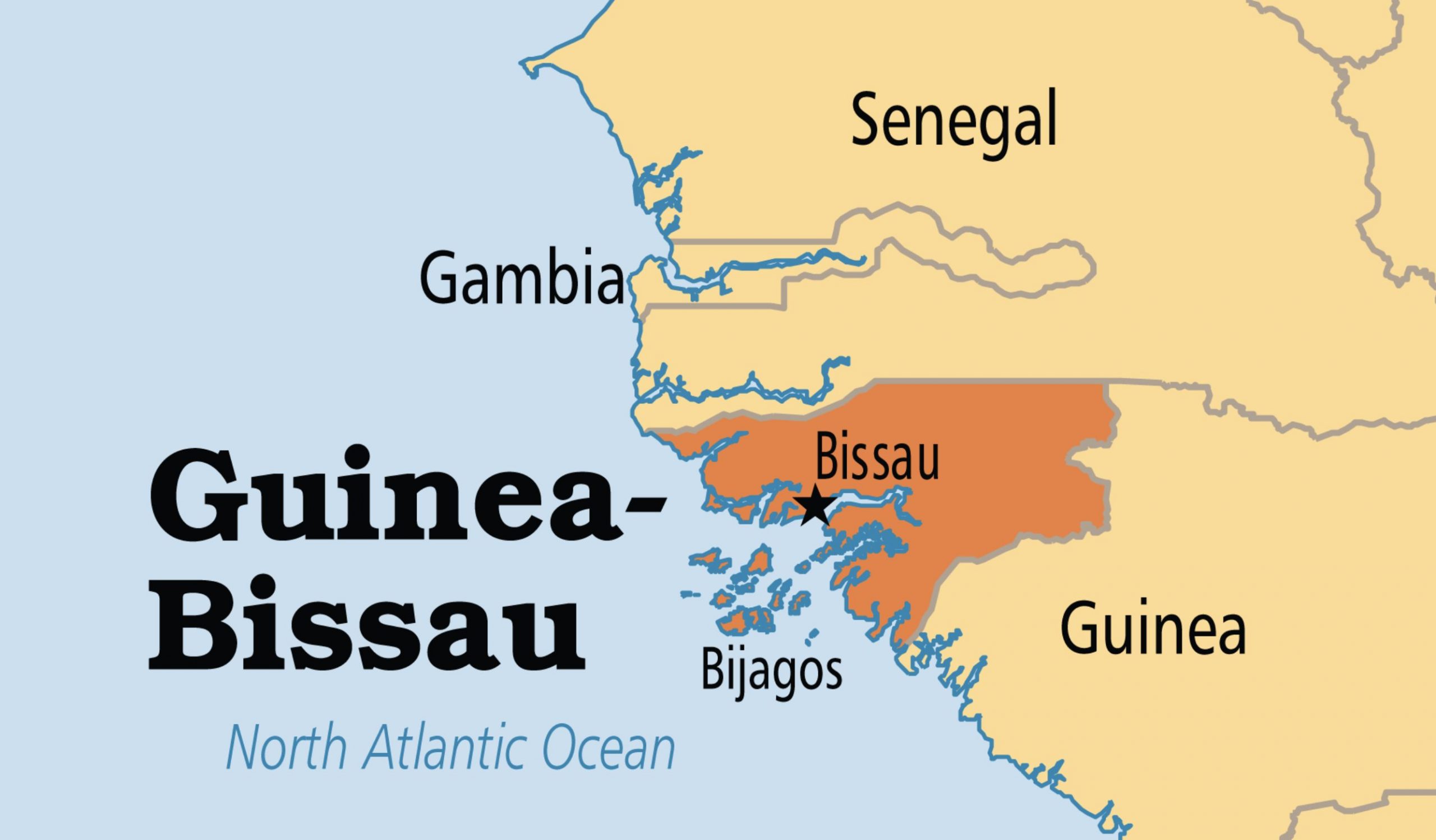
    Geography & Country Profile

    • Location: West Africa, bordered by
      • Senegal (North)
      • Guinea (East & South)
      • Atlantic Ocean (West)
    • Language: Portuguese (Lusophone Africa).
    • Population: Approx. 2.25 million.
    • HDI Rank: 174 / 193 (UNDP).
    • Economy: Dominated by agriculture, especially cashew nuts
      • Cashew = 80%+ of export earnings (World Bank).
    • Known as a hub for drug trafficking (Latin America → Europe).

    Political Background

    • Independence from Portugal in 1974.
    • One of the most unstable countries globally:
      • Has had more successful coups than peaceful transfers of power.
    • Termed the “Coup Trap” country – chronic cycle where military becomes the dominant political actor.
    In the recent years Chad, Guinea, Mali and Sudan caught the international attention for which one of the following reasons common to all of them? (2023)

    (a) Discovery of rich deposits of rare earth elements 

    (b) Establishement of Chinese military bases 

    (c) Southward expansion of Sahara Desert 

    (d) Successful coups

Join the Community

Join us across Social Media platforms.