💥UPSC 2027,2028 Mentorship (April Batch) + Access XFactor Notes & Microthemes PDF

Archives: News

  • Air Pollution

    [17th November 22] The Hindu Op-ed: Delhi’s air, a ‘wicked problem’ in need of bold solutions

    PYQ Relevance

    [UPSC 2021] Describe the key points of the revised Global Air Quality Guidelines (AQGs) recently released by the WHO. How are these different from its last update in 2005? What changes in India’s National Clean Air Programme are required to achieve these revised standards?

    Linkage: This PYQ directly links to Delhi’s recurring “severe” AQI episodes and the article’s emphasis on PM2.5 toxicity, life-expectancy loss, and structural regulatory failure. It is relevant because achieving WHO’s revised AQGs requires stronger, coordinated, long-term reforms, precisely what the article argues India’s NCAP currently lacks.

    Mentor’s Comment

    Delhi’s air crisis has again reached “public health emergency” levels, revealing the chronic and structural nature of India’s most persistent environmental challenge. This article breaks down Dr. Shashi Tharoor’s analysis of Delhi’s air pollution as a “wicked problem,” expands it with UPSC-relevant framing, and provides a structured, exam-oriented guide with value additions, PYQs, micro-themes, and practice questions.

    Introduction

    Delhi’s annual winter pollution has evolved from a seasonal inconvenience into a chronic public health emergency. Air Quality Index (AQI) levels routinely breach the 400+ “severe” category, shortening life expectancy by up to 10 years in highly exposed regions. The article argues that Delhi’s air crisis is a “wicked problem”, a complex mix of geographical, meteorological, and man-made factors requiring bold, holistic, and long-term solutions.

    Why in the News 

    Delhi’s air quality has once again plunged into the “severe” category post-Diwali, with AQI values exceeding 400 and triggering health alarms across NCR. What is striking is the persistence: for over a decade, seasonal pollution spikes have recurred despite policies, committees, bans, and monitoring systems. The article highlights the worsening public health impact, including a 10-year reduction in life expectancy, and shows that despite years of institutional attention, the crisis remains structurally unchanged, making this year’s episode another stark reminder of policy failure.

    Delhi’s Air Pollution as a Wicked Problem

    1. Complex Interactions: Combines geographical, meteorological, and human-made factors.
    2. Valley-like Topography: Delhi is landlocked with restricted air flow.
    3. Temperature Inversions: Trap pollutants close to the ground in winter.
    4. No Single Villain: Emissions arise from vehicles, industries, agriculture, construction, and households simultaneously.

    What Makes the Crisis Structurally Persistent?

    1. Chronic Health Emergency: PM2.5 toxicity linked to asthma, chronic obstructive pulmonary disease (COPD), strokes, cancers, anxiety, depression, and DNA damage.
    2. Reduced Life Expectancy: Exposure reduces life expectancy by up to 10 years in consistently high-PM areas.
    3. Population Movement: People relocate away from Delhi despite career opportunities due to health concerns.
    4. Elderly & Children at Risk: Respiratory illnesses sharply rise during winter.

    Why Are the Existing Measures Not Working?

    1. Weak Enforcement: BS-VI vehicles, dust-control norms, and industrial regulations remain poorly enforced.
    2. Rapid Urbanisation: Construction adds 27% of PM emissions; monitoring is patchy.
    3. Outdated Technology: Many industries in NCR still use old boilers and furnaces.
    4. Vehicular Emissions Rising: Over 3 crore vehicles in NCR; old diesel vehicles persist.

    Who Are the Major Contributors Highlighted in the Article?

    1. Stubble Burning: Seasonal crop residue burning in Punjab & Haryana adds massive smoke plumes.
    2. Firecrackers: Diwali and wedding fireworks spike PM levels.
    3. Waste Burning: Municipal waste, rubber, and plastic burning persists due to weak surveillance.
    4. Industries: Brick kilns, factories, and outdated machinery emit sulphur dioxide, nitrogen oxides, and PM.

    Structural Reforms Advocated to Address the Air Pollution Crisis

    1. System-wide Pollution Control Plan: Not piece-meal bans; requires unified regional strategy.
    2. Relocating Polluting Industries: Move red-category industries away from dense areas.
    3. Urban Design Changes: Create green lungs, redesign mobility, and improve public transport.
    4. Electric Mobility Transition: Incentivise EV adoption and shared mobility.
    5. Agricultural Alternatives: Support farmers with smoke-free residue management.
    6. Firecracker Alternatives: Scale up “green crackers”; enforce bans with political will.

    Conclusion

    Delhi’s air pollution demands collective regional action, technological upgrade, and political resolve. Seasonal, reactive measures have repeatedly failed; the crisis is structural and chronic. Treating it as a “wicked problem” requires system-wide transformation in transport, agriculture, industry, and governance, with long-term investment in cleaner technologies and behavioural change. The window for incrementalism has closed.

  • Corruption Challenges – Lokpal, POCA, etc

    Growing unchecked, no guardrails: On Cryptocurrency

    INTRODUCTION

    India’s crypto ecosystem is witnessing rapid expansion, with millions of users participating through exchanges that operate in a regulatory grey zone. Even though cryptocurrencies are not recognised as legal tender, trading continues unchecked through global and domestic platforms. Simultaneously, enforcement agencies report increasing difficulty in conducting investigations, seizing digital assets, and identifying crypto flows due to lack of disclosure norms, anonymous digital wallets, and absence of a comprehensive cryptocurrency law.
    As the RBI continues to caution against private crypto assets on grounds of financial instability, the mismatch between rapid adoption and weak regulatory architecture is emerging as a major economic and governance challenge.

    WHY IN THE NEWS? 

    The Indian crypto industry is projected to grow from $2.6 billion in 2024 to $15 billion by 2035, showing unprecedented expansion despite lack of regulatory oversight. This contrast, booming investments vs. near-absence of guardrails, has placed the industry at the centre of policy debate. Law-enforcement agencies have flagged that crypto-linked frauds, pump-and-dump schemes, and money-laundering networks are rising, while agencies lack legal backing and technical capability to tackle cases, making the issue urgent and nationally significant.

    Understanding Cryptocurrencies and Exchanges

    What are cryptocurrencies?

    • Decentralised Digital Assets: Built on blockchain, enabling encrypted, irreversible peer-to-peer transactions.
    • No Government Backing: Value based purely on demand-supply and market sentiment.
    • Popular Coins: Bitcoin, Ethereum; Indian users largely rely on global exchanges.
    • Not Legal Tender in India: Cannot be used for officially recognised payment obligations.

    What are crypto exchanges?

    • Online Trading Platforms: Allow users to buy, sell, hold crypto.
    • Wide Accessibility: Millions of Indians use both domestic and offshore exchanges.
    • India’s Absence of Recognition: Exchanges operate as digital intermediaries without formal regulatory status.

    How Crypto Scams Proliferate in India

    What mechanisms drive frauds?

    1. Pump-and-Dump Rackets: Influencers artificially inflate coin prices before exiting.
    2. Social Media-Driven Scams: Fraudsters lure users through WhatsApp/Telegram channels promising unrealistic returns.
    3. Disappearing Exchanges: Operators collect deposits and shut down overnight.
    4. Lack of Investor Awareness: Complex technology makes retail investors vulnerable.

    Magnitude of India’s Crypto Adoption

    How large is the user base?

    • 11 Million Global Crypto Holders: India hosts one of the world’s largest user bases.
    • 7 Million Indian Users (approx. 7%): Indicating wide penetration despite lack of backing.
    • ₹45,000 Crore Transaction Volume: Public adoption remains high regardless of regulatory uncertainty.
    • Young Demography: Primarily 18-35 age group investing through mobile apps.

    Why Does RBI Oppose Private Crypto Assets?

    What risks concern the central bank?

    1. Threat to Monetary Stability: Crypto bypasses sovereign currency systems, undermining control.
    2. Capital Flight Risks: Easy cross-border transferability allows funds to move outside the formal system.
    3. Volatility Concerns: Extreme price swings harm financial stability and investor protection.
    4. IMF FSR Context: RBI flags that widespread crypto usage could weaken monetary transmission and destabilise macroeconomic foundations.

    Why Crypto Investigations Are a Minefield in India

    What obstructs law-enforcement agencies?

    1. Disclosing Data
      1. Opaquely Stored User Data: Off-shore exchanges hide ownership/trade history.
      2. No Mandatory Registration: Agencies struggle to compel disclosure.
      3. Jurisdictional Challenges: Crypto platforms operate globally.
    2. Wallet Complexities
      1. Self-Custody Wallets: Google/MetaMask wallets controlled solely by users; agencies cannot freeze.
      2. Unregulated Cross-Border Flows: Enable illegal transfers with no paper trail.
    3. Seizing Digital Assets
      1. Technical Restrictions: Investigators require passphrases; non-cooperation prevents seizure.
      2. Custodial Limitations: No authorised secure government platform for holding crypto.
      3. High-Risk Volatility: Digital assets fluctuate, affecting value during investigations.
    4. Legal Blocks
      1. No Comprehensive Law: India lacks a crypto-specific statute.
      2. Ambiguity for Officers: Enforcement provisions unclear; actions challenged in court.
      3. Regulatory Vacuum: Agencies rely on IT Act, PMLA,insufficient for decentralised tech.
    5. Technical Snag
      1. Privacy Coins (e.g., Monero): High anonymity and advanced obfuscation algorithms.
      2. Untraceable Transactions: Blockchain mixers complicate forensic trails.

    Should Individuals Invest in Crypto?

    What risks do investors face?

    1. High Market Volatility: No asset backing; price fluctuations extreme.
    2. Unregulated Exchanges: Shutdowns lead to permanent loss of funds.
    3. Cyberattacks and Hacks: Wallets vulnerable to phishing and malware attacks.
    4. RBI and Global Position: Institutions including the IMF, RBI, European regulators warn of structural risks.

    CONCLUSION

    India’s crypto sector is expanding rapidly without an accompanying regulatory architecture. While blockchain offers transformative potential, the risks of fraud, volatility, and money-laundering remain high. Strengthening legal frameworks, mandating registration of exchanges, and improving cross-border cooperation will be essential before mainstreaming digital assets. Balancing innovation with stability remains the core policy challenge.

    PYQ Relevance

    [UPSC 2021] Discuss how emerging technologies and globalisation contribute to money laundering. Elaborate measures to tackle the problem of money laundering both at national and international levels.

    Linkage: This PYQ fits because the article shows how crypto and global digital platforms enable anonymous cross-border laundering. It also matches the article’s focus on legal gaps and enforcement challenges in tackling such flows.

  • The legal hoodwinking of adivasis

    Introduction

    The cancellation of Ghatbarra (Chhattisgarh) Gram Sabha’s community forest rights (CFRs), despite earlier recognition under the Forest Rights Act (FRA), 2006, has triggered concerns about legal fairness, administrative overreach and the future of Adivasi forest governance. The High Court ruling, which upheld the revocation of CFRs based on procedural grounds, marks a sharp break from the FRA’s constitutional promise of recognising customary forest rights and ensuring Gram Sabha consent for diversion decisions. The episode highlights the broader developmental logic that prioritises mining over community rights, creating a precedent with wide implications for forest governance in India.

    Why in the News 

    The Chhattisgarh High Court upheld the cancellation of Ghatbarra’s community forest rights, a rare instance where formally recognised CFRs were later withdrawn. This marks a significant departure from the FRA’s legal protection of settled rights and reveals how administrative technicalities can override Gram Sabha authority. The case is significant because lakhs of trees were felled after diversion was cleared, villagers’ objections were repeatedly sidelined, and legal rights were dismissed as “mistakes”, revealing systemic weakening of Adivasi rights in mineral-rich regions.

    How did the legal contest over Ghatbarra’s forest rights evolve?

    • Long history of disputes: The proposal to divert forests for mining dates back to 2011; reports noted ecological richness and unresolved rights.
    • Procedural irregularities: The Environment Minister allowed diversion despite technical objections; clearances were repeatedly granted and withdrawn.
    • Supreme Court intervention: The Court allowed mining to resume earlier without interfering with reconsideration of clearances.
    • Administrative fast-tracking: Mining proceeded while rights recognition lagged, leading to large-scale felling of forests.

    Why was Ghatbarra’s CFR status revoked?

    • DLC unilateral action: The District Level Committee cancelled CFRs in 2016 while villagers were preparing to litigate.
    • Claim dismissed as ‘mistake’: Authorities argued earlier recognition of rights was erroneous, contradicting FRA’s foundational principle.
    • Failure to meet legal standards: Court held that land had already been diverted and thus claims did not meet FRA criteria.
    • Judicial reliance on technicalities: Court questioned whether legal procedures for settling rights and obtaining Gram Sabha consent were fulfilled, placing burden on petitioners.

    What were the major shortcomings in the High Court’s reasoning?

    1. Misinterpretation of FRA Section 4(7): Court stated rights must be “free of encumbrances,” treating mining as an encumbrance rather than a violation of rights.
    2. Ignoring NGT findings: Earlier National Green Tribunal orders questioning the diversion process were not considered.
    3. Burden shifted to villagers: Petitioners were asked to prove procedural lapses by authorities, contrary to FRA’s mandate.
    4. Judicial shrinkage of community rights: The ruling prioritised administrative procedure over statutory recognition of customary rights.

    Why does this case matter for Adivasi self-determination?

    1. Erosion of Gram Sabha authority: CFRs, intended as a safeguard against arbitrary diversion, were overridden through administrative orders.
    2. Contradiction with Niyamgiri precedent: Supreme Court’s 2013 verdict upheld the primacy of Gram Sabha decisions; Ghatbarra marks a deviation.
    3. Expansion of extractive model: Mines continue to operate even when rights are unsettled; recognition does not ensure control.
    4. Undermining of democratic forest governance: Decision signals that settlements of rights can be reversed for developmental imperatives.

    What does the case reveal about India’s forest governance architecture?

    1. Development-first logic: Mining clearances were treated as faits accomplis, with rights adjudicated after damage was done.
    2. Weak institutional checks: DLCs, FAC, NGT and courts issued conflicting directions, creating procedural gaps that diluted rights.
    3. Strategic use of ambiguity: Authorities used technical ‘non-existence’ of rights to legitimise diversion.
    4. Administrative ritualism: Presence of procedures did not translate into justice; decision-making replicated colonial governance logic.

    Conclusion

    The Ghatbarra judgment illustrates how forest governance mechanisms can be used to dilute, rather than protect, Adivasi rights. Although the FRA envisions community autonomy and ecological stewardship, the ruling demonstrates how institutional language and procedural manoeuvres can sideline these safeguards. The case underscores the urgent need to re-establish statutory primacy of Gram Sabha consent and ensure that rights, once settled, cannot be reversed to accommodate extractive interests.

    PYQ Relevance

    [UPSC 2016] Why are the tribals in India referred to as the Scheduled Tribes? Indicate the major constitutional provisions for their upliftment.

    Linkage: This PYQ examines constitutional safeguards and identity recognition of STs. It links with the article as it exposes how policy practice fails ST protections, leading to exploitation despite constitutional guarantees.

  • Innovations in Biotechnology and Medical Sciences

    India’s Emerging Frontier in Precision Biotherapeutics 

    Why in the News?

    India’s growing burden of non-communicable diseases and its vast genetic diversity make precision biotherapeutics and targeted therapies a strategic medical priority.

    About Precision Biotherapeutics:

    • Concept: Precision biotherapeutics are targeted medical treatments – gene therapies, biologics, mRNA drugs, engineered antibodies – designed according to a patient’s genetic, molecular, or cellular profile.
    • Scientific Basis: Integrates genomics, proteomics, cell engineering, computational biology, and AI to correct disease at its root rather than treating symptoms.
    • Genetic Targeting: Uses genomic and proteomic profiling to identify mutations and dysfunctional biological pathways.
    • Gene Editing: Employs CRISPR and related tools to repair faulty genes, including those causing haemoglobin disorders.
    • Nucleic-Acid Therapies: Uses mRNA, siRNA, and DNA-based platforms that instruct cells to produce or suppress specific proteins.
    • Biologics & Antibodies: Develops monoclonal antibodies and targeted biologics for cancer, autoimmune diseases, and metabolic disorders.
    • AI Integration: AI systems accelerate drug discovery, target prediction, and personalised therapy development.

    Why India needs precision Biotherapeutics?

    • High Disease Burden: Non-communicable diseases cause ~65 percent of deaths; standard therapies ignore India’s biological diversity.
    • Genetic Variation: Indian populations show wide genetic diversity, making foreign-developed drugs less effective in many groups.
    • National Genome Projects: Initiatives such as GenomeIndia and IndiGen create datasets enabling population-specific therapies.
    • Healthcare Shift: Enables movement from reactive treatment to predictive, preventive, and personalised care.

    Where does India stand today?

    • Policy Recognition: Identified as a major pillar in the BioE³ Policy of DBT and BIRAC.
    • Research Strength: Organisations like IGIB, NIBMG, THSTI are mapping Indian genetic variations.
    • Industry Growth: Rapid expansion in biosimilars, immunotherapies, precision oncology, gene therapy.
    • Key Players: Biocon Biologics, Dr Reddy’s, Zydus LifeSciences, Immuneel Therapeutics, ImmunoACT, 4baseCare, Akrivia Biosciences, Bugworks, miBiome Therapeutics.
    • Challenges: Nascent regulation limited advanced biomanufacturing, high therapy costs.

    Global Progress and Benchmarks:

    • Regulatory Leaders: US and EU have clear approval pathways for cell and gene therapies.
    • Breakthroughs: Approvals like Zolgensma (SMA) and Casgevy (first CRISPR therapy).
    • Asia’s Momentum: China hosts 800+ active trials; Japan and South Korea use fast-track frameworks for regenerative medicine.

    Opportunities:

    • Disease Impact: Precision therapies improve outcomes for genetic, metabolic, rare, and cancer conditions, reducing long-term costs.
    • Market Potential: Global precision medicine market projected to exceed 22 billion USD by 2027.
    • India’s Edge: Strong IT ecosystem, data science capacity, cost-efficient manufacturing, and large clinical trial base.

    Risks:

    • Genomic Privacy: Sensitive data risks misuse without strict laws and consent rules.
    • Cost Barriers: High treatment costs may deepen health inequity.
    • R&D Gaps: Low domestic R&D investment can create dependence on foreign technologies.

    Way Forward:

    • Regulation: Establish a dedicated CDSCO pathway for cell and gene therapies.
    • Data Protection: Enact a biobanking and genomic data law ensuring privacy and research access.
    • Affordability: Integrate precision therapies into public insurance and health schemes.
    • Ethics & Governance: Create national standards on consent, fairness, and data use.
    • Manufacturing: Expand domestic biologics and gene therapy infrastructure to reduce import reliance.
    [UPSC 2024] In which of the following are hydrogels used?
    1. Controlled drug delivery in patients
    2. Mobile air-conditioning systems
    3. Preparation of industrial lubricants
    Select the correct answer using the code given below:
    Options: (a) 1 only (b) 1 and 2 only (c) 2 and 3 only (d) 1, 2 and 3*


  • Wildlife Conservation Efforts

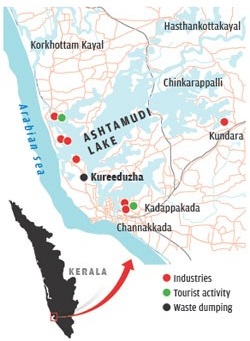
    Researchers to study rare Dolphin-Fisher kinship in Ashtamudi Lake

    Why in the News?

    In Ashtamudi Lake, Kerala, artisanal fishers and Indo-Pacific humpback dolphins (Sousa plumbea) engage in a rare and sophisticated form of human–wildlife cooperative hunting.

    Researchers to study rare Dolphin-Fisher kinship in Ashtamudi Lake

    Unique Dolphin-Fisher in Ashtamudi Lake:

    • Cooperative Hunting: Dolphins herd fish towards artisanal fishers standing in shallow water.
    • Signals: Dolphins give tail-slaps or rolls to signal fishers to cast nets.
    • Mutual Benefit: Fishers get high catches; dolphins feed on escaping fish, forming a rare human–wildlife cooperation system.
    • Documentation: First studied by University of Kerala researchers; Similar systems studied in Brazil and Myanmar.
    • Expected Outcomes: Insights into animal culture, evolution of cooperation, and improved sustainable fishing practices.

    About Indo-Pacific Humpback Dolphins (Sousa plumbea):

    • Distribution: Found from East Africa to India, the Middle East and western Indochina, with major populations along India’s west coast.
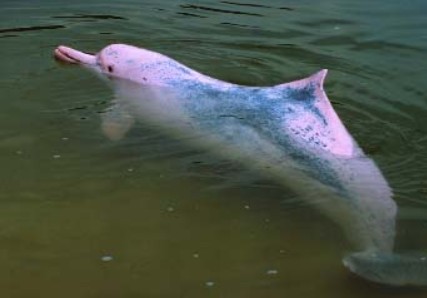
    • Appearance: Identified by a large hump under the dorsal fin, dark grey plumbeous body, white mottling, and occasional pink shading; adults grow up to 2.8 m, newborns 97–108 cm.
    • Identification Traits: Long slender beak, dorsal fin perched on a mid-back hump, adults darken with age and often show shark-related scars.
    • Habitat: Prefer shallow waters (<20 m) within 1.5 km of shore; commonly near estuaries, river mouths, bays and nearshore fish concentrations.
    • Group Behaviour: Groups of 50–100 reported in India; shy but often seen during dolphin-watching trips.
    • Diet: Feed mainly on mullet, mackerel, sardines, pomfret and other schooling fish; sometimes exploit fishing nets, increasing entanglement risk.
    • Conservation Status: Vulnerable (IUCN), Appendix I (CITES), NOT LISTED under India’s Wildlife Protection Act (only Ganges and Snubfin dolphins are listed).
    • Colour Variation: Pinkish tint comes from superficial blood vessels used for thermoregulation; calves are dark grey.

    Researchers to study rare Dolphin-Fisher kinship in Ashtamudi Lake

    About Ashtamudi Lake:

    • Location: A brackish estuarine lake in Kerala covering 5,700 hectares; designated a Ramsar Site (2002).
    • Name Origin: “Ashtamudi” refers to its eight channels, forming a gateway to the Kerala backwaters.
    • Hydrology: Fed mainly by the Kallada River; empties into the Arabian Sea via Neendakara estuary.
    • History: Once the ancient port of Quilon mentioned by Ibn Battuta.
    • Flora: Mangroves include Avicennia officinalis, Bruguiera gymnorrhiza, Sonneratia caseolaris; region hosts rare plants like Syzygium travancoricum and Calamus rotang.
    • Fauna: Supports 57 bird species (6 migratory, 51 resident).
    • Sustainable Fishery: Home to India’s first MSC-certified clam fishery (2014).
    • Livelihood & Ecology: Vital for traditional fisheries, estuarine biodiversity, and local livelihood systems.
    [UPSC 2012] Which one of the following is not a lagoon?

    Options: (a) Ashtamudi lake (b) Chilka lake (c) Preiyar lake * (d) Pulicat lake


  • Contention over South China Sea

    Senkaku-Diaoyu Islands Issue

    Why in the News?

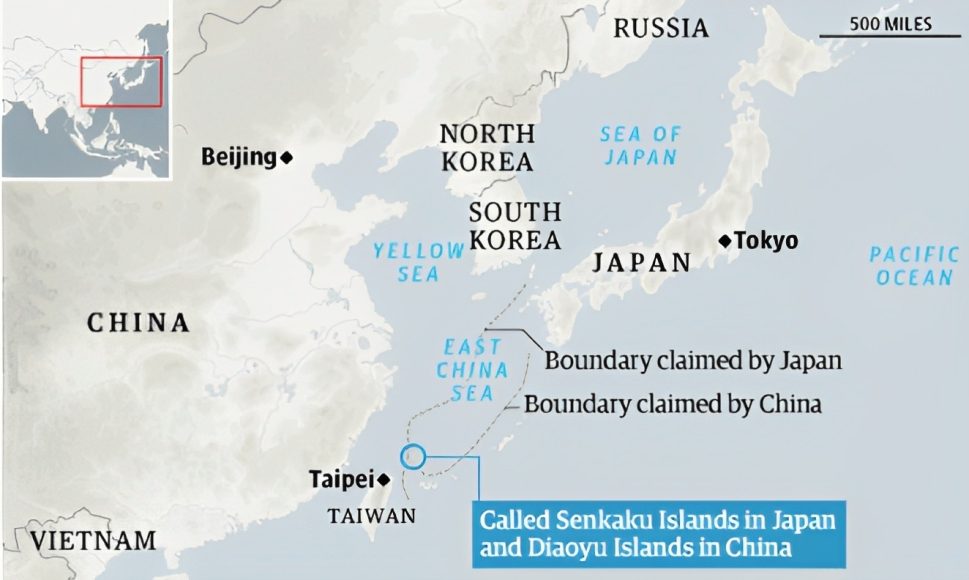
    A China Coast Guard formation patrolled the Senkaku waters as Beijing escalated tensions with Japan over recent remarks on Taiwan.

    Senkaku-Diaoyu Islands Issue

    About the Senkaku–Diaoyu Islands Issue:

    • Location & Status: A small uninhabited island group in the East China Sea, claimed by Japan, China, and Taiwan.
    • Names: Japan calls them Senkaku, China Diaoyu, and Taiwan Diaoyutai.
    • Administration: Japan has administered the islands since 1972 after the Okinawa Reversion Agreement with the United States.
    • Geography: Consists of five islands and three rocks, covering ~7 sq km; the largest is Uotsuri.
    • Strategic Location: Situated near major shipping lanes linking East Asia to global trade routes.
    • Natural Resources: Surrounding waters believed to hold oil and natural gas deposits, highlighted in a 1969 UN report.
    • Fisheries: Rich fishing grounds add significant economic importance.
    • Geopolitical Value: Located at the junction of interests of Japan, China, Taiwan, and the United States, making it a strategic flashpoint.

    What is the Dispute?

    • Japanese Claim: Japan incorporated the islands in January 1895, asserting they were terra nullius based on surveys from 1885 that found no Chinese administration.
    • Chinese & Taiwanese Claim: Cite dynastic-era maps, navigation records, and Qing documents to argue sovereignty predates Japanese control.
    • Post–World War II Status: The US took control under the 1951 San Francisco Treaty, administering the islands as part of the Nansei Shoto region.
    • 1971 Shift: Transfer of Senkaku and Okinawa back to Japan under the Okinawa Reversion Agreement sparked protests from China and Taiwan.
    • Resource Trigger: China’s active claim strengthened after the 1969 UN report identified potential hydrocarbon reserves.
    • 2012 Escalation: Japan’s purchase of three privately owned islands led to widespread protests, attacks on Japanese businesses, and a surge in nationalist sentiment in China.
    • Current Tensions: Chinese Coast Guard vessels frequently enter surrounding waters to assert Beijing’s claim.
    • Broader Dynamics: Linked to nationalism, unresolved historical grievances, and strategic competition between China, Japan, and the United States across the Indo-Pacific.
    [UPSC 2022] Which one of the following statements best reflects the issue with Senkaku Islands, sometimes mentioned in the news?

    Options: (a) It is generally believed that they are artificial islands made by a country around South China Sea.

    (b) China and Japan engage in maritime disputes over these islands in East China Sea.*

    (c) A permanent American military base has been set up there to help Taiwan to increase its defence capabilities.

    (d) Though International Court of Justice declared them as no man’s land, some South-East Asian countries claim them.


  • Judicial Reforms

    Article 32 of Indian Constitution

    Why in the News?

    At an event marking 75 years of the Constitution, the Chief Justice of India B.R. Gawai, said Ambedkar saw Article 32 as the core provision allowing citizens to approach the Supreme Court for the enforcement of fundamental rights.

    About Article 32:

    • Right to Constitutional Remedies: Article 32 allows any individual to directly approach the Supreme Court for the enforcement of Fundamental Rights under Part III of the Constitution.
    • Judicial Review Power: Empowers the Supreme Court to issue directions, orders, or writs to protect Fundamental Rights, making judicial review an essential constitutional feature.
    • Fundamental Right Status: The right to move the Supreme Court is itself a Fundamental Right and can be suspended only during a National Emergency under Article 359.
    • Jurisdiction: Grants the Supreme Court original but not exclusive jurisdiction; High Courts also have concurrent writ powers under Article 226.
    • Types of Writs Under Article 32:
      1. Habeas Corpus: Commands authorities to produce a detained person before the Court to prevent illegal detention.
      2. Mandamus: Orders public officials or bodies to perform a legal duty they have failed to discharge.
      3. Certiorari: Quashes orders of courts or tribunals that act without jurisdiction or violate due process.
      4. Prohibition: Stops lower courts or tribunals from exceeding their lawful authority during proceedings.
      5. Quo Warranto: Requires a person holding a public post to prove their legal authority, preventing illegal occupation of public office.

    Ambedkar’s Rationale for Article 32:

    • Rights Need Remedies: Ambedkar held that rights are meaningless without enforceable remedies; therefore, Article 32 had to be placed within the Constitution itself.
    • Objective Resolution Gap: He noted that the Objective Resolution (1946) declared rights but failed to guarantee mechanisms for enforcement.
    • “Heart and Soul” of the Constitution: Ambedkar called Article 32 the heart and soul because it transforms Fundamental Rights into legally enforceable claims against the State.
    • Supreme Court as Protector: He believed the Supreme Court must act as the guardian of individual liberty, ensuring no authority can violate fundamental freedoms.
    • Living Constitution Principle: Article 32 works alongside the amendment power under Article 368, ensuring adaptability while preserving core civil liberties.
    [UPSC 2012] Which of the following is included in the original jurisdiction of the Supreme Court?

    1. Dispute between the Government of India and one or more States
    2. A dispute regarding elections to either House of the parliament or that of Legislature of a State
    3. A dispute between the Government of India and Union Territory
    4. A dispute between two or more States.

    Select the correct answer using the codes given below:

    (a) 1 and 2  (b) 2 and 3  (c) 1 and 4* (d) 3 and 4


  • North-East India – Security and Developmental Issues

    Army sets up three new garrisons near the Siliguri Corridor

    Why in the News?

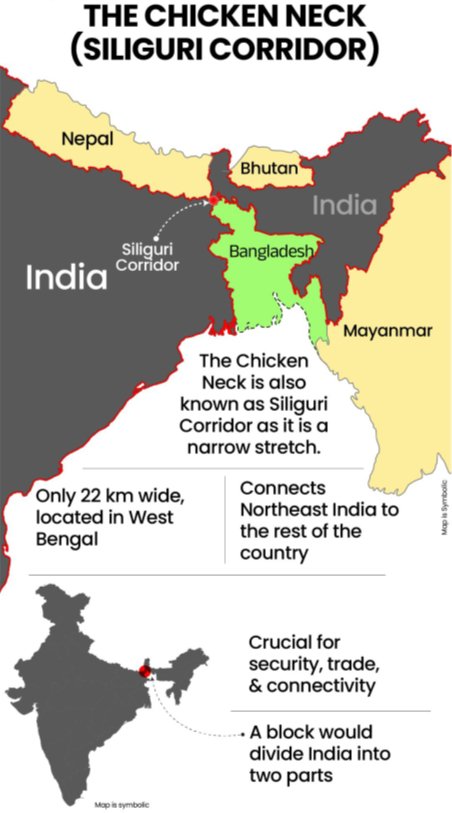
    India has set up three new Army garrisons at Dhubri, Kishanganj, and Chopra to secure the vulnerable eastern frontier and protect the Siliguri Corridor amid instability in Bangladesh and rising Chinese activity.

    Army sets up three new garrisons near the Siliguri Corridor

    About Siliguri Corridor:

    • Overview: A narrow land strip connecting mainland India to the Northeast, popularly called the Chicken Neck due to its thin, vulnerable shape.
    • Dimensions: Roughly 60 km long and 17–22 km wide, making it one of India’s most strategically sensitive corridors.
    • Location: Lies in northern West Bengal, bordered by Nepal (west), Bangladesh (south), Bhutan (north), with China’s Chumbi Valley close to the tri-junction.
    • Link to Northeast: The only land route for supplying all eight northeastern states, carrying road, rail, fuel, food and military logistics (except limited Bangladesh transit routes).
    • Strategic Sensitivity: Its narrowness and proximity to the India–China–Bhutan tri-junction make it a potential chokepoint in conflict scenarios.
    • Military Importance: Acts as the primary logistical artery for moving Indian Army troops and equipment toward Sikkim and Arunachal Pradesh, especially during LAC tensions.
    • Security Challenges: Surrounded by multiple international borders, making it prone to illegal immigration, smuggling, cross-border crime, and potential external military pressure.
    • Economic Significance: Key route for trade with Nepal and Bhutan, and supports tourism to Darjeeling, Sikkim and Bhutan.

    About the New Eastern Garrison Deployments:

    • Purpose: Developed to address rising security risks due to political changes in Bangladesh, demographic pressures along the border, and China’s increasing activity near the tri-junction.
    • Locations:
      1. Lachit Borphukan Military Station, Dhubri (Assam)
      2. Forward base, Kishanganj (Bihar)
      3. Forward base, Chopra (West Bengal)
    • Operational Role: Enables continuous surveillance, rapid troop movement, and strengthens defence preparedness across the India–Bangladesh frontier.
    • Local Support: Assam facilitated quick setup of the Dhubri station, named after Ahom general Lachit Borphukan, symbolising regional identity and military determination.

    Drivers Behind the Reinforcement:

    • Regime Change in Bangladesh: Expected shifts in border behaviour, cross-border movement, and potential security spillovers.
    • Illegal Immigration Concerns: Union Home Ministry has flagged demographic changes in border districts linked to cross-border inflow.
    • China’s Expanding Influence:
      • Accelerated LAC military build-up in Arunachal Pradesh.
      • Growing ties with Pakistan and Bangladesh, including a trilateral meet in Kunming, raising regional security concerns.
    • Regional Military Activity: India has conducted major exercises like Poorvi Prachand Prahar and IAF flying displays in Assam to signal operational readiness.
    • Pakistan–Bangladesh Engagements: Recent visit of a Pakistan Navy ship to Chattogram (first since 1971) has added a fresh strategic dimension to India’s eastern security planning.
  • Innovations in Sciences, IT, Computers, Robotics and Nanotechnology

    Quantum Clocks and the Cost of Timekeeping

    Why in the News?

    A new study in Physical Review Letters finds that in quantum clocks the main cost of timekeeping comes from measurement rather than the clockwork itself, reshaping ideas in quantum metrology.

    What are Quantum Clocks?

    • Concept: Quantum clocks are timekeeping devices based on microscopic quantum systems whose transitions – atomic jumps, tunnelling events, or energy-level shifts – act as clock ticks.
    • Quantum Nature: Unlike classical clocks, their evolution is probabilistic, allowing temporary backward ticks due to quantum fluctuations while still needing a mechanism to mark irreversible flow of time.
    • Irreversibility Requirement: A functional clock must create a permanent record distinguishing past from future, despite underlying reversible quantum dynamics.
    • Role of Measurement: Their precision depends on both internal quantum transitions and the classical measurement system used to read them, since measurement converts quantum events into usable time signals.
    • Double Quantum Dot Model: In setups using double quantum dots (DQDs), a single electron tunnels between two nanoscale sites; each tunnelling event forms a discrete tick.
    • Quantum Dot Basis: Quantum dots – recognised by the 2023 Nobel Prize in Chemistry – can confine single electrons precisely, enabling well-resolved quantum transitions.
    • Entropy and Precision: The clock’s internal entropy rises with precision; at equilibrium (equal forward and backward ticks), entropy is zero and the system loses its ability to mark time.

    Recent Findings and Implications:

    • New Demonstration (2025): A Physical Review Letters study built a working quantum clock using a double quantum dot and separately measured entropy from the clockwork and from the measurement process.
    • Key Result: The entropy generated by measurement (via DC sensing and RF reflectometry) was nine orders of magnitude higher than the entropy needed for the electron-tunnelling clock itself.
    • Zero-Entropy Clockwork Still Works: Even when the quantum system produced no entropy, continuous measurement still created an irreversible classical record, allowing timekeeping.
    • Core Insight: The arrow of time in quantum clocks arises mainly from the classical measurement interface, not from the quantum dynamics.
    • 2023 Theoretical Link: Supports earlier findings that quantum measurement is inherently invasive and energy-costly, and that increasing measurement frequency does not always improve accuracy.

    Implications:

    • Thermodynamic Cost: Extracting information from any quantum system has an energy and entropy cost, affecting quantum sensing, quantum metrology, and clock design.
    • Application Outlook: Ultra-precise atomic clocks may be improved by lower-entropy measurement systems, leading to more efficient next-generation timekeeping.
    • Quantum Technologies: Insights are crucial for scalable quantum computers, where reading qubits must be precise yet thermodynamically minimal.
    • Conceptual Implication: Suggests that the microscopic arrow of time emerges from creating readable, irreversible records, rather than solely from quantum evolution itself.
    [UPSC 2022] Which one of the following is the context in which the term “qubit” is mentioned?

    Options: (a) Cloud Services (b) Quantum Computing* (c) Visible Light Communication Technologies (d) Wireless Communication Technologies


  • Festivals, Dances, Theatre, Literature, Art in News

    Sankaradeva’s Vrindavani Vastra to be displayed in Assam

    Why in the News?

    Assam Chief Minister Himanta Biswa Sarma left for London to initiate the process of bringing back the revered Vrindavani Vastra from the British Museum.

    Sankaradeva’s Vrindavani Vastra to be displayed in Assam

    About Vrindavani Vastra:

    • Origin: 16th-century silk tapestry woven under the guidance of Srimanta Sankaradeva at Taniguchi (Barpeta), Assam.
    • Commission: Requested by Cilarai, brother of Koch king Naranarayana.
    • Weavers: Led by disciple Gopal (Mathuradas Budha Ata).
    • Design & Content:
      • Depicts Krishna’s childhood and Vrindavan leelas – birth, adventures, defeat of Kamsa.
      • Multicoloured silk with loom-embroidered captions for each scene.
    • Current Status:
      • Original piece lost; fragments preserved in British Museum, Victoria & Albert Museum (London), Guimet Museum (Paris).
      • Plans are underway to bring it to Assam temporarily in 2027.

    Who was Srimanta Sankaradeva (1449–1568)?

    • About: Assamese Vaishnavite saint, scholar, cultural reformer, and polymath.
    • Religious Contribution:
      • Founded Ekasarana Dharma: Monotheistic Bhakti movement centred on Lord Krishna.
      • Rejected idol worship, caste divisions, Brahmanical orthodoxy, and sacrifices.
      • Motto: Eka Deva, Eka Seva, Eka Biney Nahi Kewa (One God, One Service, None Else).
      • Influenced Koch and Ahom kingdoms.
    • Cultural Contribution:
      • Borgeet (devotional songs).
      • Ankia Naat & Bhaona (religious theatre).
      • Sattriya dance (recognised as a classical dance of India).
      • Brajavali (literary language).
    • Social Reform:
      • Considered the father of modern Assamese identity.
      • Promoted equality, fraternity, and community cohesion.
      • Ended regressive practices (e.g., human sacrifice).
    • Legacy:
      • Combined art, devotion, and social reform into a unified cultural renaissance.
      • Revered as one of Assam’s greatest spiritual and cultural icons.
    [UPSC 2014] With reference to the famous Sattriya dance, consider the following statements:

    1. Sattriya is a combination of music, dance and drama.

    2. It is a centuries-old living tradition of Vaishnavites of Assam.

    3. It is based on classical Ragas and Talas of devotional songs composed by Tulsidas, Kabir and Mirabai.

    Which of the statements given above is/are correct?

    Options: (a) 1 only (b) 1 and 2 only* (c) 2 and 3 only (d) 1, 2 and 3 only


Join the Community

Join us across Social Media platforms.