💥UPSC 2026, 2027, 2028 UAP Mentorship (March Batch) + Access XFactor Notes & Microthemes PDF

Type: PIB

  • Innovations in Sciences, IT, Computers, Robotics and Nanotechnology

    [pib] Polymer Electrolyte Membrane Fuel Cells (PEMFC)

    Note4Students

    From UPSC perspective, the following things are important:

    Prelims level: Polymer Electrolyte Membrane Fuel Cells (PEMFC)

    Mains level: Read the attached story

    Scientists at International Advanced Research for Powder Metallurgy & New Materials (ARCI), Hyderabad have developed Polymer Electrolyte Membrane fuel cells (PEMFC).

    Polymer Electrolyte Membrane Fuel Cells

    • Proton-exchange membrane fuel cells, also known as polymer electrolyte membrane (PEM) fuel cells (PEMFC) are a type of fuel cell being developed mainly for transport applications, as well as for stationary fuel-cell applications and portable fuel-cell applications.
    • Their distinguishing features include lower temperature/pressure ranges (50 to 100 °C) and a special proton-conducting polymer electrolyte membrane.
    • PEMFCs generate electricity and operate on the opposite principle to PEM electrolysis, which consumes electricity.
    • They are a leading candidate to replace the aging alkaline fuel-cell technology, which was used in the Space Shuttle.

    Working


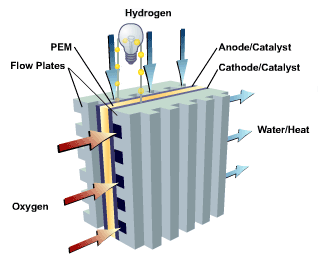
    • The PEMFC uses a water-based, acidic polymer membrane as its electrolyte, with platinum-based electrodes.
    • The protons pass through the membrane to the cathode side of the cell while the electrons travel in an external circuit, generating the electrical output of the cell.

    Applications in disaster management

    • Emergency Operation Centres (EOC) backed with 10 kW systems is being planned as a natural disaster management measure.
    • Tamil Nadu is generally affected by five to six cyclones every year, of which two to three are severe and is followed by frequent power cuts.
    • ARCI is now planning to set up a PEMFC system for Tamil Nadu to operate the systems like early warning systems, VHF set, IP phone, BSNL Ethernet and office equipment like scanner, computers, printers, phone, FAX and normal requirements like lighting and fan.
  • Water Management – Institutional Reforms, Conservation Efforts, etc.

    [pib] Law for Rain Water Harvesting

    Note4Students

    From UPSC perspective, the following things are important:

    Prelims level: Law for Rain Water Harvesting

    Mains level: Rooftop water conservation strategy


    The Ministry of Housing & Urban Affairs has issued the Model Building Bye Laws, 2016 for guidance of the States/UTs and has a chapter on ‘Rainwater Harvesting’.

    Why such move?

    • These laws aim to regulate the over-exploitation and consequent depletion of ground water.
    • It would enable States/UTs to enact suitable ground water legislation for regulation of its development, which includes provision of rain water harvesting.

    About the Bye Laws

    • 33 States/UTs have adopted the rainwater harvesting provisions.
    • The provisions of this chapter are applicable to all the buildings.

    Various provisions

    • As per Model Building Bye Laws- 2016, provision of rainwater harvesting is applicable to all residential plots above 100 sq.m.
    • Water being a State subject, initiatives on water management including conservation and water harvesting in the Country is primarily States’ responsibility.
    • So the implementation of the rainwater harvesting policy comes within the purview of the State Government/Urban Local Body / Urban Development Authority.

    Back2Basics

    Groundwater governance in India

    • Central Ground Water Authority (CGWA) has been constituted under Section 3(3) of the ‘Environment (Protection) Act, 1986’ for the purpose of regulation and control of groundwater development and management in the Country.
    • CGWA is regulating ground water withdrawal by industries/infrastructure/ mining projects in the country for which guidelines/ criteria have been framed which includes rainwater harvesting as one of the provisions while issuing No Objection Certificate.
  • Banking Sector Reforms

    [pib] Mega Consolidation in Public Sector Banks 

    Note4Students

    From UPSC perspective, the following things are important:

    Prelims level: Bank Mergers

    Mains level: Read the attached story

    The Union Cabinet, chaired by the Prime Minister has approved the mega consolidation of ten PSBs into four which include the –

    • Amalgamation of Oriental Bank of Commerce and United Bank of India into Punjab National Bank
    • Amalgamation of Syndicate Bank into Canara Bank
    • Amalgamation of Andhra Bank and Corporation Bank into Union Bank of India
    • Amalgamation of Allahabad Bank into Indian Bank

    About the merger

    • The amalgamation would be effective from 1.4.2020 and would result in creation of seven large PSBs with scale and national reach with each amalgamated entity having a business of over Rupees Eight lakh crore.
    • The Mega consolidation would help create banks with scale comparable to global banks and capable of competing effectively in India and globally.
    • Greater scale and synergy through consolidation would lead to cost benefits which should enable the PSBs enhance their competitiveness and positively impact the Indian banking system.

    Must read

    Bank Mergers

    [Burning Issue] Merger of Public Sector Bank

  • Pharma Sector – Drug Pricing, NPPA, FDC, Generics, etc.

    [pib] Amendment to the Export Policy of APIs and formulations made from these APIs

    Note4Students

    From UPSC perspective, the following things are important:

    Prelims level: Active Pharmaceutical Ingredients

    Mains level: Regulations of API

    The Government has made amendments in the export policy and restricted export of specified APIs (Active Pharmaceutical Ingredients) and formulations made from these APIs.

    Active Pharmaceutical Ingredients (APIs)

    • All drugs are made up of two core components: the API, which is the central ingredient, and the excipients, the substances other than the drug that helps deliver the medication to your system.
    • The API is the part of any drug that produces its effects.
    • Excipients are chemically inactive substances, such as lactose or mineral oil.
    • The quality of APIs has a significant effect on the efficacy and safety of medications.

    The notification covers the following APIs and formulations made from these APIs:

    • Paracetamol
    • Tinidazole
    • Metronidazole
    • Acyclovir
    • Vitamin B1
    • Vitamin B6
    • Vitamin B12
    • Progesterone
    • Chloramphenicol
    • Erythromycin Salts
    • Neomycin
    • Clindamycin Salts
    • Ornidazole
  • Food Safety Standards – FSSAI, food fortification, etc.

    [pib] Regulating Content of Trans-Fat in Oils and Fats

    Note4Students

    From UPSC perspective, the following things are important:

    Prelims level: Trans-Fat

    Mains level: Trans-Fat related health hazards


    The limit of trans-fats to be not more than 5% is prescribed under Food Safety and Standards (Food Products Standards and Food Additives) Regulations, 2011 for vanaspati, bakery shortenings, bakery and industrial margarine and interesterified vegetable fats/oils.

    What are Trans Fats?

    • Artificial Trans fats are created in an industrial process that adds hydrogen to liquid vegetable oils to make them more solid.
    • Since they are easy to use, inexpensive to produce and last a long time, and give foods a desirable taste and texture, they are still widely used despite their harmful effects being well-known.

    Why this move?

    • Studies have recently shown that 60,000 deaths occur every year due to cardiovascular diseases, which in turn are caused due to high consumption of trans fats.
    • Since the impact of trans fats on human health is increasing exponentially, it is very important to create awareness about them.

    Standards for Trans-fats

    • A draft notification to limit trans-fat to be not more than 2% by weight of the total oils/fats present in the processed food products in which edible oils and fats are used as an ingredient on and from 1st January, 2022 was issued on 28.08.2019
    • Standards prescribed under various regulations of FSSAI are enforced to check that they comply with the standards laid down under Food Safety and Standards Act, 2006, and the rules and regulations made thereunder.
    • In cases where the food samples are found to be non-conforming, recourse is taken to penal provisions under Chapter IX of the Food Safety and Standards Act, 2006.
  • Innovations in Biotechnology and Medical Sciences

    [pib] CHITRA Flow Diverter Stents

    Note4Students

    From UPSC perspective, the following things are important:

    Prelims level: CHITRA stents

    Mains level: Affordable medical devices and implants in India

    The Sree Chitra Thirunal Institute of Medical Science and Tech. Thiruvanthapuram an Institute of National Importance under the Department of Science and Technology has developed an innovative intracranial flow diverter stent for the treatment of aneurysms of the blood  vessels of the brain.

    What is Aneurysms?

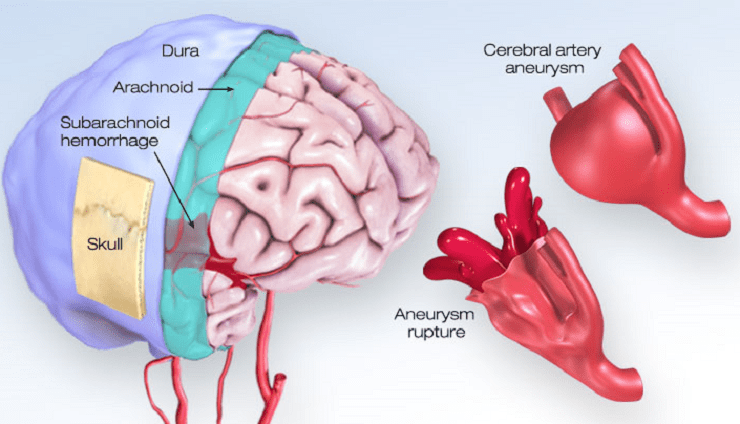
    • Intracranial aneurysm is a localized ballooning, bulging or dilation of arteries in the brain caused by progressive weakening of the inner muscles of the wall of the blood vessels.
    • Spontaneous rupture of the aneurysm can result in bleeding into the space around the brain resulting condition called a subarachnoid hemorrhage (SAH) which can lead to paralysis, coma or death.
    • Most often a ruptured brain aneurysm occurs in the space between the brain and the thin tissues covering the brain.

    How to avert risks of Brain Aneurysms?

    • Flow diverters stents when deployed in the artery in the brain bearing the aneurysms, diverts blood flow away from the aneurysm.
    • This reduces the chances of its rupture from the pressure of blood flow.
    • The Surgical treatment of an aneurysm involves opening the skull and a clip on the neck of aneurysm, so that it is cut off from the path of blood flow.
    • There are three non surgical, minimally invasive endovascular treatments of aneurysms of the brain.
    • In two of these procedures, the aneurismal sacis filled with platinum coils or occluded using high viscosity liquid polymer which solidifies when released into the sac thus sealing the sac.
    • All these techniques have some limitation or the other.

    Why are flow diverter stent preferable?

    • A more attractive third minimally invasive option is deploying a flow diverter stent to bypass the segment of the blood vessel which has the aneurysm.
    • Flow diverters have the advantages of being flexible and adaptable to the shape and course of the vessel.
    • Also flow diverters promote healing of the vessel wall by removing the constant stress of blood flow on it.

    What is CHITRA flow diverter?

    • The Chitra flow diverter is designed to have better grip on the walls of arteries of complex shapes in order to reduce the risk of migration of the device.
    • The unique design is in its weave also makes this stent resistant to kinking or twisting, when it is placed in tortuous arteries and those with complex shapes. Even a 180 degrees bend does not occlude the lumen of the stent.
    • Portion of the wires is made radio opaque for better visibility in X –Rays and fluoroscopy thus aiding accurate delivery of the diverter in the blood vessel.
    • Nitinol, a super elastic alloy with shape memory was acquired from National Aero Space Laboratories, Bengaluru (CSIR-NAL).
    • When the device is deployed at the site, it is released from its crimped locked position and assumes the desired and originally designed shape because of the shape memory property of Nitinol.

    Benefits of CHITRA

    • The imported Flow diverter stents costs Rs 7-8 lakhs and is not manufactured in India.
    • With the availability of the indigenous CHITRA, a well established industry would be able to manufacture and sell at a much lower price.
  • Agmark, Hallmark, ISI, BIS, BEE and Other Ratings

    [pib] Star Labelling Programme

    Note4Students

    From UPSC perspective, the following things are important:

    Prelims level: Voluntary star labelling program, BEE, UDIT


    The Bureau of Energy Efficiency (BEE) has included Deep Freezer and Light Commercial Air Conditioners (LCAC) under its Star Rating Programme on a voluntary basis.

    What is the news?

    • The program will be initially launched in voluntary mode from 2ndMarch, 2020 to 31st December, 2021.
    • Thereafter, it will be made mandatory after reviewing the degree of market transformation in this particular segment of appliances.
    • In order to cover split ACs beyond the scope of existing BEE star labeling program upto a cooling capacity of 18kW, BEE has prepared a star labeling program for split ACs having cooling capacities in excess of 10.5kW and upto 18.0 kW.
    • This category of Air conditioners is termed as LCAC primarily due to their application in commercial air conditioning.
    • Through this initiative, it is expected to save around 2.8 Billion Units by FY2030, which is equivalent to GHG reduction of 2.4-million-ton Carbon Dioxide.

    Why such move?

    • Energy Efficiency has the maximum GHG abatement potential of around 51% followed by renewables (32%), biofuels (1%), nuclear (8%), carbon capture and storage (8%) as per the World Energy Outlook (WEO 2010).
    • India can avoid building 300 GW of new power generation up to 2040 with the implementation of ambitious energy efficiency policies (IEA – India 2020).
    • Successful implementation of Energy Efficiency Measures contributed to electricity savings of 86.60 BUs i.e. 7.14% of total electricity consumption of the country and emission reduction of 108.28 million tonnes of CO2 during 2017-18.

    About Star Labeling Programme

    • The programme has been formulated by Bureau of Energy Efficiency, as part of its mandate, under the Energy Conservation Act, 2001.
    • Under this Programme, BEE has covered 24 appliances till date wherein 10 appliances are under the mandatory regime.
    • The existing BEE star labelling program for Air Conditioners is based on Indian Standard IS 1391 part 1, part 2 and covers AC with cooling capacities up to 10.5kW.

    Other facts: UDIT

    • Urja Dakshata Information Tool (UDIT) (udit.beeindia.gov.in), a first-ever initiative taken by BEE with the World Resources Institute (WRI), to facilitate a database on energy e­fficiency was also launched.
    • UDIT is a user-friendly platform that explains the energy efficiency landscape of India across industry, appliances, building, transport, municipal and agriculture sectors.
    • UDIT will also showcase the capacity building and new initiatives taken up by the Government across the sectors in the increasing energy efficiency domain.
  • [pib] Various schemes implemented by Zonal Cultural Centres (ZCCs)

    Note4Students

    From UPSC perspective, the following things are important:

    Prelims level: Various initiaitives mentioned in the newscard

    Mains level: Schemes for cultural promotion

    The Ministry of Culture and Tourism has informed about its various schemes in the Lok Sabha.

    Zonal Cultural Centres (ZCCs)

    • To preserve & promote various forms of folk art and culture of the tribals throughout the country including West Bengal, the govt. has set up seven Zonal Cultural Centres (ZCCs).
    • These are headquartered at Patiala, Nagpur, Udaipur, Prayagraj, Kolkata, Dimapur and Thanjavur.
    • These ZCCs organize various cultural activities and programmes all over the country on regular basis.

    These ZCCs under Ministry of Culture are also implementing a number of schemes for promoting the folk/tribal art and culture, details of which are as below –

    1) Award to Young Talented Artists:

    • The Scheme “Young Talented Artists” is carried out to encourage and recognize the young talents especially in the field of rare art forms.
    • Talented youngsters of the age group of 18-30 years are selected and given a one-time  cash award of Rs. 10,000/-.

    2) Guru Shishya Parampara:

    • This scheme envisages transmitting our valued traditions to the coming generations. Disciples are trained under veterans in art forms which are rare and vanishing.
    • Rare and vanishing art forms of the region are identified and eminent exponents are selected to carry out the training programmes in ‘Gurukula’ tradition.
    • The monthly remuneration for Guru – Rs. 7,500/-, Accompanist – Rs. 3,750/- and        Pupils – Rs. 1,500/- each for the period of six month to maximum 1 year for one scheme.
    • The names of the Gurus are recommended by the State Cultural Affairs Departments.

    3) National Cultural Exchange Programme (NCEP):

    • It can be termed as the lifeline of the Zonal Cultural Centers. Under this scheme, various festivals of performing arts, exhibitions, yatras etc are organized in member States.
    • Artists from other zones/states are invited to participate in these programmes. Participation of artists from the Zone in festivals held in other parts of the country are also facilitated.
    • Zonal centres also participate in Major festivals happening in member States by arranging performances during these festivals where large number of audience get chance to enjoy and understand art forms of other regions.
    • These festivals provide opportunity to taste and understand various cultures of our country.

    4) Preservation of Languages

    • Sahitya Akademi, an autonomous organization under Ministry of Culture, encourages the preservation and promotion of languages, especially the unrecognized and tribal languages.
    • The Akademi periodically organizes language conventions throughout the country in this regard.

    5) Theatre Rejuvenation:

    • To promote theatre activities including stage shows and Production oriented workshops, etc. Honorarium Up to Rs. 30,000/- per show excluding TA & DA is paid.
    • The groups finalized on the basis their credentials as well as the merit of project submitted by them.

    6) Research & Documentation:

    • To preserve promote and propagate vanishing visual and performing art forms including folk, tribal and classical in the field of music, dance, theatre, literature, fine arts etc. in print/ audio – visual media.
    • The art form is finalized in consultation with state Cultural Department.

    7) Shilpgram:  To promote folk and tribal art and crafts of the zone by organizing seminar, workshops, exhibitions, craft fairs, design development and marketing support to the artisans living in the rural areas.

    8) Octave:  To promote and propagate the rich cultural heritage of North East region comprising of eight States namely Arunachal Pradesh, Assam, Meghalaya, Mizoram, Sikkim, Nagaland, Manipur and Tripura to the rest of India.
  • Modern Indian History-Events and Personalities

    [pib] India’s nominations for 2020 World Heritage List

    Note4Students

    From UPSC perspective, the following things are important:

    Prelims level: World Heritage Sites

    Mains level: Not Much

    Government of India has submitted two nomination dossiers namely ‘Dholavira: A Harappan City’ and ‘Monuments and Forts of Deccan Sultanate’ for inclusion in the World Heritage List for the year 2020.  Govt. of Madhya Pradesh has submitted the proposal of ‘Group of Monuments at Mandu’ in the year 2019.

    What are World Heritage Sites?

    • A World Heritage Site is a landmark or area, selected by the United Nations Educational, Scientific and Cultural Organization (UNESCO) for having cultural, historical, scientific or other forms of significance, which is legally protected by international treaties.
    • The sites are judged to be important for the collective and preservative interests of humanity.
    • To be selected, a WHS must be an already-classified landmark, unique in some respect as a geographically and historically identifiable place having special cultural or physical significance (such as an ancient ruin or historical structure, building, city, complex, desert, forest, island, lake, monument, mountain, or wilderness area).
    • It may signify a remarkable accomplishment of humanity, and serve as evidence of our intellectual history on the planet.
    • The sites are intended for practical conservation for posterity, which otherwise would be subject to risk from human or animal trespassing, unmonitored/uncontrolled/unrestricted access, or threat from local administrative negligence.
    • The list is maintained by the international World Heritage Program administered by the UNESCO World Heritage Committee, composed of 21 “states parties” that are elected by their General Assembly.

    UNESCO World Heritage Committee

    • The World Heritage Committee selects the sites to be listed as UNESCO World Heritage Sites, including the World Heritage List and the List of World Heritage in Danger.
    • It monitors the state of conservation of the World Heritage properties, defines the use of the World Heritage Fund and allocates financial assistance upon requests from States Parties.
    • It is composed of 21 states parties that are elected by the General Assembly of States Parties for a four-year term.
    • India is NOT a member of this Committee.
    • Recently, its 42nd meeting in 2018 was held in Manama Bahrain.

    Also read:

    https://www.civilsdaily.com/news/pib-india-gets-its-37th-unesco-world-heritage-site/

    https://www.civilsdaily.com/news/jaipur-gets-unesco-world-heritage-tag/

    https://www.civilsdaily.com/news/orchha-on-unesco-world-heritage-sites-tentative-list/


    Read more about the Tentative lists from India at:

    http://whc.unesco.org/en/statesparties/IN

  • Climate Change Impact on India and World – International Reports, Key Observations, etc.

    [pib] Indian National Centre for Ocean Information Services (INCOIS)

    Note4Students

    From UPSC perspective, the following things are important:

    Prelims level: Various initiaitives mentioned in the newscard

    Mains level: Not Much


    The INCOIS Hyderabad has launched a trio of products for users in the marine realm.

    About INCOIS

    • The institute is an autonomous organisation under the Ministry of Earth Sciences.
    • INCOIS prioritises requests for specific services from its diverse user community that ranges right from fishermen to offshore oil exploration industries.

    Products launched:

    Small Vessel Advisory and Forecast Services System (SVAS)  

    The SVAS is an innovative impact-based advisory and forecast service system for small vessels operating in Indian coastal waters.

    • The SVA system warns users about potential zones where vessel overturning can take place, ten days in advance.
    • The advisories are valid for small vessels of beam width up to 7 m.
    • This limit covers the entire range of beam widths of the fishing vessels used in all the 9 coastal states and union territories of India.
    • The warning system is based on the  ‘Boat Safety Index’ (BSI) derived from wave model forecast outputs such as significant wave height, wave steepness, directional spread and the rapid development of wind at sea which is boat-specific.

    Swell Surge Forecast System (SSFS)

    SSFS is an innovative system designed for the prediction of Kallakkadal/Swell Surge that occurs along the Indian coast, particularly the west coast.

    • Kallakadal/Swell surge are flash-flood events that take place without any noticeable advance change in local winds or any other apparent signature in the coastal environment.
    • Hence the local population remains totally unaware of these flooding events until they actually occur. Such events are intermittent throughout the year.
    • Kallakkadal is a colloquial term used by Kerala fishermen to refer to the freaky flooding episodes and in 2012 UNESCO formally accepted this term for scientific use.
    • Kallakkadal are caused by meteorological conditions in the Southern Ocean, south of 30°S.
    • These swells once generated, travel northward and reach the Indian coasts in 3-5 days time, creating havoc in the coastal areas.
    • The system will now predict Kallakkadal and warnings will be given to concerned authorities at least 2-3 days in advance, which will help the local authorities for contingency plans and to reduce damage.

    Algal Bloom Information Service (ABIS)

    • The increasing frequency of algal blooms is a major concern due to its ill effects on the fishery, marine life and water quality.
    • INCOIS has developed a service for “Detection and Monitoring of Bloom in the Indian Seas”.
    • The target users are fishermen, marine fishery resource managers, researchers, ecologists and environmentalists.
    • The service also complements INCOIS’ marine fishing advisories i.e. Potential Fishing Zone advisories.
    • INCOIS-ABIS will provide near-real-time information on spatio-temporal occurrence and spread of phytoplankton blooms over the North Indian Ocean.
    • In addition, four regions have been identified as bloom hotspots viz.

    a) North Eastern Arabian Sea

    b) coastal waters off Kerala

    c) Gulf of Mannar and

    d) coastal waters of Gopalpur