💥UPSC 2027,2028 Mentorship (April Batch) + Access XFactor Notes & Microthemes PDF

Archives: News

  • Indian Navy Updates

    [pib] Indian Navy commissions INS Ikshak

    Why in the News?

    The Indian Navy has commissioned INS Ikshak, the third Survey Vessel (Large) (SVL) and the first to be based at the Southern Naval Command, at Naval Base Kochi.

    About INS Ikshak:

    • Overview: It is the third vessel of the Survey Vessel (Large) [SVL] class and the first to be based at the Southern Naval Command.
    • Series Lineage: Third ship in the SVL series, following INS Sandhayak and INS Nirdeshak, replacing older Sandhayak-class vessels.
    • Builder & Origin: Constructed by Garden Reach Shipbuilders & Engineers (GRSE) Ltd., Kolkata, under Aatmanirbhar Bharat, with over 80% indigenous content sourced from Indian MSMEs.
    • Name Meaning: Means ‘Guide’ in Sanskrit – symbolising its role in charting unexplored waters and strengthening maritime safety in the Indian Ocean Region (IOR).
    • Mission Role: Designed primarily for hydrographic surveys but also configured for Humanitarian Assistance and Disaster Relief (HADR) operations and can serve as a hospital ship during crises.

    Key Features:

    • Dimensions & Displacement: 110 m long, 16 m wide, 3,400-ton displacement, with crew capacity of ~231 personnel.
    • Propulsion & Speed: Powered by twin main engines and twin-shaft configuration; achieves 14 knots cruising speed, 18 knots maximum.
    • Survey Systems: Equipped with multi-beam echo sounder, Autonomous Underwater Vehicle (AUV), Remotely Operated Vehicle (ROV), four Survey Motor Boats (SMBs), and advanced oceanographic sensors for coastal and deep-water mapping.
    • Aviation Facility: Features a helicopter deck, extending its range, reconnaissance, and operational versatility.
    • Dual Role Capability: Convertible for HADR and medical missions, enhancing naval disaster-response capability.
    • Gender-Inclusive Design: India’s first survey vessel with dedicated accommodation for women officers and sailors.
    [UPSC 2016] Which one of the following is the best description of ‘INS Astradharini’, that was in the news recently?
    Options: (a) Amphibious warfare ship
    (b) Nuclear-powered submarine
    (c) Torpedo launch and recovery vessel *
    (d) Nuclear-powered aircraft carrier


  • Gravitational Wave Observations

    Clearest Black Hole Merger signal allows probe of Hawking’s Law

    Why in the News?

    Researchers have detected the clearest gravitational wave signal, GW250114, from merging black holes, confirming Stephen Hawking’s 1971 Black Hole Area Theorem.

    Clearest Black Hole Merger signal allows probe of Hawking’s Law

    About GW250114:

    • Overview: GW250114 is the clearest gravitational wave signal ever detected, observed on January 14, 2025, by LIGO (US), Virgo (Italy), and KAGRA (Japan).
    • What Happened: It came from the collision of two black holes, each about 30 times the Sun’s mass, located 1.3 billion light-years away.
    • Importance: Published in Physical Review Letters (Sept 2025), it gave the strongest proof of Stephen Hawking’s Black Hole Area Theorem (1971) and confirmed Einstein’s General Theory of Relativity.

    Back2Bascis: Black Holes

    • Overview: A black hole is a region in space where gravity is so strong that even light cannot escape.
    • Formation: Created when a massive star collapses after using up its fuel.
    • Types:
    1. Stellar Black Holes – formed from dead stars.
    2. Supermassive Black Holes – at the centre of galaxies.
    3. Intermediate or Primordial – smaller or early-universe types.
    • Properties: Defined by mass, spin, and charge; grow by absorbing matter or merging with other black holes.

    What is a Black Hole Merger?

    • Process: Two black holes orbit each other, come closer, and finally collide to form a bigger black hole.
    • Phases:
    1. Inspiral – they lose energy and move inward.
    2. Merger – they collide, sending out gravitational waves.
    3. Ringdown – the new black hole settles down.
    • Observation: These mergers create powerful ripples in spacetime called gravitational waves, first detected by LIGO in 2015.

    What is the Hawking’s Black Hole Area Theorem (1971)?

    • Idea: The total surface area of black holes never decreases — it can only stay the same or increase.
    • Analogy: Similar to the Second Law of Thermodynamics, where disorder (entropy) always increases.
    • Meaning: When two black holes merge, the new black hole’s surface area is greater than or equal to the combined areas of the originals.
    • Proof: The GW250114 event (2025) confirmed this by showing that the total area increased, just as Hawking predicted.
    [UPSC 2019] Recently, scientists observed the merger of giant ‘blackholes’ billions of light-years away from the Earth. What is the significance of this observation?

    Options: (a) Higgs boson particles’ were detected.

    (b) Gravitational waves’ were detected. *

    (c) Possibility of inter-galactic space travel through ‘wormhole’ was confirmed.

    (d) It enabled the scientists to understand ‘singularity’.


  • Industrial Sector Updates – Industrial Policy, Ease of Doing Business, etc.

    Govt panel working on New SEZ Norms for Exporters to Access Domestic Market

    Why in the News?

    A government panel comprising officials from the Commerce and Industry Ministry, NITI Aayog, and exporters is drafting new Special Economic Zone (SEZ) norms to revive manufacturing and support exporters hit by steep U.S. tariffs in 2025.

    Back2Basics: Special Economic Zones (SEZs) in India

    • Overview: Duty-free enclaves treated as foreign territory for trade, designed to boost exports, investment, and employment.
    • Legal Framework: Governed by the SEZ Act, 2005 and SEZ Rules, 2006 with single-window clearances and liberal FDI norms.
    • Policy Evolution: Introduced in 2000, replacing Export Processing Zones (EPZs) to strengthen export-led industrialization.
    • Objectives: Promote export growth, foreign and domestic investment, and infrastructure creation.
    • Incentives: Include duty-free imports, tax holidays, zero-rated GST, and ECB up to $500 million annually.
    • Scale: As of 2025, India has 276 operational SEZs– notably GIFT City (Gujarat), SEEPZ (Mumbai), and Noida SEZ.
    • Reform Outlook: The Development of Enterprise and Service Hubs (DESH) Bill 2022 aims to evolve SEZs into flexible, multi-use economic hubs linking domestic and global value chains.

    Need for SEZ Norms Revision:

    • U.S. Tariff Impact: Recent U.S. tariff hikes on gems, jewellery, and textiles have reduced price competitiveness of India’s SEZ-based exporters, leading to production losses.
    • Export Decline: SEZ exports dropped to $172 billion (FY25), with domestic sales stagnating at 2%, exposing overdependence on foreign markets.
    • Idle Capacity & Job Losses: Fluctuating export demand left labour and machinery underutilised; reforms aim to let SEZs meet domestic orders during downturns.
    • Global Benchmarking: Indian SEZs lag China and Vietnam in scale, policy stability, and productivity, prompting structural reform for competitiveness.
    • Revenue Balance: The government seeks industry relief while safeguarding tax revenues, given SEZs’ extensive tax exemptions.

    Proposed SEZ Reforms under Review:

    • Reverse Job Work Permission: SEZs may be allowed to accept domestic processing contracts to use idle capacity during off-peak seasons.
    • DTA Sales Flexibility: Partial permission for direct domestic sales, with duty adjustments to protect local manufacturers.
    • Simplified De-notification Rules: Faster conversion of non-performing SEZs into industrial parks or enterprise hubs.
    • Sectoral Support: Gems and jewellery exporters seek moratoriums, longer export obligations, and interest relief.
    • Integration with DESH Bill (2022): Adoption of hybrid zone model for both exports and domestic production under the Development of Enterprise and Service Hubs framework.
    [UPSC 2010] The SEZ Act, 2005 which came into effect in February 2006 has certain objectives. In this context, consider the following:
    1. Development of infrastructure facilities. 2. Promotion of investment from foreign sources. 3. Promotion of exports of services only.
    Which of the above are the objectives of this Act?
    Options: (a) 1 and 2 only* (b) 3 only (c) 2 and 3 only (d) 1,2 and 3

    [UPSC 2016] Recently, India’s first ‘National Investment and Manufacturing Zone’ was proposed to be set up in-
    Options: (a) Andhra Pradesh* (b) Gujarat (c) Maharashtra (d) Uttar Pradesh


  • Wetland Conservation

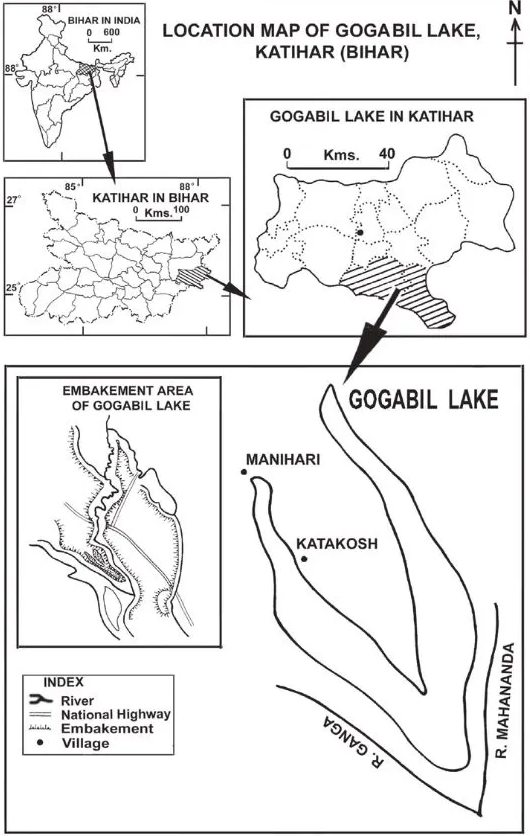
    Bihar’s Gogabeel Lake declared India’s 94th Ramsar Site

    Why in the News?

    Gogabeel Lake, located in Katihar district, Bihar, has been officially designated as India’s 94th Ramsar Site and sixth from Bihar.

    Bihar's Gogabeel Lake declared India's 94th Ramsar Site

    About Gogabeel Lake:

    • Overview: An oxbow lake situated in Katihar district, Bihar, within the Trans-Gangetic Plains, formed between the Ganga and Mahananda rivers.
    • Hydrological Nature: Connects to both rivers during monsoon floods, functioning as a dynamic floodplain wetland.
    • Legal Status: Declared Bihar’s first community reserve, co-managed by local communities and forest authorities.
    • Ecological Significance: Serves as a key habitat for migratory birds and a breeding site for vulnerable species such as the Lesser Adjutant Stork, Black-necked Stork, and Smooth-coated Otter.
    • Biodiversity: Hosts 90+ bird species (including 30 migratory), wetland flora, and fish species like Helicopter Catfish (Wallago attu).
    • Ecosystem Services: Provides flood mitigation, groundwater recharge, carbon storage, and climate regulation, contributing to the Gangetic ecosystem’s stability.
    • Cultural Linkages: Integral to local festivals like Sirva, Adra, and Chhath, symbolising people–nature harmony in rural Bihar.
  • Forest Conservation Efforts – NFP, Western Ghats, etc.

    [5th November 2025] The Hindu Op-ed: India’s forests hold the future

    PYQ Relevance

    [UPSC 2024] Environmental pollution is a major environmental issue in India. Discuss the various mitigation measures to deal with this problem and also the government’s initiatives in this regard.

    Linkage: Even though no direct linking PYQ is found. But here forest restoration and carbon sink creation are key mitigation measures in controlling pollution and ensuring ecosystem resilience.

    Mentor’s Comment

    India’s revised Green India Mission (GIM) signals a decisive shift in the nation’s ecological vision from expanding forest area to restoring ecosystem resilience. The article examines the ambitious plan to restore 25 million hectares by 2030, challenges in afforestation design, and how India can convert green cover into genuine carbon and community assets.

    Introduction

    India stands at the crossroads of economic growth and ecological sustainability. The recent revision of the Green India Mission (GIM) underscores the goal of restoring 25 million hectares of degraded forest and non-forest land by 2030, directly linked to India’s climate pledge of creating a carbon sink of 3.39 billion tonnes of CO₂ equivalent. The central question now is not just how much land India restores, but how well it does so.

    Why in the News

    The release of the revised Green India Mission blueprint (2025) marks a crucial development in India’s environmental policy. For the first time, the emphasis shifts from mere tree planting to ecological restoration and community participation. With India’s forests showing a 12% decline in photosynthetic efficiency (IIT Kharagpur-BITS Pilani, 2025), the focus on quality over quantity becomes imperative. The GIM’s success or failure will significantly impact India’s climate commitments and rural livelihoods dependent on forests.

    Afforestation in India: From Quantity to Quality

    1. New Scientific Evidence: A 2025 IIT Kharagpur study found a 12% decline in photosynthetic efficiency of dense forests due to rising temperatures and soil drying.
    2. Beyond Canopy Cover: The discovery challenges the old assumption that “more trees mean more carbon sinks” and instead emphasizes ecological resilience.
    3. Shift in Mission Focus: Between 2015-2021, ₹575 crore was disbursed for afforestation; forest and tree cover rose from 21.16% to 25.17% by 2023 yet qualitative degradation persists.

    What Are the Core Gaps in India’s Afforestation Strategy?

    1. Community Participation: Despite the Forest Rights Act (2006) empowering local communities, many plantation drives bypass their consent, eroding trust and legitimacy.
    2. Ecological Design: Monoculture plantations of eucalyptus and acacia reduce biodiversity, leaving forests vulnerable to drought and pests.
    3. Financing and Implementation: The Compensatory Afforestation Fund Management and Planning Authority (CAMPA) holds ₹95,000 crore, but fund utilization remains inconsistent. Delhi, for instance, used only 23% of funds between 2019-2024.

    What Are the Emerging Success Stories?

    1. Odisha: Joint Forest Management Committees are now part of revenue-sharing and planning processes.
    2. Chhattisgarh: Forest departments are experimenting with biodiversity-sensitive plantations and promoting village carbon markets.
    3. Himachal Pradesh: Launched biochar programmes to reduce fire risk and generate carbon credits.
    4. Tamil Nadu: Nearly doubled mangrove cover in three years, advancing coastal carbon storage.

    How Can India Finance and Implement Effective Restoration?

    1. Utilizing CAMPA Funds: Efficient allocation and transparent dashboards can ensure accountability.
    2. Innovative Tools: Integration of carbon markets, adaptive management, and public dashboards can align national and state-level efforts.
    3. Technical Training: Expanding institutes like IIFM Bhopal or the upcoming Byrnihat Ecological Institute to train field staff in ecological design.
    4. Public-Community Collaboration: Linking local monitoring with national reporting systems will enhance ground-level legitimacy and data reliability.

    What Lies Ahead for India’s Forest Future?

    1. Smarter Restoration: Focus must shift from planting to ecological engineering using native species and local hydrology.
    2. Inclusive Climate Action: Empowering communities ensures climate justice and sustainable forest governance.
    3. National Movement Approach: Collaboration between civil society, research institutions, and local communities can transform GIM from a government scheme to a people’s mission.

    Conclusion

    India’s forests are more than carbon sinks, they are the nation’s ecological infrastructure. The revised Green India Mission represents a shift from greenwashing metrics to resilient ecosystems. With rigorous monitoring, community inclusion, and scientific restoration, India can make its forests not only a tool for carbon sequestration but a foundation for climate-resilient growth.

  • Electoral Reforms In India

    A nationwide SIR

    Introduction

    India’s Election Commission (ECI) has launched the Special Intensive Revision (SIR 2.0) of electoral rolls to address a persistent issue, duplicate and multiple voter entries across constituencies and states. As the electoral roll forms the foundation of Indian democracy, its accuracy directly determines the legitimacy of elections. The initiative represents a nationwide, paperless, tech-driven approach that seeks to align the voter database with digital verification systems, ensuring that every vote counts once and only once.

    Understanding the SIR and its Objective

    1. Definition: The Special Intensive Revision (SIR), under the Representation of the People (RPA) Act, 1950, aims to ensure the integrity of electoral rolls and prevent duplication and impersonation.
    2. Objective: To update, verify, and purify the voter database by leveraging technology, interlinked databases, and field-level verification.
    3. Legal Basis: Under Section 22 and 23 of the RPA, 1950, corrections, deletions, and transfers of voter entries are authorized to maintain roll accuracy.
    4. Context: This follows recent legal scrutiny and concerns raised after instances of double voting and duplicate EPIC numbers across states.

    Why Duplicate Entries Are a Major Concern

    1. Erosion of Electoral Integrity: Duplicate or multiple entries lead to bogus voting, undermining free and fair elections.
    2. Systemic Weakness: Failures in linking EPIC (Elector Photo Identity Card) data and inter-state coordination have enabled repeated entries.
    3. Case Example: In Prashant Kishor’s case, the same EPIC number was found in two constituencies, revealing system-level flaws.
    4. Administrative Burden: Duplicate entries strain the ECI’s verification apparatus, consuming time, manpower, and digital resources.
    5. Loss of Public Confidence: Recurring discrepancies in electoral lists weaken voter faith in institutional fairness and neutrality.

    How the Electoral Roll is Being Purified

    1. Tech Integration: The Electoral Registration Officers (EROs) use National Voters’ Service Portal (NVSP), AI-driven duplicate detection, and data cross-verification through NIC and CDAC systems.
    2. Field-Level Verification: Enumerators conduct doorstep distribution and validation of forms to identify discrepancies.
    3. Automated Detection: Use of Common Photo Identity Card (EPIC) data and facial/ID match algorithms ensures high accuracy in identifying duplication.
    4. Legal Safeguards: Voters are given an opportunity to rectify records within six months under the law before deletion.
    5. Accountability Mechanism: EROs are held responsible for false deletion or oversight in duplication verification.

    How Technology is Transforming Voter Verification

    1. Digital Synchronization: SIR 2.0 uses centralized databases for unified record-keeping across states.
    2. EPIC-Database Linkage: Integration with Aadhaar and other ID repositories facilitates cross-verification while preventing fraudulent entries.
    3. Machine Learning Models: These identify patterns of duplication and commonalities across datasets.
    4. Paperless Process: Transition from manual to cloud-based verification reduces procedural errors.
    5. Accountability Enhancement: Real-time dashboards enable monitoring of deletions, corrections, and transfers.

    Challenges and Procedural Gaps

    1. Administrative Lapse: Failures stem not from technology but from poor implementation and follow-up by EROs.
    2. Inconsistent Updates: Delay in updating inter-constituency migration data leads to overlapping entries.
    3. Procedural Redundancy: Revisions often become ritualistic exercises without systemic correction mechanisms.
    4. Accountability Deficit: Lack of penal action against negligent officials reduces deterrence.
    5. Digital Divide: Areas with limited connectivity face challenges in real-time digital verification.

    Way Forward

    1. Institutional Accountability: Make EROs answerable for errors through performance audits.
    2. Continuous Roll Updating: Transition from annual revision to dynamic roll management.
    3. Citizen Participation: Introduce crowdsourced error reporting through verified portals.
    4. Data Integration: Extend linkage with Aadhaar, PAN, and DigiLocker for authentication.
    5. Transparency Mechanism: Establish public dashboards for tracking deletion and addition records.
    6. Legal Framework: Consider amending the RPA to provide statutory backing for digital roll management.

    Conclusion

    The Special Intensive Revision (SIR 2.0) symbolizes India’s move towards a digitally verifiable democracy, but its success depends on administrative accountability as much as on technology. Ensuring a clean, accurate, and dynamic electoral roll is not a technical formality, it is a democratic imperative. Only a transparent, error-free voter database can sustain public faith in India’s electoral integrity.

    PYQ Relevance

    [UPSC 2024] Examine the need for electoral reforms as suggested by various committees with particular reference to the “one nation-one election” principle.

    Linkage: It addresses electoral reform as a structural and procedural issue under the Representation of the People Act (RPA, 1950), the same law governing the SIR initiative. It connects with the broader reform drive for efficient, error-free elections.

  • Cyber Security – CERTs, Policy, etc

    Compound effect: On digital arrest scams

    Introduction

    The Supreme Court of India’s recent directive for a comprehensive probe into proliferating digital scams underscores the scale and sophistication of cyber fraud plaguing Indian citizens. The Court’s focus on “digital arrest” scams, where criminals impersonate law enforcement officials to extort money highlights a disturbing transformation in global cybercrime: industrial-scale scam operations embedded in Southeast Asian conflict zones.

    Why in the News

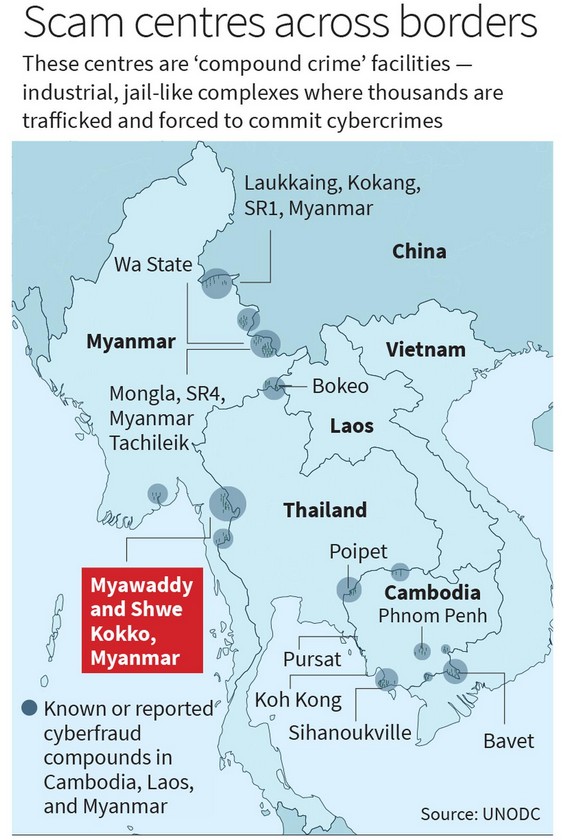
    For the first time, the Supreme Court has intervened directly to address the globalised architecture of digital scams targeting Indian citizens. These scams run from “scam compounds” in Myanmar, Cambodia, and other parts of Southeast Asia combine human trafficking, digital slavery, and organised crime. Thousands of Indians have fallen victim, some trafficked to operate scams, others defrauded online. The situation represents both a national security concern and a humanitarian crisis, demanding urgent multilateral action.

    Understanding the ‘Scam Compound’ Phenomenon

    1. Industrial-scale operations: Scam compounds operate from conflict-ridden or special economic zones in Myanmar, Cambodia, and Laos, exploiting weak governance.
    2. Cross-border architecture: These are not isolated crimes but coordinated, transnational enterprises involving militias, private entities, and local regimes.
    3. Digital slavery model: Trafficked individuals are forced, under threat and torture, to perpetrate scams such as “digital arrest,” “pig butchering,” and crypto investment frauds.
    4. State complicity: In Myanmar, regime-backed Border Guard Forces allegedly facilitate these compounds, converting scams into revenue streams for military operations.
    KK Park Cyber Scam Hub in Myanmar

    How the Digital Scam Network Operates

    1. Recruitment through deception: Victims are lured by fake job ads in cities like Bangkok, offering attractive salaries under visa-free entry regimes.
    2. Trafficking & confinement: Once recruited, they are trafficked into border regions controlled by ethnic militias in Myanmar and held captive in “digital sweatshops.”
    3. Coercive work environment: Workers face violence, sexual harassment, and torture if they fail to meet scam targets.
    4. Key scam types:
      1. “Digital arrest scams” impersonation of law enforcement to extort money.
      2. “Pig butchering scams” combining online romance and crypto fraud.
    5. Crypto laundering networks: Proceeds are funneled via money mules and institutions like Cambodia’s Huione Pay, then converted into cryptocurrency to evade tracing.

    Why Southeast Asia Became the Epicentre

    1. Conflict & weak governance: Myanmar’s post-2021 coup turmoil has enabled militia-run economies.
    2. Borderland lawlessness: Regions under Border Guard Forces function beyond formal state oversight.
    3. Economic desperation: Regional instability and poverty create fertile recruitment grounds.
    4. Regime complicity: Militias tax scam centres to fund armed operations, sustaining a vicious cycle of profit and repression.

    India’s Dual Crisis

    1. Forced scam labour: Thousands of Indian citizens trafficked and enslaved in these compounds.
    2. Domestic victimisation: Thousands more in India fall prey to online frauds orchestrated by these same captives.
    3. Diplomatic and enforcement challenge: Tackling both victim rescue abroad and fraud prevention at home requires synchronised national and international coordination.

    Policy Imperatives and India’s Way Forward

    1. Public awareness campaigns: The Reserve Bank of India and Union Ministries must amplify citizen education about emerging digital fraud patterns.
    2. Cybercrime infrastructure: Strengthening cyber policing, digital forensics, and cross-border data sharing frameworks.
    3. Regional cooperation: Collaborate with China, Thailand, Vietnam, and affected ASEAN nations to forge joint task forces.
    4. Diplomatic pressure: Use bilateral and multilateral diplomacy to pressurise Myanmar’s junta and Cambodia’s regime to dismantle scam hubs.
    5. Global recognition: Mobilise the United Nations to classify this crisis as a modern manifestation of slavery needing urgent international intervention.

    Conclusion

    The proliferation of scam compounds across Southeast Asia exposes the dark underbelly of the global digital economy where technology meets trafficking. For India, the challenge is dual: protect citizens from victimisation and rescue those coerced into perpetration. This crisis demands that India integrate cyber security, diplomacy, and human rights enforcement under one coordinated regional framework.

    PYQ Relevance

    [UPSC 2021] Keeping in view India’s internal security, analyse the impact of cross-border cyber attacks. Also, discuss defensive measures against these sophisticated attacks.

    Linkage: This question directly relates to the rise of transnational scam compounds in Southeast Asia that exploit digital networks to target Indian citizens. It underscores the urgent need for coordinated international and domestic cyber defense frameworks.


  • Women empowerment issues – Jobs,Reservation and education

    Recalling the landmark Shah Bano Case

    Why in the News?

    The upcoming Bollywood film revisits the historic Shah Bano case (1985), one of India’s most politically charged legal battles.

    Recalling the landmark Shah Bano Case

    Background of the Case:

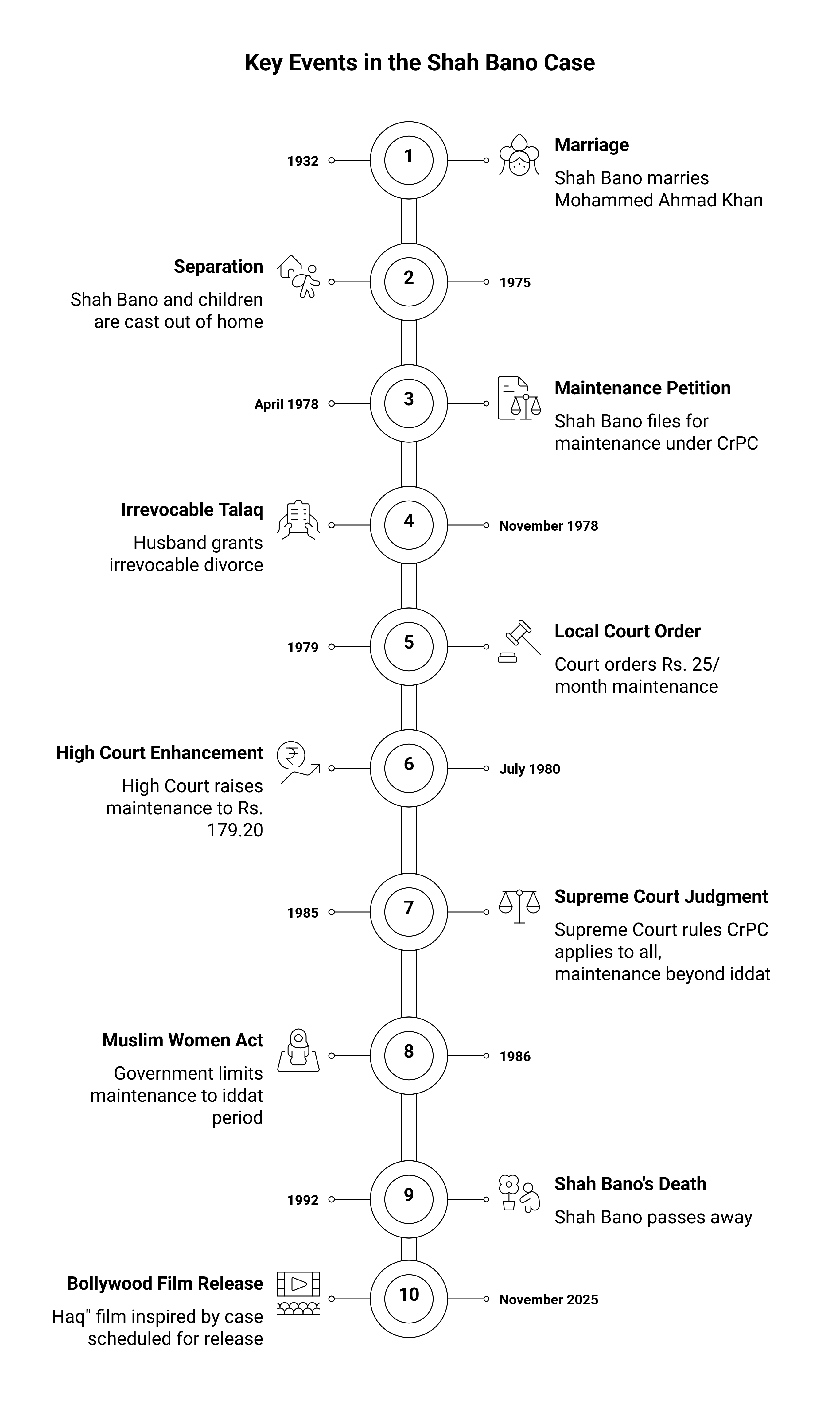
    • Origin: In 1978, Shah Bano Begum, a 62-year-old Muslim woman from Indore, was divorced by her husband, Mohammad Ahmad Khan, a lawyer, via triple talaq after 43 years of marriage.
    • Legal Action: She filed for maintenance under Section 125 of the CrPC (1973), a secular law ensuring financial support for dependents unable to maintain themselves.
    • Husband’s Argument: Claimed that under Muslim personal law, his obligation ended after the iddat period (~3 months) and that payment of mahr (dower) fulfilled his duty.
    • Lower Court Ruling: Ordered payment of ₹25/month; the Madhya Pradesh High Court raised it to ₹179.20. Khan appealed to the Supreme Court, triggering the landmark 1985 judgment.

    Supreme Court Verdict of April 23, 1985:

    • Bench & Ruling: A five-judge Constitution Bench led by CJI Y.V. Chandrachud dismissed the appeal, upholding the High Court’s decision.
    • Secular Applicability: Held that Section 125 CrPC applies to all religions, as its purpose is to prevent destitution, not to regulate personal law.
    • Maintenance Beyond Iddat: Affirmed that a divorced Muslim woman is entitled to maintenance beyond the iddat period if she cannot sustain herself.
    • Religious Harmony: Cited Quranic verses to show consistency between Islamic principles and maintenance under secular law.
    • Uniform Civil Code (UCC): Expressed concern that Article 44 remained a “dead letter,” urging steps toward a common civil code.

    Muslim Women (Protection of Rights on Divorce) Act, 1986:

    • Enactment: Passed after protests from Muslim organisations and AIMPLB, reversing the Shah Bano ruling.
    • Key Provision: Limited husband’s liability to maintenance during iddat, shifting later responsibility to relatives or Waqf Boards.
    • Judicial Interpretation:
      • Danial Latifi v. Union of India (2001) – Upheld the Act but read it progressively, requiring lump-sum payment within iddat for lifetime support.
      • Mohd. Abdul Samad v. State of Telangana (2024) – Reaffirmed that Muslim women may still claim relief under Section 125 CrPC, preserving the choice of remedy.

    Legacy and Significance:

    • Landmark Impact: Became a watershed case in India’s struggle between gender justice and religious identity.
    • Political Consequence: The 1986 Act was seen as appeasement politics, deepening the secularism debates.
    • Reform Catalyst: Revived the UCC discourse, influenced feminist legal reform, and reinforced constitutional morality.
    • Enduring Symbol: Continues to shape discussions on minority rights, women’s empowerment, and judicial activism in India’s plural legal framework.
    [UPSC 2020] Customs and traditions suppress reason, leading to obscurantism. Do you agree?


  • BRICS Summits

    BRICS Pay and the Push to De-dollarize Global Finance

    Why in the News?

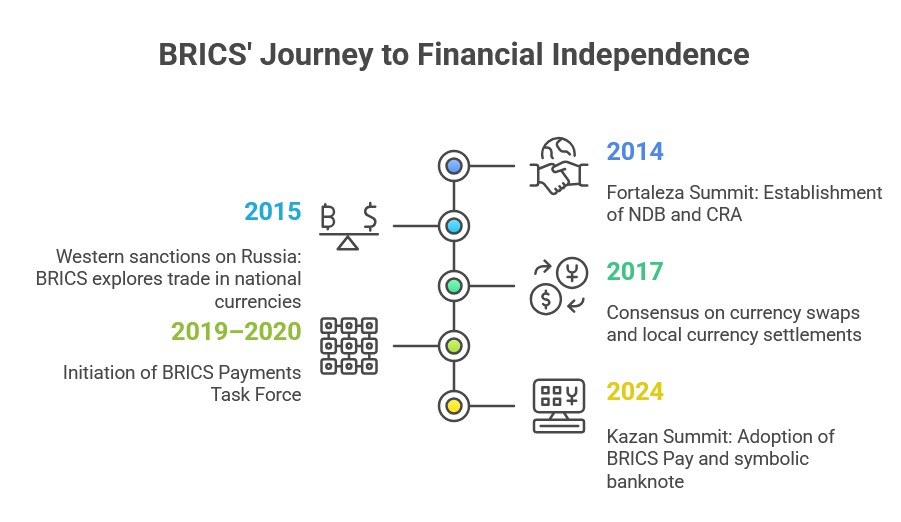
    Since 2014, BRICS nations have worked to cut dependence on the U.S. dollar, launching the New Development Bank (NDB), Contingent Reserve Arrangement (CRA), and now BRICS Pay to promote local currency trade and rival the SWIFT system.

    BRICS Pay and the Push to De-dollarize Global Finance

    About BRICS Pay Initiative:

    • Overview: BRICS Pay is a proposed cross-border digital payment and settlement platform developed by the BRICS nations (Brazil, Russia, India, China, South Africa) to facilitate trade in local currencies and reduce reliance on the U.S. dollar and the SWIFT network.
    • Origins: The idea emerged after the 2014 Fortaleza Summit, where BRICS established its own financial architecture, the New Development Bank (NDB) and the Contingent Reserve Arrangement (CRA).
    • Purpose: To enable direct financial transactions among member nations using local currencies, minimizing the role of Western-controlled financial systems and avoiding U.S.-led sanctions.
    • Development Path:
      • 2017: BRICS agreed to enhance currency cooperation via swaps, local currency settlements, and direct investments.
      • Early 2020s: The BRICS Payments Task Force (BPTF) was created to design interoperable systems.
      • 2024 Kazan Summit: Leaders highlighted strengthening of correspondent banking networks and settlements in local currencies under the BRICS Cross-Border Payments Initiative.
    • Prototype: A demo of BRICS Pay was unveiled in Moscow (October 2024), marking a concrete step toward implementation.
    • Supporting National Systems:
      • India: Unified Payments Interface (UPI)
      • China: Cross-Border Interbank Payment System (CIPS)
      • Russia: System for Transfer of Financial Messages (SPFS)
      • Brazil: Pix instant payment system
    • Strategic Importance: The initiative seeks to establish a self-reliant financial network, bypass SWIFT, and enhance monetary sovereignty among emerging economies.

    Back2Basics: Society for Worldwide Interbank Financial Telecommunication (SWIFT) System

    • Establishment: Founded in 1973 by 239 banks from 15 countries to standardize and secure cross-border financial communications.
    • Headquarters: La Hulpe, Belgium.
    • Nature: A messaging network, not a bank, it does not hold or transfer funds but enables secure interbank communication for financial transactions.
    • Coverage: Connects over 11,000 financial institutions across 200+ countries, making it the largest international payment messaging system.
    • Operation:
      • Assigns each member a Bank Identifier Code (BIC) of 8–11 characters.
      • Standardizes message formats to ensure seamless global financial communication.
      • Facilitates fund transfer instructions, trade settlements, and foreign exchange operations.
    • Governance:
      • Supervised by G10 central banks, the European Central Bank (ECB), and the National Bank of Belgium.
      • Managed by a 25-member board of directors, representing about 3,500 member institutions.
    • Strategic Role:
      • Forms the backbone of global finance, allowing efficient movement of capital.
      • Exclusion from SWIFT acts as a powerful economic sanction tool, isolating nations (e.g., Russia and Iran) from the international financial system.
    • Significance: SWIFT’s dominance reflects Western control over global finance, making it a central target for alternative networks like BRICS Pay, China’s CIPS, and Russia’s SPFS that seek a multipolar monetary order.


    [UPSC 2023] With reference to the Central Bank digital currencies, consider the following statements:

    1. It is possible to make payments in a digital currency without using US dollar or SWIFT system.

    2. A digital currency can be distributed with a condition programmed into it such as time-frame for spending it.

    Which of the statements given above is/are correct?

    Options: (a) 1 only (b) 2 only (c) Both 1 and 2* (d) Neither 1 nor 2


  • Gravitational Wave Observations

    Gamma-Ray Bursts from Black Hole ‘Morsels’ could expose Quantum Gravity

    Why in the News?

    A recent theoretical study (accepted in Nuclear Physics B, August 2025) introduces the idea of “black hole morsels”, tiny, asteroid-mass micro-black holes possibly formed during black hole mergers.

    What are Gamma-Ray Bursts (GRBs)?

    • Overview: They are extremely energetic cosmic explosions that emit intense bursts of gamma radiation, the highest-energy form of electromagnetic waves.
    • Discovery: First detected in the late 1960s by U.S. Vela satellites, initially built to monitor nuclear tests.
    • Duration-Based Classification:
      • Short GRBs: Lasting <2 seconds, typically formed by merging neutron stars or neutron stars–black hole collisions.
      • Long GRBs: Lasting 2–1000 seconds, arising from supernova collapses of massive stars (collapsars).
    • Energy Output: A single GRB can release as much energy in seconds as the Sun emits over its entire lifetime (~10⁵¹–10⁵⁴ ergs).
    • Afterglow: Follows the main burst in X-ray, optical, and radio wavelengths, allowing astronomers to study host galaxies and distances.

    Hypothesis about Black Hole ‘Morsels’:

    • Study Context: Research proposes the existence of “black hole morsels”, tiny remnants formed during black hole mergers.
    • Formation Mechanism: During merger, spacetime “pinches off” into ultra-dense pockets, creating micro-black holes or morsels that may later evaporate.
    • Emissions: These morsels are predicted to release gamma rays and high-energy particles via Hawking radiation, providing a possible observational signature of quantum gravity.
    • Scientific Goal: The hypothesis aims to bridge general relativity and quantum mechanics, offering a natural test case for quantum spacetime dynamics.

    What are Black Hole Morsels?

    • Overview: Hypothetical micro–black holes formed as fragments during black hole mergers under extreme gravitational stress.
    • Origin: Result from pinched-off regions of spacetime during coalescence of two black holes.
    • Mass & Size: Much smaller than parent black holes, roughly asteroid-scale mass but with extreme density.
    • Temperature & Radiation: Extremely hot, emitting intense Hawking radiation– photons, neutrinos, and high-energy particles.
    • Lifetime: Short-lived — ranging from milliseconds to years, depending on initial mass.
    • Detectability: Expected to produce isotropic gamma-ray bursts, unlike directional jets of typical GRBs.
    • Observation Instruments: Potential detection via HESS (Namibia), HAWC (Mexico), LHAASO (China), and Fermi Space Telescope (USA).

    Scientific Significance:

    • Quantum Gravity Evidence: Detection would confirm that gravity behaves quantum mechanically at microscopic scales.
    • Spacetime Structure: Provides direct insight into the quantum texture of spacetime near black hole singularities.
    • Cosmic Accelerator Analogy: Morsels could probe energy scales far beyond the LHC, acting as natural high-energy laboratories.
    • Current Status: None observed yet, but existing gamma-ray data are being analysed to set upper mass limits and refine the model.
    [UPSC 2019] Recently, scientists observed the merger of giant ‘Blackholes’ billions of light-years away from the Earth. What is the significance of this observation?

    Options: (a) Higgs boson particles were detected.

    (b) Gravitational waves were detected.*

    (c) Possibility of inter-galactic space travel through ‘wormhole’ was confirmed.

    (d) It enabled the scientists to understand ‘singularity’.


Join the Community

Join us across Social Media platforms.