💥UPSC 2026, 2027, 2028 UAP Mentorship (March Batch) + Access XFactor Notes & Microthemes PDF

Archives: News

  • Agricultural Sector and Marketing Reforms – eNAM, Model APMC Act, Eco Survey Reco, etc.

    What is National Farmers Database?

    The Centre’s new National Farmers Database will only include land-owning farmers for now as it will be linked to digitized land records.

    National Farmers Database

    • The Central government had proposed an Agristack initiative to create a digital database that focuses on farmers and the agricultural sector.
    • As part of the first step of this initiative, the government has initiated a farmers database that would serve as the core of the Agristack.
    • The database would be linked to the digital land record management system and would thus only include farmers who were legal owners of agricultural land.
    • The database would facilitate online single sign-on facilities for universal access and usher in proactive and personalized services to farmers such as DBT, soil and plant health advisories, weather advisories
    • It would also facilitate seamless credit & insurance, seeds, fertilizers, and pesticide-related information.

    Need for such database

    • India has 140 million operational farmland holdings.
    • The availability of a database would serve an important role in the formulation of evidence-based policies for the agricultural sector.
    • Also, the government can make use of the database for targeted service delivery with higher efficiency and in a focused and time-bound manner.
    • The database could be used to select beneficiaries of government schemes.
    • The availability of data will make it possible to implement digital technologies like AI/Machine Learning, IoT in the agricultural domain, thus opening up the sector to immense opportunities for improvement in productivity.

    Back2Basics: AgriStack Initiative

    • The AgriStack is a collection of technologies and digital databases proposed by the Central Government focusing on India’s farmers and the agricultural sector.
    • The central government has claimed that these new databases are being built to primarily tackle issues such as poor access to credit and wastage in the agricultural supply chain.
    • Under AgriStack’, the government aims to provide ‘required data sets’ of farmers’ personal information to Microsoft to develop a farmer interface for ‘smart and well-organized agriculture’.
    • The digital repository will aid the precise targeting of subsidies, services, and policies.
    • Under the program, each farmer of the country will get what is being called an FID, or a farmers’ ID, linked to land records to uniquely identify them.

  • Higher Education – RUSA, NIRF, HEFA, etc.

    What is Academic Bank of Credit?

    On the first anniversary of the National Education Policy (NEP), the Centre plans to officially roll out some initiatives promised in the policy, such as the Academic Bank of Credit

    Academic Bank of Credit

    • Academic Bank of Credit referred to as ABC is a virtual storehouse that will keep records of academic credits secured by a student.
    • It is drafted on the lines of the National Academic Depository.
    • It will function as a commercial bank where students will be the customers and ABC will offer several services to these students.
    • Students will have to open an Academic Bank Account and every account holder would be provided with a unique id and Standard Operating Procedure (SOP).
    • The academic accounts of students will have credits awarded by higher education Institutes to students for the courses they are pursuing.
    • However, ABC will not accept any credit course document directly from the students, and its institutes that will make the deposits in students’ accounts.

    Functions of ABCs

    • ABC will be responsible for opening, closing, and validating the academic accounts of students.
    • It will also perform tasks including credit verification, credit accumulation, credit transfer/redemption of students, and promotion of the ABC among the stakeholders.
    • The courses will also include online and distance mode courses offered through National Schemes like SWAYAM, NPTEL, V-Lab, etc.
    • The validity of these academic credits earned by students will be up to seven years. The validity can also vary based on the subject or discipline. Students can redeem these credits.
    • For instance, if a student has accumulated 100 credits which is equivalent to say one year and they decide to drop out.
    • Once they decide to rejoin they can redeem this credit and seek admission directly in the second year at any university. The validity will be up to seven years, hence, students will have to rejoin within seven years.

    Benefits for students

    • The participating HEIs in the ABC scheme will enable students to build their degrees as per their choices.
    • As per UGC guidelines, the higher education institutes will have to allow students to acquire credits 50-70% of credits assigned to a degree from any institute.
    • Students, depending upon their needs can take this opportunity.
    • UGC will ensure that students secured the minimum credits to be secured in the core subject area.
  • Microfinance Story of India

    Telangana’s Dalit Bandhu Scheme

    Telangana CM has recently been informed to spend Rs 80,000 crore to Rs 1 lakh crore for Dalit Bandhu Scheme, touted as the country’s biggest direct benefit transfer scheme, to empower Dalits across the state.

    Dalit Bandhu Scheme

    • Dalit Bandhu is the latest flagship program of the Telangana government.
    • It is envisioned as a welfare scheme for empowering Dalit families and enable entrepreneurship among them through a direct benefit transfer of Rs 10 lakh per family.
    • This is, once implemented on the ground, going to be the biggest cash transfer scheme in the country.
    • Apart from monetary assistance, the government plans to create a corpus called the Dalit Security Fund permanently to support the beneficiary in the event of any adversities.
    • This fund will be managed by the district collector concerned, along with a committee of beneficiaries.
    • The beneficiary would be issued an identity card with an electronic chip, which will help the government monitor the progress of the scheme.

    Where is the scheme being implemented?

    • The CM decided to implement it on a pilot basis in the Huzurabad Assembly constituency.
    • Based on the experiences of implementation in Huzurabad, the scheme will be rolled out across the state in a phased manner.
    • Officials were asked to visit Dalit colonies and interact with Dalit families to find out their views and opinions before preparing guidelines for the scheme.
    • The pilot project will focus on monitoring the implementation of the scheme, evaluating the results, and also creating a safety fund for the beneficiaries with the government’s participation.

    How is Dalitha Bandhu being implemented?

    • The CM has ensured that the Dalit Bandhu is free.
    • The governments in the past came out with some schemes and asked for bank guarantees.
    • This is not a loan. There is no need to repay it. There is no chance of any involvement of middlemen.
    • To promote Dalit entrepreneurship, the government has decided to start a system of reservations for Dalits in sectors where the government issues licenses.
    • The government will provide reservations for Dalits in issuing licenses for wine shops, medical shops, fertilizer shops, rice mills, etc.
  • LGBT Rights – Transgender Bill, Sec. 377, etc.

    [pib] SMILE Scheme

    The Government has approved a comprehensive scheme named “Support for Marginalised Individuals for Livelihood and Enterprise (SMILE)” which includes a sub-scheme for Comprehensive Rehabilitation for Welfare of Transgender Persons.

    About SMILE Scheme

    • This scheme is a sub-scheme under the ‘Central Sector Scheme for Comprehensive Rehabilitation of persons engaged in the act of Begging’.
    • It also focuses on rehabilitation, provision of medical facilities and intervention, counselling, education, skill development, economic linkages to transgender persons.
    • It covers several comprehensive measures including welfare measures for persons who are engaged in the act of begging.
    • The focus of the scheme is extensively on rehabilitation, provision of medical facilities, counselling, basic documentation, education, skill development, economic linkages and so on.

    Its implementation

    • The scheme would be implemented with the support of State/UT Governments/Local Urban Bodies, Voluntary Organizations, Community Based Organizations (CBOs), institutions and others.
    • The scheme provides for the use of the existing shelter homes available with the State/UT Governments and Urban local bodies for rehabilitation of the persons engaged in the act of Begging.
    • In case of the non-availability of existing shelter homes, new dedicated shelter homes are to be set up by the implementing agencies.
  • GI(Geographical Indicator) Tags

    [pib] King Chilli ‘Raja Mircha’ from Nagaland exported to London

    In a major boost to exports of Geographical Indications (GI) products from the north-eastern region, a consignment of ‘Raja Mircha’ also referred to as king chili from Nagaland was exported to London via Guwahati by air for the first time.

    Raja Mircha

    • The King chili from Nagaland is also referred to as Bhoot Jolokia and Ghost pepper.
    • It got GI certification in 2008.
    • Raja Mircha contains Scoville Heat Units (SHUs) which makes it the world’s hottest chili.
    • It belongs to the genus Capsicum of the family Solanaceae.
    • It has been considered as the world’s hottest chili and is constantly on the top five in the list of the world’s hottest chilies based on the SHUs.

    Answer this PYQ in the comment box:

    Q.Which of the following has/have been accorded ‘Geographical Indication’ status?

    1. Banaras Brocades and Sarees
    2. Rajasthani Daal-Bati-Churma
    3. Tirupathi Laddu

    Select the correct answer using the code given below:

    (a) 1 only

    (b) 2 and 3 only

    (c) 1 and 3 only

    (d) 1, 2 and 3


    Back2Basics: Geographical Indication (GI)

    • The World Intellectual Property Organization defines a GI as “a sign used on products that have a specific geographical origin and possess qualities or a reputation that are due to that origin”.
    • GIs are typically used for agricultural products, foodstuffs, handicrafts, industrial products, wines, and spirit drinks.
    • Internationally, GIs are covered as an element of intellectual property rights under the Paris Convention for the Protection of Industrial Property.
    • They have also covered under the Trade-Related Aspects of Intellectual Property Rights (TRIPS) Agreement.
  • Foreign Policy Watch: India-Afghanistan

    Needed, a more unified Asian voice for Afghanistan

    Context

    As the United States and the North Atlantic Treaty Organization (NATO) end their presence in Afghanistan and set off a churn in the neighbourhood, Central Asia is emerging as a key player.

    Challenges India faces in playing a leading role in Afghanistan

    • Events of the past few years, and the decisions of Russia, the US and China have kept India out of a leading role in Afghanistan.
    • India’s original hesitation in opening talks with the Taliban has cut India out of the current reconciliation process.
    • India’s efforts to build on trade with Afghanistan, shore up development projects and increase educational and training opportunities for Afghan youth have been appreciated, but these cannot grow bigger due to a number of factors.
    • The end of any formal dialogue between India and Pakistan since 2016 and trade since 2019, have resulted in Pakistan blocking India’s over-land access to Afghanistan.
    • India’s alternative route through Chabahar, though operational, cannot be viable or cost-effective also long as U.S. sanctions on Iran are in place.
    • India’s boycott of the Chinese Belt and Road Initiative (BRI) in 2017, and now tensions at the Line of Actual Control make another route to Afghanistan off-limits.
    • The U.S. has announced a formation of a “Quad” on regional connectivity — U.S.-Uzbekistan-Afghanistan-Pakistan that does not include India.

    Why Central Asian countries are interested in Afghanistan?

    • The hope is that the Central Asian window, with the “Stans” (five Central Asian republics of Kazakhstan, Kyrgyzstan, Turkmenistan, Tajikistan and Uzbekistan) will open new possibilities for India.
    • Calculations of Central Asian neighbours are three-fold:
    • The first is that prosperity for these land-locked countries can only flow from access through Afghanistan to the closest ocean, i.e. the Indian Ocean.
    • Second, that all transit through Afghanistan depends on guarantees of safe passage from the Taliban, backed by the group’s mentors in Pakistan.
    • Third, each of the “Stans” are now a part of China’s BRI, and tying their connectivity initiatives with Beijing’s will bring the double promise of investment and some modicum of control over Pakistan.

    Way forward for India

    • Given the odds, India’s room for manoeuvre with these five countries on Afghanistan appears limited but not without hope.
    • Work on common concerns: To begin with, India and the Central Asian States share common concerns about an Afghanistan overrun by the Taliban.
    • Their common concerns are the worries of battles at their borders, safe havens for jihadist terror groups inside Afghanistan and the spill-over of radicalism into their own countries.
    • Support financially: It is necessary for India to work with them, and other neighbours to shore up finances for the government in Kabul, particularly to ensure that the government structure does not collapse.
    • Cooperation on anti-terrorism: As part of the SCO’s Regional Anti-Terrorist Structure (RATS), India must also step up its engagement with the Central Asian countries on fighting terror.
    • India can support the Afghan National Defense and Security Forces (ANDSF) in terms of airpower.
    • Better ties between neighbours: South Asia must learn from Central Asia’s recent example in knitting together this region more tightly, a task that can only be completed with better ties between India and Pakistan.
    • India’s furtive discussions with the Taliban leadership in Doha make little sense unless a less tactical and more strategic engagement with Pakistan is also envisaged.

    Conclusion

    Countries of Central Asia and South Asia need to find a more unified voice, as they have in recent weeks. Afghanistan’s future will affect both regions much more than it will the distant global powers that currently dominate the debate.

  • Economic Indicators and Various Reports On It- GDP, FD, EODB, WIR etc

    Unlocking recovery

    Context

    Many developed countries are poised for strong growth. This will compel their respective central banks to begin normalizing the extremely loose monetary policies. This will require a reorientation of India’s stimulus strategy.

    Global growth momentum

    • On the global front, the growth momentum has been strong, particularly in the US and China, although recent data suggest this has peaked or is even stalling.
    • Post the perceived hawkishness of the last US Federal Reserve policy meeting, the traded interest rate of the benchmark US 10-year treasury bond fell to below 1.3 percent.
    • The falling rate reflects disquiet about the durability of the recovery once the fiscal stimulus starts waning.
    • China recently announced a 0.5 percent cut in the required reserves ratio for banks.
    • Europe’s recovery had begun to inch up, but members of the European Central Bank have begun to push back on market expectations of early tapering.
    • However, some smaller global central banks have started normalizing their respective Quantitative Easing programs.

    Growth momentum in India

    • The encouraging aspect of the recovery is the resilience of many mid-and large-turnover companies in the face of the debilitating public health crisis
    • In India, there are signs that the recovery momentum began to strengthen from mid-June, and of demand accelerating, despite capacity utilization in many industries below thresholds needed for the next round of private investments.
    • In line with the market consensus, we think that 2021-22 growth is likely to be in the 9-10 percent range.
    • Tax collections, another indicator of activity, even if a bit skewed, support this view.
    • A revival of retail consumer demand is critical for sustaining the recovery. Reports from industry associations suggest a somewhat mixed picture.
    • Demand emanating from rural geographies is important for sustaining recovery.
    • Demand for work under MGNREGA suggests continuing stress.
    • Monsoons will be a big contributor.
    • The sowing of Kharif crops stalled in late June but is predicted to pick up again in mid-July.
    • Renewed government intervention is required.

    Factors deciding the trajectory of recovery

    • Inflation: Rising inflation could force a monetary policy normalization faster than presently anticipated.
    • Global recovery: Effects global central banks’ policy tightening will only add to the difficulty of balancing a policy-induced increase in interest rates, moderating financial markets volatility, and maintaining growth incentives.
    • Access to credit: Access to credit remains a crucial input in the recovery matrix, particularly for small and micro-enterprises.
    • The Union government’s Emergency Credit Line Guarantee Scheme (ECLGS) has reportedly been very effective in stabilizing the solvency (and cash flows) of micro and small businesses.

    Way forward

    • Expansion of subvention scheme: The expansion of subvention (ECLGS) is probably the most effective template to incentivize credit flows, leveraging on the government’s balance sheet to take on the first loss risks.
    • At the same time, capex proposals of the Centre and states should gradually draw in private sector capex.
    • Policy intervention to create a level field: Corporate health has improved, with lower debt on balance sheets.
    • Adoption of technology is widespread; this will boost productivity and competitiveness.
    • But these factors reinforce trends in consolidation and market power.
    • It will require policy interventions to create a more level playing field for smaller companies, which is crucial for job creation.

    Conclusion

    Policy support will thus need to adapt from the “revive” to the “thrive” phase, to place India on a sustained 7 percent-plus growth path.

  • Indian Air Force Updates

    Theatre Command under Chief of Defence Staff is not a good idea

    Context

    The government is reportedly planning to re-organise the military into a theatre command under the chief of defence staff (CDS) in which the assets of the Air Force will be split into four and distributed among four operational theatres.

    Background of the creation of CDS

    • In 2012, the Naresh Chandra Committee suggested the creation of a CDS, which would take on overall functions of the chairman, chiefs of committee as well as the responsibilities pertaining to centralised planning, induction, training, intelligence and logistics. 
    • Operations, according to the committee’s suggestion, would continue to be managed by the respective chiefs of staff.
    • However, sometime in 2016-17, this idea was modified to organise the operational assets of the three services into four theatre commands, all of which are now proposed to be brought under the CDS.

    Issues with creating theatre command by dividing Air Force

    • Professional leadership is critical in support elements: The Air Chief’s professional leadership of the Air Force is crucial to orchestrate a variety of support elements like aerial tankers, AWACS (Airborne Warning And Control Systems), AEW, Heliborne support and UAVs in an “offensive operation”.
    • Lack of in-dept understanding: A land theatre command, if given power over the air elements, may not have the confidence to launch such a mission because of the lack of in-depth understanding of the organisational complexity and the risks involved.
    • Dilution of assets may harm effectiveness: Dilution of the combat assets of the Air Force, a 30-squadron force consisting of five or six types of aircraft, might severely affect mission-effectiveness.
    • Role of CDS: It is extremely doubtful if the CDS can cope with the enhanced responsibilities that include operations, albeit through the theatre commanders.
    • That would leave only training, maintenance, and support under the chiefs of staff — a gross under-utilisation of the operational leadership built over 40 years.
    • Resource limitations: Forming a separate air defence command for the air defence of the entire nation seems an impractical idea considering our resource limitations.
    • Current arrangement functioned effortlessly: The current arrangement of a decentralised air defence organisation managed by Air Force geographical commands has functioned faultlessly.
    •  Flexibility: The existing structures afford better flexibility.
    • There will be significant expenditure to construct the operational infrastructure of the theatre commands.
    • Timing: We are trying to effect changes at a time the military is deployed actively.
    • The Chinese have dug in hard, and we do not yet know their strategy.
    • To divide the Air Force into four units at this moment is inadvisable.

    Way forward

    • White paper: There is no white paper on the advantages of the theatre commands or one listing the merits of the CDS donning the mantle of the operational head of the entire military operation.
    • So, a white paper on these aspects could clear the air over the utilities of such moves.
    • Joint planning is a must, but operations are best undertaken by individual services who know what other services are doing and when.

    Conclusion

    Splitting the asset of the Air Force would result in dilution of its power and is not advisable at the current juncture.

  • Modern Indian History-Events and Personalities

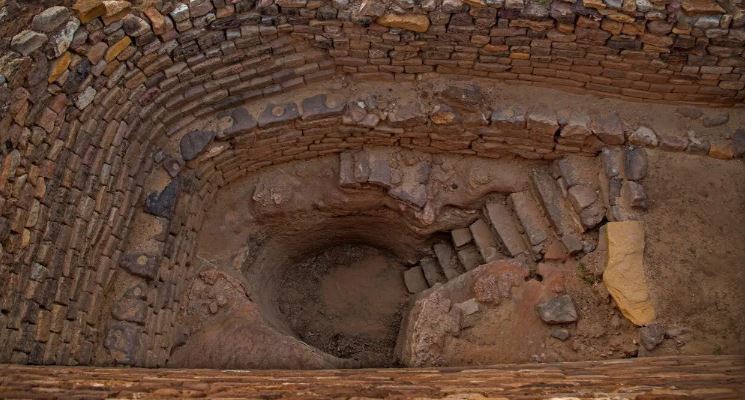
    Dholavira gets into UNESCO World Heritage list

    The Harappan city of Dholavira, in present-day Gujarat, has been named the 40th Indian site on UNESCO’s World Heritage list.

    Dholavira site

    • The IVC acropolis is located on a hillock near present-day Dholavira village in Kutch district, from which it gets its name.
    • It was discovered in 1968 by archaeologist Jagat Pati Joshi.
    • The site’s excavation between 1990 and 2005 under the supervision of archaeologist Ravindra Singh Bisht uncovered the ancient commercial city.

    Key features

    • It is one of the very few well preserved urban settlements in South Asia dating from the 3rd to mid-2nd millennium BCE.
    • It was located in the island of Khadir which was strategic to harness different mineral and raw material sources (copper, shell, agate-carnelian, steatite, lead, banded limestone, among others).
    • It facilitated internal as well as external trade to the Magan (modern Oman peninsula) and Mesopotamian regions.
    • One finds the origin of the Buddhist Stupas in memorials in Dholavira.

    A gem in the IVC acropolis

    • After Mohen-jo-Daro, Ganweriwala and Harappa in Pakistan and Rakhigarhi in Haryana of India, Dholavira is the fifth largest metropolis of IVC.
    • The site has a fortified citadel, a middle town and a lower town with walls made of sandstone or limestone instead of mud bricks in many other Harappan sites.
    • While unlike graves at other IVC sites, no mortal remains of humans have been discovered at Dholavira.

    Its architecture

    • The city demonstrates its multifaceted achievements in terms of urban planning, construction techniques, water management, social governance and development, art, manufacturing, trading, and belief system.
    • The property comprises two parts:
    1. A walled city: Consists of a fortified Castle with attached fortified Bailey and Ceremonial Ground, and a fortified Middle Town and a Lower Town
    2. A cemetery to the west of the city

    Trade and commercial activities

    • Remains of a copper smelter indicate of Harappans, who lived in Dholavira, knew metallurgy.
    • It is believed that traders of Dholavira used to source copper ore from present-day Rajasthan and Oman and UAE and export finished products.
    • It was also a hub of manufacturing jewellery made of shells and semi-precious stones, like agate and used to export timber.
    • Such beads peculiar to the Harappan workmanship have been found in the royal graves of Mesopotamia, indicating Dholavira used to trade with the Mesopotamians.

    Famous for water conservation

    • The expansive water management system designed to store every drop of water available shows the ingenuity of the people to survive against the rapid geo-climatic transformations.
    • Water diverted from seasonal streams, scanty precipitation and available ground was sourced, stored, in large stone-cut reservoirs which are extant along the eastern and southern fortification.
    • To further access water, few rock-cut wells, which date as one of the oldest examples, are evident in different parts of the city, the most impressive one being located in the citadel.
    • Such elaborate water conservation methods of Dholavira is unique and measures as one of the most efficient systems of the ancient world.

    Causes for its decline

    • Harappans, who were maritime people, lost a huge market, affecting the local mining, manufacturing, marketing and export businesses once Mesopotamia fell.
    • From 2000 BC, Dholavira entered a phase of severe aridity due to climate change and rivers like Saraswati drying up.
    • Because of a drought-like situation, people started migrating toward the Ganges valley or towards south Gujarat and further beyond in Maharashtra.
    • In those times the Great Rann of Kutch, which surrounds the Khadir island on which Dholavira is located, used to be navigable, but the sea receded gradually and the Rann became a mudflat.

    Other Harappan sites in Gujarat

    • Before Dholavira was excavated, Lothal, in Saragwala village on the bank of Sabarmati in Dholka taluka of Ahmedabad district, was the most prominent site of IVC in Gujarat.
    • It was excavated between 1955 and 1960 and was discovered to be an important port city of the ancient civilisation, with structures made of mud bricks.
    • From a graveyard in Lothal, 21 human skeletons were found. Foundries for making copperware were also discovered. Ornaments made of semi-precious stones, gold etc. were also found from the site.
    • Besides Lothal, Rangpur on the bank of Bhadar river in Surendranagar district was the first Harappan site in the state to be excavated.
    • Rojdi in Rajkot district, Prabhas near Veraval in Gir Somnath district, Lakhabaval in Jamnagar, and Deshalpar in Bhuj taluka of Kutch are among other Harappan sites in the state.

    Answer this PYQ in the comment box:

    Q.Which one of the following is not a Harappan site? (CSP 2019)

    (a) Chanhudaro

    (b) Kot Diji

    (c) Sohgaura

    (d) Desalpur

    Also read:

    Telangana’s Rudreswara Temple inscribed as a World Heritage Site

  • UDAY Scheme for Discoms

    Electricity (Amendment) Bill, 2021

    The Electricity (Amendment) Bill, 2021 will be introduced and is likely to be pushed for passage in the ongoing monsoon session of Parliament.

    Need for this bill

    • Electricity distribution is at the cutting edge of the power sector.
    • Despite the last 25 years of power sector reforms, the electricity distribution companies are unable to pay the generation and transmission companies as well as banks / financial institutions due to poor financial health.
    • In this situation, patchwork may not turn around the power sector and a holistic approach is the need of the hour.
    • The provisions of the proposed amendment bill have to be seen in this context.

    Key features of Electricity (Amendment) Bill, 2021

    De-licensing: Electricity distribution is delicensed, at least in the letter, giving consumers a choice to choose a distribution company in their area.

    Universal service obligation: There is the provision of a universal service obligation fund, which shall be managed by a government company.  This fund shall be utilized to meet any deficits in cross-subsidy. In case of supply through pre-paid meters, security deposit will not be required.

    Appellate Tribunal for Electricity (APTEL): It is being strengthened by an increasing number of members. The domains from where the chairperson and members of Central Electricity Regulatory Commission (CERC) and State Electricity Regulatory Commissions (SERC) will come have been described.

    Renewable Power Obligation: Keeping in view the national climate change goals, the responsibility of fixing renewable power obligations (RPO) is shifted from state commissions to the central government.

    Penalty: Penalty for contravention of the provisions of the Act has been increased up to Rs 1 crore. Non-fulfillment of RPO will attract stringent penalties as per the proposed amendments.

    Important issues not addressed

    • Recovery of dues: Discoms collect revenue from the consumers and feed the supply chain upstream. They are, however, unable to recover their costs, out of which nearly 75-80 percent are power purchase costs.
    • Tariff: A broad guideline to reduce tariffs could have been part of the proposed amendment bill. Recently, the Forum of Regulators came out with a report on cost elements of tariff and suggested measures to reduce the same.
    • AT&C losses: The Aggregate Technical & Commercial (AT&C) losses of 12 states were more than 25 percent and of six states between 15 and 25 percent, according to a report released by the distribution utility forum based on Uday dashboard in 2020.

    Some provisions may backfire

    • Power distribution is proposed to be delicensed. However, the eligibility criteria shall be prescribed by the central government and the conditions for registration by the SERC.
    • There is a provision for amendment and cancellation of registration as well. In case these provisions are implemented similar to a license, the purpose shall be defeated.
    • The newly registered companies are given the facility to use the power allocation as well as the network of existing discom, which may be dilapidated in many cases due to paucity of funds.
    • With such a network, the quality of supply to the electricity consumers will be seriously affected.
    • Financial penalty on discom may not fully compensate and satisfy the consumers in such cased.

    Some of the issues that may be considered for holistic power sector reforms:

    • The provision of coal and railway freight regulators
    • Linkage of AT&C losses as key performance indicator for release of central funds to states by any ministry
    • Provision of a risk management committee and corporate governance within discoms, irrespective of being listed company

    Way forward

    • Fourteen years after the last amendment to the Electricity Act, currently, the focus of the amendment is on competition and compliance.
    • Electricity regulatory commissions hold the key to take this forward.
    • The commissions should be built as strong institutions and their autonomy should be respected and maintained.
    • After providing a robust framework for fair competition, the government should minimize its frequent interventions in the sector.
    • The government interventions often distort the market and maybe resorted to only in case of market failure.

Join the Community

Join us across Social Media platforms.