💥UPSC 2027,2028 Mentorship (April Batch) + Access XFactor Notes & Microthemes PDF

Archives: News

  • Wildlife Conservation Efforts

    Mahendragiri Hills

    The Odisha government has proposed a second biosphere reserve in the southern part of the state at Mahendragiri, a hill ecosystem having a rich biodiversity.

    The 5,569-square kilometre Similipal Biosphere Reserve is Odisha’s first such reserve and was notified May 20, 1996.

    Mahendragiri Hills

    • Mahendragiri is a mountain in the Rayagada subdivision of the district of Gajapati, Odisha, India.
    • It is situated amongst the Eastern Ghats at an elevation of 1,501 metres.
    • The hill and its surrounding areas are recognized as a biodiversity hot spot due to numerous medicinal plants and other species that are found here.
    • Mahendragiri is inhabited by the Soura people, a particularly vulnerable tribal group as well as the Kandha tribe.

    Try this PYQ:

    Q.From the ecological point of view, which one of the following assumes importance in being a good link between the Eastern Ghats and the Western Ghats? (CSP 2018)

    (a) Sathyamangalam Tiger Reserve

    (b) Nallamala Forest

    (c) Nagarhole National Park

    (d) Seshachalam Biosphere Reserve

    Why designate it as a biosphere reserve?

    • The area of the proposed Mahendragiri Biosphere Reserve is around 470,955 hectares and is spread over Gajapati and Ganjam districts in the Eastern Ghats.
    • The hill ecosystem acts as a transitional zone between the flora and fauna of southern India and the Himalayas, making the region an ecological estuary of genetic diversities.
    • The rich flora in Mahendragiri represents 40 per cent of the reported flora of Odisha, with around 1,358 species of plants.

    Back2Basics:  Biosphere Reserves

    • A biosphere reserve is an area of land or water that is protected by law in order to support the conservation of ecosystems, as well as the sustainability of mankind’s impact on the environment.
    • Each reserve aims to help scientists and the environmental community figure out how to protect the world’s plant and animal species while dealing with a growing population and its resource needs.
    • To carry out the complementary activities of biodiversity conservation and sustainable use of natural resources, biosphere reserves are traditionally organized into 3 interrelated zones, known as:
      1. the core area
      2. the buffer zone and
      3. a transition zone or ‘area of cooperation

  • Innovations in Sciences, IT, Computers, Robotics and Nanotechnology

    Xenobots: Robots developed from stem cells of frogs

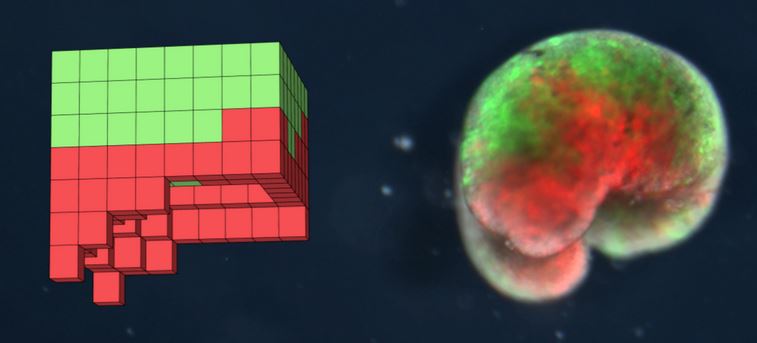
    Researchers have developed robots from stem cells of frogs called Xenobots.

    Xenobots, the name itself suggests its peculiarity.

    Xenobots

    • Xenobots, named after the African clawed frog are synthetic organisms that are automatically designed by computers to perform some desired function and built by combining together different biological tissues.
    • They are less than a 1 millimeter (0.039 inches) wide and composed of just two things: skin cells and heart muscle cells, both of which are derived from stem cells harvested from early (blastula stage) frog embryos.
    • They can self-heal after damage, record memories and work together in groups.
    • These biological robots can record information about their surroundings and move using cilia – minute hair like particles present on their surface.

    Its applications

    • These soft-body living machines can have several applications in biomedicine and the environment.
    • They could be made from a human patient’s own cells, which would bypass the immune response challenges of other kinds of micro-robotic delivery systems.
    • Such xenobots could potentially be used to scrape plaque from arteries and with additional cell types and bioengineering, locate and treat disease.
  • ISRO Missions and Discoveries

    [pib] What are Wolf–Rayet Stars?

    Indian astronomers have tracked a rare supernova explosion and traced it to one of the hottest kind of stars called Wolf–Rayet stars or WR stars.

    Space science-related terms these days are often focused on Gravitational waves, Black holes etc. But basic terminologies are very important and need to be taken care of. For example, a layman may hardly find any difference between Novae-Supernovae, Neutron star, Nebula etc. UPSC often tries to bust you with such basic differences.

    Wolf–Rayet Stars

    • Wolf-Rayet stars represent a final burst of activity before a huge star begins to die.
    • These stars, which are at least 20 times more massive than the Sun, “live fast and die hard”.
    • Wolf-Rayets stars are divided into 3 classes based on their spectra, the WN stars (nitrogen dominant, some carbon), WC stars (carbon dominant, no nitrogen) and WO where oxygen is in dominant quantities.
    • The average temperature of a Wolf-Rayet star is greater than 25,000 Kelvin, and they can have luminosities of up to a million times that of the Sun.

    What have Indian researchers studied?

    • Indian astronomers have conducted the optical monitoring of one such stripped-envelope supernova called SN 2015dj hosted in the galaxy NGC 7371 which was spotted in 2015.
    • They calculated the mass of the star that collapsed to form the supernovae as well as the geometry of its ejection.

    Their findings

    • The scientists found that the original star was a combination of two stars – one of them is a massive WR star and another is a star much less in mass than the Sun.
    • Supernovae (SNe) are highly energetic explosions in the Universe releasing an enormous amount of energy.
    • Long-term monitoring of these transients opens the door to understand the nature of the exploding star as well as the explosion properties.
    • It can also help enumerate the number of massive stars.
  • Women empowerment issues – Jobs,Reservation and education

    Address the silent crisis of India’s gender deficit

    The recently released Gener Gap Report paints a grim picture for India. The deal with this issue.

    Where India Stands

    • The World Economic Forum’s (WEF) Global Gender Gap Report 2021 was released last week.
    • The report lays bare our silent crisis of gender inequality, aggravated by the covid pandemic.
    • India has slipped 28 places to 140th position among 156 countries on the WEF’s Global Gender Gap Index.
    • The country is now 37.5% short of an ideal situation of equality, by its index, last year it was a 33.2% deficit on the whole.
    • Back in 2006, we were almost 40% short, but even the slight progress made over the past 15 years has been highly uneven.
    • Gains were made on the education and political empowerment of women, we slid sharply on health and economic parameters.

    Factors to consider

    • Though pandemic has been responsible for the decline to a significant extent, many of our deficiencies are pre-covid.
    • Some of the drop in India’s international rank over the past two years, for example, has to do with regression in the field of political power.
    • The proportion of women ministers more than halved to 9.1% of the total, though our count of female Parliamentarians did not budge from its long stagnancy.
    • Our performance over the past decade-and-a-half has been poor on women’s economic opportunities and participation.
    • Indian workforce has been turning more predominantly male.
    • Senior managerial positions in the corporate sector have not seen sufficient female appointees.
    • At the aggregate level, our income disparity is glaring.
    • Women earn only a fifth of men, which puts India among the world’s worst 10 on this indicator.
    • We fare worse on women’s health and survival, with India beaten to the last rank only by China.

    Why proportionally fewer Indian women in jobs?

    • One explanation is that sociocultural attitudes go against women going out to work, unless the family lacks sustenance, and deprivation has been in decline for decades.
    • Another is that families prefer educated mothers to invest time in teaching their kids.
    • Both these motives are said to be influenced by upward income mobility and a quest for better lives.
    • Yet, the covid setback to both family incomes and gender progress would suggest the reasons are mostly attitudinal.

    Way forward

    • If the reasons are attitudinal, tax incentives and other schemes are unlikely to get women taking up more jobs.
    • What we need are new forms of social persuasion, which must go with credible assurances of gender equity in every sphere.

    Conclusion

    A country’s economic progress is inextricably linked to empowered women. So, India needs to act on the silent crisis of India’s gender deficit to move up the economic ladder.

  • India & NATO

    India has jettisoned many of its foreing policy shibboleths of late, however, avoiding NATO is not one of them. The article suggests engaging NATO to be in sync with the changing geopolitics.

    Why India avoided engagement with NATO in the past

    • India’s real problem is not with NATO, but with Delhi’s difficulty in thinking strategically about Europe.
    • Through the colonial era, Calcutta and Delhi viewed Europe through British eyes.
    • After Independence, Delhi tended to see Europe through the Russian lens.
    • The fall of the Berlin Wall and the collapse of the Soviet Union demanded a fresh approach to Europe.
    • But Delhi could not devote the kind of strategic attention that Europe demanded.
    • The bureaucratisation of the engagement between Delhi and Brussels and the lack of high-level political interest prevented India from taking full advantage of a re-emerging Europe.
    • In the last few years, Delhi has begun to develop an independent European framework, but has some distance to go in consolidating it.

    Ending political neglect of Europe

    • India has certainly sought to end prolonged political neglect of Europe.
    • The deepening maritime partnership with France since 2018 is an example.
    • Joining the Franco-German Alliance for Multilateralism in 2019 is another.
    • India’s first summit with Nordic nations in 2018 was a recognition that Europe is not a monolith but a continent of sub-regions.
    • India’s engagement with Central Europe’s Visegrad Four also highlighted the fact that Europe is not monolith.

    Why India should engage NATO

    • During the Cold War, India’s refusal was premised on its non-alignment.
    • That argument had little justification once the Cold War ended during 1989-91.
    • An India-NATO dialogue would simply mean having regular contact with a military alliance, most of whose members are well-established partners of India.
    • If Delhi is eager to draw a reluctant Russia into discussions on the Indo-Pacific, it makes little sense in avoiding engagement with NATO.
    • If Delhi does military exercises with China and Pakistan — under the rubric of the Shanghai Cooperation Organisation (SCO), why should talking to NATO be anathema?
    • To play any role in the Indo-Pacific, Europe and NATO need partners like India, Australia and Japan.
    • Delhi, in turn, knows that no single power can produce stability and security in the Indo-Pacific.
    • India’s enthusiasm for the Quad is a recognition of the need to build coalitions.
    • A sustained dialogue between India and NATO could facilitate productive exchanges in a range of areas, including terrorism, changing geopolitics; the evolving nature of military conflict, the role of emerging military technologies, and new military doctrines.
    • More broadly, an institutionalised engagement with NATO should make it easier for Delhi to deal with the military establishments of its 30 member states.
    • On a bilateral front, each of the members has much to offer in strengthening India’s national capabilities.

    What about Russia

    • Russia has not made a secret of its allergy to the Quad and Delhi’s growing closeness with Washington.
    • Putting NATO into that mix is unlikely to make much difference.
    • Delhi, in turn, can’t be happy with the deepening ties between Moscow and Beijing.
    • As mature states, India and Russia know they have to insulate their bilateral relationship from the larger structural trends buffeting the world today.
    • Meanwhile, both Russia and China have intensive bilateral engagement with Europe.

    Consider the question “India has to end its prolonged political neglect of Europe and engage a major European institution like NATO. In light of this, examine the factors restraining India’s engagement with the Europe.

    Conclusion

    India’s continued reluctance to engage a major European institution like NATO will be a stunning case of strategic self-denial and we should avoid it.

  • Capital Markets: Challenges and Developments

    Understanding the issues with bond market in India

    What explains the Indian government borrowing at a higher interest rate than the interest rates for a home loan? The answer lies in the structural shortage in demand for government bonds. 

    How the government’s cost of borrowing matter

    • Interest on government debt is a transfer from taxpayers to savers who own government bonds.
    • As the government bondholders are primarily domestic, interest paid by the government is just a transfer from one hand to the other within the economy.
    • However, the government’s cost of borrowing does matter.
    • The large increase in interest costs limits the government’s ability to spend elsewhere.
    • But more importantly, this rate also affects the cost of borrowing for large parts of the economy.

    Understanding the term premium and credit spread

    • The RBI sets the repo rate, which is the short-term risk-free rate.
    • That is, the loan must be repaid in a few days and there is almost no risk of default.
    • The rate at which the government borrows is the long-term risk-free rate.
    • But the lender wants higher returns given the longer duration of the loan.
    • The difference between the repo rate and government’s borrowing cost, say on a 10-year loan, is called the term premium.
    • When a private firm takes a 10-year loan, it would have some credit risk too, which means a credit spread is added to the 10-year risk-free rate.

    Challenge posed by term premium

    • From an average rate of 73 basis points since 2011 (one basis point is one-hundredth of a per cent), and 120 basis points in 2018 and 2019, the 10-year term premium is currently 215 basis points.
    • In other words, the interest rate for a 10-year period borrowing is 2.15 per cent higher than the current repo rate.

    How this is related to dysfunction in bond market in India

    • Financial markets are forward-looking, and as the collective expression of the views of thousands of participants, efficient ones can occasionally “predict” what comes next.
    • But the Indian bond market is not one such: The view some hold, that the rise in term premium reflects future rate hikes by the monetary policy committee (MPC), is mistaken.
    • The Indian bond market is still too illiquid and not diverse enough to predict future trends.
    • Even though some pandemic-driven measures are being withdrawn, the MPC continues to be accommodative, and for several months at least, headline inflation is unlikely to force an abrupt change.
    • In any case, the spurt in yields after the budget points to the causality being fiscal instead of inflation-related.
    • But even the fiscal rationale seems weak.
    • The Centre’s tax collection for FY2020-21 has been substantially ahead of target, and state governments have also borrowed Rs 60,000 crore less than expected.
    •  Also, the14 states, accounting for three-fourths of all state deficits, have budgeted FY2021-22 deficits at 3.3 per cent, far lower than the 4 per cent average expected earlier.
    • Just these factors suggest that total bonds issued by the central and state governments should be lower than what the market had feared before the union budget was presented.
    • And yet, government borrowing costs have not returned to pre-budget levels.
    • This reflects dysfunction in the market.
    • Why else would a government be borrowing at a higher cost than a mortgage on a house?

    What is the reason for dysfunction in bond market

    • Dysfunction can be traced to residential mortgages being among the most competitive of loan categories.
    • On the other hand, there is a structural shortage in demand for government bonds.
    • In such a market where there is a structural shortage in demand the marginal buyer holds all the cards, and as any buyer would, demands higher returns.
    • Over 15 years,  the share of banks in the ownership of outstanding central government bonds has fallen from 53 per cent to 40 per cent now.
    • But no alternative buyer of size has emerged to fill the space vacated.
    • The RBI sometimes buys bonds to inject money into the economy, but of late this space has been used to buy dollars to save the rupee from appreciation.

    Solutions

    • The solution to the problem of bond market may lie in getting new types of buyers.
    • The RBI opening up direct purchases by retail investors is a step in this direction, though it may not become meaningful for a few years.
    • That leaves us with tapping foreign savings.
    • The limit on share of government bonds that foreign portfolio investors (FPIs) can buy has been raised steadily.
    • But without Indian bonds being included in global bond indices, these flows may not be meaningful, and would be volatile, as they have been over the past year.
    • To enable inclusion in bond indices, the RBI and the government have earmarked special-category bonds which are fully accessible (FAR) by foreign investors.
    • The FTSE putting India on a watch-list for “potential future inclusion” in the Emerging Markets Government Bonds Index is a step forward, and, one hopes, triggers similar actions by other index providers.

    Consider the question “How the lack of retailness in the bond market affects the cost of borrowing of the government as well as the private borrowers? Suggest the measures to deal with the issues.”

    Conclusion

    The issues with bond markets in India highlights the urgency to find new buyers for government bond as it has implications not just for the government’s own fiscal space, but also for the cost of borrowing in the economy.

  • Insolvency and Bankruptcy Code

    What is the Pre-pack under Insolvency and Bankruptcy Code?

    The central government has promulgated an ordinance allowing the use of pre-packs as an insolvency resolution mechanism for MSMEs with defaults up to Rs 1 crore, under the Insolvency and Bankruptcy Code.

    Read till the end to know about the ‘Swiss Challenge’.

    What are Pre-packs?

    • A pre-pack is the resolution of the debt of a distressed company through an agreement between secured creditors and investors instead of a public bidding process.
    • This system of insolvency proceedings has become an increasingly popular mechanism for insolvency resolution in the UK and Europe over the past decade.
    • Under the pre-pack system, financial creditors will agree to terms with a potential investor and seek approval of the resolution plan from the National Company Law Tribunal (NCLT).
    • The approval of a minimum of 66 percent of financial creditors that are unrelated to the corporate debtor would be required before a resolution plan is submitted to the NCLT.
    • Further NCLTs are also required to either accept or reject any application for a pre-pack insolvency proceeding before considering a petition for a CIRP.

    Benefits of pre-packs over the CIRP

    • One of the key criticisms of the Corporate Insolvency Resolution Process (CIRP) has been the time taken for resolution.
    • One of the key reasons behind delays in the CIRPs is prolonged litigations by erstwhile promoters and potential bidders.
    • The pre-pack in contrast is limited to a maximum of 120 days with only 90 days available to the stakeholders to bring the resolution plan to the NCLT.
    • The existing management retains control in the case of pre-packs while a resolution professional takes control of the debtor as a representative of creditors in the case of CIRP.
    • This allows for minimal disruption of operations relative to a CIRP.

    What is the key motivation behind the introduction of the pre-pack?

    • Pre-packs are largely aimed at providing MSMEs with an opportunity to restructure their liabilities and start with a clean slate.
    • It provides adequate protections so that the system is not misused by firms to avoid making payments to creditors.
    • Pre-packs help corporate debtors to enter into consensual restructuring with lenders and address the entire liability side of the company.

    How are creditors protected?

    • The pre-pack also provides adequate protection to ensure the provisions were not misused by errant promoters.
    • The pre-pack mechanism allows for a swiss challenge for any resolution plans which proved less than full recovery of dues for operational creditors.
    • Under the swiss challenge mechanism, any third party would be permitted to submit a resolution plan for the distressed company and the original applicant would have to either match the improved resolution plan or forego the investment.
    • Creditors are also permitted to seek resolution plans from any third party if they are not satisfied with the resolution plan put forth by the promoter.

    Back2Basics: Swiss Challenge

    • A Swiss Challenge is a method of bidding, often used in public projects, in which an interested party initiates a proposal for a contract or the bid for a project.
    • The government then puts the details of the project out in the public and invites proposals from others interested in executing it.
    • On the receipt of these bids, the original contractor gets an opportunity to match the best bid.
    • In 2009, the Supreme Court approved this method for the award of contracts.
    • This method can be applied to projects that are taken up on a PPP basis but can also be used to supplement PPP in sectors that are not covered under the PPP framework.
  • Judicial Appointments Conundrum Post-NJAC Verdict

    [pib] Justice Ramana appointed as Chief Justice of India

    The President of India, in the exercise of the powers conferred by clause (2) of Article 124 of the Constitution of India, appointed Shri Justice NV Ramana, a Judge of the Supreme Court, to be the CJI.

    Chief Justice of India

    • The CJI is the chief judge of the Supreme Court of India as well as the highest-ranking officer of the Indian federal judiciary.

    Appointment

    • The Constitution of India grants power to the President to nominate, and with the advice and consent of the Parliament, appoint a chief justice, who serves until they reach the age of 65 or until removed by impeachment.
    • Earlier, it was a convention to appoint seniormost judges.
    • However, this has been broken twice. In 1973, Justice A. N. Ray was appointed superseding 3 senior judges.
    • Also, in 1977 Justice Mirza Hameedullah Beg was appointed as the chief justice superseding Justice Hans Raj Khanna.

    Qualifications

    The Indian Constitution says in Article 124 (3) that in order to be appointed as a judge in the Supreme Court of India, the person has to fit in the following criteria:

    • He/She is a citizen of India and
    • has been for at least five years a Judge of a High Court or of two or more such Courts in succession; or
    • has been for at least ten years an advocate of a High Court or of two or more such Courts in succession; or
    • is, in the opinion of the President, a distinguished jurist

    Functions

    • As head of the Supreme Court, the CJI is responsible for the allocation of cases and appointment of constitutional benches which deal with important matters of law.
    • In accordance with Article 145 of the Constitution and the Supreme Court Rules of Procedure of 1966, the chief justice allocates all work to the other judges.

    On the administrative side, the CJI carries out the following functions:

    • maintenance of the roster; appointment of court officials and general and miscellaneous matters relating to the supervision and functioning of the Supreme Court

    Try this PYQ:

    Q. Who/Which of the following is the custodian of the Constitution of India?

    (a) The President of India

    (b) The Prime Minister of India

    (c) The Lok Sabha Secretariat

    (d) The Supreme Court of India

    Removal

    • Article 124(4) of the Constitution lays down the procedure for removal of a judge of the Supreme Court which is applicable to chief justices as well.
    • Once appointed, the chief justice remains in the office until the age of 65 years. He can be removed only through a process of removal by Parliament as follows:
    • He/She can be removed by an order of the President passed after an address by each House of Parliament supported by a majority of the total membership of that House and by a majority of not less than two-thirds of the members of that House present.
    • The voting has been presented to the President in the same session for such removal on the ground of proved misbehavior or incapacity.

    About Justice Ramana

    • Justice Ramana will take over as 48th Chief Justice of India.
    • He is a first-generation lawyer, having an agricultural background, and hails from Ponnavaram Village, Krishna District in Andhra Pradesh.
    • He is an avid reader and literature enthusiast. He is passionate about Carnatic music.

    His legal career

    • He was called on to the Bar on 10.02.1983.
    • Initially, he was appointed as a Permanent Judge of Andhra Pradesh High Court on 27.06.2000. He also functioned as Acting Chief Justice of his parent High Court from 10.3.2013 to 20.5.2013.
    • He practiced in the High Court of Andhra Pradesh, Central and Andhra Pradesh Administrative Tribunals, and the Supreme Court of India.
    • He specialized in Constitutional, Civil, Labour, Service, and Election matters. He has also practiced before Inter-State River Tribunals.
    • He served as Judge of the Supreme Court of India from 17.02.2014.
    • He has also served as the Executive Chairman of the National Legal Services Authority (NALSA) since 27.11.2019.
  • Genetically Modified (GM) crops – cotton, mustards, etc.

    [pib] Sadabahar: A mango variety that bears fruits round the year

    A farmer from Kota, Rajasthan, has developed a round-the-year dwarf variety of mango called Sadabahar, which is resistant to most major diseases and common mango disorders.

    Try this PYQ:

    Q.With reference to the Genetically Modified mustard (GM mustard) developed in India, consider the following statements:

    1. GM mustard has the genes of a soil bacterium that give the plant the property of pest-resistance to a wide variety of pests.
    2. GM mustard has the genes that allow the plant cross-pollination and hybridization.
    3. GM mustard has been developed jointly by the IARI and Punjab Agricultural University.

    Which of the statements given above is/are correct? (CSP 2018)

    (a) 1 and 3 only

    (b) 2 only

    (c) 2 and 3 only

    (d) 1, 2 and 3

    Sadabahar

    • The fruit is sweeter in taste, comparable to langra and being a dwarf variety, is suitable for kitchen gardening, high-density plantation, and can be grown in pots for some years too.
    • Besides, the flesh of the fruits, which is bourn round the year, is deep orange with a sweet taste, and the pulp has very little fiber content which differentiates it from other varieties.
    • The bountiful nutrients packed in mango are immensely good for health.
    • This variety has been verified by the National Innovation Foundation (NIF), India, an autonomous institution of the Department of Science & Technology.
  • Health Sector – UHC, National Health Policy, Family Planning, Health Insurance, etc.

    Integrated Health Information Platform (IHIP)

    The Union Minister of Health & Family Welfare has launched the Integrated Health Information Platform (IHIP).

    About IHIP

    • The new version of IHIP will house the data entry and management for India’s disease surveillance program.
    • In addition to tracking 33 diseases now as compared to the earlier 18 diseases, it shall ensure near-real-time data in digital mode, having done away with the paper mode of working.

    Various functions

    • IHIP will provide a health information system developed for real-time, case-based information, integrated analytics, advanced visualization capability.
    • It will provide analyzed reports on mobile or other electronic devices. In addition, outbreak investigation activities can be initiated and monitored electronically.
    • It can easily be integrated with another ongoing surveillance program while having the feature of the addition of special surveillance modules.

    Unique features

    • This is the world’s biggest online disease surveillance platform.
    • It is in sync with the National Digital Health Mission and fully compatible with the other digital information systems presently being used in India.
    • The refined IHIP with automated -data will help in a big way in real-time data collection, aggregation & further analysis of data that will aid and enable evidence-based policymaking.
    • With IHIP, the collection of authentic data will become easy as it comes directly from the village/block level; the last mile from the country.
    • With its implementation, we are fast marching towards AtmaNirbhar Bharat in healthcare through the use of technology.

    Also read:

    [Burning Issue] Rolling-out of National Digital Health Mission

Join the Community

Join us across Social Media platforms.