💥UPSC 2027,2028 Mentorship (April Batch) + Access XFactor Notes & Microthemes PDF

Archives: News

  • Internal Security Architecture Shortcomings – Key Forces, NIA, IB, CCTNS, etc.

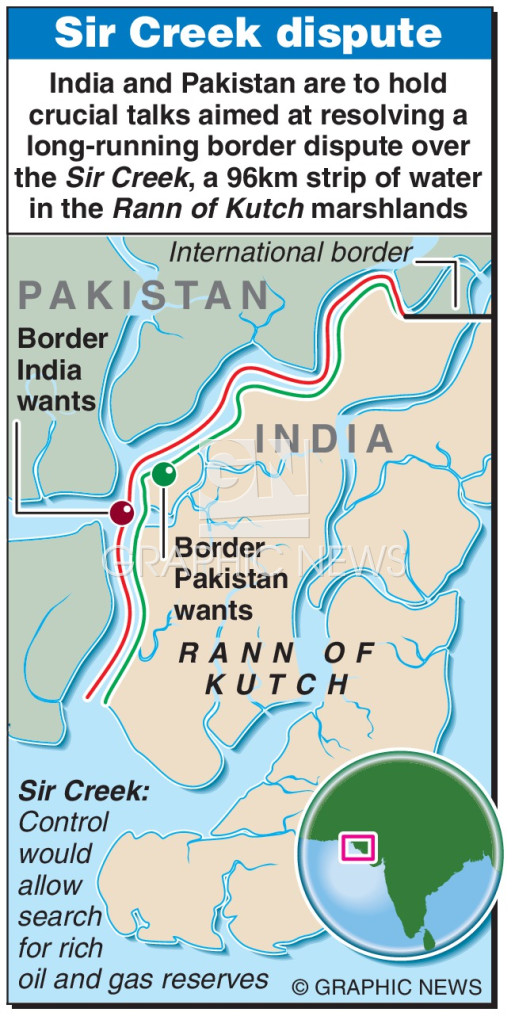
    Sir Creek Border Dispute

    Why in the News?

    Union Defence Minister recently warned Pakistan against misadventure in the Sir Creek region, stressing India’s resolve to defend its territorial integrity.

    Sir Creek Border Dispute

    About Sir Creek:

    • Location & Geography: Sir Creek is a 96-km-long tidal estuary in the Rann of Kutch, forming part of the border between Gujarat (India) and Sindh (Pakistan).
    • Physical Features: It flows into the Arabian Sea, with marshy, saline mudflats that provide vital habitat for migratory birds.
    • Historical Name: Originally known as Ban Ganga, renamed Sir Creek after a British surveyor, Sir Richard Burton (commonly credited).
    • Economic & Strategic Importance: The area hosts rich fishing grounds and potential oil and gas deposits, while being crucial for maritime boundary delimitation and coastal security.

    Historical Background of the Dispute:

    • 1908 Conflict: Disagreement between the Kutch ruler (British India) and Sindh government over fishing rights and territorial limits.
    • 1914 Bombay Government Resolution: Placed the boundary along the eastern bank (favouring Sindh/Pakistan), but also referred to the Thalweg Principle, supporting India’s claim.
      • This principle defines the border along the line of greatest depth of a river’s main navigable channel
    • 1924–25 Developments: Boundary pillars were erected and Survey of India maps marked the mid-channel as the boundary, strengthening India’s case.
    • Post-Partition Period: Dispute intensified; following the 1965 India–Pakistan war, the Rann of Kutch issue went to a UN-sponsored Tribunal.
    • 1968 Tribunal Award: Allocated 90% of the Rann to India but excluded Sir Creek, leaving it unresolved.
    • Post-1982 UNCLOS Impact: With the introduction of Exclusive Economic Zones (EEZs), control over Sir Creek gained renewed importance for maritime claims and resource access.

    India’s Position:

    • Navigability Claim: India asserts that Sir Creek is navigable at high tide, making the Thalweg Principle applicable.
    • Legal & Historical Basis:
      • 1925 Resolution and Survey of India maps.
      • Boundary pillars of 1924 marking mid-channel.
      • 1819 Treaty between East India Company and Kutch rulers, showing continued Indian jurisdiction.
    • Geographical Argument: India maintains the Rann is land, not water, invalidating Pakistan’s demand for median-line division.
    • Strategic Implication: Acceptance of India’s position ensures larger EEZ access, security leverage, and greater control in the Arabian Sea.
    [UPSC 2022] Consider the following countries:

    1. Azerbaijan 2. Kyrgyzstan 3. Tajikistan 4. Turkmenistan 5. Uzbekistan

    Which of the above have borders with Afghanistan ?

    Options: (a) 1, 2 and 5 only (b) 1, 2, 3 and 4 only (c) 3, 4 and 5 only* (d) 1, 2, 3, 4 and 5


  • Festivals, Dances, Theatre, Literature, Art in News

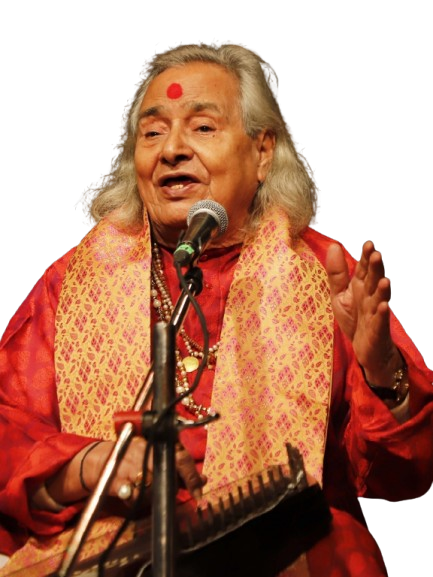
    Thumri maestro Pandit Chhannulal Mishra passes away

    Why in the News?

    Pandit Chhannulal Mishra, a maestro of Hindustani classical music and Padma Vibhushan recipient, passed away at 89.

    Who was Pandit Chhannulal Mishra?

    Thumri maestro Pandit Chhannulal Mishra passes away

    • Background: Born in 1936 in Varanasi, Pandit Chhannulal Mishra emerged from a modest family to become one of India’s greatest Hindustani classical vocalists.
    • Musical Lineage: Foremost exponent of the Purab Ang Thumri of the Banaras Gharana, blending the melodic precision of Kirana with the emotive depth of Banaras traditions.
    • Artistic Range: Mastered Thumri, Dadra, Kajri, and Chaiti, combining folk vitality and classical discipline, hallmarks of the Kashi musical spirit.
    • Voice & Expression: His gravelly, resonant voice conveyed devotion, mysticism, and deep emotion, evoking Lord Shiva, the Ganga, and the eternal mood of Banaras.
    • Cultural Symbol: Alongside Ustad Bismillah Khan, he personified the Ganga–Jamuni tehzeeb, symbolising the harmony of Hindu–Muslim artistic traditions.
    • Honours: Recipient of the Padma Vibhushan, his legacy unites classical rigor, folk heart, and spiritual emotion in a single aesthetic stream.

    About Thumri Music:

    • Nature: Thumri is a semi-classical vocal genre of North India known for its emphasis on emotion (bhava) rather than rigid raga structure.
    • Origin: Developed in the 19th century under Nawab Wajid Ali Shah of Lucknow; later enriched in Banaras, where it absorbed devotional and folk influences.
    • Etymology: Derived from thumakna (“to walk gracefully”), reflecting its rhythmic, fluid, and expressive nature tied to Kathak dance.
    • Themes: Revolves around Sringara rasa, love, separation, and devotion especially, Radha-Krishna narratives; often sung from a female perspective.
    • Language: Primarily in Braj Bhasha, Awadhi, and Hindi, with traces of Urdu and Sanskrit.
    • Musical Features:
      • Uses popular ragas like Bhairavi, Khamaj, Kafi and tālas like Dadra and Keherva.
      • Allows improvisation, vocal ornamentation (murki, meend, gamak), and interpretive freedom.
    • Forms of Thumri:
      • Bandish-ki-Thumri: Structured composition, rhythmically defined.
      • Bol-Banao Thumri: Lyrical, slow, emotive style allowing deeper expression.
    • Major Gharanas:
      • Lucknow Gharana: Courtly refinement and dance association (Begum Akhtar).
      • Banaras Gharana: Devotional Purab Ang tradition (Girija Devi, Rasoolan Bai, Siddheshwari Devi, Chhannulal Mishra).
      • Patiala Gharana: Fast, rhythm-oriented style with tappa influence (Bade Ghulam Ali Khan).

    Thumri and Indian Classical Tradition:

    • Position in the Hindustani system:
      • Thumri is semi-classical, bridging the gap between pure classical forms (like Khayal and Dhrupad) and folk/dance traditions.
      • It prioritises emotional storytelling over technical display, making classical music accessible to the wider public.
    • Connection with Kathak:
      • Thumri complements Kathak dance, aiding abhinaya (expressive gesture) through musical narration.
    • Hindustani vs Carnatic contrast:
      • Hindustani classical music (North India) focuses on raga improvisation;
      • Carnatic music (South India) is composition-centric with structured kritis and rigid tala frameworks.
    • Cultural Role:
      • Thumri mirrors the fusion of classical, folk, and devotional idioms, symbolising India’s cultural inclusivity.
      • It thrives on the interplay of bhava (emotion), raga (melody), and laya (rhythm)—a trinity central to Indian aesthetics.
    [UPSC 2019] With reference to Mian Tansen, which one of the following statements is not correct? Options: (a)Tansen was the title given to him by Emperor Akbar.*

    (b) Tansen composed Dhrupads on Hindu gods and goddesses.

    (c) Tansen composed songs on his patrons.

    (d) Tansen invented many Ragas.


  • Agricultural Sector and Marketing Reforms – eNAM, Model APMC Act, Eco Survey Reco, etc.

    Govt identifies 100 Aspirational Agriculture Districts (AADs)

    Why in the News?

    The Centre has announced the identification of 100 Aspirational Agriculture Districts under the Prime Minister Dhan-Dhaanya Krishi Yojana (PMDDKY) to boost farm productivity, sustainability, and rural incomes.

    What are Aspirational Agriculture Districts (AADs)?

    • Overview: The AADs comprise 100 districts across 29 States and Union Territories with low productivity, moderate crop intensity, and limited access to agricultural credit.
    • Selection Basis: Districts were chosen to ensure balanced regional representation, considering each state’s net cropped area and number of operational holdings.
    • Purpose: Designed as focal points for agricultural transformation, akin to the Aspirational Districts Programme (ADP) model for holistic development.
    • Objective: Accelerate agricultural growth and raise farmers’ income through data-driven governance, technology adoption, and scheme convergence.
    • Leading States: Uttar Pradesh (12), Maharashtra (9), Madhya Pradesh & Rajasthan (8 each), and Bihar (7).
    • Implementation Mechanism: Each district formulates a District Agriculture Development Plan (DADP) integrating existing central and state schemes for productivity enhancement, irrigation, crop diversification, and credit inclusion.
    • Monitoring Framework: Employs a performance-based index with measurable outcome indicators for real-time progress tracking.

    About Prime Minister Dhan-Dhaanya Krishi Yojana (PMDDKY):

    • Overview: Introduced in July 2025 by the Ministry of Agriculture and Farmers Welfare.
    • Aim: Transform 100 low-performing agricultural districts into high-productivity, market-linked, and climate-resilient hubs.
    • Design: Modeled on the Aspirational Districts Programme, emphasizing saturation-based development in agriculture.
    • Key Objectives:
      • Boost productivity through modern technology and best practices.
      • Promote crop diversification and climate-resilient farming.
      • Expand irrigation coverage and credit access.
      • Strengthen post-harvest infrastructure, storage, and value addition at grassroots levels.
      • Build market linkages and sustainable practices for inclusive rural growth.
    • Implementation Structure:
      • Convergence of 36 schemes from 11 Ministries/Departments, with no separate budget allocation.
      • District PMDDKY Committees, headed by Collectors, plan and execute projects.
      • 100 Central Nodal Officers (CNOs), mostly Joint Secretaries, monitor implementation.
      • A digital dashboard tracks 117 indicators across agriculture, irrigation, and markets.
    • Budget & Duration: Convergence-based outlay of ₹24,000 crore annually for six years (FY 2025–31), benefiting 1.7 crore farmers.
    • Expected Outcomes:
      • Improved productivity, resilience, and market efficiency.
      • Enhanced credit systems and localized agri-infrastructure.
      • Contribution toward “Viksit Bharat 2047” through sustainable agricultural transformation.
    [UPSC 2020] Under the Kisan Credit Card scheme, short-term credit support is given to farmers for which of the following purposes?

    1. Working capital for maintenance of farm assets
    2. Purchase of combine harvesters, tractors and mini trucks
    3. Consumption requirements of farm households
    4. Post-harvest expenses
    5. Construction of family house and setting up of village cold storage facility

    Options:

    (a) 1, 2 and 5 only

    (b) 1, 3 and 4 only *

    (c) 2, 3, 4 and 5 only

    (d) 1, 2, 3, 4 and 5


  • Tax Reforms

    Niti Aayog proposes Presumptive Taxation for Foreign Companies

    Why in the News?

    NITI Aayog has released a working paper recommending the introduction of an optional presumptive taxation scheme for foreign companies operating in India.

    What is Presumptive Taxation?

    • Overview: Presumptive taxation allows taxpayers to declare income at a fixed percentage (presumed rate) of total turnover or receipts without maintaining detailed books of accounts.
    • Purpose: Simplifies taxation for small businesses or specific sectors by reducing compliance and administrative burden.
    • Domestic Example: Under the Income Tax Act, Sections 44AD, 44ADA, and 44AE permit presumptive taxation for small businesses, professionals, and transporters.
    • Key Feature:
      • Tax is levied on deemed profits instead of actual income.
      • Taxpayers opting for this scheme are exempt from detailed audits or complex record-keeping.

    What has NITI Aayog Proposed?

    • Scope: Extend the presumptive taxation concept to foreign companies operating in India.
    • Objective: To reduce litigation related to Permanent Establishment (PE) status and profit attribution in cross-border taxation.
    • Main Features:
      • Optional Scheme: Foreign companies can either choose the presumptive scheme for certainty or file regular returns if actual profits are lower.
      • Sector-Specific Rates: Different deemed profit rates for sectors such as manufacturing, digital services, and logistics.
      • Safe Harbour Clause: Once a company opts in, tax authorities cannot separately litigate the PE existence for that activity.
      • Alignment with Global Norms: Codify PE and attribution principles in domestic law consistent with OECD standards.
      • Administrative Reforms: Training of tax officials to ensure consistent application in digital and cross-border cases.

    Significance:

    • Provides tax certainty and simplicity for foreign investors.
    • Reduces disputes and promotes ease of doing business.
    • Balances India’s sovereign tax rights with the need for a predictable, investor-friendly regime.
    • Positions India as a more attractive FDI destination, aligned with its economic and tax reform agenda.
    [UPSC 2020] With reference to India’s decision to levy an equalization tax of 6% on online advertisement services offered by non-resident entities, which of the following statements is/are correct?

    1. It is introduced as a part of the Income Tax Act.

    2. Non-resident entities that offer advertisement services in India can claim a tax credit in their home country under the “Double Taxation Avoidance Agreements”.

    Select the correct answer using the code given below:

    Options: (a) 1 only (b) 2 only (c) Both 1 and 2 (d) Neither 1 nor 2 *


  • J&K – The issues around the state

    [3rd October 2025] The Hindu Op-ed: Should Ladakh get statehood?

    PYQ Relevance

    [UPSC 2024] What changes has the Union Government recently introduced in the domain of Centre-State relations? Suggest measures to strengthen federalism.

    Linkage: Ladakh’s case reflects the Union’s increasing control over border UTs, where administrative powers lie with the LG and Centre, marginalising local bodies — a recent trend in Centre-State/UT relations. Strengthening federalism requires constitutional safeguards (Sixth Schedule/statehood) and greater devolution of powers and finances to elected institutions.

    Mentor’s Comment

    The debate on Ladakh’s statehood is not merely about administrative restructuring, it is about the soul of Indian federalism. It combines questions of representation, tribal identity, border security, and constitutional safeguards. This issue is now a case study in balancing national interests with local aspirations.

    Introduction

    Ladakh, separated from Jammu & Kashmir in 2019 and designated a Union Territory (UT), was expected to gain autonomy and focused development. Instead, it has witnessed deepening resentment. The recent violence in Leh (September 24, 2025), which left four dead and led to the arrest of climate activist Sonam Wangchuck under the NSA, highlights the widening trust deficit. Civil society platforms like the Leh Apex Body (LAB) and the Kargil Democratic Alliance (KDA) demand statehood, inclusion under the Sixth Schedule, a Public Service Commission, and separate Lok Sabha representation.

    Why in the News?

    This is the first major violent episode in Ladakh since its conversion to a UT, bringing the region’s discontent into national focus. While the Centre insists that measures like reservations and recruitment drives are underway, locals argue these are executive orders, not constitutional guarantees. The clash exposes the failure of the UT model in ensuring democratic accountability, despite Ladakh’s strategic importance on the China–Pakistan frontier.

    Democratic Deficit in Ladakh

    1. Loss of Voice: Earlier part of J&K Assembly; now Ladakhis cannot influence laws or leadership.
    2. Dominance of Bureaucrats: Short-term officials override local voices, bypassing elected Hill Councils.
    3. Recruitment Vacuum: No Public Service Commission; six years without gazetted officer recruitments.

    Tribal and Land Safeguards at Risk

    1. Earlier Protection: Article 370 & 35A guaranteed land and job protections.
    2. Post-2019 Vacuum: Absence of safeguards raises fears of demographic change.
    3. Constitutional Demands: LAB & KDA demand Sixth Schedule — protection for tribal culture, language, land rights, beyond mere executive orders.

    Sixth Schedule vs Statehood

    1. Government Stance: Argues Sixth Schedule inclusion is a logical first step before statehood.
    2. Counter View: Sajjad Kargili stresses that Sixth Schedule alone is insufficient; democracy needs statehood.
    3. Delhi Model Analogy: UTs with legislatures (Delhi) show friction with LGs — raising doubts about partial arrangements.

    Population and Statehood Question

    1. Centre’s Hesitation: Population (~3.5 lakh) too small for statehood.
    2. Rebuttal: Sikkim (similar population) became a State in 1975; Goa in 1987.
    3. Fragmented Governance: Ladakh’s five new districts have micro-populations (5,000–7,000), making local governance difficult without a state-level structure.

    Federalism and Centre-State Relations

    1. Supreme Court Endorsement: Upheld bifurcation of J&K into UTs.
    2. Federal Concerns: Raises questions about top-down imposition of governance models in sensitive areas.
    3. Centre vs Local Bodies: ₹6,000 crore annual budget, but only ₹600 crore devolved to Hill Councils; rest controlled by LG & bureaucrats.

    Security Dimensions and Border Considerations

    1. Centre’s Argument: Border sensitivity justifies UT status.
    2. Counterpoint: Punjab, Sikkim, Uttarakhand are border states yet enjoy full statehood.
    3. Chinese Incursion 2020: Occurred post-UT status, undermining the security rationale.

    Civil Society Demands and Distrust

    1. Four Core Demands: Statehood, Sixth Schedule, Public Service Commission, dual Lok Sabha seats (Leh & Kargil).
    2. Distrust of MHA: LAB & KDA halted talks, citing cosmetic concessions (women’s reservation, ST reservation) that miss the core demands.
    3. Governance Paralysis: Hill Councils reduced to ceremonial bodies; LG ignores their inputs.

    Nationalism vs Allegations of “Anti-national”

    1. Local Sentiment: Ladakhis argue they are patriotic, sacrificing lives to defend frontiers.
    2. Mistrust Campaign: Trolls label them pro-China/pro-Pakistan, deepening alienation.
    3. Identity Politics: Perceived delegitimisation fuels separatist tendencies — dangerous for a border region.

    Comparative Perspectives

    1. Delhi & Puducherry: UTs with legislatures — persistent Centre-LG tussle.
    2. North-East Sixth Schedule States: Despite safeguards, autonomy diluted by weak implementation.
    3. Statehood as Trust-Building: Granting Ladakh statehood could mirror past steps where integration was strengthened by empowerment (Sikkim, Mizoram).

    Conclusion

    The Ladakh case underscores that federalism is not only about administrative convenience but about trust-building. Sixth Schedule inclusion may provide interim safeguards, but without democratic statehood, Ladakh risks remaining voiceless. The challenge before India is to ensure that Ladakhis, guardians of a strategic frontier, feel like equal partners in the Union, not subjects of bureaucratic rule.

  • Waste Management – SWM Rules, EWM Rules, etc

    Cost of convenience, health hazards a a side effect of using digital tools

    Introduction

    India’s embrace of the digital revolution has been rapid and transformative. From smartphones to smart homes, electronics have become integral to urban living. However, this transformation carries a dark underbelly: the mounting crisis of e-waste. In 2025, India generated 2.2 million tonnes of e-waste, becoming the third-largest generator globally, after China and the United States. Despite having a formal recycling capacity of over 2.2 million MT, more than half of India’s e-waste is still processed informally, exposing millions to toxic substances. The issue is not just environmental but also a public health catastrophe, disproportionately affecting the poor and marginalised.

    Why is e-waste in the news?

    India’s e-waste problem is no longer a distant warning but an immediate crisis. The country has seen a 150% surge in e-waste since 2017–18 (0.71 MT to 2.2 MT in 2025), with projections of doubling by 2030. Cities like Seelampur (Delhi), Moradabad (UP), and Bhiwandi (Maharashtra) have emerged as hotspots of informal recycling, where toxic fumes and crude dismantling methods poison both workers and residents. Despite 322 formal recycling units, informal handlers dominate the sector, creating one of the sharpest contrasts between policy design and ground reality.

    The Escalating Burden of E-Waste

    1. Third-largest generator: India stands only behind China and the U.S., producing 2.2 MT of e-waste in 2025.
    2. Rapid growth: A 150% surge in seven years, expected to double by 2030.
    3. Urban hotspots: Over 60% of e-waste originates from just 65 cities; major hubs include Seelampur, Mustafabad, Moradabad, and Bhiwandi.

    Why informal recycling is a ticking time bomb

    1. Crude methods: Manual dismantling, open burning, and acid leaching without protective equipment.
    2. Toxic substances: Release of over 1,000 hazardous chemicals, including heavy metals (lead, cadmium, mercury, chromium), POPs (dioxins, furans), and fine particulate matter (PM₂.₅ and PM₁₀).
    3. Alarming air quality: PM₂.₅ levels in Seelampur exceed 300 µg/m³ — over 12 times higher than WHO’s safe limit of 25 µg/m³.

    How does e-waste impact human health?

    1. Respiratory illnesses: Workers show 76–80% prevalence of chronic bronchitis, asthma, persistent coughing (MDPI Applied Sciences, 2025).
    2. Neurological damage: Lead exposure linked to cognitive impairment, reduced IQ, attention deficits. WHO warns millions of children are at risk.
    3. Skin & ocular disorders: Rashes, burns, dermatitis; in Guiyu (China), exposure linked to miscarriages and preterm births.
    4. Genetic and systemic effects: DNA damage, oxidative stress, altered immune functions; children show higher vulnerability.
    5. Syndemic environment: E-waste risks compound poverty, malnutrition, and unsafe housing, worsening outcomes for urban poor.

    Policy response: Progress and gaps

    1. E-Waste (Management) Rules, 2022: Strengthened Extended Producer Responsibility (EPR), mandatory registration, incentives for formalisation.
    2. Weak enforcement: As of 2023–24, only 43% of e-waste was officially processed.
    3. Legal hurdles: Capping of EPR credit prices led to legal disputes with manufacturers.
    4. Gap: Informal handlers still dominate, undermining scientific recycling capacity.

    The Way Forward

    1. Formalise the informal: Integrate kabadiwalas through skill certification, PPE provision, healthcare, social security.
    2. Strengthen enforcement: Empower Pollution Control Boards, mandate digital tracking & audits.
    3. Expand medical surveillance: Health camps and long-term studies, especially on children in hotspots.
    4. Foster innovation: Promote local recycling technologies, decentralised treatment hubs.
    5. Raise awareness: Mass campaigns and school-level education on e-waste.

    Conclusion

    India’s digital empowerment cannot come at the cost of environmental collapse and human suffering. The e-waste crisis is not only a question of waste management but also of justice and public health. Unless India formalises its informal sector, strengthens enforcement, invests in technology, and raises awareness, the cost of convenience will continue to erode both ecosystems and human dignity.

    PYQ Relevance

    [UPSC 2018] What are the impediments in disposing the huge quantities of discarded solid wastes which are continuously being generated? How do we remove safely the toxic wastes that have been accumulating in our habitable environment?

    Linkage: The article on e-waste directly links to this PYQ as it highlights impediments like dominance of informal recycling, weak enforcement of E-Waste Rules, and lack of awareness, while also suggesting safe disposal measures such as formalisation, digital tracking, PPE use, decentralised hubs, and scientific recycling methods.

  • US policy wise : Visa, Free Trade and WTO

    Can diaspora please stand up

    Introduction

    The Indian-American diaspora is often hailed as one of the most successful immigrant groups in the United States, with the highest median household income among all ethnicities, six Fortune 500 CEOs, governors, Congress members, and leaders in federal agencies like the CDC and FBI. However, recent U.S. policy shifts, such as increased tariffs on Indian goods, restrictions on H-1B visas, and sanctions affecting India’s strategic infrastructure, have highlighted the limits of diaspora influence. Despite its success, the community faces a pressing question: will it remain silent, or rise to defend India’s interests when challenged abroad?

    Why is this in the news?

    In recent months, the Trump administration unleashed a series of punitive measures: slapping 50% tariffs on Indian goods, imposing a $100,000 fee on H-1B visa applications (of which Indians receive 70%), restricting student visas, and sanctioning India’s strategic infrastructure projects like the Chabahar port. These measures directly affect Indian professionals, businesses, and students in the U.S. Surprisingly, the celebrated Indian-American diaspora has responded with muted or absent voices, raising serious concerns about the costs of silence. This marks a sharp contrast: while India has celebrated its diaspora as “soft power champions,” their political engagement on issues of consequence appears weak.

    What makes the Indian-American diaspora so influential?

    1. High economic success: Highest median household income among ethnic groups, concentration of CEOs, professionals, and leaders in U.S. politics and administration.
    2. Symbol of integration: From Bollywood films to biryani, diaspora blends nostalgia with modern influence.
    3. Strategic assets: Strong presence in STEM, academia, corporate America, and policymaking.

    Why is the diaspora silent on anti-India measures?

    1. Fear of backlash: Second-generation Indian-Americans feel their American identity questioned if they oppose U.S. policy too strongly.
    2. Fragmentation: Divided by region, religion, political orientation; no unified lobbying voice.
    3. Political caution: Many supported Trump for pro-business stance or Hindu nationalist sentiment but hesitated to confront his administration.
    4. Practical concerns: Rising costs for H-1B visas, employment restrictions on STEM graduates, yet little public opposition.

    What are the consequences of this silence?

    1. Weakening of India’s strategic position: If diaspora fails to defend against hostile U.S. measures, it undermines India’s global partnerships.
    2. Loss of moral voice: Diaspora loses legitimacy as defenders of India’s interests.
    3. Encouragement of further punitive actions: Silence signals complicity, emboldening further sanctions and restrictions.
    4. Cultural reductionism: Diaspora risks being seen as only symbolic carriers of Bollywood, biryani, and Bharatanatyam rather than political actors.

    What should be the role of the diaspora?

    1. Bridge-builder: Act as advocates for India when U.S. policies hurt strategic ties.
    2. Political engagement: Use lobbying capacity, financial resources, and media influence to defend India’s interests.
    3. Principled advocacy: Support India not just through nostalgia or identity politics but through substantive action.
    4. Moral responsibility: As beneficiaries of U.S. democracy, they must speak truth to power, not remain bystanders.

    Conclusion

    The Indian-American diaspora stands at a crossroads: to remain silent and symbolic or to act as a true strategic partner for India. Its wealth, numbers, and influence offer immense potential to shape narratives in Washington, but silence risks rendering it irrelevant. For India, the diaspora must be more than a cultural soft-power asset, it must become a political and moral force that safeguards India’s interests globally.

    PYQ Relevance

    [UPSC 2020] Indian diaspora has a decisive role to play in the politics and economy of America and European Countries. Comment with examples.

    Linkage: The article highlights how the Indian-American diaspora, despite its economic and political clout, has remained largely silent on hostile U.S. measures like tariffs and H-1B restrictions. This directly links to the PYQ as it shows both the potential role of diaspora in shaping politics and economy abroad, and the limits of its current influence when it fails to actively advocate for India.

    Value Addition

    Size and Spread

    1. Largest diaspora in the world – 18 million (UN DESA, 2021).
    2. Major hubs – USA (4.8 mn), UAE (3.5 mn), Saudi Arabia (2.5 mn), UK (1.6 mn), Canada (1.7 mn), Australia (0.7 mn).

    Economic Role

    1. Remittances – India received $125 billion in 2023 (World Bank), highest globally.
    2. Investment channels – NRI deposits (over $141 billion in Indian banks).
    3. Entrepreneurship – Indian-Americans own ~80,000 businesses in the US, employing ~200,000 people.

    Diplomatic and Strategic Role

    1. Lobbying in the US – India Caucus in US Congress, among the largest country caucuses.
    2. Strengthening bilateral ties – Diaspora played a role in the US–India nuclear deal (2008).
    3. Community mobilisation – Helped India’s COVID-19 vaccine diplomacy; strong mobilisation for relief during natural disasters (Kerala floods, Nepal earthquake).

    Cultural and Soft Power Influence

    1. Bollywood & cuisine – Bollywood films rank in top 10 foreign releases in Gulf and US theatres; Indian food chains like Patel Brothers in US are cultural hubs.
    2. International Day of Yoga (21st June) – Promoted by diaspora across 170+ countries.
    3. Cricket diplomacy – Popularised Indian Premier League abroad; diaspora support in stadiums gives visibility.

    Challenges and Criticism

    1. Brain drain vs. brain gain – Loss of skilled talent, though remittances compensate.
    2. Fragmentation – Religious, regional, and political divides weaken unified lobbying.
    3. Political caution – Reluctance to challenge host-country policies that hurt India.
    4. Exploitation in Gulf – Migrant workers face poor labour conditions and weak legal recourse.

    Initiatives by India

    1. Pravasi Bharatiya Divas (PBD) – Celebrated biennially since 2003.
    2. Overseas Citizenship of India (OCI) – Allows lifelong visa, parity with NRIs in most fields (except politics & purchase of agricultural land).
    3. Scholarship Program for Diaspora Children (SPDC) – Assists NRI/PIO children studying in India.
    4. Madad Portal & e-Migrate – For welfare and grievance redressal of emigrants.

    Comparative Diaspora Roles in Other Countries

    1. China – Chinese diaspora heavily invests in home-country infrastructure, strong lobbying in US.
    2. Israel – Jewish diaspora played a decisive role in US foreign policy.
    3. Ireland – Irish-American lobby influenced US policy on Northern Ireland.
  • Mother and Child Health – Immunization Program, BPBB, PMJSY, PMMSY, etc.

    50 years of Integrated Child Development Services (ICDS) Scheme

    Why in the News?

    The Integrated Child Development Services (ICDS) scheme, launched on 2 October 1975 by then Prime Minister Indira Gandhi, has completed 50 years in 2025.

    50 years of Integrated Child Development Services (ICDS) Scheme

    What is Integrated Child Development Services (ICDS) Scheme?

    • Launched: 2nd October 1975 by PM Indira Gandhi.
    • Nodal Ministry: Ministry of Women and Child Development (MoWCD).
    • Nature: Flagship centrally sponsored scheme and world’s largest community-based outreach programme for early childhood care.
    • Beneficiaries: Children (0–6 years), pregnant women, lactating mothers, and adolescent girls (under extensions).
    • Objectives:
      • Improve nutritional and health status of 0–6 year children.
      • Lay foundation for physical, psychological, and social development.
      • Reduce mortality, morbidity, malnutrition, and school dropouts.
      • Provide non-formal pre-school education.
      • Enhance maternal health & nutrition awareness.

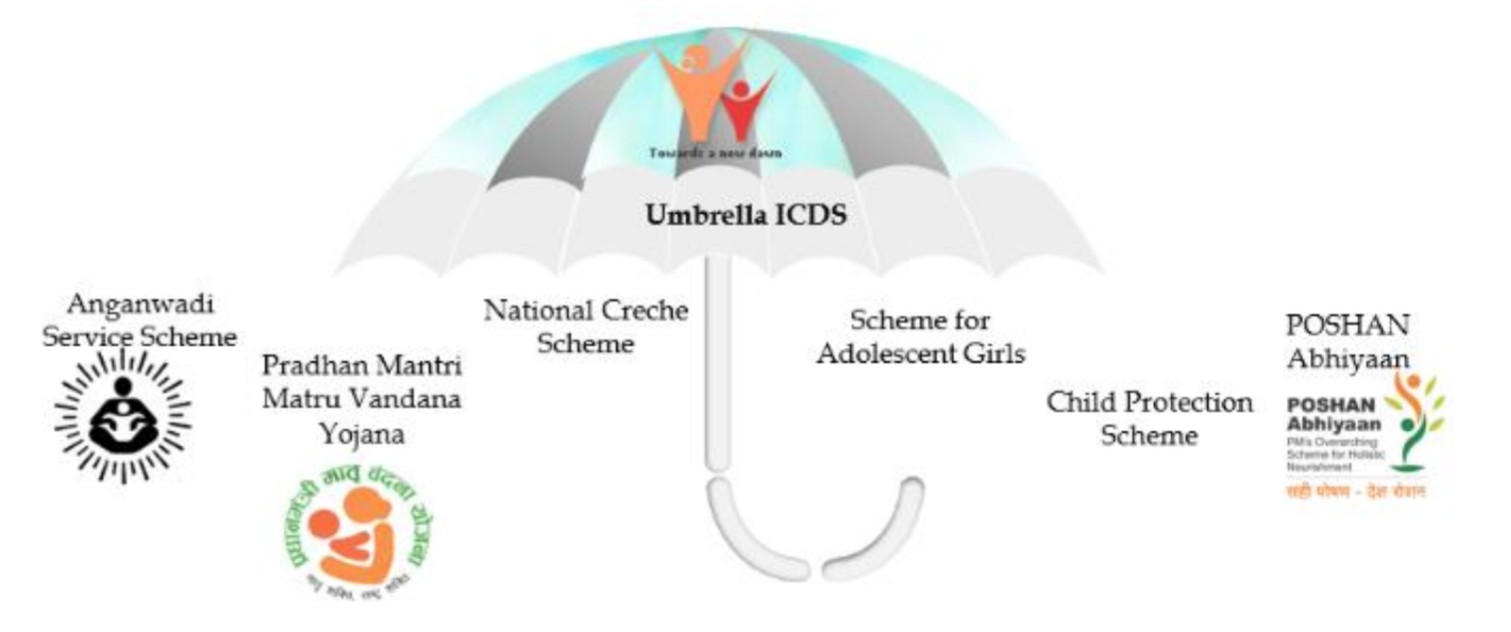
    About Umbrella ICDS Scheme:

    • Origin: The Integrated Child Development Services (ICDS) scheme was restructured and renamed as the Umbrella ICDS scheme in 2016–17.
    • Aim: Strengthen child nutrition, early childhood care, adolescent girl support, and child protection services.
    • Key Feature: Convergence model – Anganwadi Centres serve as hubs delivering integrated health, nutrition, and education.
    • Funding Pattern:
      • General States: 60:40 (Centre: State).
      • Supplementary Nutrition: 50:50.
      • NE & Himalayan States: 90:10.
      • UTs without legislatures: 100% Centre.

    Key Components and Their Features

    1. Anganwadi Services

    • Core ICDS component.
    • Provides six services: supplementary nutrition, pre-school non-formal education, health check-ups, immunization, referral services, and nutrition/health education.
    • Nutrition support: Take-Home Rations (THR), Hot Cooked Meals, snacks.
    1. Pradhan Mantri Matru Vandana Yojana (PMMVY)

    • Conditional cash transfer scheme for pregnant and lactating women.
    • Provides ₹5,000 in three instalments for wage loss, nutrition, and healthcare.
    • Delivered through Direct Benefit Transfer (DBT).
    1. National Creche Scheme

    • Day-care facilities for children (6 months–6 years) of working women.
    • Services include supplementary nutrition, early childcare education, health check-ups, and sleeping facilities.
    • Functions 7.5 hours/day, 26 days/month.
    1. Scheme for Adolescent Girls (SAG – SABLA)

    • Focus on out-of-school girls (11–14 years).
    • Nutrition support: 600 kcal/day, 18–20 g protein.
    • Non-nutrition support: life skills, home management, health & hygiene awareness, educational and skill training.
    • Encourages mainstreaming into formal education and skill development.
    1. Child Protection Services (CPS)

    • Ensures care, protection, and rehabilitation of children in difficult situations.
    • Prevents abuse, exploitation, neglect, and family separation.
    • Runs child care institutions, helplines, adoption and foster care systems.
    1. POSHAN Abhiyaan (National Nutrition Mission)

    • Launched in 2018 to reduce stunting, anaemia, and low birth weight.
    • Uses Poshan Tracker (ICT-based real-time monitoring).
    • Promotes inter-ministerial convergence and community participation via Poshan Maah and Poshan Pakhwada.
    [UPSC 2013] Consider the following statements in relation to Janani Suraksha Yojna:

    1. It is safe motherhood intervention of the State Health Departments.

    2. Its objective is to reduce maternal and neonatal mortality among poor pregnant women.

    3. It aims to promote institutional delivery among poor pregnant women.

    4. Its objective includes providing public health facilities to sick infants up to one year of age.

    How many of the statements given above are correct?

    Options: (a) Only one (b) Only two* (c) Only three (d) All four


  • Global Geological And Climatic Events

    What are Flying Rivers/ Atmospheric Rivers?

    Why in the News?

    Droughts and fires in South America highlight the importance of “flying rivers” — rain-bearing vapor streams disrupted by Amazon deforestation.

    What are Atmospheric Rivers?

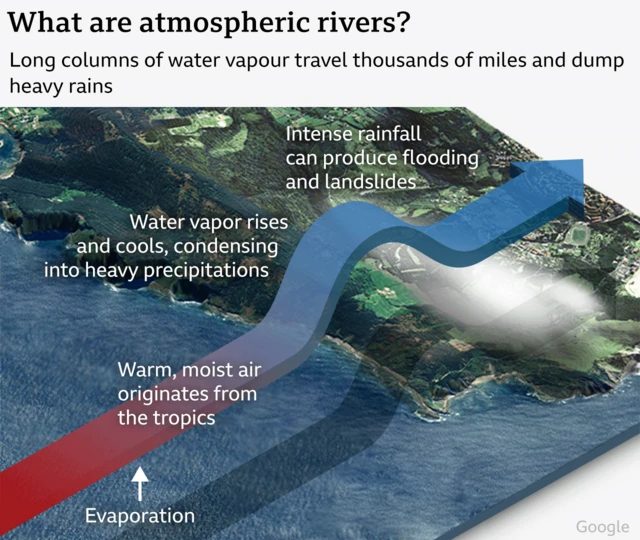
    • Overview: Long, narrow bands of concentrated water vapour in the lower atmosphere, often termed “rivers in the sky.”
    • Dimensions: Typically 2,000–5,000 km long, 400–500 km wide, and about 3 km deep.
    • Water Transport: Carry nearly 90% of water vapour across Earth’s mid-latitudes — almost double the Amazon River’s flow.
    • Formation: Warm tropical seawater evaporates, and winds transport this moisture; upon encountering land or mountains, vapour condenses into heavy rainfall or snow.
    • Role: Unlike short-term weather systems, Atmospheric Rivers (ARs) shape long-term hydrological cycles and trigger extreme precipitation events.

    Global Impacts of Atmospheric Rivers:

    • Flooding & Extreme Weather: Cause 80% of flood-related damages along the US West Coast; also linked to devastating floods in Europe, Africa, South America, and Australia.
    • South America: Amazon’s “flying rivers” disrupted by deforestation, leading to droughts in Peru, Bolivia, and Ecuador; threatens Amazon rainforest’s survival and risks savannisation.
    • East Asia: Up to 80% of heavy rainfall events in China, Korea, and Japan during early monsoon linked to ARs.
    • Climate Connection: Warming oceans are making ARs longer, wider, and more intense, increasing risks of catastrophic floods and landslides.
    • Positive Role: Contribute 30–50% of annual precipitation in some regions (e.g., US West Coast) and help end 33–74% of droughts.

    Atmospheric Rivers in India’s Context:

    • Interaction: ARs combine with cyclonic circulations and the Himalayan ranges, causing extreme rainfall and flash floods.
    • Case Studies:
      • 2010 Leh cloudburst (Ladakh) – flash floods and mudslides.
      • 2011 Kupwara floods (J&K) – severe AR-driven rainfall.
    • Study (1951–2020): Identified 574 AR events during the monsoon season in India.
    • Recent Trends: Nearly 80% of India’s most severe floods (1985–2020) linked to AR activity.
    • Cause: Rapid Indian Ocean warming intensifies evaporation, moisture transport, and AR-driven floods.
    • Impact: Leads to short, intense rainfall spells, landslides, flash floods, crop loss, and mass displacement of communities.
    [UPSC 2024] With reference to “water vapour,” which of the following statements is/are correct?

    1. It is a gas, the amount of which decreases with altitude.

    2. Its percentage is maximum at the poles.

    Select the answer using the code given below:

    Options: (a) 1 only* (b) 2 only (c) Both 1 and 2 (d) Neither 1 and 2


  • Climate Change Impact on India and World – International Reports, Key Observations, etc.

    Climate Models and Their Accuracy

    Why in the News?

    The US President Donald Trump called climate change the “greatest con job ever,” disgusted with the predictions based on climate models central to climate science.

    Climate Models and Their Accuracy

    What are Climate Models?

    • Overview: Climate models are computer simulations using mathematical equations to represent the Earth’s climate system, including the atmosphere, oceans, land surface, and ice.
    • Basis: Built on physics, chemistry, and biology, they simulate interactions among Earth’s components.
    • Purpose: Forecast temperature, rainfall, humidity, sea-level rise, and extreme weather under scenarios like high greenhouse gas emissions.
    • Difference from Weather Models: Weather models predict short-term local events, while climate models analyze long-term regional and global patterns.

    How do Climate Models work?

    • Grid System: Earth divided into a 3D grid of cells across land, atmosphere, and oceans.
    • Equations: Each cell governed by equations on energy movement, air, ice, and land processes.
    • Data Input: Observational data (greenhouse gases, ocean conditions, land use) fed into the model.
    • Interactions: Equations simulate changes in each cell and their effects on neighboring cells.
    • Outputs: Provide projections for temperature, precipitation, sea levels, ice cover, and extreme climate events.

    Evolution of Climate Models:

    Model Type What is it? Strengths Limitations
    Energy Balance Models (EBMs) 

    (1960s)

    • The earliest climate models.
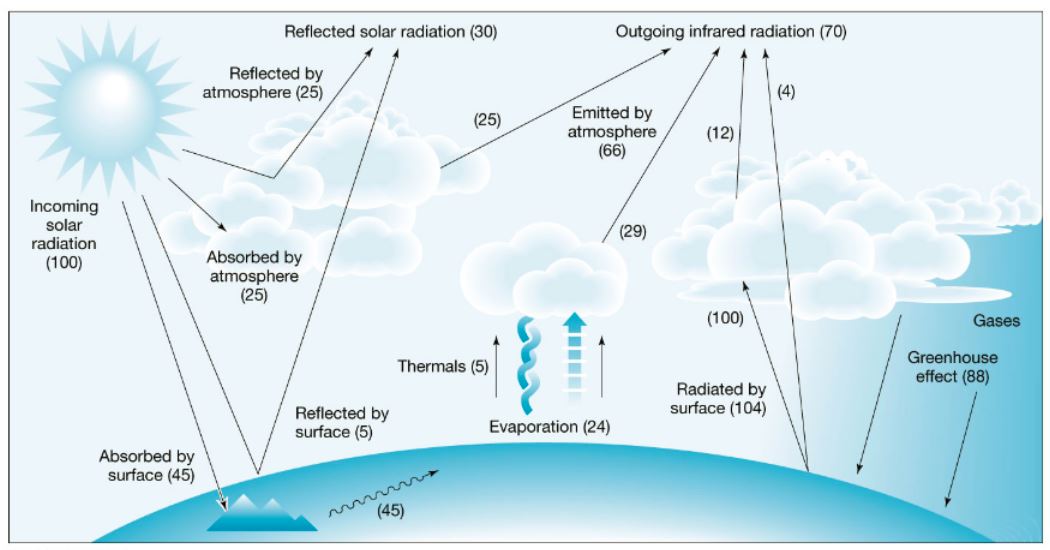
    • They treat Earth like a single box system, calculating surface temperature by balancing incoming solar radiation vs outgoing infrared radiation.
    • Essentially, they answer: “How warm should Earth be if X amount of energy comes in and Y amount goes out?”
    • Very simple; first to link CO₂ emissions with global warming.
    • Computationally inexpensive.
    • Oversimplified — ignores atmosphere, oceans, and circulation.
    • Cannot simulate rainfall, winds, or regional climate.
    Radiative Convective Models (RCMs) 

    (1960s–70s)

    • Introduced the vertical structure of the atmosphere.
    • They divide the atmosphere into layers and simulate how radiation (solar + infrared) and convection move heat upward and downward.
    • Show how greenhouse gases trap heat and alter temperatures at different heights.
    • Capture greenhouse effect more realistically;
    • Explain vertical temperature profiles;
    • Useful for studying stratospheric cooling.
    • Still ignore oceans and global circulation;
    • Cannot project regional variations or weather patterns.
    General Circulation Models (GCMs) (Global Climate Models)

    (1970s onwards)

    • The first 3D models of Earth’s climate.
    • Divide the planet into grid cells (100–250 km), each with equations for atmosphere, oceans, ice, and land.
    • Simulate winds, currents, rainfall, temperature, and pressure by solving physical equations of motion, energy, and mass.
    • Comprehensive representation of climate;
    • Simulate monsoon, El Niño, ocean currents; reproduce past climate trends.
    • Very resource-intensive; grid too coarse to capture local detail (cities, villages);
    • Uncertainty in clouds and aerosols.
    Earth System Models (ESMs)

    (1990s–present)

    • Advanced GCMs that integrate biogeochemical cycles (carbon cycle, vegetation, ocean chemistry, aerosols, land-use changes).
    • Show how human activities (deforestation, fossil fuels, pollution) interact with natural systems, feedback loops, and long-term climate.
    • Holistic view of climate–biosphere interactions;
    • Essential for IPCC reports and policy projections.
    • Extremely complex;
    • Uncertainties in carbon feedbacks, aerosols, and long-term ecological processes.
    Regional Climate Models (RCMs)

    (1990s–present)

    • High-resolution versions of GCMs, zoomed into specific regions (25–50 km grids).
    • Use downscaling techniques to provide localised forecasts of rainfall, temperature, droughts, and monsoons.
    • Useful for city- or country-level policy (flood risk, agriculture, urban heat);
    • Capture Indian monsoon and Himalayan glaciers better.
    • Dependent on GCM input;
    • Projections limited to chosen region;
    • Computationally intensive.

    How accurate are Climate Models?

    • Strengths: Modern models predict sea-level rise, polar ice loss, temperature increases, and rainfall trends with high accuracy.
    • Validation: Predictions are compared with historical climate records to confirm reliability.
    • Limitations:

      • Lack of precise data on clouds, volcanic activity, El Niño events.
      • Limited accuracy for regional variations (e.g., urban floods, Indian monsoon extremes).
      • Less accuracy in Global South due to data scarcity and complex climate systems.
      • Grid resolution (100–250 km per cell) causes oversimplification of land–atmosphere interactions.
    [UPSC 2025] The World Bank warned that India could become one of the first places where wet-bulb temperatures routinely exceed 35°C. Which of the following statements best reflect(s) the implication of the above-said report?

    I. Peninsular India will most likely suffer from flooding, tropical cyclones and droughts.

    II. The survival of animals including humans will be affected as shedding of their body heat through perspiration becomes difficult.

    Select the correct answer using the code given below:

    (a) I only      (b) II only      (c) Both I and II      (d) Neither I nor II


Join the Community

Join us across Social Media platforms.