💥UPSC 2027,2028 Mentorship (April Batch) + Access XFactor Notes & Microthemes PDF

Archives: News

  • Historical and Archaeological Findings in News

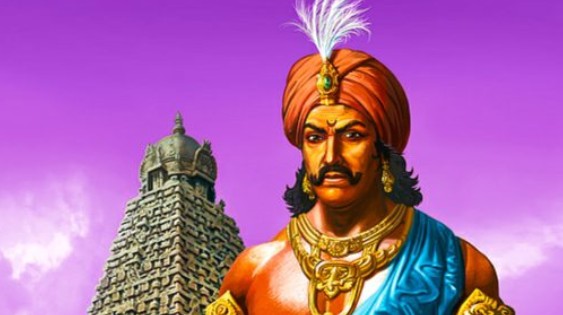
    In news: King Rajendra Chola I

    Why in the News?

    The Prime Minister will attend a function in Tamil Nadu marking 1000 years since King Rajendra Chola I’s conquest of the Gangetic plains.

    In news: King Rajendra Chola I

    About Rajendra Chola I:

    • Reign & Dynasty: Ruled from 1014 to 1044 CE, succeeding his father Rajaraja Chola I.
    • Titles:
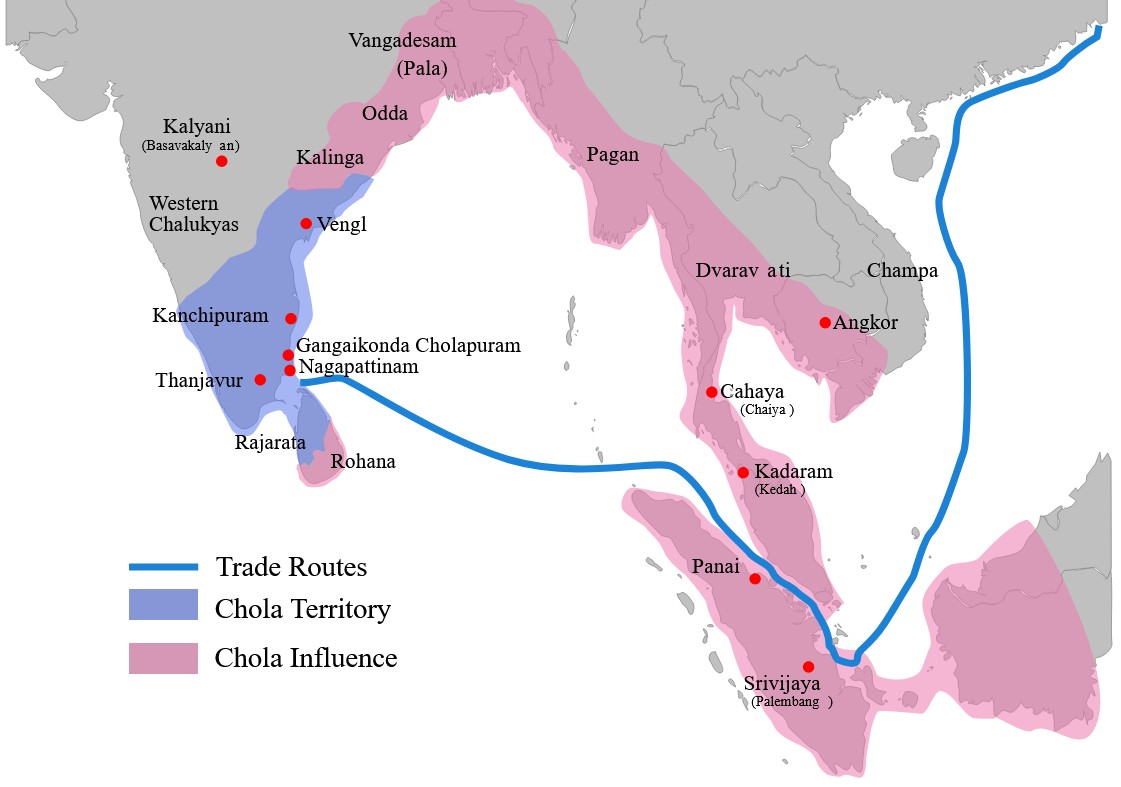
      • Gangaikonda Cholan (“Bringer of the Ganges”) – adopted after his victorious northern campaign.
      • Kadaram Kondan (“Conqueror of Kedah (Malaysia)”) – earned following his Southeast Asian naval expeditions.
    • Capital Foundation: Established Gangaikonda Cholapuram, shifting the capital from Thanjavur to the Kollidam River area.
    • Temple Building: Built the Gangaikondacholeshwaram (Shiva) Temple to commemorate his conquests.
    • Succession: Succeeded by his son, Rajadhiraja I.
    • Religious Policy:
      • Devout Shaivite, but practiced religious pluralism—patronised Buddhism, including building stupas in South India and Southeast Asia.
    • Diplomacy & Trade: Strengthened international ties with Song Dynasty China and Arab merchants.
    • Administration: Pioneered local self-governance, showcasing notable administrative sophistication.

    chola

    His Legend:

    • Northern Conquest: Rajendra led a military campaign to the Gangetic plains, defeating the Pala ruler Mahipala of Bengal and Bihar, and commemorated this victory by bringing Ganga water to his capital.
    • Overseas Expeditions: He commanded what is considered the largest blue-water navy in Indian history. Successfully conducted naval expeditions to:
      • Srivijaya Empire (covering parts of modern-day Sumatra, Java, and Malaysia)
      • Burma, Andaman & Nicobar Islands, Lakshadweep, Maldives, and Pegu Islands
      • Extracted tribute from Thailand and the Khmer kingdom of Cambodia.
      • First Indian king to undertake large-scale overseas military campaigns.
    • Trade and Diplomacy: Established trade and diplomatic links with Song China and Arab merchants.
    • Administration: Promoted local self-governance, showcasing the Cholas’ administrative efficiency.
    • Wealth and Power: Under his reign, the Chola Empire became one of the wealthiest and most powerful empires of the time.
    [UPSC 2025] Who among the following led a successful military campaign against the kingdom of Srivijaya, the powerful maritime state, which ruled the Malay Peninsula, Sumatra, Java and the neighbouring islands?

    Options: (a) Amoghvarsha (Rashtrakuta) (b) Prataprudra (Kakatiya) (c) Rajendra I (Chola) * (d) Vishnuvardhana (Hoysala)


  • Parliament – Sessions, Procedures, Motions, Committees etc

    Comptroller and Auditor General (CAG) of India 

    Why in the News?

    The Comptroller and Auditor General of India’s (CAG) audit has flagged ₹573 Crore irregularities in Indian Railways.

    About Comptroller and Auditor General (CAG) of India:

    • Foundation: Established under Article 148 of the Constitution of India.
    • Independence: A constitutional authority, not subject to executive control.
    • Appointment: Appointed by the President of India.
    • Tenure: Holds office for 6 years or until the age of 65 years, whichever is earlier.
    • Removal: Can be removed by the President in the same manner and on the same grounds as a judge of the Supreme Court of India.
    • Post-Retirement Bar: Ineligible for further office under the Government of India or any State after demitting office.
    • Funding: Administrative expenses are charged upon the Consolidated Fund of India, ensuring financial autonomy.
    • Parliamentary Independence: No minister can represent the CAG in Parliament.
    • Role: Known as the guardian of the public purse and a key pillar of Indian democracy.

    Powers and Functions:

    • Audits:
      • Fund Audits: Audits expenditures from the Consolidated Fund of India, State Consolidated Funds, and Union Territory funds.
      • Other Fund Audits: Audits Contingency Fund and Public Account at both Central and State levels.
      • Departmental Audits: Reviews profit and loss accounts, balance sheets, and subsidiary accounts of government departments.
      • Authority Audits: Audits bodies and authorities substantially financed by the government.
      • Company Audits: Examines accounts of government-owned companies and corporations.
      • Special Audits: Audits other authorities when requested by the President or Governor.
    • Parliamentary Role: Acts as a guide, friend, and philosopher to the Public Accounts Committee of Parliament.
    • Public Accountability: Exposed major scams such as the 2G spectrum and coal block allocation cases.
    • Sectoral Reviews: Highlighted inefficiencies in defence, railways, and other public enterprises.

    Limitations of the office of CAG:

    • Lack of Real-Time Control: Cannot stop or approve withdrawals from the Consolidated Fund; cheques can be issued without CAG’s prior clearance.
    • Opaque Appointment: No prescribed qualifications or transparent procedure for selection; appointment is entirely executive-controlled.
    • Limited Audit Scope:
      • Excludes certain public entities like Life Insurance Corporation and public sector banks.
      • Cannot audit public-private partnerships and funds like Prime Minister’s Citizen Assistance and Relief in Emergency Situations Fund and Prime Minister’s National Relief Fund.
      • Off-budget borrowings (e.g., through National Investment and Infrastructure Fund) remain outside audit scope.
    • Post-Facto Nature: Audits occur after expenditure, limiting preventive or real-time oversight.


    [UPSC 2012] In India, other than ensuring that public funds are used efficiently and for intended purpose, what is the importance of the office of the Comptroller and Auditor General (CAG)?

    1. CAG exercises exchequer control on behalf of the Parliament when the President of India declares national emergency/financial emergency.

    2. CAG reports on the execution of projects or programmes by the ministries are discussed by the Public Accounts Committee.

    3. Information from CAG reports can be used by investigating agencies to press charges against those who have violated the law while managing public finances.

    4. While dealing with the audit and accounting of government companies, CAG has certain judicial powers for prosecuting those who violate the law.

    Which of the statements given above is/are correct?

    Options: (a) 1, 3 and 4 only (b) 2 only (c) 2 and 3 only* (d) 1, 2, 3 and 4


  • Modern Indian History-Events and Personalities

    In news: Mangal Pandey (1827-1857)

    Why in the News?

    The Prime Minister paid tribute to the great freedom fighter Mangal Pandey on his birth anniversary.

    Who was Mangal Pandey?

    • Birth: Born on 19 July 1827 in Nagwa village, Ballia district, Uttar Pradesh.
    • Military Service: Joined the British East India Company’s army in 1849 as a sepoy in the 34th Bengal Native Infantry at Barrackpore.
    • Trigger of Revolt: Opposed the use of Enfield rifle cartridges greased with cow and pig fat, offensive to religious beliefs.
    • Rebellion: On 29 March 1857, attacked British officers and encouraged sepoys to rise in revolt.
    • Punishment: Arrested, tried, and executed by hanging on 8 April 1857.
    • Legacy: Regarded as the “Hero of the First War of Indian Independence” and a symbol of resistance.

    Back2Basics: 1857 War of Independence

    • Overview: The First War of Indian Independence or the Great Rebellion of 1857.
    • Sepoy Composition: Indians made up over 87% of the British Indian Army but faced severe discrimination.
    • Root Causes:
      • Military Discontent: Unequal pay, poor promotion prospects, denial of allowances.
      • Religious Insensitivity: Use of animal fat-greased cartridges insulted Hindu and Muslim beliefs.
      • Economic Hardship: Heavy land taxes, decline in traditional crafts, and rising unemployment.
      • Political Grievances: Annexation of Indian states and enforcement of oppressive laws.
    • Outbreak:
      • Barrackpore: Mangal Pandey’s defiance on 29 March 1857 marked the beginning.
      • Meerut: On 10 May 1857, sepoys rebelled after refusing cartridges and were imprisoned.
      • Delhi: Rebels marched to Delhi and declared Bahadur Shah II as Emperor.
    • Spread of Revolt: Uprising expanded to Kanpur, Lucknow, Jhansi, Bihar, Bareilly, Faizabad, and beyond.
    • Mass Participation: Involved sepoys, peasants, landlords, and regional rulers.

    Suppression and Its Aftermath:

    • Brutal Suppression: Rebellion was crushed by 1859; Delhi was recaptured in September 1857.
    • Administrative Shift: British East India Company was dissolved; India came under direct British Crown rule, initiating the British Raj.
    • Military Reorganization: Indian representation in the army was reduced and reorganized to prevent future revolts.
    • Increased Repression: Racial discrimination and harsh policies intensified post-revolt.


    [UPSC 2006] Who was the Governor-general of India during the Sepoy Mutiny?

    Options: (a) Lord Canning* (b) Lord Dalhousie (c) Lord Hardinge (d) Lord Lytton


  • Minority Issues – SC, ST, Dalits, OBC, Reservations, etc.

    [21st July 2025] The Hindu Op-ed: Temples of social justice 

    PYQ Relevance:

    [UPSC 2024] Despite comprehensive policies for equity and social justice, underprivileged sections are not yet getting the full benefits of affirmative action envisaged by the Constitution. Comment.

    Linkage:  The article explicitly states that “any argument against government control of temple affairs would be striking at the root of social justice”. This question directly addresses “social justice” and the upliftment of “underprivileged sections,” which is the core argument of the article “social justice model” enabled by the regulation of temple funds.


    Mentor’s Comment:  A political controversy in Tamil Nadu emerged over using temple funds to build colleges. The debate highlights a unique social justice model rooted in colonial-era laws, notably the Tamil Nadu Hindu Religious and Charitable Endowments Act, 1959, which legally permits such use of surplus funds. The issue reflects ongoing tensions between secular governance, social reform, and religious traditions.

    Today’s editorial analyses the Issues related to temple funds like to build colleges. This topic is important for GS Paper I (Indian Society) and  GS Paper II (Social Justice) in the UPSC mains exam.

    _

    Let’s learn!

    Why in the News?

    A political controversy recently erupted in Tamil Nadu over the use of temple funds for building colleges.

    What is the origin and evolution of state control over temples in Tamil Nadu?

    • Colonial Intervention and Legal Frameworks: The British colonial government began regulating temples through laws such as the Madras Regulation VII of 1817 and the Religious Endowments Act, 1863. These aimed at curbing mismanagement and ensuring proper use of temple revenues, though actual control was minimal.
    • Madras Hindu Religious and Charitable Endowments (HRCE) Act, 1927 & 1951: Post-independence, the Madras HRCE Act, 1951 granted the state direct control over temple administration. It replaced hereditary trustees with government-appointed officers, shifting from oversight to active state involvement in managing temple affairs.
    • Dravidian Politics and Reformist Push: The Self-Respect Movement and the rise of Dravidian parties (e.g., DMK) advocated for rationalism and secular administration of temples. This reinforced the idea of temples as public institutions, furthering state oversight in their functioning.

    Why is using temple funds for education legally and socially justified?

    • Legal Provision under State Law: The Tamil Nadu Hindu Religious and Charitable Endowments (HR&CE) Act, 1959 allows the use of temple surplus funds for public purposes like education, healthcare, and social welfare, provided the core religious functions are not affected. Eg: The government used temple funds to construct colleges in Tiruvannamalai and Krishnagiri, serving backward districts.
    • Social Justice and Inclusive Development: Tamil Nadu follows a Dravidian model that sees temples as public institutions capable of promoting equality, education, and empowerment, especially for marginalized communities. Eg: Building a college with temple funds in a remote area helps first-generation learners, aligning with constitutional goals of equity and social upliftment.
    • Historical and Cultural Precedent: In the pre-colonial and colonial era, temples often served as centres of learning and charity. Using their resources for education today revives that tradition in a modern, secular context. Eg: In the 19th century, temple lands supported gurukuls and feeding centres, a legacy extended now through modern institutions.

    How did the Self-Respect Movement shape temple governance?

    • Challenged Brahminical Control: The movement, led by Periyar E.V. Ramasamy, questioned hereditary priesthood and the dominance of Brahmins in temple administration, pushing for non-Brahmin inclusion in both ritual and managerial roles.
    • State Intervention in Temple Administration: It laid the ideological foundation for government regulation of temples through legislations like the HR&CE Act, bringing temples under state control to ensure transparency, social equity, and public accountability.
    • Promotion of Secular and Social Justice Values: The movement emphasized that temple wealth should serve the public good, such as education, healthcare, and social welfare, especially for the oppressed castes, transforming temples into instruments of social reform.

    What are the constitutional and legal bases for state intervention in religious institutions in India?

    • Article 25(2)(a) – Social Welfare and Reform: The Constitution permits the state to regulate or restrict any economic, financial, political, or secular activity associated with religion to promote social welfare and reform.
    • Article 26 – Regulates While Protecting Rights: While religious denominations have rights to manage their own affairs, the state can impose reasonable restrictions in the interest of public order, morality, and health.
    • Judicial Precedents and Statutory Laws: Courts have upheld state control over temples (e.g., in Shirur Mutt case) distinguishing between religious practices and secular administration. Laws like the Hindu Religious and Charitable Endowments (HR&CE) Act legally enable such oversight.

    Should religious institutions be allowed to function autonomously without state control? 

    • Argument in favour: 
      • Protection of Religious Freedom: Article 26 of the Indian Constitution grants religious denominations the right to manage their own affairs. Autonomy respects the pluralistic ethos of India and avoids state overreach in spiritual matters.
      • Cultural and Traditional Integrity: Many religious institutions have centuries-old customs and management systems. Autonom y helps preserve these indigenous practices without interference from changing political or administrative interests.
    • Argument against: 
      • Accountability and Transparency: Without state oversight, there is a higher risk of financial mismanagement, corruption, or exploitation of devotees. State regulation ensures proper audit and governance of temple funds and assets.
      • Public Interest and Welfare: Religious institutions often hold significant wealth and influence. State control can direct surplus resources towards social welfare, education, and infrastructure, promoting inclusive development beyond the religious community.

    Way forward: 

    • Balanced Autonomy with Regulation: Implement a co-governance model where religious institutions retain spiritual autonomy, while the state ensures financial transparency, protection of heritage, and equitable use of public funds.
    • Strengthen Legal Frameworks: Update existing laws to clearly define the limits of state intervention, ensure community representation in temple boards, and establish robust grievance redressal mechanisms.
  • FDI in Indian economy

    India’s FDI challenge: In a world of shrinking investment, rising competition, capital will chase confidence, clarity

    Why in the News?

    India is in the spotlight as recent UNCTAD data reveals a significant decline in net FDI inflows, falling to a 15-year low in FY24, even though gross inflows remain strong.

    What are the key reasons behind the global decline in FDI flows, particularly to EMDEs?

    • Geopolitical Instability: Rising geopolitical tensions such as the Russia-Ukraine war, Middle East conflicts, and US-China rivalries have weakened investor confidence, especially in Emerging Markets and Developing Economies (EMDEs) due to increased risk perception. Eg: After the Ukraine war, many European investors pulled out from Eastern European nations due to security concerns.
    • Protectionist Policies: Countries have adopted more protectionist measures, including tighter FDI regulations, screening laws, and withdrawal from bilateral investment treaties (BITs), limiting foreign investor access. Eg: India terminated several Bilateral Investment Treaties post-2016, including with the Netherlands and Germany, leading to investor uncertainty.
    • Supply Chain Realignment: Due to disruptions from the COVID-19 pandemic and rising geopolitical tensions, companies are shifting towards nearshoring and friend-shoring, bypassing many EMDEs. Eg: Several U.S. firms moved manufacturing from China to Mexico or Vietnam rather than to India or African countries.

    Why has India experienced a sharp fall in net FDI despite rising gross inflows?

    • High Repatriation of Earnings: While gross FDI inflows have increased, foreign investors are repatriating more profits, dividends, and disinvestments, leading to a decline in net FDI. Eg: In FY24, gross inflows were around $71 billion, but outflows (disinvestment/repatriation) rose sharply, reducing net FDI to $10.6 billion.
    • Increased Disinvestment by Foreign Investors: Foreign companies have sold off stakes or exited Indian ventures due to regulatory uncertainties or global consolidation strategies. Eg: Vodafone’s reduction in stake in Vodafone Idea and exits by foreign private equity firms.
    • Shift in Investment Strategy: There is a growing trend toward private equity and venture capital, which often involves short-term investments and quicker exits compared to traditional FDI. Eg: Start-up funding peaked in 2021–22 but many investors exited via IPOs or mergers within 2–3 years.

    How can trade agreements and FTAs boost India’s FDI inflows and global integration?

    • Market Access and Investor Confidence: Trade agreements and FTAs offer preferential market access, reduce tariff and non-tariff barriers, and provide a stable regulatory environment, encouraging foreign investors. Eg: The India-UAE CEPA (2022) led to a 34% rise in bilateral trade and boosted UAE investments in sectors like logistics and infrastructure.
    • Integration into Global Value Chains (GVCs): FTAs help India plug into regional and global supply chains, making it a more attractive hub for FDI in manufacturing and exports. Eg: The India-ASEAN FTA improved electronics and automobile component exports, drawing FDI from Japan and South Korea into India.
    • Legal and Dispute Resolution Frameworks: Comprehensive FTAs often include investment protection clauses and dispute resolution mechanisms, which reduce investor risk and boost inflows. Eg: India’s negotiation of Investment Protection Agreements (IPAs) with the EU has raised interest among European investors in clean energy and pharma.

    Why is state-level reform crucial in India’s strategy to enhance FDI inflows?

    • Ease of Doing Business at Ground Level: State-level reforms simplify land acquisition, labour regulations, and approval processes, making local environments more investor-friendly. Eg: Andhra Pradesh ranked top in the Business Reforms Action Plan (BRAP) 2020 for streamlining industrial approvals and digitizing services.
    • Sector-Specific Policy Innovation: States can tailor sectoral incentives, infrastructure, and skill policies to attract targeted FDI in areas like textiles, electronics, or renewable energy. Eg: Tamil Nadu’s Electric Vehicle Policy attracted investments from Ola Electric and Hyundai in the EV sector.
    • Healthy Inter-State Competition: Reform-oriented states create competitive pressure, encouraging others to improve investment climates, creating a national uplift in FDI appeal. Eg: Gujarat’s proactive approach in renewable energy prompted states like Rajasthan to fast-track their solar park approvals.

    Way forward: 

    • Institutionalize Competitive Federalism: Strengthen the ranking framework for states based on FDI-related reforms (like BRAP), and link a portion of central incentives or grants to reform performance.
    • Build State-Capacity for Investor Facilitation: Enhance training for state-level bureaucrats, establish single-window clearance systems, and promote public-private dialogue platforms to address investor concerns proactively.

    Mains PYQ:

    [UPSC 2014] Though 100 percent FDI is already allowed in non news media like a trade publication and general entertainment channel, the Government is mulling over the proposal for in creased FDI in news media for quite some time. What difference would an increase in FDI make? Critically evaluate the pros and cons.

    Linkage:  Evaluating the “pros and cons” necessitates an understanding of the challenges and opportunities associated with foreign investment inflows, reflecting a part of India’s FDI challenge in attracting and managing capital effectively. This question directly related to the implications of increasing FDI in a specific sector.
  • Terrorism and Challenges Related To It

    A long list: on the U.S., designation of The Resistance Front group

    Why in the News?

    The U.S. has designated The Resistance Front (TRF), which claimed responsibility for the Pahalgam terror attack (April 2025), as a Foreign Terrorist Organization (FTO) and Specially Designated Global Terrorist.

    What is the impact of the U.S. designating TRF as an FTO on global counterterrorism?

    • Legitimizes India’s concerns: The U.S. acknowledgment of TRF’s role in the Pahalgam terror attackstrengthens the global consensus on cross-border terror threats.
    • Links to Lashkar-e-Taiba (LeT): The U.S. designation of TRF as a front/proxy of LeT exposes the continued existence of banned groups under new names.
    • Strengthens international action: The move could help India push for sanctions against TRF at the UN’s 1267 Sanctions Committee, boosting transnational legal cooperation.

    Why is Pakistan’s claim about LeT being defunct questionable?

    • TRF’s Linkage with LeT: The U.S. designation of The Resistance Front (TRF) as a “front and proxy” for Lashkar-e-Taiba (LeT) proves that LeT continues to operate under new aliases, despite Pakistan’s claims of dismantling the group. Eg: TRF claimed responsibility for the 2025 Pahalgam attack, showing LeT’s continued operational role.
    • Continued Terror Activities: Despite LeT’s inclusion in the U.S. Foreign Terrorist Organization (FTO) list since 2001, it has repeatedly executed attacks in India, reflecting its persistent capabilities. Eg: The 2008 Mumbai attacks and later cross-border infiltrations have been linked to LeT-trained cadres.
    • International Endorsement Missing: Pakistan’s claim lacks credible global validation. Instead, it has been seen shielding TRF at the UN Security Council (UNSC), undermining its own narrative. Eg: TRF’s name was excluded from the UNSC resolution on the Pahalgam attack, reportedly due to Pakistani lobbying.

    How does the U.S. response post-Pahalgam reveal contradictions in its policy?

    • Mixed messaging: While designating TRF is a positive step, claims by the Trump administration about mediating a ceasefire and nuclear de-escalation dilute India’s counter-terror narrative.
    • Diplomatic inconsistency: Praise for Pakistan’s military chief shortly after India clarified its stance reflects a lack of consistent pressure on Pakistan to curb terrorism.
    • Missed opportunity at UNSC: The U.S. initially allowed TRF to be left out of the UNSC resolution, showing conflicting priorities between diplomacy and counterterrorism.

    What blocks India’s effort to sanction the TRF at the UNSC?

    • Veto Power Politics: The UN Security Council’s 1267 Committee requires unanimous consent among P-5 members for sanctions. Some permanent members, especially China and the U.S., have previously withheld support or yielded to Pakistan’s pressure, blocking India’s proposals. Eg: TRF’s name was omitted from the UNSC resolution on the 2025 Pahalgam attack.
    • Pakistan’s Diplomatic Shielding: Pakistan continues to lobby against designations of terror outfits like TRF, masking them as defunct or rebranded groups, and frames them as indigenous resistance, making it harder for India to gain international consensus.

    How should India strengthen its anti-terror diplomacy? (Way forward)

    • Build Strategic Alliances and International Pressure: India should deepen counter-terrorism cooperation with key countries like the U.S., France, and the UK, while mobilizing regional blocs (e.g., QUAD, BRICS) to collectively push for sanctioning terror groups at global forums like the UNSC 1267 Committee.
    • Pursue Legal and Diplomatic Action Proactively: India must file strong dossiers with evidence linking terror fronts like TRF to banned outfits like LeT and pursue timely extraditions of wanted terrorists through bilateral treaties and Interpol. Eg: The extradition request for Tahawwur Hussain Rana reflects India’s resolve to hold perpetrators accountable.

    Mains PYQ:

    [UPSC 2024] Terrorism has become a significant threat to global peace and security’. Evaluate the effectiveness of the United Nations Security Council’s Counter-Terrorism Committee (CTC) and its associated bodies in addressing and mitigating this threat at the international level.

    Linkage: The article explicitly mentions India’s hope that the U.S. designation of TRF will facilitate its designation at the UNSC under the 1267 Committee for sanctions, directly aligning with the question’s focus on international counter-terrorism mechanisms. This question directly pertains to the global challenge of terrorism and the role of international bodies like the UN Security Council.

  • Innovations in Biotechnology and Medical Sciences

    Gujarat’s Tribal Genome Sequencing Project

    Why in the News?

    Gujarat has launched India’s first Tribal Genome Sequencing Project to map tribal genetic data, contributing to the national Genome India Project (GIP).

    About the Gujarat Tribal Genome Project:

    • Launch & Duration: Announced in Gujarat’s 2025–26 budget; spans 5 years under Gujarat Biotechnology Research Centre (GBRC).
    • Target Population: Focuses on genome sequencing of tribal communities forming ~15% of Gujarat’s population (~1 crore).
    • Objective: Addresses under-representation in Genome India Project (GIP), which had only ~100 tribal samples from Gujarat.
    • Sample Size: Involves 4,158 individuals, including 378 trio families, to create a 2,000-sample reference genome panel.
    • Data Collection: Includes blood, stool, genealogical, physiological, and lifestyle information.

    Key Features:

    • Precision Medicine Applications
      • Early Detection: Enables screening for sickle cell anaemia, G6PD deficiency, BRCA-linked cancers.
      • Gene-Trait Mapping: Explores genetic links to traits like agility and archery.
    • Genomic Sampling Protocol
      • Filtering: Uses SNP genotyping to remove closely related samples.
      • Sequencing: Conducts Whole Genome Sequencing (WGS) on 2,000 diverse samples via Illumina NovaSeq 6000.
      • Data Security: Employs double encryption for privacy and anonymity.

    About the Genome India Project (GIP):

    • Launch: Initiated in January 2020 by the Department of Biotechnology (DBT).
    • Structure: Multi-institutional consortium involving top Indian research bodies.
    • Objectives
      • Diversity Mapping: Decode genetic variation across Indian population.
      • Reference Panel: Build Single Nucleotide Polymorphism (SNP) -based haplotype database for Indian genomes.
      • Biobank Creation: Establish DNA reserves for research and therapy development.
    • Key Achievements
      • Sequencing Scale: 10,074 genomes sequenced from 99 ethnic groups.
      • Data Storage: Securely stored at Indian Biological Data Centre (IBDC), Faridabad.
      • Insights: Revealed rare traits aiding affordable diagnostics and predictive tools.
    • Significance
      • Global Impact: Offers India-specific insights to global genomics research.
      • Healthcare Value: Enables evidence-based, genetically informed policy and diagnosis.
    [UPSC 2017] With reference to agriculture in India, how can the technique of ‘genome sequencing’, often seen in the news, be used in the immediate future?

    1. Genome sequencing can be used to identify genetic markers for disease resistance and drought tolerance in various crop plants

    2. This technique helps in reducing the time required to develop new varieties of crop plants

    3. It can be used to decipher the host-pathogen relationships in crops

    Select the correct answer using the code given below:

    Options: (a) 1 only (b) 2 and 3 only (c) 1 and 3 only (d) 1, 2 and 3


  • Artificial Intelligence (AI) Breakthrough

    BioEmu AI tool for Protein Flexibility Modelling

    Why in the News?

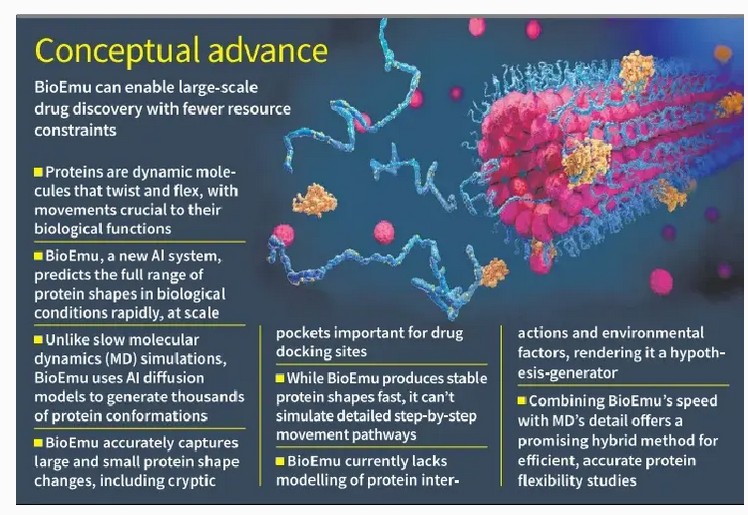
    In a breakthrough, scientists have developed BioEmu—an AI tool that predicts the full range of protein shapes, offering faster and scalable insights into protein dynamics.

    BioEmu AI tool for Protein Flexibility Modelling

    What is BioEmu?

    • Overview: It is a deep learning tool that predicts the equilibrium ensemble of a protein — meaning all the different shapes a protein can naturally take.
    • It works like diffusion models, starting with random/noisy inputs and learning to rebuild protein shapes.
    • Training: It was trained on-
      • AlphaFold structures (millions of predicted proteins)
      • Molecular dynamics (MD) simulation data (200 ms)
      • 500,000 mutant sequences from lab experiments
    • Speed: Once trained, BioEmu can quickly create thousands of 3D protein structures on a single GPU in just minutes to hours.

    Key Features of BioEmu:

    • Flexibility Capture: Shows how proteins change shape, fold/unfold, or form hidden binding pockets.
    • Accuracy:
      • Detects 83% of large and 70–81% of small shape changes.
      • Predicts open/closed forms of enzymes like adenylate kinase.
    • Mutation Analysis: Helps see how mutations affect protein structure and stability.
    • Fast & Scalable: Much faster than traditional MD simulations; works on thousands of proteins using less computing power.
    • Snapshots Only: Gives static 3D shapes, not full motion timelines.
    • Limitations: Can’t handle membrane proteins, drug molecules, or multi-chain complexes.

    Why is BioEmu Important?

    • Improves Protein Modelling: Adds to what AlphaFold does by showing how proteins move, not just what they look like.
    • Helps Drug Discovery: Finds hidden drug binding sites — speeding up the search for new medicines.
    • More Accessible: Works on basic hardware, making advanced protein modelling available to more researchers.
    • Combines with Other Tools: Can be used with molecular dynamics for deeper study.
    • Future of Research: Encourages students and scientists to learn a mix of AI, biology, and physics.
    [UPSC 2020] Which of the following statements are correct regarding the general difference between plant and animal cells?

    1. Plant cells have cellulose cell walls whilst animal cells do not.

    2. Plant cells do not have plasma membrane unlike animal cells which do.

    3. Mature plant cell has one large vacuole vacuoles.

    Select the correct answer using the code given below:

    Options: (a) 1 and 2 only, (b) 2 and 3 only, (c) 1 and 3 only * (d) 1, 2 and 3


  • Food Safety Standards – FSSAI, food fortification, etc.

    [pib] India praised at Codex Executive Committee (CCEXEC88) for Millet Standards

    Why in the News?

    India recently participated in the 88th Codex Executive Committee (CCEXEC88) in Rome (14–18 July 2025), earning praise for leading global millet standards.

    About the Codex Alimentarius Commission (CAC):

    • Established: In 1963 by the Food and Agriculture Organization (FAO) and the World Health Organization (WHO).
    • Headquarters: Located in Rome, Italy.
    • Membership:
      • 189 members: 188 countries + the European Union.
      • Open to all FAO and WHO members state and associate members.
    • Objectives:
      • Protect consumer health by ensuring food safety.
      • Promote fair practices in international food trade.
      • Harmonize food standards to reduce trade disputes.
    • Key Functions:
      • Develops global standards on:
        • Food safety and hygiene
        • Food additives, contaminants
        • Residues of veterinary drugs and pesticides
        • Labelling and import/export rules
      • Sets Maximum Residue Limits (MRLs) and general/horizontal standards.
      • Supports developing countries in enhancing food safety systems.
    • Structure:
      • Executive Committee: Streamlines the Commission’s work.
      • Subsidiary Bodies:
        • General Subject Committees: Address additives, contaminants, hygiene, etc.
        • Commodity Committees: Develop product-specific standards.
        • Regional Coordinating Committees: Harmonize regional standards.
        • Task Forces: Address short-term, emerging issues.
    • Codex Alimentarius (Food Code):
      • A collection of international food standards, guidelines, and codes of practice.
      • Though voluntary, they are widely adopted, especially in international trade.
    • Relevance to WTO:
      • Codex standards are reference points under the WTO SPS Agreement for resolving trade-related food safety disputes.

    India and Codex Alimentarius Commission:

    • Member Since: 1964.
    • Active Participation:
      • India is an elected member of the Executive Committee (CCEXEC).
      • Participates in standard-setting across various food sectors.
    • Recent Contributions:
      • Chaired the development of whole millet grain standards, co-chaired with Mali, Nigeria, and Senegal.
      • Led new work on fresh dates (approved for CAC48).
      • Will co-chair future standards for fresh turmeric and broccoli.
    • Strategic Role at CCEXEC88 (Rome, July 2025):
      • Proposed SMART Key Performance Indicators for the Codex Strategic Plan 2026–2031.
      • Shared its capacity-building programs for neighbouring countries (Bhutan, Nepal, Bangladesh, Sri Lanka, Timor Leste), praised by FAO.
    • Capacity Building & Mentorship:
      • Promoted use of the Codex Trust Fund (CTF) by less active member countries.
      • Shared success stories of mentorship programmes with Bhutan and Nepal.
    • Special Role:
      • Chairs the Codex Committee on Spices and Culinary Herbs (CCSCH) since 2014.
      • Aligns domestic FSSAI standards with Codex to support export competitiveness.

    Millets and India’s Leadership in Millets Promotion:

    • Millets = Shree Anna: Renamed in the Union Budget 2023-24, emphasizing their nutritional, economic, and environmental value.
    • Types of Millets:
      • Major: Jowar (Sorghum), Bajra (Pearl Millet), Ragi (Finger Millet)
      • Minor: Foxtail, Little, Kodo, Barnyard, Proso millets
    • Key Traits:
      • Drought-resistant, short duration crops
      • Nutrient-rich: High in fiber, iron, calcium, gluten-free
      • Climate-smart and low-input, suitable for dryland farming
    • India’s Global Push:
    • Government Initiatives:
      • National Millet Mission (2007) to boost production and processing.
      • Shree Anna Abhiyan: Focus on millet-based product innovation and marketing.
      • Integration into Public Distribution System (PDS), midday meals, and armed forces’ diets.
    [UPSC 2010] As regards the use of international food safety standards as reference point for the dispute settlements, which one of the following does WTO collaborate with?

    Options: (a) Codex Alimentarius Commission * (b) International Federation of Standards Users (c) International Organization for Standardization (d) World Standards Cooperation

    https://www.pib.gov.in/PressReleasePage.aspx?PRID=2146080

  • International Space Agencies – Missions and Discoveries

    International Moon Day

    Why in the News?

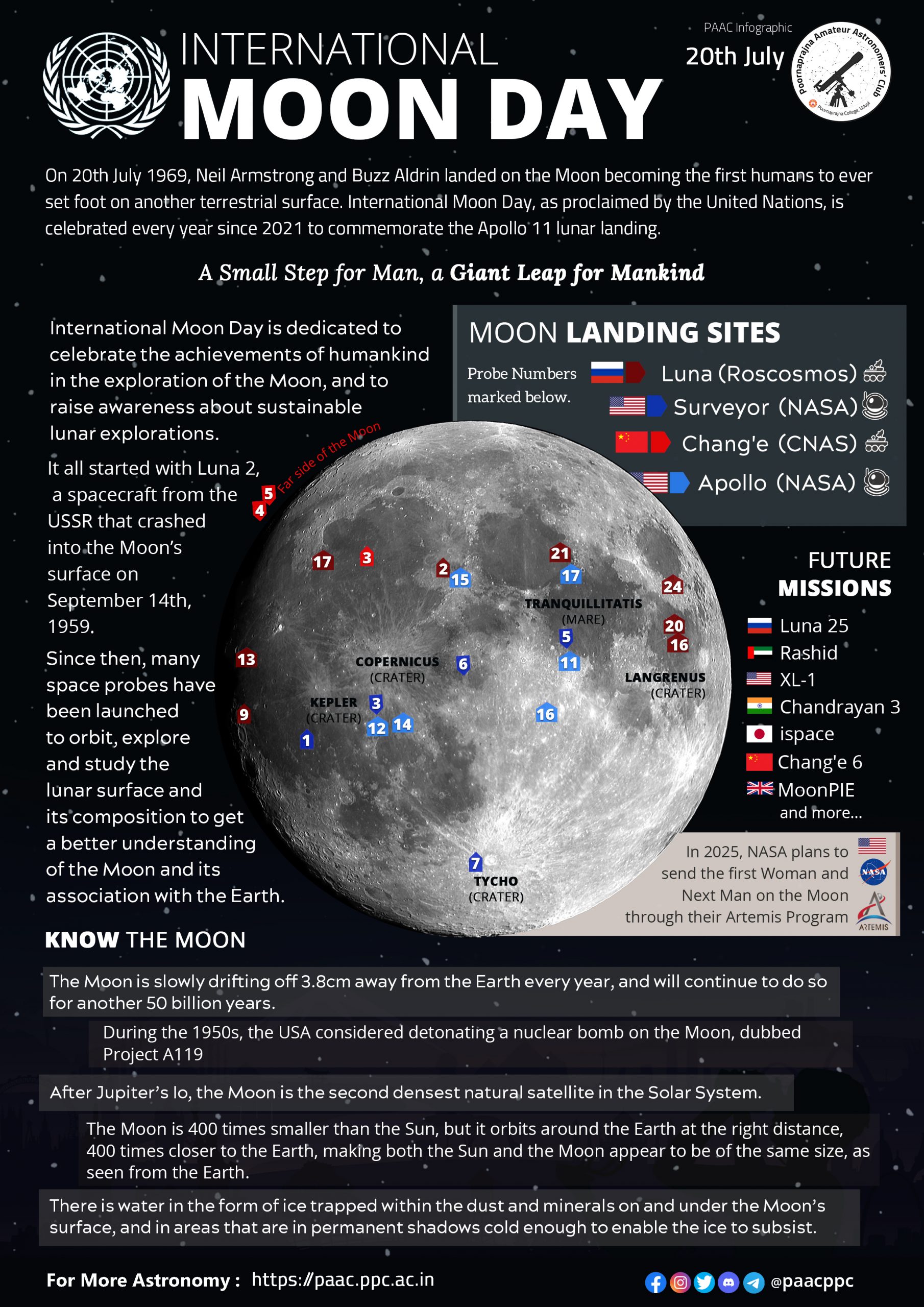
    Observed every year on July 20, the International Moon Day marks the historic first human landing on the Moon by the Apollo 11 mission in 1969.

    moon day

    About International Moon Day:

    • Date & Purpose: Observed annually on July 20 to mark the Apollo 11 Moon landing in 1969.
    • UN Recognition: Declared by the UN General Assembly in 2021 on the recommendation of COPUOS.
    • First Observance: Officially celebrated for the first time on July 20, 2022.
    • Activities: Includes sky-gazing, science outreach, and student competitions to promote space awareness.
    • Date Controversy: While the lunar module landed on July 20, Neil Armstrong stepped onto the Moon at 2:56 UTC on July 21—yet July 20 remains the official date.

    Significance:

    • Historic Milestone: Celebrates Apollo 11 and humanity’s first step on the Moon by Neil Armstrong and Buzz Aldrin.
    • Peaceful Space Use: Promotes the Moon as a shared heritage and fosters international cooperation in outer space.
    • Sustainability Focus: Encourages responsible and eco-friendly exploration of lunar resources.
    • Global Unity: Reflects the UN’s vision of peaceful space collaboration under themes like “One Moon, One Vision, One Future”.
    [UPSC 2009] India has recently landed its Moon Impact Probe on the Moon. Among the following countries, which one landed such probe on the Moon earlier?

    Options: (a) Australia (b) Canada (c) China* (d) Japan


Join the Community

Join us across Social Media platforms.