💥UPSC 2027,2028 Mentorship (April Batch) + Access XFactor Notes & Microthemes PDF

Archives: News

  • Civil Services Reforms

    [pib] PRATIBHA Setu Initiative

    Why in the News?

    The Union Public Service Commission (UPSC) has launched the PRATIBHA Setu initiative to channel the potential of civil service aspirants who reach the interview stage but do not make the final merit list.

    About PRATIBHA Setu:

    • Meaning: Stands for Professional Resource And Talent Integration – Bridge for Hiring Aspirants.
    • Purpose: Connects candidates who cleared the interview stage of Union Public Service Commission exams but didn’t make the final merit list with verified employers.
    • Launch: Rolled out during CSE Examination 2023 results; evolved from the Public Disclosure Scheme (2018).
    • Objective: Utilizes the Union Public Service Commission’s rigorous selection process to support alternate career pathways for high-performing aspirants.
    • Talent Pool:
      • Scale: Over 10,000 high-performing candidates available for recruitment.
      • Merit-Based: Offers employers access to a pre-tested, well-evaluated talent group.

    Key Features:

    • Eligibility:
      • Included: Civil Services, Indian Forest Service, Engineering Services, Central Armed Police Forces, Combined Medical Services, etc.
      • Excluded: National Defence Academy, Naval Academy, and certain Limited Departmental Competitive Examinations.
    • Access for Recruiters: Organizations register using Corporate Identification Number through the Ministry of Corporate Affairs portal.
    • Platform Tools:
      • Functions: Dashboard for shortlisting, wish-listing, and making selections or rejections.
      • Data Access: Employers can view candidates’ educational profiles and contact details in digital format.

    Impact:

    • Candidate Benefit: Opens alternate career paths for deserving UPSC aspirants.
    • Employer Advantage: Enables transparent and efficient hiring from India’s top talent.
    • Wider Utility: Extends the relevance of the UPSC selection process beyond final appointments.
    [UPSC 2020] In the context of India, which one of the following is the characteristic appropriate for bureaucracy?

    Options: (a) An agency for widening the scope of parliamentary democracy (b) An agency for strengthening the structure of federalism (c) An agency for facilitating political stability and economic growth (d) An agency for the implementation of public policy*


  • Foreign Policy Watch: United Nations

    In news: International Seabed Authority (ISA) 

    Why in the News?

    Despite growing global pressure, the International Seabed Authority (ISA) has yet to finalize regulations for deep sea mining.

    Deadlock Over Deep Sea Mining Rules:

    • ISA’s 36-member executive council concluded a line-by-line reading of the draft “mining code” containing 107 regulations.
    • These regulations govern mining for cobalt, nickel, and manganese in international waters.
    • Key concerns remain unresolved, especially around environmental protection mechanisms.
    • Chile and 36 other countries demand a moratorium until scientific assessments confirm minimal harm to marine ecosystems.
    • Also, the US is not a member of the ISA or party to UNCLOS.

    About International Seabed Authority (ISA):

    • Establishment: Formed under the United Nations Convention on the Law of the Sea (1982) and the 1994 Agreement relating to Part XI of the Convention.
    • Headquarters: Located in Kingston, Jamaica.
    • Membership: Comprises 168 member states including India and the European Union.
    • Jurisdiction: Governs “The Area” — the seabed and ocean floor beyond national boundaries, covering around 54% of global oceans.
    • Guiding Principle: Operates on the principle that deep-sea resources are the common heritage of humankind.

    Key Functions:

    • Regulation of Mineral Activities
      • Licensing: Grants licenses for exploration of seabed mineral resources.
      • Transition Oversight: Manages the shift from exploration to commercial exploitation.
    • Mining Code Development: Maintains the Mining Code—rules for environmental impact, royalties, benefit sharing, and technology transfer.
    • Environmental Protection
      • Standards: Sets and enforces environmental norms for seabed activities.
      • Risk Management: Applies precautionary principles to minimize ecological harm.
    • Oversight and Compliance
      • Monitoring: Oversees contractors and states for legal and environmental adherence.
      • Enforcement: Investigates violations and recommends corrective action.

    India’s Engagement with the International Seabed Authority:

    • Active Participation: India contributes to rule-making and sustainable seabed governance.
    • Existing Contracts:
      • Polymetallic nodules in the Central Indian Ocean Basin.
      • Polymetallic sulphides in the Central Indian Ridge.
    • New Applications (2024):
      • Polymetallic sulphides in the Carlsberg Ridge.
      • Cobalt-rich crusts in the Afanasy-Nikitin Seamount.
    • Mining Code Engagement: Participates in drafting and negotiating legal standards.
    • Equity and Protection: Supports fair benefit-sharing and strong environmental safeguards.
    [UPSC 2021] Consider the following statements:
    1. The Global Ocean Commission grants licences for seabed exploration and mining in international waters.
    2. India has received licences for seabed mineral exploration in international waters
    3. ‘Rare earth minerals’ are present on the seafloor in international waters.
    Which of the statements given above are correct?
    (a) 1 and 2 only (b) 2 and 3 only* (c) 1 and 3 only (d) 1, 2 and 3


  • Indian Air Force Updates

    MiG-21s to retire by September

    MiG-21s to retire by September

    Why in the News?

    The Indian Air Force’s longest-serving combat aircraft, the Russian-origin MiG (Mikoyan and Gurevich)-21, is set to be phased out by September 2025.

    About MiG-21:

    • Type: Single-engine, single-seater, multi-role fighter and ground attack aircraft.
    • Origin: Originally inducted as an interceptor; later upgraded for multi-role capabilities.
    • Key Indian Variants: Type-77, Type-96, MiG-21 BIS and MiG-21 Bison (most advanced variant with upgraded radar, avionics, and missile systems).
    • Safety Concerns:
      • High accident rate, especially in recent decades.
      • Earned the nickname “flying coffin” due to frequent crashes and pilot fatalities.
    • Combat Features:
      • Performance: Known for high speed, agility, and rapid climb capability.
      • Armament: Capable of deploying both air-to-air and air-to-ground missiles.
      • War Record: Played key roles in- 1965 War with Pakistan; 1971 Bangladesh Liberation War; 1999 Kargil Conflict.
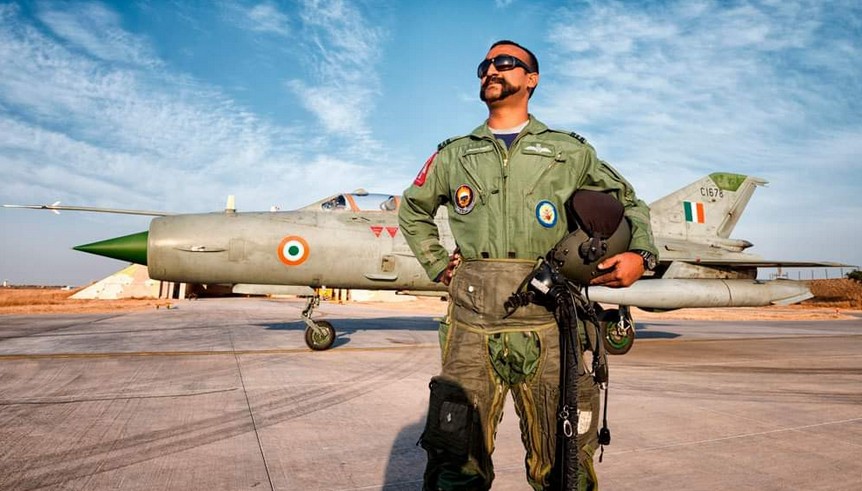
    • Notable Operation: In 2019, a MiG-21 Bison piloted by Group Captain Abhinandan Varthaman shot down a Pakistani F-16 during aerial combat.

    Induction and Retirement:

    • Induction:
      • Timeline: Inducted into the Indian Air Force in 1963 during tensions with China and Pakistan.
      • Assembly: First units assembled in India at Chandigarh with Soviet assistance.
      • Scale: Over 700 MiG-21s were procured, forming the backbone of the Indian Air Force for decades.
    • Retirement:
      • Current Status: As of now, three MiG-21 Bison squadrons remain, each with 16–18 aircraft.
      • Replacement: To be replaced by the indigenously developed Tejas Mark-1A aircraft.

    Back2Basics: LCA Tejas

    • Type: Indian single-engine, fourth-generation, multirole light fighter aircraft.
    • R&D: Designed by the Aeronautical Development Agency in collaboration with the Aircraft Research and Design Centre of Hindustan Aeronautics Limited.
    • Origins: Developed under the Light Combat Aircraft programme launched in the 1980s to replace India’s ageing MiG-21 fleet.
    • Indigenous Content:
      • By Value: 59.7% of the aircraft’s components are sourced indigenously.
      • By Units: 75.5% of the line replaceable units are domestically produced.


    [UPSC 2024] Consider the following aircraft:

    1. Rafael 2. MiG-29 3. Tejas MK-1

    How many of the above are considered fifth generation fighter aircraft?

    Options: (a) Only one (b) Only two (c) All three (d) None*


  • Tribes in News

    Hatti Tradition of Polyandry

    Why in the news?

    The recent polyandrous marriage in Himachal Pradesh has brought the spotlight back on the customary practices of the Hatti tribe.

    About Hatti Tribe:

    • Location: Indigenous to the Trans-Giri region (Himachal Pradesh) and Jaunsar Bawar region (Uttarakhand).
    • Rivers: Settled around the Giri and Tons rivers, tributaries of the Yamuna.
    • Etymology: “Hatti” derives from “haat” (traditional village markets).
    • Population: Around 2.5 lakh in 2011; now estimated at 3 lakh.
    • Traditional Governance: Khumbli (tribal council) handles disputes and key decisions.
    • Social Structure: Divided into upper castes (Bhat, Khash) and lower castes (Badhois).
    • Livelihood: Depend mainly on agriculture; eco-tourism also provides seasonal income.
    • Backwardness: Social and educational deprivation due to geographical isolation.
    • Scheduled Tribe Status:
      • Jaunsar Bawar (Uttarakhand) recognized in 1967.
      • Trans-Giri region (Himachal Pradesh) granted status in 2023–24.

    Legal Status of Polygamy and Polyandry:

    • Prohibition: Banned under Hindu Marriage Act (1955), Special Marriage Act, and Bharatiya Nyaya Sanhita.
    • Exemption for Scheduled Tribes: These laws do not automatically apply to Scheduled Tribes unless notified by the Central Government.
    • Constitutional Provision: Article 342 gives Scheduled Tribes distinct legal recognition.
    • Legal Exemption Clause: Section 2(2) of the Hindu Marriage Act exempts Scheduled Tribes unless otherwise notified.
    • Definition of Custom: Recognised if the practice is long-standing, reasonable, and not against public policy.
    • Judicial Requirement: Courts need clear evidence to validate customary laws.
    • Uniform Civil Code (Uttarakhand, 2024): Explicitly excludes Scheduled Tribes.
    • UCC Rules (2025): Confirms UCC does not apply to groups protected under Part XXI of the Constitution.

    Related Judicial Pronouncements:

    • Customs vs Fundamental Rights: The Supreme Court strikes down customs that violate equality, dignity, or liberty.
    • Triple Talaq Case: Declared unconstitutional as it violated Articles 14 and 21.
    • Ram Charan v. Sukhram (2024): Tribal women cannot be denied inheritance based on customary male preference.
    • Judicial Outlook: Customs must adapt and cannot override fundamental rights.
    [UPSC 2019] Which Article of the Constitution of India safeguards one’s right to marry the person of one’s choice?

    Options: (a) Article 19 (b) Article 21* (c) Article 25 (d) Article 29


  • Disasters and Disaster Management – Sendai Framework, Floods, Cyclones, etc.

    [22nd July 2025] The Hindu Op-ed: Water, energy demand spotlights risk of human-induced quakes 

    PYQ Relevance:

    [UPSC 2020] Discuss the geophysical characteristics of Circum-Pacific Zone.

    Linakge: This question is about a region known for earthquakes and volcanoes. The article mainly talks about quakes caused by human activity but also mentions that these usually happen in places already on fault lines or where tectonic plates are shifting—areas like the Circum-Pacific. So, it’s important to understand these natural zones when looking at how human actions might trigger earthquakes.


    Mentor’s Comment:  Human-induced earthquakes are increasingly drawing scientific and public attention, as research shows that human activities like groundwater extraction, dam construction, and fracking can trigger or accelerate seismic activity, particularly in tectonically sensitive regions such as Delhi-NCR, the Western Ghats, and parts of Maharashtra and Kerala.

    Today’s editorial analyses the Issues related to Human-induced earthquakes in India. This topic is important for GS Paper I (Geography), GS Paper II (Governance) and  GS Paper III (Disaster Management) in the UPSC mains exam.

    _

    Let’s learn!

    Why in the News?

    Recent studies in India have highlighted a correlation between excessive groundwater depletion and increased seismic events, especially in Delhi.

    What are human-induced earthquakes?

    • These are earthquakes triggered by human activities rather than natural tectonic movements. Activities like mining, groundwater extraction, building dams, and fracking disturb the earth’s crust, causing seismic activity. Over 700 human-induced quakes have been recorded globally in the last 150 years.


    How do activities like groundwater extraction and dams trigger quakes in India?

    • Groundwater Depletion Weakens Crustal Stability: Excessive extraction of groundwater reduces pore pressure, leading to a shift in stress within the earth’s crust. Eg: In Delhi-NCR, increased seismic activity between 2003–2012 has been linked to excessive groundwater loss.
    • Reservoir-Induced Seismicity (RIS): The weight of large reservoirs exerts additional pressure on underlying faults, triggering quakes. Eg: The 1967 Koynanagar earthquake (magnitude 6.3) was linked to the Koyna Dam in Maharashtra.
    • Water Infiltration into Fault Zones: Water from reservoirs or excessive irrigation can seep deep into fault lines, lubricating them, and making them more likely to slip. Eg: Seismic tremors near Mullaperiyar Dam in Kerala are suspected to be induced due to water infiltration in a seismically sensitive region.
    • Load Variation Due to Filling and Emptying of Dams: Rapid filling or draining of reservoirs changes the stress distribution, causing small or moderate tremors. Eg: In the Himalayan region, such stress changes are a concern for dams like Tehri Dam.
    • Ground Subsidence from Overuse of Aquifers: Excessive groundwater extraction leads to land subsidence, altering the natural equilibrium of stress in the crust. Eg: Regions in North Gujarat have experienced subsidence, making them more vulnerable to fault reactivation and quakes.

    Why is Delhi-NCR prone to quakes from groundwater loss?

    • Rapid Groundwater Depletion Alters Stress Fields: Excessive groundwater extraction reduces the hydrostatic pressure underground, disturbing the natural stress balance in fault zones. This stress redistribution can reactivate dormant faults, triggering seismic activity. Eg: Studies from 2003–2012 show increased microseismic activity in parts of Gurgaon and Faridabad, correlated with falling water tables.
    • Aquifer-Related Land Subsidence: Continuous overuse of aquifers causes the land to sink (subsidence), which can strain the Earth’s crust and disturb nearby fault lines. In Delhi-NCR, land sinking has been recorded in Dwarka, Kapashera, and parts of Noida, increasing quake risk. Eg: A 2021 study by IIT-Kanpur showed that excessive aquifer use led to ground subsidence and elevated seismic hazard.
    • Built-Up Pressure on Seismically Active Faults: Delhi-NCR sits near the Mahendragarh-Dehradun fault and Delhi-Haridwar ridge, making it naturally earthquake-prone. When groundwater is extracted, it weakens the structural resistance of rocks, making nearby active faults more vulnerable. Eg: Minor tremors in Rohini and West Delhi (2020-21) were suspected to be linked to combined stress from tectonics and human activity.

    How does climate change contribute to seismic risks?

    • Melting Glaciers Increase Uplift Pressure: Rapid glacial melt in the Himalayas (due to rising temperatures) reduces surface weight. This triggers isostatic rebound — the crust rises and shifts, which can activate faults beneath. Eg: In Uttarkashi (Uttarakhand), increased seismic activity has been observed near retreating Gangotri Glacier, linked to glacial thinning and uplift.
    • Changing Rainfall Patterns Cause Landslides and Crustal Stress: Intense rainfall and flash floods (exacerbated by climate change) cause rapid groundwater recharge and erosion, disturbing fault stability. Eg: In Kodagu (Karnataka), unusually heavy rains in 2018 triggered landslides and minor tremors due to destabilized slopes and crustal shifts.
    • Sea-Level Rise and Coastal Seismic Pressure: Rising sea levels increase water load on coastal plates, especially in delta regions. This can suppress or activate tectonic stresses near coastlines. Eg: In Sundarbans (West Bengal), changes in sediment load and sea-level rise have raised concerns of future seismic risks in this low-lying, tectonically sensitive zone.
    What are the steps taken by the Indian Government?

    •  Seismic Zoning and Monitoring: India is divided into four seismic zones (II to V) to prioritize risk-based planning. The National Centre for Seismology (NCS) monitors seismic activity across the country in real-time.
    • Implementation of Earthquake-Resistant Building Codes: The Bureau of Indian Standards (BIS) has issued IS codes for earthquake-resistant construction.
    • Capacity Building and Public Awareness: NDMA and NDRF conduct training, mock drills, and awareness programs in vulnerable areas.

    Way forward: 

    • Integrated Land and Water Management: Promote sustainable groundwater use, recharge practices, and land-use planning to reduce land subsidence and seismic vulnerability.
    • Expand Monitoring and Preparedness: Enhance seismic monitoring networks and public awareness programs to improve early warning systems and disaster resilience.
  • The Crisis In The Middle East

    The threat to India’s ‘great power’ status 

    Why in the News?

    The ongoing tensions in West Asia, particularly between Iran, Israel, and the U.S., have reignited concerns about a potential U.S.-Israel-Iran conflict, which could have serious geopolitical and economic consequences.

    How could a U.S.-Israel-Iran war impact India?

    • Energy Security Risk: A war could disrupt oil exports from Iran and the Strait of Hormuz, through which 60% of India’s crude imports pass. Eg: During the 2019 U.S.-Iran tensions, India faced uncertainty in oil supply and had to cut Iranian imports.
    • Geopolitical Imbalance: Collapse of Iran may increase U.S. dominance in West Asia, weakening India’s strategic depth and bargaining power. Eg: India’s balancing diplomacy between Gulf countries, Israel, and Iran would face strain, as seen when Chabahar Port talks slowed under U.S. pressure.
    • Diaspora and Economic Fallout: War could threaten the safety of 8 million Indians in the Gulf and affect remittances and trade. Eg: During the 1990 Gulf War, India had to evacuate over 1.7 lakh citizens and faced economic shocks.

    What is the difference between great power and super power?

    The terms “great power” and “superpower” both refer to influential countries, but they differ in scale, reach, and dominance.

    • Great Power: A great power is a country with significant regional or global influence, strong economy, capable military, and active diplomacy. Eg: India, France, Germany
    • Superpower: A superpower is a country with unmatched global dominance across military, economic, political, and cultural spheresEg: United States (Cold War era: USA and USSR were two superpowers).

    How does the Iran-Israel conflict impact India’s great power status?

    • Challenges to Strategic Autonomy: The conflict pressures India to balance relations with both Iran and Israel, testing its strategic autonomy — a key trait of great powers. India called for restraint without directly criticising either side.
    • Limited Global Influence in Conflict Resolution: India’s geopolitical clout is still evolving, and its absence in conflict mediation highlights the gap between global aspirations and actual influence. Eg: India was not part of backchannel diplomacy, unlike the U.S. or China.

    How does multipolarity guide India’s foreign policy?

    • Strategic Autonomy: India avoids aligning permanently with any one power bloc, maintaining independent decision-making. Eg: India is a member of both the QUAD and BRICS, balancing ties with the U.S. and China.
    • Diversified Partnerships: Multipolarity enables India to build issue-based coalitions with different countries for mutual benefit. Eg: India partners with France on defence, Russia on energy, and U.S. on technology.
    • Global Rule-Shaping Role: India promotes a rules-based order and voices the concerns of the Global South in global forums. Eg: India’s presidency of the G20 in 2023 emphasized inclusive development and reform of global institutions.

    Why is Iran vital to India’s energy and strategy?

    • Energy Security: Iran has vast reserves of crude oil and natural gas, essential for India’s growing energy needs. Eg: Before U.S. sanctions, Iran was among India’s top three crude oil suppliers.
    • Strategic Connectivity: Iran hosts the Chabahar Port, offering India access to Afghanistan, Central Asia, and bypassing Pakistan. Eg: The International North-South Transport Corridor (INSTC) runs through Iran, linking India to Europe.
    • Regional Balance: Ties with Iran help India maintain a geopolitical balance in West Asia amid U.S., Israel, and Gulf influences. Eg: India engages Iran to counter China’s influence in the region, including at Gwadar Port in Pakistan.

    How does India balance ties between major powers?

    • Strategic Autonomy: India maintains independent foreign policy decisions without aligning fully with any bloc, ensuring flexibility in global affairs.
    • Multi-alignment Approach: India engages simultaneously with the U.S., Russia, China, EU, and others, based on issue-specific interests.
    • Issue-based Partnerships: India chooses partners depending on the context — cooperating with the U.S. on defense, Russia on energy, and China on trade, while managing conflicts diplomatically.

    How can India promote peace in West Asia? (Way forward)

    • Diplomatic Balancing: India can maintain neutral engagement with rival states like Iran, Israel, and the Gulf countries, promoting dialogue over conflict. Eg: India has strong ties with both Iran and Saudi Arabia, enabling it to act as a bridge-builder.
    • Economic Cooperation: Promoting trade, energy ties, and infrastructure projects can foster interdependence and reduce regional tensions. Eg: India’s investment in Chabahar Port connects the region economically and supports stability in Afghanistan.
    • Cultural and Diaspora Links: Leveraging its diaspora presence and civilizational ties, India can promote people-to-people engagement and soft power diplomacy. Eg: The 8-million-strong Indian diaspora in the Gulf enhances goodwill and mutual trust in the region.

    Mains PYQ:

    [UPSC 2014] Though 100 percent FDI is already allowed in non news media like a trade publication and general entertainment channel, the Government is mulling over the proposal for in creased FDI in news media for quite some time. What difference would an increase in FDI make? Critically evaluate the pros and cons.

    Linkage:  Evaluating the “pros and cons” necessitates an understanding of the challenges and opportunities associated with foreign investment inflows, reflecting a part of India’s FDI challenge in attracting and managing capital effectively. This question directly related to the implications of increasing FDI in a specific sector.

  • Foreign Policy Watch: India – EU

    At FTA’s heart, the promise of Global Capacity Centres

    Why in the News?

    India and the United Kingdom are nearing the finalisation of a Free Trade Agreement (FTA) that is expected to significantly reshape their bilateral economic relationship. A key area of focus is the expansion of Global Capability Centres (GCCs) in India.

    What are GCCs (Global Capability Centres)?

    GCCs are offshore units set up by multinational companies (MNCs) in countries like India to handle critical business functions.

    How can GCCs boost the India-U.K. FTA?

    • Enhance Digital Collaboration: GCCs in India offer services like AI, cybersecurity, and R&D that align with the UK’s digital economy goals. Eg: British companies like Barclays use India’s GCCs for advanced analytics and digital banking solutions.
    • Support Professional Mobility: GCC operations require movement of skilled professionals between India and the UK, pushing for smoother visa and work policies. Eg: Infosys and TCS facilitate cross-border staff exchanges for UK-based projects.
    • Strengthen Global Supply Chains: GCCs act as strategic hubs for managing global operations and reducing dependency on single markets. Eg: Unilever runs global compliance and finance functions from its India GCC, supporting resilience and efficiency.

    Why is India a preferred hub for GCCs?

    • Cost Advantage: Operating a GCC in India is more cost-effective compared to Western countries, enabling firms to maintain quality while optimizing costs. Eg: Target Corporation runs its Indian GCC in Bengaluru to handle IT services and supply chain support at reduced costs.
    • Robust Digital Infrastructure: India’s expanding digital ecosystem and government support through policies like Digital India attract companies to establish innovation hubs here. Eg: Bosch established a smart manufacturing and AI innovation centre in Bengaluru as part of its India-based GCC.

    What policy steps support GCC growth in India?

    • Digital India Mission: Promotes digital infrastructure and connectivity, enabling a strong foundation for tech-driven operations. Eg: A U.S. retail firm’s GCC in Hyderabad leverages India’s broadband push to manage global e-commerce platforms.
    • Startup India & Innovation Support: Encourages collaboration between GCCs and Indian startups for agile solutions and R&D. Eg: A financial GCC in Pune co-develops regtech tools with local fintech startups.
    • Special Economic Zones (SEZs) & IT Parks: Offer tax incentives, simplified compliance, and ready infrastructure for foreign firms. Eg: GCCs in Bengaluru’s SEZs benefit from lower operational costs and faster approvals.
    • Ease of Doing Business Reforms: Simplified registration, relaxed FDI norms, and labor reforms attract foreign investors. Eg: A healthcare MNC establishes a GCC in Chennai due to smoother FDI entry and single-window clearances.
    • Skill Development Schemes: Programs like PMKVY and FutureSkills Prime build a skilled digital workforce for GCCs. Eg: GCCs in Noida hire AI and cybersecurity professionals trained through FutureSkills.

    What are the challenges? 

    • Talent saturation in Tier-1 cities: Intense competition for skilled tech professionals increases costs. Eg: In Bangalore, GCCs like Walmart Global Tech and Goldman Sachs compete for the same AI/ML talent pool, pushing up salary levels and attrition.
    • Infrastructure gaps in Tier-2 cities: Poor connectivity, weak urban infrastructure, and limited office space deter expansion. Eg: Despite interest in Nagpur for cost-effective operations, Deloitte limited its operations due to lack of reliable internet and skilled ecosystem.
    • High attrition rates: Rapid job-switching among mid-career professionals disrupts continuity. Eg: JPMorgan Chase’s GCC in Hyderabad faced over 22% attrition in 2023, especially among cybersecurity analysts.
    • Regulatory & compliance hurdles: Navigating data protection and labor laws adds to legal burden. Eg: Meta’s GCC in Gurugram had to rework its data storage policies post the DPDP Act, 2023, causing operational delays.
    • Limited R&D ownership: Indian GCCs often do not drive core product innovation. Eg: While Apple’s Bengaluru GCC handles app testing, core iOS design decisions remain with teams in California.

    Way forward: 

    • Promote Tier-2 city readiness: Improve digital infrastructure, urban planning, and talent development in emerging tech hubs like Coimbatore, Indore, and Kochi through targeted government-industry partnerships.
    • Encourage innovation and R&D ownership: Provide tax incentives, faster IP approvals, and create collaborative platforms with academia to help GCCs move beyond support roles to core product development.

    Mains PYQ:

    [UPSC 2024] The West is fostering India as an alternative to reduce dependence on China’s supply chain and as a strategic ally to counter China’s political and economic dominance.’ Explain this statement with examples.

    Linkage: The UK wants better access to India’s fast-growing digital economy and aims to strengthen its global services presence. India is becoming more important in global supply chains, especially in digital services and transformation, where Global Capability Centres (GCCs) play a key role.

  • Electoral Reforms In India

    Legal Status of Right to Vote

    Why in the News?

    The ongoing Supreme Court hearings on the Special Intensive Revision (SIR) of electoral rolls in Bihar have reignited discussions on the legal status of the ‘right to vote’ in India.

    About Right to Vote in India:

    • Overview: It is also known as suffrage, allows citizens to elect their representatives in democratic institutions.
    • Constitutional Basis: Guaranteed under Article 326 of the Constitution of India, which provides for universal adult franchise.
    • Eligibility: Every citizen of India aged 18 and above is entitled to vote, unless disqualified by law.
    • Supervision: Organised and overseen by the Election Commission of India.
    • Supporting Laws:
      • Representation of the People Act, 1950: Defines voter eligibility and grounds for disqualification.
      • Representation of the People Act, 1951: Governs the procedures for conducting elections.

    Judicial Interpretation:

    • N.P. Ponnuswami v. Returning Officer (1952): Declared the Right to Vote as a statutory right.
    • Jyoti Basu v. Debi Ghosal (1982): Reiterated that the Right to Vote is neither a fundamental right nor a common law right.
    • People’s Union for Civil Liberties v. Union of India (2003): Recognised the Right to Vote as at least a constitutional right.
    • Kuldip Nayar v. Union of India (2006): Held that the Right to Vote continues to be a statutory right.
    • Raj Bala v. State of Haryana (2015): Recognised the Right to Vote as a constitutional right.
    • Anoop Baranwal v. Union of India (2023):
      • Majority View: Right to Vote is a statutory right.
      • Dissenting Opinion by Justice Ajay Rastogi:
        • Linked the Right to Vote with the freedom of speech and expression under Article 19(1)(a).
        • Considered it essential to free and fair elections and thus part of the basic structure of the Constitution.

    Current Legal Status:

    • Nature: It is legally a statutory right.
    • Constitutional Context: It is shaped by constitutional provisions but does not hold the status of a fundamental right.

    Back2Basics: Other Types of Rights in India

    Description Enforceability
    Natural Rights Inherent and inalienable rights (e.g., life, liberty); not directly enforceable unless linked to fundamental rights. Indirectly through Fundamental Rights
    Fundamental Rights Guaranteed under Part III of the Constitution (e.g., right to equality, speech, life). Enforceable in Supreme Court under Article 32
    Constitutional Rights Rights given in the Constitution but outside Part III (e.g., property, trade). Enforceable under Article 226 via High Courts
    Statutory Rights Granted by ordinary laws (e.g., MGNREGA, Forest Rights Act, Food Security Act). Enforceable as per respective legislations


    [UPSC 2017] Right to vote and to be elected in India is a:

    Options: (a) Fundamental Right (b) Natural Right (c) Constitutional Right* (d) Legal Right


  • Parliament – Sessions, Procedures, Motions, Committees etc

    Vice-President (VP) of India

    Why in the News?

    The Vice-President of India, Jagdeep Dhankhar resigned citing health reasons, creating a rare mid-term vacancy in India’s second-highest constitutional office.

    What happens if VP resigns?

    • The Deputy Chairman of Rajya Sabha presides in his absence. No provision exists for an “acting” Vice-President.
    • Unlike the President, whose vacancy must be filled within six months, the VP election must be held “as soon as possible.”
    • The Election Commission will notify the schedule.
    • Election governed by the Presidential and Vice-Presidential Elections Act, 1952.
    • The elected candidate will serve a full 5-year term, not the remainder of Dhankhar’s term.

    About Vice-President (VP) of India

    • Position: Second-highest constitutional post; deputy to the President.
    • Parliamentary Role: Serves as ex-officio Chairman of the Rajya Sabha.
    • Succession: Ranks second in order of precedence and first in line to become President.
    • Membership: Is a member of Parliament, not directly elected by the people.
    • Qualifications:
      • Citizenship: Must be a citizen of India.
      • Age: Minimum 35 years.
      • Office of Profit: Should not hold any.
      • Parliamentary Eligibility: Must qualify for election to Rajya Sabha (unlike President, who must qualify for Lok Sabha) due to the VP’s role in the Upper House.
    • Roles and Responsibilities:
      • Rajya Sabha Chairmanship: Presides over sessions and ensures order.
      • Bill Classification: Refers money bills to the Lok Sabha Speaker.
      • No Independent Powers: Has no executive or legislative powers unless acting as President.

    Election Procedure:

    • Constitutional Basis: Governed by Article 66.
    • Electoral College: Comprises 543 Lok Sabha MPs, 233 elected Rajya Sabha MPs, and 12 nominated Rajya Sabha members.
    • Voting Method: Proportional representation by single transferable vote and secret ballot.
    • No Whip Allowed: Parties cannot issue voting whips.
    • Conduct: Managed by the Election Commission; Returning Officer is the Secretary-General of either House (on rotation).
    • Winning Quota: Requires 50% of valid votes + 1; votes are transferred in rounds if no candidate secures majority in the first round.

    Resignation and Removal:

    • Resignation
      • Article 67(a): VP submits his/her resignation to the President. Parliamentary approval is NOT needed, and the resignation takes effect immediately upon receipt.
      • No Acting VP: Constitution doesn’t provide for an acting Vice-President.
      • Presiding in Absence: Deputy Chairman of Rajya Sabha presides in VP’s absence (currently Harivansh Narayan Singh).
      • Example: Dhankhar, who took office in 2022, is only the third VP in Indian history to resign before completing his term, after V.V. Giri and R. Venkataraman.
    • Removal
      • Article 67(b): Removal process begins in Rajya Sabha with 14 days’ notice.
      • Voting Requirement: Needs effective majority in Rajya Sabha and simple majority in Lok Sabha.
      • No Grounds Specified: Constitution doesn’t list specific removal grounds.
      • Judicial Immunity: Article 122 bars courts from questioning parliamentary proceedings related to removal.
      • No Precedent: No VP has been removed so far.
    [UPSC 2013] With reference to Parliament, consider the following statements:

    1.The Chairman and the Deputy Chairman of the Rajya Sabha are not the members of that House.

    2.While the nominated members of the two Houses of the Parliament have no voting right in the presidential election, they have the right to vote in the election of the Vice President.

    Which of the statements given above is/are correct?

    Options: (a) 1 only (b) 2 only (c) Both 1 and 2* (d) Neither 1 nor 2


  • Global Geological And Climatic Events

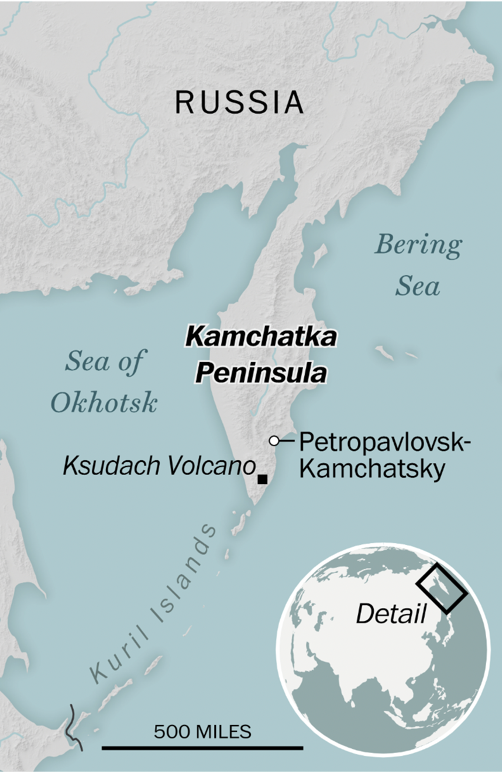
    In news: Kamchatka Peninsula

    Why in the News?

    Five strong offshore earthquakes hit Russia’s Kamchatka Peninsula, the strongest measuring 7.4 in magnitude.

    Kamchatka Peninsula

    About Kamchatka Peninsula:

    • Location: Situated in Far Eastern Russia, bordered by the Sea of Okhotsk (west) and the Pacific Ocean and Bering Sea (east).
    • Size and Shape: Stretches about 1,200 km north to south and 480 km at its widest point.
    • Area: Covers approximately 370,000 square kilometers—comparable in size to New Zealand.
    • Ethnic Composition: Majority are ethnic Russians; around 13,000 belong to the indigenous Koryak community.
    • Climate: Harsh with long, snowy winters and wet, cool summers.
    • Topography: Highest peak is Klyuchevskaya Sopka, an active volcano in the Eastern Mountain Range.
    • Global Recognition: Hosts the “Volcanoes of Kamchatka,” a UNESCO World Heritage Site.

    Tectonic Significance:

    • Geological Setting: Lies on the Pacific Ring of Fire, making it a global hotspot for seismic and volcanic activity.
    • Volcanic Density: Contains over 150 volcanoes, 29 of which are currently active.
    • Kuril–Kamchatka Trench: Located just offshore, reaches depths of about 10,500 meters and drives regional seismicity.
    • Tectonic Cause: Caused by subduction of the Pacific Plate beneath the Eurasian Plate.
    [UPSC 2004] Consider the following geological phenomena:

    1. Development of a fault 2. Movement along a fault

    3. Impact produced by a volcanic eruption 4. Folding of rocks

    Which of the above cause earthquakes?

    Options: (a) 1, 2 and 3 (b) 2 and 4 (c) 1, 3 and 4 (d) 1, 2, 3 and 4*


Join the Community

Join us across Social Media platforms.