💥UPSC 2027,2028 Mentorship (April Batch) + Access XFactor Notes & Microthemes PDF

Archives: News

  • Innovations in Biotechnology and Medical Sciences

    What is the Hayflick Limit?

    Why in the News?

    Leonard Hayflick, the renowned biomedical researcher who made a discovery about the limits of cell division in somatic cells (Hayflick Limit) has passed away at 98.

    What is the Hayflick Limit?

    • In the early 1960s, Hayflick discovered that somatic (non-reproductive) cells have a finite number of divisions, typically between 40-60 times.
    • This phenomenon, the ‘Hayflick limit’ suggests that aging occurs because cells eventually stop dividing.
      • This leads to the accumulation of senescent cells that contribute to the aging process.
    • The “ultimate Hayflick limit” for humans is estimated to be around 125 years.
    • Beyond this, no amount of lifestyle changes or medical interventions can extend the human lifespan.
    • Hayflick’s discovery has been applied to cells from various animals, revealing different Hayflick limits based on species’ lifespans.
    • Ex. Galapagos turtles, have cells that can divide approximately 110 times, whereas laboratory mice have a much lower limit of around 15 divisions.

    Broader Implications and Research

    • Hayflick’s discovery led to the discovery of telomeres in the 1970s.
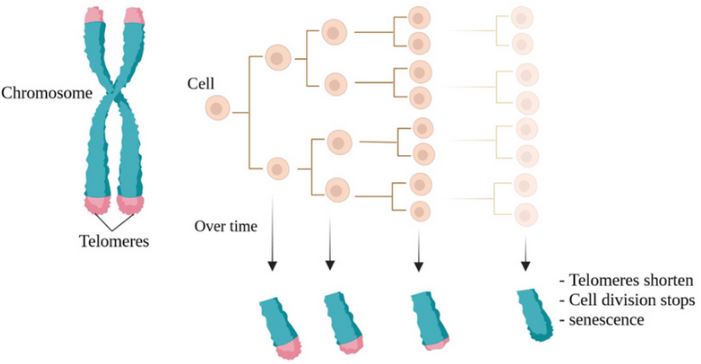
      • Telomeres are protective DNA sequences at the ends of chromosomes, which shorten with each cell division.
    • When telomeres reach a critical length, cell division stops, which correlates with the Hayflick limit.
    • In the 1980s, scientists discovered telomerase, a protein capable of replenishing telomeres, which is naturally active in cancer cells, allowing them to bypass the Hayflick limit.

    PYQ:

    [2011] Regular intake of fresh fruits and vegetables is recommended in the diet since they are a good source of antioxidants. How do antioxidants help a person maintain health and promote longevity?

    (a) They activate the enzymes necessary for vitamin synthesis in the body and help prevent vitamin deficiency

    (b) They prevent excessive oxidation of carbohydrates, fats and proteins in the body and help avoid unnecessary wastage of energy

    (c) They neutralize the free radicals produced in the body during metabolism

    (d) They activate certain genes in the cells of the body and help delay the ageing process

  • Global Geological And Climatic Events

    What is a Waterspout?

    Why in the News?

    A yacht sank off the coast of Sicily, Italy after being hit by a Waterspout.

    What are Waterspouts?

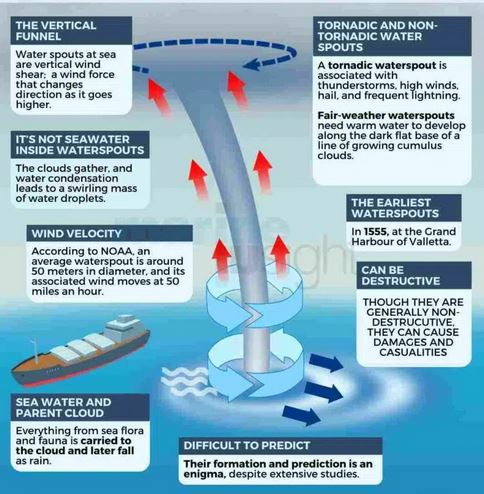
    • A waterspout is a rotating column of air and mist over a water body.
    • It is a weaker relative of tornadoes and typically lasts for about five minutes, although it can occasionally last up to 10 minutes.
    • Size and Strength:
      • Average diameter: Around 165 feet.
      • Wind speeds: Can reach up to 100 km/hr.
    • Waterspouts are more common in tropical waters but can form anywhere with high humidity and relatively warm water temperatures compared to the overlying air.

    Types of Waterspouts:

    • Tornadic Waterspouts
        • These are actual tornadoes that either form over water or move from land to water.
    • They are associated with severe thunderstorms and can be accompanied by high winds, large hail, and dangerous lightning.
    • Fair-Weather Waterspouts:
      • These are more common and form only over water during fair weather.
      • They are generally smaller and less dangerous than tornadic waterspouts.

    PYQ:

    [2020] Consider the following statements:

    1. Jet streams occur in the Northern Hemisphere only.

    2. Only some cyclones develop an eye.

    3. The temperature inside the eye of a cyclone is nearly 10ºC lesser than that of the surroundings.

    Which of the statements given above is/are correct?

    (a) 1 only

    (b) 2 and 3 only

    (c) 2 only

    (d) 1 and 3 only

  • Economic Indicators and Various Reports On It- GDP, FD, EODB, WIR etc

    The path to Viksit Bharat runs through fields  

    Why in the News?

    India’s 78th Independence Day is a time to reflect on our significant successes and setbacks. We should learn from both to make quicker progress towards the Prime Minister’s vision of a Viksit Bharat@2047 by 2047.

    Key Aspects of Viksit Bharat@2047

    • Economic Growth: The vision aims to elevate India to the status of the world’s third-largest economy and strive for a $30 trillion economy by 2047.
    • Environmental Sustainability: Viksit Bharat aims to preserve biodiversity and mitigate climate change impacts through restoration and conservation efforts.
    • Social Progress: The initiative seeks to build an inclusive society that respects cultural diversity and ensures the dignity and well-being of all citizens.
    • Good Governance: Effective governance is a cornerstone of the Viksit Bharat vision, focusing on accountability, transparency, and sound policies that are responsive to the needs of the people.
    • Youth Engagement: Recognizing the potential of India’s youth, the government has launched initiatives like the “Voice of Youth” portal to encourage young people to contribute ideas for achieving the goals of Viksit Bharat.

    Economic Challenges

    • Weak Domestic Demand: Stagnant or declining demand for goods and services due to low-income growth, high inflation, unemployment, and the impact of the Covid-19 pandemic.
    • High Unemployment: Despite rapid growth, unemployment remains a serious issue, worsened by the pandemic. The unemployment rate in India rose to 8.1 per cent in April 2024 from 7.4 per cent in March 2024, according to CMIE’s Consumer Pyramids Household Survey. 
    • Poor Infrastructure: India lacks adequate infrastructure like roads, railways, ports, power, water and sanitation, hampering economic development. The infrastructure gap is estimated at around $1.5 trillion.
    • Balance of Payments Deterioration: India runs a persistent current account deficit, with imports exceeding exports. Exports and imports decreased by 6.59% and 3.63% respectively in 2022.
    • High Private Debt Levels: India has witnessed a significant rise in debt levels in recent years.
      • According to the Reserve Bank of India (RBI), the total non-financial sector debt reached 167% of GDP in March 2020, up from 151% in March 2016. 
      • Household debt in India rose to 40.10% of GDP in the fourth quarter of 2023, up from 39% in the previous quarter. 

    Military Challenges

    • Securing Borders: Despite conflicts with Pakistan and China, India has reasonably managed border security. However, the rapid rise of China poses economic and military challenges.
    • China’s Growing Influence: Almost all of India’s neighbours are moving closer to China, necessitating better policy and diplomacy to secure India’s interests and ensure regional stability.
    • Military Modernization and Resource Allocation: India’s dependence on foreign arms imports, despite efforts to promote self-reliance through initiatives like “Make in India,” highlights the need for a robust domestic defense industry.
      • The country has been the largest arms importer from 2018 to 2022, indicating ongoing challenges in achieving military self-sufficiency

    Suggestive measures: (Way forward)

    • Agricultural Reforms: Investment in agricultural research and development, irrigation, and land-lease markets is vital. Building value chains for perishables can enhance food security and adapt to climate challenges.
    • Nutritional Security: Transitioning from mere food security to nutritional security is crucial, addressing issues like child malnutrition, which affects 35% of children under five.
    • Support for Farmers: Implementing subsidies for pulses and other sustainable crops can encourage healthier diets and environmental benefits. The government should provide financial incentives to farmers to shift from water-intensive crops to pulses.
    • Infrastructure Development: Continued investment in infrastructure, including transportation and digital connectivity, is essential for economic growth and improving citizens’ quality of life.
    • Education and Skill Development: Reforms in education to prioritize skill development and innovation are necessary to prepare the workforce for emerging industries and ensure inclusive growth.
    • Healthcare Initiatives: Expanding access to affordable healthcare services nationwide is critical for enhancing public health and productivity.

    Mains PYQ:

    Q Foreign Direct Investment (FDI) in the defence sector is now set to be liberalized: What influence this is expected to have on Indian defence and economy in the short and long run? (UPSC IAS/2016)

  • Poverty Eradication – Definition, Debates, etc.

    The tyranny of inequality  

    Why in the News?

    A recent study by Thomas Piketty and colleagues highlights a dramatic rise in wealth and income inequality in India over the past few decades, with a sharp increase particularly from 2014 to 2022.

    The analysis from ” Gallup World Poll (GWP) Survey (2019-23)” for India  

    Note: The GWP measures corruption through individual perceptions, asking respondents whether they believe corruption is widespread.
    • Income Inequality: The survey data indicates a significant rise in income inequality, with the top 1% controlling over 40% of total wealth in India, a stark increase from 12.5% in 1980.
      • The top 1% of income earners now receive 22.6% of the country’s total pre-tax income, up from 7.3% in 1980.
    • Rent-Seeking Behavior: The persistence of rent-seeking behavior among wealthy investors, which diverts resources from productive uses to securing unwarranted gains from government entities.
    • Judicial Trust and Corruption: Trust in the judiciary can play a significant role in curbing corruption. Higher trust correlates with lower perceived corruption levels.
    • Mutual Fund vs Fixed deposits: Speculative investments, such as mutual funds, largely drive income inequality, while savings in fixed deposits and post offices help curb it.
    • Inequality promotes corruption: The study finds that higher income inequality causes widespread corruption, while greater confidence in the judiciary helps reduce it.

    What is our present methodology for counting inequality?

    • Piketty’s Measure: Thomas Piketty’s measure compares the income share of the top 1% to that of the bottom 50%. This highlights the growing disparity in income distribution effectively.
    • Consumption vs Income Inequality: Inequality is traditionally measured using consumption expenditure surveys by the National Sample Survey Office (NSSO). However, consumption inequality tends to be lower than income inequality.
    • Use of Multiple Data Sources: Researchers often combine data from various sources, including national accounts, tax data, and recent surveys like the Periodic Labour Force Surveys (PLFS) and Consumer Pyramid Household Survey (CPHS).
    • Gini Index and Other Metrics: The Gini index is frequently used to quantify inequality, but it has limitations, being less sensitive to changes at the income distribution extremes.

    Issues Associated with measuring income inequality:

    • Data quality and availability: There has been a noted decline in the reliability of household surveys since 2011-12, making it difficult to obtain accurate and comparable data. For example, The 55th NSS round showed a dramatic decline in poverty estimates, which many experts deemed misleading due to the survey’s methodological flaws.
    • Underreporting of wealth: Surveys may underreport wealthier households’ consumption, leading to inaccurate inequality assessments. For example, the Household Consumption Expenditure Survey (HCES) 2022-23 reported a significant drop in rural and urban poverty levels. However, critics argue that these figures may not accurately reflect the reality of wealthier households
    • Comparability with other countries: India’s reliance on consumption data rather than income data can result in mischaracterization as a low-inequality country in international comparisons.
    • Focus on labor income: Some reports focus only on labor income, ignoring other income sources and skewing the understanding of overall inequality. For example, studies have shown that the income share of the top 10% in India has grown significantly, while labour income alone does not reflect this concentration adequately
    • Complexity of income dynamics: Accurately assessing inequality is challenging due to the influence of economic policies, globalization, and market forces. For instance, Researchers have noted that the absence of comprehensive tax data beyond 2017-18 adds uncertainty to the analysis of income inequality trends

    Way forward: 

    • Improve Data Collection and Methodologies: There is an urgent need to enhance the quality and reliability of household surveys and other data sources.
    • Broadening Income Metrics Beyond Labor Income: To better capture the full spectrum of income inequality, it’s essential to include non-labor income sources, such as capital gains, property income, and speculative investments.

    Mains PYQ:

    Q It is argued that the strategy of inclusive growth is intended to meet the objective of inclusiveness and sustainability together. Comment on this statement. (UPSC IAS/2019)

  • Wildlife Conservation Efforts

    Yaks from China stray into eastern Ladakh

    Why in the News?

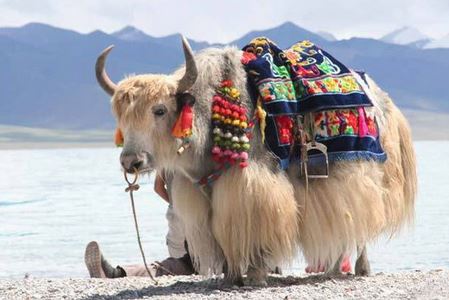
    Around 40 Chinese yaks ventured into Indian Territory in the “Demchok” area of eastern Ladakh and are currently under the control of the local villagers.

    Grazing land issue at LAC:

    • Nomads from both sides traditionally access grazing grounds across the LAC.
    • Indian nomads have been stopped by Chinese soldiers when crossing to the Chinese side.
    • Demchok nomads lost access to Lungkar Valley in 2022 and Nilung Valley in 2017.
    • Loss of these areas has negatively impacted the livelihoods of border residents.
    • China expanded its presence on the Indian side of Charding nala (adjacent to Demchok) since 2020 stand-off.

    About Himalayan Yaks in India:

    Details
    Species Belongs to the Bovini tribe, including bison, buffaloes, and cattle.
    Adaptation Can tolerate extreme cold, down to -40°C; adapted for high altitudes with long, insulating hair.
    Cultural Significance Valued by Himalayan peoples;

    Linked to Tibetan Buddhism legend of Rinpoche.

    Raising Method Traditionally reared under a transhumance system; involves significant hardship.
    Habitat Endemic to the Tibetan Plateau and high-altitude regions.
    Altitude Preference Thrives above 14,000 feet; typically climbs to 20,000 feet and rarely descends below 12,000 feet.
    Yak-Rearing States in India Arunachal Pradesh, Sikkim, Uttarakhand, Himachal Pradesh, Jammu & Kashmir.
    Population Decline 2019 census: 58,000 yaks in India, a 25% drop from 2012; decline due to low remuneration and market.
    Significance Provides crucial nutritional and livelihood security for pastoral nomads in high-altitude regions.
    Threats Climate change causing heat stress; inbreeding due to closed borders limiting genetic diversity.
    Protection Status* – IUCN Red List: Vulnerable
    – CITES: Appendix I
    – Indian Wildlife Act: Schedule I
    Food Status* Approved as a ‘food animal’ by the Food Safety and Standard Authority of India (FSSAI).


    PYQ:

    [2016] What is/are unique about ‘Kharai camel’, a breed found in India?

    1. It is capable of swimming up to three kilometres in seawater.

    2. It survives by grazing on mangroves.

    3. It lives in the wild and cannot be domesticated.

    Select the correct answer using the codes given below:

    (a) 1 and 2 only

    (b) 3 only

    (c) 1 and 3 only

    (d) 1, 2 and 3

  • Modern Indian History-Events and Personalities

    [pib] Maharaja Bir Bikram Kishore Manikya Bahadur

    Why in the News?

    The Prime Minister has paid homage to the great Maharaja of Tripura Bir Bikram Kishore Manikya Bahadur on his birth anniversary.

    Who was Maharaja Bir Bikram Kishore Manikya Bahadur?

    Details
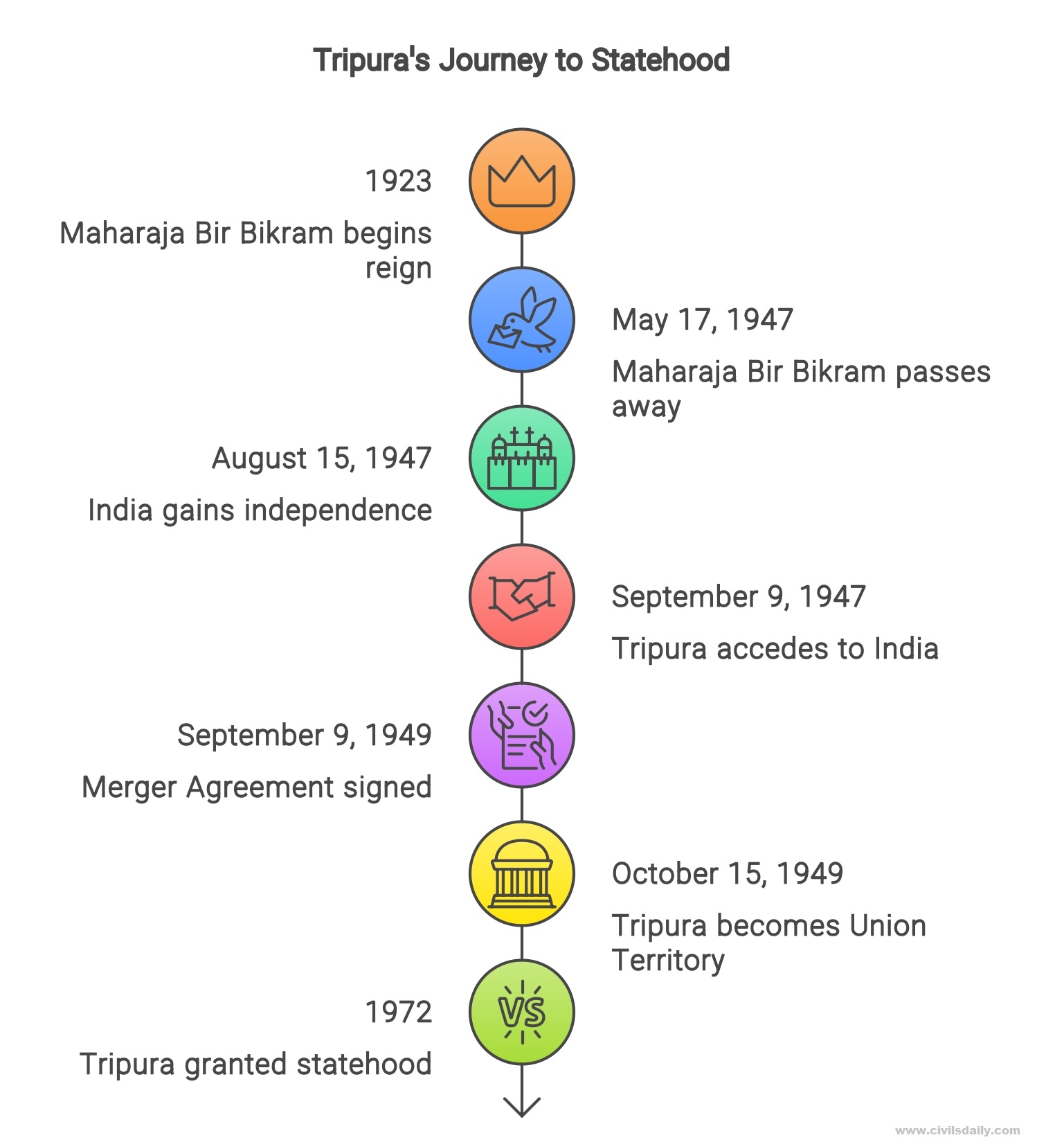
    Reign 1923 – 1947
    Birth August 19, 1908
    Contributions to Tripura – Modernized Tripura with infrastructure and educational reforms.
    – Planned and designed the city of Agartala, earning the title “Architect of Modern Tripura.”-He took initiatives to explore tea cultivation and established several tea estates in Tripura.
    Education and Infrastructure – Established schools, colleges, and hospitals.
    – He was instrumental in establishing the first airport in Tripura, the Maharaja Bir Bikram Airport, which greatly improved connectivity and facilitated economic growth
    Social Reforms Introduced land reforms, granted land rights to indigenous people, and worked to abolish untouchability.

    Maharaja Bir Bikram was a patron of the arts and culture, supporting various cultural activities and institutions.

    Military Role Supported the British during World War II.
    Legacy Died on May 17, 1947

    Remembered as a visionary ruler who played a crucial role in shaping modern Tripura.

    PYQ:

    [2022] The political and administrative reorganization of states and territories has been a continuous ongoing process since the mid-nineteenth century. Discuss with examples. (250 words, 15 marks)

    [2007] Which one of the following is the correct chronological order of the formation of the following states as full states of the Indian Union?

    (a) Sikkim, Arunachal Pradesh, Nagaland, Haryana

    (b) Nagaland , Haryana, Sikkim, Arunachal Pradesh

    (c) Sikkim, Haryana, Nagaland, Arunachal Pradesh

    (d) Nagaland, Arunachal Pradesh, Sikkim, Haryana

  • Forest Conservation Efforts – NFP, Western Ghats, etc.

    Banni Grasslands of Kachchh

    Why in the News?

    A study conducted by researchers at Kachchh University assessed the suitability of different areas in Banni for sustainable grassland restoration, with ecological value being the primary criterion.

    Restoration of Banni Grasslands: Highlights of the Study

    Recent Study:

    • Objective: A study conducted by researchers at KSKV Kachchh University assessed the suitability of different areas in Banni for sustainable grassland restoration, with ecological value being the primary criterion.
    • Need for restoration: Originally covering about 3,800 sq. km, the Banni grasslands have shrunk to about 2,600 sq. km.
    • Categories of Restoration Zones: The researchers divided the grassland into five categories based on restoration suitability:
      • Highly Suitable: 937 sq. km (36%)
      • Suitable: 728 sq. km (28%)
      • Moderately Suitable: 714 sq. km (27%)
      • Marginally Suitable: 182 sq. km (7%)
      • Not Suitable: 61 sq. km (2%)
    • Restoration Potential: The “highly suitable” and “suitable” zones, making up nearly two-thirds of the Banni grasslands, can be restored easily by providing adequate water sources.

    About Banni Grasslands:

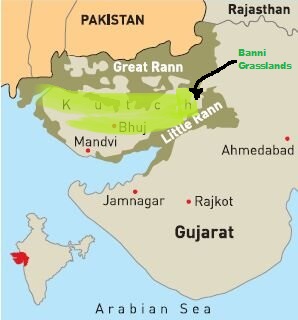
    • The Banni Grassland is a salt-tolerant ecosystem located in the Kutch district of Gujarat, covering around 3,847 square km.
    • It is said to be Asia’s largest grassland (TOI).
    • The climate is arid and semi-arid, with extremely hot summers (temperatures above 45°C) and mild winters (12°C to 25°C), receiving 300-400 mm of annual rainfall mainly during the monsoon.
    • It is inhabited by pastoral communities like the Maldharis, who rely on livestock grazing (cattle, buffalo, and sheep) for their livelihood.
    • Agriculture is limited due to arid conditions, with some areas used for salt production.
    • Flora: Grasses such as Dichanthium, Sporobolus, and Cenchrus species, with salt-tolerant plants, shrubs, and trees like Acacia and the invasive Prosopis juliflora.
    • Fauna: Indian wolf, hyena, chinkara, Great Indian Bustard, flamingos, and various raptors, reptiles, and invertebrates.

    PYQ:

    [2021] The vegetation of Savannah consists of grassland with scattered small trees, but extensive areas have no trees. The forest development in such areas is generally kept in check by one or more or a combination of some conditions. Which of the following are such conditions?​

    1. Burrowing animals and termites​

    2. Fire​

    3. Grazing herbivores​

    4. Seasonal rainfall​

    5. Soil properties​

    Select the correct answer using the code given below.​

    (a) 1 and 2

    (b) 4 and 5​

    (c) 2, 3 and 4

    (d) 1, 3 and 5​

  • Foreign Policy Watch: India-Japan

    [pib] 2+2 Ministerial Dialogue

    Why in the News?

    Japanese foreign and defence ministers have arrived in India to participate in the India-Japan 2+2 ministerial meeting.

    About 2+2 Ministerial Dialogue

    • The 2+2 Ministerial Dialogue is a diplomatic summit held annually since 2018, initially between India and the US.
    • It later expanded to include Japan, Australia, Russia, and the United Kingdom.
    • This dialogue involves the Foreign and Defense Ministers of participating countries and focuses on strengthening bilateral relations and addressing common concerns.
    • The dialogue replaced the Strategic and Commercial Dialogue during a 2017 agreement between PM Narendra Modi and President Donald Trump.
    • First Summit was held on September 6, 2018, between India and the US in New Delhi, involving discussions on defense partnerships and strategic cooperation.

    Key Milestones:

    What are the key priorities of the Indo-Japan 2+2 Dialogue?

    • Update Security Cooperation: Revising the 2008 security agreement to reflect current strategic needs.
    • Promote a Free Indo-Pacific: Collaborating to ensure a free, open, and stable Indo-Pacific region.
    • Engage in Strategic Talks: Holding strategic discussions between foreign and defense ministers to boost bilateral ties.
    • Address Regional Security: Discussing key issues like Chinese assertiveness, the Russia-Ukraine war, and the Gaza crisis.
    • Coordinate Quad Efforts: Exploring cooperation within the Quad framework, including a potential summit.

    PYQ:

    [2020] Quadrilateral Security Dialogue (Quad) is transforming itself into a trade bloc from a military alliance, in present times Discuss.

  • Innovations in Biotechnology and Medical Sciences

    Waggle Dance of Bees

    Why in the News?

    Two scientists have raised concerns about “problematic behaviour” in papers on honeybee communication co-authored by Dr. Mandyam Srinivasan, a highly honoured neuroscientist.

    About Waggle Dance of Bees

    Details
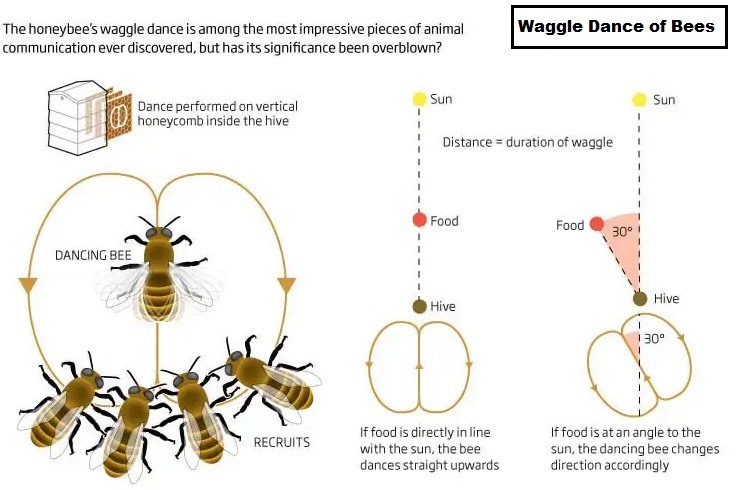
    Purpose Communicates location of food sources to other bees.
    Dance Pattern Figure-eight (8) movement with a waggle run in the middle.
    Direction Indication Angle of waggle run shows direction relative to the sun.
    Distance Indication Duration of waggle run indicates distance to the food source.
    Efficiency Enhances foraging efficiency by guiding bees directly to food sources.
    Environmental Impact Accuracy affected by Sun position, wind, and landscape.
    Scientific Importance Decoded by Nobel laureate Karl von Frisch; an example of advanced insect communication.


    PYQ:

    [2023] Which of the following organisms perform waggle dance for others of their kin to indicate the direction and the distance to a source of their food?

    (a) Butterflies

    (b) Dragonflies

    (c) Honey Bees

    (d) Wasps

  • Labour, Jobs and Employment – Harmonization of labour laws, gender gap, unemployment, etc.

    Labor conditions in southern states  

    Why in the News?

    Migrant workers from various parts of India are gradually becoming a noticeable presence in the agricultural fields of Tamil Nadu’s Cauvery delta, often called the granary of South India.

    Migrants in Tamil Nadu’s Cauvery Delta

    • Labour Shortage in Agriculture: The Cauvery Delta, known as the granary of South India, is experiencing a significant shortage of farmhands as the younger generation moves away from agriculture. This has led to a reliance on migrant workers, particularly from states like West Bengal and Bihar, who are skilled in paddy transplanting and harvesting.
    • Economic Dynamics: Migrant labourers are filling the labour gap during agricultural seasons, working in groups and completing tasks more quickly than local labourers. They charge around ₹4,500 to ₹5,000 per acre, compared to local workers who earn ₹600 per day.
    • Sociocultural Integration: While there hasn’t been significant tension between migrant workers and local labourers, the integration of migrants into the agricultural workforce is still evolving.
      • Local labour unions acknowledge the presence of migrant workers but do not see it as a widespread issue yet, partly due to the ongoing mechanization of agriculture and changing job preferences among the local youth.

    Dependence on Migrant Workers in Kerala

    • Shift in Labor Sources: Kerala has seen a growing dependence on migrant workers from northern and eastern states, including West Bengal and Bihar, to fill labour shortages in various sectors, including agriculture.
      • A recent study by the Gulati Institute of Finance and Taxation estimated the number of inter-state migrant workers in Kerala at 2.5 million, equivalent to 7% of the state’s population.
    • Economic Factors: High wage differentials between Kerala and the migrants’ home states, along with a robust urban economy, have made Kerala an attractive destination for migrant labourers.

    External Migration from Uttar Pradesh to Maharashtra

    • High Migration Rate: Uttar Pradesh tops the list for inter-state job-related migration to Maharashtra, with over 5.7% of migrants moving for employment purposes between 2020 and 2021.
    • Concentration of Migrants: Within Maharashtra, districts such as Mumbai and Thane have the highest concentrations of migrants from Uttar Pradesh.

    How does the proposed ‘quota-for-local’ Bill impact migrant workers?

    • uction in the already precarious employment options available to migrants, who often fill lower-skilled positions.
    • Increased Competition: The migrant workers might face intensified competition for fewer available roles, particularly in sectors where they have traditionally been employed, such as delivery services and hospitality.
    • Economic Migration: The bill could lead to a demographic shift in the labor market. Migrants may choose to relocate to states with more inclusive hiring practices, impacting the state’s economy and workforce diversity.
    • Exploitation Risks: The present Bill could make migrants more vulnerable to exploitation, as companies may feel less inclined to hire them, leading to further marginalization of these workers.
    • Industry Concerns: Business leaders and industry representatives have expressed concerns that the bill could deter investment and talent from flowing into Karnataka, potentially leading to job losses and reduced economic growth. The focus should be on skills rather than reservations.

    What measures can be taken to protect migrant workers from exploitation?

    • Right to Change Employers: States need to ensure that migrant workers have the freedom to change employers without facing penalties, which can reduce their vulnerability to abuse and exploitation.
    • Empower Migrant workers: The government/ Private sector needs to provide comprehensive information regarding workers’ rights, including recruitment processes, legal protections, and avenues for reporting abuse.
      • Strengthening labor laws and legal assistance with counseling services that protect migrant workers and ensure strict enforcement through regular inspections of workplaces is a need of the hour.
    • Social Security and Housing Access: States need to ensure that migrant workers have access to social services, housing, and healthcare, which can help mitigate their vulnerabilities.
      • NITI Aayog in its report ”India’s Booming Gig and Platform Economy” has said that fiscal incentives such as tax breaks or startup grants may be provided for businesses that provide livelihood opportunities where women constitute a substantial portion of their workers.
    • International Cooperation: Encourage countries to adopt and implement international standards and conventions that protect the rights of migrant workers, promoting safe and ethical recruitment practices.

    Lack of Proper Data and Registration

    • Historical Data Gaps: The last comprehensive survey on internal migration was conducted as part of the National Sample Survey in 2007-08, with the Census 2011 data only partially released in 2020.
    • Absence of Real-Time Data: During the COVID-19 lockdown, the Indian government did not collect data on the deaths or job losses of internal migrants. The Ministry of Labour and Employment confirmed that it maintained no records of migrant workers who lost their jobs or lives during this period.

    Legislation: 

    The Inter-State Migrant Workmen (Regulation of Employment and Conditions of Service) Act, 1979 was enacted to protect the rights and regulate the conditions of service for migrant workers who move between states in India for employment.

    Implementation Challenges

    • Lack of Awareness: Many migrant workers are unaware of their rights under the Act, leading to exploitation and poor working conditions.
    • Inadequate Enforcement: There is often insufficient enforcement of the Act by state governments, resulting in widespread violations and the continued presence of migrant workers in informal and unregulated sectors.
    • Data Gaps: The absence of accurate data on the number of inter-state migrant workers complicates enforcement and the provision of services.

    Way forward: 

    • Promote Sustainable Employment and Skill Development in Source Regions: To reduce the over-reliance on migrant labour and address labour shortages in sectors like agriculture, the government should focus on creating sustainable employment opportunities in the migrants’ home states.
    • Promote Sustainable Employment and Skill Development in Source Regions: The government should create a real-time migrant data system linked with Aadhaar, enabling targeted policies, social security, and effective crisis response for internal migrants.

    Mains PYQ:

    Q Discuss the changes in the trends of labour migration within and outside India in the last four decades. (UPSC IAS/2015)

Join the Community

Join us across Social Media platforms.