💥UPSC 2026, 2027, 2028 UAP Mentorship (March Batch) + Access XFactor Notes & Microthemes PDF

Archives: News

  • Festivals, Dances, Theatre, Literature, Art in News

    Srinagar gets tag of ‘World Craft City’, fourth from country

    Why in the News?

    Srinagar has become the fourth Indian city to be recognised as a ‘World Craft City’ by the World Craft Council (WCC), three years after it was designated as part of the UNESCO Creative City Network (UCCN) for crafts and folk arts.

    Craft Sector in Kashmir

    • The Indian National Trust for Art and Cultural Heritage-Kashmir (INTACH-K) is working with the J&K Handicrafts department to map Srinagar’s craft sector in preparation for the final nomination.
    • Srinagar boasts a rich artisanal heritage, with over 20,000 registered craftsmen engaged in various disciplines such as papier mâché, walnut wood carving, hand-knotted carpets, and more.
    • Handicrafts contribute significantly to the local economy, with approximately 2.64% of J&K’s overall economic output attributed to the sector by 2016-17.
    • Notable Craft: Papier-Mache, Walnut Wood Carving, Carpets, Sozni embroidery and Pashmina and Kani shawls.

    About World Craft Council (WCC International)

    Details
    What is it? Non-profit, Non-governmental organization
    Working
    • Establishment in 1964;
    • Registered in Belgium as an international association without lucrative purpose (AISBL).
    • Affiliated to the UNESCO
    Founders Kamaladevi Chattopadhay and Aileen Osborn Webb
    Purpose To promote fellowship among craftspersons worldwide, foster economic development through craft-related activities, organize exchange programs, workshops, conferences, seminars, and exhibitions, and offer encouragement and advice to artisans.
    Legal Status
    • Registered in Belgium as an international association without lucrative purpose (AISBL)
    • WCC is organized into five regions: Africa, Asia Pacific, Europe, Latin America, and North America.
    Meetings
    • European branch meets annually;
    • The General Assembly occurs every four years (took place in Chennai in 2012).

    What is World Craft City (WCC) Designation?

    • The WCC initiative was launched in 2014 by the World Crafts Council AISBL (WCC-International).
    • It recognizes the pivotal role local authorities, craftspeople, and communities play in cultural, economic, and social development worldwide.
    • India has only 3 cities designated as World Craft City:
    1. Jaipur (Kundan Jadai (Gem setting), Meenakari Jewellery, Lac-based craft, Gotta Patti Work etc. )
    2. Mysuru (Kinnal paintings, Sandalwood carvings, Rosewood Inlay etc. )
    3. Mamallapuram (Stone Carving continuing since Pallava dynasty (275 CE to 897 CE))

    PYQ:

    [2018] Safeguarding the Indian art heritage is the need of the moment. Comment (10M) 

    [2018] Consider the following pairs:

    1. Puthukkuli shawls — Tamil Nadu
    2. Sujni embroidery — Maharashtra
    3. Uppada Jamdani saris — Karnataka

    Craft Heritage of which of the pairs given above is/are correct?

    (a) 1 only

    (b) 1 and 2

    (c) 3 only

    (d) 2 and 3

  • Indian Missile Program Updates

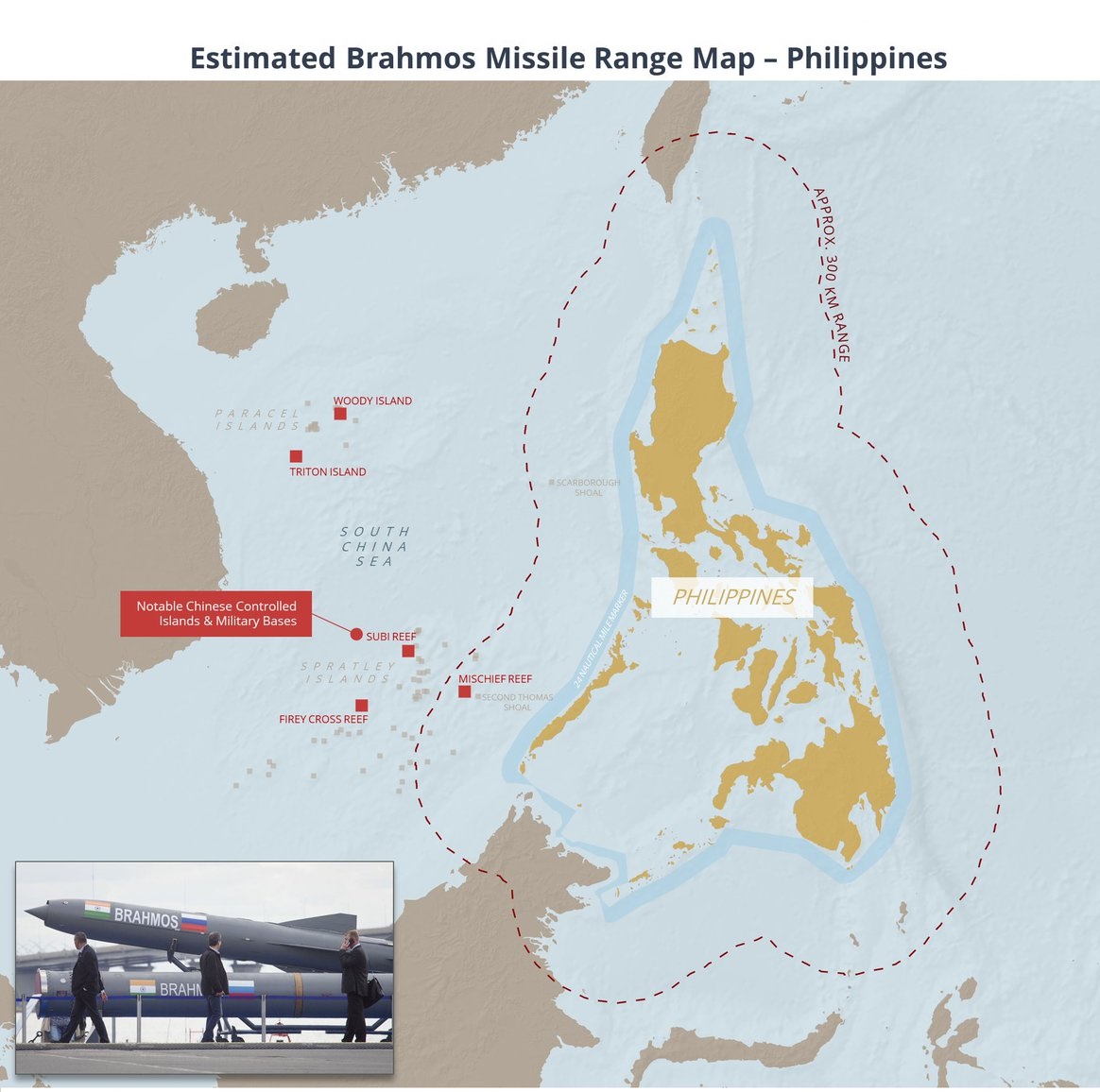
    Philippines hails BrahMos Missiles as a ‘game changer’

    Why in the News?

    • The BrahMos cruise missiles so inducted are termed a “game changer” by the Philippines envoy. The missiles provide credible defence and deterrent capabilities to the Philippines’ armed forces.

    About BrahMos Missiles

    • BrahMos is a joint venture between the DRDO and Russia’s NPO Mashinostroyeniya.
    • The name BrahMos comes from the two rivers, the Brahmaputra of India and the Moskva of Russia.
    • The first successful test in 2001 was conducted from a specially designed land-based launcher.

    Capabilities:

    • BrahMos is a medium-range ramjet supersonic cruise missile.
    • Launched from: submarines, ships, aircraft, or land.
    • It is the fastest supersonic cruise missile in the world.
    • It has two stages:
    1. The first stage comprised a solid-fuel rocket booster and
    2. The second stage comprises a liquid-fueled ramjet. ( because it provides the capability to manoeuvre and increase the range of missiles)

    Warhead:

    • Ship-launched and land-based missiles can carry a 200 kg warhead,
    • Aircraft-launched variant (BrahMos A) can carry a 300 kg warhead.

    Variants and Range 

    • The missile travels at speeds of Mach 2.8 to 3.0, which is being upgraded to Mach 5.0.
    • A hypersonic version of the missile, BrahMos-II, is also presently under development with a speed of Mach 7-8 to boost aerial fast strike capability.
    • Initially restricted by the Missile Technology Control Regime to a range of 290km, the BrahMos missile’s range was extended to 450km following India’s entry into the regime in June 2016.
    • Ongoing efforts aim further to extend the missile’s range beyond 600km, enhancing its operational reach and effectiveness in various scenarios.

    India-Philippines Relations: A quick recap

    • Context: 2023 marked the 75th anniversary of bilateral relations between India and the Philippines.
    • Equipment Transfers: These agreements facilitated government-to-government procurement of defence material and equipment.

    Details of the BrahMos Deal

    A MoU on defence cooperation was signed in 2006, reinforced by a 2017 MoU on defence industry and logistics cooperation.

    • Contract Details: In January 2022, the Philippines signed a $375 million deal with India for three batteries of shore-based anti-ship BrahMos missiles.
    • First Export Customer: The Philippines became the first export customer for the joint India-Russia venture.
    • Delivery Milestone: The first batch of missiles was delivered in April 2024.
    • Boost to India’s Defence Export: This deal marks India’s first overseas export of the BrahMos, showcasing India’s growing defence industry capabilities.

    Bilateral Trade and Economic Cooperation

    • Trade Milestone: In 2023, bilateral trade crossed the $3 billion mark for the first time, with a trade balance in India’s favour.
    • Preferential Trade Agreement (PTA): Ongoing negotiations for a PTA aim to enhance trade balance and diversification.
    • Trade Partnerships: India is among the top 15 trade partners for the Philippines.

    Modernisation of the Philippines Armed Forces

    • Phase-3 Modernisation: The Philippines armed forces are in phase-3, termed Horizon-3, of their modernisation programme.
    • Focus Areas: They are looking at acquiring ships, aircraft, and radars, and enhancing Maritime Domain Awareness (MDA).
    • Strategic Goals: Aiming to defend entitlements and secure their Exclusive Economic Zone (EEZ) against China over its claims for the South China Sea.


    PYQ:

    [2014] Which reference to the Agni-IV Missile,

    which of the following statements is/are correct?

    1. It is a surface-to-surface missile.
    2. It is fuelled by liquid propellant only.
    3. It can deliver one-tonne nuclear warheads about 7500 km away.

    Select the correct answer using the code given below.

    (a) 1 only

    (b) 2 and 3 only

    (c) 1 and 3 only

    (d) 1, 2 and 3

  • Medical Education Governance in India

    NTA Reform Panel to Check Irregularities in Exams

    Why in the News?

    A seven-member high-level committee was constituted under the chairmanship of K. Radhakrishnan, former ISRO Chairman, by the Ministry of Education to reform the National Testing Agency (NTA).

    About National Testing Agency (NTA)

    • NTA is a premier, specialist, autonomous and self-sustained testing organization to conducts entrance examinations for admission/fellowship in higher educational institutions.
    • It was established in 2017 with a grant amount of Rs.25 crore from the Union Government.
    • NTA is responsible for conducting exams such as:
      • Joint Entrance Examination – Main (JEE Main)
      • National Eligibility cum Entrance Test-Undergraduate (NEET-UG) as well as NEET PG
      • National Eligibility Test (NET)
      • Common Management Admission Test (CMAT)
      • Graduate Pharmacy Aptitude Test (GPAT).
    • The NTA is chaired by an eminent educationist who will be appointed by the Ministry of Education.
    • There will be a Board of Governors comprising members from user institutions.

    National Testing Agency (NTA) Under Scrutiny

    • The NTA has been criticized after the NEET paper leak controversy and the subsequent scrapping of exams like UGC-NET due to “lack of integrity”.
    • The committee aims to establish a robust process for conducting various entrance examinations end to end.

    NTA Reform Panel: Committee Composition

    • Committee Head: K. Radhakrishnan, former Chairman of ISRO and Chairman of the Board of Governors at IIT-Kanpur.
    • Two-Month Timeline: The committee aims to meet ten times over the next two months to develop comprehensive recommendations.
    • Key Issues and Focus Areas:
      • Data Security Protocol: Develop a manual to fix a data security protocol to prevent question paper leaks.
      • Printing and Process Integrity: Review processes for printing question papers, onboarding printers, and training staff to minimize external participation.
      • Organisational Restructuring: Consider adding a data security vertical in the NTA organogram and implementing transparent processes, requiring organizational restructuring.
    • Examination Investigation and Security:
      • Root Cause Analysis: The committee will investigate the initial cause of question paper leaks to identify and plug gaps.
      • Modes of Examination: Examine different modes of conducting examinations:
    1. JEE (Mains) and JEE (Advanced) are computer-based tests.
    2. NEET-UG is conducted in pen-paper Optical Mark Recognition (OMR) mode.

    Challenges faced by NTA

    • Infrastructure Limitations: Currently, India lacks the infrastructure to conduct computer-based tests online for more than three lakh students simultaneously.
    • Large-Scale Exams: NEET-UG involves up to 24 lakh students appearing in pen and paper OMR mode at once.

    Conclusion

    • The reforms are critical to restoring the integrity of entrance examinations in India, ensuring secure and fair testing processes.
    • The committee’s recommendations will play a pivotal role in shaping the future operations of the NTA and entrance examination protocols.

    Back2Basic:  University Grants Commission (UGC)

    Details
    Establishment
    • Came into existence on 28th December, 1953.
    • Became a statutory organization by an Act of Parliament in 1956.
    Legislation The UGC Act, 1956.
    Nodal Ministry Ministry of Human Resource Development (now Ministry of Education).
    Responsibilities
    • Providing funds to universities and colleges.
    • Coordination, determination, and maintenance of standards of teaching, examination, and research in institutions of higher education.
    Mandate
    • Promoting and coordinating university education.
    • Determining and maintaining standards of teaching, examination, and research in universities.
    • Framing regulations on minimum standards of education.
    • Monitoring developments in collegiate and university education.
    • Disbursing grants to universities and colleges.
    • Serving as a link between the Union and state governments and institutions of higher learning.
    • Advising Central and State governments on measures necessary for the improvement of university education.
    Unique Distinction Only grant-giving agency in India with the dual role of funding and maintaining standards in higher education institutions.
    Functions
    • Promoting and coordinating university education.
    • Determining and maintaining standards of teaching, examination, and research in universities.
    • Framing regulations on minimum standards of education.
    • Monitoring developments in collegiate and university education.
    • Disbursing grants to universities and colleges.
    • Serving as a link between the Union and state governments and institutions of higher learning.
    • Advising Central and State governments on measures necessary for the improvement of university education.
    Link Role Acts as a vital link between Union and State governments and institutions of higher learning.
    Advisory Role Advises the Central and State governments on necessary measures for the improvement of university education.
  • Surrogacy in India

    Centre amends Maternity Leave Rules for Surrogacy

    Why in the News?

    • The Centre has notified amended rules allowing women government employees to take 180 days of maternity leave for children born through surrogacy.
      • Changes are introduced in the Central Civil Services (Leave) Rules, 1972.
      • There were previously no rules granting maternity leave to women government employees for children born through surrogacy.

    Back2Basics: Surrogacy (Regulation) Act, 2021 

    • Purpose: The Act aims to regulate surrogacy in India by prohibiting commercial surrogacy and allowing only altruistic surrogacy.
    • Eligibility Criteria:
      • Only Indian couples who have been legally married for at least five years can opt for surrogacy.
      • The woman must be between 25 to 50 years old, and the man must be between 26 to 55 years old.
      • Both partners must not have any living biological, adopted, or surrogate children.
    • Surrogate Mother Criteria:
      • The surrogate mother must be a close relative of the intending couple.
      • She should be a married woman having her own child and must be 25 to 35 years old.
    • Prohibitions:
      • Commercial surrogacy is banned under this Act.
      • Any form of payment to the surrogate mother beyond medical expenses and insurance coverage is prohibited.
    • Penalties:
      • Engaging in commercial surrogacy can lead to imprisonment up to 10 years and a fine up to Rs 10 lakhs.
    • Regulatory Bodies:
      • The Act establishes a National Surrogacy Board at the national level and State Surrogacy Boards at the state level to oversee the implementation of the law.

    About the Central Civil Services (Leave) (Amendment) Rules, 2024

    • The amendment is issued under this notification, exercising the powers conferred by the proviso to Article 309 of the Constitution.
      • Article 309 provides that acts of the appropriate Legislature may regulate the recruitment and conditions of service of persons appointed to public services and posts in connection with the affairs of the Union or any State.
    • Authority: The President of India has made these amendments to the Central Civil Services (Leave) Rules, 1972.

    Features and Benefits:

    • Surrogacy Inclusion: These amendments specifically address the needs of surrogacy, providing equitable maternity, paternity, and childcare leave benefits to government employees involved in surrogacy.
    • Enhanced Leave Entitlements:
      • Maternity Leave: 180 days for both the surrogate and the commissioning mother.
      • Paternity Leave: 15 days for the commissioning father within six months of the child’s birth.
      • Child Care Leave: Available to the commissioning mother. Female government servants and single male government servants are already allowed childcare leave for a maximum of 730 days (2 years!) during their entire service for the care of their two eldest surviving children.
    • Flexibility and Inclusivity:
      • The amendments aim to provide more flexible and inclusive leave options for government employees, recognizing diverse family structures and reproductive choices.
    • Support for Families:
      • These changes enhance support for government employees, ensuring they can adequately care for their children and family needs, especially in cases of surrogacy.
    • Administrative Implementation:
      • The rules simplify the process for applying for and approving leave, ensuring that employees can easily access their entitlements.

    Impact:

    • Employee Well-being: Improved leave policies contribute to better work-life balance and overall well-being for government employees.
    • Gender Equality: By providing paternity leave and child care leave in surrogacy cases, the rules promote gender equality and shared parenting responsibilities.
    • Organizational Efficiency: Streamlined leave procedures and clear guidelines help maintain productivity and efficiency within government departments.

    PYQ:

    [2020] In the context of recent advances in human reproductive technology, “Pronuclear Transfer” is used for:

    (a) fertilization of egg in vitro by the donor sperm

    (b) genetic modification of sperm-producing cells

    (c) development of stem cells into functional embryos

    (d) prevention of mitochondrial diseases in offspring

  • Foreign Policy Watch: India-Maldives

    From China tilt to a balancing with Beijing and Delhi  

    Why in the news?

    Amid mounting domestic and foreign policy challenges in Male, Mohamed Muizzu appears to be seeking reconciliation with India.

    Economic Difficulties in Maldives

    • Debt Burden: Maldives faces severe economic strain with a debt-to-GDP ratio of 110% and significant debt servicing obligations, including around $512 million annually in 2024 and 2025.
    • Foreign Reserves: Foreign reserves are critically low at $622 million, insufficient to cover debt maturities and sustain imports amid rising inflation.
    • Dependence on Imports: Heavy reliance on imports for essential goods exacerbates economic vulnerabilities, particularly amidst food and fuel inflation.
    • Revenue Generation: The government struggles with low domestic revenue generation capacity, further complicating fiscal management and debt sustainability.
    • Diversification Efforts: Efforts to diversify economic partnerships beyond traditional allies like India and China reflect a strategy to mitigate economic dependencies and attract diverse investments.

    What do the ties between India and China imply?

    • Geopolitical Competition: India and China’s engagements in countries like the Maldives reflect a broader competition for influence in the Indian Ocean region. Both countries strategically invest in infrastructure and security partnerships to enhance their regional foothold.
    • Economic Leverage: China’s substantial investments in the Maldives, including infrastructure projects under the Belt and Road Initiative (BRI), provide economic leverage but also raise concerns about debt sustainability and strategic dependencies.
    • Strategic Alignment: While India emphasizes developmental assistance and strategic partnerships focused on security and governance, China’s engagements often prioritize infrastructure development and economic cooperation, reflecting different strategic priorities.
    • Regional Stability: Both India and China play pivotal roles in ensuring stability and security in the Indian Ocean region. Their respective approaches influence regional dynamics and perceptions among neighbouring countries regarding economic partnerships and security alignments.

    India’s stand

    • Balanced Approach: India continues to engage with the Maldives despite geopolitical shifts and maintains a stance of constructive diplomacy, offering economic support and emphasizing mutual respect.
    • Long-term Engagement: Inviting President Muizzu to Prime Minister Modi’s swearing-in signals India’s commitment to long-term bilateral relations and stability in the Indian Ocean region.
    • Strategic Importance: India views the Maldives as crucial for maritime security and regional stability, underpinning its continued diplomatic efforts and economic assistance.

    Conclusion: India can increase its economic assistance to the Maldives through grants, concessional loans, and capacity-building initiatives aimed at improving fiscal management and revenue generation capabilities. And focus on projects that enhance infrastructure resilience, promote sustainable development, and support economic diversification efforts beyond traditional sectors.

    Mains PYQ:

    Q Discuss the political developments in Maldives in the last two years. Should they be of any cause of concern to India? (UPSC IAS/2013) 

  • Finance Commission – Issues related to devolution of resources

    Finance Commission and Indian Cities

    Why in the news? 

    With the new Lok Sabha and Union government in place, this final piece focuses on how the 16th Finance Commission can drive substantive public finance reforms for India’s cities.

    Note: The Sixteenth Finance Commission has been requested to make its recommendations available by October 31, 2025, covering an award period of 5 years commencing 1st April, 2026.

    16th Finance Commission can catalyse municipal-level financial reforms     

    • Strengthening State Finance Commissions: The Commission should emphasize the need for state governments to constitute state finance commissions on time, provide them with adequate resources, and ensure their recommendations are taken seriously.
    • Fiscal Decentralization: The 16th FC should recommend a formula-based approach for predictable fiscal transfers from state governments to municipalities, moving away from the current practice of ad hoc, discretionary grants. This will enhance the financial autonomy of urban local bodies.
    • Revenue Optimization: The Commission should incentivize municipalities to enhance their own revenues through measures like property tax reforms, user charges, and leveraging land assets. This will reduce their dependence on state grants and promote fiscal responsibility.
    • Fiscal Responsibility and Budget Management: The 16th FC can provide incentives for municipalities to adopt fiscal responsibility and budget management frameworks to accelerate municipal borrowings for infrastructure development. This will enable cities to access capital markets for financing their growth.
    • Transparency and Citizen Participation: The 16th FC can encourage municipalities to enhance transparency and citizen participation in urban governance for improved accountability at the neighbourhood level. This will make urban local bodies more responsive to the needs of citizens.

    Need for the Reforms

    • Inadequate Funding and Resource Utilization: Indian cities face significant financial shortfalls and struggle to effectively utilize the funds they have, leading to underdeveloped infrastructure and services.
    • Lack of Accountability: There is minimal accountability regarding how municipal spending improves citizens’ lives, resulting in inefficient use of resources and unmet public needs.
    • Fiscal Decentralization: Cities need predictable fiscal transfers for effective planning, but state governments often delay constituting State Finance Commissions (SFCs) and implementing their recommendations.
    • Revenue Optimization: Cities underutilize their revenue-generating powers due to outdated valuation processes controlled by state governments. Comprehensive reforms are needed at all stages of revenue collection.
    • Transparency and Fiscal Responsibility: The legal framework for financial accounting, reporting, and budgeting is inconsistent across states. Standardized formats, mandatory accounting standards, and management accounting systems are necessary to improve transparency and fiscal responsibility.

    Activities by State Governments

    • Timely Constitution and Implementation of State Finance Commissions: State governments must ensure the timely establishment and effective implementation of SFC recommendations to support fiscal decentralization and provide predictable funding to cities.
    • Updating Valuation Processes: States should regularly update guidance values or circle rates to reflect current market values, enabling cities to optimize revenue collection and ensure financial sustainability.
    • Enhancing Legal and Institutional Frameworks: States should establish and enforce standardized formats for financial accounting, reporting, and budgeting to ensure consistency, transparency, and comparability across municipalities.
    • Empowering Local Governments: States should delegate reasonable expenditure authority to city councils, reducing dependency on state-level approvals and enabling more efficient and responsive local governance.
    • Mandating Transparency and Citizen Participation: States should mandate public disclosure of municipal financial data and project details in machine-readable formats and support the implementation of participatory budgeting to enhance transparency and citizen involvement in governance.

    Conclusion: The 16th Finance Commission can drive critical municipal-level financial reforms by strengthening state finance commissions, promoting fiscal decentralization, optimizing revenues, enhancing fiscal responsibility, and encouraging transparency and citizen participation in governance.

    Mains PYQ:

    Q How is the Finance Commission of India constituted? What do you know about the terms of reference of the recently constituted Finance Commission? Discuss. (15) (UPSC IAS/2018)

  • Panchayati Raj Institutions: Issues and Challenges

    How the PESA has boosted Forest Conservation in India?

    Why in the News?

    Conservation policies in India have long wrestled with dual conflicts: balancing conservation goals against local communities’ resource extraction needs, and reconciling conservation with the imperative of economic development.

    Structural Mandate of Panchayat (Extension to Scheduled Areas) Act (PESA):

    • PESA was passed in 1996 and it mandates local government councils in Scheduled Areas to reserve all chairperson positions and at least half of the seats for Scheduled Tribes (ST).
    • This legislative framework is designed to empower marginalized communities by giving them a direct say in local governance and resource management.

    Implementation in India:

    • Unlike the 73rd Amendment (which applies to non-Scheduled Areas), PESA ensures mandated representation for STs in decision-making bodies.
    • Variations in PESA implementation across states highlight challenges and successes in translating legislative intent into effective governance structures.

    How it Ensures Equitable Representation:

    • Impact on Forest Conservation: The study employs a “difference-in-differences” methodology to analyze the effect of PESA on forest cover. Findings indicate that areas with mandated ST representation under PESA experience lower rates of deforestation and higher afforestation rates compared to areas without such representation.
    • Economic Incentives for Conservation: ST communities, dependent on forest resources for livelihoods, are incentivized to protect forest cover under PESA. This “forest stewardship” mechanism emerges as STs engage in sustainable practices and resist deforestation pressures driven by mining and commercial interests.

    On Democratic Decentralization:

    • Comparison with Administrative Decentralization: The paper distinguishes between administrative decentralization (focused on efficiency) and democratic decentralization. Democratic decentralization, as exemplified by PESA, emphasizes representative and accountable local governance structures with decision-making autonomy over resource management.
    • Single Umbrella Institution: Advocates for consolidating power into a single, empowered institution that integrates both conservation and development objectives. Such an institution would better navigate the complexities of balancing local economic interests with sustainable conservation practices.

    Conclusion: PESA serves as a critical example of how legislative mandates for political representation can drive positive environmental outcomes while addressing socio-economic disparities among forest-dwelling communities in India.

    Mains PYQ:

    Q What are the two major legal initiatives by the state since Independence, addressing discrimination against Scheduled Tribes (ST)? (UPSC IAS/2017)

  • Coal and Mining Sector

    Power markets in India: their working, advantages, and the road ahead

    Why in the news?

    Amid rising summer demand, the government has permitted the trading of excess electricity produced from “linkage coal” within the nation’s power markets.

    What is the Power Market?

    • A power market is a platform where electricity is bought and sold, enabling generators and consumers to trade electricity based on market-driven prices and conditions.

    Types of Markets related to Power exchanges in India include:

    • Spot Markets: These include real-time markets (RTM) and day-ahead markets (DAM). RTM allows for immediate buying and selling of electricity, while DAM involves bidding for electricity to be delivered the next day.
    • Term-Ahead Markets: These markets facilitate trades for longer durations, ranging from hours to several days in advance, providing more certainty and planning for market participants.

    Their working and Power exchanges in India

    • Market Operation: Power exchanges in India operate as platforms where electricity generators (sellers) and consumers (buyers) participate in trading electricity. Generators submit offers indicating the quantity of electricity they can supply at various prices, while buyers submit bids indicating the quantity they wish to purchase at various prices.
    • Renewable Energy Certificates (REC): Power exchanges also manage the trading of Renewable Energy Certificates (RECs). RECs represent the environmental attributes of renewable electricity generated and can be sold to utilities to meet their renewable purchase obligations (RPOs).
    • Regulation: Power exchanges are regulated by the Central Electricity Regulatory Commission (CERC) in India. The regulatory framework ensures fair and transparent trading practices, oversees market operations and sets rules to promote market integrity.
    • Market Dominance: The Indian Energy Exchange (IEX) is the dominant power exchange in India, handling the majority of electricity trading volume. Other exchanges include Power Exchange India Limited (PXIL) and Hindustan Power Exchange Ltd (HPX), though IEX holds more than 90% of the market share.

    Their advantages 

    • Flexibility: Enables generators to respond swiftly to fluctuating electricity demand by selling surplus power at market-driven prices, enhancing grid stability.
    • Efficiency: Optimizes utilization of coal-based power generation assets, minimizing wastage and maximizing revenue through market-based transactions.
    • Transparency: Promotes transparent pricing mechanisms in the electricity sector, fostering competitive market dynamics and benefiting consumers with potentially lower electricity costs.

    The Road Ahead for Power Exchanges:

    • Market Coupling: It matches bids from different power exchanges to discover a uniform market clearing price, promoting efficiency and reducing price disparities across regions.It enhances price discovery, market stability, and regional grid integration by providing a reliable reference price for policymakers.
    • Capacity Markets: It compensates generators for maintaining available capacity, incentivizing investment in reliable generation infrastructure. They ensure long-term grid reliability, especially during peak demand periods, aligning India’s power market with international standards and attracting investment.
    • International Alignment and Competitiveness: India’s adoption of advanced market structures (like market coupling and capacity markets) aims to align with mature international markets.These developments can foster greater competition, attract investment, and enhance overall sector efficiency and reliability.

    Mains PYQ: 

    Q Write a note on India’s green energy corridor to alleviate the problem of conventional energy. (UPSC IAS/2013)

  • Climate Change Impact on India and World – International Reports, Key Observations, etc.

    Create the space for governance with a green heart

    Why in the news?

    As a new term begins for the government and the Lok Sabha, it must prioritize environmental concerns. No government has ever truly prioritized the environment, and the last one, focused on development, actively harmed it.

    Present Himalayan states

    • The Indian Himalayan Region (IHR) encompasses the portion of the Himalayas located within India, extending across thirteen Indian States and Union Territories, including Ladakh, Jammu and Kashmir, Himachal Pradesh, Uttarakhand, Sikkim, West Bengal, Manipur, Meghalaya, Mizoram, Nagaland, Tripura, Assam, and Arunachal Pradesh.

    Problems Associated with Lack of Political Will on Environmental Governance

    • Neglect of Climate Change Mitigation and Adaptation: Inadequate actions to reduce carbon emissions and build climate resilience.And failure to address the remediation aspects of climate change, such as food security and disaster preparedness.
    • Degradation of Forest Cover: Significant decline in both quantitative and qualitative forest cover.Recent legislation weakening forest protections, leading to further environmental damage.
    • Deteriorating Urban Environments: Severe air pollution and water scarcity in major cities, adversely affect public health.Poor sewage treatment infrastructure, resulting in heavily polluted rivers and water bodies.
    • Environmental Degradation in the Himalayas: Rapid glacial melting and altered weather patterns threatening water and food security. Government inaction on local environmental protests and concerns highlights a disconnect between policy and grassroots needs.
    • Ineffective Environmental Impact Assessments (EIA): EIAs are reduced to mere formalities, failing to prevent environmentally harmful projects.Dilution of EIA regulations and lack of meaningful stakeholder engagement, compromising environmental protection efforts.

    How This Can Be Restored?

    • Enhanced Environmental Impact Assessments (EIA): Strengthen EIA mechanisms, elevate them to statutory status, and ensure they are thorough and transparent to prevent projects from causing environmental harm.
    • Restoration Projects: Initiate large-scale conservation and restoration projects for glaciers, forests, and rivers in the Himalayan region.
    • Community Involvement: Actively involve local communities and stakeholders in decision-making processes to ensure their concerns and knowledge are integrated into policy-making.
    • Strict Enforcement of Environmental Laws: Improve enforcement of existing environmental regulations and increase penalties for violations to deter harmful activities.
    • Sustainable Development Policies: Develop and implement policies that balance development with environmental conservation, ensuring long-term ecological health and resilience.
    • Revised Legislation: Reassess and amend legislation like the Forest (Conservation) Amendment Bill, 2023, to provide stronger protections for natural habitats.
    • Resilience Building: Invest in infrastructure and programs aimed at enhancing resilience against climate change impacts, such as improved water management systems and disaster preparedness plans.

    Government steps taken: 

    • The National Mission for Sustaining the Himalayan Ecosystem (NMSHE) was launched as part of India’s National Action Plan on Climate Change to holistically address the vulnerabilities of the Himalayan ecosystem.
    • Under NMSHE, the government has developed a common framework and methodology for climate vulnerability and risk assessment across 12 Himalayan states.
    • The government has also established the “G.B. Pant Institute of Himalayan Environment & Development” to focus on sustainable development and environmental conservation in the Indian Himalayan Region.

    Conclusion: To achieve Sustainable Development Goal 13 (Climate Action), India must enhance environmental governance, prioritize climate resilience, and enforce robust conservation policies to protect the Indian Himalayan Region and its ecosystems.


    Mains PYQ:

    Q Climate change is a global problem. How India will be affected by climate change? How Himalayan and coastal states of India will be affected by climate change? (15) (UPSC IAS/2017)

  • Railway Reforms

    Indian Railways and safety challenges

    Why in the news?

    The turmoil has not subsided since the tragic accident involving the GFCJ container train, which, while travelling at high speed, collided with the 13174 Agartala-Sealdah Kanchanjunga Express, resulting in 11 deaths and approximately 40 injuries.

    Indian Railways: Recent Issues

    • Tragic Accident: The GFCJ container train collided with the 13174 Agartala-Sealdah Kanchanjunga Express, causing 11 deaths and around 40 injuries.
    • Premature Conclusions: The Chairperson of the Railway Board prematurely blamed the container train crew and provided incorrect information about casualties.
    • Slow Rollout of Kavach System: Kavach, an indigenous signalling system to prevent collisions, has been slowly implemented due to limited industrial capacity.
    • Staffing Issues: Indian Railways is overstaffed but has critical vacancies in safety-sensitive positions, leading to stress and overwork for existing staff.
    • Ambiguous Protocols: Ambiguous rules for handling Automatic signal failures create confusion and increase the risk of accidents.

    What are the major challenges that Indian Railways faces?  

    • Safety Concerns: Inadequate measures to prevent collisions and improve overall safety, despite technological advancements.
    • Staffing Shortages: Critical vacancies in essential roles such as loco pilots, train managers, and signal maintainers, lead to overworked staff.
    • Slow Technological Implementation: Delayed implementation of safety technologies like the Kavach system due to limited industrial capacity and lack of focus.
    • Ambiguous Safety Protocols: Poorly drafted rules and unclear protocols for handling signal failures and emergencies.
    • Managerial and Communication Issues: Premature conclusions and miscommunication by top management, undermine trust and effective crisis management.

    What can be the solution?

    • Enhanced Safety Protocols: Strengthen and clarify protocols for Automatic signal failures and other emergency situations.
    • Accelerated Technology Adoption: Fast-track the implementation of safety technologies like the Kavach system, with targets of 4,000 to 5,000 km/year.
    • Increase Recruitment in Critical Areas: Fill vacancies in essential safety roles promptly to reduce stress and workload on existing staff.
    • Encourage Industrial Capacity Building: Support and incentivize allied industries to increase capacity for producing and implementing safety technologies.
    • AI-Enabled Safety Monitoring: Implement AI-enabled applications to analyze digital data from station loggers and train microprocessors for actionable safety insights.
    • Focus on Managerial Accountability: Ensure that managerial issues are thoroughly investigated and addressed to improve overall safety management.

    Steps taken by the government:

    • The government has established the Rashtriya Rail Sanraksha Kosh (RRSK), a dedicated fund with a corpus of Rs. 1 lakh crore over 5 years, to finance critical safety asset replacement, renewal, and upgradation.
    • The government has implemented Electrical/Electronic Interlocking Systems at 6,427 stations as of May 2023, which centrally operate points and signals to eliminate human error-related accidents.

    Conclusion: Strengthen and clarify safety protocols for handling signal failures and emergencies, ensuring clear guidelines and training for staff. Fast-track the implementation of safety technologies like the Kavach system, setting annual targets of 4,000 to 5,000 km to improve overall safety and prevent collisions.

    Mains PYQ:

    Q Why is Public Private Partnership (PPP) required in infrastructural projects? Examine the role of PPP model in the redevelopment of Railway Stations in India. (UPSC IAS/2022)


Join the Community

Join us across Social Media platforms.