💥UPSC 2027,2028 Mentorship (April Batch) + Access XFactor Notes & Microthemes PDF

Archives: News

  • Defence Sector – DPP, Missions, Schemes, Security Forces, etc.

    A renewed focus on emerging technologies

    Indian army ramps up AI, but how effective will it be? – DW – 10/18/2023

    Central idea

    The Indian military’s strategic embrace of emerging technologies, encompassing AI, cyber, and unmanned systems, reflects a forward-looking vision. While showcasing diverse initiatives, the article underscores the need for organizational shifts, jointness, and collaboration with civilians to effectively integrate these technologies

    Key Highlights:

    • Diverse Initiatives: Indian military strategically adopts AI, cyber, and unmanned systems, with each service branch leading initiatives.
    • Strategic Vision: Reflects a forward-looking approach, leveraging technology for operational and strategic advantages.
    • AIDef Showcases: Defence Ministry’s ‘AIDef’ presents Defence AI Council and Project Agency, showcasing a commitment to integrate AI across allied organizations.
    • Indigenous Emphasis: Highlights a push for indigenization, aligning with national goals of self-reliance in defence.

    Challenges:

    • Organizational Shift Needed: Warns against viewing technology as a ‘plug and play,’ stressing the need for organizational and doctrinal changes.
    • Data-sharing Imperative: Advocates for a cultural shift, urging military to share data with civilians for technology to reach its full potential.
    • Crucial Interconnectedness: Identifies jointness and interoperability challenges, crucial for effective integration of emerging technologies.
    • Need for Unified Commands: Stresses the urgency of joint theatre commands to streamline operations and enhance coordination.

    Key Phrases:

    • Civil-Military Partnerships: Emphasizes collaborative defence, necessitating partnerships with scientists, academics, and technologists.
    • Shared Responsibility: Highlights the shared responsibility of the military and civilians in navigating the complexities of emerging technologies.
    • Historical Challenge: Explores the perpetual military challenge of adapting to change, underlining the complexity of integrating emerging technologies.
    • Strategic Evolution: Recognizes the need for a strategic evolution to effectively incorporate emerging technologies into military operations.

    How AI Strengthens the Indian Army | ESDS

    Analysis:

    • Operational Synergy: Advocates for joint theatre commands to achieve operational synergy and seamless integration of emerging technologies.
    • Unified Strategy: Stresses the importance of a unified strategy for joint operations, minimizing challenges related to technology integration.
    • Specialization Advocacy: Urges a shift towards specialization in human resources practices, aligning officer expertise with the demands of emerging technologies.
    • Intellectual Inclination: Recommends extended tenures for officers inclined towards technological domains, fostering intellectual capabilities.
    Value addition box from Civilsdaily


    The U.S. Department of Defense (DoD) actively engages with private tech companies through initiatives like the Defense Innovation Unit (DIU) and In-Q-Tel to leverage cutting-edge technologies.


    The U.S. prioritizes collaboration between defense agencies and civilian entities, exemplified by the establishment of the Defense Innovation Board, composed of experts from various industries.


    The U.S. military emphasizes jointness through unified combatant commands, promoting interoperability in the application of emerging technologies across different branches.


    Key Data:

    • ‘UDAAN’ Initiative: The Indian Air Force is utilizing AI, cyber, and virtual reality under ‘UDAAN’ to address operational, logistical, and training needs.
    • Integrated Unmanned Roadmap: The Navy is progressing with emerging technologies, including an Integrated Unmanned Roadmap, as part of project ‘Swavlamban.’
    • Defence Cyber Agency: Established in 2018, the Defence Cyber Agency addresses threats in the cyber domain.
    • Defence Space Agency: Launched in 2018, it focuses on threats and capabilities related to space.
    • Comprehensive Approach: Reveals the military’s comprehensive approach, identifying 45 niche technologies for diverse military applications.
    • Strategic Preparedness: Illustrates a strategic preparedness to harness a spectrum of technologies for operational superiority.
    • Communication Enhancements: Mentions GSAT-7 and GSAT-7A launches, highlighting advancements in military communication capabilities through satellite technology.
    • Space for Defence: Showcases India’s utilization of space capabilities for defence purposes, marking a significant leap in technological applications.

    Way Forward:

    • Integrated Planning: Calls for integrated planning to address challenges in jointness and interoperability, laying the groundwork for successful technology integration.
    • Cross-Service Collaboration: Advocates for cross-service collaboration, emphasizing the need for unified efforts to maximize the potential of emerging technologies.
    • Private Sector Integration: Recommends openness to technocrats from the private sector, fostering innovation and expertise infusion for defence.
    • Innovation Ecosystem: Calls for the creation of an innovation ecosystem, encouraging collaboration between defence and civilian talent for holistic technological advancements.

    This transformative journey requires a multi-faceted approach, encompassing strategic vision, organizational adaptability, collaborative partnerships, and talent infusion to fully realize the potential of emerging technologies in the military landscape.


  • RTI – CIC, RTI Backlog, etc.

    A fact check unit that is unconstitutional

    Centre's fact-check unit: What is it and how does the Union govt defend it?

    Central idea

    The article critically examines the Government of Tamil Nadu’s establishment of a Fact Check Unit, highlighting constitutional concerns, the potential impact on freedom of speech, and the challenges posed by ambiguity and absence of due process.

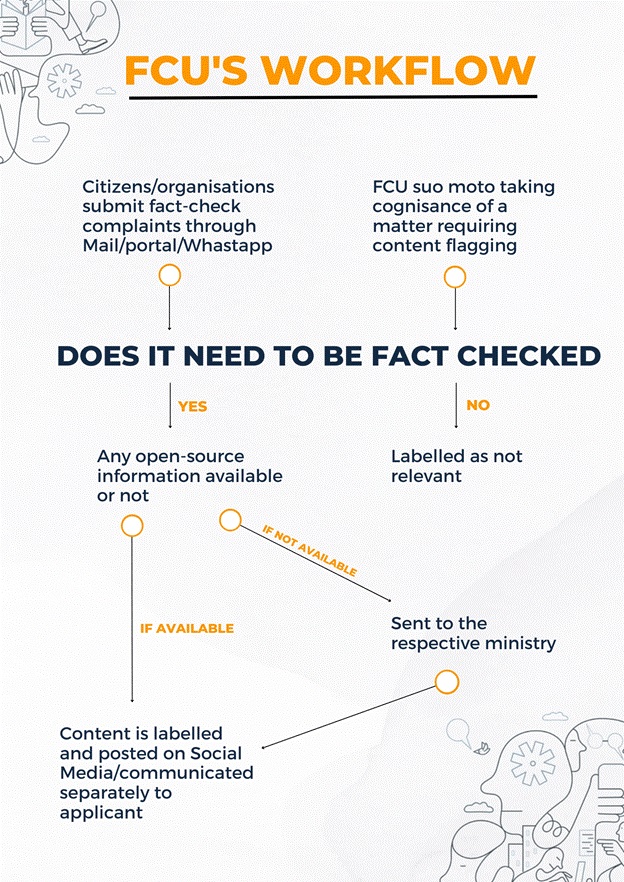
    What is fact check unit?

    A Fact Check Unit is an entity or organization tasked with verifying the authenticity and accuracy of information, particularly in the context of news, announcements, policies, schemes, guidelines, and initiatives of a government or other institutions.

    Key Highlights:

    • Establishment of Tamil Nadu Fact Check Unit: The Government of Tamil Nadu issues an order to create a Fact Check Unit for verifying information related to the state government across diverse media platforms.
    • Constitutional Concerns Raised: Assertions about the order violating fundamental rights and being constitutionally vague and arbitrary, particularly emphasizing the potential infringement on freedom of speech.
    • Impact on Freedom of Speech: Examining the implications of the Fact Check Unit on freedom of speech and expression, highlighting the need for reasonable restrictions and challenging the authority of a Government Order in imposing such restrictions.
    • Chilling Effect Analysis: A deeper analysis of the perceived chilling effect on freedom of speech, exploring the implications of the Government acting as the arbiter of information authenticity.

    Press Information Bureau

    Challenges:

    • Scope Ambiguity and Potential Misuse: Critiques the lack of specificity in defining “information related to the Government of Tamil Nadu,” raising concerns about ambiguity and the possibility of misuse.
    • Due Process Absence: Points out the absence of due process, where the Fact Check Unit lacks a mechanism for the author’s hearing, positioning the government as the sole determinant of information authenticity.
    • Legal Limitations on Government Orders: Discusses the legal limitations of Government Orders in imposing restrictions on freedom of speech, underscoring the need for a more nuanced and legislative approach.
    • Global Challenges of Misinformation: Draws parallels with global challenges of misinformation, citing events like the U.S. presidential election, and underscores the necessity for effective measures in addressing this widespread issue.

    Key Phrases for enhancing answer quality:

    • “Chilling effect on freedom of speech”
    • “Unconstitutionally vague and arbitrary”
    • “Opportunity of hearing”
    • “Mis/disinformation and fake news challenge”
    • “Government as judge, jury, and executioner”

    Analysis:

    • Constitutional Implications Explored: In-depth analysis of the constitutional concerns, with a focus on how the Fact Check Unit might impact freedom of speech and questioning the legal standing of a Government Order.
    • Interrogation of Scope Ambiguity: Scrutiny of the ambiguity surrounding the definition of “information related to the Government of Tamil Nadu,” delving into potential implications for various forms of expression.

    Key Facts:

    • US Election and Misinformation Parallel: Drawing parallels with global challenges of misinformation during events like the U.S. presidential election, emphasizing the need for effective measures.

    Way Forward:

    • Stakeholder Consultation Advocacy: Advocacy for comprehensive consultations with stakeholders, including the public and intermediaries, to develop effective measures against misinformation.
    • Global Best Practices Exploration: Encouraging exploration of global best practices, such as the European Commission’s Code of Practice on Disinformation, for a more inclusive and well-informed approach.
    • Media Literacy Promotion Recommendation: Recommending the promotion of media literacy and support for an independent network of fact-checkers as constructive measures to combat misinformation.
  • Animal Husbandry, Dairy & Fisheries Sector – Pashudhan Sanjivani, E- Pashudhan Haat, etc

    Freemartins in Animal Husbandry

    Central Idea

    • In the realm of animal husbandry, a phenomenon known as Freemartinism sheds light on the extraordinary diversity found in cattle.

    Freemartinism: A Unique Phenomenon

    • Freemartins are sterile female cattle born exhibiting characteristics of both sexes.
    • This phenomenon arises when a male and a female twin develop within the same uterus, occurring in approximately 90% of twin pregnancies in cattle.
    • The exchange of blood between the male and female foetuses during gestation plays a pivotal role in Freemartinism.
    • Freemartinism is primarily attributed to the sharing of cells carrying the Y chromosome from the male twin with the female twin.
    • Y chromosome triggers the development of male reproductive organs in the male foetus, while the female foetus, influenced by male hormones, undergoes incomplete development of its reproductive system.
    • Freemartins possess underdeveloped or non-functional reproductive tracts, rendering them incapable of reproduction.

    Agricultural Significance

    • In agricultural settings, identifying freemartins is crucial to enhance reproductive efficiency in cattle breeding.
    • Farmers often utilize physical and behavioural traits to identify freemartins, subsequently removing them from the breeding herd.
    • This culling strategy helps improve the overall breeding program by ensuring that non-reproductive cattle do not contribute to the herd.
  • Festivals, Dances, Theatre, Literature, Art in News

    Who was Lachit Borphukan?

    Lachit Borphukan

    Central Idea

    • An animation film on an iconic Ahom general Lachit Borphukan has been selected for the International Film Festival of India (IFFI) 2023 to be held in Goa.

    Lachit Borphukan

    • Lachit Borphukan was a legendary military commander from the northeastern region of India, specifically from the state of Assam. Here are some facts related to him:
    Description
    Timeline 1622-1672
    Dynasty Ahom Dynasty
    Mughal Threat Faced the Mughal Empire’s expansion into Assam
    Battle of Saraighat Led Ahom forces to victory against the Mughals in 1671

    Defended Assam against the Aurangzeb’s forces led by Ram Singh

    Leadership Known for strategic brilliance and guerrilla tactics
    Legacy Revered as a symbol of Assamese pride and resistance
    INS Lachit Indian Navy’s guided-missile destroyer named in honor
    Lachit Divas Celebrated annually on November 24th in Assam


    https://www.thehindu.com/news/national/other-states/assam-ips-officer-directed-animation-film-chosen-for-iffi-2023/article67550668.ece


  • Wetland Conservation

    Places in news: Kadalundi Mudflats

    Central Idea

    • Kadalundi’s mudflats are shrinking drastically with sands cover.
    • These mudflats have been a vital source of sustenance for thousands of migrant shorebirds, offering abundant prey like polychaetes and crustaceans.

    About Kadalundi Mudflats

    • Kadalundi Mudflats are situated in the Kadalundi Bird Sanctuary, which is located in the Kozhikode district of Kerala, along the southwestern coast of India. The sanctuary encompasses estuarine wetlands, mudflats, and mangrove forests.
    • The mudflats are part of the estuarine ecosystem formed at the confluence of the Kadalundi River and the Arabian Sea.
    • This unique environment is influenced by both freshwater from the river and saline water from the sea, creating a diverse habitat.

    Ecological significance

    • Kadalundi Mudflats are renowned for their rich biodiversity, especially in terms of avian species.
    • The Kadalundi Bird Sanctuary and the mudflats are protected under the Wildlife Protection Act of 1972.
    • The mudflats serve as a critical habitat for various resident and migratory birds.
    • It is estimated that over 100 species of resident and migratory birds visit the area, making it a paradise for birdwatchers and ornithologists.
    • They are a crucial stopover point for migratory birds travelling along the East Asia-Australasia Flyway.
  • GI(Geographical Indicator) Tags

    Cultivation of GI-tagged Onattukara Sesame

    Onattukara Sesame

    Context

    • Kerala is taking efforts to expand the cultivation of Geographical Indication (GI)-tagged Onattukara sesame, a unique and valuable agricultural product.
    • Onattukara sesame was granted the GI tag in January this year.

    Onattukara Sesame (Ellu )

    Description

    Region of Cultivation

    Primarily cultivated in the Onattukara region, covering Alappuzha, Kollam, and Pathanamthitta districts in Kerala, India.
    Medicinal Properties Onattukara sesame is known for its medicinal properties and high quality.
    Traditional Use Traditional ayurvedic doctors in the region have used Onattukara sesame oil for treating rheumatism and skin protection since the 18th century.
    Nutritional Value Rich in vitamin E and antioxidants. Contains essential fatty acids like oleic acid, linoleic acid, and palmitoleic acid.
    Varieties Grown in various varieties, including ‘ayali,’ Kayamkulam-1, thilak, thilathara, and thilarani, developed by ORARS, Kayamkulam.
    Market Potential Obtaining the GI tag is expected to increase its popularity and market value, leading to higher prices for sesame seeds and oil.
    Pricing Current prices: Sesame seeds – ₹200 to ₹250 per kilogram, Sesame oil – ₹500 to ₹600 per kilogram.
  • GI(Geographical Indicator) Tags

    GI tag for Sea Buckthorn

    Sea Buckthorn

    Central Idea

    • The Geographical Indication Registry has officially granted the GI tag to ‘Ladakh Sea Buckthorn’.
    • It is the fourth GI tag after Apricot (Raktsey Karpo), Pashmina, and Ladakhi Wood Carving in Ladakh.

    About Sea Buckthorn

    • Sea buckthorn is a plant that grows in Europe and Asia.
    • In India, it’s found in the Himalayan region, especially in dry places like the cold deserts of Ladakh and Spiti.
    • This plant produces small orange or yellow berries that are sour but full of vitamins, especially vitamin C.
    • It can survive really hot and really cold temperatures, which makes it perfect for the cold deserts.
    • Every part of the plant—berries, leaves, twigs, roots, and thorns—are useful for medicine, food, fuel, and fencing.
    • It’s also a vital food source for many birds and provides nutritious food for animals like sheep, goats, donkeys, cattle, and camels in the cold desert regions.
    • It is often called the ‘Wonder Plant,’ ‘Ladakh Gold,’ ‘Golden Bush,’ or ‘Gold Mine’ of the cold deserts.

    Back2Basics: GI Tag

    • A GI is a sign used on products that have a specific geographical origin and possess qualities or a reputation that are due to that origin.
    • Nodal Agency: Department for Promotion of Industry and Internal Trade (DPIIT), Ministry of Commerce and Industry
    • India, as a member of the World Trade Organization (WTO), enacted the Geographical Indications of Goods (Registration and Protection) Act, 1999 w.e.f. September 2003.
    • GIs have been defined under Article 22 (1) of the WTO Agreement on Trade-Related Aspects of Intellectual Property Rights (TRIPS) Agreement.
    • The tag stands valid for 10 years.
  • Skilling India – Skill India Mission,PMKVY, NSDC, etc.

    India’s Global Talent Competitiveness Ranking falls to 103

    Central Idea

    • India’s ranking in the Global Talent Competitiveness Index (GTCI) has significantly declined from 83 a decade ago to 103 in the latest report released this month.
    • India now finds itself positioned between Algeria (ranked 102) and Guatemala (ranked 104), all classified as lower-middle-income countries.

    About Global Talent Competitiveness Index (GTCI)

    • The GTCI ranks 134 countries based on their ability to grow, attract, and retain talent.
    • It is released by INSEAD, a partner and sponsor of the United Nation’s Sustainable Development Goals (SDGs)Davos, Switzerland recently.
    • INSEAD is one of the world’s leading and largest graduate business schools with locations all over the world and alliances with top institutions.
    • The report ranks countries based on 6 pillars:
    1. enable
    2. attract
    3. grow
    4. retain talent
    5. vocation and technical skills
    6. global knowledge skills

    India’s Ranking and Comparisons

    • Rank 103: India’s current rank is well below the median score of the countries assessed in the GTCI.
    • BRICS Nations: India’s performance in the GTCI is the weakest among the BRICS countries. China leads the group at rank 40, followed by Russia at 52, South Africa at 68, and Brazil at 69.
    • Top Three Countries: These are Singapore, Switzerland, and the United States.
    • Skills Mismatch: India faces an increased skills mismatch and difficulties in finding skilled employees, resulting in its low rankings in the ‘Employability’ and ‘Vocational and Technical Skills’ categories.
    • Best-Performing Area: India’s best-performing area in the GTCI is “Global Knowledge Skills,” driven by innovation and software development, contributing to its 69th position in the “Talent Impact” sub-pillar.
  • Foreign Policy Watch: India-China

    Explained: Border Peace and Tranquility Agreement (BPTA)

    bpta

    Central Idea

    • India and China, historical adversaries who fought a war in 1962, reached their first-ever border agreement, known as the Border Peace and Tranquility Agreement (BPTA), in 1993, following years of border disputes.
    • The BPTA aimed to maintain peace along the Line of Actual Control (LAC) and reduce the risk of unplanned confrontations.

    Why discuss this?

    • Thirty years later, the legacy of this historic agreement is continued by contested interpretations and unfulfilled commitments, while the ongoing border crisis further highlights the challenges both nations face in reaching a resolution.

    BPTA: A Historic Yet Contested Agreement

    • Context: The BPTA was negotiated in the aftermath of the Sumdorong Chu standoff, marking a significant diplomatic achievement in the early 1990s.
    • Signing: The agreement was signed in 1993 during the tenure of PV Narasimha Rao as PM.
    • Peaceful Coexistence: The agreement committed both nations to avoid using or threatening force against each other. It emphasized strict adherence to the LAC and mutual reduction of military forces to maintain friendly relations.
    • Legacy: While it played a crucial role in maintaining peace for nearly two decades, the BPTA also spurred infrastructure development and frequent incidents, ultimately leading to the Galwan clash in 2020.

    Ambiguity Surrounding the LAC

    • Inherent Ambiguity: The primary issue undermining border agreements is the inherent ambiguity surrounding the LAC, which was embedded in the BPTA.
    • LAC Problem: India’s discomfort with the term “LAC” proposed by China in 1959 remained a contentious issue.
    • Ambiguous Formulation: The BPTA allowed both sides to clarify the LAC wherever necessary, implying a lack of shared perception about the 1959 LAC.
    • Compromised Clarity: This formulation didn’t definitively reject China’s version of the LAC but aimed to prevent constant confrontation.

    Impact on Subsequent Agreements

    • Positive Developments: The BPTA paved the way for additional agreements, such as confidence-building measures in the Military Field along the LAC (1996) and the appointment of Special Representatives (2003).
    • Unfinished Business: Negotiations for a final boundary settlement stalled, and the mechanisms to clarify LAC claims remained incomplete.

    Infrastructure Development and Tensions

    • Race for Facts on the Ground: Ambiguity over the LAC drove both countries to strengthen their claims through infrastructure development and increased patrols.
    • Frequent Encounters: Frequent encounters between patrols exacerbated tensions along the border.
    • Unforeseen Consequences: The BPTA inadvertently contributed to a slowdown in boundary negotiations, as both sides aimed to bolster their positions along the LAC.

    The Current Crisis

    • Blatant Disregard: The ongoing crisis, beginning in 2020, saw both nations cast aside the commitments made in the first article of the BPTA.
    • Stalled Boundary Negotiations: Amidst the crisis, efforts to settle the boundary dispute have almost completely stalled.
    • A Challenging Relationship: The 30-year-old border remains unsettled, mirroring the broader complexities of the India-China relationship.

    Conclusion

    • The BPTA reached 30 years ago, marked a significant milestone in India-China relations.
    • However, its legacy remains deeply contested and fraught with ambiguities.
    • As the ongoing border crisis unfolds, the challenges in achieving a lasting resolution and fostering peaceful coexistence between the two nations persist.
  • Child Rights – POSCO, Child Labour Laws, NAPC, etc.

    How the mandatory reporting provision under POCSO works?

    Central Idea

    • In a recent decision, the Himachal Pradesh High Court ruled that the failure to report sexual crimes against minors is a bailable offence.
    • This ruling has raised significant legal questions regarding the interpretation of the Protection of Children from Sexual Offences (POCSO) Act, particularly with respect to the nature of the offence and its implications for pre-arrest bail.

    What is the POCSO Act?


    • The POCSO Act came into effect on November 14, 2012, following India’s ratification of the UN Convention on the Rights of the Child in 1992.
    • Its primary objective is to address offences related to the sexual exploitation and abuse of children, which were previously either not specifically defined or inadequately penalized.
    • According to the Act, a child is defined as any person below the age of 18 years.
    • In 2019, the Act underwent a review and amendment, introducing more stringent punishments (after Nirbhaya Case), including the death penalty, for those committing sexual crimes against children.

    Interpretation of the POCSO Act

    • Section 21 of POCSO Act: This section of the POCSO Act mandates the reporting of sexual offences against children. However, it does not explicitly specify whether the offence is bailable or not.
    • Reference to CrPC: The court, in its ruling, argued that since the POCSO Act does not provide clarity on the bailability of the offence, it should be determined by referring to the Code of Criminal Procedure (CrPC).
    • CrPC Classification: The CrPC classifies offences as either bailable or non-bailable based on the maximum punishment they entail. Offences punishable with imprisonment of less than three years are generally considered bailable and non-cognizable.
    • POCSO Act’s Penalty: Section 21 of the POCSO Act prescribes a penalty of imprisonment ranging from 6 months to 1 year. Consequently, this makes it fall within the category of bailable offences under the CrPC.

    Case Context

    • Allegations: The case in question involved a hotel manager accused of failing to report an offence committed against a minor, as mandated by Section 21 of the POCSO Act.
    • Main Accused: The main accused had committed a sexual assault on a minor schoolgirl and recorded a video of the incident in a hotel.
    • Legal Charges: The accused faced charges under Sections 376 (Rape) and 506 (Criminal Intimidation) of the Indian Penal Code, as well as Sections 6 and 21 of the POCSO Act, which address aggravated penetrative sexual assault and the failure to report sexual crimes against children.
    • Hotel Manager’s Involvement: The hotel manager was also named in the FIR due to the mandatory reporting provision under the POCSO Act.

    Mandatory Reporting Under POCSO

    • Section 19: Section 19 of the POCSO Act obliges “any person” who apprehends or has knowledge of a sexual offence against a child to report it to the Special Juvenile Police Unit (SJPU) or the police.
    • Penalty for Non-Reporting: Section 21 of the POCSO Act prescribes a penalty, including imprisonment, for failing to report such offences.
    • Exemptions: Children are not held liable for failing to report sexual offences, and those making false complaints are also exempt from punishment under Section 22 of the Act.

    Supreme Court’s Perspective

    • The seriousness of Non-Reporting: The Supreme Court has consistently held that the failure to report such cases is a serious crime, emphasizing the importance of reporting child sexual abuse.
    • Specific Obligations: In certain cases, the Supreme Court has placed additional obligations on professionals, such as medical practitioners and educators, to report child sexual abuse cases to appropriate authorities.

    Balancing Reporting Requirements with Privacy

    • SC’s Balance Attempt: In a recent case (X vs The Principal Secretary, Health and Family Welfare Department, Govt of NCT of Delhi), the Supreme Court sought to balance the mandatory reporting provision under POCSO with the confidentiality provision under the Medical Termination of Pregnancy Act, 1971.
    • Minors Seeking Medical Termination: The court recognized that minors may seek medical termination of pregnancies resulting from consensual sexual activity, and the mandatory reporting requirement might deter them from approaching qualified doctors.
    • Harmonious Interpretation: To ensure that minors’ rights to privacy and reproductive autonomy are protected, the court advocated for a harmonious interpretation of both the POCSO Act and the Medical Termination of Pregnancy Act.
    • Exemption for RMPs: The court suggested that registered medical practitioners, upon the request of minors and their guardians, can be exempted from disclosing a minor’s identity and personal details when reporting an offence under Section 19(1) of the POCSO Act or in any ensuing criminal proceedings.

    Conclusion

    • The Himachal Pradesh High Court’s ruling on the availability of the failure to report sexual crimes against minors has sparked discussions on the interpretation of the POCSO Act and its alignment with the CrPC.
    • Furthermore, the Supreme Court’s efforts to strike a balance between mandatory reporting requirements and minors’ privacy rights underscore the complexity of addressing child sexual abuse within the legal framework.

Join the Community

Join us across Social Media platforms.