💥UPSC 2026, 2027, 2028 UAP Mentorship (March Batch) + Access XFactor Notes & Microthemes PDF

Archives: News

  • Climate Change Impact on India and World – International Reports, Key Observations, etc.

    Heat domes, anticyclones and climate change: What’s causing heat waves across the world?


    What’s the news?

    • The average daily global temperature on Thursday was recorded at 17.12 degrees Celsius, encompassing measurements over land, ocean, ice sheets, and mountainous snow regions.

    Central idea

    • In a concerning announcement, the National Oceanic and Atmospheric Administration (NOAA) declared June as the hottest month ever recorded on Earth since temperature tracking began 174 years ago. The heatwave has persisted into July, with 18 out of the first 20 days witnessing unprecedented average daily global temperatures.

    What is Heat-wave?
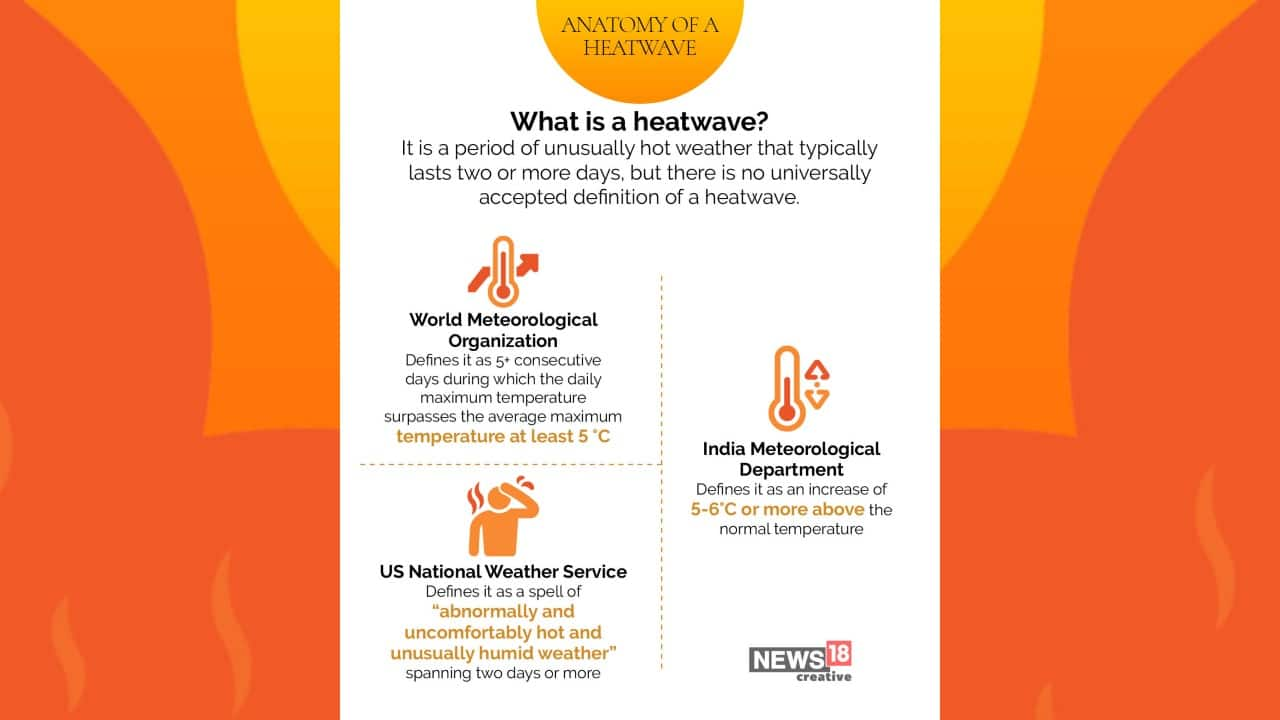
    It is a period of unusually hot weather that typically lasts two or more days, but there is no universally accepted definition of a heatwave. (Image: News18 Creative)

    • A heatwave is a prolonged period of abnormally hot weather.
    • Heatwaves usually last for several days or weeks and can occur in both dry and humid
    • Characterized by temperatures that are significantly higher than the average for a particular region during that time of year.

    What are heat domes?
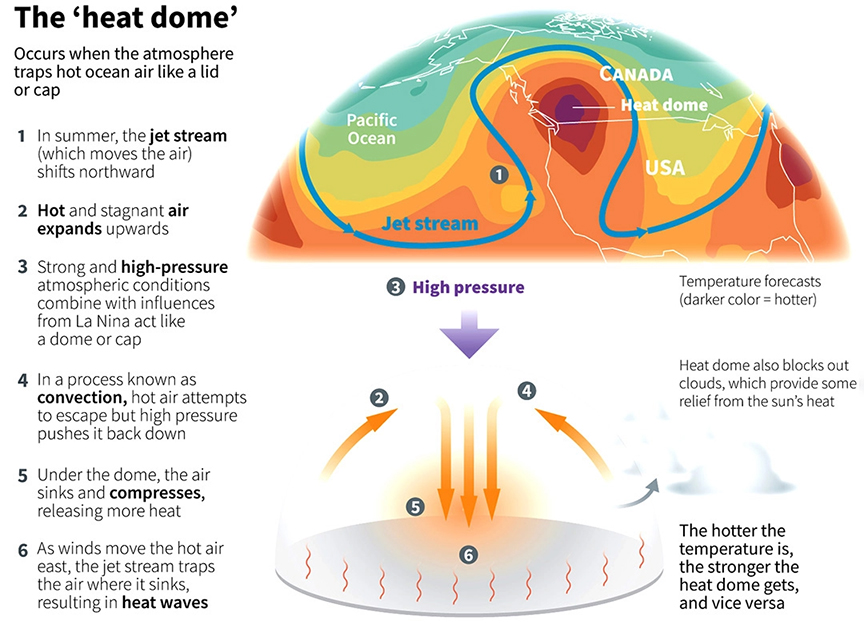
    Heat Waves and Heat Dome | 20 Jul 2021

    • A heat dome occurs when an area of high-pressure stays over a region for days and weeks. It traps warm air, just like a lid on a pot, for an extended period.
    • The longer that air remains trapped, the more the sun works to heat the air, producing warmer conditions with every passing day.
    • Heat domes, if they last for a long period, may cause deadly heat waves.

    What are Anticyclones?

    • An anticyclone, also known as a high-pressure system, is essentially an area of high pressure in which the air goes downwards towards the Earth’s surface.
    • As the air sinks, its molecules get compressed, which increases the pressure, making it warmer. This causes dry and hot weather.
    • The winds remain calm and gentle during an anticyclone, and there is almost no formation of clouds because here the air sinks rather than rises.

    Factors behind this scorching trend?

    • Climate change: The primary driver behind the escalating heatwaves and rising global temperatures is human-induced climate change.
    • The burning of fossil fuels, deforestation, industrial processes, and other human activities release greenhouse gases, such as carbon dioxide (CO2), methane (CH4), and nitrous oxide (N2O), into the atmosphere. These gases trap heat and lead to the greenhouse effect, resulting in the warming of the Earth’s surface.
    • El Nino events, characterized by abnormal warming of surface waters in the equatorial Pacific Ocean, can elevate temperatures worldwide and exacerbate heatwaves.
    • Heat domes and anticyclones are weather phenomena that can intensify and extend heatwaves.
    • Warmer oceans release more heat into the atmosphere, fueling extreme weather events like heatwaves.
    • Urban areas with concrete and asphalt surfaces can create heat islands that retain and amplify heat, leading to higher temperatures within cities compared to surrounding rural areas.
    • Climate change can trigger feedback loops that amplify its effects. For example, melting ice in the Arctic reduces the Earth’s reflective surface, leading to increased absorption of sunlight and further warming.

    *NOTE: Although heat domes and anticyclones don’t occur due to climate change, they have become more intense and longer as a result of soaring global temperatures.

    Impact of Heatwaves

    1.Human Health Impacts:

    • Heat-related Illnesses: Heatwaves can cause heat-related illnesses such as heat exhaustion and heatstroke, which can be life-threatening if not treated promptly. The elderly, young children, and individuals with pre-existing health conditions are more vulnerable.
    • Dehydration: High temperatures and excessive sweating can lead to dehydration, especially if individuals do not consume enough fluids.

    2.Impact on Agriculture:

    • Crop Failure: Prolonged heatwaves can cause damage to crops and reduce agricultural yields due to drought conditions and water shortages.
    • Livestock Stress: High temperatures can lead to heat stress in livestock, affecting their productivity and overall health.

    3.Environmental Impact:

    • Drought: Heatwaves can contribute to drought conditions by increasing evaporation and reducing water availability, leading to water scarcity and affecting ecosystems.
    • Wildfires: Hot and dry conditions during heatwaves can increase the risk of wildfires, leading to extensive damage to forests and wildlife habitats.
    • Water Quality: Heatwaves can lead to higher water temperatures, which may negatively impact aquatic ecosystems and decrease water quality.

    4.Energy Demand and Infrastructure Stress:

    • Increased Energy Consumption: Heatwaves result in higher energy demand due to the use of air conditioning and cooling systems, putting strain on the power grid.
    • Power Outages: The increased demand for electricity during heatwaves can lead to power outages if the electrical infrastructure becomes overloaded.

    5.Social and Economic Impact:

    • Disruption of Daily Activities: Heatwaves can disrupt daily life, making it uncomfortable to work, travel, or engage in outdoor activities.
    • Economic Losses: Heatwaves can result in productivity losses, increased healthcare costs, and damage to infrastructure, leading to economic impacts on communities and businesses.

    Worse affected countries

    • United States: North America, particularly the United States, has experienced prolonged heatwaves covering a large swath of the country. States like California, Florida, New Mexico, and Arizona have been experiencing extreme temperatures. Temperature remained around 43.3 degree Celsius.
    • Europe: Countries in Europe, such as Italy and Greece, have been gripped by two consecutive heatwaves. Italy’s island of Sardinia saw temperatures reaching 47.7 degrees Celsius, and Greece experienced temperatures exceeding 40 degrees Celsius, leading to wildfires and affecting historical sites.
    • Spain: Spain witnessed a temperature of 45.4 degrees Celsius in the town of Figueres, the highest temperature recorded in the country since 1928. It led to dry spells and wildfires.
    • Asia: China, Iraq and Saudi Arabia remain some of the worst affected countries. A remote township in China saw temperatures touching 52 degree Celsius
    • Algeria: North Africa’s Algeria has reported record-breaking temperatures, with some experts suggesting temperatures exceeding 50 degrees Celsius in certain areas.
    • Tunisia: Tunisia has also been impacted by severe heatwaves, with temperatures reaching up to 49 degrees Celsius in some regions.

    Mains Marks enhancer: Best Practices in India

    • Andhra Pradesh:
      • Setting up Heat Action Plans: Cities like Vijayawada have implemented Heat Action Plans that include public awareness campaigns, heat helplines, and designated cooling centers to provide relief to vulnerable populations.
    • Telangana:
      • Early Warning Systems: The Telangana State Development Planning Society issues heatwave alerts and early warnings to district authorities and the public, allowing them to take precautionary measures.
    • Rajasthan:
      • Urban Heat Island Mitigation: Cities like Jaipur have implemented measures to reduce the urban heat island effect by promoting green spaces, reflective surfaces, and better urban planning.
    • Gujarat:
      • Cool Roofs: The Gujarat government has encouraged the use of cool roofs in buildings to reflect sunlight and reduce indoor temperatures during heatwaves.
    • Tamil Nadu:
      • Heatwave Awareness Programs: The Tamil Nadu government conducts awareness programs through schools, colleges, and community organizations to educate people about heatwave safety and preparedness.

    Way forward: Urgent actions needed

    • The international community must strengthen and implement the commitments made under climate agreements, such as the Paris Agreement.
    • Countries should set more ambitious targets for reducing greenhouse gas emissions
    • Provide support to developing nations to enhance climate resilience and adaptation.
    • Prioritize the transition to renewable energy sources and invest in clean technologies.
    • Develop robust adaptation strategies such as involves establishing heat emergency response plans, cooling centers, and public awareness campaigns.
    • Cities should adopt green urban planning practices, incorporating green spaces, green roofs, and sustainable building designs to mitigate the urban heat island effect and promote natural cooling.
    • Promote sustainable land management practices, including reforestation and afforestation
    • Enhance early warning systems to detect and respond to extreme heat events promptly.

    Conclusion

    • The alarming surge in global temperatures, culminating in devastating heatwaves across continents, is a potent reminder of the urgency to combat climate change. As nations grapple with the immediate impacts of heatwaves, it is imperative to take collective action to reduce greenhouse gas emissions, mitigate the effects of climate change, and safeguard the planet for future generations. The time to act is now; the consequences of inaction are too dire to ignore.

    Also read:

    Heatwaves in India: Increasing Frequency Needs Range of Measures to Mitigate

  • Indian Ocean Power Competition

    China backing Russia, NATO looking East: Why Indo-Pacific is at centre of global order

    Indo-Pacific

    What’s the news?

    • The Russia-Ukraine conflict has made NATO summits more significant than ever. The wide presence of four Asia-Pacific countries: Australia, New Zealand, Japan, and South Korea has made this year’s summit more prominent especially for Indo- pacific

    Central idea

    • The recent NATO summit was held in Vilnius, Lithuania, marked a significant turning point for the alliance. The summit showcased NATO’s increasing focus on the Indo-Pacific region, signifying the importance of this area for Euro-Atlantic security.

    What is Indo-Pacific?

    • The Indo-Pacific is a geographic region interpreted differently by different countries.
    • For India, the geography of the Indo-Pacific stretches from the eastern coast of Africa to Oceania whereas, for US, it extends up to the west coast of India which is also the geographic boundary of the US Indo-Pacific command.

    NATO’s Historical Background and Pivot Towards Asia

    • Founded in 1949, NATO emerged as a response to concerns over expanding Soviet influence in Eastern Europe.
    • Originally cantered on trans-Atlantic security, the alliance has evolved to address pressing global security challenges.
    • The recent summit’s agenda highlighted issues in the Indo-Pacific, such as North Korea’s nuclear activities, ballistic missile tests, and China’s military expansion and modernization.

    Indo-Pacific Partnerships and Collaborations during the summit

    • NATO and Japan:
    • Individually Tailored Partnership Program between NATO and Japan was signed for the period of 2023-2026- focuses on cooperation in new technologies, space, and supply chain resilience.
    • NATO and New Zealand:
    • New Zealand was recognized as a valued partner by NATO during the summit.
    • The alliance praised the collaboration with New Zealand in various areas, including cyber defense, counter-terrorism, arms control, and new technologies.
    • NATO and South Korea:
    • A significant agreement was reached between NATO and South Korea further strengthening their collaboration in emerging areas, particularly related to hybrid threats.
    • NATO and Australia: Presence of Australian Prime Minister Anthony Albanese at the NATO summit indicates a willingness to strengthen ties and foster cooperation in areas of common concern

    Significance of the Indo-Pacific for NATO

    • The Indo-Pacific is home to numerous security challenges that have implications beyond the region.
    • These challenges include North Korea’s nuclear and missile activities, China’s military expansion, territorial disputes, and non-traditional security threats such as cyber-attacks and terrorism.
    • China’s growing economic, political, and military influence in the Indo-Pacific has global ramifications.
    • China’s Belt and Road Initiative (BRI) and its assertive actions in the South China Sea have raised concerns among NATO allies about potential disruptions to regional stability and international norms.
    • The Indo-Pacific region is a major driver of the global economy, with many NATO member states heavily reliant on trade and economic ties with countries in the area.
    • Ensuring the security of critical sea lanes and trade routes is essential for NATO’s economic interests and stability.
    • Collaborating with Indo-Pacific countries can contribute to a rules-based international order and strengthen NATO’s global reach.

    Concerns Over NATO’s Role in Indo-Pacific

    • Ambiguity and uncertainty within the alliance regarding NATO’s official presence and role in the Indo-Pacific.
    • French President Emmanuel Macron’s public opposition to the idea of opening a NATO liaison office in Tokyo highlighted these concerns.
    • Establishing an official NATO presence in proximity to China could potentially unsettle the Chinese security establishment and may be perceived as a challenge to China’s regional interests.
    • Unease among ASEAN and other South Asian countries with strategic interests in the area.
    • Some ASEAN countries’ centrality in the Indo-Pacific being replaced by bloc politics led by NATO.
    • It could stretch the alliance’s resources and capabilities- divert attention away from NATO’s core mission in the Euro-Atlantic region.

    Interesting read: What is Thucydides’ Trap?

    • Thucydides’ Trap is a term derived from the historical work “History of the Peloponnesian War” by the ancient Greek historian Thucydides. Thucydides chronicled the conflict between the city-state of Athens and the rising power of Sparta in the 5th century BC, which eventually led to the Peloponnesian War.
    • The central idea behind Thucydides’ Trap is that when a rising power challenges an established power, the competition between the two can lead to conflict or war.
    • Thucydides famously wrote, “It was the rise of Athens and the fear that this instilled in Sparta that made war inevitable.” The rising power’s ascent and the fear it generates in the established power create a dangerous and unstable situation that may lead to a conflict as both sides jostle for power and influence.
    • In the context of modern times, NATO’s involvement in the region could inadvertently contribute to the Thucydides’ Trap, where a rising power (China) and an established power (United States) risk conflict
    • It serves as a warning to policymakers that managing the rise of a new power and avoiding a potential conflict requires careful diplomacy, strategic communication, and the establishment of mechanisms to peacefully resolve disputes

    Conclusion

    • The recent NATO summit in Vilnius showcased the alliance’s Look East moment, highlighting its increased focus on the Indo-Pacific region. Strengthening ties with Indo-Pacific partners is crucial amid the evolving global strategic landscape. However, NATO must navigate carefully and exercise caution while addressing the challenges of the 21st century and the changing dynamics of the international order.

    Also read:

    North East as Gateway to Indo-Pacific Strategy

  • Electoral Reforms In India

    Using name ‘INDIA’ in Political Alliances

    india

    Central Idea

    • A complaint has been lodged with the Delhi police against 26 Opposition parties for the alleged “improper use” of the name ‘INDIA’ in their newly formed alliance.

    Why discuss this?

    • The complainant argues that the parties have violated the Emblems and Names (Prevention of Improper Use) Act, 1950.
    • It has allegedly attempted to gain “undue influence” in elections by using the name ‘INDIA’ for their coalition.
    • It alleges that by naming their alliance as ‘INDIA’, they have attempted to exert undue influence on the electorate and may be prosecuted under Section 171F of the Indian Penal Code, 1860.

    About Emblems Act, 1950

    • The Emblems Act, 1950 aims to prevent the improper use of certain emblems and names for commercial and other purposes.
    • The Act seeks to protect the dignity and sanctity associated with national emblems, insignia, and names of international organizations.

    Key features of the Emblem Act

    Description Article/Sections
    Protected Emblems and Names Identifies specific emblems and names protected under the Act, including national emblem, UN emblems, Red Cross, and notified emblems.

    Ensures their dignity and sanctity.

    Section 3
    Prohibition of Improper Use Prohibits unauthorized use of protected emblems and names for commercial or misleading purposes.

    Maintains their integrity and respect.

    Section 5
    Offenses and Penalties Establishes penalties, including imprisonment and fines, for violating the Act’s provisions. Section 7
    Exceptions and Permitted Use Allows certain circumstances and purposes where use of protected emblems and names is permitted with relevant authorities’ permission. Section 4
    Enforcement and Authorities Grants powers to authorized Police for enforcement, investigation, and legal actions against violators. Section 8


  • Tourism Sector

    India secures 80th rank on Henley Passport Index

    passport

    Central Idea

    • India has seen an improvement in its ranking on the Henley Passport Index 2023, climbing seven places to the 80th position from 87 last year.
    • However, despite the rise in ranking, the number of countries allowing visa-free access to Indian passport holders remains the same.

    What is Henley Passport Index?

    • The Henley Passport Index is a global ranking system that measures the strength and value of passports from different countries.
    • It is published by Henley & Partners, a global residence and citizenship advisory firm.
    • The index provides an annual ranking of passports based on the number of countries and territories their holders can travel to without requiring a visa or with visa-on-arrival access.

    How is it derived?

    • It takes into account data from the International Air Transport Association (IATA) and other reliable sources.
    • The index includes 199 passports and 227 travel destinations.
    • It assigns a “visa-free score” to each passport, which represents the number of destinations that can be visited without obtaining a visa in advance.
    • The higher the visa-free score, the stronger the passport.

    India’s Passport Performance in 2023

    • India is ranked 80th in 2023.
    • In 2014, India ranked 76th with 52 countries granting visa-free access to Indian passport holders.
    • Since then, its ranking has fluctuated, with positions of 88th (2015), 85th (2016), 87th (2017), 81st (2018), 82nd (2019 and 2020), and 81st (2021).
    • In the Henley Openness Index, which measures the number of nations allowing visa-free access, India ranked 94th out of 97 countries for permitting visa-free access to only four nations.

    Global scenario

    • Singapore Takes the Lead: Singapore has replaced Japan as the country with the most powerful passport, allowing its citizens visa-free access to 192 out of 227 travel destinations globally.
    • Other Top Countries: Germany, Italy, and Spain share the second position. The third position is shared by Austria, Finland, France, Luxembourg, South Korea, and Sweden.
    • Japan’s Position: Japan, previously holding the top position for five years, dropped to third place on the Henley Passport Index.
    • Pakistan: The country known for terrorism and the recent economic crisis has been ranked at 100 in the list. Citizens of Pakistan can travel to just 33 countries without applying for a visa.
  • Innovations in Biotechnology and Medical Sciences

    Bacteriophages: The Good Viruses that fight Bacteria

    bacteriophage

    Central Idea

    • Viruses have had a significant impact on human history, causing deadly outbreaks of diseases.
    • However, not all viruses are harmful, and scientists are discovering the importance of the virome (bacteriophages).

    Do you know?

    Viromes and bacteriophages are closely related because bacteriophages, or phages for short, are a type of virus that specifically infects bacteria.

    Bacteriophages are considered part of the virome, as they contribute to the overall viral genetic material present in a given environment or organism.


    What are Virome?

    • What is it: They are the collection of viruses in our bodies contributing to our health, similar to the bacterial microbiome.
    • Bacteriophages: The majority of viruses inside us are bacteriophages, which kill bacteria in our microbiomes without affecting human cells.
    • Vast in Numbers: Our bodies host around 380 trillion virus particles, 10x more than the number of bacteria.
    • Beneficial Viruses: Some viruses play beneficial roles, such as killing cancer cells, aiding immune system training, fighting pathogens, and regulating gene expression during pregnancy.

    Bacteriophages and Phage Therapy

    • Bacteriophages’ Mechanism: Bacteriophages hunt down bacteria, attach to their surface, inject viral DNA, and replicate inside the bacteria before causing the bacterial cell to burst and release new viral particles.
    • Historical Background: In the early 20th century, scientists explored phages as potential treatments for bacterial infections, but antibiotic development overshadowed this research.
    • Antibiotic Resistance: With the rise of antibiotic-resistant bacteria, scientists are revisiting phage therapy as an alternative to combat bacterial infections.
    • Advantages of Phages: Phages effectively target multi-resistant pathogens, are precise in eliminating bacterial strains, and do not disrupt the gut microbiome like antibiotics do.

    Phage Therapy in Practice

    • Historical Use: Phage therapy persisted in countries like Georgia, Ukraine, and Russia, where antibiotics were scarce. These regions have witnessed successful treatment outcomes against antibiotic-resistant infections.
    • Expanding Use: Phage therapy is gaining attention in countries like Belgium, the US, and Germany, with specialized therapy centres and calls for increased exploration and utilization.
    • Challenges and Safety: Standardization of therapy and tailoring phages to specific bacteria causing the infection remain challenges. However, phage therapies have a good safety record, and human bodies can tolerate them well.

    Future Prospects

    • Complementary Approach: Phages are unlikely to replace antibiotics but could be used in combination to enhance antibiotic effectiveness, particularly against resistant bacterial strains.
    • Research and Clinical Projects: Further large-scale research and clinical projects are recommended to establish effective phage therapies for different types of infections.
  • Land Reforms

    Unique Land Parcel Identification Number (ULPIN) to curb Land-Linked Illegal Activities

    land ulpin

    Central Idea

    • President Murmu emphasized the importance of implementing a Unique Land Parcel Identification Number (ULPIN).

    What is ULPIN?

    • ULPIN or Bhu-Aadhaar is a 14-digit Alpha–Numeric Unique ID for each land parcel.
    • This is the next step in the Digital India Land Records Modernisation Programme (DILRMP) which began in 2008.
    • The identification will be based on the longitude and latitude coordinates of the land parcel, and is dependent on detailed surveys and geo-referenced cadastral maps.
    • ULPIN is generated using the Electronic Commerce Code Management Association (ECCMA) standards during the importing of the geo-referenced shape file into BhuNaksha, a cadastral mapping solution of NIC.

    Digital India Land Records Modernisation Programme (DILRMP)

    • DILRMP is a central sector scheme implemented by the Department of Land Resources under the Ministry of Rural Development.
    • Erstwhile National Land Record Modernization Programme, it was revamped and converted as a Central Sector Scheme with effect from 1st April, 2016 with 100% funding by the Centre.
    • The program aims to develop an Integrated Land Information Management System (ILIMS) across the country by leveraging the commonalities in land records systems in different states.
    • It integrates land records processes and databases with financial institutions, banks, circle rates, registration offices, and other sectors.
    • The program includes the computerization of land records, survey/re-survey activities, and digitization of registration processes.


    Benefits of ULPIN

    • Curbing malpractices: The implementation of ULPIN and digitization of land records can significantly reduce unethical and illegal activities related to land. The transparency brought about by digitization enhances accountability and curbs malpractices.
    • Efficient Land Use: ULPIN will facilitate proper utilization of land parcels and aid in the formulation and implementation of new schemes.
    • Linkage with E-Courts: Connecting E-Courts with land records and registration databases offers multiple benefits, including improved accessibility to information and streamlined legal processes related to land disputes.
    • Indestructible documentation: Digitization of land records proves valuable in times of calamities such as floods and fires, as it helps in preventing loss of documents and expedites the recovery process.

    Impacts on Development and Welfare

    • Development Catalyst: By providing transparent and accessible land information, digitization supports informed decision-making and effective resource management.
    • Proper Scheme Implementation: Linking land records with various government departments facilitates the efficient implementation of welfare schemes ex. PM Awas Yojana.
    • Beneficiary targeting: Accurate and up-to-date land data helps identify beneficiaries and ensures the targeted delivery of benefits and services.
  • Russian Invasion of Ukraine: Global Implications

    NATO Vilnius Summit, 2023: Key Takeaways

    nato

    Central Idea

    • The Vilnius Summit held in July 2023 was significant in assessing the progress made by the North Atlantic Treaty Organization (NATO) in the past year and preparing for future conflicts.
    • While expectations were high regarding Ukraine’s membership timeline, the summit fell short in this regard.

    About NATO (North Atlantic Treaty Organization)

    Formation Established on April 4, 1949
    Members Consists of 30 member countries
    Headquarters Located in Brussels, Belgium
    Mission Safeguard freedom and security through political and military cooperation
    Key feature: Article 5 Mutual defense provision, attack on one is an attack on all
    Operations Involved in peacekeeping and crisis management operations worldwide
    NATO-Russia Relations Complex relationship with Russia, involving cooperation and tensions
    Evolving Security Challenges Adapts to address evolving security challenges like terrorism, cyber threats, and hybrid warfare


    Also read:

    NATO+5 Status and India

    Key takeaways from Vilnius Summit

    (1) NATO’s Response to Threats:

    • Russian Threat: The summit communique acknowledged Russia as the most significant and direct threat to the security, peace, and stability of NATO allies in the Euro-Atlantic area.
    • Concerns over Belarus and Iran: NATO expressed concerns about Belarus providing territory and infrastructure for Russian aggression against Ukraine. It also highlighted Iran’s delivery of Uncrewed Aerial Vehicles (UAVs) to Russia for attacks on critical infrastructure in Ukraine.

    (2) Recalibrations in the Baltic Sea:

    • Finland and Sweden’s Inclusion: The summit marked Finland’s first participation as a NATO member, while Turkey agreed to ratify Sweden’s bid to join the alliance.
    • Curbing Russian dominance: This paves the way for a strategic recalibration in the Baltic Sea region that was previously dominated by Russia.

    (3) Commitments to Ukraine:

    • Membership Timeline: Despite expectations, no concrete timeline for Ukraine’s NATO membership was provided.
    • Concrete Outcomes: Ukraine secured short-term and long-term security commitments from NATO members, including the creation of the NATO-Ukraine Council and a multi-year program to help upgrade Ukrainian forces.
    • Defense Support: Member states such as Germany, Norway, and France made commitments to support Ukraine’s defense, including financial assistance, military equipment, and bilateral security cooperation.

    (4) Concerns over China:

    • Beijing’s Threat: The summit reiterated NATO’s recognition of China as a threat to its security, interests, and values. It highlighted China’s opaque strategy, intentions, military build-up, and its support to Russia.
    • Indo-Pacific Engagement: NATO emphasized the importance of the Indo-Pacific region’s security, linking it to Euro-Atlantic security.

    (5) Defense Spending and Readiness:

    • Burden-Sharing: NATO acknowledged the need for increased defense spending beyond the 2 percent of GDP baseline due to the more contested security order.
    • Regional Defense Plans: Allies reached an agreement on regional defense plans to enhance the alliance’s readiness. The plans focus on upgrading forces, increasing interoperability, and addressing financial implications.

    Conclusion

    • Overall, the summit reaffirmed NATO’s relevance and strategic priorities in an evolving security landscape.
  • Women Safety Issues – Marital Rape, Domestic Violence, Swadhar, Nirbhaya Fund, etc.

    Marital Rape Case hearing soon: SC

    marital rape

    Central Idea

    • CJI DY Chandrachud has agreed to list a series of petitions seeking the criminalisation of marital rape for an early hearing.
    • The petitions, triggered by decisions from the Karnataka and Delhi High Courts, aim to challenge the exception in Section 375 of the Indian Penal Code (IPC) that currently decriminalises marital rape.

    What is Marital Rape?

    • Marital rape is the act of sexual intercourse with one’s spouse without her consent.
    • It is no different manifestation of domestic violence and sexual abuse.
    • Sex and sexual violence are different altogether irrespective of the person in intercourse.

    Why discuss this?

    • Historical Perspective: Marital rape was historically considered a right of spouses, but it is now recognized as a form of sexual abuse and domestic violence in many societies worldwide.
    • Indian Penal Code: Marital rape is not explicitly recognized as a criminal offense under Section 375 of the Indian Penal Code (IPC).
    • Exception: Exception Two of Section 375 decriminalizes marital rape, stating that sexual intercourse by a man with his own wife, who is not under 18 years of age, without her consent is not considered rape.
    • Non-Criminalization: India is one of the fifty countries that have not yet outlawed marital rape.

    Background and High Court Decisions

    • Karnataka HC: It had in April 2022 held that a husband could be charged with rape if he had forcible sexual intercourse with his wife.
    • Delhi HC: A Division Bench delivered a split verdict in May 2022 on the issue of marital rape. It struck down ‘exception two’ as unconstitutional, while another judge rejected the plea to criminalise marital rape, suggesting that any changes in the law should be addressed by the legislature.
    • Gujarat HC: Before this ruling, in 2018, the Gujarat High Court also called for a relook at the marital rape immunity but quashed the charge of rape against the married man.

    marital rape

    Justice J.S. Verma Committee Recommendations (2013)

    • It recommended the removal of the exception for marital rape.
    • It proposed that the law should specify that the “marital or other relationship between the perpetrator or victim is not a valid defence against the crimes of rape or sexual violation.”

    Key observations by Delhi High Court

    • Spousal Intimacy: The court highlighted that consent within a marriage is often given as a part of spousal intimacy, even when the will to engage may be absent.
    • Written Agreements: The court suggested that treating every such case as marital rape could result in partners having to draft detailed written agreements for survival in a marriage.
    • Burden of Evidence: The court expressed concerns about creating a detailed evidentiary record of every act of intimacy or involving a third party as a witness.
    • Marriage Obligations: The court emphasized that marriage entails obligations, including conjugal expectations, financial responsibilities, and duties towards progeny.
    • Sexual Liberty: The court noted that signs of injury on a partner may not necessarily indicate non-consensual sex but could be a result of passion in the age of sexual liberation.
    • Cruelty vs. Rape: The court stated that forced sexual intercourse between spouses cannot be treated as rape and, at most, could be considered sexual abuse under the Domestic Violence Act.

    Reasons against Criminalization

    • Traditional Views: The reluctance to criminalize non-consensual sex between married couples is attributed to traditional views of marriage.
    • Religious Doctrines: Interpretations of religious doctrines often influence the perceptions of marital relationships.
    • Gender Norms: Societal expectations of male and female sexuality and the subordination of wives to their husbands contribute to the resistance against criminalization.
    • Subjectivity: Determining consent in marital rape cases can be subjective and intricate.
    • Potential Misuse: Without adequate safeguards, criminalizing marital rape could be misused by dissatisfied wives to harass their husbands, similar to the misuse of dowry laws.
    • Judicial Burden: Criminalizing marital rape could increase the burden on the judiciary, diverting resources from other important cases.

    Arguments for Criminalization

    • Associated Violence: Marital rape is often accompanied by physical violence, making it a more dangerous form of sexual abuse.
    • Mental Harassment: Research indicates that marital rape can cause more emotional and physical harm than rape by a stranger.
    • Abusive Relationships: Marital rape is frequently part of an abusive relationship rather than a one-time event.
    • Violation of Rights: Criminalizing marital rape is seen as a violation of fundamental rights, including the right to privacy and bodily integrity guaranteed under Article 21 of the Indian Constitution.

    Challenges in Prosecuting Marital Rape

    • Lack of Awareness: Limited public awareness and reluctance of authorities to prosecute are common challenges globally.
    • Gender Norms: Societal norms that subordinate wives to their husbands make it difficult for women to recognize and report marital rape.
    • Acceptability: Prevailing social norms often prevent the acceptance of the concept of marital rape.

    Present Regulations in India

    • Indian Penal Code: The IPC criminalizes rape in most cases, but marital rape is not illegal when the woman is over 18 years of age.
    • Age of Consent: Until 2017, men married to women between 15 and 18 years old could not be convicted of rape.
    • Separated Wives: Marital rape of an adult wife who is separated, officially or unofficially, is a criminal offence punishable by imprisonment.
    • Domestic Violence Act: The Protection of Women From Domestic Violence Act (2005) provides married women subjected to marital rape with the right to demand financial compensation and seek shelter or aid homes.

    Way forward

    • Recognition of Rights: Sanctioning marital rape acknowledges a woman’s right to control her body and self-determination.
    • Need for Concrete Law: The absence of a clear law makes it challenging for the judiciary to decide domestic rape cases without solid evidence.
    • Balancing Rights and Duties: The judiciary should consider the rights and duties of both partners before providing a final interpretation.
  • MGNREGA Scheme

    Rajasthan minimum income Bill: provisions, what makes it unique

    income

    What’s the news?

    • Rajasthan government has introduced ‘The Rajasthan Minimum Guaranteed Income Bill, 2023’ in the Assembly, what is widely expected to be the last session before the State goes for polls in less than four months.

    Central Idea

    • Rajasthan Minimum Guaranteed Income Bill, 2023, aim at providing guaranteed wages or pensions to the entire adult population of the state. Social activists have reacted positively to the bill, highlighting its unique features and praising its focus on providing employment and pensions through legislation rather than cash transfer schemes.

    What is the Bill?

    • All families of the state get guaranteed employment of 125 days every year,
    • The aged, disabled, widows, and single women get a minimum pension of Rs 1,000 per month.
    • The pension will be increased each year at the rate of 15 per cent.
    • The Bill has three broad categories: right to minimum guaranteed income, right to guaranteed employment, and right to guaranteed social security pension.
    • The government anticipates an additional expenditure of Rs 2,500 crore per year for this scheme, which may increase with time

    Major provisions of the Bill

    1. Minimum guaranteed income:
    • Guaranteed minimum income for 125 days- each year – every adult citizen of Rajasthan.
    • Implemented through- Indira Gandhi Shahri Rozgar Guarantee Yojana for urban areas and MGNREGA for rural areas.
    • Supplement MGNREGA’s 100 days- additional 25 days of employment in rural regions.
    1. Guaranteed employment:
    • After completion of work- minimum wages should be paid on a weekly or fortnightly basis.
    • Implementation responsibility – through A program officer– ensures- job sites are located within a five-kilometer radius of the registered job card address in both urban and rural areas.
    • If the program officer fails to provide employment within 15 days of receiving an application- applicant will be entitled to a weekly unemployment allowance.
    1. Guaranteed social security pension:
    • Individuals falling into the categories- old age, specially-abled, widows, and single women with prescribed eligibility- entitled to a pension.
    • The pension amount will increase annually by 5% in July and 10% in January, beginning from the financial year 2024-2025.

    What is the Rationale behind the Bill?

    • The bill aligns with the principle of social justice and aims to provide support and security to the most vulnerable members of society.
    • Treating the most marginalized individuals with fairness and dignity.
    • “Mahatma Gandhi’s message that the true measure of a society lies in how it treats its most vulnerable members”
    • As part of a bouquet of schemes and measures undertaken by the government to provide relief from inflation
    • Provide a safety net and alleviate financial burdens on the most vulnerable sections of society.

    Criticism over the bill

    • The bill’s introduction close to the upcoming elections- politically motivated
    • Populist measure designed to appeal to voters
    • Financial feasibility of implementing the bill’s provisions- securing sustainable funding
    • Burden on the state’s finances in the long run.
    • Proper identification of beneficiaries, monitoring mechanisms, and ensuring efficient delivery of guaranteed income, employment, and pensions

    Conclusion

    • The Rajasthan Minimum Guaranteed Income Bill, 2023, is being seen as a pioneering step towards securing social security for all residents of the state. If implemented properly and efficiently the legislation will pave the way towards building a just and inclusive society, where the welfare of every citizen is a priority.

    Also read:

    A Social Security Board for Gig Workers: Rajasthan’s Pioneering Step


  • Foreign Policy Watch: India-Pakistan

    More than court action, revisit the Indus Waters Treaty

    Indus

    What’s the news?

    • India raised objection when Pakistan initiated arbitration at the Permanent Court of Arbitration to address the interpretation and application of the IWT.
    • On July 6, 2023, the court unanimously passed a decision (which is binding on both parties without appeal) rejecting each of India’s objections.

    Central Idea

    • The Indus Waters Treaty (IWT), 1960 has long been hailed as a remarkable example of cooperation between India and Pakistan, despite their tumultuous relationship. The treaty has endured numerous conflicts and established detailed procedures for dispute resolution. However, in recent years, there has been an increase in the utilization of judicial recourse to settle disputes arising from India’s construction of run-of-river hydroelectric projects.

    What is Indus Water Treaty (IWT)?

    • The Indus Waters Treaty is a water-distribution treaty between India and Pakistan, brokered by the World Bank signed in Karachi in 1960.
    • According to this agreement, control over the water flowing in three eastern rivers of India the Beas, the Ravi and the Sutlej was given to India.
    • The control over the water flowing in three western rivers of India the Indus, the Chenab and the Jhelum was given to Pakistan

    Basis of the treaty

    • Back in time, partitioning the Indus rivers system was inevitable after the Partition of India in 1947.
    • The sharing formula devised after prolonged negotiations sliced the Indus system into two halves.
    • Underlying the treaty is the principle that water does not recognise international boundaries and upper riparian’s have a responsibility to lower riparian’s.

    What are the Disputes and Challenges?

    • Construction and design of run-of-river hydroelectric projects by India- Kishanganga (a tributary of the Jhelum) and Ratle, a hydro-electric project on the Chenab- objections from Pakistan– potentially impact the flow and utilization of water downstream.
    • Pakistan initiated arbitration at Permanent Court of Arbitration- India objected to the jurisdiction of the courtadvocating for the use of the neutral expert process instead.
    • Pervasive atmosphere of distrust and strained relations between India and Pakistan, which hampers effective cooperation under the treaty.
    • As precipitation patterns and runoff are altered, the assumption of fixed water availability under the IWT becomes increasingly uncertain.
    • The treaty’s allocation of water resources does not adequately consider the potential impact of climate change on future water availability, creating a need for flexible mechanisms.
    • The IWT does not sufficiently address the rapidly growing industrial and agricultural needs of both countries.

    Principles of water course

    • Equitable and Reasonable Utilization (ERU): This principle emphasizes the fair and reasonable use of water resources among riparian states.
    • No Harm or Do No Harm Rule (NHR): The no harm principle states that riparian states should not cause significant harm to other states sharing the same watercourse. It requires taking necessary measures to prevent or mitigate any adverse impacts that might arise from water-related activities.
    • Integrated Water Resources Management (IWRM): IWRM approach considers water resources as an interconnected system, taking into account social, economic, and environmental factors. Achieve optimal and sustainable use of water resources.
    • Basin-wide Management: Water resources should be managed at the basin or watershed level, as it is the most natural unit for water management.
    • Prior Informed Consent: Obtaining the consent of affected communities and stakeholders before implementing projects or activities that may have significant impacts on water resources.
    • Environmental Protection: Need to protect and conserve the ecological integrity of watercourses. Preservation of aquatic ecosystems, biodiversity, and water quality.
    • The Role of the World Bank: The World Bank, as a party to the treaty, could utilize its platform to foster a transnational alliance of epistemic communities.

    Conclusion

    • By incorporating principles of equitable water utilization and preventing significant harm, the IWT can better address the evolving needs and climate change impacts of India and Pakistan. The World Bank’s involvement in facilitating collaboration and policy convergence could play a pivotal role in shaping a revised treaty that fosters long-term cooperation and sustainability in the shared management of the Indus waters

    Also read:

    Indus Water Treaty: A Case of Hydropolitics

Join the Community

Join us across Social Media platforms.
