💥UPSC 2026, 2027, 2028 UAP Mentorship (March Batch) + Access XFactor Notes & Microthemes PDF

Archives: News

  • Indian Missile Program Updates

    Vertical Launch Short Range Surface-to-Air Missile (VL-SRSAM)

    The Defence Research and Development Organisation (DRDO) and the Indian Navy has successfully flight-tested the indigenously developed Vertical Launch Short Range Surface-to-Air Missile (VL-SRSAM) from the Integrated Test Range (ITR) at Chandipur off the coast of Odisha.

    What is Vertical Launch Short Range Surface-to-Air Missile (VLSRSAM) ?

    • VL-SRSAM has been designed and developed jointly by three facilities of the DRDO for deployment of Indian Naval warships.
    • The missile has the capability of neutralising various aerial threats at close ranges including sea-skimming targets.
    • The tactic of sea skimming is used by various anti-ship missiles and some fighter jets to avoid being detected by the radars onboard warships.
    • For this, these assets fly as close as possible to sea surface and thus are difficult to detect and neutralise.

    Features of VL-SRSAM

    • The missile has been designed to strike at the high-speed airborne targets at the range of 40 to 50 km and at an altitude of around 15 km.
    • Its design is based on Astra missile which is a Beyond Visual Range Air to Air missile.
    • Two key features of the VL-SRSAM are cruciform wings and thrust vectoring.
    • The cruciform wings are four small wings arranged like a cross on four sides and give the projective a stable aerodynamic posture.
    • The thrust vectoring is an ability to change the direction of the thrust from its engine control the angular velocity and the attitude of the missile.
    • VL-SRSAM is a canisterised system, which means it is stored and operated from specially designed compartments.
    • In the canister, the inside environment is controlled, thus making its transport and storage easier and improving the shelf life of weapons

    Strategic significance of the missile

    • The launch was conducted from a vertical launcher against an electronic target at a very low altitude.
    • The flight path of the vehicle along with health parameters was monitored using a number of tracking instruments deployed by ITR, Chandipur.
    • The successful testing of these systems was crucial for future launches of the missile from Indian Naval Ships.


    UPSC 2023 countdown has begun! Get your personal guidance plan now! (Click here)

  • Health Sector – UHC, National Health Policy, Family Planning, Health Insurance, etc.

    Equitable education and health care needed for better future

    Equitable health and educationContext

    • To create the foundation for the next century, we need to invest in equitable education and health care in the next 25 years not just for the elite, but for all.

    What is current status of education?

    • Expenditure on Education: The expenses on education as a percentage to GDP, India lags behind some developed/ developing nations.
    • Infrastructure deficit: Dilapidated structures, single-room schools, lack of drinking water facilities, separate toilets and other educational infrastructure is a grave problem.
    • Student-teacher ratio: Another challenge for improving the Indian education system is to improve the student teacher ratio.

    What is current status of healthcare?

    • Weak delivery: Current health infrastructure in India paints a dismal picture of the healthcare delivery system in the country.
    • Unpreparedness: Public health experts believe that India is ill-equipped to handle emergencies.
    • Technical glitches in urban areas: It is not prepared to tackle health epidemics, particularly given its urban congestion.

    A systemic approach to reforming education system in the country needs

    • Dynamic pedagogy: Academic interventions involve the adoption of grade competence framework instead of just syllabus completion.
    • Directional efforts: Effective delivery of remedial education for weaker students like after-school coaching, audio-video based education.
    • Administrative reforms: that enable and incentivize teachers to perform better through data-driven insights, training, and recognition. Example: Performance based increments in Salary.

    equitable education and healthA systemic approach to reforming healthcare system in the country needs

    • Universal health coverage: Access to healthcare in India is not equitable—the rich and the middle class would survive the COVID-19 or any other crisis but not the poor.
    • Increasing healthcare professionals in numbers: India has handled the COVID-19 pandemic exceptionally well. However, India is in dire need of more medical staff and amenities.
    • Revamping medical education: If the government wants to stay successful in fighting the COVID-19 pandemic, it needs to rapidly build medical institutions and increase the number of doctors.
    • Cross-subsidization of health-care: How the poor managed without, or even with, any government insurance scheme is a big question. They can make up for the loss by cross-subsidizing treatments of patients with premium insurance policies.

    Recent initiatives

    • PLI scheme: In view of these challenges, the government announced various policies like PLI scheme for domestic manufacturing of active pharmaceutical ingredients (APIs).
    • National Digital Health Mission: It also announced the National Digital Health Mission.

    Way forward

    • India’s healthcare system is too small for such a large population.
    • There seems to be a long battle ahead. The public healthcare system cannot be improved overnight.
    • The country needs all hands on deck during and after this crisis—both public and private sectors must work together and deliver universal health coverage for all citizens.

    Conclusion

    • Providing expanded access to high quality education and healthcare supports—particularly for those young people who today lack such access—will not only expand economic opportunity for those individuals, but will also likely do more to strengthen the overall state economy.

    Mains question

    Q. To create the foundation for the next century, we need to invest in education and health in the next 25 years not just for the elite, but for all. Critically examine

    UPSC 2023 countdown has begun! Get your personal guidance plan now! (Click here)

  • Zoonotic Diseases: Medical Sciences Involved & Preventive Measures

    Tomato Flu cases found in India

    With cases of tomato flu reported from at least four states — Kerala, Tamil Nadu, Haryana, and Odisha — the Union Health Ministry has issued a set of guidelines on prevention, testing, and treatment of the infection.

    Researchers believe that it is a different clinical presentation of hand-foot-and mouth disease (HFMD) caused by a group of enteroviruses (viruses transmitted through the intestine).

    What is Tomato Flu?

    • Tomato flu or tomato fever is characterized by fever, joint pain, and red, tomato-like rashes usually seen in children below the age of five years.
    • This is accompanied by other symptoms of viral fevers such as diarrhoea, dehydration, nausea and vomiting, and fatigue.
    • This was thought to be an aftereffect of dengue and chikungunya that is commonly seen in Kerala.
    • However, researchers now believe that it is HFMD caused by enteroviruses like Coxsackievirus A-6 and A-16.

    Is it very uncommon?

    • Tomato flu could be an after-effect of chikungunya or dengue fever in children rather than a viral infection.
    • It could also be a new variant of the viral hand, foot, and mouth disease, a common infectious disease targeting mostly children aged 1–5 years and immunocompromised adults.
    • HFMD is not a new infection, we have read about it in our textbooks. It is reported from time to time across the country, but it is not very common.

    Why is the infection spreading now?

    • There actually are more cases or because we are more vigilant about viral infections and testing after Covid-19.
    • Since the disease is self-limiting, doctors do not usually test for it.
    • There are so many viral infections in children, but we cannot — and there is no need to — test for each and every one of it.

    Which pathogen is causing it now? And how is the clinical presentation different?

    • The current HFMD cases are mainly caused by Coxsackievirus A-6 and A-16.
    • Another pathogen — Enterovirus71 — that also causes the disease is not very prevalent now, according to her.
    • This is good because the pathogen was known to lead to severe neurologic symptoms, including fatal encephalitis (brain inflammation).
    • In almost all cases, say 99.9% cases, the disease is self-limiting.
    • But, in a small number of cases it can lead to CNS (central nervous system) complications.

    Is there a treatment for the infection?

    • There is no specific treatment or vaccine available for the disease.
    • Those with the infection are treated symptomatically, such as prescription of paracetamol for fever.

    How can the infection be prevented?

    • As it happens mainly in children, the Centre’s advisory focuses on preventions in these age groups.
    • As per the advisory, anyone suspected to have the infection should remain in isolation for five to seven days after the onset of the symptoms.
    • It states that children must be educated about the infection and asked not to hug or touch other children with fever or rashes.
    • The children should be encouraged to maintain hygiene, stop thumb or finger sucking, and use a handkerchief for a running nose, the advisory states.


    UPSC 2023 countdown has begun! Get your personal guidance plan now! (Click here)

  • Digital India Initiatives

    Data diplomacy

    Context

    • The government has withdrawn the Personal Data Protection Bill from Parliament after several amendments were proposed by the Joint-Parliamentary Committee.

    Definition of data

    • Data is a collection of discrete values that convey information, describing quantity, quality, fact, statistics, other basic units of meaning, or simply sequences of symbols that may be further interpreted.

    What is Data Protection?

    • Data protection refers to policies and procedures seeking to minimise intrusion into the privacy of an individual caused by collection and usage of their personal data.

    What is data localisation?

    • Data localization or data residency law requires data about a nation’s citizens or residents to be collected, processed, and/or stored inside the country, often before being transferred internationally.

    What is Data Governance?

    • Data governance is a collection of processes, roles, policies, standards, and metrics that ensure the effective and efficient use of information in enabling an organization to achieve its goals. Data governance defines who can take what action, upon what data, in what situations, using what methods.

    Interesting facts

    • Over 90% of all the data in the world was created in the past 2 years;
    • The total amount of data being captured and stored by industry doubles every 1.2 years;
    • If you burned all of the data created in just one day onto DVDs, you could stack them on top of each other and reach the moon – twice.

    Data sovereignty of India

    • Definition: India has placed itself at the heart of the battle, its foreign policy vision fuelled by the principle of ‘data sovereignty’—a broad notion that supports the assertion of sovereign writ over data generated by citizens within a country’s physical boundaries.
    • Issues: The ideal of “data sovereignty”, and global attempts to leverage it, has come under heavy criticism from various stakeholders who are of the view that the concept violates the principle of “free and open internet”. They also argue that “data sovereignty” hampers innovation and economic growth, and is a ruse for authoritarian digital governance.

    India’s Data Diplomacy: Three Pillars

    • Pillar 1: India’s data for India’s development

    The flagship ‘Digital India’ programme clearly views data as the cornerstone of India’s socioeconomic future—one where the government leverages the Indian citizen’s data for the benefit of the people themselves, and not solely for profit-making.

    • Pillar 2: Cross-border data flows and digital trade

    In keeping with its foreign policy tradition of actively shaping debates on global trade rules, India has been an active participant in the ongoing contestation on regulating cross-border data flows.

    • Pillar 3: Securitising the economic

    The final pillar of India’s data diplomacy has been predicated ostensibly on safeguarding its citizens’ data from external threats.

    Why data is important?

    • Improve People’s Lives: Data will help you to improve quality of life for people you support: Improving quality is first and foremost among the reasons why organizations should be using data.
    • Make Informed Decisions: Data = Knowledge. Good data provides indisputable evidence, while anecdotal evidence, assumptions, or abstract observation might lead to wasted resources due to taking action based on an incorrect conclusion.
    • Stop Molehills from Turning into Mountains: Data allows you to monitor the health of important systems in your organization: By utilizing data for quality monitoring, organizations are able to respond to challenges before they become full-blown crisis.
    • Get The Results You Want: Data allows organizations to measure the effectiveness of a given strategy: When strategies are put into place to overcome a challenge, collecting data will allow you to determine how well your solution is performing, and whether or not your approach needs to be tweaked or changed over the long-term.

    Conclusion

    • The fulcrum of India’s data diplomacy should be predicated on the rule of law and the genuine protection of fundamental rights enshrined in the Constitution. A commitment to the rule of law and accountability for all actors sets India apart from present adversaries like China and offers an opportunity to burnish its reputation globally.

    Mains question

    Q.Data is considered as new gold across the globe in this context analyse data sovereignty along with status of data diplomacy of India.

    UPSC 2023 countdown has begun! Get your personal guidance plan now! (Click here)


  • Delhi Full Statehood Issue

    Constitution Bench to hear Delhi statehood plea

    A Constitution Bench led by Justice D.Y. Chandrachud will hear the legal battle between the Centre and the Government of Delhi for control over officials in the national capital.

    What is a Constitution Bench?

    • The constitution bench is the name given to the benches of the Supreme Court of India.
    • The Chief Justice of India has the power to constitute a Constitution Bench and refer cases to it.

    Constitution benches are set up when the following circumstances exist:

    1. Interpretation of the Constitution: Article 145(3) provides for the constitution of at least five judges of the court which sit to decide any case “involving a substantial question of law as to the interpretation” of the Constitution of India.
    2. President of India seeking SC’s opinion: When the President has sought the Supreme Court’s opinion on a question of fact or law under Article 143 of the Constitution. Article 143 of the Constitution provides for Advisory jurisdiction to the SC. As per the provision, the President has the power to address questions to the apex Court, which he deems important for public welfare.
    3. Conflicting Judgments: When two or more three-judge benches of the Supreme Court have delivered conflicting judgments on the same point of law, necessitating a definite understanding and interpretation of the law by a larger bench.
    • The Constitution benches are set up on ad hoc basis as and when the above-mentioned conditions exist.
    • Constitution benches have decided many of India’s best-known and most important Supreme Court cases, such as:
    1. K. Gopalan v. State of Madras (Preventive detention)
    2. Kesavananda Bharati v. State of Kerala (Basic structure doctrine) and
    3. Ashoka Kumar Thakur v. Union of India (OBC reservations) etc.

    Why in news now?

    • A 2018 Constitution bench decision interpreting Article 239AA had not dealt with an aspect having a bearing on the dispute over services, CJI agreed.
    • The proceedings have their genesis in the Delhi HC judgment of August 4, 2017, whereby it held that for the purposes of administration, the L-G was not bound by the aid and advice of the Council of Ministers in every matter.
    • On appeal, the SC on February 15, 2017, referred the matter to decide on the interpretation of Article 239AA.

    What is the 2018 Judgment all about?

    • By a majority decision in July, 2018, the Constitution bench upheld the respective powers of the state Assembly and the Parliament.
    • It said that while the CoM must communicate all decisions to the L-G, this does not mean that the L-G’s concurrence is required.
    • In case of a difference of opinion, the L-G can refer it to the President for a decision.
    • The L-G has no independent decision-making power but has to either act on the ‘aid and advice’ of the CoM or is bound to implement the decision of the President on a reference being made.
    • The bench, which limited itself to the interpretation of Article 239AA, left individual issues to be decided by regular benches.

    When power tussle began?

    • Subsequently in 2019, a two-judge bench of the SC dealt with some individual issues arising from the power tussle between the Centre and the NCT government.
    • It ruled that the Anti-Corruption Branch of the Delhi government cannot investigate corruption cases against central government officials.
    • The power to appoint commissions under the Commission of Inquiry Act, 1952, would be vested with the Centre and not the Delhi government, the judgment said.

    Issue over control of administrative services

    • The judges, however, differed on who should have control over administrative services.
    • This was challenged again in the SC where the Centre contended that the two judges could not take a decision on the question.
    • The 2018 Constitution bench judgment had not interpreted the expression “insofar as any such matter as applicable to Union Territories” appearing in Article 239AA.
    • The Centre has urged SC CJI Ramana to refer the matter to a five-judge Constitution bench so that the question of law can be settled before the dispute over who has control over services can be looked into.

    Article 239AA of the Indian Constitution

    • Article 239AA granted Special Status to Delhi among Union Territories (UTs) in the year 1991 through the 69th Constitutional Amendment.
    • It provided a Legislative Assembly and a Council of Ministers responsible to such Assembly with appropriate powers.
    • That’s when Delhi was named as the National Capital Region (NCT) of Delhi.
    • As per this article – Public Order, Police & Land in NCT of Delhi fall within the domain and control of Central Government which shall have the power to make laws on these matters.
    • For remaining matters of State List or Concurrent List, in so far as any such matter is applicable to UTs, the Legislative Assembly shall have the power to make laws for NCT of Delhi.


    UPSC 2023 countdown has begun! Get your personal guidance plan now! (Click here)

  • RBI Notifications

    Central Bank Digital Currency (CBDC): the Digital Rupee

    Reports have said the Reserve Bank of India’s (RBI) digital rupee — the Central Bank Digital Currency (CBDC) — may be introduced in phases beginning with wholesale businesses in the current financial year.

    What is Central Bank Digital Currency (CBDC)?

    • CBDC is a central bank issued digital currency which is backed by some kind of assets in the form of either gold, currency reserves, bonds and other assets, recognised by the central banks as a monetary asset.
    • The present concept of CBDCs was directly inspired by Bitcoin, but a CBDC is different from virtual currency and cryptocurrency.
    • Cryptocurrencies are not issued by a state and lack the legal tender status declared by the government.

    What is Currency chest?

    Currency in India is managed by Currency chest. Currency chest is a place where the Reserve Bank of India (RBI) stocks the money meant for banks and ATMs. These chests are usually situated on the premises of different banks but administrated by the RBI.

    Why India needs a digital rupee?

    • Online transactions: India is a leader in digital payments, but cash remains dominant for small-value transactions.
    • High currency in circulation: India has a fairly high currency-to-GDP ratio.
    • Cost of currency management: An official digital currency would reduce the cost of currency management while enabling real-time payments without any inter-bank settlement.

    Why is CBDC preferred over Cryptocurrency?

    • Sovereign guarantee: Cryptocurrencies pose risks to consumers.  They do not have any sovereign guarantee and hence are not legal tender.
    • Market volatility: Their speculative nature also makes them highly volatile.  For instance, the value of Bitcoin fell from USD 20,000 in December 2017 to USD 3,800 in November 2018.
    • Risk in security: A user loses access to their cryptocurrency if they lose their private key (unlike traditional digital banking accounts, this password cannot be reset).
    • Malware threats: In some cases, these private keys are stored by technical service providers (cryptocurrency exchanges or wallets), which are prone to malware or hacking.
    • Money laundering: Cryptocurrencies are more vulnerable to criminal activity and money laundering.  They provide greater anonymity than other payment methods since the public keys engaging in a transaction cannot be directly linked to an individual.
    • Regulatory bypass: A central bank cannot regulate the supply of cryptocurrencies in the economy.  This could pose a risk to the financial stability of the country if their use becomes widespread.
    • Power consumption: Since validating transactions is energy-intensive, it may have adverse consequences for the country’s energy security (the total electricity use of bitcoin mining, in 2018, was equivalent to that of mid-sized economies such as Switzerland).

    Features of CBDC

    • High-security instrument: CBDC is a high-security digital instrument; like paper banknotes, it is a means of payment, a unit of account, and a store of value.
    • Uniquely identifiable: And like paper currency, each unit is uniquely identifiable to prevent counterfeit.
    • Liability of central bank: It is a liability of the central bank just as physical currency is.
    • Transferability: It’s a digital bearer instrument that can be stored, transferred, and transmitted by all kinds of digital payment systems and services.

    Key benefits offered

    • Faster system: CBDC can definitely increase the transmission of money from central banks to commercial banks and end customers much faster than the present system.
    • Financial inclusion: Specific use cases, like financial inclusion, can also be covered by CBDC that can benefit millions of citizens who need money and are currently unbanked or banked with limited banking services
    • Monetary policy facilitation: The move to bring out a CBDC could significantly improve monetary policy development in India.
    • Making of a regional currency: In the cross border payments domain, India can take a lead by leveraging digital Rupee especially in countries such as Bhutan, Saudia Arabia and Singapore where NPCI has existing arrangements.

    Others:

    • It is efficient than printing notes (cost of printing, transporting, and storing paper currency)
    • It reduces the risk of transactions
    • It makes tax collection transparent
    • Prevents money laundering

    Issues involved with CBDC

    • Innovation with centralization: The approach of bringing a sovereign digital currency stands in stark contrast to the idea of decentralization.
    • Liability on RBI:  when bank customers wish to convert their deposits into digital rupee, the RBI will have to take these liabilities from the books of banks and onto its own balance sheet.
    • Inflationary risk: Central banks would indulge in issuing more digital currencies which could potentially trigger higher inflation.
    • User adoption: User adoption could also pose a major setback for the smooth roll out of the CBDC in India. The main challenges would always be user adoption and security.
    • Reduced savings: Many, including various central bankers, fear that people may begin withdrawing money from their bank accounts as digital currencies issued by Central banks become more popular.
    • Volatility: the risk is higher and there is more price volatility and lesser acceptance as a money instrument globally, unless the trust factor and investor protection factors change.

    Way forward

    • The launch of CBDCs may not be a smooth affair and still requires more clarity in India. There are still a lot of misconceptions about the concept of digital currency in the country.
    • The effectiveness of CBDCs will depend on aspects such as privacy design and programmability.
    • There is a huge opportunity for India to take a lead globally via a large-scale rollout and adoption of digital currencies.


    UPSC 2023 countdown has begun! Get your personal guidance plan now! (Click here)

  • Urban Floods

    What are Cloudbursts? Why are they rising across India?

    Over 20 people have been killed in destruction caused by cloudbursts and flash floods in different parts of Himachal Pradesh and Uttarakhand over the last three days.

    What are Cloudbursts?

    • A cloudburst is a localised but intense rainfall activity.
    • Short spells of very heavy rainfall over a small geographical area can cause widespread destruction, especially in hilly regions where this phenomenon is the most common.
    • Not all instances of very heavy rainfall, however, are cloudbursts.
    • A cloudburst has a very specific definition: Rainfall of 10 cm or more in an hour over a roughly 10 km x 10-km area is classified as a cloudburst event.
    • By this definition, 5 cm of rainfall in a half-hour period over the same area would also be categorized as a cloudburst.

    How is it different from normal rainfall?

    • To put this in perspective, in a normal year, India, as a whole, receives about 116 cm of rainfall over the entire year.
    • This means if the entire rainfall everywhere in India during a year was spread evenly over its area, the total accumulated water would be 116 cm high.
    • There are, of course, huge geographical variations in rainfall within the country, and some areas receive over 10 times more than that amount in a year.
    • But on average, any place in India can be expected to receive about 116 cm of rain in a year.
    • During a cloudburst event, a place receives about 10% of this annual rainfall within an hour.

    How common are cloudbursts?

    • Cloudbursts are not uncommon events, particularly during the monsoon months.
    • Most of these happen in the Himalayan states where the local topology, wind systems, and temperature gradients between the lower and upper atmosphere facilitate the occurrence of such events.
    • However, not every event that is described as a cloudburst is actually, by definition, a cloudburst.
    • That is because these events are highly localized.
    • They take place in very small areas which are often devoid of rainfall measuring instruments.

    Why are they so destructive?

    • The consequences of these events, however, are not confined to small areas.
    • Because of the nature of terrain, the heavy rainfall events often trigger landslides and flash floods, causing extensive destruction downstream.
    • This is the reason why every sudden downpour that leads to destruction of life and property in the hilly areas gets described as a “cloudburst”, irrespective of whether the amount of rainfall meets the defining criteria.
    • At the same time, it is also possible that actual cloudburst events in remote locations aren’t recorded.

    Can cloudbursts be forecasted?

    • The India Meteorological Department forecasts rainfall events well in advance, but it does not predict the quantum of rainfall — in fact, no meteorological agency does.
    • The forecasts can be about light, heavy, or very heavy rainfall, but weather scientists do not have the capability to predict exactly how much rain is likely to fall at any given place.
    • Additionally, the forecasts are for a relatively large geographical area, usually a region, a state, a meteorological sub-division, or at best a district.
    • As they zoom in over smaller areas, the forecasts get more and more uncertain.
    • Theoretically, it is not impossible to forecast rainfall over a very small area as well, but it requires a very dense network of weather instruments and computing capabilities that seem unfeasible with current technologies.
    • As a result, specific cloudburst events cannot be forecast. No forecast ever mentions a possibility of a cloudburst.
    • But there are warnings for heavy to very heavy rainfall events, and these are routinely forecast four to five days in advance.
    • Possibility of extremely heavy rainfall, which could result in cloudburst kind of situations, are forecast six to 12 hours in advance.

    Are cloudburst incidents increasing?

    • There is no long-term trend that suggests that cloudbursts, as defined by the IMD, are rising.
    • What is well established, however, is that incidents of extreme rainfall, as also other extreme weather events, are increasing — not just in India but across the world.
    • While the overall amount of rainfall in India has not changed substantially, an increasing proportion of rainfall is happening in a short span of time.
    • That means that the wet spells are very wet, and are interspersed with prolonged dry spells even in the rainy season.
    • This kind of pattern, attributed to climate change, does suggest that cloudburst events might also be on the rise.


    UPSC 2023 countdown has begun! Get your personal guidance plan now! (Click here)

  • Modern Indian History-Events and Personalities

    Pandurang Khankhoje: Ghadarite revolutionary and a hero of Mexico

    Lok Sabha Speaker, who is currently in Canada for the 65th Commonwealth Parliamentary Conference, will travel to Mexico where he will unveil statues of Swami Vivekananda and Maharashtra-born freedom fighter and agriculturalist Pandurang Khankhoje.

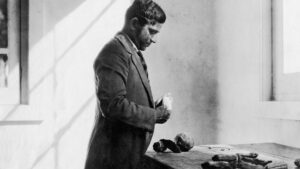
    Who was Pandurang Khankhoje (1883-1967)?

    • Born in Wardha, Maharashtra, in the late 19th century, Pandurang Khankhoje came in contact with other revolutionaries early on.
    • As a student, Khankhoje was an ardent admirer of the French Revolution and of the American War of Independence.
    • Closer to home, the Hindu reformer Swami Dayanand and his Arya Samaj movement, which called for a spirit of reform and social change, became the hero to a young student group led by Khankhoje.

    Revolutionary activities abroad

    • Khankhoje decided to go abroad for further training in revolutionary methods and militaristic strategy.
    • At this time, the British government’s suspicions of him were also growing due to his anti-government activities.
    • Before leaving, he visited Bal Gangadhar Tilak, by whom he was inspired.
    • Tilak advised him to go to Japan, which was itself a strong, anti-West Asian imperialistic force then.
    • After spending time with nationalists from Japan and China, Khankhoje eventually moved to the US, where he enrolled in college as a student of agriculture.

    Participation in the Indian independence movement

    • Khankhoje was one of the founding members of the Ghadar Party, established by Indians living abroad in 1914, mostly belonging to Punjab.
    • Its aim was to lead a revolutionary fight against the British in India.
    • While in the US, Khankhoje met Lala Har Dayal, an Indian intellectual teaching at Stanford University.
    • Har Dayal had begun a propaganda campaign, publishing a newspaper that featured patriotic songs and articles in the vernacular languages of India.
    • This was the seed from which the Ghadar Party would emerge.

    How did Khankhoje reach Mexico?

    • At the military academy, Khankhoje met many people from Mexico.
    • The Mexican Revolution of 1910 had led to the overthrow of the dictatorial regime, and this inspired Khankhoje.
    • He also reached out to Indians working on farms in the US with the aim of discussing the idea of Indian independence with them.
    • Along with the Indian workers, militant action was planned by Khankhoje in India, but the outbreak of the First World War halted these plans.
    • He then reached out to Bhikaji Cama in Paris, and met with Vladimir Lenin in Russia among other leaders, seeking support for the Indian cause.

    Association with Mexico

    • As he was facing possible deportation from Europe and could not go to India, he sought shelter in Mexico.
    • Soon, in part due to his prior friendship with Mexican revolutionaries, he was appointed a professor at the National School of Agriculture in Chapingo, near Mexico City.
    • He researched corn, wheat, pulses and rubber, developing frost and drought-resistant varieties, and was part of efforts to bring in the Green Revolution in Mexico.
    • Later on, the American agronomist Dr Norman Borlaug, called the Father of the Green Revolution in India, brought the Mexican wheat variety to Punjab.
    • Khankhoje was revered as an agricultural scientist in Mexico.

    Return to India

    • Both Pandurang and Jean returned to India after 1947.
    • His application for visa was initially rejected by the Indian government due to the ban by the British Indian Government, but was eventually overturned.
    • He settled in Nagpur and subsequently embarked on a political career.
    • Pandurang Khankhoje died on 22 January 1967.

    Back2Basics: Ghadar Party

    Founder: Sohan Singh Bhakna, 15 July 1913

    • The Ghadar Movement was an early 20th century, international political movement founded by expatriate Indians to overthrow British rule in India.
    • Earlier activists had established a ‘Swadesh Sevak Home’ in Vancouver and a ‘United India House’ in Seattle to carry out revolutionary activities. Finally, in 1913, the Ghadr was founded.
    • The Ghadar Party, originally known as the Pacific Coast Hindustan Association, was founded on July 15, 1913 in the US by Lala Har Dayal, Sant Baba Wasakha Singh Dadehar, Baba Jawala Singh, Santokh Singh, and Sohan Singh Bhakna.
    • The Ghadar party drew a sizable following among Indian expatriates in the United States, Canada, East Africa, and Asia.
    • It fought against colonialism from 1914 to 1917, with the support of Imperial Germany and the Ottoman Empire, both of which were Central Powers opposed to the British.
    • The party was organized around the weekly newspaper The Ghadar, which featured the masthead caption: Angrezi Raj Ka Dushman (an enemy of British rule); “Wanted brave soldiers to stir up rebellion in India,” the Ghadar declared.


  • Modern Indian History-Events and Personalities

    Tribute to women freedom fighters

    Context

    • Prime Minister Narendra Modi’s Independence Day speech underlined the role of women veeranganas in our freedom movement. The initiative highlighting the brave women of our freedom struggle, under the broader celebration of Azadi Ka Amrit Mahotsav, will mark a turning point in Indian feminist history writing from an Indic perspective.

    What veerangana means?

    • Veerangana means a brave female, someone who can fight for their rights. A strong woman not only protects herself, but protects others too.

    Veerangana’s in freedom struggle

    Rani Laxmibai

    • The queen of the princely state of Jhansi, Rani Laxmibai is known for her role in the First War of India’s Independence in 1857.
    • Refusing to cede her territory, the queen decided to rule on behalf of the heir, and later joined the uprising against the British in 1857.
    • Cornered by the British, she escaped from Jhansi fort. She was wounded in combat near Gwalior’s Phool Bagh, where she later died.
    • Sir Hugh Rose, who was commanding the British army, is known to have described her as “personable, clever…and one of the most dangerous Indian leaders”.

    Jhalkari Bai

    • A soldier in Rani Laxmibai’s women’s army, Durga Dal, she rose to become one of the queen’s most trusted advisers.
    • She is known for putting her own life at risk to keep the queen out of harm’s way.
    • Till date, the story of her valour is recalled by the people of Bundelkhand, and she is often presented as a representative of Bundeli identity.

    Durga Bhabhi

    • Durgawati Devi, who was popularly known as Durga Bhabhi, was a revolutionary who joined the armed struggle against colonial rule.
    • A member of the Naujawan Bharat Sabha, she helped Bhagat Singh escape in disguise from Lahore after the 1928 killing of British police officer John P Saunders.
    • Later, as revenge for the hanging of Bhagat Singh, Rajguru, and Sukhdev, she made an unsuccessful attempt to kill the former Punjab Governor, Lord Hailey.

    Rani Gaidinliu

    • Born in 1915 in present-day Manipur, Rani Gaidinliu was a Naga spiritual and political leader who fought the British.
    • She joined the Heraka religious movement which later became a movement to drive out the British. She rebelled against the Empire, and refused to pay taxes, asking people to do the same.
    • The British launched a manhunt, but she evaded arrest, moving from village to village.
    • Gaidinliu was finally arrested in 1932 when she was just 16, and later sentenced for life. She was released in 1947.
    • Then PM Nehru described Gaidinliu as the “daughter of the hills”, and gave her the title of ‘Rani’ for her courage.

    Rani Chennamma

    • The queen of Kittur, Rani Chennamma, was among the first rulers to lead an armed rebellion against British rule.
    • Kittur was a princely state in present-day Karnataka.
    • She fought back against the attempt to control her dominion in 1824 after the death of her young son. She had lost her husband, Raja Mallasarja, in 1816.
    • She is seen among the few rulers of the time who understood the colonial designs of the British.
    • Rani Chennamma defeated the British in her first revolt, but was captured and imprisoned during the second assault by the East India Company.

    Begum Hazrat Mahal

    • After her husband, Nawab of Awadh Wajid Ali Shah, was exiled after the 1857 revolt, Begum Hazrat Mahal, along with her supporters, took on the British and wrested control of Lucknow.
    • She was forced into a retreat after the colonial rulers recaptured the area.

    Velu Nachiyar

    • Many years before the revolt of 1857, Velu Nachiyar waged a war against the British and emerged victorious. Born in Ramanathapuram in 1780, she was married to the king of Sivagangai.
    • After her husband was killed in battle with the East India Company, she entered the conflict, and won with support of neighbouring kings.
    • She went on to produce the first human bomb as well as establish the first army of trained women soldiers in the late 1700s.
    • Her army commander Kuyili is believed to have set herself ablaze and walked into a British ammunition dump.
    • She was succeeded by her daughter in 1790, and died a few years later in 1796.

    Conclusion

    • The veeranganas are a potent symbol of nationalism and patriotism. They can overturn oppressive attitudes towards women in society. Their role and celebration in popular culture also refutes the colonial allegations about the suppression of women throughout Indian history. But it is essential to discover, rewrite and reinterpret the role and representation of these heroic women in the liberation of the motherland.


    Mains question

    Q. The veerangana’s are a potent symbol of nationalism and patriotism. They can overturn oppressive attitudes towards women in society. Discuss examples of them showing how they inspire women’s today.


    UPSC 2023 countdown has begun! Get your personal guidance plan now! (Click here)


  • Roads, Highways, Cargo, Air-Cargo and Logistics infrastructure – Bharatmala, LEEP, SetuBharatam, etc.

    ‘Kerala Savari’: India’s first online taxi service as a public option

    Kerala has soft launched ‘Kerala Savari’, the country’s first online taxi service owned by a State government, to ensure fair and decent service to passengers along with fair remuneration to auto-taxi workers.

    What is Kerala Savari?

    • Operated by the Motor Workers Welfare Board under the aegis of the Labour Department, the Kerala Savari ensures safe travel for the public at ‘government approved fares’ without any ‘surge pricing’.
    • The ‘Kerala Savari’ app would be made available to the public on online platforms shortly as it is under the scrutiny of Google now.

    Why such initiative?

    • The alleged unfair trade practices and violation of consumer rights by private app-based cab aggregators have come as a major concern for governments.
    • Recently, the Central Consumer Protection Authority (CCPA) had issued notices to cab aggregators Ola and Uber for unfair trade practices and violation of consumer rights which include:
    1. Charging exorbitant fares during peak hours
    2. Unprofessional behaviour from the part of drivers
    3. Lack of proper response from customer support, and
    4. Undue levy of cancellation charges despite the cab driver refusing to accept the ride booked by the passenger etc.
    • It is against this backdrop that the Kerala government has decided to come up with an app-based platform to offer auto-taxi service for the public.

    What are the main attractions of ‘Kerala Savari’?

    • There will be no fluctuation in fares on Kerala Savari irrespective of day or night or rain.
    • But Kerala Savari only 8% service charge in addition to the rate set by the government, whereas the private cab aggregators charge up to 20 to 30% service charge.

    What are the security-related features of ‘Kerala Savari’?

    • Kerala Savari is claimed as a safe and reliable online service for women, children, and senior citizens.
    • This consideration has been given importance in app designing and driver registration.
    • A police clearance certificate is mandatory for drivers joining the scheme apart from the required proper training.
    • A panic button system has been introduced in the app.
    • It has also been decided to install GPS in vehicles at a subsidised rate.

    Will the new government initiative end the monopoly of private cab aggregators?

    • Kerala has over five lakh autorickshaws and one lakh cabs.
    • The State government plans to bring all auto-taxi workers engaged in the sector under the new platform.
    • Since smartphone literacy is high in Kerala, the State is hopeful of bringing them under the scheme in a short span of time.
    • In addition, the Kerala government has also decided to provide fuel, insurance, and tyre subsidies for vehicle owners in the future and has already initiated talks with major companies in this regard.
    • After the evaluation of the first phase of the project in Thiruvananthapuram, it will be extended to the entire State in a phased manner.
    • Kerala Savari is expected to reach Kollam, Ernakulam, Thrissur, Kozhikode, and Kannur municipal limits within a month.
    Regulation of Cab Aggregators in India

    • The Motor Vehicles Amendment Act 2019 seeks to regulate Cab aggregators in India
    • It’s the first time cab aggregators have got statutory recognition as “digital intermediaries” or “transport aggregators”.
    • They are now defined as marketplaces that can be used by passengers to connect with a driver for moving from one place to another.
    • The Centre will issue broad guidelines from time to time and the states will rely on them to frame their own rules to regulate the industry.
    • The aggregators will also have to comply with the provisions of the Information Technology Act, 2000.
    • This means they will have to follow rules on storing data safely to protect the identity of users.


    UPSC 2023 countdown has begun! Get your personal guidance plan now! (Click here)

Join the Community

Join us across Social Media platforms.