💥UPSC 2027,2028 Mentorship (April Batch) + Access XFactor Notes & Microthemes PDF

Archives: News

  • Festivals, Dances, Theatre, Literature, Art in News

    Charaichung Festival at Majuli  

    Why in the News?

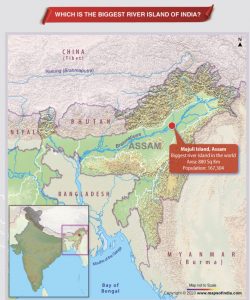
    Assam’s Majuli island hosted the second edition of the Charaichung Festival, aimed at reviving Asia’s first protected Royal Bird Sanctuary, Charaichung, established in 1633 AD.

    About Charaichung Sanctuary

    • Established in 1633 AD by Ahom King Swargadeu Pratap Singha (Burha Roja).
    • Considered Asia’s first protected royal bird sanctuary.
    • Holds a 392-year-old legacy.
    • Once thriving, the sanctuary has deteriorated and now requires active conservation.
    • Home to around 150 species of indigenous and migratory birds.

    About the Charaichung Festival

    • Held from December 7 to 10, 2025, at Majuli.
    • Organised by Majuli Sahitya and local communities.
    • Objective:
      • Revive Charaichung sanctuary
      • Strengthen bird conservation
      • Promote Majuli as a global tourism destination
    • Includes a special forest conservation exhibition showcasing biodiversity protection efforts.

    Significance of Majuli

    • Recognised as the world’s largest river island.
    • One of India’s important bird habitats, attracting domestic and international nature enthusiasts.
    • Rich in biodiversity and cultural heritage.
    Which of the following National Parks is unique in being a swamp with floating vegetation that supports a rich biodiversity? (2015)

    (a) Bhitarkanika National Park 

    (b) Keibul Lamjao National Park 

    (c) Keoladeo Ghana National Park 

    (d) Sultanpur National Park

  • Climate Change Impact on India and World – International Reports, Key Observations, etc.

    Mass Mortality of Goniopora Corals at One Tree Reef  

    Why in the News?

    A new study published in Proceedings of the Royal Society B (December 10, 2025) reports unprecedented coral bleaching and mortality at One Tree Reef (OTR) in the southern Great Barrier Reef, driven by extreme heat and rapid spread of black band disease (BBD).

    Background

    • Coral reefs have shaped Earth’s climate for 250 million years.
    • OTR has not witnessed bleaching of this severity for decades.
    • The impacted species, Goniopora (flowerpot or daisy corals), typically live in lagoons and turbid reefs and are known for thermal tolerance, making their mass mortality alarming.

    Why Black Band Disease Spread at OTR

    • BBD is common in the Caribbean but historically rare in the southern Great Barrier Reef.
    • OTR is offshore and not affected by major nutrient pollution — usually a known trigger.
    • Other coral genera at OTR that bleached did not develop BBD.
    • Northern Great Barrier Reef surveys (2024) showed very low incidence (1–2 percent).
    Consider the following statements: (2018)

    1. Most of the world’s coral reefs are in tropical waters. 

    2. More than one-third of the world’s coral reefs are located in the territories of Australia, Indonesia and Philippines. 

    3. Coral reefs host far more number of animal phyla than those hosted by tropical rainforests. 

    Which of the statements given above is/are correct? 

    (a) 1 and 2 only (b) 3 only (c) 1 and 3 only (d) 1, 2 and 3

  • Pension Reforms

    Onboarding of MTNL Pensioners onto SAMPANN  

    Why in the News?

    The Controller General of Communication Accounts (CGCA) has inaugurated the onboarding of all Mahanagar Telephone Nigam Limited (MTNL) pensioners onto the SAMPANN portal, marking a major step in modernizing pension administration under the Department of Telecommunications (DoT).

    About the MTNL Pensioners

    • The onboarding covers 45,939 MTNL pensioners from Delhi and Mumbai.
    • Includes both current retirees (November 2025) and past pensioners.
    • Event held at the Office of Principal CCA, Delhi.
    • Pensioners received E-PPOs (Electronic Pension Payment Orders) during the event.

    About SAMPANN

    System for Accounting and Management of Pension (SAMPANN)

    • A centralized, comprehensive telecom pension management platform of the DoT.
    • Enables fully digital processing of pension cases.

    Key Features of SAMPANN

    • Accurate, rule-based pension calculations.
    • Integrated case processing with end-to-end digital workflow.
    • PFMS-linked timely pension disbursements.
    • Multi-modal grievance redressal system.
    • Mobile app support (Android and iOS).
    • Real-time dashboards for monitoring and transparency.
    • Reduction of paperwork and delays.
    Consider the following statements: (2020)

    1. Aadhaar metadata cannot be stored for more than three months. 

    2. State cannot enter into any contract with private corporations for sharing of Aadhaar data. 

    3. Aadhaar is mandatory for obtaining insurance products. 

    4. Aadhaar is mandatory for getting benefits funded out of the Consolidated Fund of India. 

    Which of the statements given above is/ are correct? 

    (a) 1 and 4 only (b) 2 and 4 only (c) 3 only (d) 1, 2 and 3 only

  • Financial Inclusion in India and Its Challenges

    ‘Your Money, Your Right’ Movement  

    Why in the News?

    The Prime Minister recently urged citizens to actively participate in the ‘Your Money, Your Right’ movement, a national initiative to help people reclaim their unclaimed financial assets.

    About the Movement

    • Launched by the Central Government in October 2025.
    • Objective: Enable citizens to locate and recover unclaimed deposits, insurance proceeds, dividends, mutual fund amounts, and other financial assets.

    Scale of Unclaimed Funds in India

    • Banking sector: Rs 78,000 crore unclaimed.
    • Insurance companies: Rs 14,000 crore unclaimed.
    • Mutual funds: Rs 3,000 crore unclaimed.
    • Dividends: Rs 9,000 crore unclaimed.
    • Deposits lying idle for 10 years or more are classified as unclaimed deposits.

    Dedicated Portals for Easy Access

    • Unclaimed bank deposits
      • Regulatory Body: Reserve Bank of India
      • Portal: UDGAM Portal
    • Unclaimed insurance proceeds
      • Regulatory Body: Insurance Regulatory and Development Authority of India
      • Portal: Bima Bharosa Portal
    • Unclaimed mutual fund amounts
      • Regulatory Body: Securities and Exchange Board of India
      • Portal: MITRA Portal
    • Unpaid dividends and unclaimed shares
      • Regulatory Body: Ministry of Corporate Affairs
      • Portal: IEPFA Portal
    Pradhan Mantri Jan-Dhan Yojana’ has been launched for (2015)

    (a) providing housing loan to poor people at cheaper interest rates 

    (b) promoting women’s Self-Help Groups in backward areas 

    (c) promoting financial inclusion in the country 

    (d) providing financial help to the marginalized communities

  • ISRO Missions and Discoveries

    NSIL and ISRO Technology Transfer 

    Why in the News?

    NewSpace India Limited (NSIL) has so far signed 70 Technology Transfer Agreements (TTAs) to license technologies developed by ISRO to Indian industries.

    About NSIL

    • Commercial arm of the Department of Space (DoS), incorporated under the Companies Act 2013.
    • Mandated to:
      • Commercialise ISRO technologies.
      • Enable industry participation in space missions.
      • Act as the actual licensor of ISRO technologies.

    Technology Transfer Mechanism

    Types of Agreements

    1. Technology Transfer Agreements (TTAs) – Define rights, obligations, and usage of transferred technology.
    2. Non-Disclosure Agreements (NDAs) – Contain explicit confidentiality clauses protecting commercially sensitive information.

    Role of IN-SPACe

    • Acts as a facilitator for Non-Governmental Entities (NGEs).
    • NSIL remains the licensing authority.

    Oversight for Fairness

    • A dedicated Technology Transfer Committee reviews all proposals.
    • Ensures transfers are transparent, equitable, and accountable.

    Transparency and RTI Compliance

    • NSIL is a public authority under RTI Act, 2005.
    • Suo motu disclosure under Section 4:
      • Lists technologies available for transfer.
      • Guidelines and procedures for NGEs.
      • Periodically updated information on technology transfers.

    What Information is Public?

    • Names and details of industries receiving ISRO technologies
      (furnished under RTI and available via ISRO/DoS websites such as URSC, IN-SPACe, NSIL).
    • Media publications also highlight certain transfers.

    Information Exempt from Disclosure

    Under Section 8(1)(d) of the RTI Act, NSIL does not disclose:

    • Commercial terms.
    • Payment details.
    • Copies of agreements.
      These are considered commercially sensitive or strategic.
    With reference to the Indian Regional Navigation Satellite System (IRNSS), Consider the following statements : (2018)

    1. IRNSS has three satellites in geostationary and four satellites in geosynchronous orbits. 

    2. IRNSS covers entire India and about 5500 sq. km beyond its borders. 

    3. India will have its own satellite navigation system with full global coverage by the middle of 2019. 

    Which of the statements given above is/are correct ? 

    (a) 1 only (b) 1 and 2 only (c) 2 and 3 only (d) None

  • Artificial Intelligence (AI) Breakthrough

    [11th December 2025] The Hindu OpED: ​​AI must pay: On the DPIIT working paper on AI and Copyright Issues

    PYQ Relevance

    [UPSC 2024] What is the present world scenario of intellectual property rights with respect to life materials? Although India is second in the world to file patents, still only a few have been commercialised. Explain the reasons behind this less commercialization.

    Linkage: This topic is relevant because it highlights India’s weak IPR monetisation systems and the need for clear licensing frameworks for AI training. It directly links to the issue of poor commercialization of intellectual property due to inadequate revenue and protection mechanisms.

    Mentor’s Comment

    The rapid expansion of AI models such as LLMs has outpaced global regulatory thinking, especially concerning copyright. India’s new working paper on “AI and Copyright Issues” marks a significant policy moment because it attempts to balance innovation with fair remuneration for content creators.  

    Introduction 

    Large Language Models (LLMs) rely heavily on public text, data, and multimedia scraped from the Internet. This has created tension between AI developers and content producers whose material forms the backbone of AI training datasets. India’s Department for Promotion of Industry and Internal Trade (DPIIT) has released a working paper proposing a mandatory licensing framework to ensure remuneration for content creators while keeping AI innovation unhindered. The proposal aims to prevent prolonged litigation, offer a collaborative revenue system, and address the growing disruption in the media landscape.

    Why in the news?

    India’s working paper is significant because it represents the first structured attempt to create a national solution to the global controversy around AI training data and copyright. For years, AI hyperscalers have argued for unrestricted scraping of Internet content, while publishers insisted on licensing and consent. With lawsuits piling up worldwide and no uniform judicial clarity, India’s move is a major shift from unregulated data scraping to a mandatory revenue-sharing model. It highlights the scale of the problem, hundreds of media houses and small publishers risk losing fair compensation as LLMs synthesize new outputs from their work without attribution. The proposal marks a pivot toward balancing AI development with creators’ rights, avoiding a situation that could disadvantage India’s AI ecosystem through excessive restrictions or unchecked exploitation.

    What Drives the Rapid Progress of LLMs?

    1. Iterative advancements in machine learning: Continuous improvements in applied techniques enhance the performance and reasoning ability of LLMs.
    2. Expanding access to global text and multimedia data: Massive publicly available datasets fuel training, improving output depth and sophistication.
    3. Dependence on Internet-scale content: AI firms rely heavily on materials produced by media houses, publishers, and content creators.

    What Is the Core Conflict Between AI Firms and Content Producers?

    1. Free-use argument by AI developers: They claim public Internet content should be freely usable for training, even when outputs are monetized.
    2. Licensing demand from content producers: Reproduction or syndication by AI, directly or indirectly, should require consent and licence fees.
    3. Fierce industry debate: News, entertainment, and book publishing sectors fear uncompensated use of their intellectual property.

    What Does India’s Working Paper Propose?

    1. Mandatory licensing framework: Allows unlimited scraping of public information, but mandates structured payments to a central body.
    2. Non-profit copyright society: Collects royalties from AI developers based on revenues earned through AI models trained on Indian content.
    3. Collaborative revenue-sharing: Ensures creators benefit from the value AI systems extract from their work.

    Why Is the Licensing Model Considered Practical?

    1. Avoids the burden of opting out: Individual content producers lack the power to prevent scraping or enforce restrictions.
    2. Recognizes data processing as a functional reality: AI models synthesize new outputs rather than reproduce original text verbatim.
    3. Addresses inequity concerns: Small publishers may still feel disadvantaged, but a flawed system is preferable to absence of remuneration.

    What Are the Challenges in Implementing the System?

    1. Royalty determination issues: Difficulties in deciding proportional payments, especially between small and large publishers.
    2. Ongoing global litigations: Lawsuits against AI companies continue, and no uniform judicial framework exists yet.
    3. Needless delay is a threat: Waiting for courts to settle the issue only benefits AI firms and worsens market disruption.
    4. Tech industry dissent: Some developers resist additional regulatory burdens but the committee views collaboration as essential.

    Conclusion

    India’s working paper marks an important shift toward a balanced AI-copyright ecosystem. While the proposed licensing structure is imperfect, it offers a practical, collaborative alternative to years of litigation and unregulated data extraction. If supported by the government and refined through stakeholder dialogue, it can ensure that India’s creators, publishers, and AI innovators coexist in a fair and sustainable digital environment.

  • Economic Indicators and Various Reports On It- GDP, FD, EODB, WIR etc

    Is India’s 8.2% growth rate sustainable?

    Introduction

    India’s growth figures highlight strong quarterly momentum driven by manufacturing revival, domestic demand, and fiscal support. However, the sustainability of this growth depends on addressing long-standing structural bottlenecks, improving capital productivity, widening the export base, and navigating global volatility.

    Why in the News? 

    India’s GDP surged 8.2% to ₹84.8 lakh crore, placing the economy on a significantly higher productivity trajectory and projecting post-pandemic momentum. The IMF has assigned India a “Grade C” rating, warning that despite strong quarterly numbers, structural weaknesses, low private investment, weak export engine, uneven manufacturing recovery, and demand imbalances, could undermine long-term growth stability. This contrast between record headline growth and deep structural fragilities makes the issue critical for policymakers and analysts.

    What Is Driving the Current Growth Momentum?

    1. Higher GDP Output: Reflects strong post-pandemic momentum and productivity shift highlighted by the jump to ₹84.8 lakh crore output.
    2. Manufacturing Uptick: Growth driven by industrial demand, base effects, and sectors like construction (growing at 9.9%).
    3. GVA Expansion: ₹83.4 lakh crore GVA, driven by agriculture, industry, and services, with increased value addition.
    4. Investment-Led Trends: Fixed capital formation rising, indicating capacity expansion and infrastructure push.
    5. Private Consumption Boost: Supported by fiscal measures, higher rural incomes, and improved sentiment.

    What Explains the Strength in Sectoral Performance?

    1. Industrial Revival: Manufacturing and construction displayed a significant rebound after years of sluggishness.
    2. Services Resilience: High-growth areas include trade, transportation, communication, and financial services.
    3. Electricity & Utilities: Strong 4% growth driven by improved output and demand.
    4. Export-Linked Sectors: Remain subdued due to uncertain global markets.

    What Are the Structural Weaknesses Behind the Headline Growth?

    1. Private Investment Weakness: Corporate balance sheets show improved profits, but capacity expansion remains limited.
    2. Low Export Competitiveness: India’s export growth remains inadequate, weakening long-term sustainability.
    3. Agricultural Stress: Rural sector faces weather volatility, erratic monsoons, and stagnant productivity.
    4. Employment Concerns: Growth not accompanied by proportionate labour productivity improvements.
    5. Demand Imbalances: High-income consumption rising faster than mass consumption.

    What Do IMF’s “Grade C” Red Flags Indicate?

    1. Growth Quality Concerns: Strong numbers, but capital formation, labour productivity, and structural depth remain weak.
    2. Sustainability Risks: Fiscal burden, external shocks, and global volatility challenge long-term growth.
    3. Macro Vulnerabilities: Uneven export engine and high dependence on domestic demand.
    4. Policy Gaps: Need for reforms in taxation, industrial competitiveness, and labour markets.

    How Do Global Headwinds Affect India’s Growth Outlook?

    1. Trade Protectionism: Affects export-driven sectors such as textiles, electronics, and engineering goods.
    2. Geopolitical Tensions: Disrupt supply chains and energy markets, raising import bills.
    3. Oil Price Uncertainty: High import dependence makes India vulnerable to price shocks.
    4. Financial Volatility: Impacts FPI flows, exchange rates, and corporate borrowing.

    Conclusion

    India’s 8.2% growth demonstrates powerful economic momentum, yet it conceals vulnerabilities in investment, exports, productivity, and sectoral balance. For growth to remain sustainable, India must transition from cyclical recovery to structural transformation, anchored in manufacturing competitiveness, export diversification, resilient agriculture, and robust private investment.

    PYQ Relevance

    [UPSC 2021] Do you agree that the Indian economy has recently experienced V-shaped recovery? Give reasons in support of your answer. 

    Linkage: This PYQ aligns with the article’s theme of strong headline growth masking deeper structural weaknesses and questioning the quality of recovery. It allows analysis of base effects, uneven sectoral revival, and sustainability concerns highlighted by the IMF’s Grade-C assessment.

  • Child Rights – POSCO, Child Labour Laws, NAPC, etc.

    Australia social media ban on users aged under-16 kicks in

    Introduction

    Australia has enacted a first-of-its-kind law mandating that major social media platforms verify user age and remove accounts of children below 16 unless parents explicitly consent. The reform marks a sharp departure from earlier tech-driven self-regulation and responds to rising concerns over children’s mental health, grooming risks, harmful content, and the pressure of constant screen exposure. The move has been positioned as a “template for the world,” with global relevance as regulators struggle to manage Big Tech.

    Why in the news?

    Australia has become the first country globally to impose a minimum age for social media access, marking a structural shift in how online safety is governed. The legislation is significant because social media firms were previously allowed to operate on self-declared age checks, often exploited by under-16 users. 

    Australia’s Move Towards an Age-Restricted Internet Ecosystem

    1. Minimum age requirement: Platforms must block users under 16 unless parents consent.
    2. Verification mandate: Tech firms must take “reasonable steps” to verify age and remove under-age accounts.
    3. New regulatory law: The Online Safety Amendment (Social Media Minimum Age) Act creates enforceable obligations.
    4. Scope of platforms: Facebook, Instagram, YouTube, Snapchat, X, TikTok, Threads, Reddit covered.

    What Makes the Age-16 Cut-Off Significant?

    1. Based on mental-health indicators: Government-commissioned survey found 74% of children saw or heard disturbing content; 53% experienced online bullying; 27% faced personal attacks.
    2. Escalating harm to minors: 38% reported exposure to harmful content; 16% received sexualised images; 25% faced coercion or harassment.
    3. Self-harm risk: 17% saw content encouraging suicide or self-harm.
    4. Increased vulnerability: Under-16 users are at greater risk of grooming, hate speech, compulsive scrolling and pressure for online perfection.

    How Are Tech Companies Responding?

    1. Compliance with resistance: Firms say the rule may not improve safety unless implemented globally.
    2. Burden of verification: Companies argue age-verification tools are intrusive or inaccurate.
    3. Big Tech backlash: Meta has called it impractical; industry bodies say “it will not make kids safer.”
    4. Regulator’s stance: eSafety insists firms have long failed to prioritise child safety despite repeated warnings.

    How Does This Compare With India’s Approach?

    1. Parental consent focus: India allows minors to access social media with guardian approval; no age-16 prohibition.
    2. Law under review: India’s DPDP Act originally proposed a strict age-limit but relaxed it in 2023.
    3. Tech-industry influence: India’s softer position partly reflects concerns of over-regulation and digital inclusion.
    4. Existing obligations: Platforms must ensure safety of users but without mandatory age verification.
    5. Contrast in regulatory philosophy: Australia mandates verification; India relies on parental oversight.

    Why Is Australia Positioning Itself as a Global Template?

    1. First mover advantage: No other country has set a universal age-16 social media restriction.
    2. Evidence-backed regulation: Emphasis on child mental-health data, grooming cases, hate content rise.
    3. Model for Western democracies: May influence UK’s Online Safety Act and EU child-protection deliberations.
    4. Accountability push: Shifts burden onto platforms, not users or parents.

    Arguments Supporting the Ban

    1. Protects Mental and Emotional Health
      1. Lower exposure to harmful content and compulsive usage.
      2. Reduces anxiety, body-image issues, and cyberbullying.
    2. Ensures Safer Social Environments
      1. Decreases risks of grooming, harassment, stalking.
      2. Strengthens mechanisms of child protection.
    3. Encourages Healthy Childhood Development
      1. Promotes in-person socialisation, sports, hobbies.
      2. Protects attention spans and reduces digital addiction.
    4. Enhances Parental Participation
      1. Builds shared responsibility between state and family.
      2. Forms a bridge for conversations on digital behaviour.
    5. Holds Big Tech Accountable
      1. Platforms must prioritise safety over profit algorithms.
      2. Shifts burden from minors to corporations.

    Arguments Criticising the Ban 

    1. May Not Be Technically Feasible: 
      1. Age-verification technologies can be inaccurate or intrusive.
      2. Teens may bypass rules using VPNs, fake IDs, or loopholes.
    2. Restricts Freedom and Digital Expression
      1. Limits creativity, art-sharing, community-building.
      2. Curtails a teen’s right to express identity.
    3. Affects Social Inclusion: Digital communities are key social spaces; absence may create social disconnectedness.
    4. May Push Children to Unregulated Spaces
      1. Alternative apps, gaming communities, or private groups may become more dangerous.
      2. Harder for parents to monitor.

          5.Differential Impact Across Socio-economic Groups: Children with tech-savvy families bypass       easily; others comply strictly; this may lead to inequality in digital exposure.

    Conclusion

    Australia’s social media age-restriction law marks a decisive shift toward child-centric digital governance. By mandating age verification, compelling parental consent, and imposing significant penalties, it challenges Big Tech’s long-standing autonomy. Its global implications lie in redefining platform accountability and inspiring nations to re-examine their youth-safety frameworks. For India, the development provides an important reference point as it balances innovation with child protection in digital spaces.

    PYQ Relevance

    [UPSC 2023] Child cuddling is now being replaced by mobile phones. Discuss its impact on the socialization of children.

    This PYQ directly relates to how digital exposure alters children’s socialisation, a core concern behind Australia’s under-16 social media ban. It links the societal impact of early phone use with the need for stronger regulation to protect minors online.

  • Foreign Policy Watch: United Nations

    UNICEF

    Why in the News?

    UNICEF, created on December 11, 1946, originally provided emergency relief to children and mothers in war-affected regions after World War II. A recent quiz on UNICEF’s history highlights several facts important for UPSC Prelims.

    UNICEF’s First Greeting Card (1949)

    • A thank-you drawing from a young girl became UNICEF’s first fundraising greeting card.
    • The artwork depicted children dancing around a maypole.
    • This started UNICEF’s global tradition of greeting cards used to fund child-focused programs.

    Transformation in 1953: Change of Name

    • UNICEF became a permanent part of the UN system in 1953.
    • Its original name: United Nations International Children’s Emergency Fund.
    • Words International and Emergency were removed.
    • New name: United Nations Children’s Fund, but acronym UNICEF retained for familiarity.
    • India is the member.

    Nobel Peace Prize

    • UNICEF was awarded the Nobel Peace Prize in 1965.
    • Recognised for advancing “brotherhood among nations” through children’s welfare, development, and global health programs.

    World’s Most Widely Used Hand Pump

    • Severe droughts in rural India in the 1970s led to a major collaboration between the Government of India, WHO and UNICEF.
    • Result: India Mark II hand pump, now among the most widely deployed rural water pumps in the world.
    • Known for reliability, low maintenance and suitability for community use.

    U.S. Withdrawal Controversy (Early 1980s)

    • UNICEF faced indirect criticism when the US government announced withdrawal from UNESCO.
    With reference to the United Nations Convention on the Rights of the Child, consider the following: (2010)

    1. The Right to Development 

    2. The Right to Expression 

    3. The Right to Recreation 

    Which of the above is/ are the Rights of the child? 

    (a) 1 only (b) 1 and 3 only (c) 2 and 3 only (d) 1, 2 and 3

  • Inland Waterways

    India Hosts 3rd Global IALA Council Session in Mumbai

    Why in the News?

    The Union Minister for Ports, Shipping and Waterways, Sarbananda Sonowal, inaugurated the 3rd Global IALA Council Session in Mumbai and launched a Digital Ticketing Portal for Lighthouse Tourism. Over 30 countries are participating in the high-level global event, held from 8–12 December 2025.

    About IALA (International Association of Marine Aids to Navigation and Lighthouse Authorities)

    • A non-profit international body that sets global standards for marine aids to navigation.
    • Works in areas such as:
      • AtoN systems
      • VTS standards
      • e-Navigation frameworks
    • Promotes harmonisation of navigation technologies across member states.
    • India is a long-standing member and host of the 3rd Council session.
    India is one of the founding members of the International North-South Transport Corridor (INSTC), a multimodal transportation corridor, which will connect (2025)

    (a) India to Central Asia to Europe via Iran 

    (b) India to Central Asia via China 

    (c) India to South-East Asia through Bangladesh and Myanmar 

    (d) India to Europe through Azerbaijan

Join the Community

Join us across Social Media platforms.
