💥UPSC 2027,2028 Mentorship (April Batch) + Access XFactor Notes & Microthemes PDF

Archives: News

  • Global Geological And Climatic Events

    Rapid Intensification of Cyclones

    Tropical cyclones remain the deadliest natural climate hazard that causes an unacceptably high loss of life, property and infrastructure.  Global warming has already resulted in a detectable increase in the number of higher intensity cyclones as well as their intensification.

    Also read:

    [Burning Issue] Tropical Cyclones and India

    Try this question:

    Q. The Marsupial Theory often seen in news is related to which of the climatic phenomena?

    a) Heatwaves b) Monsoon Variability c) Formation of Cyclones d) Thunderstorms

    What is Rapid Intensification of Cyclones?

    • RI is defined as an increase in maximum sustained winds by at least 55 km/hour in a 24-hour period.
    • Such acceleration can only come with a rapid drop in the pressure in the eye of the cyclone.
    • Rapid intensification (RI) is making cyclone forecasts harder and intense cyclones with RI are expected to grow in number.
    • The lack of understanding of the transition from a seedling of a cyclone, like a low-pressure system to a tropical storm, limits extending the forecast lead times.

    Factors causing RI

    The most important environmental factors for cyclone genesis are-

    • the rotation or vorticity of a low-pressure system at the surface;
    • sea surface temperatures or the volume of warm water available;
    • the vertical motion of air in this low-pressure system;
    • the amount of humidity available in the middle atmosphere and
    • the vertical shear or the change in winds from the surface to the upper atmosphere.

    MJO and Cyclones

    • Madden-Julian Oscillations as they are known, dominate the tropics during October-April by propagating from the western Indian Ocean into the eastern Indian Ocean, across the Indonesian seas into the Pacific Ocean.
    • Referred to as MJOs, these Madden-Julian Oscillations throw seeds of rotational low-pressure systems over the Indian and the Pacific Oceans.
    • And thus, MJOs show a strong association with cyclogenesis, especially for the post-monsoon season.

    Impacts of MISO

    • Monsoon Intraseasonal Oscillations (MISO) are alternating periods of heavy and minimal rainfall, each lasting for about a month or so and tending to follow a cyclical, northward shifting pattern from the equator to southern Asia.
    • While the strong vertical shear suppresses cyclones during the monsoon season, MISOs influence cyclone genesis during the pre-monsoon season.

    Other factors

    • At longer timescales, phenomena like the El Niño and La Niña influence not only the number of cyclone seeds but also the location and the expanse of warm water.
    • For example, during the pre-monsoon season of La Niña year, the region of warm water over the Bay of Bengal increases. This leads cyclones to travel longer and grow stronger than during an El Niño year.
    • Over the Pacific Ocean, on the other hand, it is the El Niño that provides a larger swath of warm water and more intense cyclones.
    • West Africa produces waves called easterly waves that propagate west from land onto the tropical Atlantic Ocean and sow the seeds for most hurricanes.
    • Extensive analysis has produced theories that are evocatively called the Marsupial Theory — a wave pouch that allows cyclones to grow, or waves interacting to produce a Kelvin cat’s eye, which is a ‘sweet-spot’ for the birth of a cyclone.

  • Modern Indian History-Events and Personalities

    In news: Santhal Rebellion

    Covid-19 pandemic has led to the cancellation of annual public observance of Hul in Jharkhand.

    Try this question from CSP 2018:

    Q.After the Santhal uprising subsided, what was/ were the measure/measures taken by the colonial government?

    1. The territories called ‘Santhal Paraganas’ were created.
    2. It became illegal for a Santhal to transfer land to a non Santhal.

    Select the correct answer using the code given below:

    (a) 1 only

    (b) 2 only

    (c) Both 1 and 2

    (d) Neither 1 nor 2

    Hul Divas

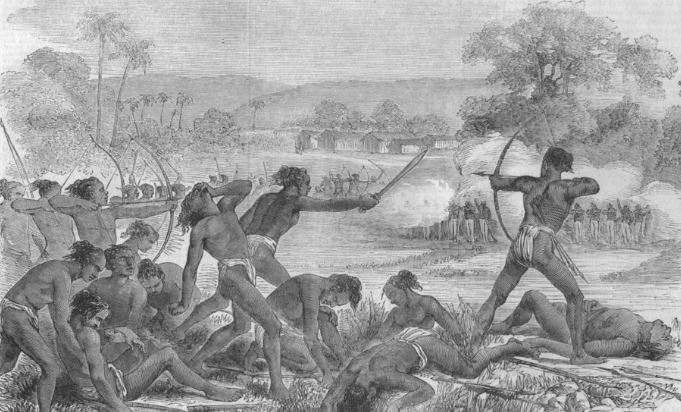
    • Hul Divas is observed annually on June 30 in memory of tribals — Sidho and Kanhu Murmu — who led the Santhal Hul (rebellion) on June 30, 1855, at Bhognadih in Sahebganj district.

    About Santhal Rebellion

    • The Santhals of Rajmahal Hills resented the oppression by revenue officials, police, money-lenders, and landlords—in general, by the “outsiders’ (whom they called diku).
    • The Santhals under Sido and Kanhu rose up against their oppressors, declared the end of the Company’s rule and asserted themselves independent in 1854.
    • It was only in 1856 after extensive military operations that the situation was brought under control. Sido died in 1855, while Kanhu was arrested in 1866.
    • A separate district of Santhal Parganas was created by the Government to pacify the Santhals.

    Must read:

    Tribal Issues | Part 2 | Pre Independence Tribal Revolts

  • Tax Reforms

    Stamp Duty on Mutual Fund Purchases

    The Amendments in the Indian Stamp Act, 1899 has been brought through Finance Act 2019 for Rationalized Collection Mechanism of Stamp Duty across India with respect to Securities Market Instruments.

    Up till now, we knew that stamp duties are levied on property transactions, registrations etc. With the Finance Act 2019, the stamp duties are also levied on Mutual Funds.

    What is Stamp Duty?

    • Stamp duty is a legal tax payable in full and acts as evidence for any sale or purchase of a property. It is payable under Section 3 of the Indian Stamp Act, 1899.
    • The levy of stamp duty is a state subject and thus the rates of stamp duty vary from state to state.
    • The Centre levies stamp duty on specified instruments and also fixes the rates for these instruments.
    • It is usually paid by the buyer with regardless of agreement and in case of property exchange, both seller and the buyer has to share the stamp duty equally.
    • A stamp duty paid instrument/document is considered a proper and legal instrument/document and has evidentiary value and is admitted as evidence in courts.

    What is the move?

    • Beginning July 1, all shares and mutual fund purchases will attract a stamp duty of 0.005 per cent and any transfer of security will attract a stamp duty of 0.015 per cent.
    • The government had introduced changes to the Stamp duty Act last year by introducing a uniform rate of stamp duty on the trading of shares and commodities.
    • All categories of mutual funds (except for ETFs) will attract stamp duty for the first time.
    • Shares purchased by individuals at stock exchanges were charged stamp duty at different rates by respective states.

    Where all will it be applicable?

    • The stamp duty will be applicable on all transactions, including shares, debt instruments, commodities and all categories of mutual fund schemes.
    • As for mutual funds, it will be applicable on all fresh purchases, including the fresh monthly purchases in previously registered Systematic Investment Plans.
    • It will also be applicable if investors switch from one scheme to another and also in case of dividend reinvestment transactions.
    • Transfers of units from one Demat account to another, including market/off-market transfers, will also attract stamp duty.

    How does it impact the investor?

    • The impact on long-term investments by a retail investor is nominal.
    • Since the stamp duty will be charged a one-time charge, if an investor invests Rs 1 lakh in a mutual fund scheme or in stock and holds it for two years, he will have to pay a duty of only Rs 5.
    • In fact, it will be marginally lower as the stamp duty is applicable on the net investment value i.e gross investment amount less than any other deduction like transaction charge.
    • There is no duty at the time of redemption.

    What about big investors?

    • The impact is higher for investors with short-term investment horizons such as banks and corporates who invest in liquid and overnight schemes of mutual funds.

    How much revenue can it generate for the government?

    • In the financial year 2019-20, the mutual fund industry mobilized aggregate funds of over Rs 188 lakh crore.
    • A high portion of that was in overnight funds or liquid funds.
    • A 0.005 per cent stamp duty on this amount works out to Rs 940 crore.
    • If the industry continues to mobilise funds to the tune of Rs 190 lakh crore or higher, it will generate revenues of nearly Rs 1,000 crore for the government from mutual fund transactions itself.

    Back2Basics: Mutual Funds

    • MF is a trust that collects money from a number of investors who share a common investment objective.
    • Then, it invests the money in equities, bonds, money market instruments and/or other securities.
    • Each investor owns units, which represent a portion of the holdings of the fund.
    • The income/gains generated from this collective investment are distributed proportionately amongst the investors after deducting certain expenses, by calculating a scheme’s “Net Asset Value or NAV.
    • It is one of the most viable investment options for the common man as it offers an opportunity to invest in a diversified, professionally managed basket of securities at a relatively low cost.
    • All funds carry some level of risk. With mutual funds, one may lose some or all of the money invested because the securities held by a fund can go down in value.
  • Global Geological And Climatic Events

    The lost continent of Zealandia

    A new map has revealed the lost continent of Zealandia.

    The ocean relief can be divided into various parts such as Continental Shelf, Continental Slope, Continental Rise or Foot, Deep Ocean basins, Abyssal plains & Abyssal Hills, Oceanic Trenches, Seamounts and Guyots.

    Revise these ocean bottom relief features from your basic references.

    Also revise India’s Deep Ocean Mission.

    About Zealandia

    • Zealandia — or Te Riu-a-Māui, as it’s referred to in the indigenous Māori language — is a 2 million-square-mile (5 million square kilometres) continent east of Australia, beneath modern-day New Zealand.
    • Scientists discovered the sprawling underwater mass in the 1990s, then gave it formal continent status in 2017.
    • Still, the “lost continent” remains largely unknown and poorly studied due to its Atlantean geography.

    Its formation

    • It is a group of submerged pieces of crust that separated from the ancient supercontinent Gondwana about 85 million years ago.
    • Gondwana was formed when Earth’s ancient supercontinent, Pangea, split into two fragments.
    • Laurasia was transformed into North America, Asia, and Europe, while Gondwana became Africa, South America, Australia, and Antarctica.
    • But land masses continued to be rearranged afterwards, with Zealandia breaking off Gondwana.

    Data revealed by the new map

    • The new maps reveal Zealandia’s bathymetry (the shape of the ocean floor) as well as its tectonic history, showing how volcanism and tectonic motion have shaped the continent over millions of years.
    • Data for the bathymetric map was provided by the Seabed2030 project — a global effort to map the entire ocean floor by 2030.

    Why call it a continent?

    • Zealandia was classified as a “microcontinent,” as the island of Madagascar, until 2017.
    • But according to Mortimer, it has all the requirements to be classified as a continent.
    • It has defined boundaries; it occupies an area of over one million square kilometres and is elected above the ocean crust.

    Also read: https://www.civilsdaily.com/news/seabed-2030-project/

  • Animal Husbandry, Dairy & Fisheries Sector – Pashudhan Sanjivani, E- Pashudhan Haat, etc

    G4 Flu virus and it’s pandemic potential

    In new research, scientists from China – which has the largest population of pigs in the world – have identified a “recently emerged” strain of influenza virus that is infecting Chinese pigs and that has the potential of triggering a pandemic.

    Practice question for mains:

    Q.What are zoonotic diseases? Why China has emerged as the epicentre of global outbreaks of zoonotic disease?

    G4 Flu

    • Named G4, the swine flu strain has genes similar to those in the virus that caused the 2009 flu pandemic.
    • The scientists identified the virus through surveillance of influenza viruses in pigs that they carried out from 2011 to 2018 in ten provinces of China.
    • They also found that the G4 strain has the capability of binding to human-type receptors (like, the SARS-CoV-2 virus binds to ACE2 receptors in humans).
    • The virus was able to copy itself in human airway epithelial cells, and it showed effective infectivity and aerosol transmission.

    Swine industry is the new hotspot for zoonoses

    • The scientists report that the new strain (G4) has descended from the H1N1 strain that was responsible for the 2009 flu pandemic.
    • Pigs are intermediate hosts for the generation of pandemic influenza virus.
    • Thus, systematic surveillance of influenza viruses in pigs is a key measure for pre-warning the emergence of the next pandemic influenza.

    Back2Basics: 2009 swine flu pandemic

    • The WHO declared the outbreak of type A H1N1 influenza virus a pandemic in 2009 when there were around 30,000 cases globally.
    • It was caused by a strain of the swine flu called the H1N1 virus, which was transmitted from human to human.
    • Influenza viruses that commonly circulate in swine are called “swine influenza viruses” or “swine flu viruses”.
    • Like human influenza viruses, there are different subtypes and strains of swine influenza viruses. Essentially, swine flu is a virus that pigs can get infected by.
    • The symptoms of swine flu include fever, cough, sore throat, body aches, headaches, chills and fatigue.
  • New Species of Plants and Animals Discovered

    Species in news: Assam keelback snake

    More than a century after it was first seen, the Assam keelback — a snake species endemic to the region — was rediscovered in 2018 at the Poba Reserve Forest (RF) by a team from Wildlife Institute of India (WII).

    Try this question from CSP 2018:

    Q.In which one of the following State Pakhui Wildlife Sanctuary is located?

    (a) Arunachal Pradesh (b) Manipur (c) Meghalaya (d) Nagaland

    Assam Keelback Snake

    • The species is small — about 60 cm long, brownish, with a patterned belly.
    • This particular keelback does not belong to the generalized keelback snake of India but is rather a unique genus (Herpetoreas).
    • It was discovered 129 years ago by Samuel Edward Peel, a British tea planter based in Upper Assam.
    • The snake’s ‘lost’ status has a lot to do with the habitat it occupies — in this case, a lowland evergreen forest.
    • These forests have been selectively degraded during the last 100 years: tea plantations have been made, selective logging has taken place, and many other activities such as oil exploration and coal mining.

    Is the snake under threat?

    • Most snakes and other reptiles are categorised as ‘data deficient’ in the IUCN list.
    • There is practically no information available about it and it is difficult to determine its status.
  • New Species of Plants and Animals Discovered

    Species in news: Globba Andersonii Plant

    A team of researchers have “rediscovered” a rare species called Globba andersonii from the Sikkim Himalayas near the Teesta River valley region after a gap of nearly 136 years.

    Try this question from CSP 2016:

    Q.With reference to ‘Red Sanders’, sometimes seen in the news, consider the following statements:

    1. It is a tree species found in a part of South India.
    2. It is one of the most important trees in the tropical rain forest areas of South India.

    Which of the above statements is/are correct?

    (a) 1 only

    (b) 2 only

    (c) Both 1 and 2

    (d) Neither 1 nor 2

    Globba Andersonii

    IUCN status: Critically Endangered

    • Globba andersonii is characterised by white flowers, non-appendaged anthers (the part of a stamen that contains the pollen) and a “yellowish lip”.
    • The plant, known commonly as ‘dancing ladies’ or ‘swan flowers’ was thought to have been extinct until its “re-collection”, for the first time since 1875.
    • The earliest records of the collection of this plant were dated between the period 1862-70 when it was collected by Scottish botanist Thomas Anderson from Sikkim and Darjeeling.
    • Then, in 1875, the British botanist Sir George King, had collected this taxon from the Sikkim Himalayas.
  • Digital India Initiatives

    Share the public data with public

    Open access to public data is essential for policy analysis and evidence-based policymaking. Policy framework for sharing of public data by the government is also looked into in this article. 

    How Open Data Charter came about

    • Open-source software enthusiasts and civil society activists in the U.S. and U.K. came with a demand to unlock the data gathered by governments for unfettered access and reuse by citizens.
    • Data collected at public expense must belong to the people. This is the principle for the Open Data Charter adopted by 22 countries since 2015.
    • It calls upon governments to disseminate public data in open digital formats.
    • In return, the Charter argues, governments can expect “innovative, evidence-based policy solutions”.

    Steps toward making data accessible-NDSAP

    •  The National Data Sharing and Accessibility Policy (NDSAP) was adopted in 2012.
    • It was a step towards making non-sensitive government data accessible online.
    • The main thrust of the policy is to “promote data sharing and enable access to Government of India owned data for national planning, development and awareness”.
    • The implementation guidelines for NDSAP include ideals such as “openness, flexibility, transparency, quality” of data.
    • It aims to facilitate “access to Government of India shareable data in machine-readable form”.
    • The guidelines prescribe open digital formats suitable for analysis and dissemination.
    • Opaque formats such as the portable document format and the image format are discouraged.
    • As part of the Open Government Data (OGD) initiative, data.gov.in was launched in 2012.
    • However, the implementation has lagged far behind its stated objectives.

    How data could have helped policy making in Covid pandemic

    • The district-wise, demographic-wise case statistics and anonymous contact traces released in the public domain would have proved useful.
    • Reliable model forecasts of disease spread and targeted regional lockdown protocols could have been generated.
    • Model forecasts have limitations, but models without inputs from empirical data are even more unreliable.

    Violation of OGD in data shared for pandemic

    • Principles of OGD notwithstanding, sufficiently granular infection data are not available.
    • Violating the data format guidelines, OGD portal provides COVID-19 data only as a graphic image unsuitable for any analysis.
    • The Indian Council of Medical Research and mygov.in fare no better.
    • They too do not publish district-wise statistics, and the available data are not in usable formats.

    Examples from other countries

    • The data portals of Canada, the U.K. and the U.S. present district-wise COVID-19 cases data.
    • These countries also provide data about the emergent effects on mental health, jobs and education.
    • According to the latest report of the Open Data Barometer, an independent group measuring the impact of open data, these nations lead the pack.
    • India is a contender to reach the top bracket and not a laggard.

    Way forward

    • The government must provide the impetus and incentive to exploit this voluminous data by invigorating the dated national data portal.
    • Every department must be mandated to share substantive data respecting privacy concerns.
    • The government should look within for examples of creative outcomes of opening up the database.
    • Start-ups have built novel applications using Indian Railways data to provide ticket confirmation prediction and real-time train status.

    Consider the question “Examine the provisions for data sharing and accessibility in India. Also, elaborate how the sharing of public data could help in policymaking.”

    Conclusion

    Sharing public data is a way to create beneficial social impact. So, the government must ensure the implementation of policy measures and encourage the analysis of public data to come at the informed policy decision.

  • Economic Indicators and Various Reports On It- GDP, FD, EODB, WIR etc

    Why spending on infrastructure matters

    Spending on infrastructure can help kickstart the economy. This article highlights the importance of spending on infrastructure and suggests ways to find resources.

    Gloomy prospects for Indian economy

    • The IMF estimates the global economy to contract by -4.9 per cent this year.
    • It could still contract should the virus not recede in the latter half of 2020.
    • As for the Indian economy, growth has been decelerating for the past eight quarters.
    • Indications by the RBI suggest that growth is contracting for the first time in four decades.
    •  We must address the elephant in the room — the need to further aid a demand recovery as the economy begins to reopen.

    Components of Indias growth

    • Growth in the Indian economy has been dominated by the following components respectively-
    • 1) Consumption.
    • 2) It is followed by investments.
    • 3) Government expenditure.
    • 4) Net exports.
    • However, consumption and investment demand have been subdued for the past few quarters, dragging down overall growth.
    • Keynesian theory suggests that for aggregate demand to increase, at least one of the components of GDP needs to expand.

    Declining consumption demand

    • These two components were perhaps casualties of a sharp deceleration in credit supply.
    •  The IL&FS debacle in September 2018 only made matters worse.
    • The NBFC sector, suffered from funding crunches leading to a further squeeze in credit supply.
    • Freeze in credit supply impacted consumption demand.
    • This deceleration is likely to exacerbate going forward.

    Declining rate of investment

    • Broad-based utilisation levels, as represented by the RBI, dropped to 68.6 per cent in Q3FY20.
    • This is well below the 75 per cent benchmark for new capacity addition, implying suboptimal levels of fresh investments.
    • A higher rate of investments is essential for sustainable economic growth.
    • The deteriorating economic scenario and increasing levels of debt with rating downgrades for industries are likely to aggravate existing problems.

    Importance of expenditure on spending on infrastructure

    • Government expenditure is the only exogenously determined element in a Keynesian framework.
    • The positive push required to aid a demand recovery has to come through the government.
    • However, with sparse resources that India has, we must deploy funds that yield a higher return.
    • One key area that can provide the necessary support is infrastructure investment.
    • A study by S&P Global estimates 1 per cent of GDP spend on infrastructure can boost real growth by 2 per cent while creating 1.3 million direct jobs.
    • Historically, countries have used infrastructure to provide counter-cyclical support to the economy.
    • Notably, infrastructure has strong links to growth and with both supply and demand-side features that help generate employment and long-term assets.
    • India already has an upper hand here.
    • Front-loading key projects with greater visibility from the recently announced National Infrastructure Pipeline (NIP) could aid in a quicker recovery.

    Special infrastructure bond

    •  India already has several institutions for infrastructure development purposes from the likes of IIFCL, IRFC to more recently NIIF.
    • Taking a cue from China, floating special infrastructure bonds through this organisation to accelerate the funding of the NIP could aid a speedier recovery.
    • Further, taking a page from the New Deal and its Reconstruction Finance Corporation, this institution’s ability for greater leverage can be used to make amends to our credit channels.
    • This ability could also be used for the development of state government and urban local body bond markets.
    • This could help businesses and bankers overcome risk aversion and bring back trust in the system while financing new paths for growth.

    Consider the question “Highlight the role of consumption and investment as the two largest contributors to India’s growth and explain how spending on the infrastructure could help revive the economy hit hard by the pandemic”

    Conclusion

    The exogenous component in the form of spending by the government could step-in in a greater way, perhaps because, it is the only one that can.

  • Foreign Policy Watch: India-China

    Resistance to China is going to be definitive moment for India

    How India overcomes the challenge posed by China would have far-reaching effects. Role of Russia and the U.S. is important for India. This article discusses these factors and the significance of the outcome of the conflict started at Galwan. 

    Two takes on India’s China policy

    • Following Galwan encounter, there are two views about the future of India’s China policy.
    • Some say that structural constraints would limit dramatic changes in policy once the heat of the moment dissipates.
    • While others say that the Galwan clash comes amidst the deepening crisis in bilateral relations over the last decade.
    • Stalled boundary talks, a widening trade deficit, the clash of national interests in the region, and Chinese opposition to India’s global aspirations have together strained Sino-Indian relations.
    • Galwan is the last straw, the argument goes, that broke the camel’s back.

    So, what will be the outcome

    •  The relationship is likely to depend on how the current military confrontation in Ladakh is resolved.
    • If it ends with a quick return to the status quo that prevailed in April, inertia is likely to limit radical policy departures.
    • If the Ladakh crisis ends in a setback for India, the pressure on Delhi to radically reorient its China policy will mount.

    What if the standoff continues?

    • In that case strengthening India’s military and political hand against China is the immediate objective of Delhi’s post-Galwan diplomacy.
    • The long term steps suggested include the construction of a military alliance with the US and other Western partner.
    • As as well as economic decoupling and diversification.
    • Short term steps are about being able to stare down the Chinese in the current military confrontation and hold its ground.

    Role of Russia

    • Three decades after the collapse of the Soviet Union, India’s dependence on Russian arms remains substantive.
    • Rajnath Singh’s visit to Moscow amidst the crisis with China underlines the weight of the past in India’s security policy.
    • India is also pressing other major defence suppliers, including France and Israel, to accelerate deliveries on contracted defence equipment.
    • There have been reports from Russia, that China is pressing Moscow not to sell the new fighter aircraft to India.
    • Russia and China are strong strategic partners today.
    • While the past suggests India has a special claim to Russian affections, there is a Sino-Russian strategic cohabitation today in opposition to America
    • How Russia responds to India’s request will have a major bearing on the future evolution of Delhi’s ties with Moscow.

    Role of the U.S.

    • Unlike Russia’s public stance of neutrality between India and China, Washington has come out in favour of Delhi.
    • There was vocal public support of the US defence and foreign policy establishment against Chinese aggression at Galwan.
    •  Media reports from Delhi say the US is already supplying valuable real-time military intelligence of value to the Indian armed forces.
    • Washington is apparently willing to do more but is letting Delhi decide the pace and intensity of that cooperation.

    Challenges in the U.S. cooperation

    • The uncertain political moment in the US amidst the general election scheduled for early November can’t be underestimated.
    • A change of guard in Washington will certainly slow things down as the new administration settles down and reviews its priorities.
    • America’s stakes in China are far higher than Russia’s.
    • Profound economic interdependence of the U.S. and China is a significant political constraint on the US’s options.
    • On deeper military cooperation with Washington, Delhi would want to move with care rather than rush into it as it did in 1962.

    How will outcomes of the crisis matter for India

    • If Delhi comes out of this crisis wounded, its troubles at home and the world will mount significantly.
    • A weakened India will find recasting its China policy even harder.
    • But victorious India will find its international political stock rising and its options on China expanding.
    •  Successful Indian resistance to China’s expansionism would be a definitive moment in the geopolitical evolution of Asia.
    • The stakes for India and the world, then, are far higher today than in 1962.

    Consider the question “Examine the issues that introduce friction in India-China relations. Also, elaborate on the scope of India’s alliance with the U.S to counter the challenges posed by China.”

    Conclusion

    Outcomes of the resistance will have a profound impact on India’s standing and India’s destiny.

Join the Community

Join us across Social Media platforms.