💥UPSC 2027,2028 Mentorship (May Batch) + Access XFactor Notes & Microthemes PDF

Archives: News

  • Primary and Secondary Education – RTE, Education Policy, SEQI, RMSA, Committee Reports, etc.

    What is the STARS Project?

    The World Bank has approved a $500 million Strengthening Teaching-Learning and Results for States Program (STARS) to improve the quality and governance of school education in six Indian states.

    Try this question:

    Q. The STARS Project recently seen in news is an initiative of:

    World Bank/ Bill and Melinda Gates Foundation / UNECOSOC/ UNICEF

    STARS Project

    • The STARS project will be implemented through the Samagra Shiksha Abhiyan, the flagship central scheme.
    • The six states include- Himachal Pradesh, Kerala, Madhya Pradesh, Maharashtra, Odisha and Rajasthan.
    • It will help improve learning assessment systems, strengthen classroom instruction and remediation, facilitate school-to-work transition, and strengthen governance and decentralized management,
    • Some 250 million students (between the age of 6 and 17) in 1.5 million schools and over 10 million teachers will benefit from the STARS program.
    • STARS will support India’s renewed focus on addressing the ‘learning outcome’ challenge and help students better prepare for the jobs of the future – through a series of reform initiatives.

    Reform initiatives under STARS

    • Focusing more directly on the delivery of education services at the state, district and sub-district levels by providing customized local-level solutions towards school improvement.
    • Addressing demands from stakeholders, especially parents, for greater accountability and inclusion by producing better data to assess the quality of learning.
    • Equipping teachers to manage this transformation by recognizing that teachers are central to achieving better learning outcomes. The program will support individualized, needs-based training for teachers that will give them an opportunity to have a say in shaping training programs and making them relevant to their teaching needs.
    • Investing more in developing India’s human capital needs by strengthening foundational learning for children in classes 1 to 3 and preparing them with the cognitive, socio-behavioural and language skills to meet future labour market needs.

    Issues with the project

    • First, it fails to address the basic capacity issues: major vacancies across the education system from District Institutes of Education and Training (DIETs), district and block education offices, to teachers in schools, remain unaddressed.
    • Without capable and motivated faculty, teacher education and training cannot be expected to improve.
    • Second, the Bank ignores that decentralizing decision-making requires the devolution of funds and real decision-making power.
    • Greater decentralisation can allow accountability to flow to the people rather than to supervising officers.
    • It requires not just investment in the capacity of the front-line bureaucracy but also in increasing their discretionary powers while fostering social accountability.
  • Food Processing Industry: Issues and Developments

    PM Formalization of Micro Food Processing Enterprises (PM FME) Scheme

    The Ministry for Food Processing Industries (MoFPI) has launched the PM Formalization of Micro Food Processing Enterprises (PM FME) as a part of “Atmanirbhar Bharat Abhiyan”.

    Practice question for mains:

    Q.What is the PM FME Scheme? Discuss its potential to neutralize various challenges faced by India’s unorganized food industries.

    PM FME Scheme

    • It aims to provide financial, technical and business support for upgradation of existing micro food processing enterprises.
    • It is a centrally sponsored scheme to be implemented over a period of five years from 2020-21 to 2024-25 with an outlay of Rs 10,000 crore.
    • The expenditure under the scheme would to be shared in 60:40 ratios between Central and State Governments, in 90:10 ratios with NE and the Himalayan States, 60:40 ratio with UTs with the legislature and 100% by Centre for other UTs.

    Features of the scheme

    • The Scheme adopts One District One Product (ODODP) approach to reap the benefit of scale in terms of procurement of inputs, availing common services and marketing of products.
    • The States would identify food product for a district keeping in view the existing clusters and availability of raw material.
    • The ODOP product could be a perishable produce based product or cereal-based products or a food product widely produced in a district and their allied sectors.
    • An illustrative list of such products includes mango, potato, litchi, tomato, tapioca, kinnu, bhujia, petha, papad, pickle, millet-based products, fisheries, poultry, meat as well as animal feed among others.
    • The Scheme also place focus on waste to wealth products, minor forest products and Aspirational Districts.

    Credit facility provided

    • Existing Individual micro food processing units desirous of upgradation of their unit can avail credit-linked capital subsidy @35% of the eligible project cost with a maximum ceiling of Rs.10 lakh per unit.
    • Seed capital @ Rs. 40,000/- per SHG member would be provided for working capital and purchase of small tools.
    • FPOs/ SHGs/ producer cooperatives would be provided a credit-linked grant of 35% for capital investment along the value chain.
    • Support for marketing & branding would be provided to develop brands for micro-units and groups with 50% grant at State or regional level which could benefit a large number of micro-units in clusters.

    Why need such a scheme?

    • The unorganized food processing sector comprising nearly 25 lakh units contribute to 74% of employment in the food processing sector.
    • Nearly 66% of these units are located in rural areas and about 80% of them are family-based enterprises supporting livelihood rural household and minimizing their migration to urban areas.

    Challenges faced

    • The unorganised food processing sector faces a number of challenges which limit their performance and their growth.
    • These challenges include lack of access to modern technology & equipment, training, access institutional credit, lack of basic awareness on quality control of products; and lack of branding & marketing skills etc.
    • Owing to these challenges; the unorganised food processing sector contributes much less in terms of value addition and output despite its huge potential.
  • Innovations in Sciences, IT, Computers, Robotics and Nanotechnology

    Gold Nanoparticles and their applications

    Indian researchers have successfully synthesized gold nanoparticles (GNPs) using psychrotolerant Antarctic bacteria through a non-toxic, low-cost, and eco-friendly way.

    Nanotechnology is a pathbreaking technology which can create many new materials and devices with a wide range of applications, such as in nanomedicine, nanoelectronics etc.   GNPs are another distinct development.

    What are Gold Nanoparticles?

    • Metallic NPs have been efficiently exploited for biomedical applications and among them, GNPs are found to be effective in biomedical research.
    • And NPs are those materials that are at least one dimension smaller than 100 nanometers.
    • NPs have a high surface-to-volume ratio and they can provide the tremendous driving force for diffusion, especially at elevated temperatures.
    • GNPs are melted at much lower temperatures (300 °C) than bulk gold (1064 °C).
    • NPs have been found to impart various desirable properties to different day-to-day products.
    • For example, GNPs are found to have greater solar radiation absorbing ability than the conventional bulk gold, which makes them a better candidate for use in the photovoltaic cell manufacturing industry.

    Properties of GNP

    1) Biomedical

    • Genotoxicity describes the property of a chemical agent that is capable of damaging the genetic information of DNA and thus causing the mutation of the cell, which can lead to cancer.
    • The study revealed the genotoxic effect of GNPs on a sulphate reducing bacteria (SRB).
    • These GNPs can be used as composite therapeutic agent clinical trials, especially in anti-cancer, anti-viral, anti-diabetic, and cholesterol-lowering drugs.

    2) Optical

    • GNPs have unique optical properties too. For example, particles above 100 nm show blue or violet colour in the water, while the colour becomes wine red in 100 nm gold colloidal particles.
    • They can thus be used for therapeutic imaging.

    3) Electronics

    • GNPs are also found to be useful in the electronics industry.
    • Scientists have constructed a transistor known as NOMFET (Nanoparticles Organic Memory Field-Effect Transistor) by embedding GNPs in a porous manganese oxide.
    • NOMFETs can mimic the feature of the human synapse known as plasticity or the variation of the speed and strength of the signal going from neuron to neuron.
    • These novel transistors can now facilitate better recreation of certain types of human cognitive processes, such as recognition and image processing and have their application in AI.
  • Water Management – Institutional Reforms, Conservation Efforts, etc.

    Kholongchhu Hydel Project

    India and Bhutan took a major step forward for the construction of the 600 MW Kholongchhu project.

    Try this question from CSP 2019:

    What is common to the places known as Aliyar, Isapur and Kangsabati?

    (a) Recently discovered uranium deposits

    (b) Tropical rain forests

    (c) Underground cave systems

    (d) Water reservoirs

    Kholongchhu Hydel Project

    • The Kholongchhu project is regarded as a “milestone” in the India-Bhutan partnership, under which four hydropower projects have been built in the last 30 years totalling a capacity of 2,100 MW.
    • It is one of four additional projects agreed to in 2008, as a part of India’s commitment to helping Bhutan create a total 10,000 MW of installed capacity by 2020.
    • The project is located at the lower course of Kholongchhu just before its confluence with Drangmechu (Gongrichu) in Trashiyangtse District of Bhutan.
    • The GoI will provide, as a grant, the equity share of the Bhutanese DGPC in the JV Company.
    • Once the project is commissioned, the JV partners will run it for 30 years, called the concession period, after which the full ownership will transfer to the Bhutan government.

    Whats’ so special with the project?

    • It is the first hydropower joint venture project in Bhutan’s less developed eastern region of Trashiyangtse.
    • It is the first time an India-Bhutan hydropower project will be constructed as a 50:50 joint venture and not as a government-to-government agreement.
  • Innovations in Biotechnology and Medical Sciences

    What is Gynandromorphism?

    Recently, a rare biological phenomenon called Gynandromorphism was observed in dragonflies at Kole wetlands of Kerala.

    Gynandromorphism is a core biology concept. We can expect a prelims question in a rare scenario.

    Try this question from CSP 2013:

    Q.Improper handling and storage of cereal grains and oilseeds result in the production of toxins known as aflatoxins which are not generally destroyed by normal cooking process. Aflatoxins are produced by

    (a) Bacteria (b) Protozoa (c) Moulds (d) Viruses

    Gynandromorphism

    • Gynandromorphs are individual animals that have both genetically male and female tissues and often have observable male and female characteristics.
    • They may be bilateral, appearing to divide down the middle into male and female sides, or they may be mosaic, with patches characteristic of one sex appearing in a body part characteristic of the other sex.
    • Gynandromorphs occur in insects, spiders, crustaceans, and other arthropods as well as in birds, but they are extremely rare, and discovering one in the field or in the laboratory is a major event.
    • Estimating how frequently they occur is difficult because they usually go unnoticed in species where sexual dimorphism is less pronounced.
    • Gynandromorphs have been reported in mosquitoes, fruit flies, and in other insects, but they are most dramatic in those butterfly species in which the male and female wing colours and patterns are dramatically different.
  • Foreign Policy Watch: India-China

    Making sense of moves of China

    The role played by intelligence and emphasis on Summit diplomacy in relation with China are the two issues discussed in this article. So, what went wrong in Galwan incident from the intelligence point of view? And what are the perils of Summit diplomacy? Read to know...

    Galwan-New and fractious phase

    • What occurred in the Galwan heights on June 15, must not be viewed as an aberration.
    • It would be more judicious to view it as signifying a new and fractious phase in China-India relations.
    • Even if the situation reverts to what existed in mid-April India-China relations appear set to witness a “new and different normal”.
    • China’s reaction has been consistent — India must move out of Galwan.
    • This is something that India cannot ignore any longer.
    • Galwan incident cannot be viewed as a mere replay of what took place in Depsang (2013), Chumar (2014) and Doklam (2017).
    • This is a new and different situation and India must not shrink from addressing the core issue that relations between India and China are in a perilous state.

    Close and careful analysis of China’s claim is necessary

    • China’s assertion of its claim to the whole of the Galwan Valley needs close and careful analysis for following reasons-
    • 1) Point 14 gives China a virtual stranglehold over the newly completed, and strategically significant, Darbuk-Shyok-Daulat Beg Oldie Road, which leads on to the Karakoram Pass.
    • 2) The strategic implications for India of China’s insistence on keeping the whole of the Galwan Valley are serious as it fundamentally changes the status quo.
    • 3) By laying claim to the Galwan Valley, China has reopened some of the issues left over from the 1962 conflict.
    • And this demonstrates that it is willing to embark on a new confrontation.

    LAC and claim line of China

    • Ambiguity has existed regarding the Line of Actual Control (LAC) in this sector.
    • The Chinese “claim line” is that of November 1959.
    • For India the LAC is that of September 1962.
    • In recent years, both sides had refrained from reopening the issue, but China has never given up its claims.
    • By its unilateral declaration now, China is seeking to settle the matter in its favour. India needs to measure up to this challenge.

    Importance of Aksai Chin

    • The importance of Aksai Chin for China has greatly increased of late, as it provides direct connectivity between two of the most troubled regions of China, viz., Xinjiang and Tibet.
    • This does not seem to have been adequately factored in our calculations.
    • While Indian policymakers saw the reclassification of Ladakh as purely an internal matter.
    • They overlooked the fact that for China’s military planners it posited a threat to China’s peace and tranquillity.

    Intelligence capabilities

    • Admittedly, the timing and nature of China’s actions should have aroused keen interest in intelligence circles about China’s strategic calculations.
    • The Chinese build-up in the Galwan Valley, Pangong Tso and Hotsprings-Gogra did not require any great intelligence effort, since there was little attempt at concealment by the Chinese.
    • India also possesses high-quality imagery intelligence (IMINT) and signals intelligence (SIGINT) capabilities.
    • These capabilities are distributed between the National Technical Research Organisation, the Directorate of Signals Intelligence of the Ministry of Defence and other agencies.
    • Which made it possible to track Chinese movement.
    • Where intelligence can be faulted is with regard to inadequate appreciation of what the build-up meant, and what it portended for India.
    • This is indicative of a weakness in interpretation and analysis of the intelligence available.
    • And also of inability to provide a coherent assessment of China’s real intentions.
    • Intelligence assessment of China’s intentions, clearly fell short of what was required.
    • While India’s technological capabilities for intelligence collection have vastly increased in recent years, the capacity for interpretation and analysis has not kept pace with this.
    • Advances in technology, specially Artificial Intelligence have, across the world, greatly augmented efforts at intelligence analysis.

    Who has the responsibility of intelligence assessment and analysis

    • The principal responsibility for intelligence assessment and analysis concerning China, rests with the National Security Council Secretariat (NSCS) and India’s external intelligence agency, the Research and Analysis Wing (R&AW).
    • To a lesser extent, it remains with the Defence Intelligence Agency.
    • The decision of the NSCS to dismantle the Joint Intelligence Committee has contributed to a weakening of the intelligence assessment system.
    • In the case of the R&AW, lack of domain expertise, and an inadequacy of China specialists might also have been a contributory factor.

    Adverse impact of certain policy measures

    •  The preference given recently to Summit diplomacy over traditional foreign policy making structures proved to be a severe handicap.
    • Summit diplomacy cannot be a substitute for carefully structured foreign office policy making.
    • Currently, India’s Summit diplomacy has tended to marginalise the External Affairs Ministry with regard to policy making, and we are probably paying a price for it.
    • As it is, the Ministry of External Affairs’s (MEA) stock of China experts seems to be dwindling.
    • And MEA’s general tilt towards the U.S. in most matters, has resulted in an imbalance in the way the MEA perceives problems and situations.

    Conclusion

    Along with the other factors, India should also focus on intelligence analysis and interpretation and make sure there are enough China experts in the MEA.

  • Foreign Policy Watch: India-SAARC Nations

    Reimagining South Asian boundaries

    State-centric politics is the issue that plagues the regional cooperation in the region. But the consequences for the lives, livelihoods and the well-being of the people located at the edges of nation-states are overlooked. This issue is discussed in this article.

    State plays central role in disputes

    • One of the major problems of South Asian politics is that it has to flow from within a state-centric paradigm.
    • This state-centrism has given the state structure the propriety to be the sole arbiter of disputes.
    • It is the state that articulates, defines, and represents “national” interests in negotiations with other states.
    • States in South Asia places importance on political boundaries as the “natural” shield even in the arbitration of South Asian affairs.
    • This approach happens to be the dominant South Asian pattern.
    • In this approach territorial boundaries are valued more than lives, livelihoods and the well-being of the people located at the edges of nation states.
    • “Patriotism” looms large as and when inter-state relationships are viewed through the statist lens.
    •  Hostility, real or imagined, is used as the governing principle in the arbitration of territorial disputes across South Asia.

    Lack of regional identity

    • Basically, the term “region” seems to be a contested idea in a South Asian context.
    • This is because none of the South Asian states has ever recognised and respected the idea of regional identity or regional politics.
    • They have been wary of such natural division in politics.
    • Given that this is a reality, how could one even think of South Asia as a region to reckon with?

    South Asia as region of regions

    • One must understand that South Asia is perhaps the most natural regional grouping of states around the world.
    • And, at the same time, it is also the most difficult and contested grouping.
    • South Asia needs to be rethought, not as a region of states, but as a region of regions.
    • As such it demonstrates itself more as a borderland that needs to be cultivated out of contact zones.
    • Such contact zone exists beyond the limits of territorial boundaries shared by the member-states.

    So, how this applies to India-Nepal border dispute?

    • There is a need to go beyond the popular debates revolving around such “troubling” questions such as: how much area has been “encroached” upon by which state and on what basis.
    • Such questions appear to be “normal” in the way a “statist paradigm” deals with the issue.
    • To those who are to maintain their lifeworld at those zones these issues are troubling.

    Interconnected (fluid) life

    • South Asian life, essentially at the edges of the nation state, is bound to be fluid.
    • This is because the boundary, which confirms the territorial limits of a nation state, is at the same time the affirmed threshold of another nation state.
    • In a certain sense, the people living at the edges of nation states within South Asia do not actually belong to any of the two nation states.
    • Or in other words, they belong to both the states at the same time.
    • Plurality, differences and inclusivity bring coherence to borderland ontology.
    • They defy the logic of singular, unifying, exclusive identities that the nation states privilege.

    Implications for regional cooperation

    • Unless both India and Nepal agree to see the reality beyond the gaze of the statist paradigm, they would harm regional experiments such as the BIMSTEC or the Bangladesh, Bhutan, India, Nepal (BBIN) sub-regional initiative.
    • South Asian states need to realise the difference between “regional cooperation” merely as advocacy and as an issue that demands self-approval and self-promotion.
    • South Asian countries may claim success on regional cooperation while closing all doors of recognising difference and mutual tolerance.
    • Powerful countries operating within and beyond the orbit of South Asia might become successful in establishing their control.
    • To establish control these countries may use the token of “regional cooperation” as an issue of realpolitik.

    Consider the question “South Asia is perhaps the most natural regional grouping of states around the world, yet it is also the most difficult and contested grouping. Comment.”

    Conclusion

    Region and regional identity are not just issues of “realpolitik” in South Asia; rather, the need is to “officially” accommodate this rather naturally drafted way of doing politics, if we are genuinely concerned about South Asian geopolitics.

  • RBI Notifications

    Governance of the commercial banks

    This article discusses the nitty-gritty of the recently released discussion paper by the RBI on governance. Governance in the commercial bank has been in the news following the failures of some banks.

    Discussion paper by RBI

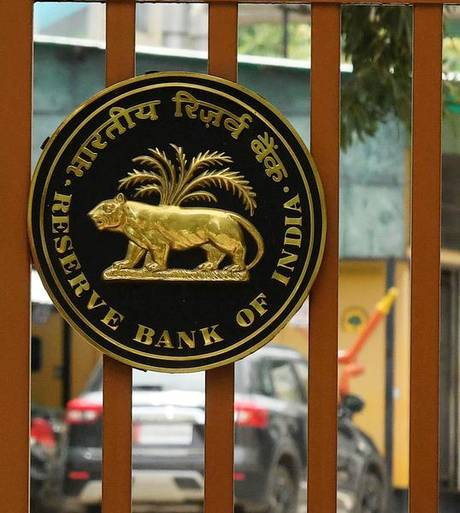
    • Recently RBI released a discussion paper on ‘Governance in Commercial Banks in India’.
    • Recently there have been high-profile instances involving governance failures in certain banks.
    • These instances have called into question the adequacy of the existing legal regime for ensuring good governance in commercial banks.
    • Internationally, the question of governance norms in banks is treated differently given the complex nature of functions performed by banks in comparison to other businesses.
    • Functions of the banks make them critical for allocation of resources in the economy, protection of consumer interests and maintenance of financial stability.

    Objectives of the discussion paper

    • The stated objective of the discussion paper is to align the current regulatory framework on bank governance with global best practices.
    • Best practices include the guidelines issued by the Basel Committee on Banking Supervision and the Financial Stability Board.

    Current regulatory framework

    • To this end, RBI adopts international standards for bank governance into the general corporate governance framework in India.
    • This general governance framework comprises the Companies Act, 2013, and the Securities and Exchange Board of India (Listing Obligations and Disclosure Requirements) Requirements, 2015.
    • These governance norms focus on the responsibilities of the board of directors, board structure and practices.
    • And it also includes aspects of risk management, internal audit, compliance, whistle-blowing, vigilance, disclosure and transparency.

    Issue of connection between management and owner

    • RBI also constituted an internal working group to review the extant regulatory guidelines relating to ownership and control in private sector banks.
    • This group is expected to submit its report by September 30, 2020.
    • But the assumption that deeper connections between the management and the owners necessarily lead to mismanagement needs to evaluated carefully and recalibrated to ensure balanced reforms.
    • The governance risks attributable to such connections might be relevant for government-owned banks as well.

    Key recommendations in the paper

    • (1) The majority of a commercial bank’s board must comprise of independent directors.
    • This is a standard higher than that prescribed under the Companies Act and the SEBI Regulations.
    • (2) The chairperson of the board must be an independent director.
    • (3) Chairpersons of crucial board committees (the audit committee, the risk management committee and the nomination and remuneration committee) must be independent directors who are not chairpersons of any other board committee.
    • (4) The tenures of non-promoter CEOs and WTDs should be limited to 15 years.

    Way forward

    • In order to make the reform effective, the appointment process for independent directors also needs to be re-evaluated to limit the role of controlling-shareholders.
    • The liability regime for directors on the boards of banking companies should also be revisited to balance the rights and liabilities of the directors.
    • The efficacy of implementation of norms as prescribed will depend on adequate enforcement.
    • The findings of the report of the working group have to be considered to formulate a comprehensive and effective governance framework for commercial banking in India.

    Consider the question “Given the complex nature of functions performed by the banks in comparison to other businesses subjecting them to stricter norms of governance is necessary. In light of this examine the adequacy of existing governance norms and suggest ways to improve them.”

    Conclusion

    RBI must exercise caution to ensure that the reforms balance the interests of all the stakeholders and do not come at the cost of discouraging investments and entrepreneurship in the Indian banking industry.

  • Oil and Gas Sector – HELP, Open Acreage Policy, etc.

    Why India is producing less and less oil?

    India’s crude oil production fell 7.1% in May 2020 compared to May 2019 on the back of low demand due to the Covid-19 pandemic.

    Practice question for mains:

    Q.Discuss the impact of Covid-19 pandemic on the global crude oil dynamics.

    Crude oil exploration in India

    • Crude oil production in India is dominated by two major state-owned exploration and production companies, ONGC and Oil India.
    • These companies are the key bidders for crude oil block auctions and end up acquiring most of the blocks that are put up for auction in India.

    Falling production

    • Domestic production of crude has been falling every year since FY 2012.
    • This has led to a steady climb in the proportion of imports in domestic crude oil consumption from 81.8% in 2012 to 87.6% in 2020.

    Why is production falling?

    • Most of India’s crude oil production comes from ageing wells that have become less productive over time.
    • A lack of new oil discoveries in India coupled with a long lead time to begin production from discovered wells has led to a steady decline in India’s crude oil production making dependency on imports.
    • The output of these ageing wells is declining faster than new wells can come up according to experts.
    • Domestic exploration companies are attempting to extend the life of currently operational wells.

    Why are there not more private players?

    • There has been a lack of interest in exploration and production in India from major private players, particularly those based abroad.
    • According to experts, this is because of long delays in the operationalization of production even after an oil block is allotted due to delays in approvals.
    • Some of the key approvals which are required to begin production include environmental clearances and approval by the Directorate General of Hydrocarbons after the allottee completes a seismic survey and creates a field development plan.

    What policy changes could help?

    • Existing public and private sector players have asked for reduced levies of oil production including oil cess, royalties, and profit petroleum especially when crude oil prices are below $45/barrel.
    • Experts say the requirement to pay royalties to the government at low crude prices can make it unviable for these companies to invest in further exploration and production.

    OALP could help

    • The government introduced the Open Acreage Licensing Programme (OALP) in 2019 to allow companies to carve out blocks that they are interested in and with lower royalties and no oil cess.
    • However, existing players are calling for a relaxation of royalties and oil cess on block allotted under previous policies.
    • The Chinese government offered a floor price to oil producers insulating them somewhat from any sharp falls in international crude prices.
    • This kind of policy at least allows for a company to have a fixed worst-case scenario for the sale of crude oil attracts more investment in exploration and production.

    Back2Basics: OALP

    • The OALP, a part of the government’s Hydrocarbon Exploration and Licensing Policy (HELP), gives exploration companies the option to select the exploration blocks on their own, without having to wait for the formal bid round from the Government.
    • The company then submits an application to the government, which puts that block up for bid.
    • OALP offers single license to explore conventional and unconventional oil and gas resources to propel investment in and provide operational flexibility to the investors.
  • Wildlife Conservation Efforts

    New rules to regulate exotic animal trade

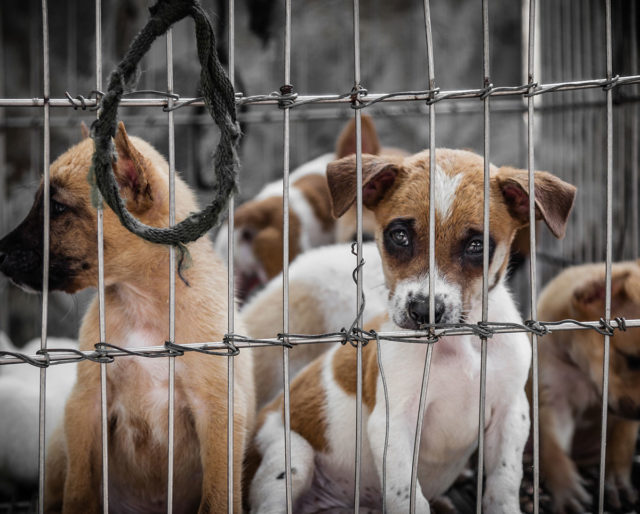
    The Environment Ministry’s wildlife division has introduced new rules to regulate the import and export of ‘exotic wildlife species’.

    Practice questions for mains:

    Q.What are Zoonotic Diseases? Discuss how the illicit trade in wildlife has resulted in the spread of zoonotic diseases of the scale of the ongoing COVID-19?

    Which exotic species are these new regulations talking about?

    • The Wildlife Crime Control Bureau is an organisation that is tasked with monitoring illegal trade.
    • The advisory says ‘exotic live species’ will cover animals under Appendices I, II and III of the Convention on International Trade in Endangered Species (CITES) of Wild Fauna and Flora.
    • It will not include species from the Schedules of the Wild Life (Protection) Act, 1972.

    What are the new rules?

    • Currently, it is the Directorate-General of Foreign Trade, Ministry of Commerce that oversees such trade.
    • Under the new rules, owners and possessors of such animals and birds must also register their stock with the Chief Wildlife Warden of their States.
    • Officials of the Wildlife Department will also prepare an inventory of such species and have the right to inspect the facilities of such traders to check if these plants and animals are being housed in inhumane conditions.
    • Additionally, stockists will have six months to declare their stock.

    Why such a move?

    • The illegal trade is estimated to generate revenues of up to $23 billion a year, a/c to FATF.
    • India continues to battle wildlife crime, with reports suggesting that many times such species are available for trade on online market places.

    Also read:

    Guidelines for Import of Exotic Species


    Back2Basics: CITES

    • CITES stands for the Convention on International Trade in Endangered Species of Wild Fauna and Flora.
    • It is as an international agreement aimed at ensuring “that international trade in specimens of wild animals and plants does not threaten their survival”.
    • It was drafted after a resolution was adopted at a meeting of the members of the International Union for Conservation of Nature (IUCN) in 1963.
    • It entered into force on July 1, 1975, and now has 183 parties.
    • The Convention is legally binding on the Parties in the sense that they are committed to implementing it; however, it does not take the place of national laws.
    • India is a signatory to and has also ratified CITES convention in 1976.

    CITES Appendices

    • CITES works by subjecting international trade in specimens of selected species to certain controls.
    • All import, export, re-exports and introduction from the sea of species covered by the convention has to be authorized through a licensing system.

    It has three appendices:

    • Appendix I includes species threatened with extinction. Trade-in specimens of these species are permitted only in exceptional circumstances.
    • Appendix II provides a lower level of protection.
    • Appendix III contains species that are protected in at least one country, which has asked other CITES Parties for assistance in controlling trade.

Join the Community

Join us across Social Media platforms.