[2012] The acidification of oceans is increasing. Why is this phenomenon a cause of concern? The growth and survival of calcareous phytoplankton will be adversely affected. The growth and survival of coral reefs will be adversely affected. The survival of some animals that have phytoplanktonic larvae will be adversely affected. The cloud seeding and formation of clouds will be adversely affected. Select the correct answer using the code given below: (a) 1, 2 and 3 only (b) 2 only (c) 1 and 3 only (d) 1, 2, 3 and 4
Central Electricity Authority released midterm review of 20th Electric Power Survey (EPS).
About Central Electricity Authority:
The Central Electricity Authority of India advises the government on policy matters and formulates plans for the development of electricity systems.
It is a statutory organisation constituted under section 3 of Electricity Supply Act 1948, which has been superseded by section 70 of the Electricity Act, 2003.
Demand & Growth
Peak demand: 459 GW (2035-36)
Electricity need: 3,365 BU
Growth: ~5.6–6.4% CAGR
Capacity Expansion
From ~520 GW (2026) → 1,121 GW (2035-36)
Energy Mix:
Solar: 509 GW (45%)
Coal: 315 GW (28%)
Wind: 155 GW (14%)
Hydro: 77 GW
Others: small share
Non-fossil capacity ~70%
Key Insight
Solar leads in capacity
Coal dominates generation (51%) → ensures baseload power
Energy Storage Need
174 GW / 888 GWh
BESS: 80 GW
Pumped storage: 94 GW
Critical for renewable integration + grid stability
[2024] Recently, the term “pumped-storage hydropower” is actually and appropriately discussed in the context of which one of the following? (a) Irrigation of terraced crop fields (b) Lift irrigation of cereal crops (c) Long duration energy storage (d) Rainwater harvesting system
The Levels and Trends in Child Mortality by the United Nations Inter-agency Group for Child Mortality Estimation highlights:
Global slowdown in reducing child deaths
India’s steady improvement in child and neonatal mortality
Global Scenario
4.9 million children died before age 5 (2024)
Includes 2.3 million newborns
Under-5 mortality:
↓ More than 50% since 2000
BUT progress slowed by >60% since 2015
2.1 million deaths (age 5–24 years)
Regional Distribution
Sub-Saharan Africa: Accounts for 58% of global under-5 deaths
India’s Performance
1. Neonatal Mortality Rate (NMR)
1990: 57 per 1000 live births
2024: 17 per 1000
2. Under-5 Mortality Rate (U5MR)
1990: 127 per 1000
2024: 27 per 1000
3. Key Drivers of Improvement
Expanded immunisation coverage
Increase in institutional deliveries
Strengthening of public health systems
Targeted interventions:
Maternal & child healthcare
Nutrition programs
Key Observations
India is a major contributor to mortality reduction in South Asia
Demonstrates that: Low-cost interventions can significantly reduce deaths
Challenges Ahead
Slowing global progress
Persistent: Malnutrition and Infectious diseases
High neonatal share: Nearly half of under-5 deaths
[2023] Consider the following statements in relation to Janani Suraksha Yojna: 1. It is a safe motherhood intervention of the State Health Departments. 2. Its objective is to reduce maternal and neonatal mortality among poor pregnant women. 3. It aims to promote institutional delivery among poor pregnant women. 4. Its objective includes providing public health facilities to sick infants up to one year of age. How many of the statements given above are correct? (a) Only one (b) Only two (c) Only three (d) All four
The Supreme Court of India questioned whether the Enforcement Directorate should remain “remediless” after alleged obstruction of its investigation by West Bengal authorities during a search at I-PAC (Jan 2026).
Background of the Case
ED was conducting a probe related to a ₹2,742 crore coal smuggling case.
Allegation: Mamata Banerjee and police interfered with ED search operations.
ED filed a petition seeking: CBI probe into the incident.
Core Legal Issue
Can ED approach Supreme Court under Article 32?
Arguments by West Bengal Government
ED is not a “person” under: Article 32 of the Indian Constitution
Therefore, Cannot claim fundamental rights violation
Federalism Concern:
Allowing ED to file under Article 32 may:
Undermine State autonomy
Lead to Centre vs State litigation flood
Arguments by ED / Centre
Obstruction of investigation: Undermines rule of law
Situation unprecedented: Requires judicial remedy
Question raised: Should an agency be left without any legal recourse?
Supreme Court’s Observations
Law cannot allow a vacuum (no remedy)
If such actions go unchecked: Could set a dangerous precedent
Raised key question: Can ED approach:
SC under Article 32
OR High Court under Article 226?
Key Constitutional Provisions Involved
Article 32: Right to move SC for enforcement of fundamental rights
Traditionally available to: Individuals (natural/legal persons)
Article 226
High Courts can issue writs: For fundamental rights + other legal rights
Wider scope than Article 32
Article 131
SC’s original jurisdiction
Deals with: Centre vs State disputes
Key Constitutional Concepts
1. Federalism (Basic Structure)
States are not subordinate to Centre
Balance of power must be preserved
2. Locus Standi
Who has the right to approach the court
Issue: Can a statutory agency (ED) file writ petitions?
3. Rule of Law
No authority should be:
Above law
Nor left without remedy
[2012] Which of the following are included in the original jurisdiction of the Supreme Court? 1. A dispute between the Government of India and one or more States 2. A dispute regarding elections to either House of the Parliament or that of Legislature of a State 3. A dispute between the Government of India and a Union Territory 4. A dispute between two or more States Select the correct answer using the code given below: (a) 1 and 2 only (b) 2 and 3 only (c) 1 and 4 only (d) 3 and 4 only
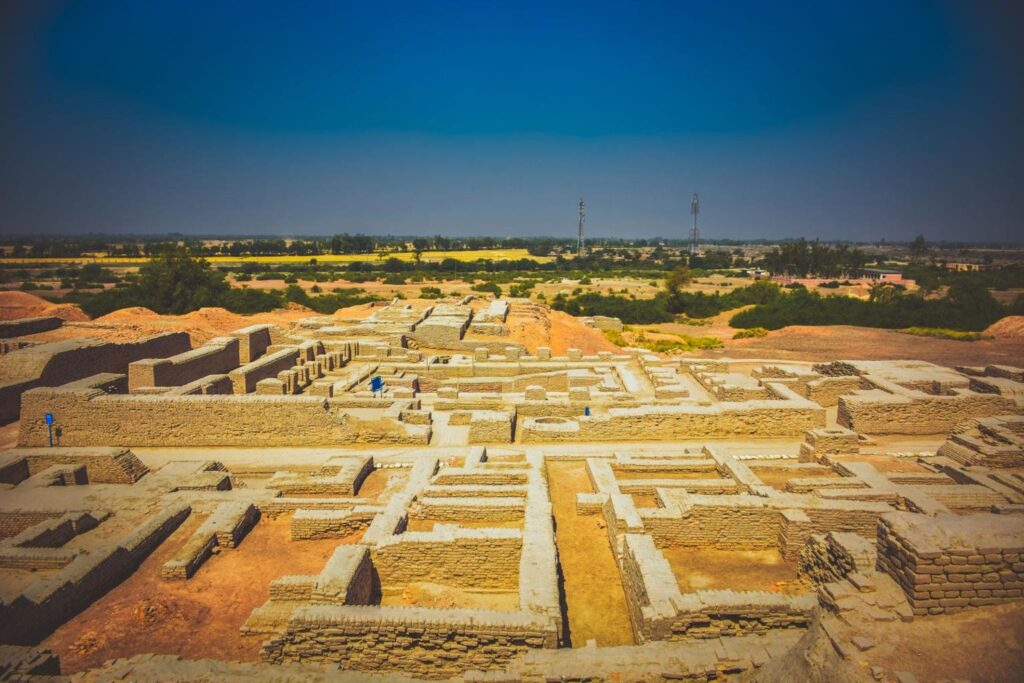
A study published in Science Advances (March 2026) finds that Mohenjo-daro exhibited collective (democratic-like) governance, comparable to Athens and Republican Rome.
About Mohenjo-daro
Part of the Indus Valley Civilization (IVC)
Located in present-day Sindh (Pakistan)
Known for:
Advanced urban planning (grid system)
Drainage and sanitation systems
Lack of clear evidence of centralized monarchy
Key Findings of the Study
1. Democracy Beyond Greece & Rome
Democratic/collective governance was not unique to Europe
Similar systems found in:
North America: Iroquois Confederacy, Zuni
Mesoamerica: Teotihuacan, Monte Albán, Tlaxcala
South Asia: Mohenjo-daro
2. Two Dimensions of Governance
Researchers used two parameters:
Power concentration: Whether authority is centralized or dispersed
Inclusiveness: Degree of public participation in governance
3. Indicators of Collective Governance
Urban planning features:
Large open public spaces (for gatherings)
Absence of palaces or grand royal tombs
Art & architecture: Limited glorification of rulers
It shows Shared decision-making systems
4. Indicators of Autocracy
Monumental: Palaces, pyramids, elite tombs
City layouts: Roads converging to ruler’s residence
Rituals: Grand spectacles reinforcing ruler authority
5. “Autocracy Index”
Study created a spectrum:
From highly autocratic → highly collective
Mohenjo-daro ranked towards collective governance
6. Role of Economic Structure (Key Insight)
Autocratic societies:
Based on controlled resources (mines, trade routes, war plunder)
More democratic societies:
Based on: Broad taxation and Community labour
7. Inequality Link
Inclusive systems: Lower economic inequality
Challenges assumption: Complexity always leads to autocracy
Broader Significance
Democracy has deep, global historical roots
Challenges Eurocentric view: That democracy began only in Greece & Rome
Important for modern governance: Helps understand power concentration & inequality trends
[2013] Which of the following characterizes/characterize the people of Indus Civilization? 1. They possessed great palaces and temples. They worshipped both male and female deities. 2. They employed horse-drawn chariots in warfare. Select the correct answer using the code given below: (a) 1 and 2 only (b) 2 only (c) 1, 2 and 3 (d) None of the statements given above is correct
Scientists from CSIRO, RMIT University, and University of Melbourne developed the first proof-of-concept quantum battery (March 2026).
What is a Quantum Battery
A quantum battery is an energy storage device that uses principles of quantum mechanics instead of chemical reactions.
It can charge, store, and discharge energy like conventional batteries.
Key Quantum Principles Used
Superposition: A system can exist in multiple states simultaneously.
Entanglement: Particles become interconnected, enabling coordinated energy transfer.
Key Features of the Prototype
Built using multi-layered organic microcavity.
Wireless charging using laser.
Operates at room temperature.
Energy stored lasts much longer than charging time (very high efficiency).
Unique Property
Charging speed increases with size
Opposite to classical batteries.
Known as quantum advantage in charging.
Potential Applications
Ultra-fast charging of electric vehicles.
Wireless energy transfer over long distances.
High-efficiency next-generation energy storage systems.
Current Limitations
Still at proof-of-concept stage.
Major challenge: extending energy storage duration for practical use.
Significance
Confirms theoretical predictions in quantum thermodynamics.
Could revolutionize energy storage, transmission, and efficiency.
[2022] Which one of the following is the context in which the term “qubit” is mentioned? (a) Cloud Services (b) Quantum Computing (c) Visible Light Communication Technologies (d) Wireless Communication Technologies
Authorities have planned to translocate ~50 Asiatic wild water buffaloes from Kaziranga National Park to Kanha Tiger Reserve in a phased manner, starting with a smaller group.
About the Species
Asiatic Wild Water Buffalo
Scientific name: Bubalus arnee
Status: Endangered (IUCN)
India holds major global population
Key Details of the Plan
Total planned: ~50 buffaloes
Initial phase: 5–15 individuals
Method:
Tranquilization and capture
Gradual relocation after feasibility checks
Why Translocation is Being Done?
Species Conservation: Avoids over-concentration in one area
Reduces risk from: Disease outbreaks and Natural disasters.
Kanha Tiger Reserve historically had wild buffaloes
Aim: restore lost populations
Genetic Diversity: Helps maintain: Healthy breeding populations and Reduced inbreeding.
Why Kaziranga?
Hosts 1000+ wild buffaloes
One of the strongest populations globally
Suitable as a source population
Why Kanha?
Suitable: Habitat (grasslands + water sources)
Part of central Indian landscape restoration
[2017] According to the Wildlife (Protection) Act, 1972, which of the following animals cannot be hunted by any person except under some provisions provided by law? 1. Gharial Indian 2. Wild ass 3. Wild buffalo Select the correct answer using the code given below: (a) 1 only (b) 2 and 3 only (c) 1 and 3 only (d) 1, 2 and 3
India has submitted its First National Report (NR1) on the implementation of the Nagoya Protocol (ABS) to the Convention on Biological Diversity (CBD) on 27 February 2026, fulfilling obligations under Article 29.
Key Highlights of the Report
1. Reporting Period
Covers 1 November 2017 to 31 December 2025
Earlier Interim Report submitted in 2017
2. Legal & Institutional Framework
Based on: Biological Diversity Act, 2002, Biological Diversity Rules, 2024 and ABS Regulations, 2025.
Three-tier structure:
National Biodiversity Authority (NBA)
State Biodiversity Boards (SBBs) / UT Biodiversity Councils
Biodiversity Management Committees (BMCs)
2,76,653 BMCs established → strong grassroots participation
3,556 IRCCs (Internationally Recognised Certificates of Compliance) published
Accounts for over 60% of global total
Shows leadership in transparency under Nagoya Protocol
5. Financial Benefits Generated
₹216.31 crore mobilised through NBA approvals
₹139.69 crore disbursed to: Local communities, Farmers, and Traditional knowledge holders
₹51.96 crore generated via SBBs/UTBCs
6. Non-Monetary Benefits
395 approvals included: Capacity building, Technology transfer, Training and Collaborative research.
7. Monitoring of Foreign Biological Resources
41 declarations received for use of foreign bioresources
Ensures compliance with international ABS norms
8. Capacity Building & Awareness
2,56,393 individuals trained
Through: 3,724 workshops and 600+ capacity-building initiatives
9. Strategic Contribution
Supports Target 13 of India’s NBSAP (National Biodiversity Strategy and Action Plan)
Strengthens: Biodiversity conservation, Livelihood security, and Community participation
[2025] Consider the following statements: 1. In India, the Biodiversity Management Committees are key to the realisation of the objectives of the Nagoya Protocol. 2. The Biodiversity Management Committees have important functions in determining access and benefit sharing, including the power to levy collection fees on the access of biological resources within its jurisdiction. Which of the statements given above is/are correct? (a) 1 only (b) 2 only (c) Both 1 and 2 (d) Neither 1 nor 2
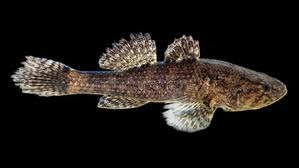
Scientists have discovered a new estuarine fish species, named Butis bargabhimae, in the Rupnarayan River near Tamluk.
About the Species
1. Classification
Family: Butidae (gudgeon gobies)
Habitat: Brackish water (estuaries)
Found where rivers meet the sea
2. Discovery Process
Time: 2022–2024
Institutions: Tamralipta Mahavidyalaya and Vidyasagar University.
Method:
Field collection by local fishermen
Morphological + DNA analysis
Unique Features
Presence of interorbital scales (between eyes)
Additional auxiliary body scales
Distinct light and dark bands on pectoral fins
DNA similarity only ~86% with closest relatives
Confirms it as a new species
Naming Significance
Named after Bargabhima, a local deity of Tamluk
Reflects link between biodiversity and cultural heritage
Scientific Importance
Taxonomic Clarity: Helped correct misidentification of similar species in:
India
Bangladesh
Role of DNA Barcoding: Shows importance of genetic tools in species identification
Hidden Biodiversity: Suggests many undiscovered species in Indian rivers and estuaries
[2022] DNA Barcoding can be a tool to: 1. Assess the age of a plant or animal. 2. Distinguish among species that look alike. 3. Identify undesirable animal or plant materials in processed foods. Select the correct answer using the code given below: (a) 1 only (b) 3 only (c) 1 and 2 (d) 2 and 3
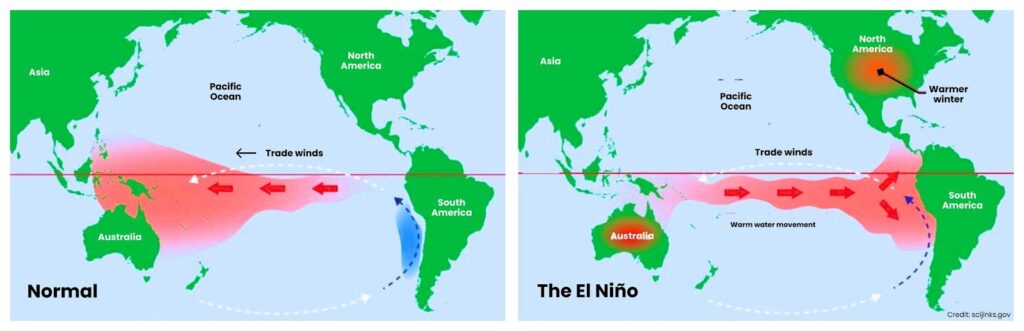
Forecasters, including NOAA Climate Prediction Center, warn of a possible El Niño in 2026, with chances it could intensify into a “super El Niño”, potentially pushing global temperatures to new highs.
What is El Niño?
A warm phase of the El Niño–Southern Oscillation (ENSO)
Occurs when Pacific Ocean surface waters become warmer than normal
What is a “Super El Niño”?
When sea surface temperature rises ≥ 2°C above average
Much stronger than normal El Niño
Rare events: Last major one: 2015–16
Current Situation
Present phase: La Niña (cool phase) is ending
Forecast: ~62% chance of El Niño by mid-2026 and ~15% chance of super El Niño
How El Niño Works
Warm water shifts toward eastern Pacific
Weakens trade winds
Alters global weather systems
[2011] La Niña is suspected to have caused recent floods in Australia. How is La Niña different from El Niño? 1. La Niña is characterized by unusually cold ocean temperature in the equatorial Indian Ocean whereas El Niño is characterized by unusually warm ocean temperature in the equatorial Pacific Ocean. 2. El Niño has an adverse effect on the southwest monsoon of India, but La Niña has no effect on monsoon climate. Select the correct answer: (a) 1 only (b) 2 only (c) Both 1 and 2 (d) Neither 1 nor 2