💥UPSC 2026, 2027, 2028 UAP Mentorship (March Batch) + Access XFactor Notes & Microthemes PDF

Search results for: “”

  • International Relations

    India’s Foreign Relations

    # Role of border states in India’s Foreign Policy

    # Indian maritime challenges and its diplomatic dimensions

    # Raja-Mandala diplomacy – Maritime India versus Continental Delhi, France, Middle East

    # Yoga: Re-uniting the World

    # Different levels of Diplomacy | Track 1, Track 2, Track 3

    # Demystifying The Concept Of Diplomatic Immunity

    # India–Sri Lanka

    # India-Bangladesh – Radio Bangla, Digital Radio Mondiale (DRM), Border Haats, Sebi, Bangla regulator sign pact over co-operation, Teesta, The BCIM Corridor

    # India-Myanmar – India and Myanmar bilateral ties, History of Ethnic insurgency in Myanmar, Imphal-Mandalay bus service, Kaladan Multi Modal Project in Myanmar, Myanmar operation: Hot pursuit, the Rohingya Conflict, the BCIM Corridor.

    # India-Russia

    # India-China – Delhi-Nagpur high-speed rail, Ladakh, Stilwell Road, boundary negotiations, China-Pakistan Economic Corridor, Indian International Fleet Review, China’s Indian Ocean strategy: Implications for India(Colombo port project, String of Pearls, One belt One Road, Maritime Silk Road, Project Mausam), The Great Fall of China (Devaluation of Yuan and Stock Market Volatility, Special Drawing Rights(SDR)), China’s Silk Route & OBOR diplomacyAIIB & The Changing World OrderThe BCIM Corridor.

    # India-Pakistan – Indus Treaty, MFN status, Balochistan, Pathankot probe, Kashmir dispute, UN Military Observer Group in India and Pakistan (UNMOGIP), China-Pakistan Equation

    # India – US – Defence ties [The Logistics Support Agreement (LSA), The Communication and Information Security Memorandum of Agreement (CISMOA), The Basic Exchange and Cooperation Agreement (BECA),Defence Technology and Trade Initiative (DTTI)], Visa, Free Trade and WTO [ Totalisation Agreement, H1B and L1 visas, NASSCOM], Latest developments [Yudh Abhyas, India, US and Japan major naval drill, Anti-Dumping Duty (ADD), WTO’s Government Procurement Agreement(GPA)]

    # India-Maldives – Maldives’ political crisis

    # Nepal’s Constitution & Emerging Developments – Nepal adopts historic constitution, Blockade.

    # India-Afghanistan – India-Afghanistan Motor Vehicles Agreement, extradition treaty, Heart of Asia conference, Taliban Conundrum.

    # India-Africa – Operation Sankat Mochan, South Sudan civil war, India-Tanzania: Solar Mamas, India-Mozambique, Exim Bank’s African credit, Pelindaba Treaty, Seychelles.

    # India-Iran – Chahbahar port, Iran oil policy change, International North South Transport Corridor (INSTC), Farzad-B gas field, Iran N-deal.

    # India-Sri Lanka – Constitutional issues in Sri Lanka, 13th Amendment, 19th amendment

    # India-France

    # India-South Korea

    # India – Germany

    # India-Middle East – The Syrian civil war, Russian interest in Syria, Syria peace plan, anti-terror bloc, Latest developments (NIIF)

    # India-Pacific Island Nations

    #Ministry of External Affairs : Important Updates – Haj pilgrimage, Ashgabat Agreement, Pravasi Bharatiya Divas

     Miscellaneous

    # Italian Marines Case

    # The Saudi Cable leaks

    International Issues

    # Cross-Border Terrorism – Islamic State, J&K attack, surgical strikes, War on terror CCIT, Deradicalisation plan, Breaking The Terror Cycle, Islamic Military Alliance.

    # Contention over South China Sea – Hague ruling, China-Russia joint naval exercise,2002 Declaration on the Conduct of Parties, N. Convention on the Law of the Sea, 2002 declaration on conduct.

    # North Korean Fusion Bomb test in bid to change world power equation

    # The refugee crisis: Understanding the refugee crisis and lessons for IndiaEurope’s ChallengeThe Rohingya Conflict

    # Vienna Conference to end Syrian Crisis

    # Yemen Crisis – Operation Rahat, The Arab Spring.

    International Institutions, Agencies, Groupings and Fora 

    # Economic integration and different types of trade agreements – FTA, PTA, CEPA, CECA

    # India’s Bid To Join Export Control Regimes – Missile Technology Control Regime (MTCR), NSG, the Hague Code of Conduct.

    # United Nations – World Health OrganisationWorld Bank Group

    # IMF – International Monetary Fund and India [Extended Fund Facility (EFF), South Asia Regional Training and Technical Assistance Center(SARTTC)]

    # World Trade Organization (WTO) – WTO and India [ Most Favoured Nation status, Doha Development Agenda, Global Value Chains, Recent India-US trade disputes – WTO, Peace Clause, Bali Package, TFA in Services, GATS, Special Safeguard Mechanism (SSM)]

    # India-Africa Forum Summit (IAFS)

    # ASEAN – ASEAN-India and East Asia Summit 2015RCEP and its significance for IndiaIndia-ASEAN [Multinational Field Training Exercise (FTX)]

    # India-APEC

    # BRICS

    # G4 – Why G4 nations need a hardball diplomacy?

    # G20 – The Antalya Summit 2015

    # Mekong Ganga Cooperation and BIMSTEC

    # SAARC – Comparing ASEAN with SAARC, South Asia Free Trade Agreement (SAFTA) and the complexities surrounding it, India-SAARC Nations [SAARC satellite, Mutua l Legal Assistance Treaty (MLAT) between India and Maldives, BBIN Agreement, National Knowledge Network]

    # SCO & India

    # Indian-Ocean Rim Association (IORA)

    # East Asia Summit (EAS)

    # International Atomic Energy Agency (IAEA) – AERB to get Regulatory Independence

    # Nuclear Security Summit (2010 – 2016)

    # Important International NGOs which often recur in news – Amnesty International, Commonwealth Human Rights Initiative, CARE International, OXFAM, Greenpeace International

    Important World Reports & their Organisations

  • Civilsdaily featured at Product Hunt! Upvote us today

    For the uninitiated, Product Hunt is a curation of the best new products, every day. That means they feature cool products which offer some bit of innovation from otherwise run of the mill products.

    Civilsdaily featured at Product Hunt! And this is great news for us. What will make it even greater? Your UPVOTES!

    Please click the link – login via your twitter handle and upvote it.

    https://www.producthunt.com/tech/civils-daily


  • BRICS Summits

    Importance for Exams

    Mains : This year is special because India holds chair of the BRICS Summit from February to December. Though the exact outcome of all the Conferences, Meeting, MoUs, Declarations leading to the main Summit is not important, the themes being discussed are independently very important.

    Prelims : All the declarations(Jaipur, Udaipur, etc), places(Khajuraho) where meetings were held and other keywords(like the BRICS Wellness Index) are important from a prelims perspective.

    In News

    The 2016 8th Annual BRICS Summit will be held in Panaji, Goa, from 15th to 16th October. The theme this year is Building Responsive, Inclusive and Collective Solutions. It will be attended by the heads of state/government of the five member states Brazil, Russia, India, China and South Africa.

    Timeline

    September – Events and Outcomes
    1 -2 Sept – BRICS Convention on Tourism, Khajuraho
    2-6 Sept – BRICS film festival
    10-11 Sept – BRICS Wellness Workshop, Bangalore
    The Ministry of AYUSH, in collaboration with Research and Information System for Developing Countries (RIS).
    14 Sept – BRICS Joint Working Group on Counter Terrorism
    16 Sept – BRICS Environment Ministers.
    GOA MoU on setting up of JWG environment-related issues
    14-16 Sept – 3rd BRICS Urbanisation Forum, Visakhapatnam
    17 Sept – MOU on Climate co-operation


    August – Events and Outcomes

    1-2 Aug – BRICS Workshop on Strengthening Health Surveillance, Bengaluru
    22 Aug – BRICS Women Parliamentarians’ Forum, Jaipur
    Jaipur Declaration – Enablers for achieving SDG
    22-23 Aug – 2nd meeting of the BRICS Ministers of Disaster Management, Udaipur
    Udaipur Declaration – to enable Disaster Risk Management
  • IAS Prelims 2016 Corner #4

    So let us have some questions from the terms that keep appearing in the newspapers to find out if we did out little extra effort on them. Who knows what’s in store for the IAS Prelims 2016. Here we go!

    #1.  Consider the following statements:

    1. Index of Industrial Production (IIP) is released every quarter.

    2. Index of  Eight Core Industries (ICI) is released every month.

    Which of the above statements is/are correct?

    (a) 1 only

    (b) 2 only

    (c) Both 1 and 2

    (d) Neither 1 nor 2

    #2. Consider the following statements:

    1. Central Sector Schemes are fully funded by the Central government.

    2. Centrally Sponsored Schemes are implements by the respective State      governments.

    Which of the above statements is/are correct?

    (a) 1 only

    (b) 2 only

    (c) Both 1 and 2

    (d) Neither 1 nor 2

    #3. Which of the following grouping of countries operates without any permanent Secretariat?

    (a) ASEAN

    (b) G-20

    (c) APEC

    (d) BIMSTEC

    #4. Consider the following statements:

    1. The Advocate-General of a State is appointed by the State’s Governor.

    2. The Advocate-General of a State cannot be removed by the State’s Governor.

    Which of the above statements is/are correct?

    (a) 1 only

    (b) 2 only

    (c) Both 1 and 2

    (d) Neither 1 nor 2

    #5. Consider the following statements:

    1. Creation or abolition of a Legislative Council in a State does not involve an amendment of the Constitution.

    2. Parliament has no role to play in the creation or abolition of a State’s Legislative Assembly.

    Which of the above statements is/are correct?

    (a) 1 only

    (b) 2 only

    (c) Both 1 and 2

    (d) Neither 1 nor 2

    #6. Consider the following pairs:

                         Body                                     Headed by

    1. National Security Council           :   Defence Minister

    2. Cabinet Committee on Security :   Prime  Minister

    3. Board of Approval for SEZs        :   Commerce Minister

    Which of the above pairs is/are correctly matched?

    (a) 2 only

    (b) 1 and 2 only

    (c)  3 only

    (d) 1, 2 and 3

    #7. Consider the following statements:

    1. Geographical Indications Registry has been set up at New Delhi.

    2. All aspects of GI are administered by the Department of Industrial Policy and Promotion.

    Which of the above statements is/are correct?

    (a) 1 only

    (b) 2 only

    (c) Both 1 and 2

    (d) Neither 1 nor 2

    Answer key:

    #1. (b)

    #2. (c)

    #3. (b)

    #4. (a)

    #5. (a)

    #6. (a)

    #7. (b)

    Explanations shall follow in comment section.


  • How much do you score on this list of 5 must read books on Indian History?

    Preparing for Civil Services gives you the best time to catch up on your nation’s history, unless you are the one who snoozes through the subject and wakes up in the last minute to ratofy Spectrum books!

    But traditional books tend to become a boring read after a while! Add to that, the oft recommended best sellers – Discovery of India, Freedom at Midnight, Argumentative Indian and likes become a tad too traditional for our senses, neh?

    Hence, to keep things spicy, go through this article and let us know – How much do you score on this list of 5 must read books on Indian History?

    #1. The Idea of India by Sunil Khilnani


    This long essay makes an eloquent and persuasive argument for Nehru’s idea of nationhood in India. At a time when the relevance of Nehru’s vision is under scrutiny, this book assumes a special significance.

    This is what Anil Swaroop (Secretary, GoI) has to say about the book,

    The book doesn’t directly answer the critical question: What is the idea of India? However, it lays bare certain dimensions of the idea that enables the reader to have a reasonably good idea of the idea. A well researched book on what could be the idea of India. Given the complex matrix of Indian history and the present day existence, it is indeed difficult to articulate in black and white such an idea but one can comprehend and perhaps appreciate it as one walks through the pages of the book.


    #2. The Story of India by Michael Wood


    Michael sets out on an epic journey across this vibrant country to trace the roots of India’s present in the incredible riches of her past. The Story of India is a magical mixture of history and travelogue, and an unforgettable portrait of India – past, present and future.

    Why should you read it?

    It reinforces some otherwise mundane facts with beautiful anecdotes! You will read a lot about Kanishka and the southern empires in this compelling narrative. In case you haven’t watched the BBC produced documentary, do give it a shot!

    #3. The Great Arc by John Keay


    The Great Arc is a wonderful little chronicle of the “Great Trigonometrical Survey” carried out in India roughly between 1800-1860 CE. Various teams surveyed India right from its southern tip, to the Himalayas.

    Do you know the importance of that work?

    The Great Arc made possible the mapping of the entire Indian sub-continent and the development of its roads, railways and telegraphs. India as we now know it was defined in the process.

    It’s a thin book and is amazingly well chronicled and you would thank us for referring this to you!

    #4. Land of the Seven Rivers by Sanjeev Sanyal


    Did the Great Flood of Indian legend actually happen? Why did the Buddha walk to Sarnath to give his first sermon? How did the Europeans map India?
    The history of any country begins with its geography. So grab this book as soon as you can! 

    #5. India After Gandhi by Dr. Ramachandra Guha


    We are sure you already know about this one. Why doubt an aspirant’s wisdom and knowledge when he has already spent countless hours wondering whether to read post independence from India After Gandhi or fall back on Bipan Chandra!

    However, we did come by an interesting review of this book and we would do well to produce a befitting quote to suit the magisterial work that this is.

    If you do not know where you come from, then you don’t know where you are, and if you don’t know where you are, then you don’t know where you’re going. And if you don’t know where you’re going, you’re probably going wrong.
    — Terry Pratchett


    So, that was it from our side! If you have some free time, catch up on these books. Let us know some of your favorites and of course, do let us know your score!


  • Indian Society

    # Tribal Issues

    Related reading: The Northeast Insurgency

     # Census 2011

    # Growing intolerance in society

    # Miscellaneous:

  • Geography

    Physical geography

    # Water in the Atmosphere – Saturation, Condensation, Classification of clouds and Precipitation

    Geographic phenomenon : Key Concepts and Issues – Some Geographical terms: Drought, Normal Monsoon, Positive Indian Ocean Dipole

    # El Niño: A Global Weather Phenomenon – How does El Nino affect Indian Monsoon? La Nina, Southern Oscillation, El Niño–Southern Oscillation (ENSO).

  • Indian History

    Modern India

    # The First Firangis | Chap 1|Warren Hastings and his time as the Governor General of India(1772-1785) – The Regulating Act of 1773

    # The First Firangis | Chap 2 | Hey Pitt, What’s Your Act? – Pitts Act of 1784

    # The First Firangis | Chap 3 | Lord Cornwallis & His Permanent Settlement – Governor General Cornwallis (1786-1793), Permanent Settlement

    # The First Firangis | Chap 4 | Extracting Land Revenue – Land revenue systems – Permanent Settlement, Ryotwari, Mahalwari.

    # The First Firangis | Chap 5 | The Marquess of Wellesley & His Subsidiary Alliance – Wellesley & his system of Subsidiary Alliance

    # The First Firangis | Chapter 6 | The Anglo Mysore wars – The 3 Anglo Mysore Wars

    # Gandhiji’s 4 Satyagraha – Champaran Satyagraha – 1917, Ahmedabad Satyagraha – 1918, Kheda Satyagraha – 1918, Rowlatt Satyagraha – 1919

    # Miscellaneous:

    • The relevance of republic day
    • Our Legislature through the ages – Regulating Act of 1773, Pitt’s India Act of 1784, Charter Act of 1833, Charter Act of 1853, Indian Councils Act of 1861, Indian Councils Act of 1892, Indian Councils Act of 1909 : The Morley-Minto reforms, Indian Councils Act of 1919 : The Montagu-Chelmsford Reforms, The Government of India Act 1935.

    India After Independence:

    # The emergency and its aftermath

  • Indian Heritage and Culture

    # Different Forms of Traditional Theatre in India:

    • Part 1 – Bhand Pather, Swang, Nautanki, Raasleela, Bhavai, Jatra
    • Part 2 – Maach, Bhoona, Dashavatar, Krishnattam, Yakshagaana, Therukoothu.

    [Related reading: 9 Indian Arts in the UNESCO’s List of the Intangible Cultural Heritage]

    # Dances of India:

    • Classical Dances of India – Manipuri, Mohiniyattam, The Sattriya Dance, Kathakali, Bharatnatyam
    •  Folk Dances Of India – Mamallapuram Dance Festival, Bathukamma – Telangana’s Floral Festival, Dumhal Dance, Hikat Dance, Hurka Baul, Tera Tali dance, Kalbelia, The Koli dance, Haryanvi dance.

     # The High and Mighty Kings of India [Click here]

    • Kanishka
    • Ashoka
    • Kharavela

    # Indian Paintings:

     # Indian Literature:

     # Architecture:

     # Music of India

    • Regional Music – Songs of the North-East, Tappa (Punjab), Powada (Maharashtra), Laman (Himachal Pradesh), Alha (Bundelkhand), Barhamasa from Kumaon, Pandavani, Lotia, Pankhida (Rajasthan)

     # Arts & Heritage Institutions

     # Protecting and Conserving our artifacts:

     #Spiritual Tourism:

     # Jallikattu

    # Miscellaneous

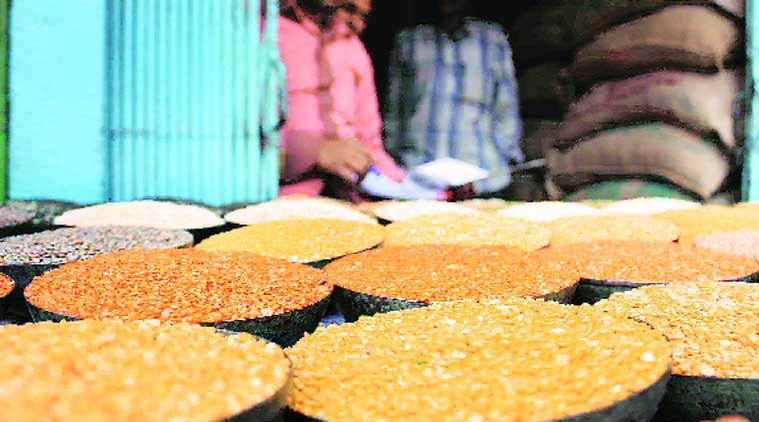
  • Pulses Production – Subramanian Committee, Eco Survey, etc.

    Pulses are important source of protein, high in fibre content and provide ample quantity of vitamins and minerals. India having the largest shares about 25% production, about 33% acreage and about 27% consuming of total pulses of the world.

    Although India is the highest producer of pulses in the world, its domestic demand outstrips domestic production. The shortfall is met from imports. In last 1 year prices of pulses have increased sharply which has made pulses unaffordable for the common man.

    In this article We will explain why despite India being the largest producer of pulses, the price of pulses have increased so rapidly and we will also discuss steps taken by government in this regard and why those steps have not achieved intended results.

    • What Factors caused increase in prices of pulses in recent years?
    • Government steps in recent years to curb pulse prices
    • Why government steps have failed to reduce prices?
    • Will creating buffer stock for pulses would be able to curb pulses price?

    source

    What factors caused increase in prices of pulses in recent years?

    • Draught: Successive back to back drought i.e failure of crops in 3 successive seasons biggest reason for current price increase in pulses
    • Low MSP: Low production of pulses due to Lower MSP prices for pulses in comparison to wheat and rice and even this low target for pulses procurement is not realized by the government, all these factors disincentives farmers towards pulse production.
    • Grown in only Marginal Land: Since pulses could be grown in marginal land, a trend has developed in India where pulses are only grown in marginal and arid lands and mostly by small farmers, all this has led to low productivity for pulse crop. Only 15% of the 25 million hectares area sown annually for pulses in India is irrigated, compared to 60% for paddy and 90-95% for wheat and sugarcane
    • Limited option of import: Option of import are limited in case of pulses since its production is restricted to few countries in Africa and Asia and even there due to lack of local demand, the production of pulses are low.
    • Rise in demand: Rise in rural income due to MNREGA and better functioning of PDS has increased demand for protein rich food including pulses in last few years.

    Steps taken by Government in recent years to curb pulse prices

    • Banned exports and future trade in pulses.
    • Created buffer stock for pulses
    • Government has signed agreement with Mozambique under which India will encourage greater production of pulses in Mozambique with an assurance that it will be purchased by India at a mutually-agreed price.
    • Allowed import of pulses at zero duty.
    • Government has imported 50000 tonnes of pulses and also subsidized the domestic cost of transport, handling and milling through a price stabilization fund.
    • Imposing essential commodities act and cracking down on hoarders and black marketer through imposition of stock holding limit.
    • Government has increased MSP price of 2 pulse crops i.e. Arhar and masur by Rs 250 per quintal.
    • Inclusion of cluster demonstrations in rice fallows for pulses cultivation in rabi season from 2015-16 under BGREI (Bringing Green Revolution in Eastern India) scheme in order to increase production of pulses in Eastern India in states of Assam, Bihar, Chhattisgarh, Jharkhand, Odisha, Eastern U.P. and West Bengal
    • A special programme for demonstration of new varieties of pulses through Krishi Vigyan Kendra (KVKs) has been taken up from Rabi 2015-16 in order to increase availability of seeds of new varieties of pulses and promote adoption of new varieties

    Why government steps failed to reduce prices?

    • Firstly steps taken against stockers are discouraging them to further invest in warehouses and cold storage. In the absence of stockiest, market prices of pulses collapse, discouraging farmers from growing them in current season.
    • Secondly by suspending future and forward market in pulses, the government has simply shot the messenger. Forward and future market give signal about likely future prices and if harnessed they could actually help the government take preventive measures.
    • Thirdly government imported just 7000 tonnes to tame prices, whereas overall consumption is 3.3 to 4 million tones.
    • Fourthly the government announced MSP norms in November 2015 , which had a limited impact on Pulse production in 2016, since by that time farmers had already made decision regarding which crop they will sow in rabi season.

    Will creating buffer stock for pulses help curb the rising pulses price?

    • Creation of buffer stock of 150000 tonnes from both domestic production and imports could reduce fluctuations in prices as the accumulated reserve could be released in market whenever price of pulses spikes
    • It could also increase production of pulses, since The Food Corporation of India, National Agricultural Cooperative Marketing Federation of India, Small Farmers’ Agribusiness Consortium and other agencies would be engaged in purchasing the crop from farmers.
    • The payment for these purchases would be made from the price stabilisation fund created by the government. This will encourage farmers to take up pulses production on a larger scale and will enable India to help achieve self-sufficiency in pulses in a few years
    • However buffer stock alone would not be able to curtail price in the long run, alongside this step the government has to take number of other steps which include

    source

    The Way forward?

    1. Create a crop-neutral incentive structure for farmers, which at present are skewed in favour of rice, wheat & sugarcane. This could be done by rapidly increasing MSP for pulses in next few years.
    2. Greater public investment in providing irrigation facilities in areas under pulse production could increase productivity of pulses
    3. Augment seed availability of pulses
    4. More allocation should be done on scientific research related to pulses varieties so that better varieties of pulses could be developed

    References:

More posts